
The hardest ethical moments of intern year won’t feel like “ethics cases.” They’ll look like routine orders, rushed discharges, and quiet corners of the chart.
You’re about to walk into them on a schedule.
Below is a concrete, time-based guide to when those ethics crises usually hit during intern year—and what you should be doing at each point so you do not end up practicing in ways you’ll regret later.
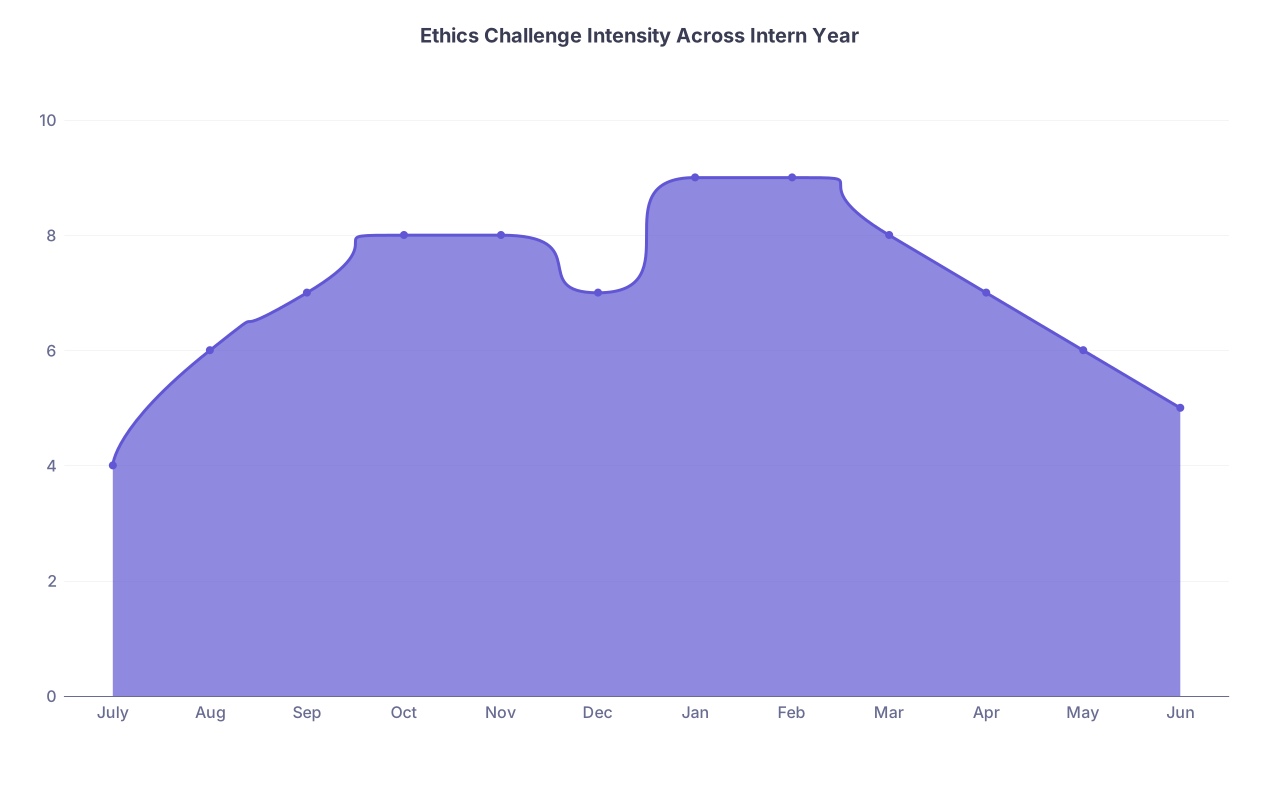
Big-Picture Timeline: Where the Crises Cluster
| Category | Value |
|---|---|
| July | 4 |
| Aug | 6 |
| Sep | 7 |
| Oct | 8 |
| Nov | 8 |
| Dec | 7 |
| Jan | 9 |
| Feb | 9 |
| Mar | 8 |
| Apr | 7 |
| May | 6 |
| Jun | 5 |
Think of intern year ethics like this:
- July–September: Overwhelmed and compliant. Your main risk is silently following bad patterns.
- October–December: Competent but cautious. You start to see the problems but struggle to speak up.
- January–March: Jaded or awakening. Major conflicts about futility, consent, and honesty peak.
- April–June: Power vs. fatigue. You finally have some influence, but you’re tired enough to compromise.
Now let’s walk it month by month.
Before July 1: Pre-Intern Prep (What You Should Do Now)
At this point you should:
Pick your “ethics buddy.”
One co-intern, senior, or faculty member you explicitly ask: “Can I run hard cases by you this year?” Do this before orientation chaos.Set your non‑negotiables in writing.
Literally write down 3–5 lines you will not cross:- “I will not forge or backdate notes.”
- “I will not lie to families about prognosis to ‘keep hope alive’.”
- “I will not witness a form I did not actually witness.”
Put it in your notes app. You’ll need it at 3 a.m.
Bookmark your hospital ethics resources.
- Institutional ethics consultation pager
- Risk management/legal office number
- Policy manual on:
- Capacity and consent
- Code status/DNR
- Restraints
- AMA discharges
You’re not doing deep reading now. You’re making sure you know where to look when you’re in trouble.
July: Orientation, Orders, and Your First Quiet Compromises
This month you’re terrified of making a medical mistake. That fear can push you into ethical mistakes.
You’ll see your first mini-crises when:
- An upper-level says: “Just copy my note template and change the name.”
- The attending suggests: “Document that he declined the CT so we’re covered,” even though the conversation was cursory and rushed.
- Nursing asks you to put in restraints “for safety” on a confused patient who has not hurt anyone yet.
At this point you should:
Week 1–2: Decide what you’ll refuse early.
- Tell your senior: “If I’m not in the room, I’m not comfortable documenting ‘full conversation held’.”
- Practice saying: “I can chart that we attempted to discuss and he appeared confused.”
Week 3–4: Build a 30-second safety check before ethically loaded orders. Before:
- Restraints
- Capacity determinations
- Discharges against medical advice Ask yourself:
- Do I actually know what the patient wants?
- Do they understand what is happening?
- Have I documented the conversation in plain language?
If you do that consistently in July, you’ll be ahead of 80% of interns I’ve watched sleepwalk through this month.
August–September: “Just How We Do It Here” Pressure
By now you’re less scared of writing orders, more scared of rocking the boat. This is where culture starts grinding against your ethics.
Common crises here:
Gaming the system for beds.
- Admitting to “inpatient” vs “observation” for reimbursement reasons you barely understand.
- Being told to list diagnoses on the problem list you’re not convinced are real.
Stretching the truth.
- “Put that they failed oral antibiotics so we can justify IV, even though they never got them.”
- “Write that they can’t care for themselves so we can get the SNF to take them.”
Family vs patient wishes early skirmishes.
The son insists, “Do everything,” while the patient has quietly told you they don’t want CPR.
At this point you should:
End of August: Learn the 3 phrases that buy you time.
- “I’m not sure that’s accurate; can we document it as ‘per family report’?”
- “I’m uncomfortable stating that as fact; can I phrase it as concern instead?”
- “Before I sign this, can we clarify the indication? I want to be sure the chart is clean.”
These are polite, non-accusatory, and signal you’re not going to falsify the record.
September: Have your first explicit ethics conversation with your attending. Sometime on a calmer day, say:
“I want to make sure I’m learning good habits about documentation and coding. If you ever see me cutting corners ethically, I’d appreciate you telling me directly.”
This does two things: it flags you as someone who cares and gives you cover later when you push back.
October–November: Competence Grows, Moral Distress Deepens
By now you can run a ward list. Which means you finally see the machine from the inside.
Your first major ethics crises usually land here.
Common October–November Crises
Futility and non-beneficial care.
- Intubating a patient with metastatic cancer you know will never leave the ICU because “the family’s not ready.”
- Continuing dialysis on someone whose entire body is failing because “nephrology wants to keep going.”
Truth-telling vs “protecting” families.
- Being asked to present a chemo option that has near-zero chance of meaningful benefit “to keep options on the table.”
- Watching colleagues avoid the phrase “your mom is dying” while ordering more tests.
Capacity calls under pressure.
- ED wants to send a confused patient home. Social work thinks it’s unsafe. You’re the one who has to document capacity.
At this point you should:
October Week 1–2: Start using the ethics consult service before the disaster. You do not need a classic textbook dilemma to call. Criteria that justify reaching out:
- Team conflict about goals of care
- Family divided and escalating
- Forced treatment being considered (e.g., feeding tubes, restraints, psychiatric meds)
Call early:
“We have a patient where team and family disagree about continuing aggressive treatment. Before this gets more fraught, I’d like ethics input.”
October Week 3–4: Learn one structured way to assess capacity. Use a simple 4-part framework every time:
- Can they communicate a choice?
- Do they understand the situation and options?
- Can they appreciate consequences for themselves?
- Can they reason about options?
Then chart those four steps plainly. You’ll save yourself and your attending later.
November: Track your moral distress once a week. Pick a fixed time (Sunday night) and quickly note:
- 1–10: How bothered am I about an ethical issue this week?
- One sentence: What case is sticking with me?
High scores three weeks in a row? Time to speak with a mentor, not just “tough it out.”
December: Holidays, Discharges, and Emotional Landmines
December is messy.
Families are heightened. Administration is desperate to clear beds before holidays. You’re stuck in the middle.
Typical crises:
Rushed discharges to “make room.”
- Being nudged to send a medically fragile patient to a barely-adequate facility because they need the bed for post-op cases.
- Soft pressure to document that the patient “declines rehab” when they actually do not understand their options.
Religious and cultural conflicts.
- Family refusing transfusions for a bleeding patient.
- Disagreements about withdrawal of care around religious holidays.
At this point you should:
Early December: Pre-commit to how you’ll handle unsafe discharges. Say to yourself (and maybe your senior):
- “If I believe a discharge is unsafe, I will at least:
- Document my concerns,
- Offer to call the receiving facility,
- And discuss with attending before signing.”
- “If I believe a discharge is unsafe, I will at least:
Late December: Debrief at least one hard case with a friend or mentor. Pick the one that’s haunting you the most and tell the story start to finish. Not to fix it. To avoid letting it calcify into cynicism.
January–February: Power Increases, So Does the Stakes
By now you’re functioning. You’re running codes, making night float calls, and seniors trust your judgment. This is exactly when interns get ethically sloppy—because they’re finally efficient.
Your hardest crises often hit here.
Cases You’re Likely to Face
Code status chaos.
- Patient comes in “full code” with no real discussion; now you’re pounding on their chest at 3 a.m. thinking, “We should have talked.”
- Family demands CPR that will almost certainly be violent and futile.
Consent under duress.
- Surgical team wants “consent” from a terrified family in the hallway in 2 minutes.
- Using sedation on a patient largely to get a procedure done smoothly, not because they truly need it.
Resource allocation and fairness.
- Limited ICU beds → who gets the last one?
- Different treatment intensity for insured vs uninsured patients that nobody names aloud, but you can see.
At this point you should:
January: Build a “goals-of-care sprint” habit. Before every:
- high‑risk procedure
- ICU transfer
- DNR discussion
Take 5 structured minutes:
- Ask what the patient hopes will happen.
- Explain, in one sentence, what you think is likely.
- Ask what level of suffering they find acceptable for more time.
Then document it. It’s not a perfect family meeting. It’s a fast, honest alignment that prevents a lot of moral injury later.
February: Start protecting future you from legal fallout. Especially with:
- AMA discharges
- “Difficult” families
- High-liability procedures
Your chart should show:
- Options you offered
- Risks you explained
- The patient’s words where possible
If you’d be ashamed to see your note on a courtroom projector, don’t sign it.
March: Burnout, Numbing, and the Choice Point
March is where I see interns split.
Some lean into numbness:
- Dark humor only
- Automatic “full code on everyone” because it’s easier
- Documenting what others want them to, not what’s true
Others lean into responsibility:
- Taking extra 3 minutes to clarify capacity
- Calling palliative early, not as a last resort
- Saying “I don’t think we’re being honest with this family” out loud
At this point you should:
First 2 weeks of March: Do a personal ethics audit. Look back over:
- 3 cases you’re proud of
- 3 cases that still bother you
Ask yourself:
- Where did I stay aligned with my values?
- Where did I sell out because I was tired, scared, or rushed?
Pick one behavior you will change:
- “I will stop using euphemisms about death.”
- “I will not sign off on ‘patient lacks capacity’ without my own assessment.”
Last 2 weeks of March: Schedule one meeting with someone senior specifically about ethics. Email the palliative care attending you like, or that one thoughtful intensivist:
“Could I get 20 minutes to talk about how to handle ethically hard cases as an intern? I’ve had a few this year and I want to get better at it.”
One such conversation can reset your trajectory for the rest of training.
April–May: You Finally Have a Voice—Use It Before You’re Gone
Now attendings look to you for the “intern perspective.” You know the nursing staff’s names. You’ve seen how bad patterns repeat.
And you’ll face some of your most complex conflicts:
Chronic “frequent flyer” patients.
- The patient everyone’s written off as “noncompliant” who actually has no real outpatient support.
- Pressure to avoid admitting someone because they’re “just here for a bed.”
Informal discrimination.
- Subtler differences in how pain meds are prescribed based on race or substance use history.
- Who gets labeled “difficult” vs “advocating.”
At this point you should:
April: Start interrupting toxic shorthand. When you hear:
- “He’s just drug‑seeking.”
- “She’s a disaster.”
- “Classic noncompliant patient.”
Try one simple line:
- “Can we be more specific? What actually happened with his meds?”
- “What barriers is she facing?”
You’re not lecturing. You’re forcing the team to talk facts instead of caricatures.
May: Practice one act of structural advocacy. Pick a repeated ethics problem and push one step upstream:
- If social admissions are constant → email your chief and social work about a short case summary and ask, “What systemic fix is possible here?”
- If consent is routinely rushed → propose a tiny process change: standard pre‑op checklist item for “documented goals-of-care conversation.”
This is how you move from surviving ethical crises to slightly reducing them for the next intern.
June: Hand-Offs, “Sign This,” and Final-Week Temptations
End of year. You’re tired. You want a clean exit. This is ripe for shortcuts.
Crises here:
- Signing off on:
- Discharge summaries you barely remember
- Death certificates you’re pressured to complete with simplified or inaccurate causes
- Glossing over:
- Long-term consequences of transfers you arrange
- Incomplete follow-up plans for patients with high risk
At this point you should:
Early June: Decide your line for documentation shortcuts. Tell your future self:
- “I will not document I examined a patient if I did not.”
- “I will not sign a death certificate with a cause I know is wrong just to make it go away.”
Last 2 weeks: Leave at least one thing better than you found it.
- A simple checklist for night float cross-cover
- A template for capacity documentation
- A brief tip sheet for new interns on “Ethics landmines on this service”
Think of it as your ethical legacy project. Small, but real.
Snapshot: Where Major Ethics Crises Tend to Hit
| Quarter | Typical Ethics Crises |
|---|---|
| Q1 (Jul–Sep) | Documentation shortcuts, restraints, early capacity calls |
| Q2 (Oct–Dec) | Futility, truth-telling, pressured discharges |
| Q3 (Jan–Mar) | Code status, consent, resource allocation, moral distress peak |
| Q4 (Apr–Jun) | Discrimination patterns, chronic system failures, end-of-year shortcuts |
Quick Process Map: What To Do When You Feel “This Feels Wrong”

| Step | Description |
|---|---|
| Step 1 | Something feels wrong |
| Step 2 | Name the concern in one sentence |
| Step 3 | Check policy or senior |
| Step 4 | Document clearly and proceed |
| Step 5 | Call ethics or risk |
| Step 6 | Clarify plan with team |
| Step 7 | Debrief with mentor later |
| Step 8 | Still uneasy? |
Keep that template in your head. It’s your emergency brake.
FAQ (Exactly 2 Questions)
1. What if my attending is the one pushing something I feel is unethical?
You are not powerless, but you also are not the ethics police. As an intern, your moves are:
Clarify, do not accuse.
“Just to be clear, are we comfortable documenting X even though Y?” Sometimes the attending will adjust once they hear it out loud.Offer a safer alternative.
“Would it be okay if I wrote that as ‘per family’ or ‘concern for’ instead of stating it as a fact?”Escalate quietly if it’s serious.
If it involves clear falsification, exploitation, or illegal behavior:- Talk to a trusted senior, chief, or program director.
- Use the ethics consult or anonymous reporting pathway if your program has one.
You will not win every battle. Your goal is to avoid being the person who quietly signs their name to something you know is wrong.
2. How do I know when to call an ethics consult versus just talking to my team?
Use ethics consults when:
- There’s real disagreement (within the team or with family) about goals of care or major decisions.
- Coercion, forced treatment, or serious safety tradeoffs are being considered.
- You feel stuck in a loop of family meetings with no progress and increasing distress.
Use informal team discussion when:
- Everyone basically agrees on the plan but communication is sloppy.
- The main issue is process (e.g., we’re late to discuss DNR) rather than true conflict.
If you’re hesitating, err on the side of a brief ethics curbside: “Can I run a case by you to see if a formal consult is needed?” That’s literally what they’re there for.
Open your calendar right now and put a 10‑minute recurring monthly event titled “Ethics Check-In.” When that reminder pops up, think of one case from that month that bothered you and ask: “If this happened to someone I love, would I be okay with how I handled it?”