

What do you do when the family wants “everything done,” the patient’s living will says the opposite, and the attending looks at you and says, “Figure it out”?
Let’s cut to it: you’re not supposed to white‑knuckle your way through every ethically messy situation alone. But you’re also not supposed to page ethics every time someone frowns. The job is to know which is which.
Here’s a clear way to think about when to call an ethics consult and when to manage the issue yourself—without becoming “that person” who either never asks for help or calls a committee for a Tylenol order.
The Core Rule: Complexity + Conflict + Consequences
If you remember nothing else, remember this:
Ethics consults are for cases that have:
- Real ethical complexity
- Actual conflict (or high risk of it)
- Serious consequences for the patient, team, or institution
If you’re missing all three, you probably handle it at the bedside with good communication, reflection, and maybe a quick curbside with a senior.
Let’s break this into concrete categories you can actually use on call.
Clear “Call Ethics” Situations
If you’re in one of these, stop pretending it’s “just a communication issue.” Call.
1. Major disagreement about goals of care
Classic pattern:
– ICU patient, poor prognosis
– Different clinicians saying different things
– Family insists on full code, team thinks it’s non‑beneficial or harmful
You need ethics when:
- There’s persistent disagreement about whether something is beneficial vs futile
- The team is split among themselves
- Families feel “they’re giving up on our loved one” and trust is unraveling
You don’t call ethics to “get the family to agree with us.” You call to:
- Clarify values and goals
- Help structure a serious‑illness conversation
- Mediate between team and family when emotions and mistrust are high
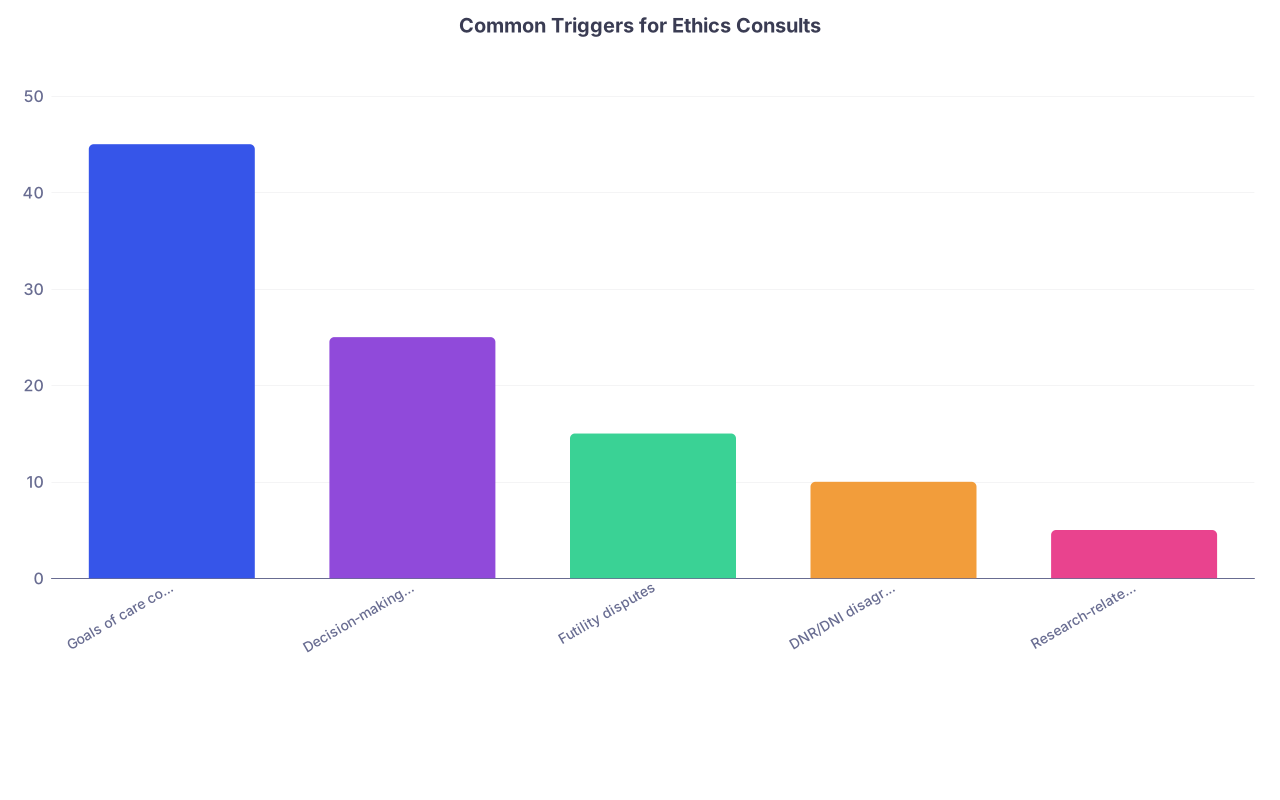
| Category | Value |
|---|---|
| Goals of care conflict | 45 |
| Decision-making capacity | 25 |
| Futility disputes | 15 |
| DNR/DNI disagreement | 10 |
| Research-related issues | 5 |
2. Questionable decision‑making capacity for a big decision
Red flag scenario:
Patient with borderline delirium wants to leave AMA after high‑risk surgery. Or a psych patient refuses life‑saving treatment and everyone’s unsure if it’s a values choice or impaired judgment.
Call ethics when:
- The decision is high‑stakes (life, limb, major function, or major suffering)
- Capacity is uncertain and psychiatry’s input alone doesn’t settle the value question
- Surrogates disagree about what the patient would want
You can usually handle:
- Mild confusion but clearly intact understanding for small decisions
- Routine capacity assessments for simple things (refusing labs, a diet change) with a senior’s guidance
You should get ethics involved when the chart is full of: “seems to understand,” “questionable insight,” “likely lacks capacity”—and yet people are still barreling ahead with huge decisions.
3. Futility and “doing everything” wars
This is the case that burns teams out. Patient is clearly dying, interventions are almost certainly non‑beneficial, but machines are still running because “we’re not ready to let go.”
Call ethics when:
- The team believes interventions are non‑beneficial or harmful
- The family demands ongoing aggressive treatment without a realistic goal
- There’s talk of “futility” policies, unilateral DNR, or ethics committee review
Ethics can:
- Clarify whether this is truly a “futility” issue or a values/communication issue
- Make sure policies and legal standards are followed
- Take some emotional pressure off the bedside team while still centering the patient
4. Conflict within the team about what’s right
Sometimes the ethics problem is inside the team.
Examples:
- Attending wants to continue aggressive chemo that fellows and nurses think is borderline cruel
- Surgeon refuses to withdraw a vent though the family and ICU team agree it’s appropriate
- Residents feel pressured to “document things a certain way” to justify placement or reimbursement
Call ethics when:
- You have a serious moral concern, not just “I’d do it differently”
- You’ve tried normal channels (attending discussion, chief, program leadership) and it’s still unresolved
- There’s risk of moral distress, burnout, or actual policy violations
Ethics doesn’t have to be adversarial. They can do confidential consults, help you think, and sometimes approach leadership themselves.

When You Should Usually Handle It Yourself
Not every awkward situation is an ethics consult. A lot of stuff is “just” good clinical practice and communication.
1. Basic informed consent and refusal
You don’t need ethics because:
- A patient refuses a blood draw
- A family wants to think overnight about a PEG tube
- A patient says “I don’t want that MRI” and they clearly understand the risks
Handle it yourself by:
- Explaining risks, benefits, alternatives
- Checking understanding (“Can you tell me in your own words what you’re choosing?”)
- Documenting clearly
You call ethics if:
- The decision is life‑threatening AND
- You’re unsure about capacity or coercion OR
- There’s serious family disagreement around a competent patient
2. Cultural or religious differences without real conflict
Example:
Family requests that you not tell the patient a cancer diagnosis directly, in a culture where that’s common.
You usually:
- Explore the request
- Clarify the patient’s own preferences about information (if you can)
- Negotiate a compromise (e.g., more gentle disclosure, involving family more deeply)
You bring in ethics if:
- The patient’s rights are clearly being violated
- The team is being asked to lie or document false information
- There’s internal disagreement among clinicians about what’s acceptable
3. Routine professionalism issues
Late consults, rude comments, minor boundary annoyances—these are usually not ethics consult material.
Use:
- Your chief resident
- Program director
- Risk management (for safety/legal issues)
- HR or professionalism channels
Ethics is more for “Is this right to do to a patient?” than “This attending is a jerk.” Sometimes they overlap, but don’t confuse them.
| Scenario Type | Likely Action |
|---|---|
| Routine consent/refusal | Handle yourself |
| High-risk decision + unclear capacity | Call ethics |
| Futility dispute in ICU | Call ethics |
| Cultural request, no direct conflict | Handle yourself |
| Team disagreement on documentation | Call ethics |
| Family communication style issues | Handle yourself first |
A Simple 4‑Question Test Before You Call
When you’re on the fence, run through this checklist:
Is there a clear ethical question here, not just “I feel bad about this”?
Example: “Who should be the decision‑maker?” “Is it permissible to withhold treatment X?”Are reasonable people on the team genuinely disagreeing about what’s right?
If everyone agrees but feels guilty or sad, you may want support, but not a formal ethics consult.Are the stakes high for the patient or institution?
Life, death, serious harm, rights violations, or big policy implications.Have normal channels failed?
Have you:- Talked to the attending
- Involved case management or social work
- Clarified medical facts and prognosis
- Documented what you already tried
If you can honestly answer “yes” to all four, you’re usually justified in calling ethics.

| Step | Description |
|---|---|
| Step 1 | Recognize Ethics Concern |
| Step 2 | Handle with team |
| Step 3 | Clarify goals and document |
| Step 4 | Discuss with attending or senior |
| Step 5 | Request Ethics Consult |
| Step 6 | High stakes for patient? |
| Step 7 | Team or family conflict? |
| Step 8 | Tried normal channels? |
How to Call Ethics Without Looking Clueless
Most hospitals have an ethics consult service through the operator, intranet, or EMR order. But how you involve them matters.
Do this:
Frame a clear question
Bad: “This case is a mess. Help.”
Better: “In a patient lacking capacity with no clear surrogate, what’s the ethically appropriate way to decide about starting dialysis?”Summarize the facts briefly
– Diagnosis and prognosis
– What the patient has expressed (past or present)
– Who the stakeholders are (family, team, consultants)
– What’s already been triedDon’t weaponize ethics
Don’t say to the family, “We called ethics because you’re being unreasonable.” Say, “We asked our ethics colleagues to help us think through the best way to honor your loved one’s values.”Involve them early enough
Ethics can’t do much if you call after the code status is changed, the surgery is done, or the family has left in tears.

Building Your Own “Handle It Myself” Muscles
You shouldn’t outsource all hard feelings to ethics. A huge part of your growth is learning to manage routine ethical tension yourself.
Three skills to practice:
Plain‑language explanation
If you can’t explain the medical situation and options in simple terms, everything will feel like an ethics crisis. Often it’s a communication problem, not an ethics problem.Values questions
Instead of arguing about treatments, ask:- “What are you hoping we can achieve?”
- “What would your mom say is most important to her now?”
- “When you think about quality of life, what does that look like for you?”
Ethics consults ask these questions all the time. You can, too.
Self‑check for moral distress
If you feel sick signing an order, that’s important data.
Ask yourself:- “Do I think this is wrong or just sad?”
- “Is my discomfort about the patient’s values being honored, or my own?”
- “Who can I talk this through with today?”
You’re allowed to ask for an informal ethics “curbside” just to think through a case, without triggering the full committee machinery.
Legal vs Ethics vs Risk Management: Who Do I Call?
These get confused constantly.
- Ethics: What’s the right thing to do for this patient, in this situation, given their values?
- Legal / General Counsel: What’s legally required or prohibited for the institution?
- Risk Management: How do we limit liability, disclosures, and institutional risk?
They overlap, but they’re not the same. Ethics will sometimes say, “Legally you could do X, but ethically Y is better aligned with the patient’s values.” They’re allowed to say that. Your job is to know they’re different voices.
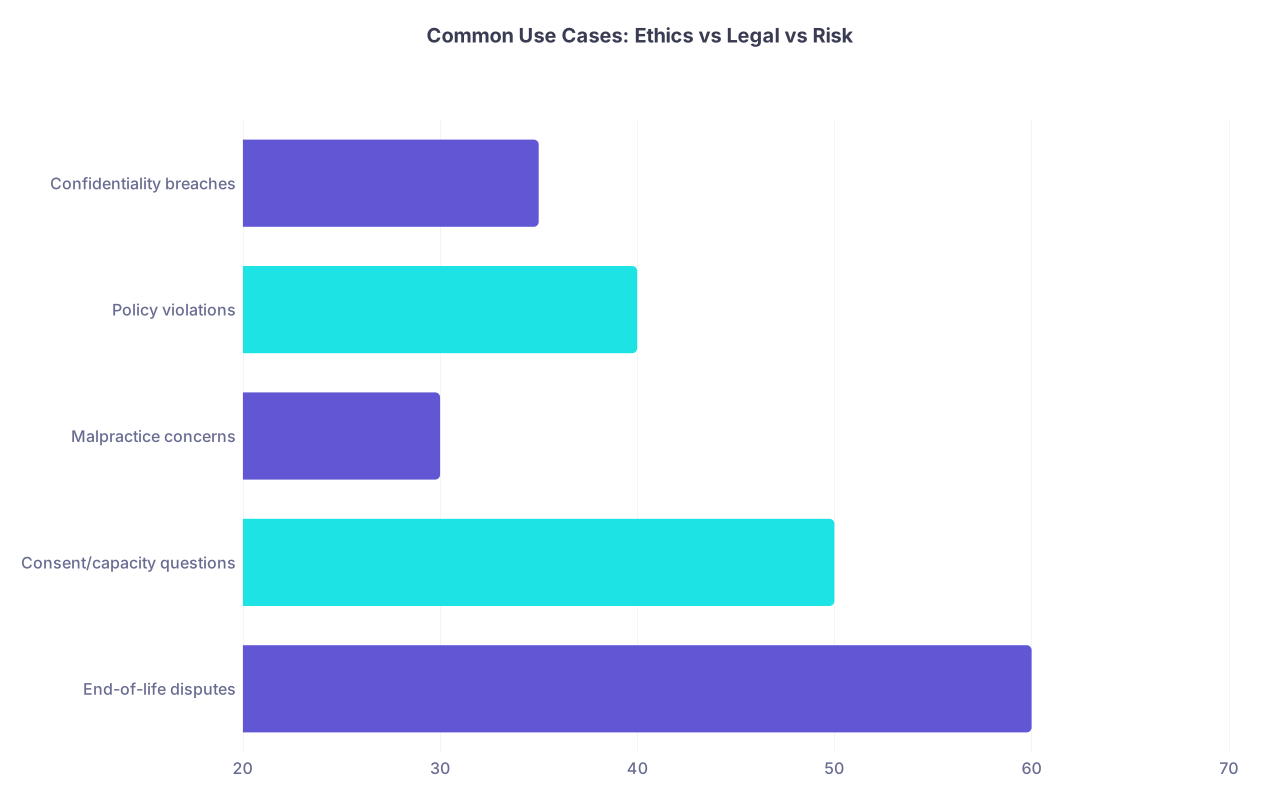
| Category | Value |
|---|---|
| End-of-life disputes | 60 |
| Consent/capacity questions | 50 |
| Malpractice concerns | 30 |
| Policy violations | 40 |
| Confidentiality breaches | 35 |
Bottom Line
2–3 key points, so you can remember them post‑call:
- Call ethics when there’s real ethical conflict, high stakes, and unclear right answer—even after good communication and team discussion.
- Handle it yourself when it’s routine consent, mild disagreements, or straightforward value differences you can manage with better conversation and documentation.
- Don’t be a hero and don’t be helpless. Build your bedside ethics skills, and use ethics consults as a tool—not a crutch and not a last‑ditch panic move.
FAQ (Exactly 7 Questions)
1. Will I look weak or incompetent if I call an ethics consult as a trainee?
No. When done thoughtfully, it usually makes you look mature and conscientious. Attendings get annoyed when you call ethics without trying basic steps first, not when you appropriately escalate a genuinely complex case. If you’re unsure, run it by your senior or attending and say, “Would you support an ethics consult here?”
2. Do I need the attending’s permission to call ethics?
Check your hospital’s policy. Practically, you should almost always loop your attending in before placing a formal ethics consult, both out of respect and to avoid mixed messages. Many ethics services will ask, “Is the attending aware and supportive of this consult?” If your attending refuses but you think the issue is serious, talk to your chief, program director, or ethics service informally.
3. How is an ethics consult different from just asking chaplaincy or social work for help?
Chaplaincy focuses on spiritual and existential concerns. Social work focuses on discharge planning, resources, and family support. Ethics focuses on “What should we do?” when values, rights, and obligations collide. In a good hospital, they all work together. But only ethics is formally tasked with weighing ethical options and policies.
4. Can families or patients request an ethics consult directly?
Often yes, and I wish more knew that. Many hospitals allow patients or surrogates to request ethics review. It’s written somewhere in the patient rights documents no one reads. If a family says, “I don’t think this is right,” you can say, “We have an ethics service that helps with questions like this—I can help request a consult if you’d like.”
5. Does an ethics consult have authority to overrule the clinical team?
Usually no, not directly. Ethics services give recommendations, not orders. But their recommendations can heavily influence what leadership and legal counsel support. In rare “futility” or policy cases, committees might have defined roles in decision‑making, but day to day, they’re advisors—not a second attending.
6. How much detail should I put in my ethics consult note request?
Enough to give a clear picture without writing a novel. A tight paragraph is often ideal: key medical facts, prognosis, decision‑makers, what’s already been discussed, and the specific ethical question you want help answering. Save the emotional backstory for the in‑person or phone discussion.
7. What if I disagree with the ethics consultation recommendation?
That happens. Ethics is not magic. You can respectfully disagree, ask for clarification, or request a follow‑up meeting. Document your reasoning. If your moral objection is serious, talk to your attending about whether you can step back from certain orders or procedures. Conscientious objection is a separate but real issue—and a place where ethics can sometimes help you, too.


