
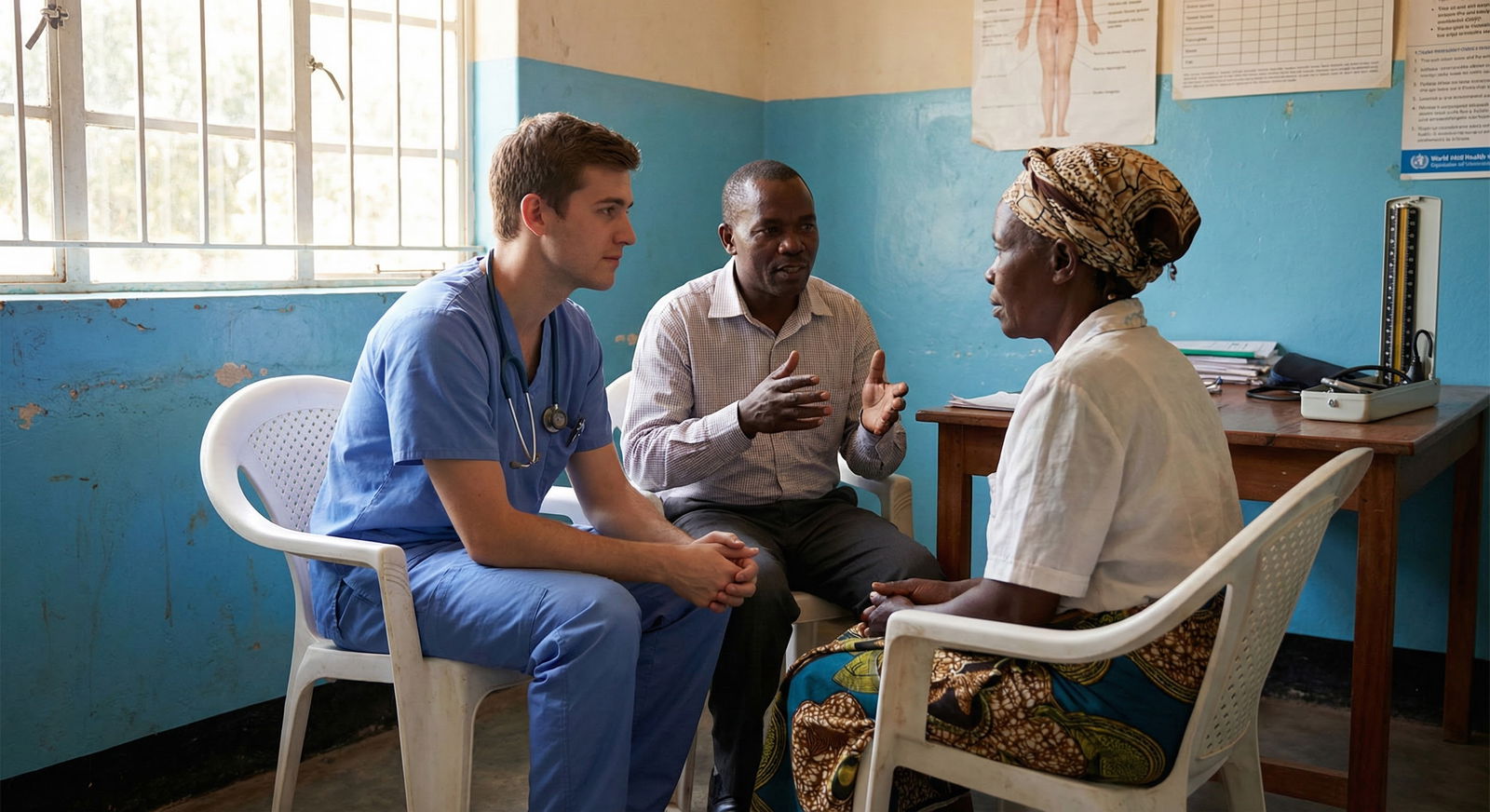
The last 72 hours before an international medical mission will expose every gap in your planning and every weakness in your boundaries.
If you treat these three days like “just packing time,” you are already behind.
You are not just getting on a plane. You are stepping into a power imbalance, a different legal system, and a community that will remember your behavior long after you leave. At this point, the ethics matter more than the itinerary.
Below is a strict, time-based guide for the final 72 hours. Follow it, and you will walk into your mission prepared, safer, and less likely to harm the very people you intend to help.
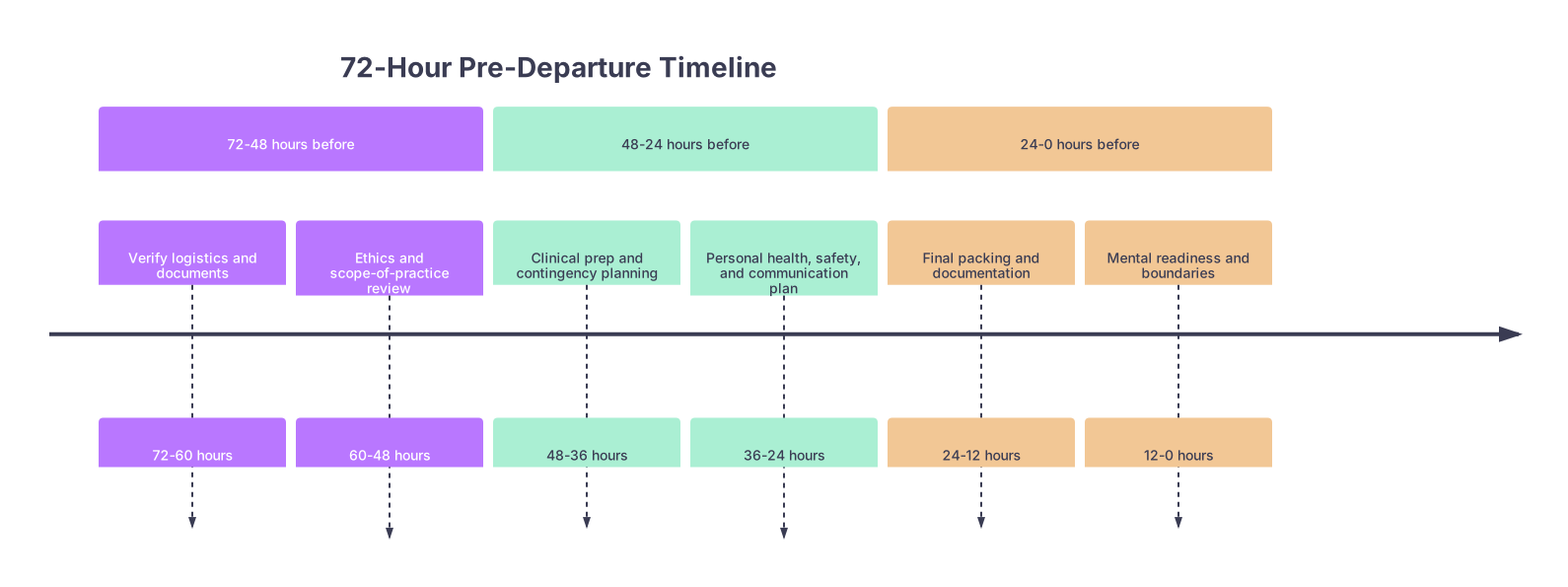
Overview: The 72-Hour Structure
First, see the whole window at once.
| Period | Event |
|---|---|
| 72-48 hours before - Verify logistics and documents | 72-60 hours |
| 72-48 hours before - Ethics and scope-of-practice review | 60-48 hours |
| 48-24 hours before - Clinical prep and contingency planning | 48-36 hours |
| 48-24 hours before - Personal health, safety, and communication plan | 36-24 hours |
| 24-0 hours before - Final packing and documentation | 24-12 hours |
| 24-0 hours before - Mental readiness and boundaries | 12-0 hours |
We will walk this hour-by-hour in blocks. Do not skip ahead in real life. At each point, you should be doing exactly what that window demands.
72–60 Hours Before Departure: Confirm Reality
At this point you should stop assuming anything is “probably fine.” Verify.
1. Confirm the Mission Framework (Not Just Your Flight)
Within this 12-hour block, you lock down the non-negotiables: who you are, why you are going, and under what authority.
You should:
- Pull up:
- Your latest email or packet from the host organization.
- Any memorandum of understanding (MOU).
- The local partner’s contact info.
Answer, in writing (yes, literally write this down):
- Who is clinically in charge on site?
- Name of local supervising physician or medical director.
- What is your defined role?
- Student, resident, attending, non-clinical, etc.
- What procedures are explicitly out of scope for you?
If you cannot answer those three with names and specifics, you are ethically exposed. Email or message the coordinator now and get clarity.
2. Check Legal and Documentation Status
Next, you audit your legal footprint. No hand-waving.
You should verify:
- Passport: valid at least 6 months beyond return.
- Visa: issued / not required / on arrival (confirmed from official source, not a friend).
- Any temporary medical registration or license approval from host country, if applicable.
- Professional licensure and malpractice status at home:
- Are you covered abroad?
- If covered through an NGO or university, do you have written proof?
| Document Type | What You Confirm |
|---|---|
| Passport | Validity, name matches ticket |
| Visa / Entry Permit | Status, duration, conditions |
| Medical License | Local requirements, host-country rules |
| Malpractice Coverage | Geographic coverage, mission-specific |
| Mission Agreement / MOU | Role, scope, supervision |
If any of these are missing or unclear: you do not “hope it works out.” You escalate to the mission organizer immediately and prepare a backup plan (including the possibility that you attend in a limited or non-clinical role).
60–48 Hours Before: Ethical and Clinical Scope Lock-In
Now you shift from logistics to ethics and scope. This is where good intentions routinely go off the rails.
3. Define Your Red Lines (Before You Are Under Pressure)
At this point you should decide what you will not do—even if asked, even if “everyone else does it.”
Write down:
- Procedures you will refuse because you are not trained or not credentialed:
- Example: “I will not perform C-sections. I will assist only under direct supervision.”
- Situations you will walk away from:
- Example: “I will not prescribe long-term medications if no follow-up is available.”
- Boundary conditions:
- No photography of patients without explicit, documented consent.
- No posting patient stories in identifiable form on social media. Period.
This is non-negotiable. If you wait until you are in a crowded clinic with a line out the door and a local organizer begging you to “just try,” you will cave. Decide now.
4. Quick Ethics Drill: Common Mission Traps
Spend 30–45 minutes doing an “ethics fire drill.” You can do this solo or with teammates via video call.
Run through scenarios:
- A child needs surgery that you do not perform at home.
- A local “translator” pressures patients to consent quickly.
- The team is offered a “shortcut” on customs for medications or devices.
- Photos of “before and after” are being taken for donor materials.
For each, answer:
- What is the most ethical action?
- Who would you talk to on-site?
- What will you say? (Draft the actual phrases.)
You do not improvise ethics in the field. You rehearse.
48–36 Hours Before: Clinical Preparedness and Reality Check
At this point you should translate the mission’s stated goals into realistic clinical actions you are prepared to deliver.
5. Align Expected Pathologies with Your Competence
You probably have a general idea of what you will see: tropical diseases, chronic untreated conditions, maternal health issues.
Now make it concrete.
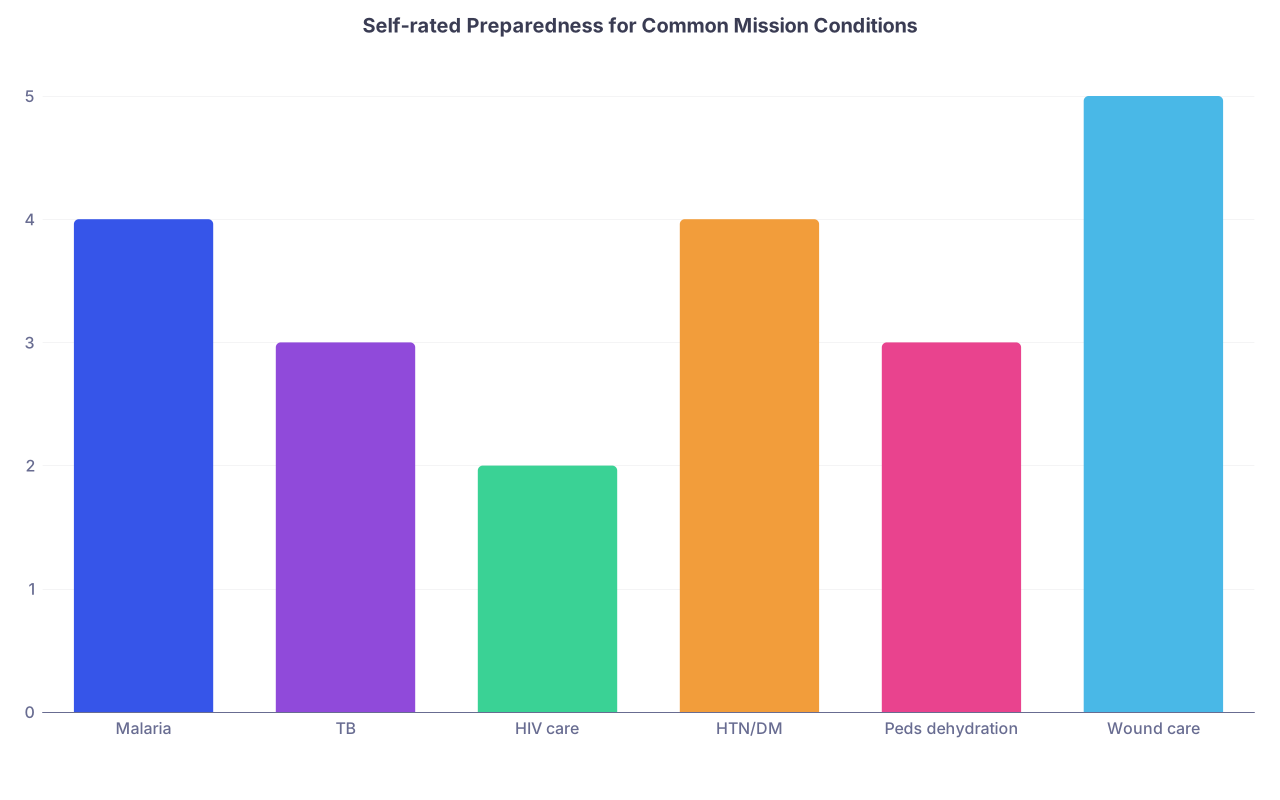
Create a short list of 10–15 conditions you are most likely to encounter, based on mission briefs or local epidemiology, for example:
- Malaria
- Tuberculosis
- HIV-related infections
- Hypertension / diabetes without regular meds
- Pediatric dehydration
- Obstetric emergencies basics
- Wound care and minor trauma
Next:
- For each, write:
- “Confident at my current training level”
- “Need a quick refresher”
- “Will assist only / refer”
Use that to focus your last focused reading.
| Category | Value |
|---|---|
| Malaria | 4 |
| TB | 3 |
| HIV care | 2 |
| HTN/DM | 4 |
| Peds dehydration | 3 |
| Wound care | 5 |
(Scale 1–5; if anything is 1–2, you either review hard now or step back from managing those cases independently.)
6. Pack Clinical Tools Responsibly
This is where people start shoving random medical gear into a duffel. Resist that.
At this point you should:
- Confirm:
- What the host site already has.
- What you are explicitly requested to bring.
- Pack what is:
- Portable.
- Relevant.
- Legally and customs-safe.
Typical personal clinical kit (adjust to your role):
- Stethoscope, penlight, reflex hammer.
- Reusable blood pressure cuff (adult + pediatric, if reasonable).
- Small supply of:
- Alcohol swabs.
- Disposable gloves in your size (if you have unusual sizing).
- Simple tools:
- Tape measure.
- Thermometer (non-mercury).
- Reference:
- Offline app or PDF guidelines adapted to low-resource settings (e.g., WHO, MSF).
Avoid:
- Bringing drugs that you are not qualified to prescribe.
- High-tech toys that cannot be maintained or repaired locally.
- Anything that will create dependency once you leave.
36–24 Hours Before: Personal Health, Safety, and Communication
You cannot help anyone if you are sick, lost, or unreachable. This block is about shoring up your own stability.
7. Medical and Medication Check
At this point you should be brutally honest about your own health.
Run through:
- Vaccinations:
- Confirm you have recorded proof (photo of card, app, or printout).
- Prophylaxis:
- Malaria meds—start schedule checked.
- Other region-specific prophylaxis (e.g., traveler’s diarrhea plan).
- Personal prescriptions:
- At least enough for duration + 1–2 weeks extra.
- Labeled original containers, plus a medication list with doses and indications.
Pack a personal health kit (not clinic stock) that includes:
- Basic analgesics, antidiarrheals, oral rehydration salts.
- Any specific allergy meds you require.
- A few days of “can still function” support if you get mild illness (e.g., loperamide, electrolyte packets).
8. Safety and Communication Infrastructure
You do not go dark on your family, program director, or home institution.
At this point you should:
- Share:
- Full itinerary (flights, layovers, local travel).
- Local lodging address and contact info.
- Backup contacts: mission coordinator, local partner.
- Establish a check-in schedule:
- Example: “I will send a message within 12 hours of landing, then every 48–72 hours.”
Set up tech:
- Offline maps of the city/region.
- Local emergency numbers saved in your phone under clear labels:
- “Local EMS,” “US Embassy,” “Mission Coordinator.”
- A simple, paper backup:
- Printed list of contacts and addresses in case your phone dies.
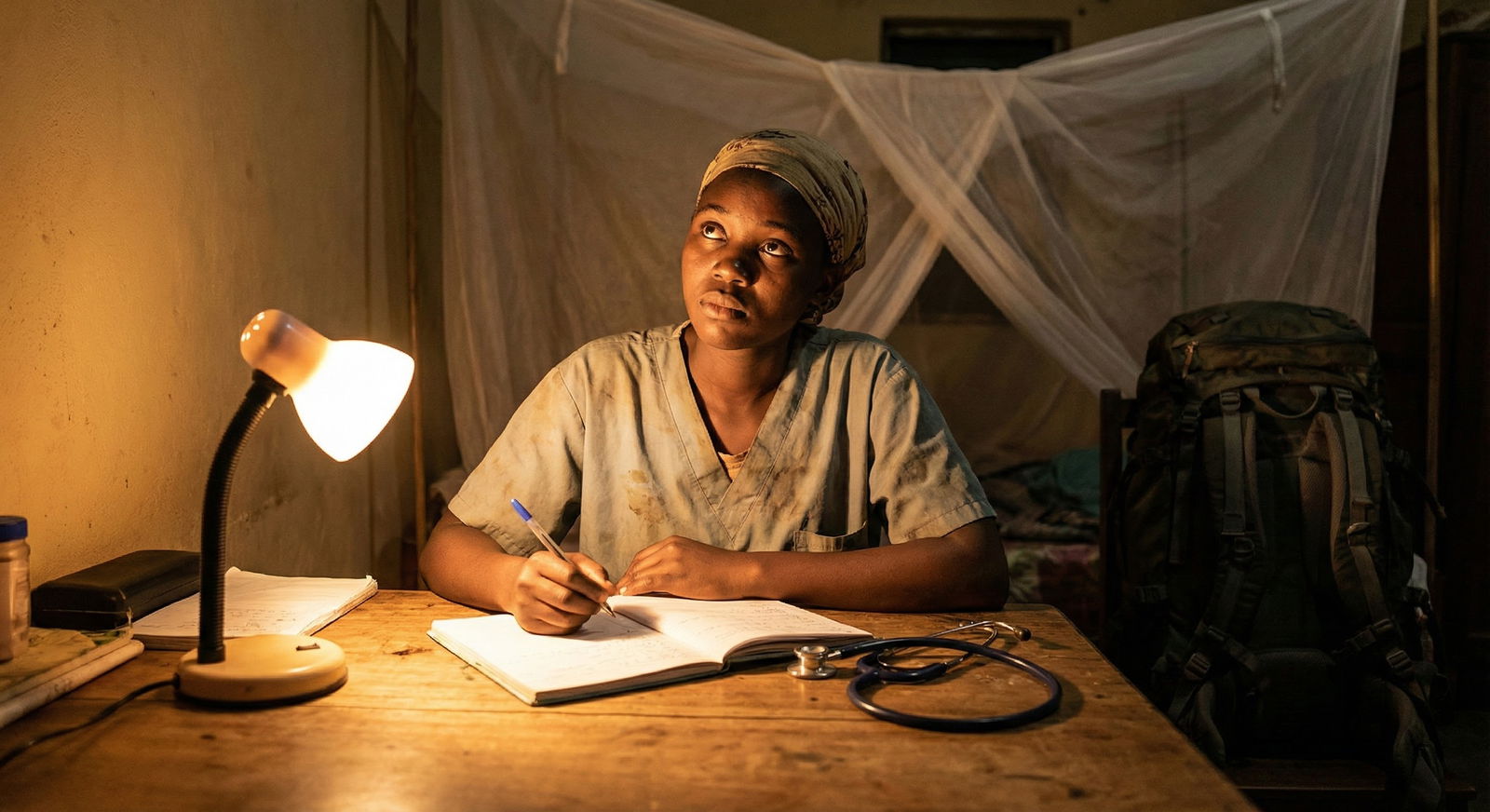
If you are part of an academic program, this is when you send the final “Here is my final plan and contacts” email to your supervising faculty.
24–12 Hours Before: Final Packing and Documentation
Now you are close. At this point you should move from planning to execution and verification.
9. Run the Three-Bag System
You are not on vacation. Your packing logic should reflect the mission priorities.
Use three categories:
On-person / carry-on critical:
- Passport, visa documents, copies of letters from host/NGO.
- Wallet, cash, and cards (split into two locations).
- Phone, chargers, power bank, adapter.
- One change of clothes and minimal toiletries.
- Minimal clinical tools you cannot replace easily (stethoscope, if allowed).
Mission-essential checked bag(s):
- Medical supplies requested by host.
- Durable, sharable items.
- Label bags clearly with:
- Name.
- Organization.
- Contact phone/email.
Personal comfort checked bag:
- Clothes, shoes (closed toe, washable).
- Modest attire that respects local norms.
- Sleep items (ear plugs, small travel pillow).
- Non-perishable snacks that will not offend local culture.
Do a literal checklist walk-through. Do not trust memory at 1 a.m.
10. Documentation Bundle
Create both a physical and digital “mission folder.” At this point you should be able to hand someone one folder and they can reconstruct who you are and why you are there.
Include:
- Printed:
- Mission invitation / acceptance letter.
- Contact info for host.
- Proof of insurance and malpractice coverage (if applicable).
- Emergency contacts.
- Digital:
- Scans of passport, visa, license, certifications.
- Offline copies stored in your phone and in secure cloud.
12–6 Hours Before: Mental Rehearsal and Boundary Reinforcement
These are the hours where anxiety and excitement spike. This is exactly when you must slow down and think clearly.
11. Reset Expectations: You Are Not Going to “Save Them”
At this point you should deliberately dismantle the “hero narrative” in your own head.
Remind yourself:
- You are a guest, not a savior.
- You will do less than you wish and see more suffering than you can fix.
- Your primary ethical goal:
- Do the most good within your competence.
- Do not create new problems or dependencies.
Take 20–30 minutes to review:
- The host country’s history of medical missions or external aid, if you have it.
- Any prior feedback your organization has received from local partners.
You are calibrating your mindset away from “impact” and toward “humility and collaboration.”
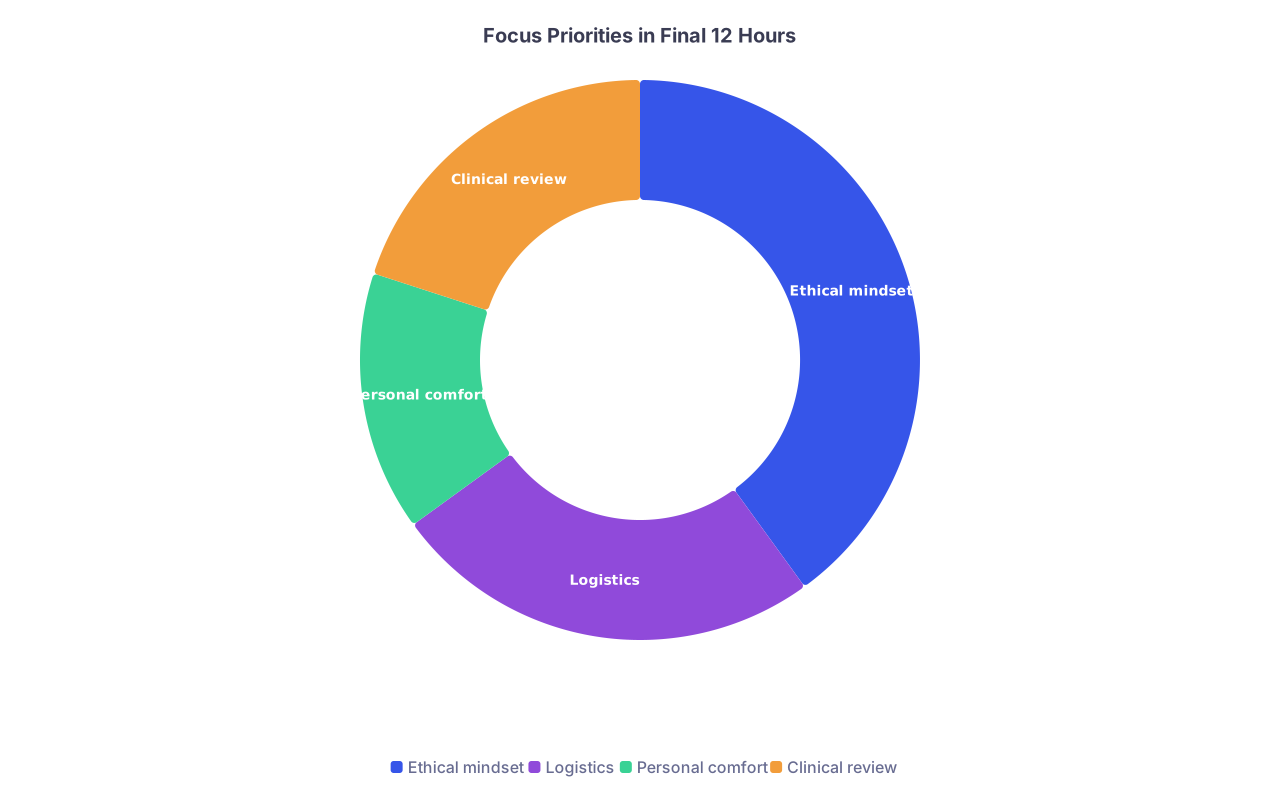
| Category | Value |
|---|---|
| Ethical mindset | 40 |
| Logistics | 25 |
| Personal comfort | 15 |
| Clinical review | 20 |
12. Explicit Communication Boundaries
You will be asked for favors. For personal contact. For exceptions.
At this point you should decide:
- Will you give out your personal phone or email to patients?
- Will you accept social media friend requests?
- How will you respond when asked for money or special help?
Draft stock phrases you are comfortable using, for example:
- “I am only here for a short time and I cannot safely manage your care from far away.”
- “Our team works through the local clinic; I need to follow their system.”
- “I am not allowed to share my personal contact, but the clinic can help you follow up.”
This sounds minor now. It will not feel minor when a family is begging you in person. Decide your policy before you land.
Final 6 Hours: Last Checks and Sleep (Yes, Sleep)
At this point you should stop tweaking and start stabilizing.
13. The 30-Minute Final Walkthrough
Set a timer for 30 minutes and run:
Documents check
- Passport in hand-luggage zip pocket.
- Wallet and backup cash.
- Mission folder.
Electronics check
- Phone fully charged, power bank charging.
- Offline maps and local numbers visible.
Calendars and notifications
- Turn on trip events and reminders.
- Set check-in reminders for your communication plan.
Ethics and scope reminder
- Re-read your “red line” list.
- Re-open your short list of conditions and your confidence levels.
Then stop. If you keep “just adding one more thing,” you will forget something important.
14. Protect Your First 24 Hours on the Ground
Your performance in the first clinic day will be directly proportional to how wrecked you are from travel.
In this last window you should:
- Eat a simple, non-experimental meal.
- Hydrate well.
- Aim for at least some sleep before or on the plane (ear plugs, eye mask).
And mentally, commit to this rule:
- You will not overstep your training on day one.
You will watch, learn the local flow, and only gradually expand your role as you understand the system.
Quick Reference: 72-Hour Checklist Snapshot
Print this. Put it by your bag.
| Time Window | Key Tasks |
|---|---|
| 72–60 hours | Confirm mission role, legal docs |
| 60–48 hours | Define red lines, ethics rehearsal |
| 48–36 hours | Clinical focus list, tools packed |
| 36–24 hours | Health kit, safety, communication |
| 24–12 hours | Three-bag system, doc bundle |
| 12–0 hours | Mindset, boundaries, final review |
FAQ (Exactly 2 Questions)
1. I am a student with limited skills. Should I even go on an international medical mission?
If the mission is structured, supervised, and built around long-term local partnerships, then yes, students can contribute meaningfully—often more through logistics, education, and simple clinical tasks than through “big procedures.” The red flag is any mission that seems excited about letting you “do more than you can at home.” Your role should be explicitly defined as supervised and educational, not as a substitute provider. If that clarity is missing 72 hours before departure, you push for it or reconsider going.
2. What if the local team expects me to perform tasks outside my comfort zone?
This happens constantly. You are not obligated to match their expectations if those expectations are unsafe or unethical. You anchor to two things: your home-country standard of care and your actual training. Communicate respectfully but firmly: “Where I train, I am not allowed to perform that procedure independently; I can assist but must be supervised.” Then escalate to the mission lead or your home institution if pressure continues. Compromising now might feel useful in the moment, but it exposes patients and you to serious harm that will outlast your short stay.
Key points to carry with you:
- In the final 72 hours, logistics are necessary but ethics and scope are decisive.
- Write down your red lines and your role before you get on the plane; do not improvise them in the field.
- Your best contribution is safe, humble, sustainable care that respects local systems—not dramatic stories for your return.


