
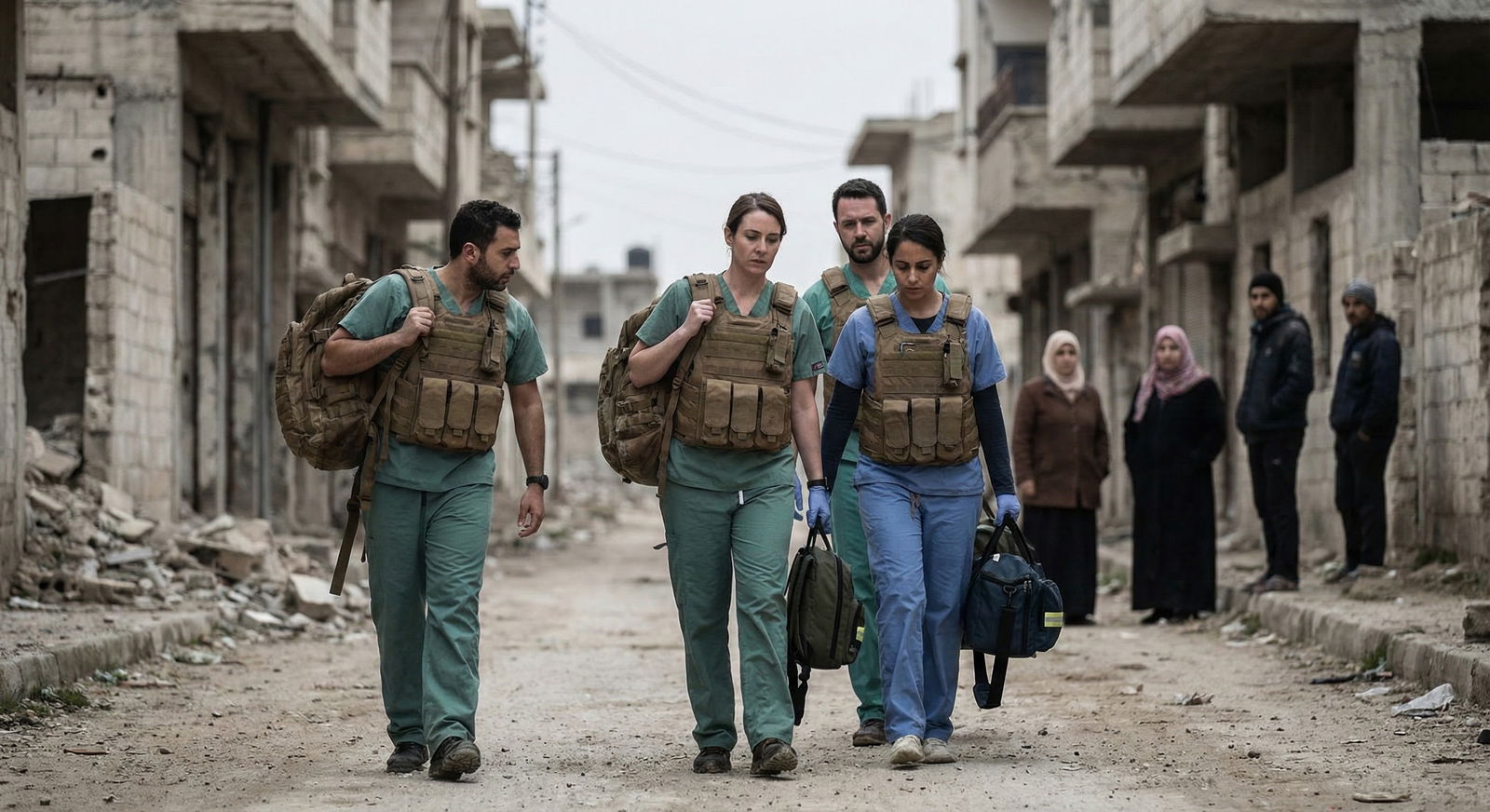
Most people spend more time packing shoes than preparing their ethics. That’s backwards.
You just got your acceptance email for a medical mission. Great. From this point on, the countdown isn’t just about vaccines and flight alerts — it’s about whether you’ll be safe, useful, and not a liability to your hosts or your patients.
You’ve got 12 weeks. Here’s exactly what to do, week by week and then day by day, so that by the time you board that plane, you’re not just “excited to help,” you’re actually mission-ready.
Week 12–10: Stabilize Your Life and Understand the Mission
At this point you should be moving from “this sounds amazing” to “this is a real deployment with real consequences.”
Week 12: Lock in logistics and expectations
By now you should:
- Reply to the acceptance email with clear confirmation.
- Get (and actually read) the mission briefing packet.
- Start a simple “Mission Binder” or digital folder:
- One section for documents (passport scan, insurance, licenses)
- One for medical/ethics prep
- One for packing and logistics
This week, you clarify:
What work you’re actually allowed to do.
Ask the organizer in writing:- What is my role? (Student? Resident? Attending? Non-clinical?)
- What procedures am I not allowed to perform?
- Who supervises me clinically?
Where you’re going in practical terms.
Get:- Exact location(s) and type of facility (district hospital? rural clinic? mobile outreach?)
- Population served (urban/rural, language, typical conditions)
- Expected daily schedule
Your risk profile.
Start a running list:- Endemic diseases (malaria? dengue? TB? HIV prevalence?)
- Safety concerns (political stability, crime, travel advisories)
- Environmental risks (altitude, heat, rainy season)
At this point you should also check your passport.
- Valid at least 6 months beyond return date?
- 2–3 blank pages left?
If not, fix it this week. Passport delays will wreck you.
Week 11: Medical clearance and vaccines
This week is about your body, not your intentions.
Schedule a travel medicine appointment (or student health if they have travel services).
Bring:- Mission dates and locations
- Planned activities (surgery, OB, field clinics, night calls)
- Any chronic conditions, meds you take, and mental health history
Vaccines & prophylaxis planning.
Expect to discuss:- Routine updates: Tdap, MMR, varicella, flu, COVID.
- Region-specific: Hep A/B, typhoid, yellow fever, rabies (if indicated).
- Malaria prophylaxis options (atovaquone-proguanil vs doxycycline vs mefloquine).
Baseline labs or screening if needed:
- Consider TB testing if you’ll be in high-risk settings.
- Document current medical status for your own record.
You don’t need every shot this week, but you do need the plan laid out on the calendar.
Week 10: Deep-dive into the host country and culture
Ethics without context is useless. This week is context week.
At this point you should:
Read a short, serious book or report on:
- The country’s recent history
- Health system structure
- Major social fault lines (ethnic groups, religion, political tensions)
Ask your coordinator:
- Dress norms in clinic and in community
- Gender dynamics in healthcare
- Policies about photographing patients and facilities
Start a language essentials sheet:
- Greetings and introductions
- Basic medical phrases: “Where does it hurt?”, “Do you understand?”, “Any allergies?”
- Permission phrases: “Is it okay if I examine you?”
If the team has alumni, schedule a 30-minute call with at least one of them. Ask what surprised them, what they wish they had known, and what mistakes they saw foreigners repeat.
Week 9–7: Clinical Skills and Ethics Foundations
Now we move from macro to micro. From “where am I going?” to “what will I do when a real person is in front of me?”
Week 9: Scope of practice and ethical guardrails
This is the week you draw your lines before you’re exhausted on day 4 in a packed clinic.
At this point you should:
Write down your scope of practice. Literally.
Example for a 3rd-year medical student:- I will take histories and do physical exams under supervision.
- I will not prescribe, write orders, or perform procedures without direct supervision.
- I will not perform skills I’ve not been trained on, even if “no one else is here.”
Review core medical mission ethics. At minimum:
- Beneficence without saviorism.
- Non-maleficence when systems are weak.
- Respect for autonomy when language and culture barriers exist.
- Justice: how are we selecting who gets care?
Clarify consent and documentation expectations.
- Is there a local medical record system?
- How is follow-up arranged?
- What’s the protocol if you suspect abuse or neglect?
Write 3–5 “red-line scenarios” and how you’ll respond:
- Being asked to do a procedure you’ve never done.
- Being left alone “just for a minute” in a busy ward.
- Being pressured to share patient photos.
If you don’t practice those responses now, you will fold later.
Week 8: Clinical refreshers targeted to the mission
This week is not about reading Harrison’s cover to cover. It’s about pattern recognition for the conditions you’ll see most.
Ask the team or host site: “Top 10 diagnoses we see?” Make your study list based on that.
Common patterns:
- Malaria, pneumonia, diarrheal disease, TB
- Obstetric emergencies
- Trauma and wound care
- Chronic diseases unmanaged (hypertension, diabetes, heart failure)
Block out 2–3 focused sessions this week:
- 1 session: acute care in low-resource settings (fluids, sepsis, shock).
- 1 session: OB and neonatal basics relevant to your role.
- 1 session: tropical and infectious disease basics.
Use open-access guidelines from WHO or national ministries, not just your US teaching hospital habits. Resource mismatch is real.
Week 7: Personal resilience and mental health planning
Everyone says “I’m fine” until they’re not.
At this point you should:
Name your vulnerabilities.
- History of depression, anxiety, PTSD? Sleep issues on call?
- Past burnout on rotations or high-stress jobs?
Build a simple mental health plan:
- One person back home you’ll debrief with weekly.
- One teammate (if possible) you can be honest with.
- 2–3 coping strategies that don’t require Wi-Fi or alcohol:
- Short journaling.
- 10-minute walk alone within safe bounds.
- Breathing or short body-scan before sleep.
Set boundaries now:
- You will not be on your phone until 1am every night.
- You will protect at least one short block of time weekly just to rest.
Write these down. When you’re exhausted, you don’t make good decisions. You follow pre-made decisions.
Week 6–4: Safety, Systems, and Community
Now we clean up the systems that will protect you and your patients.
Week 6: Insurance, legal, and emergency plans
This week is about boring-but-critical details.
At this point you should:
Confirm medical malpractice coverage:
- Does your institution cover you abroad?
- Does the NGO provide coverage? Get it in writing.
Purchase travel insurance that includes:
- Medical evacuation.
- Trip interruption.
- Clear emergency contact numbers.
Build a simple emergency info card (2 copies: wallet and luggage):
- Full name, blood type (if known), allergies, chronic conditions.
- Local mission contact.
- Home contact.
- Insurance provider and policy number.
Ask the organization:
- Where’s the nearest capable hospital for you if you get seriously ill?
- What’s the security protocol if unrest or violence breaks out?
Week 5: Team dynamics and power awareness
You are not going alone (or you shouldn’t be). This week is about understanding the human ecosystem.
At this point you should:
Attend (or push for) a pre-departure team meeting:
- Introductions and roles.
- Chain of command clinically and logistically.
- Who handles conflict within the team?
Reflect honestly on power dynamics:
- You, compared to local staff.
- Your training level vs local clinicians with years of experience.
- Race, nationality, language, and how patients might perceive you.
Make a personal pledge:
- You will not undermine local clinicians in front of patients.
- You will not “correct” someone publicly unless immediate harm is at stake.
- You will ask, “How do you usually manage this here?” before suggesting your way.
Week 4: Packing planning (not packing yet)
Do not start throwing things into a suitcase yet. Plan first, buy what’s missing, then pack later.
At this point you should:
Create three packing lists:
- Clinical gear: stethoscope, penlight, watch, reference app downloads, small notebook, N95s if needed.
- Personal health/safety: meds, mosquito protection, water treatment if indicated, basic first aid for yourself.
- Cultural/respect items: appropriate clothing, small gifts for hosts (if culturally appropriate and not patronizing), printed photos from home if you choose.
Clarify what the host site actually needs.
Ask the coordinator:- Do you want us to bring supplies? If yes, what exactly?
- Are there items that create dependency or inequity you’d rather we not bring (e.g., expensive devices with no maintenance)?
You’re not Santa. Random donated junk creates more problems than it solves.
Week 3–2: Simulation, Final Training, and Ethical Rehearsal
Now you’re close enough that this feels real. Time to run drills.
Week 3: Clinical and ethical scenarios
At this point you should:
Run at least two mock scenarios with a colleague or mentor:
- You’re in a cramped clinic. No labs, minimal meds, language barrier. Child in respiratory distress. What do you actually do, given your role and skills?
- Elderly patient needs long-term medication you know they can’t afford or access reliably. What do you prescribe? How do you discuss this?
Practice introducing yourself with accurate titles:
- “I’m a medical student from [X], working here with Dr. [Local].”
- “I’m a nurse from [X], I’ll be assisting the local team.”
Rehearse declining unsafe tasks respectfully:
- “I’m not trained to do that safely. Is there someone else available who can?”
- “I’d like to help, but this is beyond my skill level. Can we find another option?”
If you feel silly practicing out loud, good. Do it anyway. That discomfort now saves lives later.
Week 2: Systems check and home-front prep
This week you should be tightening bolts and closing loops.
Confirm:
- Flights, baggage allowances, and arrival instructions.
- Airport pickup and first-night lodging.
- Local SIM/Wi-Fi situation.
Arrange home responsibilities:
- Bills auto-paid.
- Academic or work obligations officially covered.
- Someone has access to essential documents in case you need help.
Share your itinerary and emergency plan with:
- One close friend or family member.
- One institutional contact (e.g., global health office, dean, or supervisor).
Also: update your offline resources on your phone or tablet:
- Download key guideline PDFs.
- Offline translation tools.
- Drug references that work without internet.
Final Week: From Bags to Mindset
This is where people panic. Do not.
7–5 Days Before Departure: Pack with intention
At this point you should:
Pack fully once, then remove 20%.
You are not moving there. You are also not starring in an REI catalog.Separate:
- Carry-on essentials: passport, meds, mission letter, 1 set of clinic clothes, minimal toiletries, any essential clinical tools.
- Checked bag: the rest.
Double-check:
- Required documents printed and digital: invitation letter, emergency contacts, insurance cards, any licenses or student ID.
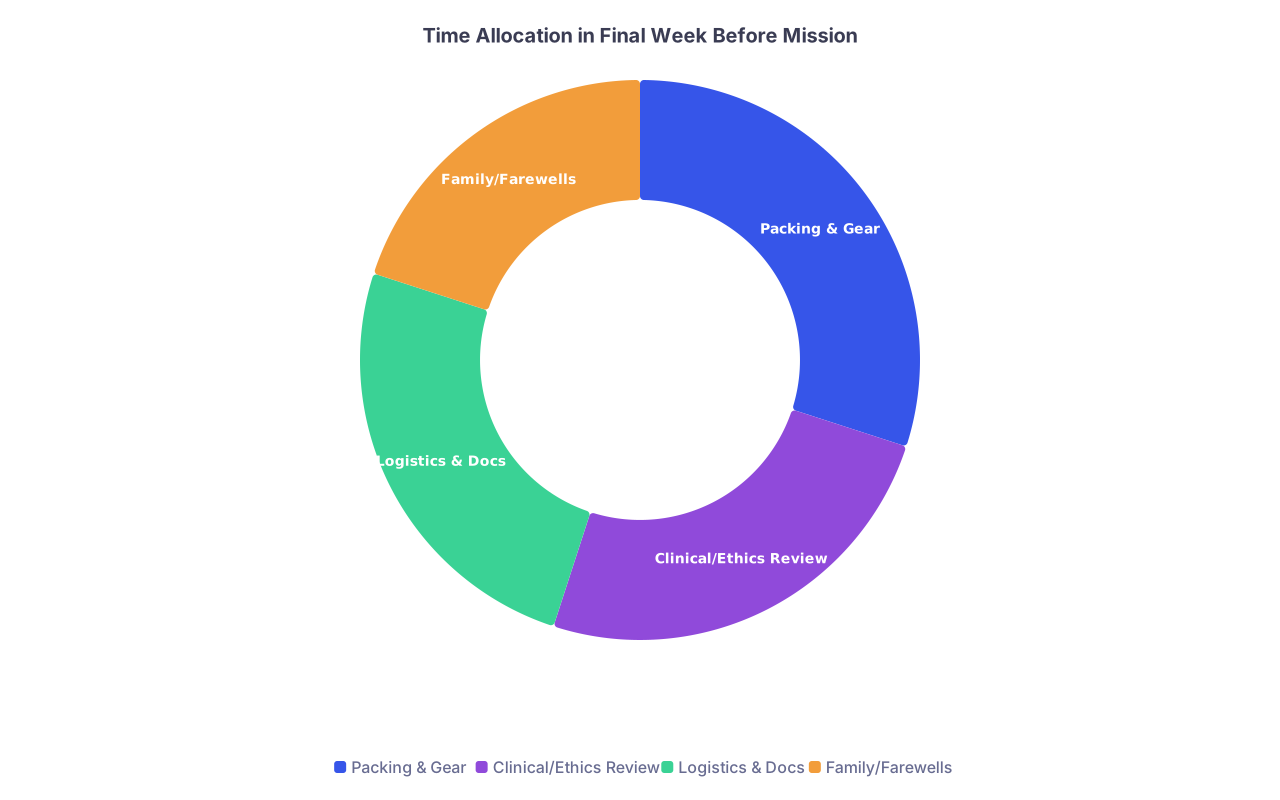
| Category | Value |
|---|---|
| Packing & Gear | 30 |
| Clinical/Ethics Review | 25 |
| Logistics & Docs | 25 |
| Family/Farewells | 20 |
4–2 Days Before Departure: Intentional slowdown
You’re tempted to cram. Don’t.
At this point you should:
Sleep. Seriously.
Night call and time zones are coming. You’re not “earning it” by starting exhausted.Do one short ethics and expectations review:
- Re-read your scope-of-practice statement.
- Re-skim your red-line scenarios.
- Review any country-specific cultural notes.
Spend time with key people:
- Tell them what you’re hoping to learn, not just what you’re going to “do.”
- Give them your contact info and realistic communication expectations.
Day Before Departure: Final checks and mental reset
Today is not the day to start new projects.
At this point you should:
Lay out travel clothes that:
- Are culturally appropriate for arrival.
- Work if your luggage is delayed and you go straight to clinic.
Reconfirm:
- Flight time and terminal.
- Airport arrival time plan (3 hours early for international, minimum).
Do a 10-minute reflection:
- Why are you going? Write it in 2–3 sentences, not a novel.
- What would “success” look like, besides photos and a line on your CV?
Departure Day: Crossing Over
You’re not “going on a trip.” You’re stepping into someone else’s reality.
At this point you should:
- Arrive at the airport early enough that you’re not panicked and snappy.
- Keep:
- Passport and mission documents in one easily accessible place.
- Phone fully charged, power bank ready.
On the plane:
- Review your intro script for local staff and patients.
- Spend 10–15 minutes reading something about the history of where you’re going, not just the diseases.
When you land:
- Observe more than you speak.
- Ask local staff how they want to be addressed.
- Follow, then gradually contribute.
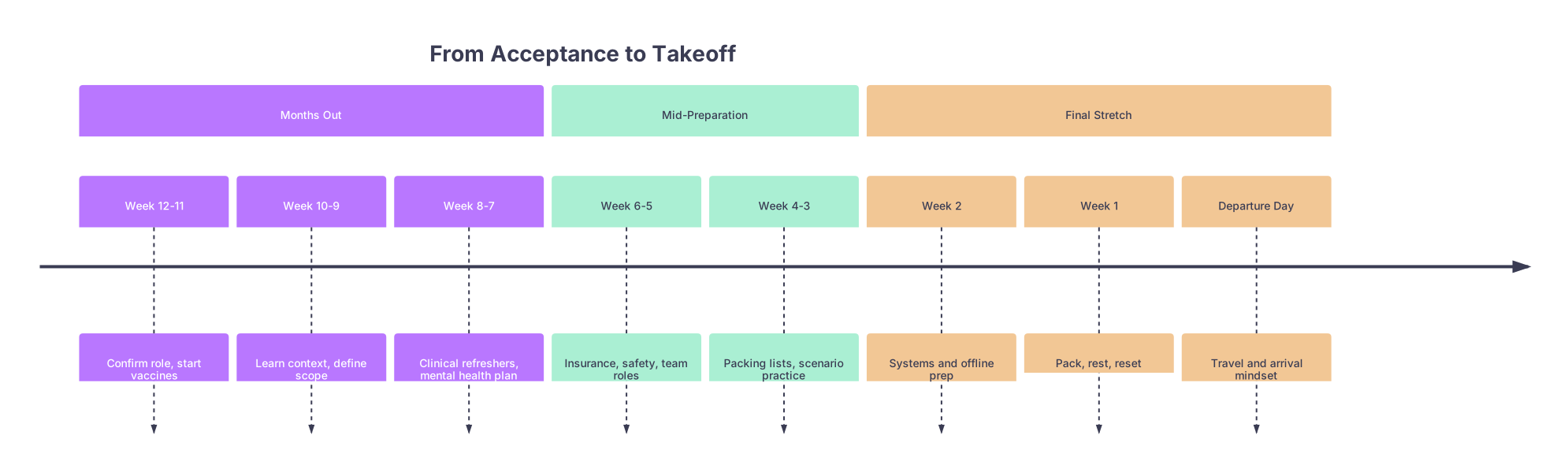
| Period | Event |
|---|---|
| Months Out - Week 12-11 | Confirm role, start vaccines |
| Months Out - Week 10-9 | Learn context, define scope |
| Months Out - Week 8-7 | Clinical refreshers, mental health plan |
| Mid-Preparation - Week 6-5 | Insurance, safety, team roles |
| Mid-Preparation - Week 4-3 | Packing lists, scenario practice |
| Final Stretch - Week 2 | Systems and offline prep |
| Final Stretch - Week 1 | Pack, rest, reset |
| Final Stretch - Departure Day | Travel and arrival mindset |
Quick Reference Table: What You Should Have Done by Each Phase
| Timeframe | Key Milestones Completed |
|---|---|
| Week 12–10 | Role defined, travel clinic visited, context read |
| Week 9–7 | Scope written, ethics reviewed, skills refreshed |
| Week 6–4 | Insurance set, safety plan, team roles clarified |
| Week 3–2 | Scenarios practiced, documents organized |
| Final Week | Packing done, offline tools ready, rested |
FAQ (4 Questions)
1. How much clinical experience do I really need before a medical mission?
Enough that you’re not learning basic skills on vulnerable patients. If you’re a preclinical student, your role should be clearly non-clinical or strictly observational. If you’re clinical, you should only do abroad what you’re already competent to do at home under similar supervision. If you need YouTube to remember how to do it, you shouldn’t be doing it there.
2. Is it okay to post photos from my medical mission on social media?
Only if you’d be comfortable doing the exact same thing in your home hospital — which usually means: no identifiable patients, no “poverty porn,” and no images that highlight suffering just to boost your humanitarian aesthetic. Follow host-country norms, local policies, and your institution’s rules. When in doubt, don’t post.
3. What if I disagree with local clinical practices or see care that looks substandard?
First, check your assumptions. Different resources and guidelines change what’s possible. Ask questions privately: “Can you help me understand how you usually manage this here?” If you still believe harm is happening, escalate thoughtfully within the team and chain of command. Public shaming of local clinicians is arrogant and usually counterproductive.
4. How do I handle feeling guilty about leaving at the end of a short-term mission?
You should feel some tension. That’s honest. But guilt isn’t a strategy. Use that discomfort to:
- Advocate for continuity (support long-term partners, not one-off trips).
- Reflect on how this experience changes your practice and priorities at home.
- Stay involved with the organization or local partners in sustainable ways.
Your goal isn’t to erase the injustice in two weeks. It’s to contribute responsibly without causing new harm.
Three things to carry with you as you go:
- You’re a guest in someone else’s system — act like it.
- Decide your ethical lines before you’re tired, flattered, or pressured.
- Your readiness isn’t measured by how full your suitcase is, but by how clearly you know your role, your limits, and your responsibilities when you land.


