
The way mindfulness is sold to clinicians is dangerously incomplete.
Not because mindfulness is bad. Because half-baked, context-blind “mindfulness” gets smuggled into team-based medicine and quietly wrecks communication, safety, and trust.
If you treat mindfulness as a solo escape hatch instead of a relational practice, you will harm your team. I’ve watched it happen in ICUs, family medicine clinics, and residency programs that thought they were being “progressive.”
Let’s walk through the mindfulness mistakes that quietly disrupt team communication—and how to avoid them before you become “that colleague.”
1. Mistaking “Turning Inward” for “Checking Out”
Mindfulness is not a license to disappear in the middle of team work.
But this is the pattern I’ve seen over and over:
- Code blue ends
- Debrief starts
- One person crosses legs, closes eyes, breathes deeply, goes silent
- Everyone else stares at the floor wondering if they should talk or wait for this performance to end
That’s not mindful. That’s socially tone-deaf.
The core mistake
Using mindfulness as:
- An immediate retreat when emotions spike
- A shield to avoid engagement
- A way to signal “I’m doing self-care” while the team is still in active coordination mode
You think you’re regulating. Your colleagues experience you as… gone.
Teams read this as:
- “They’re not listening.”
- “They don’t care what just happened.”
- “We can’t rely on them when things are intense.”
In acute care, that’s lethal for trust.
What this looks like in real life
During sign-out:
Senior resident asks, “Any safety concerns before we wrap?”
Intern takes a long pause, closes eyes, inhales for 6 seconds, exhales loudly.
Silence stretches. Nobody knows if they should speak or wait. Sign-out loses momentum, someone rushes and misses a key follow-up.During family meeting:
Emotions rise, you feel overwhelmed. Instead of staying present to the conversation, you mentally retreat into counting breaths. You hear every third sentence. You nod at the wrong time. The social worker later tells a colleague, “They totally checked out.”
How to avoid this mistake
You can regulate yourself without abandoning the room:
- Keep your eyes open.
- Use micro-skills:
- Feel your feet in your shoes
- Soften your jaw
- Take one or two quiet slower breaths
- Stay visually engaged: look at the speaker, not at the floor or ceiling.
If you really do need a brief reset after an intense moment, name it in plain language:
- “I’m feeling a bit flooded. Can I take 30 seconds, then I want to hear your thoughts?”
That keeps you in the relationship instead of disappearing behind your eyelids.
2. Turning Mindfulness into a One-Person Show
If your “mindfulness practice” draws attention to itself, you’re creating friction.
Deep sighing. Dramatic posture shifts. Eyes closed for long stretches during team conversations. Fidget toys that click or crinkle. You might think you’re centering yourself; everyone else thinks you’re annoyed, dismissive, or trying to signal moral superiority.
I once heard a nurse say, after a meeting with a very “mindful” fellow:
“Every time we talk about system problems, he does that long exhale and stares at the wall like he’s transcending us. It’s condescending.”
That’s the ethical problem: your internal strategy is being broadcast as social behavior, and it’s being misread.
Where this goes wrong
- You visibly “breathe through” other people’s comments
- You roll your shoulders and close your eyes while someone else is speaking
- You say, “Let’s all just take a breath,” when what you really mean is “You’re all too emotional and I’m above this”
That last one? Infuriating to staff who’ve been ignored for years.
How to repair this
- Make your mindfulness low profile, especially in group settings
- Respect that not everyone wants to do breathwork on command
- If you’re going to suggest a pause, own it as your need, not their deficiency:
- Wrong: “We should all calm down and breathe.”
- Better: “I’m feeling a bit amped up. I’d benefit from 10 seconds to breathe. Okay if we pause briefly?”
Mindfulness that humiliates or corrects others will poison team communication fast.
3. Using “Non-Judgment” to Avoid Necessary Judgment
The phrase “non-judgmental awareness” gets people into trouble in medicine when they interpret it like this:
“No judgments. Ever. About anything.”
That’s not only wrong—it’s unethical.
You are obligated to make judgments about:
- Safety
- Professional behavior
- Reliability
- Boundaries
- Ethical breaches
If you use mindfulness as an excuse to stay “detached” from problematic behavior, you’re not practicing acceptance. You’re practicing avoidance.
What this looks like
- A colleague routinely shows up late to rounds. You “observe without judgment” and do nothing. The team normalizes unreliability.
- A resident speaks disrespectfully to a nurse. You notice your own anger and “let it go” instead of naming the behavior or supporting the nurse afterwards.
- Someone cuts corners on a procedure. You acknowledge your anxiety, breathe, and convince yourself you’re “staying grounded” instead of escalating a safety concern.
You’re not being Zen. You’re being complicit.
The ethical correction
True mindfulness in medicine:
- Helps you notice your reactions clearly
- Regulates your fight-flight response enough to act skillfully
- Creates space between stimulus and response
It does not erase your responsibility to act.
A mindful response might sound like:
- “I felt defensive when you said that, but I want to check in because I’m also concerned about how it landed on the nurse.”
- “I can feel myself getting activated here; I still think we need to address the pattern of missed pages.”
Non-judgment is about not hating yourself or others for what arises. It’s not about pretending there’s no right or wrong in clinical ethics.
4. Confusing “Emotional Regulation” with Emotional Flatness
Another common mistake: people use mindfulness to sand down their emotional range until they’re basically unreadable.
The quiet, calm exterior seems “professional,” but the team can’t tell if you’re:
- Disagreeing
- Confused
- Bored
- Angry
- Numb
So they stop checking in with you. They guess. They misinterpret your silence. Communication gets noisier, not cleaner.

How this plays out
- In a planning meeting, you sit very still, neutral face, minimal reaction. You think you’re being mindful and present. A junior resident later says, “I thought you hated the idea because you didn’t say anything.”
- Family conference about goals of care. You’re regulating hard to keep your voice even. To the family, you sound cold. The social worker ends up doing all the emotional connection work.
Emotional regulation doesn’t mean “no visible emotion.” It means not being hijacked by it.
Healthier alternative
Let some of your humanity show:
- “I feel sad about this prognosis too, and I want us to be very clear and honest with you.”
- “I’m frustrated by how long this took, but let’s focus on what we can change for next time.”
Your team doesn’t need a robot. They need a stable human who still reacts, just not explosively.
5. Weaponizing Mindfulness Language Against Colleagues
This one is nasty when it shows up, and it does show up:
- “You’re being really reactive right now; maybe try to be more mindful.”
- “If you were practicing non-attachment, this wouldn’t bother you.”
- “You’re personalizing this; that’s not very mindful.”
This is moral grandstanding wrapped in spiritual jargon. And it shuts people down fast.
Why this wrecks communication
- It pathologizes normal emotional responses
- It implies you’re “more evolved” than your colleagues
- It turns legitimate concerns into “ego problems” or “attachments”
- It trains people to say less, not more, especially around you
In ethics and team dynamics, you actually want people to voice discomfort, anger, or fear. Silencing that with mindfulness vocabulary is about control, not growth.
Fix: Use mindfulness talk on yourself, not as a diagnostic tool on others
Examples:
- “I notice I’m getting defensive listening to this feedback.”
- “I can feel my own frustration; I’m going to take a breath before I respond.”
And if someone else is escalated:
- Stick with plain language and curiosity:
- “You sound really upset—can you tell me what’s feeling most unfair about this right now?”
Mindfulness is a mirror, not a weapon.
6. Treating Mindfulness as a Solo Sport in a Team Sport Environment
Medicine is team-based. Communication is relational. But many clinicians treat mindfulness as purely individual, practiced in isolation, with no translation into how they show up with others.
Result: your internal calm doesn’t translate into shared understanding or psychological safety.
You’re regulated, sure. But the team dynamic is still chaotic, resentful, or shut down.
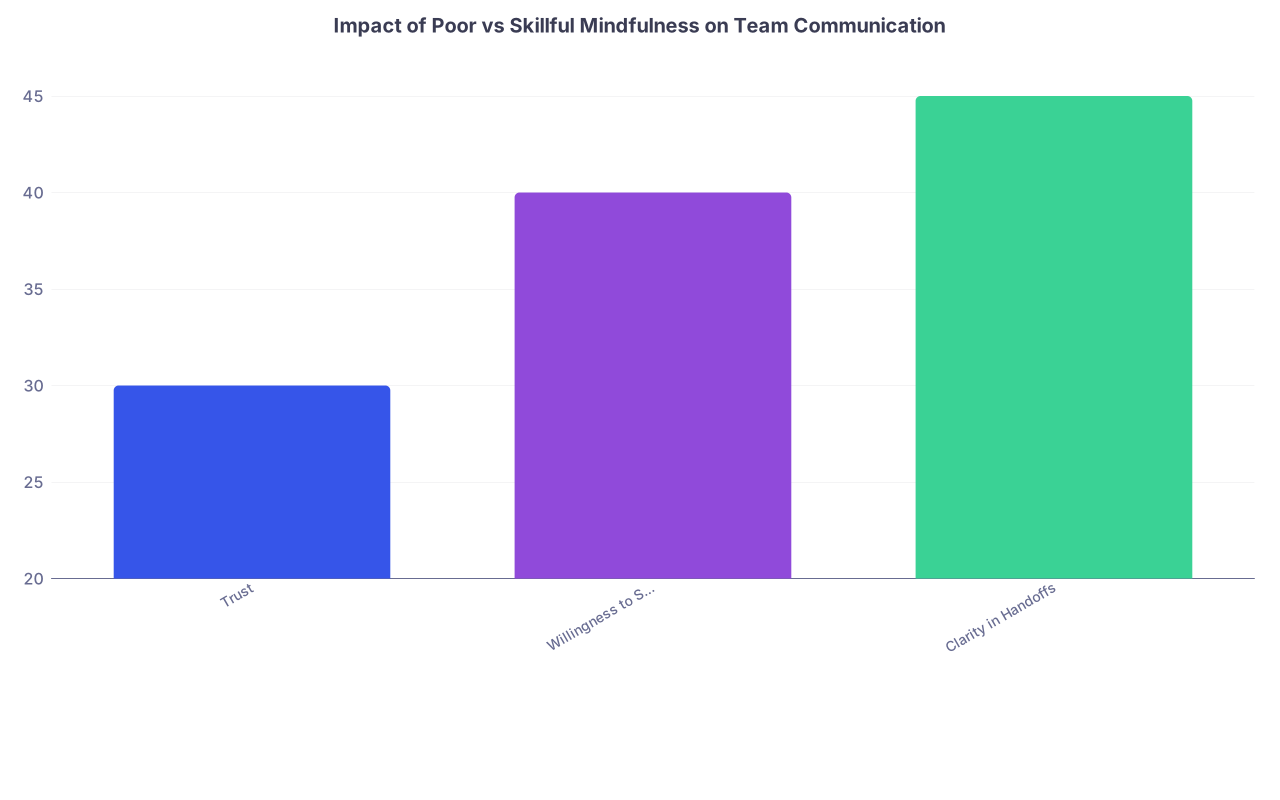
| Category | Value |
|---|---|
| Trust | 30 |
| Willingness to Speak Up | 40 |
| Clarity in Handoffs | 45 |
Imagine two attendings:
- Attending A: Meditates daily, very calm; avoids conflict; rarely asks for feedback; doesn’t explain decisions; says, “I try not to get caught up in drama.” The team describes them as “chill but distant.”
- Attending B: Also practices mindfulness; opens rounds by saying, “If something doesn’t feel safe or clear, I want to hear it, even if I look rushed.” Pauses to check, “Anything unclear?” at transitions. The team describes them as “steady and approachable.”
Same meditation cushion. Very different relational mindfulness.
The mistake
You stop with “I feel better.”
You don’t ask, “Does my presence make it easier for others to speak, clarify, and disagree?”
How to make your practice relational
- Use mindfulness to notice when you’re shutting a conversation down too quickly
- Catch yourself interrupting and intentionally pause
- Sense the room: “I’m noticing some hesitation—does anyone see this differently?”
- After heated events, name your process:
- “I was feeling overwhelmed earlier and went pretty fast; did that leave anyone confused or concerned?”
Mindfulness that doesn’t change how you invite and receive communication is incomplete.
7. Using Mindfulness as a Sedative Instead of a Signal
Sometimes your stress, unease, or anger is telling you something important about the environment:
- Unsafe staffing
- Chronic disrespect from a consultant
- Hidden bias in how patients are discussed
- Moral distress over resource allocation
If you automatically breathe it away every time, you dull your internal alarm system.
I’ve watched clinicians use meditation apps on break just long enough to tolerate another 12 hours of a toxic unit. They’re calmer—but they’ve also lost the energy to advocate for change.
The communication fallout
- You stop naming unsafe patterns to leadership
- You tell younger staff to “just focus on what you can control” when what they should do is escalate
- You normalize dysfunction instead of challenging it
Mindfulness that anesthetizes you to moral injury isn’t virtue. It’s surrender.
A more ethical use
Let mindfulness clarify, not erase, the signal:
- Notice: “I feel a burning anger every time staffing is cut.”
- Regulate enough that you can speak, not just explode.
- Communicate clearly:
- “I want to flag that our staffing today felt unsafe. Here are specific examples.”
Mindfulness should convert raw distress into structured, ethical communication—not silence.
8. Over-Prescribing Mindfulness to Others as a Fix-All
Another subtle communication killer: reflexively recommending mindfulness to colleagues who raise concerns.
They say:
- “I’m exhausted; this schedule is brutal.”
You say: “Have you tried a short mindfulness practice before bed?”
They say:
- “Our voices aren’t being heard at these meetings.”
You say: “Mindfulness helped me not take it personally.”
That’s not supportive. It’s dismissive with a wellness coating.

Why this backfires
- It shifts the problem from system → individual
- It implies their primary issue is coping, not valid criticism
- It trains people that raising problems gets them “have you tried meditating?” instead of action
Soon they stop telling you things. And they stop believing any wellness effort is genuine, because it all sounds like “fix yourself so we can keep burning you out.”
Better responses
Use mindfulness to make you more present, then respond like an actual colleague:
- “You’re right, this schedule is brutal. Have you talked with X about potential changes? I’d be willing to back you up.”
- “It sounds like you don’t feel heard at these meetings. What would meaningful change look like to you?”
If they ask you how you cope, sure—share your mindfulness practice. But don’t prescribe it like a sedative for justified outrage.
9. Ignoring Power Dynamics in “Mindful Communication”
If you’re in a position of power—attending, senior resident, chief, faculty—your version of “mindful communication” lands differently.
Common mistakes:
- Saying “Let’s just be present with what is” when juniors are trying to raise concerns about your decision
- Ending debates with “Let’s all take a breath and move on” when you sense disagreement but don’t want to deal with it
- Using a slow, calm tone as a way to override urgency
To you, it feels grounded. To them, it feels like: “I’m the calm one, therefore I’m right.”
The downstream effect
- People stop challenging you
- Real safety concerns get minimized as “reactivity”
- The team confuses “calm tone” with “good judgment”
That’s dangerous. Calm doesn’t equal correct.
The fix
Pair your mindfulness with explicit permission:
- “I’m trying to stay calm here, but I still want pushback if you disagree with this plan.”
- “If my tone sounds final, I still want someone to tell me if they see a safety issue.”
And when someone does raise a concern:
- Don’t instantly meet it with, “Let’s all take a breath.”
- First, listen. Ask one clarifying question. Then regulate if needed.
Your job isn’t to keep the room tranquil. It’s to keep the room truthful.
10. Performing Mindfulness for Credit
Final trap: treating mindfulness like a badge you wear instead of a practice you embody.
- Dropping “mindfulness” into every CV and committee intro
- Mentioning your retreat every third sentence
- Quoting Jon Kabat-Zinn in staff emails while still sending curt, ambiguous messages at 11:45 pm
This is communication theater. People quickly notice the gap between your branding and your behavior.
| Pattern | Actual Effect on Team | Red Flag? |
|---|---|---|
| Quiet micro-pauses while still engaged | Clears your thinking, reduces reactivity | No |
| Suggesting brief, optional group pause with consent | Can improve focus and safety | No |
| Long, dramatic sighs in conflict | Signals contempt or boredom | Yes |
| “You should be more mindful” comments | Shames and silences others | Yes |
| Meditates privately, asks for feedback publicly | Builds trust | No |
| Talks about mindfulness constantly, resists feedback | Breeds cynicism | Yes |
If your team associate “mindfulness” with hypocrisy, you’ve already lost the communication game.
The simplest test:
- Ask yourself, “Do people feel safer telling me the truth because I practice this, or more cautious?”
If the answer isn’t clearly “safer,” your “mindfulness” is probably performative.
Key Takeaways: Mindfulness That Protects, Not Poisons, Communication
Keep it simple:
- Mindfulness should make you more available, not more absent. If your practice looks like checking out, you’re doing it wrong at work.
- Use mindfulness to regulate and clarify, not to avoid judgment, silence others, or anesthetize yourself to real problems.
- Your inner calm only matters if it improves how others experience you—more listening, more honesty, more psychological safety. If that’s not happening, your mindfulness needs a hard reset.