
The biggest lie residents tell themselves is this: “I’m just being mindful” — when what they’re actually doing is checking out.
You know exactly what I mean. You’re on hour 20 of a call. Your pager has finally stopped screaming. You sit down, stare at nothing, scroll Instagram, maybe play some dumb game on your phone. You call that “taking a mindful break.” It is not.
This is emotional numbing dressed up as self‑care. And if you let it become your default coping style, it will quietly wreck your empathy, your professionalism, and your sense of self as a physician.
Let’s walk straight into it.
The Dangerous Confusion: Numbing vs Mindfulness
Here’s the core mistake: confusing disconnection with presence.
Mindfulness is active, deliberate attention to your experience. Checking out is passive withdrawal from it. They feel similar in the moment — less pain, less stress — but they do opposite things to your mind and your ethics.
Let me draw the line clearly.
| Dimension | Numbing / Checking Out | Actual Mindfulness |
|---|---|---|
| Awareness | Blurry, foggy, tuned out | Clear, curious, tuned in |
| Intention | Escape what you feel | Turn toward what you feel |
| Effect on Empathy | Decreases over time | Usually increases |
| Short‑Term Relief | Yes, often strong | Sometimes mild, sometimes hard |
| Long‑Term Outcome | Cynicism, burnout, errors | Resilience, clarity, boundaries |
I’ve heard residents call all of this “mindfulness”:
- Binge‑watching Netflix until 3 a.m. post‑night float
- Scrolling TikTok in the stairwell between codes
- Zoning out during family meetings so they “don’t get too attached”
- Drinking “just enough to sleep” several nights a week
- Turning every patient into a lab value problem instead of a human
None of that is mindfulness. It’s anesthesia. Cheap, fast, addictive anesthesia.
And here’s the ethical problem: the more you anesthetize yourself, the less you can actually show up for patients. You don’t just numb your own pain. You numb your capacity to care.
How “Checking Out” Sneaks In — And Why It Feels So Reasonable
You’re not weak or broken if you do this. The system practically trains you to.
Thirty‑hour calls, constant bad news, repeated exposure to trauma, plus the unspoken rule: “Don’t let it get to you.” So you improvise. You find ways to make it hurt less.
At first, it’s small:
- You walk a little faster past the room of the patient who reminds you of your dad.
- You silence a thought like, “That could be my kid.”
- You keep it “light” in the workroom with dark jokes that are 80% pain, 20% punchline.
This is the early stage — understandable, even useful in tiny doses.
The trap is when this becomes your default operating mode. You begin to live in a low‑grade checked‑out state. Not fully present anywhere. Not in the room with the patient, not at home with your partner, not even alone with yourself.
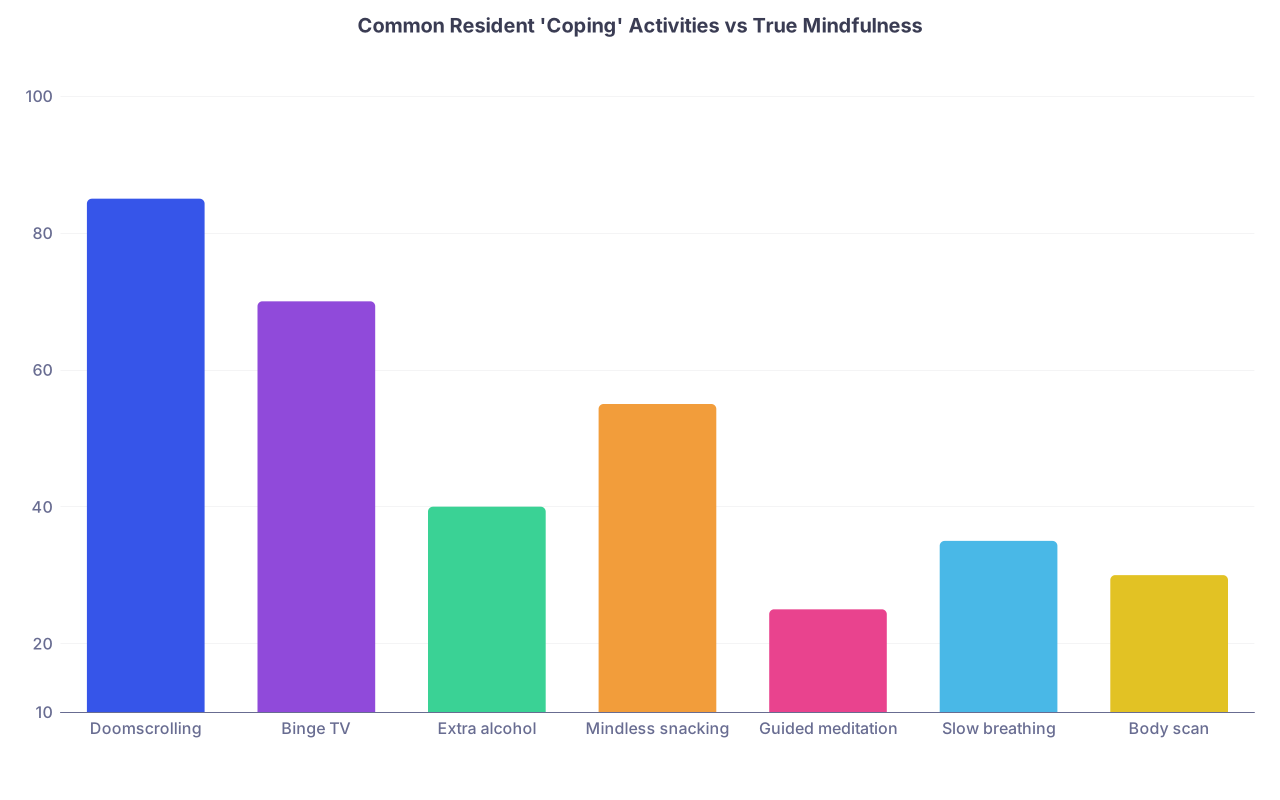
| Category | Value |
|---|---|
| Doomscrolling | 85 |
| Binge TV | 70 |
| Extra alcohol | 40 |
| Mindless snacking | 55 |
| Guided meditation | 25 |
| Slow breathing | 35 |
| Body scan | 30 |
Most residents I’ve worked with overestimate how “mindful” their downtime is. When we actually label it, 70–80% of what they call “self‑care” is low‑quality numbing.
Here’s the part nobody tells you: chronic checking out doesn’t just blunt your distress. It makes you more vulnerable to emotional blowups later. Because you’re not actually processing anything — you’re just kicking it down the hallway.
Red Flag Behaviors: “This Is Not Mindfulness”
If you see yourself in these, pay attention. These are not crimes, but they are warnings.
You catch yourself thinking of patients as “the appy in 12” or “the train wreck in 402” — and you like it that way.
Using shorthand is normal. Needing shorthand to avoid feeling anything? That’s distance you’re creating on purpose.You feel a tiny rush of relief when a patient dies… because the workup is now “done.”
I’ve heard this said in workrooms too many times to count. The feeling itself is human. The problem is never examining it. If the only story you tell yourself is, “That’s just efficiency,” you’re skipping the ethical and emotional work.You sit in your car outside the hospital for 20–40 minutes scrolling, unable to make yourself go in… but you call it a “mindful transition.”
Transition rituals are good. But spacing out, dissociating, and pretending it’s contemplative practice? No.You tell yourself, “I just don’t get attached anymore,” and you say it like a badge of honor.
This one scares me the most. Non‑attachment in Buddhism is deep engagement without clinging. What many residents mean is: “I’ve stopped letting people matter to me.”You can’t remember your last genuine emotional reaction at work.
No irritation, no sadness, no joy. Just… flat. That’s not calm. That’s shutdown.You avoid quiet.
No silent commute. No shower without a podcast. No walk without music. If silence feels threatening, you’re likely running from what would show up in that space.
Don’t romanticize these as “professionalism.” They’re symptoms of your nervous system tapping out.
The Ethical Cost: When Numbing Becomes Normal
Here’s where this ties directly into medical ethics — not in some abstract philosophy sense, but in the way you actually practice.
Unchecked checking out leads to:
Superficial consent and communication
When you’re disconnected, you lean on scripts. You “explain” procedures on autopilot. You don’t stop to notice the confusion in a patient’s face. Ethically, that’s shaky consent. You met the legal requirement, maybe. You didn’t meet the human one.Biased decision‑making
The patients who feel like “extra work” — the complex, the non‑compliant, the frequent flyers — are the first ones you emotionally abandon. They pick up your impatience. You pick easier paths for them. Less advocacy, less curiosity, more assumptions. That’s how inequities get amplified in daily micro‑decisions.Moral injury masquerading as “burnout”
Many residents say, “I’m burnt out,” when actually, they’re morally injured. They watched themselves act out of alignment with their own values while emotionally numbed. That gap hurts. You cannot fix moral injury with more numbing.Erosion of integrity in the gray zones
Small lapses become easier: fudging times, minimizing near‑misses, documenting conversations that did not really happen in full. When you’re checked out, it’s easier to rationalize: “Everyone does it.” Real mindfulness makes it harder to lie to yourself about that.
What Real Mindfulness Looks Like in a Hospital (And What It Doesn’t)
Let me be specific. Mindfulness is not lighting incense and doing a 45‑minute body scan between rapid responses. Nobody has time for that fantasy.
Real mindfulness in residency looks like this:
- Five conscious breaths before you enter a difficult room, feeling your feet on the floor.
- Noticing, “I’m angry at this patient,” instead of automatically acting from that anger.
- Saying in your head, “This is sadness,” when you feel your chest tighten after a bad outcome.
- Staying with that for 10–20 seconds instead of instantly grabbing your phone.

| Step | Description |
|---|---|
| Step 1 | Pager goes off |
| Step 2 | Pause for 2 breaths |
| Step 3 | Notice body tension |
| Step 4 | Name main emotion |
| Step 5 | Choose response |
| Step 6 | Enter patient room |
Contrast this with fake “mindfulness” you should stop lying to yourself about:
- Standing in the hallway scrolling texts for 10 minutes and calling it “decompressing.”
- Numbing yourself in family meetings by focusing obsessively on lab trends so you don’t hear the grief in the room.
- Joking through your feelings on rounds instead of owning, “That case last night is still really on my mind.”
The difference is simple but brutal:
Mindfulness brings you closer to your experience, even when it hurts.
Checking out takes you away from it, especially when it hurts.
The Residency Reality: You Actually Do Need Some Armor
Now, here’s where people misunderstand and swing too far in the other direction.
You cannot, and should not, feel everything fully, all the time, in residency. That would crush you. You do need:
- Boundaries around how emotionally entangled you get with each patient
- Short‑term, low‑stakes distractions (yes, sometimes you absolutely should watch a dumb show)
- A way to “shelve” certain feelings until you’re off‑shift
The mistake is turning temporary armor into permanent numbness.
Mindfulness, used correctly, helps you:
- Notice what needs to be shelved and for how long
- Come back to it later — actually process it — instead of burying it
- Intentionally choose when to engage deeply and when to keep it light
Think of it like this:
Numbing is yanking the batteries out of the smoke detector.
Mindfulness is hearing the alarm, checking if there’s actually a fire, and then deciding what to do.
A Simple Test: “Am I Checking Out or Being Mindful?”
When in doubt, run this quick diagnostic in your head. It takes 10 seconds and can keep you honest.
Ask yourself:
What’s my intention right now?
- If the honest answer is, “I don’t want to feel this,” you’re numbing.
- If the answer is, “I want to see what’s here without being overwhelmed,” that’s mindfulness.
Am I getting more present or less present?
After this “break,” do you feel:- Clearer, a bit more grounded, slightly more capable of connecting?
- Or foggier, more distant, vaguely irritable?
Could I describe what I’m feeling in 2–3 words?
- If yes: you’re probably in contact with your experience (a mindfulness ingredient).
- If no: you’re probably checked out.
Would I be comfortable if a trusted attending saw this moment and asked what I was doing?
- If you’d say, “I’m taking three breaths to reset before going in,” that’s legit.
- If you’d mumble a half‑truth about “just looking something up,” you know.
Use this especially before you label something “mindful.”
Safer Alternatives: Coping That Doesn’t Rot Your Empathy
You don’t need to become a monk. You do need to stop lying to yourself that zoning out is some elevated practice.
Here are coping tools that actually build resilience instead of hollowing you out:
90‑second emotion check‑ins
Between patients, between tasks. Put your phone away for 90 seconds. Notice: Where’s the tension? What’s the emotion word? That’s it. No analysis. Just data.Micro‑boundaries with patients
You can care deeply in the room and still not carry it all home. A quiet internal phrase helps:
“I’m with you fully for the next 10 minutes.”
After you leave: “I leave the rest of this here for now.”
It sounds cheesy. It also works.Scheduled decompression that’s actually restorative
There’s a difference between “two hours vanished and I feel gross” and “I watched one episode, laughed, and then slept.”
Decide the end point before you start: one episode, 20 minutes of a game, 15 minutes of scrolling. Then actually stop.Peer debriefs that aren’t just sarcasm
Gallows humor has its place. But once a week, have a 10‑minute real talk with a co‑resident:
“What case stuck with you this week?”
Name it. Respect it. Let it move a bit instead of calcifying.Minimal, not perfect, mindfulness practice
Five minutes of guided meditation on Headspace, Ten Percent, Calm, or a free YouTube track is enough to start rewiring.
Not for Instagram. Not for your CV. For your nervous system.
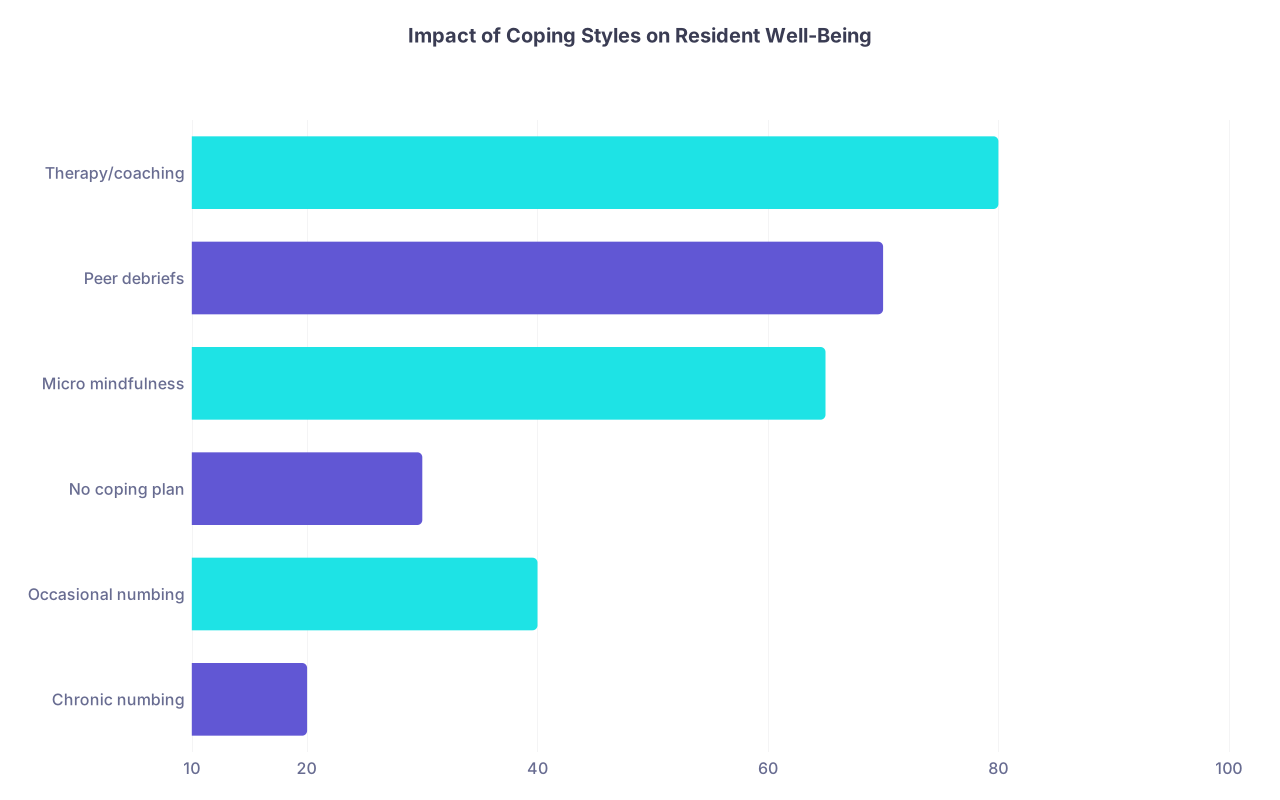
| Category | Value |
|---|---|
| Chronic numbing | 20 |
| Occasional numbing | 40 |
| No coping plan | 30 |
| Micro mindfulness | 65 |
| Peer debriefs | 70 |
| Therapy/coaching | 80 |
Numbers are illustrative, but the pattern matches what I’ve seen: the more intentional and connected the coping, the better the long‑term outcomes.
When You’re Already Pretty Far Gone
If you’re reading this and thinking, “Too late, I’m already dead inside,” it isn’t. But you do need to stop pretending this is just “being tough.”
Signs you’ve crossed a more serious line:
- You fantasize about residents or attendings getting sick or leaving so your workload decreases.
- You feel contempt for almost everyone: patients, nurses, other residents, your own friends.
- You’re using alcohol, benzos, or weed not for occasional fun but as your main off‑switch.
- You can’t remember the last time you felt something like genuine joy, pride, or gratitude at work.
At that point, this isn’t a “mindfulness tune‑up” issue. It’s a you deserve help issue.
That might mean:
- Confidential counseling through GME or your institution
- An outside therapist who understands medical culture
- Talking honestly with a PD or trusted attending before something breaks completely
Do not make the classic resident move of saying, “I’ll deal with it after boards / after intern year / after fellowship.” You are practicing right now. Your habits and ethics are forming right now.
The Bottom Line: Don’t Call It Mindfulness If It’s Actually Escape
Let me be blunt:
- Mindfulness makes you more honest with yourself.
- Numbing helps you lie to yourself more convincingly.
- Residency will reward both in the short term. Only one will let you practice with integrity in 10 years.
So here’s what I want you to walk away with:
Don’t kid yourself. If the main goal of what you’re doing is not to feel, call it what it is: checking out. That honesty alone starts to loosen its grip.
Aim for presence, not perfection. You don’t need to be some serene Buddha‑resident. You just need to be 5–10% more present, more often, and a little less dependent on anesthesia.
Protect your future self. The habits you build to survive residency become the defaults you carry into attending life. Make sure they’re ones you respect.
Checking out will always be the easier path in the moment. But it’s not mindfulness, and it’s not free. You pay for it with your empathy, your ethics, and eventually your sense of who you are as a physician.
You’re allowed to be tired. You’re allowed to be overwhelmed. Just don’t disappear on yourself and call it wisdom.