
Already Matched in One Field but Want to Switch to a Competitive Specialty
You are not stuck. Matching once does not lock you into the wrong specialty for the rest of your career.
Switching from a non-competitive field into something like dermatology, plastics, ortho, ENT, urology, rad onc, or ophthalmology is hard—but absolutely doable if you play it smart and brutally strategic. I’ve seen people pull this off from FM to derm, IM to ENT, prelim surgery to ortho. They didn’t get lucky. They executed.
If you’re already matched (or already in residency) and you want to move into a competitive specialty, this is your playbook.
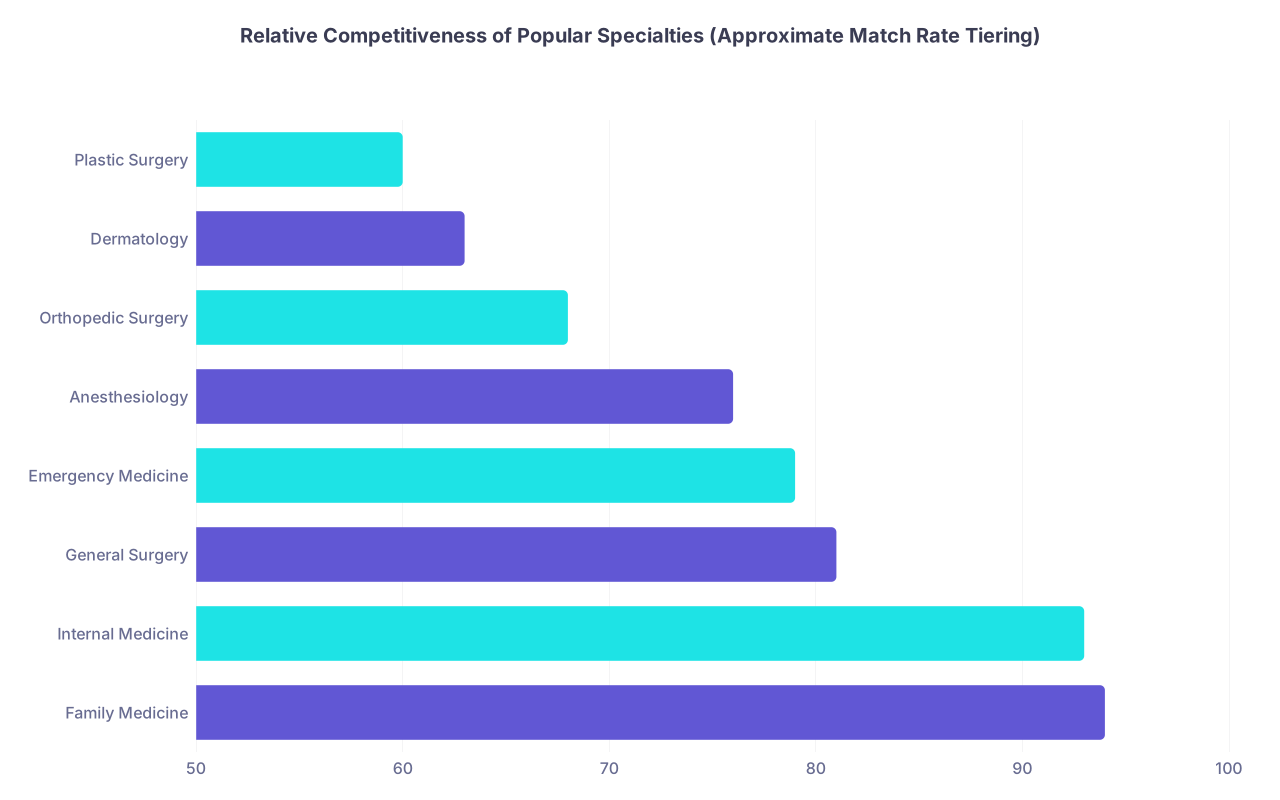
| Category | Value |
|---|---|
| Family Medicine | 94 |
| Internal Medicine | 93 |
| General Surgery | 81 |
| Emergency Medicine | 79 |
| Anesthesiology | 76 |
| Orthopedic Surgery | 68 |
| Dermatology | 63 |
| Plastic Surgery | 60 |
Step 1: Get Completely Honest About Your Situation
The biggest mistake people make is wishful thinking. “I really like derm, I’ll just apply next cycle” while they quietly do a generic PGY-1 somewhere and hope it works out.
That never works.
You need a clear read on three things:
Your starting point
- Are you:
- a rising PGY-1 who just matched into another specialty but hasn’t started?
- in PGY-1 right now?
- PGY-2 or above in your current field?
The earlier you are, the more leverage you have.
- Are you:
Your numbers and CV
Be honest, not “optimistic”:- Step 1: pass/fail—but your score still exists in the background for many PDs
- Step 2 CK score
- Class rank/AOA
- Med school pedigree (yes, it still matters for competitive fields)
- Any prior research, especially in the target field
- Evaluations: any red flags? professionalism issues? failures?
Your real constraints
- Visa status? This can quietly kill certain options.
- Family/geographic immobility? Limits where you can scramble for a new spot.
- Financial runway? Can you tolerate a “gap” research year?
If your Step 2 is 204 and you’re from an unranked Caribbean school with no research, switching into plastics is not “ambitious,” it’s fantasy. But switching from IM to anesthesiology or EM? That might be very realistic.
You can still move, but the direction matters. Competitive specialties will expect receipts.
Step 2: Decide if This Is a Crush or a Career
Before you blow up a perfectly decent match, you’d better be sure you’re not just chasing perceived prestige or a single rotation high.
Ask yourself—and actually write this down:
- What specific parts of my current specialty day-to-day do I dislike?
- What specific parts of the target specialty day-to-day do I know I enjoy (not just “I liked the rotation”)?
- Have I worked with attendings/fellows in that specialty and asked them direct questions about lifestyle, call, clinic load, income, burnout?
- Am I drawn to the work or to:
- lifestyle stories
- money
- competitiveness / ego
- social media aesthetics (derm and plastics are especially bad for this)
If you cannot articulate concrete reasons tied to clinical work, pathology, patient population, procedural vs cognitive balance, you are about to gamble your career on vibes.
Talk to at least:
- 1 resident in that competitive field
- 1 attending who’s more than 5 years out
- 1 person who burned out or left that field (they exist)
Then, and only then, move forward.
Step 3: Understand the Two Main Paths to Switching
You basically have two macro-strategies.
Path A: Leverage Your Current Position (Internal or Friendly Transfer)
Best if:
- You’re PGY-1 or early PGY-2
- You’re in a large academic center with your desired specialty in-house
The plays here:
Internal transfer
- Magic words: “preliminary” or “transitional” year connected to a big university hospital.
- If your institution has your dream specialty (e.g., you matched IM at a place with a strong derm department), your odds go up dramatically.
- You need:
- spotless evaluations
- rock-solid PD support (or at least non-obstruction)
- department champions in the new specialty
“Friendly” transfer across departments at the same institution
Happens more than programs admit. For example:- A PGY-1 gen surg prelim jumps into ortho when someone drops or fails
- A transitional year resident slides into radiology or anesthesiology when programs unexpectedly expand
This path relies heavily on relationships and your reputation on the wards. If attendings like working with you, they will go to bat for you.
Path B: Build a New Application From Scratch (Reapplicant Strategy)
Best if:
- You’re in a community program with no in-house target specialty
- You’re already categorical in something very different (e.g., FM → ENT)
- Or you know your home program will not support a switch
This path usually involves:
- Dedicated research time (formal research fellowship or unaccredited research year)
- Away rotations / visiting rotations in the target field
- Heavy networking: conferences, cold emails, Zoom meetings with PDs
- Then: reapplying through ERAS like you never matched before
This is slower, more painful, and more uncertain. But it’s often the only realistic way into the ultra-competitive fields.

| Step | Description |
|---|---|
| Step 1 | Want to switch specialties |
| Step 2 | Plan simple transfer or reapplication |
| Step 3 | Explore internal transfer with mentors and PD |
| Step 4 | Plan research year plus networking |
| Step 5 | Consider less competitive related specialty |
| Step 6 | Target is competitive specialty |
| Step 7 | In academic center with target specialty |
| Step 8 | Can take research year |
Step 4: Timeframe Reality Check
Switching into a competitive specialty usually adds time to your training.
Typical scenarios:
| Starting Point | Target | Typical Extra Time |
|---|---|---|
| PGY-1 IM at academic center | Derm/Rads/Anes | 0–1 year |
| PGY-1 community FM | Ortho/ENT/Uro | 2–3 years |
| PGY-2+ in non-competitive specialty | Derm/Plastics | 2–3 years |
| Prelim surgery | Ortho/ENT/Uro | 0–2 years |
You might:
- Finish your current PGY-1
- Then do:
- a dedicated research year
- or a second PGY-1 in the new field
- or step into a PGY-2 spot if you get very lucky
If adding 1–3 years to your training is an absolute deal-breaker, you either:
- pick a less competitive target
- or stay where you are and craft a niche you like inside your current field (procedural focus, subspecialty clinic etc.)
Step 5: How to Talk to Your Current Program Director Without Setting Yourself on Fire
This is the conversation people are most afraid of. Understandable. But hiding your intentions forever is worse.
Here’s the order of operations:
Get your story straight first
Before you walk in:- Know exactly why you’re switching
- Be able to explain it without trashing your current specialty or program
- Have a rough plan (research? timeline? target specialties?)
Timing
- Best: after you’ve proven yourself for a few months (strong evals in hand)
- Worst: day one of orientation or after a massive clinical mistake
In the meeting
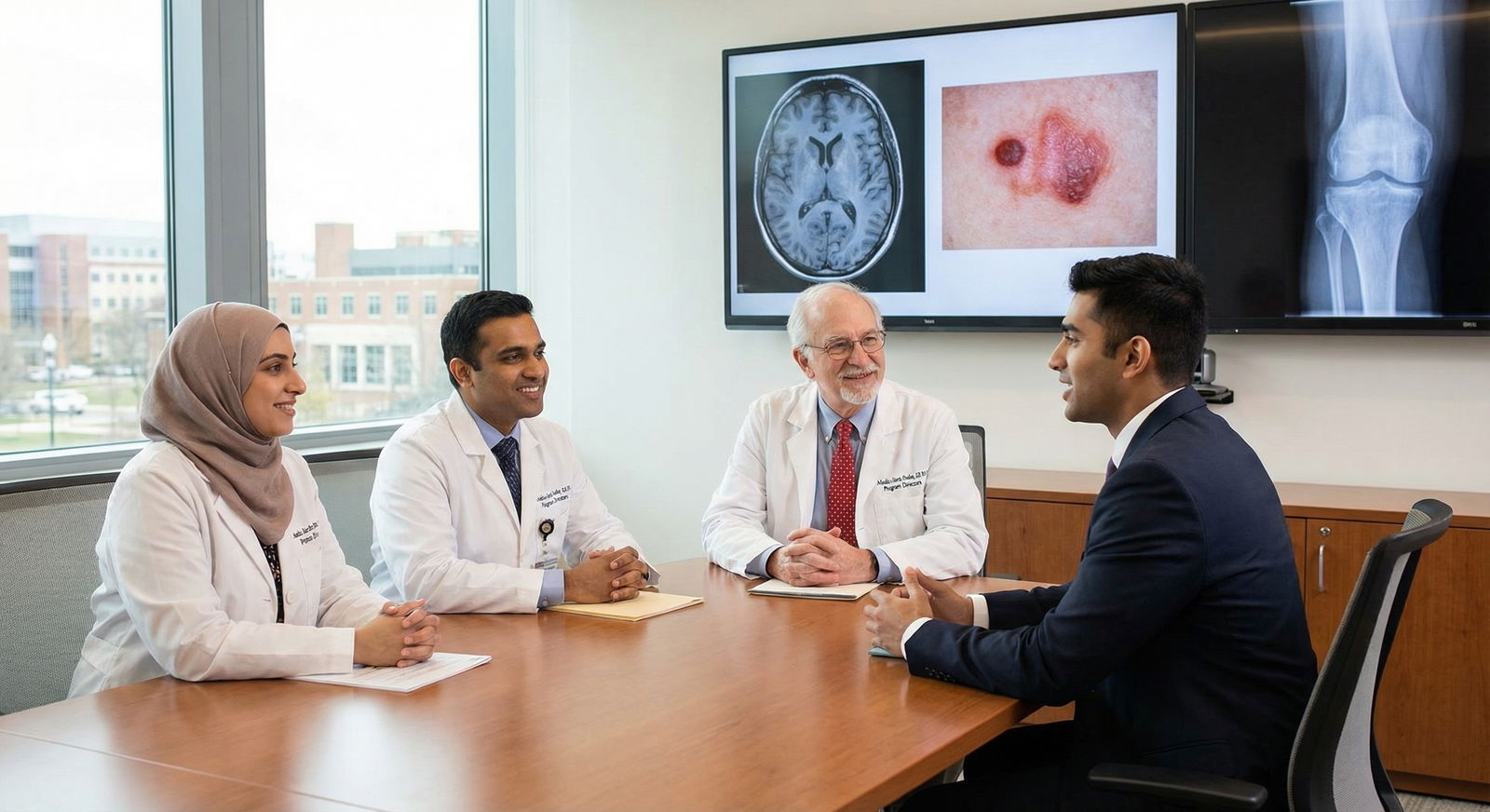
Script it roughly like this (adjust for your style):“Dr. X, I appreciate the opportunity to train here and I’ve really valued my time so far. Over the past year [or in medical school], I developed a strong, persistent interest in [target specialty]. After working closely with mentors in that field and reflecting a lot, I’ve realized that long-term my skills and interests are better aligned with [specific aspects].
I want to be transparent with you. I’m committed to giving my best to our patients and the team while I’m here. At the same time, I’m hoping to explore a formal path into [target specialty], potentially through [research year / applying to PGY-1 positions / internal transfer if possible].
I’d really value your honest feedback and any advice on how to do this in a way that’s professional and reflects well on our program.”
Key points:
- Respectful.
- Transparent.
- Shows loyalty while you’re there even if you leave.
- Be surprisingly supportive, or
- Be neutral but not obstructive, or
- Get defensive and try to block you
If they’re hostile, stay calm. Do not argue. Document the meeting (privately, for your own records). Then quietly build your network and application elsewhere. You do not need their blessing to leave, but it does make things easier.

Step 6: Build a Targeted, Ruthless Strategy for the New Specialty
“Being passionate” is garbage currency in competitive specialties. You need assets.
Think in four buckets:
1. Relationships in the Target Specialty
You want:
- A primary mentor in that specialty who knows you well
- At least 2 attendings in the field willing to write strong, specific letters
- A PD or senior faculty member who will answer an email about you
How to build this:
- Ask to do electives/consult months with that specialty at your institution
- If your hospital doesn’t have it:
- cold email academic faculty at nearby university programs
- ask for an observership / visiting rotation / research collaboration
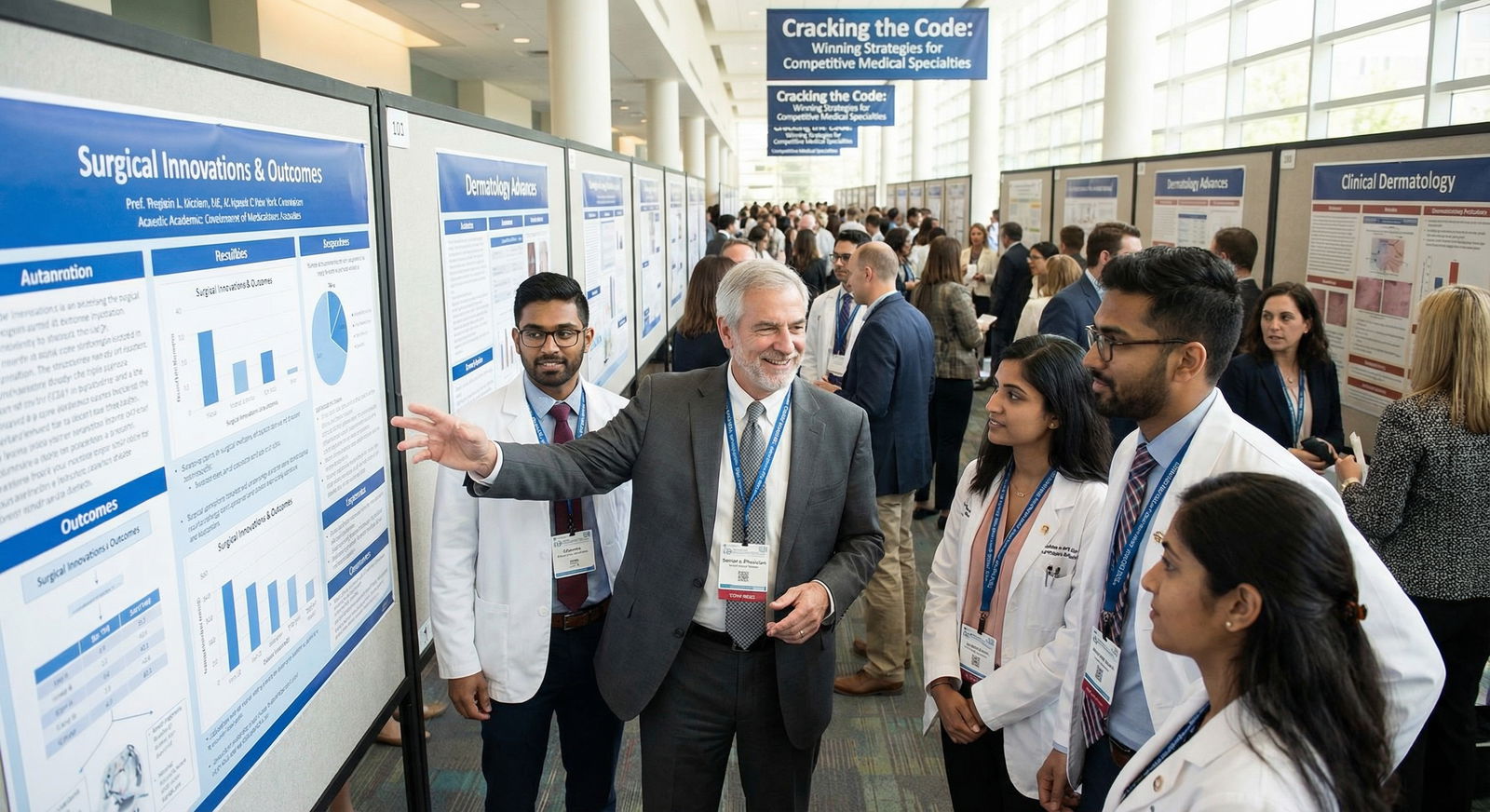
- Go to their national or regional conference and show up—poster or no poster
2. Research That Actually Matters
For derm, plastics, ortho, ENT, urology, ophtho, rad onc: research is not optional. It’s oxygen.
Prioritize:
- Projects with faculty who are known names in that specialty
- Things that can realistically turn into:
- abstracts/posters
- pubmed-indexed publications
- review articles or case series at minimum
Red flag: “We’re thinking of a big chart review that might become something someday.” Translation: you will waste your one shot doing data entry for 14 months and get your name on nothing.
Ask upfront:
- “What’s the realistic timeline for a poster or publication from this project?”
- “Have you gotten residents into competitive specialties before? Which ones?”
3. Letters of Recommendation
For competitive switches, your letters need to be nuclear-level strong, not “solid.”
You want letters that say things like:
- “I have worked with many residents going into [specialty], and X is in the top 5% I’ve ever worked with.”
- “We would gladly take X into our own residency program if a spot were available.”
At minimum, aim for:
- 2–3 letters from target specialty faculty (one senior, ideally PD or chair-level)
- 1 letter from your current PD (if not sabotaging) or a current specialty attending who loves you
4. A Clear, Coherent Narrative
Your personal statement and interviews must answer:
- Why did you choose your original specialty?
- What changed—specifically, not vaguely?
- What have you done since realizing that to explore the target field seriously?
- Why should a program spend limited spots on someone switching in late?
The worst possible narrative:
“I realized I actually like derm more than IM and derm lifestyle is better.”
The best narratives:
- Emphasize a thread through both fields (e.g., love of longitudinal care and complex medical dermatology)
- Show humility about the initial misalignment but a mature, evidence-based pivot
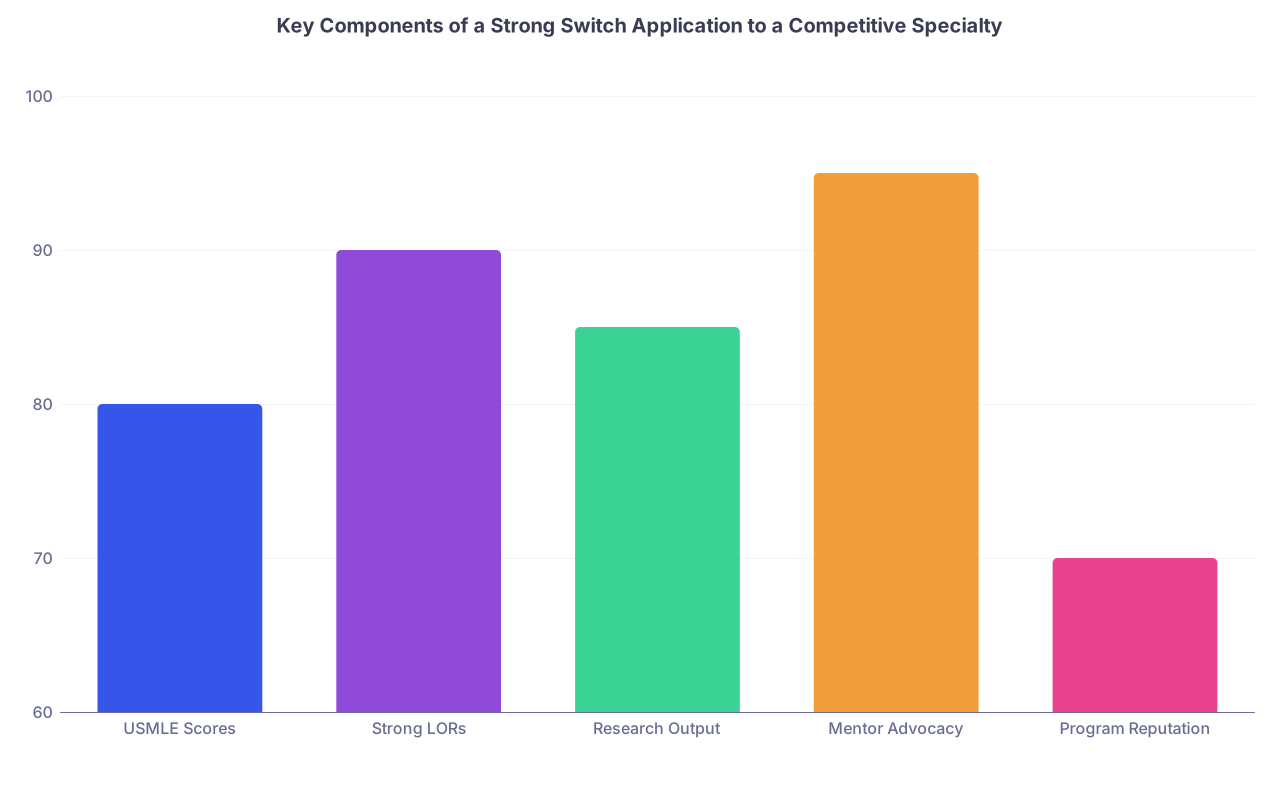
| Category | Value |
|---|---|
| USMLE Scores | 80 |
| Strong LORs | 90 |
| Research Output | 85 |
| Mentor Advocacy | 95 |
| Program Reputation | 70 |
Step 7: Managing the Politics and the Emotional Toll
Let’s not pretend this is purely strategic. It’s emotionally brutal.
You may:
- Feel guilty about “abandoning” your current field or co-residents
- Worry constantly about failing twice
- Deal with snide comments: “Oh, so you think you’re a derm person now?”
Here’s how to handle it like a professional:
Do your current job well
Your reputation follows you. If you check out or start half-assing your current residency because you “aren’t staying anyway,” people notice. And they talk.Keep your circle small
You do not need to announce your plan hospital-wide. A few key mentors, your PD (eventually), maybe one trusted co-resident. That’s it.Expect some people to be annoyed
That’s their issue, not yours. You get one career. They do not have to live with your regret in 10 years.Protect your mental health
You’re working full time and basically reapplying to residency. That’s a recipe for burnout. Sleep, therapy if needed, boundaries on how many projects you say yes to.
Step 8: Contingency Planning if You Don’t Match Again
If you’re aiming for derm, plastics, ortho, ENT, urology, etc., you need a Plan B before you submit your new application.
Think in explicit forks:
If I match in the new specialty:
- I will: [resign from current program at X time, transition, etc.]
If I don’t match, but I get:
- A research fellowship offer: Will I take another extra year?
- A prelim spot: Am I willing to reapply a third time?
- Nothing: Will I stay and finish my current specialty? Look for a different related field?
One smart move many people ignore:
Pick a “bridge” specialty that is:
- More competitive than your current field
- Less competitive than your dream field
- Overlaps in skills
Example:
- Aim: Ortho → very hard
- Bridge: PM&R with MSK focus, or sports medicine pathways
Or:
- Aim: Derm
- Bridge: IM with strong allergy/immunology or rheum focus, or cutaneous oncology in heme/onc
No, it’s not the same. But it may give you 80% of what you want with a much higher probability of success and far less career chaos.
Step 9: What To Do This Week if You’re Serious
If you’ve read this far, you’re not casually thinking about this. You’re already halfway out the door mentally.
Here’s the next 7–14 days:
Write a one-page “career memo” to yourself
- Why you want to switch
- Key strengths you bring to the new specialty
- Major risks and your tolerance for them
Identify 3–5 faculty in the target specialty
- At your institution or nearby
- Draft a specific, respectful email asking for a 20–30 minute conversation about your interest and possible paths
Pull your score reports and CV
- Make a brutally honest assessment:
- Are your numbers remotely competitive?
- Where are the gaps (research, letters, exposure)?
- Make a brutally honest assessment:
Book a meeting with one trusted mentor
- Not necessarily your PD yet
- Someone who knows the game and will tell you the truth, not just cheerlead
After that, your path will be clearer. You’ll either realize:
- “Yes, this is worth the fight, and here’s the plan,” or
- “I actually don’t want this badly enough to blow up my life. I’ll optimize where I am.”
Both outcomes are valid. What’s not valid is drifting for 3 years in a specialty you already know is wrong while secretly scrolling derm Instagram.