
The average doctor is tracking the wrong social metrics. And it is quietly costing them career opportunities.
You do not need to be an “influencer” to make LinkedIn and X (Twitter) work for your career. You do need to understand which numbers correlate with actual outcomes: invited talks, leadership roles, job offers, collaborations, and reputation in your niche.
Let’s walk through this like a data problem, not a vanity contest.
1. The Career Equation: What Actually Converts Online Presence into Opportunity
Before obsessing over analytics, you need a simple model:
Career impact from social media ≈
(relevant reach) × (signal quality) × (conversion rate)
Where:
- Relevant reach = how many people who matter to your career see you regularly
- Signal quality = how clearly your content signals your expertise and professional brand
- Conversion rate = how often online contact becomes real-world opportunity
Most physicians I see online optimize for only one metric: raw followers. That is a flawed optimization.
Because for careers, the data shows:
- A single engaged follower who is a division chief is worth more than 500 random followers, no question.
- A post that reaches 300 people in your subspecialty is more valuable than a viral post seen by 50,000 laypeople.
- Ten DMs from relevant colleagues beat 1,000 likes from med students who are not decision-makers.
So every metric on LinkedIn and X should be filtered through a single question:
“Does this correlate with more relevant people knowing, trusting, and contacting me?”
That is the bar.
2. LinkedIn: Metrics That Matter (And Those That Don’t)
On LinkedIn, the platform is already tilted toward professional outcomes. But physicians still chase the wrong numbers.
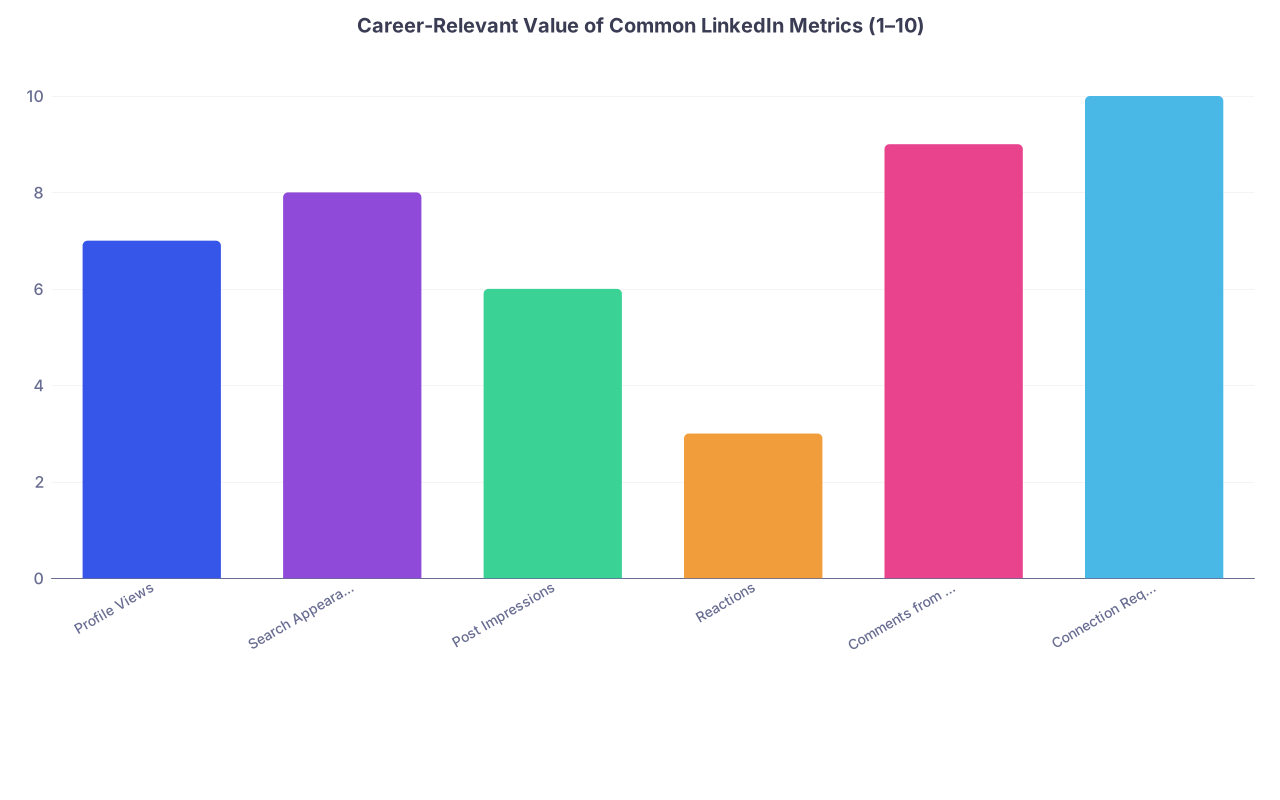
| Category | Value |
|---|---|
| Profile Views | 7 |
| Search Appearances | 8 |
| Post Impressions | 6 |
| Reactions | 3 |
| Comments from Peers | 9 |
| Connection Requests from Leaders | 10 |
2.1 High-Value LinkedIn Metrics for Doctors
Search Appearances
What it is: How many times you appeared in LinkedIn search in a given week.Why it matters: This reflects discoverability. For physicians, the high-yield searchers are:
- Recruiters for hospitals, systems, and academic centers
- Industry medical directors and medical affairs
- Journal editors, conference organizers, consulting firms
Data pattern I see: When “Search Appearances” climbs from ~20/week to 80–100/week, outreach messages usually follow within 4–8 weeks, if your headline and “About” section are optimized.
Career signal:
- Strong leading indicator of inbound opportunities.
- A better KPI than raw followers for those seeking jobs, speaking gigs, or advisory roles.
Profile Views (Who, Not Just How Many)
What it is: How many people viewed your profile, and critically, which people.A useful heuristic:
- 100 profile views with 70% being non-medical accounts = low value
- 30 profile views with 40–50% being physicians, directors, VPs, recruiters in your space = high value
Track:
- Titles: “Medical Director”, “Chief Medical Officer”, “Program Director”, “VP Medical Affairs”, “Founder”
- Organizations: major health systems, specialty societies, relevant startups, pharma/biotech in your disease area
The data that actually matters:
Profile views from high-value titles over a 90-day window > total view count.Comments from Peers and Leaders
Reactions are cheap. Comments from the right people are not.
On LinkedIn, I often treat:
- 1 substantive comment from a known leader in your subspecialty
as equivalent to - 15–20 generic “great post” likes from randoms.
You want:
- Named colleagues engaging with your clinical takes
- Program directors or chiefs interacting with your leadership or systems posts
- Industry or startup folks asking follow-up questions in your threads
Why it matters: This is where signal quality and professional reputation are visible.
- 1 substantive comment from a known leader in your subspecialty
Connection Requests from the Right Profiles
Most physicians I work with do not track who is sending them connection requests over time. Big mistake.
High-value trend:
When your weekly inbound connection requests shift from primarily students / general public to:- Academic physicians in your subspecialty
- Clinical operations / quality leadership
- Industry medical / clinical science roles
- Healthcare founders, VC-backed startups
…that is your leading indicator that your content and profile are correctly positioned.
A simple tracking rule:
- Aim for ≥30–40% of new monthly connections to be in your target “career audience” (leaders, decision-makers, or collaborators in your space).
"People Who Viewed This Profile Also Viewed" Panel
Underused but powerful signal. Check who you are “clustered” with.
- If your panel is mostly other clinicians in your subspecialty and academic rank → your positioning is coherent.
- If your panel shows random professions or entirely unrelated specialties → your profile and content are sending a fuzzy signal.
The data here is qualitative, but directionally useful: you want that panel to look like the peers and role models whose careers you respect.
2.2 Overrated LinkedIn Metrics for Doctors
These are not useless, but they are badly over-weighted in physicians’ minds:
Total Followers / Connections
The platform average for decent professional reach is surprisingly low.From what I see across physician accounts:
- 1,000–3,000 relevant connections in medicine is usually enough for excellent visibility.
- Above ~5,000, additional quantity has sharply diminishing returns unless you are building a brand business (courses, media, etc.).
If someone has 15,000 followers but almost no comments from senior physicians, no recruiters in their DMs, and no panel invites, their numbers are inflated but impact is not.
Post Impressions (in isolation)
A post getting 20,000 impressions may sound impressive.
If 95% of that is from outside your domain or outside healthcare altogether, it is noise.Much more useful to ask:
- How many saves did it get? (often hidden but strong engagement signal)
- Did anyone important message you because of it?
- Did it lead to any meetings, invitations, or collaborations?
Endorsements for Skills
Most physicians click “endorse” with no real thought. Volume of endorsements correlates more with how many colleagues you casually connect with than with actual reputation.
Better to care about:
- Who endorsed you (leaders vs random connections)
- Whether your top 3 skills match your desired career direction (e.g., “Health Policy”, “Clinical Research”, “Digital Health”, rather than generic “Healthcare”)
3. X (Twitter): Metrics That Really Matter for Medical Careers
X is noisier, more conversational, and much more ego-trap prone. Physicians can waste a staggering amount of energy chasing viral posts that never lead to anything tangible.
So again, filter by career impact.
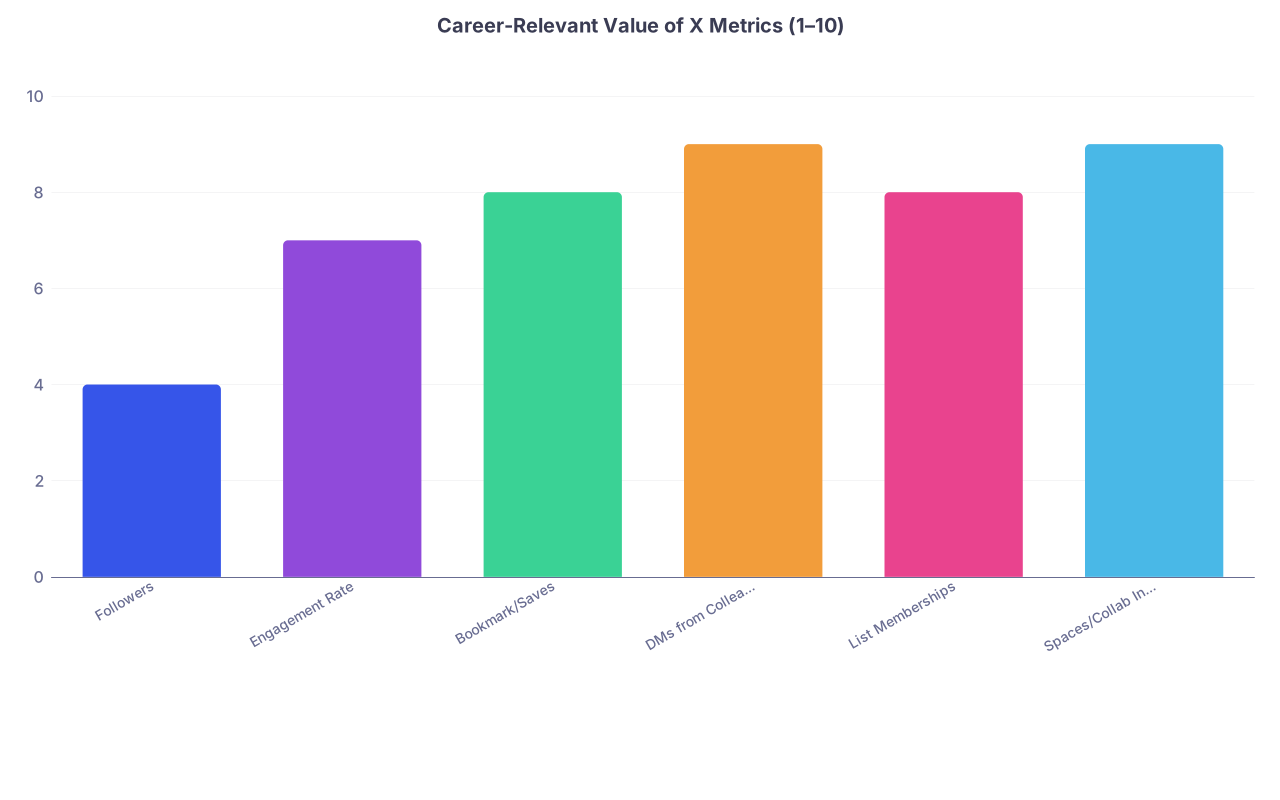
| Category | Value |
|---|---|
| Followers | 4 |
| Engagement Rate | 7 |
| Bookmark/Saves | 8 |
| DMs from Colleagues | 9 |
| List Memberships | 8 |
| Spaces/Collab Invites | 9 |
3.1 High-Value X Metrics for Doctors
Engagement Rate from the Right Audience
Raw likes are a vanity trap. What you want:
- Replies and quote posts from respected physicians in your niche
- Threads that trigger real clinical or research discussion
- Retweets from organizations, journals, departments, or societies
A useful internal metric:
- For any substantive post (clinical insight, thread, or policy take), aim for ≥10–15% of engagement coming from physicians, academics, or institutions in your subspecialty.
This is harder to calculate precisely, but a quick scan of profiles engaging with you weekly gives you enough data.
DMs That Lead to Real-World Interaction
The single best career metric on X is not public at all: direct messages that turn into something concrete.
Examples I see repeatedly:
- “Loved your thread on post-op delirium. Would you be open to giving a grand rounds talk?”
- “We’re organizing a panel on AI in radiology; saw your comments. Interested?”
- “We’re hiring for a hybrid clinical–industry role. Can I send you the JD?”
If you are not tracking DMs → calls → outcomes, you are missing the real conversion funnel.
Think of it like this:
- Impressions = views at the top of the funnel
- Engagement (replies, quote tweets) = mid-funnel interest
- DMs and email exchanges = bottom-funnel conversion opportunities
Being Added to Lists (Old Feature, Still a Strong Signal)
On X, being added to lists like:
- “Cardiology Experts”
- “Health Policy Voices”
- “MedEd Leaders”
- “Oncology Researchers”
…is a strong signal that people are categorizing you as a go-to in that domain.
Metrics to care about:
- Total number of lists that include you
- Specific lists curated by major organizations, journals, departments, or well-known experts
If you see list count increasing month over month in the right categories, your brand signal is strengthening.
Spaces / Podcast / Panel Invites Originating from X
This is another bottom-funnel indicator. Trace back:
- How many talks, panels, podcast episodes, or roundtables were triggered by someone first seeing you on X?
- How many collaboration papers started with a thread or reply?
I have seen mid-career physicians jump their national visibility because of 2–3 high-quality threads that were read by society leaders—and then led to guideline groups, panels, or editorial roles.
Bookmarks / Saves (If You Have Access)
On X, “Bookmarks” are not publicly visible in bulk metrics, but when platforms surface “bookmarked often” or “shared via DM,” that is a strong proxy for real-world impact.
For threads or posts that others use in teaching, presentations, or journal clubs, the true value is significantly higher than their like counts suggest.
3.2 Overrated X Metrics
Total Followers
I have seen physicians with:
- 5–10k followers and strong career leverage: frequent panels, leadership roles, cross-institution collaborations.
- 50k+ followers with minimal career effect beyond occasional media requests—because the audience is mostly laypeople or premeds.
A more honest heuristic:
- % of followers that are physicians, scientists, health policy, or health tech leaders
matters more than - absolute follower count.
Viral General-Public Threads
The thread explaining “how to read a CBC like an internist” may go viral with students and the public. Nice boost, little conversion.
The thread parsing new heart failure trial data that gets saved and shared among cardiologists? That is the one that gets you DM’d for a panel or writing invite.
4. Cross-Platform Metrics: How LinkedIn and X Work Together
The smartest physicians are not “choosing” between LinkedIn and X. They use both, but for different stages of the relationship.
X = discovery + intellectual signaling
LinkedIn = validation + formal professional contact

| Step | Description |
|---|---|
| Step 1 | X - Posts and Threads |
| Step 2 | Discovery by Peers and Leaders |
| Step 3 | Discussion and DMs on X |
| Step 4 | Connection on LinkedIn |
| Step 5 | Invites - Talks, Roles, Collaborations |
4.1 The Metrics That Really Matter Across Both
Think like a funnel analyst, not a content creator.
Over any 6–12 month period, track:
Top-of-Funnel (Visibility and Signal)
- Consistent visits to your profiles from relevant roles (LinkedIn: Search Appearances + Profile Views by role)
- Steady engagement from subspecialty peers (X and LinkedIn comments / quote posts from the right people)
Mid-Funnel (Relationship Formation)
- New LinkedIn connections from people who first saw you on X (ask them; they usually tell you)
- DMs leading to Zoom calls, informal mentorship discussions, or brainstorming chats
Bottom-Funnel (Career Outcomes)
Over 12 months, count how many of these originated with LinkedIn/X:- Invited talks (department, regional, national, or society level)
- Committee or guideline roles
- Job or role interviews (clinical, admin, or industry)
- Writing invitations (editorials, reviews, newsletter columns)
- Research or quality-improvement collaborations
That is your actual ROI. Everything else is upstream noise.

5. Practical Benchmarks for Different Career Goals
Let’s put some realistic numbers around this. Not absolute rules, but empirically reasonable targets based on what I have seen across physicians using these platforms strategically.
| Career Goal | Key Platform | Critical Metrics | Example 6–12 Month Targets |
|---|---|---|---|
| Academic promotion / visibility | X + LinkedIn | Comments from peers, list memberships, search appearances | 5–10 high-quality threads; 5–10 comments per post from peers; 50–100 search appearances/week |
| Transition to industry | Search appearances, profile views from industry, recruiter messages | 100–200 search appearances/week; 10–20 profile views/month from industry titles; 3–5 recruiter messages/quarter | |
| Build MedEd / speaking profile | X + LinkedIn | DM invites, panel/talk invites, list memberships | 2–3 invited talks traced to social; 3–5 list adds in niche; 5–10 DMs from educators/leaders |
| Local/regional leadership | Connections with leadership, comments from admins | 100–300 local/regional admins/physician leaders in network; regular engagement on leadership posts | |
| Policy / advocacy influence | X | Engagement from policy accounts, list memberships | Replies and quote tweets from policy orgs; inclusion in 5–10 policy-related lists |
These are not massive numbers. The data pattern is clear: who engages and what it leads to matters far more than scale.
6. How to Audit Your Current Metrics in 30 Minutes
You can run a quick audit right now. No fancy tools.

Step 1: LinkedIn (10–15 minutes)
- Check last 90 days of Profile Views
- Count how many are: recruiters, directors, CMOs, med affairs, health tech, or physician leaders.
- Look at Search Appearances trend
- Is it trending up, flat, or down over 3 months?
- Scan last 10 posts
- Who is commenting? Titles and institutions matter more than total counts.
- Check “People Also Viewed”
- Do they look like people with the career you want?
Step 2: X (10–15 minutes)
- Review last 20–30 replies and quote tweets to your substantive posts
- How many are from physicians or relevant professionals vs the general public?
- Count DMs in the last 3–6 months that led to:
- A meeting, talk, collaboration, job inquiry, or writing invite.
- Look at lists you are on
- Are they aligned with your subspecialty, MedEd, policy, or industry goals?
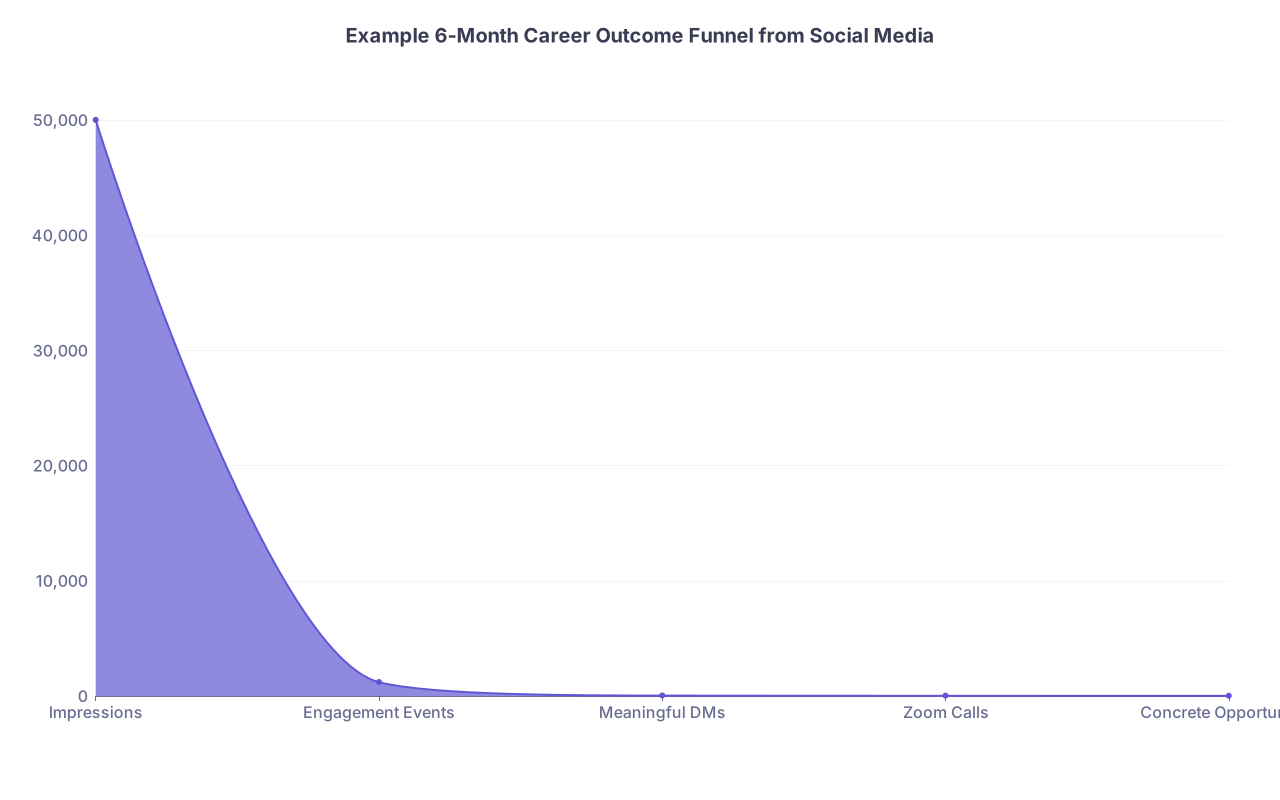
| Category | Value |
|---|---|
| Impressions | 50000 |
| Engagement Events | 1200 |
| Meaningful DMs | 35 |
| Zoom Calls | 18 |
| Concrete Opportunities | 6 |
If your funnel looks like:
- Tens of thousands of impressions
- Hundreds of likes
- Almost no DMs, calls, or invites
…then your content is not targeted or your profile does not convert. Both are fixable.
7. A Data-Driven Way to Improve the Metrics That Matter
You do not need to post constantly. You do need to treat this like an experiment.

Monthly cycle that works for most busy physicians:
Define one primary 6–12 month outcome.
- Example: “Increase invitations for speaking on perioperative medicine.”
Choose 2–3 metrics as proxies.
- LinkedIn: profile views from anesthesiology departments, search appearances, comments from anesthesiology leaders.
- X: replies/quotes from anesthesiologists, DMs from societies or course organizers.
Plan 4–8 targeted posts per month.
- On X: short threads on recent periop trials, protocols, or controversies.
- On LinkedIn: 2–3 posts summarizing talks, QI initiatives, or leadership lessons in periop care.
Track results in a simple spreadsheet. Monthly entries such as:
- Posts made
- Comments from relevant titles
- New high-value connections
- DMs → calls → concrete invitations
Within 3–6 months, the trend is usually obvious. If the right people are interacting with you more, the metrics are doing their job.
FAQ (5 Questions)
1. Do I need thousands of followers on LinkedIn or X for this to work?
No. The data from physicians who actually get career outcomes suggests you can see tangible benefits with:
- 1,000–3,000 LinkedIn connections
- 1,000–5,000 X followers
…provided a meaningful fraction of them are in your professional target group (physicians, leaders, industry, policy). Relevance beats scale.
2. How often should I post to meaningfully move these metrics?
For most clinicians, a sustainable cadence that still moves the needle is:
- LinkedIn: 1–2 solid posts per week, plus commenting on others’ posts.
- X: 3–5 tweets per week, with 1–2 substantive threads per month.
Consistency and quality of audience matter more than volume. A handful of targeted, high-signal posts outperforms daily low-value content.
3. Is it better to separate personal and professional accounts?
For careers, a clear professional identity usually performs better. You do not have to be sterile, but:
- LinkedIn should be overwhelmingly professional.
- X can tolerate some personal content, but if >50% of your posts are non-medical, your signal gets noisy.
If your personal content is heavily political or controversial, a separate account for professional work may protect your career metrics.
4. What type of content most reliably drives career-relevant engagement?
Patterns I see repeatedly:
- Concise, insightful takes on new research in your subspecialty.
- Practical clinical pearls that other clinicians save or share.
- Behind-the-scenes views of QI, leadership, or systems problems you are solving.
- Clear narratives of your work (e.g., building a clinic, designing a curriculum).
Content that helps peers do their jobs better tends to produce the most high-value engagement, even if it is not “viral.”
5. How long does it usually take before I see real career impact from these platforms?
From physicians who use LinkedIn and X with intent:
- 1–3 months: noticeable uptick in profile views, search appearances, and engagement from peers.
- 3–6 months: first DMs leading to talks, collaborations, or committee invitations.
- 6–12 months: clear pattern of recurring opportunities if you maintain consistency.
This is not overnight. But compared to waiting passively for recognition inside one institution, a year of focused digital presence is often a faster, more scalable path.
The bottom line:
- Stop optimizing for follower counts and viral posts.
- Start measuring how often the right people see you, talk to you, and invite you into the rooms that matter.