
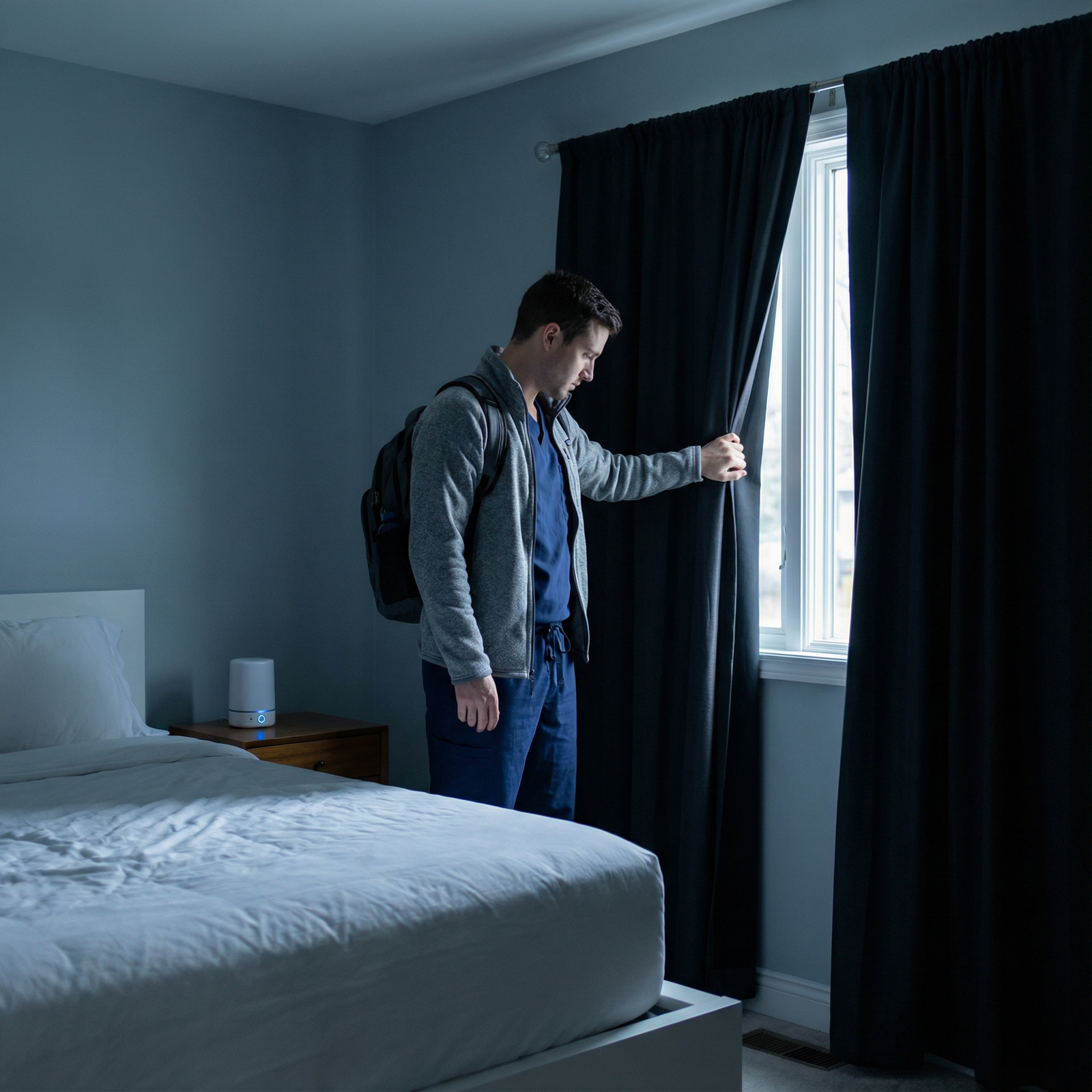
What if the part of you that makes you good at medicine is exactly what makes night float wreck you?
You’re great with people, but nights leave you wired and lonely.
Or you’re quiet and analytical, and nights drain you because there’s no real “off” time—just pagers and fluorescent lights.
Night float doesn’t hit everyone the same. Extroverts and introverts get crushed in different ways. If you try to recover like the opposite of who you are, you’ll keep feeling fried no matter how much you “sleep more” or “drink more water.”
Let’s fix this properly.
I’m going to break this down by:
- What nights do to your brain and body
- How this plays out differently for introverts vs extroverts
- Concrete, step‑by‑step recovery plans tailored to each
- How to adjust on switch days and post‑call so you do not tank your next block
You’re in residency. You do not have infinite time or control. So everything here assumes you’ve got:
- Limited days off
- Rotating schedules
- Random last‑minute “can you stay a little longer?” moments
We’ll work inside that reality, not some fantasy schedule.
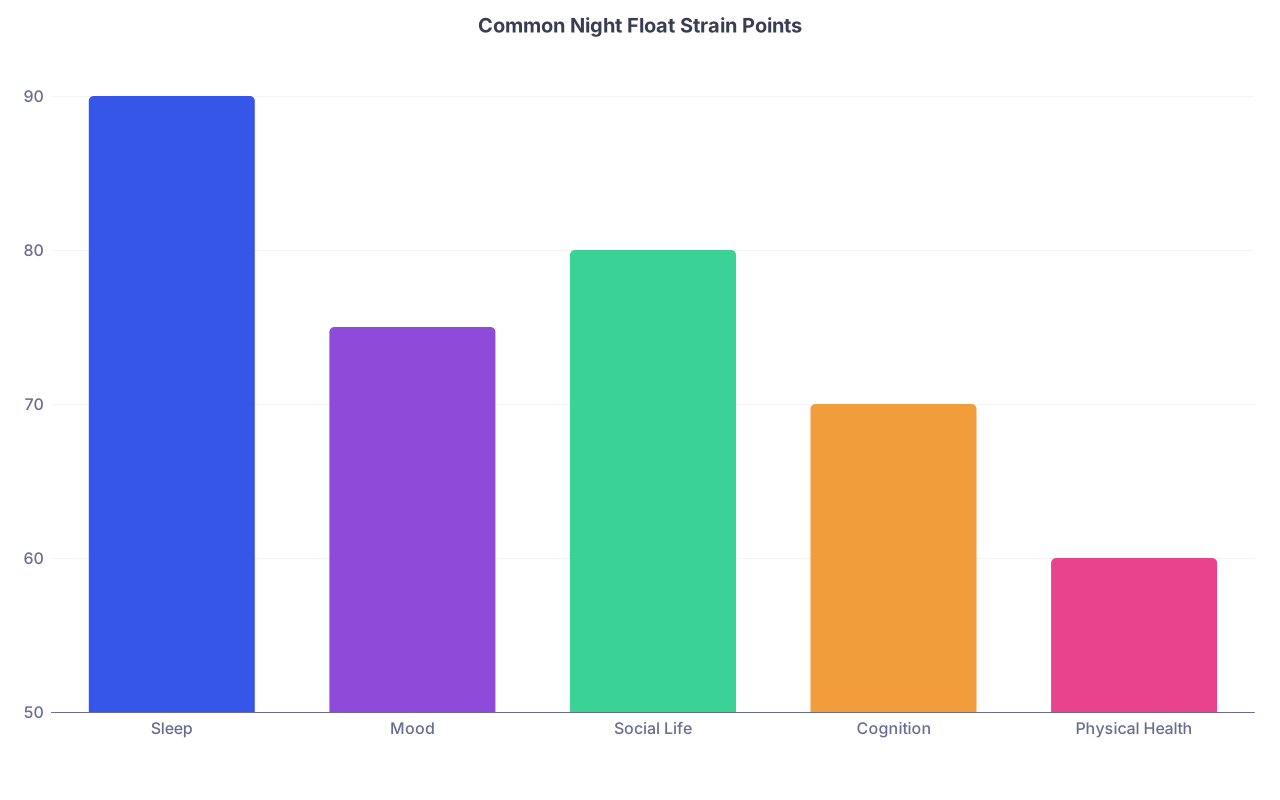
| Category | Value |
|---|---|
| Sleep | 90 |
| Mood | 75 |
| Social Life | 80 |
| Cognition | 70 |
| Physical Health | 60 |
Step 1: Know what night float is actually doing to you
Before we get cute about introvert vs extrovert, you need to understand the non‑negotiables: circadian abuse.
On night float your:
- Melatonin release is flipped or blunted
- Cortisol is mistimed (you’re alert when you should be winding down, and foggy when you should be sharp)
- Sleep pressure builds differently because your “day” is full of weird, bright, artificial cues
That leads to:
- Fragmented sleep (you wake up after 3–4 hours and can’t get back)
- “Jet lag mood” — irritable, flat, or weirdly emotional
- Micro‑mistakes that scare you more than you admit
None of that cares if you’re introverted or extroverted.
Where personality does matter:
- How you recharge
- What drains you besides sleep loss
- What makes you feel like a human instead of a night zombie
So fixing nights is a two‑layer problem:
- Circadian basics (same for everyone)
- Personality‑matched recovery (different for you vs your co‑intern)
You need both.
Step 2: Quick self‑audit – how are you actually wired?
You do not need a Myers‑Briggs report. You need to answer, honestly:
After a brutal shift:
- Do you instinctively want to text someone and talk it out?
- Or do you want everyone to leave you alone so you can scroll or read in silence?
On a golden weekend:
- Do you get energy from meeting friends, going out, being around people (even if tired)?
- Or do you feel like any plan that involves “talking to people for 3 hours” sounds like another shift?
Here’s the rule:
- If people time usually gives you energy → You lean extrovert for this purpose.
- If people time usually costs you energy (even if you like them) → You lean introvert.
That’s all we need for tailoring recovery.

Step 3: The non‑negotiable core: circadian rules for everyone
Whether you’re introverted or extroverted, these are the “laws of physics” of night float. Ignore them and personality tweaks won’t save you.
A. Post‑shift sleep plan that actually works
Typical night float scenario: 6 or 7 nights in a row, 12-hour shifts (say 7 PM–7 AM).
When you get home:
- Eat something light and boring within 30–45 minutes of getting home
- Example: toast with peanut butter, yogurt and granola, leftover rice and chicken
- Heavy food = reflux + garbage sleep
- Caffeine cutoff: nothing after ~2–3 AM on shift unless you are about to drive home and you’re unsafe. Then use a small dose, like half a cup of coffee, and accept you might lose 30–60 minutes of sleep.
Sleep environment:
- Blackout: not “kinda” dark. Really dark. Sheets over the window if you have to.
- White noise: fan, app, whatever. Hospitals are noisy; your body is primed to wake up to sounds.
- Phone: not on your chest. Plug it in across the room. Use Do Not Disturb with favorites allowed in case of actual emergencies.
Target sleep window for a 7 PM–7 AM shift:
- Sleep: roughly 8:30/9:00 AM → 2:30/3:00 PM
- Optional nap: 60–90 minutes around 5–6 PM if you’re crashing
That gives you ~5–6 core hours plus a small top‑off. Most residents won’t get perfect 8‑hour blocks during night float. Stop aiming for perfection and aim for consistent chunks.
B. Light exposure: your secret weapon
You’re trying to trick your brain about what “day” is.
- On the way home: sunglasses. Yes, even if it feels stupid.
- At home pre‑sleep: keep lights low, screens on night mode, no overhead blazing LEDs.
- Before shift: wake up, get bright light in your face for 15–20 minutes (sunlight if you can, bright white lamp if not). This is your “morning.”
Simple rule: dim and cave‑like before bed, stadium‑bright before heading in.
C. Food and hydration that don’t sabotage sleep
- One solid “main meal” before you go in (your fake dinner–lunch)
- Snack through the night (small, not giant meals)
- Nuts, cheese sticks, hummus and crackers, fruit, yogurt
- Avoid sugar bombs at 3 AM. You crash at 5. Every time.
- Water: aim to keep a bottle with you, but front‑load earlier in shift so you’re not chugging at 6 AM and then peeing all “night” instead of sleeping.
Once you’ve got this baseline, then we layer the introvert/extrovert differences.
Step 4: If you’re an introvert on night float
You seem “fine” on nights. You’re composed, you get your notes done, you don’t complain. People may even say you’re “built for nights” because you’re okay with quiet.
But internally?
- Your social battery is draining from constant micro‑interactions (pages, nurses asking questions, cross‑cover calls)
- You never actually get alone time that isn’t just collapsing into bed
- Group post‑shift breakfasts and “let’s all hang in the call room” stuff feel like punishment
So your recovery plan has to protect solitude and control.
A. Your 24‑hour template (introvert version)
Assume 7 PM–7 AM shift.
7:15–8:00 AM – Decompress alone
- No “communal breakfast” unless it genuinely restores you (for most introverts on night float, it does not)
- Simple rule: 10–15 minutes of quiet non‑screen decompression after shift or during commute:
- Drive in silence or with calm music/podcast
- If you train/bus, noise‑canceling headphones, nothing work‑related
8:15–9:00 AM – Transition routine home → bed
- Do the same 2–3 steps every day. Autopilot:
- Quick shower (hot, then slightly cooler at the end)
- Light snack
- Curtains, white noise, bed
- Do not check messages, group chats, or work email “quickly.” Your brain will spin.
9:00 AM–2:30 PM – Core sleep
Non‑negotiable. Warn partners/roommates: “During night float, 9–3 is off‑limits unless someone’s on fire.”
2:30–4:00 PM – Low‑stim solo time
This is key for introverts.
- Do not immediately socialize or call people back.
- Protect at least 30–60 minutes of “quiet wakefulness”:
- Reading
- Light show or YouTube (non‑medical)
- Short walk alone with sunglasses
- This is the time your brain finally feels like it belongs to you.
4:00–5:00 PM – Functional life tasks (limited)
Pick 1–2:
- Dishes + one load of laundry
- Pay bills and answer 2 non‑urgent texts
- Order groceries online
Do not try to “catch up on life” fully. You’ll burn the little energy you have.
5:00–6:00 PM – Optional nap or rest
If you’re dragging, 60 minutes in bed. If you’re wired, keep it to quiet rest—lying down, stretching, but not doomscrolling.
6:00–6:30 PM – Pre‑shift “morning” routine
- Bright light
- Eat main meal
- Brief check‑in with 1–2 important people if you want to (not group chats)
Then go in.
B. Guardrails for introverts
Say no to “optional” social when your battery’s empty
You do not have to go to the 8:30 AM post‑shift brunch just because everyone’s going. A simple, “I’m dead, I’m heading home to crash” is enough. The people who matter will get it.One person, not five
If you want support, pick one safe person to text or call rather than engaging three group chats. Less noise, more actual connection.Micro‑solitude on shift
On nights, especially in busy services:
- Take 3–5 minutes alone in a quiet stairwell or empty room when you can
- Close your eyes and breathe slowly for 10 breaths
I’ve watched introverts stay semi‑functional for entire weeks just by taking two of these micro‑breaks a night.
- Use headphones strategically post‑shift
Door closed, white noise, and noise‑blocking headphones if you live with extroverted co‑residents. You’re not mean. You’re protecting sleep and sanity.

| Step | Description |
|---|---|
| Step 1 | Post shift 7 AM |
| Step 2 | Quiet commute |
| Step 3 | Brief social decompress |
| Step 4 | Home snack and shower |
| Step 5 | Core sleep 9 AM to 2 30 PM |
| Step 6 | Solo low stim time |
| Step 7 | Short social check in |
| Step 8 | Life tasks |
| Step 9 | Optional nap or exercise |
| Step 10 | Main meal and bright light |
| Step 11 | Back to night shift |
| Step 12 | Introvert or Extrovert |
| Step 13 | Introvert or Extrovert |
Step 5: If you’re an extrovert on night float
You might look like you’re handling it well—chatting with nurses, joking with the cross‑cover team, living on coffee and gallows humor.
Then on your days “off” you feel:
- Flat, weirdly sad, or restless
- Lonely because your whole social circle is on the opposite schedule
- Scrolling Instagram at 3 PM watching people at brunch and feeling like you’re in exile
Your problem isn’t just sleep. It’s social deprivation and emotional backlog.
So your recovery plan has to deliberately build in connection—without destroying your sleep.
A. Your 24‑hour template (extrovert version)
Still assuming 7 PM–7 AM shift.
7:15–8:00 AM – Short social decompression
Unlike the introvert, a 10–20 minute post‑shift connection can help:
- Quick breakfast with 1–2 co‑residents, not the entire department
- Or a short call to your partner/friend on your commute: “I’m alive, couple of crazy cases, going to crash soon.”
Set a hard end time. Social yes, but not 2 hours of chatting.
8:30–9:00 AM – Wind down and bed
Same basics: shower, snack, dark room, phone away.
9:00 AM–2:30 PM – Core sleep
Non‑negotiable.
2:30–3:00 PM – Wake + light
Sit by the window or use a bright light lamp. Think of it as “coffee with the sun.”
3:00–4:00 PM – Real‑time connection
You actually need this.
Options:
- 20–30 minute video call with a close friend or partner
- Walk with a roommate who’s around
- If you live alone: phone call with someone who makes you feel normal, not just venting
This is where extroverts win or lose nights. If you skip this repeatedly, you start to feel detached and depressed.
4:00–5:30 PM – Life + brief movement
- 15–20 minutes of some kind of movement: walk, bodyweight exercises, parking farther and walking to the hospital
- One or two necessary chores
Physical movement helps stabilize mood much more for extroverts because it often becomes another mini social outlet (gym buddy, seeing people outside).
5:30–6:15 PM – Main meal + light, fun stimulation
- Bigger meal here
- Put on something social‑feeling: a show you follow with friends, group text where you send a quick meme, etc.
6:15–6:45 PM – Transition to work
- Commute playlist that makes you feel alive, not just awake
- Quick check‑in text: “Heading in, wish me luck.”
For extroverts, even tiny social anchors reduce that creeping “I’m the only one awake in this city” feeling.
B. Guardrails for extroverts
- Stop trying to squeeze in full social days
Huge mistake: on your one day “off,” you wake at noon, then try to see 5 friends, go to dinner, then stay up late. You nuke your sleep and drag for the next 3 shifts.
Cap it:
- One main social plan per off day (brunch or dinner, not both)
- Hard boundary on alcohol; on nights it wrecks already fragile sleep
- Use asynchronous connection intentionally
If your people are on day schedule:
- Start a 3–5 person group chat labeled something dumb (e.g., “Night Goblins”)
- Drop one message a day with a snapshot: call room chaos, empty hallway, 4 AM snack
- Ask them to send a daily “normal life” photo back
You get social input without needing everyone awake when you are.
- Know when “being social” is actually avoidance
Sometimes extroverts use constant talking to avoid processing tough stuff: a code that went badly, an attending who shredded them. Build in 5–10 minutes alone to actually emotionally catch up. Journal, jot a note, whatever. If you don’t, you’ll feel weirdly overamped.
| Aspect | Introvert Priority | Extrovert Priority |
|---|---|---|
| Post-shift time | Quiet, solo decompression | Brief social check-in |
| Midday block | Protected solitude | Intentional connection |
| Micro-breaks on shift | Small pockets of alone time | Short chats, teamwork moments |
| Off-day schedule | Minimal social plans | One solid social anchor |
| Biggest risk | Over-isolation into numbness | Overscheduling, sleep erosion |
Step 6: Switch days and post‑float: how not to wreck the landing
The two most dangerous times on night float are:
- The first 1–2 nights (when your body’s still on days)
- The switch back to days (when you just want to “live like a normal person” again and blow up your sleep)
A. Going onto nights
Day schedule → first night shift.
Best strategy for most residents:
- Sleep in a bit on the day before (e.g., to 9–10 AM instead of 6)
- Short afternoon nap from ~3–5 PM
- Caffeine at start of shift, small top‑off around 1–2 AM
Introvert twist:
- That pre‑shift afternoon? Keep it quiet. Do not overbook. You’re about to be “on” all night.
Extrovert twist:
- Brief social contact before your first night (coffee with a friend, lunch with partner) so you don’t start the block already feeling disconnected.
B. Coming off nights (last shift)
This is where people do dumb things.
General best move:
- Sleep a shorter block after your last night (e.g., 9 AM–12:30/1 PM)
- Wake up, get bright light, stay awake until 9–10 PM
- Then go to bed and start aligning with days
Introvert version:
- That afternoon/evening: keep it low key. One calm plan at most. Your body is wrecked; do not agree to social marathons.
Extrovert version:
- Yes, you can see friends that evening.
- No, you shouldn’t stay out past 11 PM “making up for lost time.” You will pay for it for three days.
If you can, block the next morning from anything major (no dentist, no important meetings). Use it as a gentle landing.
Step 7: When it’s going off the rails—red flags and fixes
Personality aside, there are points when night float is no longer “hard but doable” and is turning into “you’re in trouble.”
Watch for:
- You’re making near‑miss mistakes 2–3 nights in a row
- You can’t fall asleep more than 2–3 hours total, multiple days
- You feel either completely numb or on the verge of tears most of the time
- You start fantasizing about driving your car into a ditch just to get admitted and sleep
If you’re there:
- Tell someone in your program you trust: chief, PD, mentor, senior. Be explicit: “Nights are going badly. I’m not safe if this keeps going.”
- Talk to occupational health or employee wellness if available; many hospitals actually have night‑shift sleep resources, but nobody advertises them.
- Strip your life down to the absolute basics: sleep, food, minimal movement, one small source of joy (a show, a book, time with one person). Everything else can wait two weeks.
And yes, sometimes you just need to be pulled from a block or get your schedule adjusted. That’s not weakness. That’s not “failing nights.” That’s protecting your license and your patients.
Your one concrete move today
Open your calendar (or your block schedule) and look at your next night float stretch.
Right now, draft a one‑day template for yourself—introvert or extrovert version—with:
- Your core sleep block
- A protected solo or social block (depending on you)
- A short decompression ritual after shift
Write it down as actual times. Not vibes.
Because when you’re walking out of the hospital at 7:15 AM, exhausted, you won’t “remember to take care of yourself.” You’ll follow whatever default you’ve already scripted.
So script it now—once—for your actual personality, not the person you think you’re supposed to be.


