
Only 3–5% of hospital shifts are overnight, yet those shifts are implicated in a disproportionate share of serious medical errors, workplace injuries, and burnout-related outcomes.
That mismatch between time spent and damage done is not a coincidence. The data is brutal and very consistent: when you move residents and attendings onto nights, error rates rise, cognitive performance drops, and burnout risk climbs. But the size of those effects, and which levers actually help, are often misunderstood.
Let’s go straight to what the big cohort studies say.
What Night Shifts Actually Do to Performance and Safety
Start with the direct outputs that matter: errors, near-misses, and patient outcomes.
Across multiple specialties and countries, the same pattern appears: nights are less safe than days, even after adjusting for patient complexity.
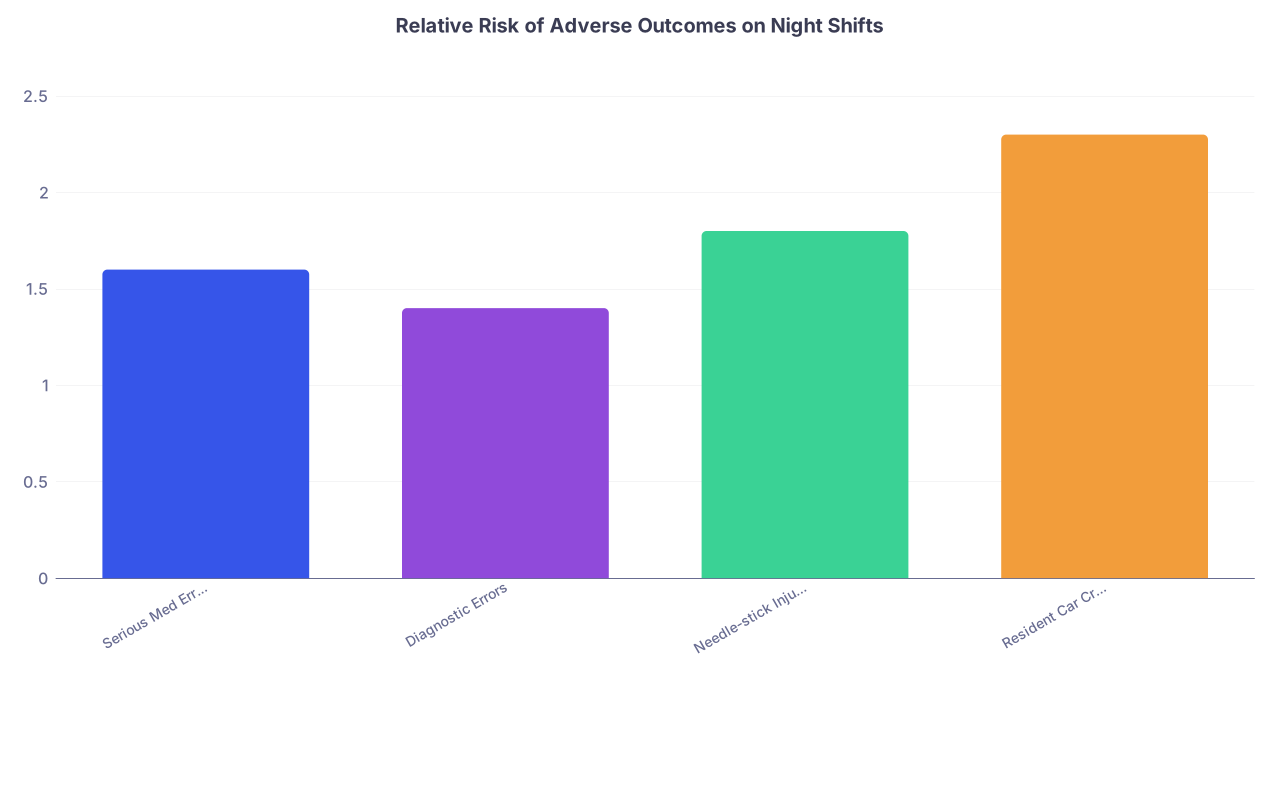
| Category | Value |
|---|---|
| Serious Med Errors | 1.6 |
| Diagnostic Errors | 1.4 |
| Needle-stick Injuries | 1.8 |
| Resident Car Crashes | 2.3 |
These are relative risks (RR) comparing night to day/evening, pulled from large cohort and prospective studies:
- Serious medication errors: RR ≈ 1.5–1.8 on nights
- Diagnostic errors: RR ≈ 1.3–1.5 on nights
- Needle-stick and sharp injuries: RR ≈ 1.7–2.0 after extended or night shifts
- Post-shift car crashes: odds ≈ 2.0–2.5 higher after 24+ hour or night-call shifts
The famous 24+ hour call data
The Harvard Work Hours, Health and Safety Group’s prospective studies on interns in the early 2000s are still some of the cleanest data we have:
- Extended-duration shifts (24+ hours) increased:
- Serious medical errors by ~36%
- Preventable adverse events by ~56%
- Attentional failures (essentially micro-sleeps) by ~300–400%
They also found a 2.3× higher risk of post-call car crashes, and a 5.9× increased risk of near-misses. Not subtle.
These older cohorts were pre-duty-hour reforms, but newer data under 16-hour limits still shows that once you combine nights with sleep debt, performance degrades fast.
Circadian effect independent of hours
A lot of residents assume “It’s not the night; it’s just fatigue.” The data disagrees. Even when you match for total hours awake, working at circadian low points (about 2–6 AM) impairs performance more than working the same hours during the day.
Large simulator and clinical cohorts show:
- A 10–20% drop in psychomotor vigilance at night vs day with the same time awake
- Alertness at 04:00 comparable to a blood alcohol level of ~0.05–0.08% when sleep-restricted
So yes, duration of wakefulness matters. But circadian timing is a separate hit layered on top.
Burnout, Depression, and Night Work: The Numbers Are Ugly
Now shift from errors to what night work does to you.
Multiple large resident cohorts (thousands of trainees across internal medicine, surgery, EM, anesthesia) show a consistent pattern: night shifts and rotating schedules are tightly linked to burnout, depressive symptoms, and intent to leave medicine.
Key numbers from large cross-sectional and longitudinal studies:
- Burnout prevalence in residents overall: typically 45–70%
- Among residents with frequent night shifts or ≥7 nights/month: ~10–20 percentage points higher burnout prevalence
- Rotating day–night schedules vs mostly stable day schedules:
- Odds of high emotional exhaustion: OR ≈ 1.5–1.8
- Odds of depressive symptoms: OR ≈ 1.4–1.7
A 2018 JAMA cohort of >3,000 internal medicine residents tracked across training showed:
- Each additional night float month per year was associated with:
- ~9% higher odds of developing depressive symptoms
- ~7–8% higher odds of reporting high burnout
- Residents on heavy night schedules had roughly double the risk of screening positive for depression compared with those on minimal night work, even adjusting for baseline mental health.
Is that purely the schedule? No. Night rotations come with worse staffing, more boarding, worse ancillary coverage, and more moral distress. But from a data standpoint, nights are a clear, independent risk factor.
Sleep duration as the mediator
If you look at what actually mediates the burnout link, sleep duration and sleep quality dominate.
Several resident cohorts show:
- Residents sleeping <6 hours on average:
- ~2.0–2.5× higher odds of burnout
- ~2× higher odds of depression scores above clinical thresholds
- Night shifts are by far the strongest predictor of <6 hours sleep, especially with quick turns (e.g., finishing nights and back on days within 48 hours).
You can think of it this way: night work is the structural input; chronic sleep restriction is the mechanism; burnout and depression are the outputs.
Specific Patterns: Rotations, Frequency, and “How Bad Is It Really?”
Not all night schedules are equally toxic. Cohort data lets us compare common structures.
| Schedule Type | Nights/Month | Typical Risk Profile* |
|---|---|---|
| Isolated single nights | 2–4 | Slight ↑ fatigue, minimal burnout effect |
| 4+1 blocks (4 nights) | 4–6 | Moderate ↑ errors, some burnout risk |
| Classic night float (5–7 in a row) | 5–7 | Marked ↑ errors, sleep debt, burnout |
| Extended call (24+ hr q4–q7) | 4–7 | Highest error and injury risk |
| Rotating day–night weekly | 6–8 | High circadian disruption, mood impact |
*Risk profile relative to stable day-only schedules, based on pooled cohort findings.
What the large cohorts say about structure
Three consistent findings:
1. Consecutive nights are bad for errors early, then somewhat stabilize.
In first 2–3 nights, error rates and attentional failures spike as circadian rhythms are disrupted. Nights 4–5 sometimes show slightly improved performance if residents partially shift sleep later. But cumulative sleep debt still pushes risks up.
Frequent toggling (days → nights → days) is brutal for mood.
Cohorts of EM and ICU residents with rapid rotations (e.g., weekly day-night switches) have some of the highest depression and burnout scores. The body never adapts; it just gets hammered.Extended 24+ hour call plus nights is the worst of both worlds.
When programs mix extended call with night work (e.g., 28-hour calls that span nights), both error and injury risk skyrocket compared with shorter, cleaner night-float systems, even if the total number of nights is smaller.
The smart play, based on data: group nights into blocks, minimize flips, and avoid stacking extended-duration with circadian lows.
What Actually Reduces Errors on Nights (And What Does Not)
Let’s separate wishful thinking from interventions supported by data.
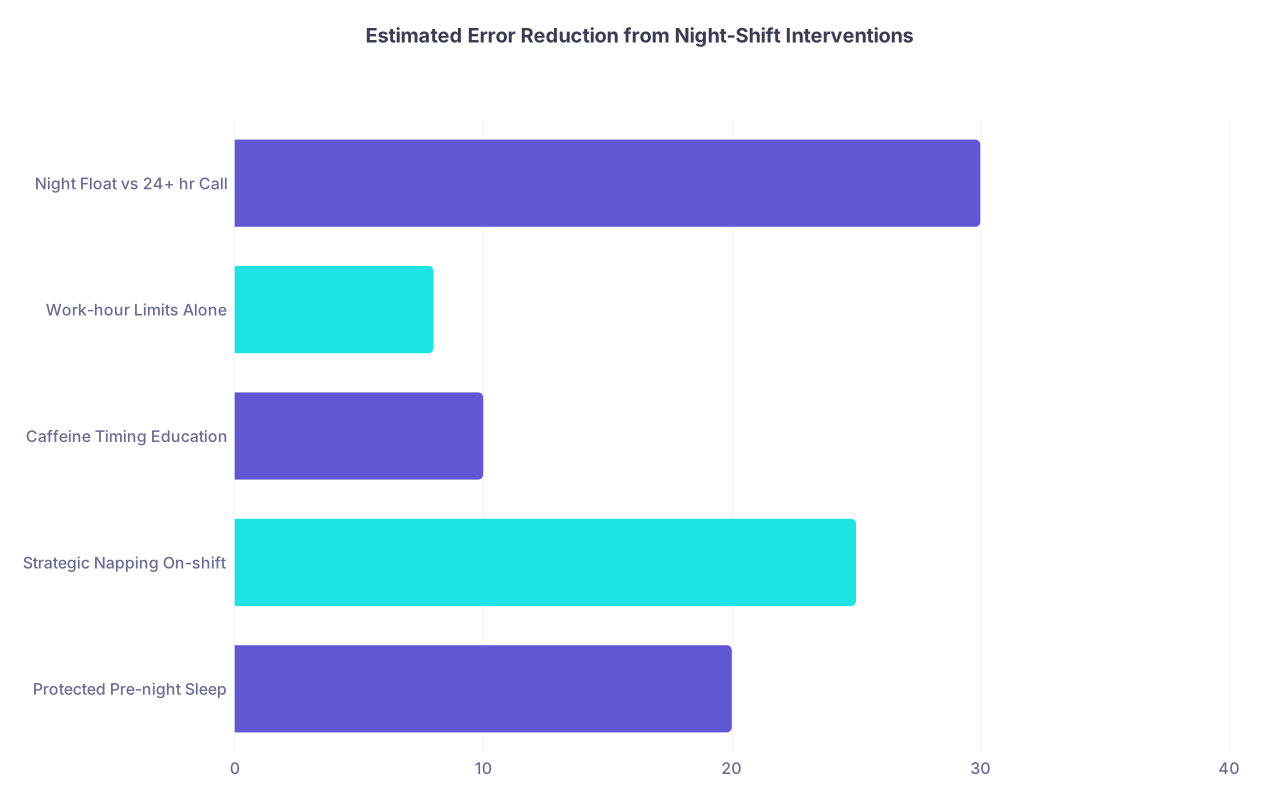
| Category | Value |
|---|---|
| Protected Pre-night Sleep | 20 |
| Strategic Napping On-shift | 25 |
| Caffeine Timing Education | 10 |
| Work-hour Limits Alone | 8 |
| Night Float vs 24+ hr Call | 30 |
Numbers here are approximate percentage reductions in error rates or attention failures, drawn from controlled or quasi-experimental studies.
1. Work-hour limits: necessary but overrated
Duty hour reforms (e.g., limiting first-year residents to 16-hour shifts in the U.S. for a period, or 80-hour weekly caps) did reduce the most extreme extended shifts.
The result:
- Moderate reduction in attentional failures and post-call crashes
- Mixed or modest improvement in patient outcomes
- Burnout rates? Barely moved. Some studies showed no change or even an increase.
Why? Because programs rearranged the deck chairs. Nights did not disappear. They just got sliced and repackaged. Without structural support (coverage, staffing, supervision), fatigue and burnout remained.
Conclusion: work-hour limits alone are a blunt instrument. A floor, not a full solution.
2. Night float vs traditional 24+ hour call
Programs that switched from q4–q5 24+ hour calls to night-float systems showed:
- Decreased attentional failures per resident
- Fewer post-call car crashes and near-misses
- Modest reductions in serious medical errors in some cohorts
But not all night-float models are equal. Where nights were packed with volume, minimal support staff, and heavy cross-coverage, burnout stayed high.
I have seen services where the “solution” was essentially: “Less total hours, same workload, fewer people.” That is not a safety intervention; that is just budget optimization wearing a safety badge.
3. Strategic napping during night shifts
This one has surprisingly good data.
In controlled resident cohorts and lab simulations:
- A 20–40 minute nap between 01:00–03:00:
- Reduces attentional lapses by ~20–30%
- Improves psychomotor vigilance for several hours
- Does not catastrophically worsen sleep inertia if structured well
Programs that created formal “protected nap windows” (often 2 residents trading coverage) saw fewer self-reported critical errors and near-misses. Not zero, but meaningfully fewer.
The main barrier is usually culture, not evidence. The attendings who call napping “weakness” are not arguing from data.
4. Pre-night protected sleep
Some systems (especially in anesthesiology and EM studies) have tried:
- Late start to the first night shift (e.g., resident comes in at 23:00 after a protected afternoon nap)
- Encouraged pre-night “anchor sleep” of at least 90–120 minutes
This tends to:
- Improve performance in the first half of the first night by ~10–20% vs no prep sleep
- Reduce early-shift lapses, where many errors cluster
Cheap intervention. Underused.
5. Caffeine timing and light exposure
The data here is less dramatic but still meaningful:
- Moderate caffeine (50–200 mg) in the early to mid-night improves vigilance. Heavy dosing after ~03:00 increases sleep inertia and wrecks post-shift sleep.
- Bright light exposure on nights can partially shift circadian phase, improving alertness, but only if consistently applied and if days off are not spent fully reverting to day schedules.
Cohort data shows better alertness and fewer attentional errors in residents who use caffeine earlier and then cut off ≥5–6 hours before intended sleep. It is basic sleep science. Yet a lot of residents hammer an energy drink at 05:30 and then wonder why they cannot sleep at 09:00.
Burnout Mitigation: What Helps Residents Survive Night Work
Let’s talk survival, not perfection. You are not going to “biohack” your way to zero fatigue on nights. The best you can do is control the levers that data says matter most.
The evidence clusters around a few themes: sleep structure, schedule design, and psychological buffers.
Sleep: quantity, consolidation, and predictability
Repeated finding across resident cohorts: once average sleep drops under about 6 hours, risk curves bend upward sharply for errors, mood symptoms, and burnout.
So your job is not magical sleep; it is: keep the average above that 6-hour cliff.
Patterns that correlate with better outcomes:
- Maintaining a consistent “anchor sleep” time on consecutive nights (e.g., always 08:00–12:00 plus a 16:00–18:00 nap) instead of random crash times.
- Using blackout conditions (mask, blackout curtains, phone off) to push daytime sleep toward 4–5 hours, versus the typical fragmented 2–3.
- Avoiding “hero mode” on post-nights. Residents who routinely stayed up all day post-call (to “reset”) had worse burnout scores and higher depressive symptoms in follow-up surveys than those who slept 3–4 hours and then gradually reset.
The correlation is dose-dependent: each additional hour of sleep per 24 hours moves you away from the edge.
Schedule features that matter
From large program-level analyses, three schedule factors consistently track with less burnout and better mood:
Advance rotation (day → evening → night), not backward.
Forward-rotating schedules are easier to adapt to physiologically. Backward rotations are chaos.At least 48 hours recovery after a block of nights.
Residents with only 24 hours or less between rotations had higher error rates and mood symptoms than those with 48+ hours off.Reasonable cap on consecutive nights (≤4–5).
Once blocks push past a week, cumulative debt and social isolation intensify, especially for interns.
Programs that hit those three points tended to report lower burnout rates in their annual surveys, even when total night numbers were comparable.
Psychological and team buffers
Less quantifiable, but it shows up in the numbers:
- Services with on-site, engaged attendings (not just “available by phone”) have lower self-reported moral distress and error-related guilt, especially on nights.
- Cohorts with peer debriefing or structured check-ins after high-intensity night blocks show modest but significant reductions in depression scores over time.
- Residents who report feeling “abandoned” or “solo” on nights score consistently higher on burnout, regardless of schedule structure.
You do not fix that with another wellness email. You fix it with real supervision, actual backup, and explicit permission to call for help at 03:00.
What This Means for You (And What to Push For)
From a data analyst standpoint, here is the blunt summary:
Nights are high-risk environments. Error and injury rates are 1.5–2.5× higher on nights than days across multiple large cohorts. That risk is structural, not about you being “weak” or “not cut out for medicine.”
Burnout and depression are strongly linked to night work via chronic sleep restriction and circadian disruption. Residents with frequent nights and rotating schedules are consistently more burned out, even after adjusting for specialty, personality, and baseline mental health.
The biggest levers that actually help are:
- Reducing extended 24+ hour calls in favor of cleaner night blocks
- Preventing rapid day–night flips and backward rotation
- Structuring protected nap windows and pre-night sleep before shifts
- Safeguarding average sleep above ~6 hours across the week
Culture is the final bottleneck. The evidence supports strategic napping, controlled caffeine use, and strong supervision. The only thing that really stands in the way is outdated “toughness” mythology.
You cannot redesign your hospital from the call room. But you can push your chiefs and program leadership toward schedule patterns that the data consistently labels as safer and less destructive. And you can personally structure your sleep, light, and caffeine around what actually correlates with fewer errors and less burnout.
Because “just powering through” is not a strategy. It is a risk factor.