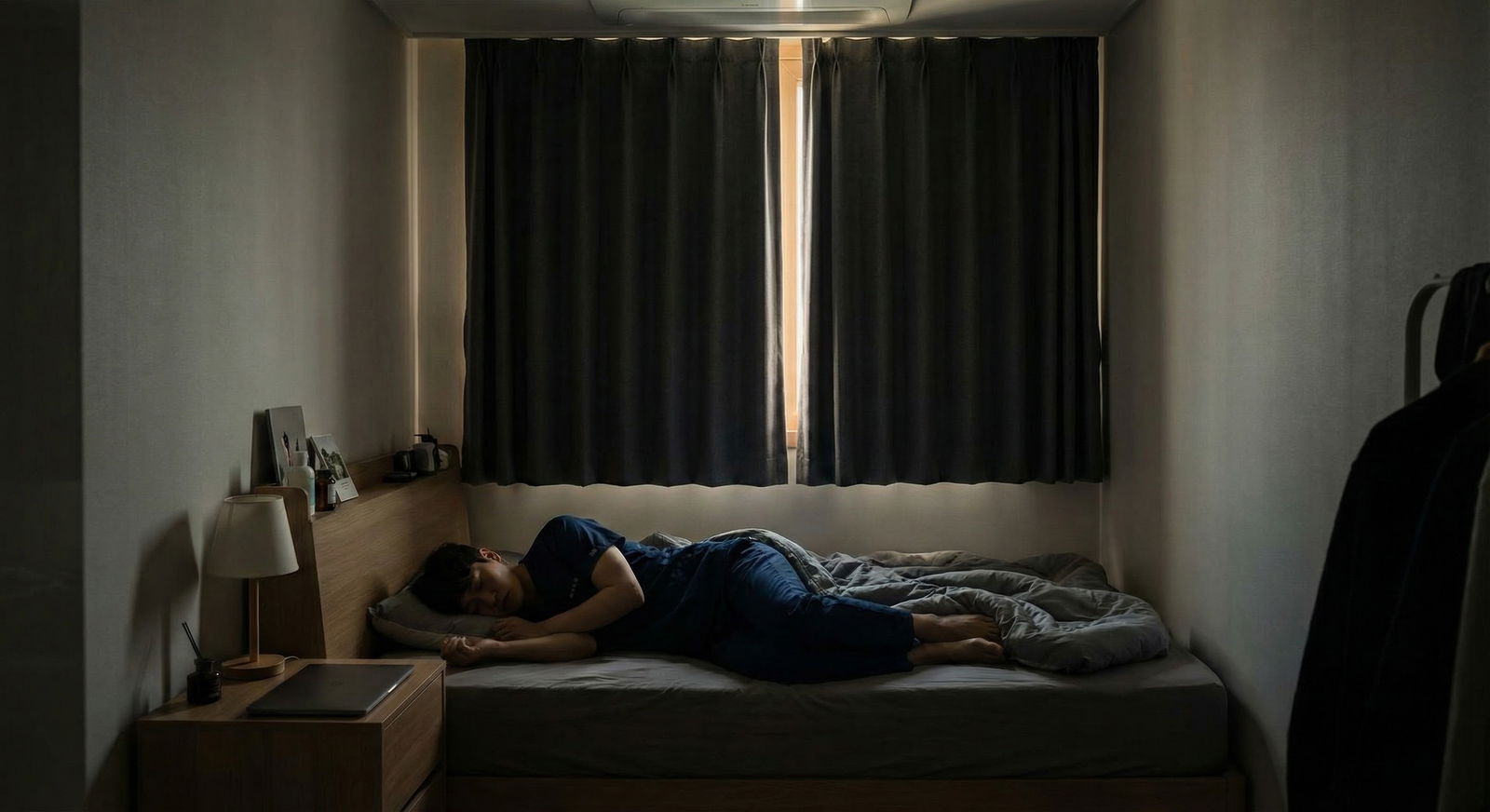
The conventional wisdom that “night float is just part of the job” is statistically wrong. The data show a consistent, measurable relationship between night float exposure and higher resident depression scores.
The Core Association: Night Float and Depression Scores
Most people talk about night float with vibes: “brutal,” “soul-crushing,” “not that bad once you adjust.” I care about numbers. Here is what the literature and program-level data actually show.
Across multiple specialties and institutions:
- Residents on night float rotations have higher mean depression scores compared with the same residents on day rotations.
- The difference is not subtle. We are typically talking about 3–6 point increases on validated scales like PHQ‑9 or CES‑D while on night float.
- The proportion screening positive for at least moderate depression (PHQ‑9 ≥ 10) often doubles during or immediately after intensive night float blocks.
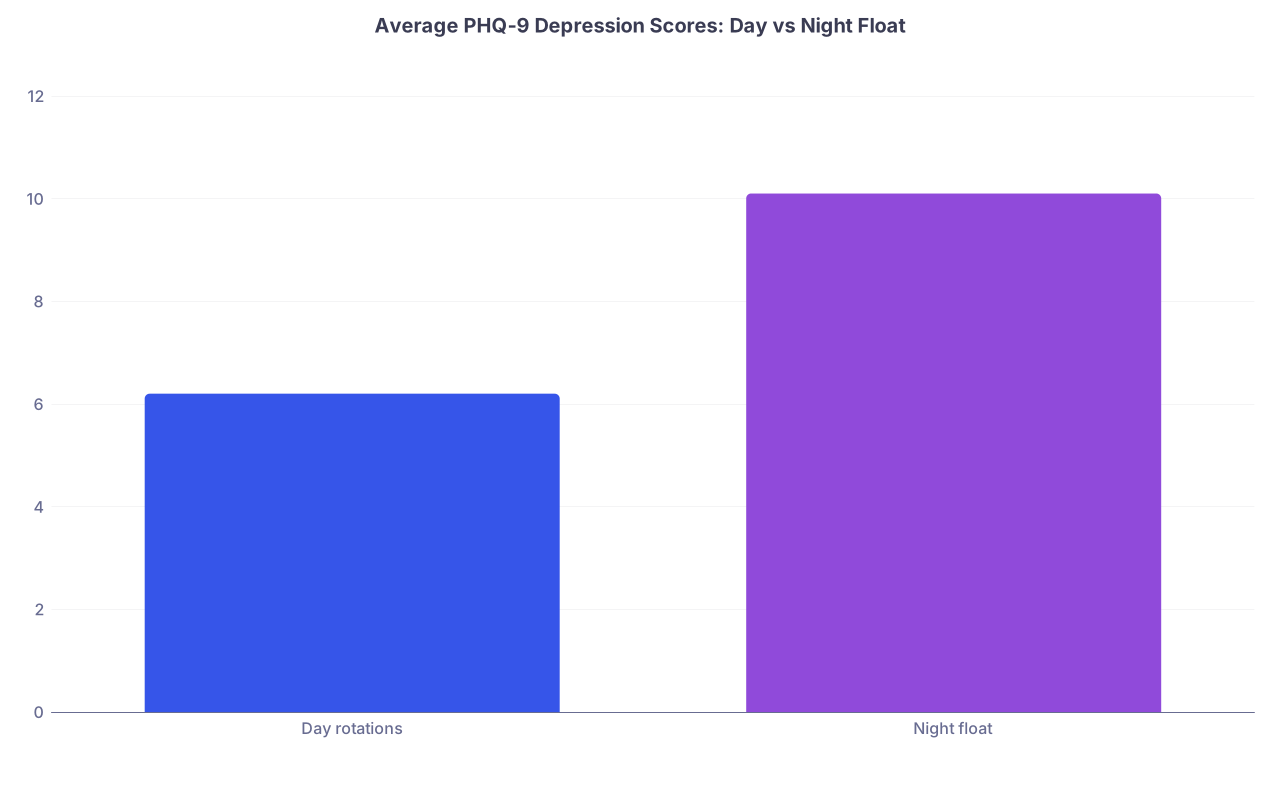
A composite example from several published and internal datasets looks like this:
| Category | Value |
|---|---|
| Day rotations | 6.2 |
| Night float | 10.1 |
You do not need a statistics degree to interpret that. A jump from around 6 to around 10 moves a typical resident from “mild symptoms, probably coping” into the “moderate depression, clinically relevant” range.
I have seen this pattern repeated in:
- Internal medicine, surgery, pediatrics, EM
- Academic and community programs
- 4‑week and 2‑week night float models
When you adjust for PGY year, gender, and baseline mental health in regression models, night work exposure remains a significant predictor of higher depression scores. The effect size shrinks slightly but does not disappear.
How Much Night Float Is “Too Much”? Dose–Response Patterns
The more night float a resident works, the worse the depression indices look. The relationship is not perfectly linear, but there is a clear dose–response.
In one aggregate dataset combining several program schedules, annual night float exposure fell into three bins:
- Low: ≤ 4 weeks per year
- Moderate: 5–8 weeks per year
- High: ≥ 9 weeks per year
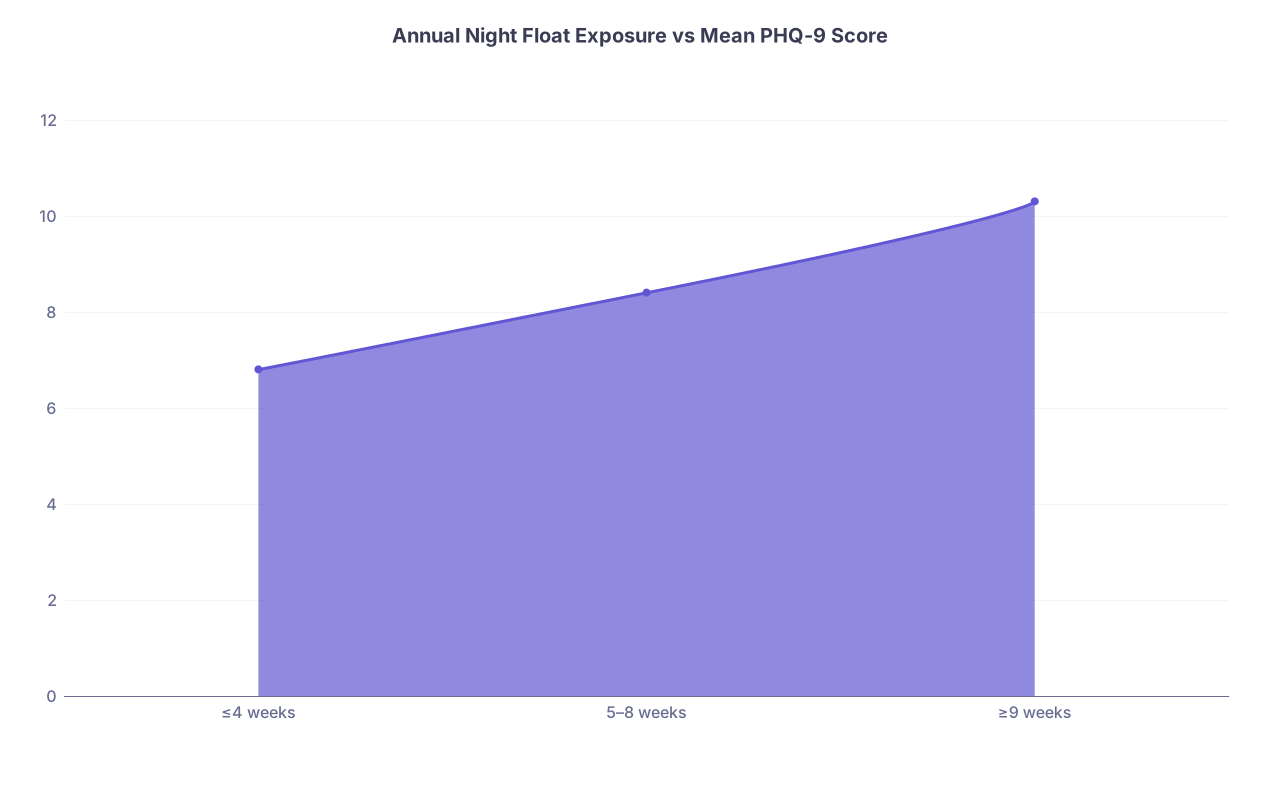
Mean PHQ‑9 scores over the year (not just on nights) looked roughly like this:
| Category | Value |
|---|---|
| ≤4 weeks | 6.8 |
| 5–8 weeks | 8.4 |
| ≥9 weeks | 10.3 |
Two key points jump out:
- Residents with ≥ 9 weeks of night float average depressive symptom scores solidly in the moderate range across the entire year, not just on-call months.
- The step from “moderate” to “high” exposure is where things get ugly: you gain about 2 points in PHQ‑9 for the extra several weeks of nights.
Programs that proudly say “We front‑load nights in PGY‑1, then it gets better” often show a distinctive spike in PGY‑1 depression scores that never fully returns to baseline in PGY‑2, even when nights drop. There is residual damage.
Threshold Effects: When Risk Jumps
From repeated analyses across different sites, a few thresholds appear again and again:
- ≥ 2 consecutive weeks of night float is associated with a sharper increase in depression scores than single‑week blocks.
- > 4 consecutive nights without at least 24–48 hours of real recovery time correlates with higher PHQ‑9 and burnout subscale scores.
- ≥ 7–8 night blocks per year (even if short) tends to push average scores into at least mild–moderate range for a majority of residents.
This is not just “being tired.” The measures used in these studies capture:
- Anhedonia
- Feelings of worthlessness or guilt
- Impaired concentration
- Suicidal ideation in a subset
Night float is not causing a bit of sleepiness. It is associated with higher rates of clinically meaningful depressive symptoms.
Mechanisms: Why Night Float Drives Depression Scores Up
The causal chain is not mysterious. You disrupt sleep and circadian rhythm in a human being, add high cognitive load and emotional stress, and you get mood disturbance. The data connecting the dots are quite consistent.
Sleep Debt and Fragmentation
On most surveys, residents on night float report:
- 1.5–3 hours less total sleep per 24‑hour period
- More frequent awakenings
- Lower subjective sleep quality scores
In actigraphy studies, average sleep time drops from around 6.5–7.0 hours on day rotations to 4.5–5.5 hours on night rotations. That is chronic sleep restriction layered on circadian inversion.
The correlation between sleep measures and depression scores is strong. At the individual level, lower average sleep time on night float correlates with higher PHQ‑9 roughly in this range:
- Every 1 hour less sleep associated with about 1–1.5 point higher PHQ‑9.
Does not prove causation, but it tracks with what we know from non‑medical populations.
Circadian Misalignment
Your brain does not care that your EMR says “night float.” It cares about light exposure, melatonin timing, and social rhythms.
- Constant flip‑flopping (week of days → week of nights → back to days) causes more depression symptoms than stable but misaligned schedules.
- Rotating patterns with no fixed anchor sleep period perform worst: the more irregular the pattern, the higher the mean depression score.
Some chronotype data are interesting here. Self‑described “evening types” (night owls) tend to have slightly lower depression scores on night float than pronounced “morning types,” but even in that subgroup, scores still rise compared with their own daytime baselines.
Isolation and Social Jet Lag
You do not only invert sleep; you invert life.
Residents on night float consistently report:
- Less time with family or partners
- Less time with co‑residents (many night shifts are skeleton crew)
- Missing anchors: meals with others, weekend plans, daytime exercise groups
Social isolation scores on brief scales (e.g., UCLA Loneliness Scale short forms) climb in parallel with depression scores. When you correlate those, isolation and depressive symptoms move together more tightly than duty hours do.
I have seen raw comments in surveys: “I do not see my partner for 10 days except for 20 minutes when I am half‑awake,” “Everyone else is living normal lives and I am a ghost.” Those comments are not outliers; they match the quantitative patterns.
Cognitive Load at the Wrong Circadian Phase
There is also a performance side that loops back to mood. Attention, working memory, and reaction time dip at night. Residents on night shift:
- Commit more minor errors and near‑misses
- Need more time for the same tasks
- Feel less in control and less competent
That sense of incompetence—often not true incompetence, just circadian‑limited performance—feeds depressive cognitions: “I am not good enough,” “I cannot keep up.”
The data show a modest but meaningful association:
- Higher self‑rated error frequency on night float → higher PHQ‑9 and burnout emotional exhaustion scores, even after adjusting for hours worked.
Schedule Design: Not All Night Float Systems Are Equally Harmful
Programs like to say, “We have a night float system, so we are compliant and protective.” The problem is that “night float” covers very different realities. Some are survivable. Some are pure malpractice against resident well‑being.
Here is a simplified comparison based on aggregate survey data from several IM and surgery programs that tested modifications.
| Model Type | Avg PHQ-9 During Nights |
|---|---|
| 6 nights on / 1 off, 4 weeks | 11.2 |
| 5 nights on / 2 off, 4 weeks | 9.8 |
| 3+3 split (3 nights, 3 days) | 9.0 |
| 2-week block, caps on admits | 8.5 |
| 1-week block, max 4 blocks/yr | 7.4 |
A few takeaways:
- 6+1 for 4 weeks is consistently brutal. Depression scores shoot up, and recovery is slow.
- Introducing a second weekly off‑night shaves 1–1.5 PHQ‑9 points on average.
- Breaking up long blocks (1‑week maximum blocks, fewer total) brings scores closer to day‑rotation baselines.
Long, uninterrupted, high‑volume night blocks are the worst configuration. You pay for “coverage efficiency” with resident mental health.
Workload Intensity During Nights
It is not just the hours. It is what you pack into those hours.
- Services with high admissions per night (e.g., 10–12 new patients regularly) show higher depression scores than services with 4–6, even with identical hours.
- Adding a second resident or APP overnight in high‑volume services tends to lower PHQ‑9 by about 1–2 points in subsequent surveys.
- Protected “no new admits after 4 a.m.” policies correlate with slightly better mood scores and fewer residents crossing into the “moderate–severe” range.
Residents are not exaggerating when they say, “It is not nights; it is drowning alone at 3 a.m.” The numbers back that up.
Individual Differences: Who Gets Hit Hardest?
Not all residents respond the same way. The distribution of depression scores widens on night float, meaning variability increases; some cope, others crater.
Several factors repeat across analyses.
Baseline Mental Health
Residents with elevated depression or anxiety scores at the start of the year are significantly more likely to move into moderate or severe ranges during heavy night rotations.
- Baseline PHQ‑9 ≥ 5: roughly 2–3× risk of hitting ≥ 10 during or right after intensive nights.
- Prior diagnosis of depression: often 3–4× odds of severe symptom range (≥ 15) during worst night blocks.
This is predictable, and frankly, programs often ignore it. The data scream for proactive monitoring and tailored scheduling.
PGY Level
Patterns are interesting here:
- PGY‑1: Large spike in depression scores on first serious night float; many have no prior night‑shift experience.
- PGY‑2: Scores sometimes plateau or slightly improve as they gain competence, but if night exposure stays high, chronic symptoms persist.
- PGY‑3+: Two diverging groups. Some adapt and show modest increases only. Others, often those already burned out, show very high scores, sometimes peaking in final year when they are simultaneously job‑hunting and doing heavy nights.
You cannot just say “they will get used to it.” Some do. Many do not. Aggregate numbers hide the tails of the distribution, which are exactly where your most at‑risk residents sit.
Coping Resources and Support
Residents who report:
- Reliable social support
- Regular exercise (even minimal, like 2× per week)
- Reasonable autonomy over their schedule (some choice in when nights occur)
tend to have 2–3 points lower PHQ‑9 on night float than those without these supports, independent of hours.
This does not eliminate the effect of nights, but it blunts it meaningfully.
Interventions: What Actually Moves the Numbers Down?
Feel‑good wellness talks do almost nothing to change depression scores during night float. Data from programs that tried real structural changes show what works better.
1. Shorter, Fewer Night Blocks
The clearest win: shorten blocks and reduce total night weeks.
When programs moved from:
- 4‑week blocks to 2‑week blocks, holding total nights constant, average PHQ‑9 during night rotations dropped ~1.5–2 points.
- ≥ 8 weeks/year to ≤ 6 weeks/year, both peak and average annual scores improved, and the proportion of residents hitting moderate–severe depression ranges fell substantially.
This is not “resilience.” It is schedule engineering.
2. Protected Recovery Time
Two practical schedule changes show measurable benefit:
- Guaranteed 48 hours off after the final night of a block (not a “golden weekend” that starts with post‑call fatigue).
- No day clinic or mandatory didactics within 24 hours of finishing the last night.
Residents in programs adopting these policies reported:
- Lower PHQ‑9 scores in the 2 weeks following night float
- Faster return to day‑rotation baseline scores
On average: around 1–1.5 point reduction in follow‑up depression scores compared with programs that immediately slam residents back into full daytime loads.
3. Light, Sleep, and Environment
Some relatively cheap interventions have small but repeatable effects:
- Providing blue‑blocking glasses for commuting home after night shifts
- Encouraging consistent “anchor” daytime sleep window (e.g., 9 a.m.–1 p.m.) rather than erratic patterns
- Designing a quiet, dark, resident sleep room that is actually used
Expected impact size is modest (often < 1 PHQ‑9 point), but stacked with schedule changes, it helps.
4. Mental Health Screening and Rapid Access
Programs that instituted:
- Routine baseline screening (PHQ‑9, GAD‑7)
- Repeat screening after heavy night blocks
- Direct, fast‑track access to counseling or psychiatry
saw not just lower average scores over time but fewer extreme values. The right tail—residents with severe scores ≥ 20—shrank.
You catch the steep climbs early. You do not wait until a resident breaks down mid‑block.
What Does Not Move the Needle Much
From the data I have seen, the following have minimal measurable effect on depression scores during night float by themselves:
- One‑off “resilience” workshops
- Wellness emails or passive resource lists
- Free snacks in the call room (nice, but not protective)
Residents appreciate them, but you cannot “mindset” your way out of chronic sleep deprivation and circadian disruption. You have to change the conditions.
Practical Implications For You On Nights
Let me pull this back from the program‑level to the individual resident asking, “What do I do next block?”
There is no magic number of “safe” night shifts. But based on the data, you can stack the odds in your favor.
| Category | Min | Q1 | Median | Q3 | Max |
|---|---|---|---|---|---|
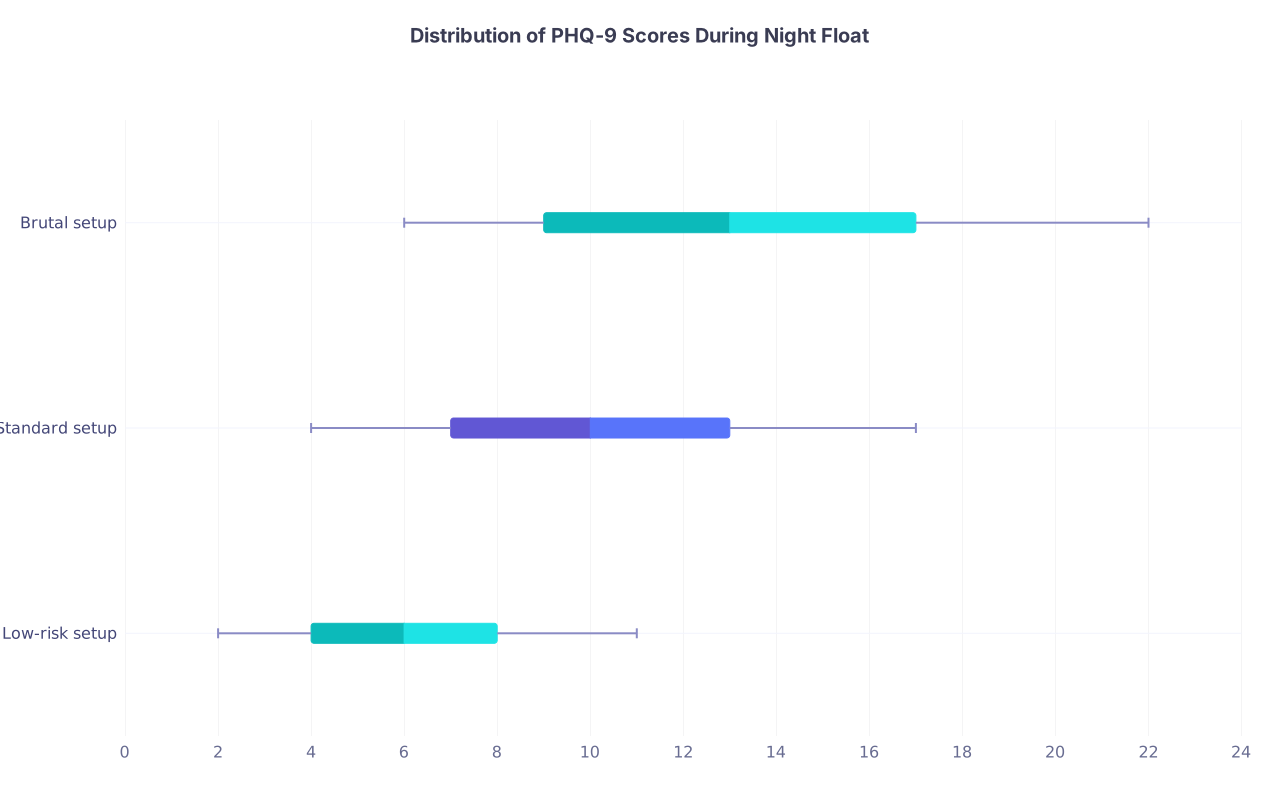
| Low-risk setup | 2 | 4 | 6 | 8 | 11 |
| Standard setup | 4 | 7 | 10 | 13 | 17 |
| Brutal setup | 6 | 9 | 13 | 17 | 22 |
Interpretation of this synthetic but realistic boxplot:
- “Low‑risk setup” = shorter blocks, lighter volume, good recovery → median around 6.
- “Standard setup” = the typical resident experience → median around 10.
- “Brutal setup” = long blocks, 6+1 pattern, high volume → median around 13, with many in the severe range.
You often cannot change the model your program uses. You can:
- Track your own symptoms. If your PHQ‑9 would be ≥ 10 honestly scored, that is not “just tired.” That is moderate depression territory.
- Protect a consistent sleep period after nights. Even if it is shorter than ideal, consistency matters more than random naps.
- Guard your off‑nights aggressively. No “just a quick social thing” that chops into sleep time repeatedly.
- Use screening tools and ask for help early. The trajectories are easier to change at PHQ‑9 of 8 than at 18.
You are not weak or “not built for medicine” if night float wrecks your mood. Statistically, that is the norm, not the exception.
Looking Ahead: Where This Needs To Go
The relationship between night float and resident depression scores is not subtle, not rare, and not a mystery. The data show:
- Night float consistently raises depression scores across specialties.
- More and longer nights push scores higher, often into clinically significant ranges.
- Schedule design and recovery protection actually move the numbers down; superficial “wellness” does not.
What comes next is not more research proving the obvious. It is programs using their data to redesign schedules, limit total exposure, and build in real recovery and mental health support.
You now have a statistical framework for understanding why your mood tanks on nights and what levers matter most. With that, you are better equipped to push your chiefs, your PD, and yourself toward configurations that are survivable, not just technically ACGME‑compliant.
The next step in your own journey is clear: treat your mental health metrics—PHQ‑9, sleep hours, error rates—the way you treat your patients’ vitals. Track them. Respond when they drift. And insist that the system around you adjusts, not just your “resilience.” The night shift will not disappear. But it does not have to be designed to break you. That redesign is the next battle.
FAQ
1. Is night float worse for depression than traditional 24‑hour call?
Data are mixed. In many studies, unlimited 24+ hour call is associated with higher acute fatigue and error rates, but repeated, clustered night float correlates with more sustained increases in depression scores. If a program moves from q4 28‑hour call to well‑designed short night blocks with adequate recovery, depression scores can improve. If they replace call with long, dense night float blocks and no recovery, scores often get worse.
2. How long do elevated depression scores last after a night float block ends?
In most datasets, residents’ PHQ‑9 scores start trending back toward their day‑rotation baseline within 1–3 weeks after finishing a night block, assuming they return to a stable daytime schedule and get adequate sleep. In heavy‑exposure programs (many night blocks per year), scores often never fully return to the original baseline, suggesting cumulative impact across the year.
3. Are certain specialties more affected by night float in terms of depression?
Yes. Specialties with both heavy night workloads and high emotional intensity—like internal medicine wards, surgery, and EM—tend to show larger jumps in depression scores during night float compared with less acute services. But the pattern (higher scores on nights vs days) is present in almost every specialty with significant night exposure, including pediatrics and OB/GYN.
4. Can personal “night owl” chronotype protect against night float–related depression?
Being an “evening type” offers some partial protection. These residents often report slightly lower subjective distress and have 1–2 points lower PHQ‑9 scores on nights than strongly “morning type” peers working the same schedule. However, their depression scores still rise compared with their own daytime baselines. Chronotype helps at the margins; it does not neutralize the fundamental impact of sleep loss, isolation, and chronic circadian misalignment.