
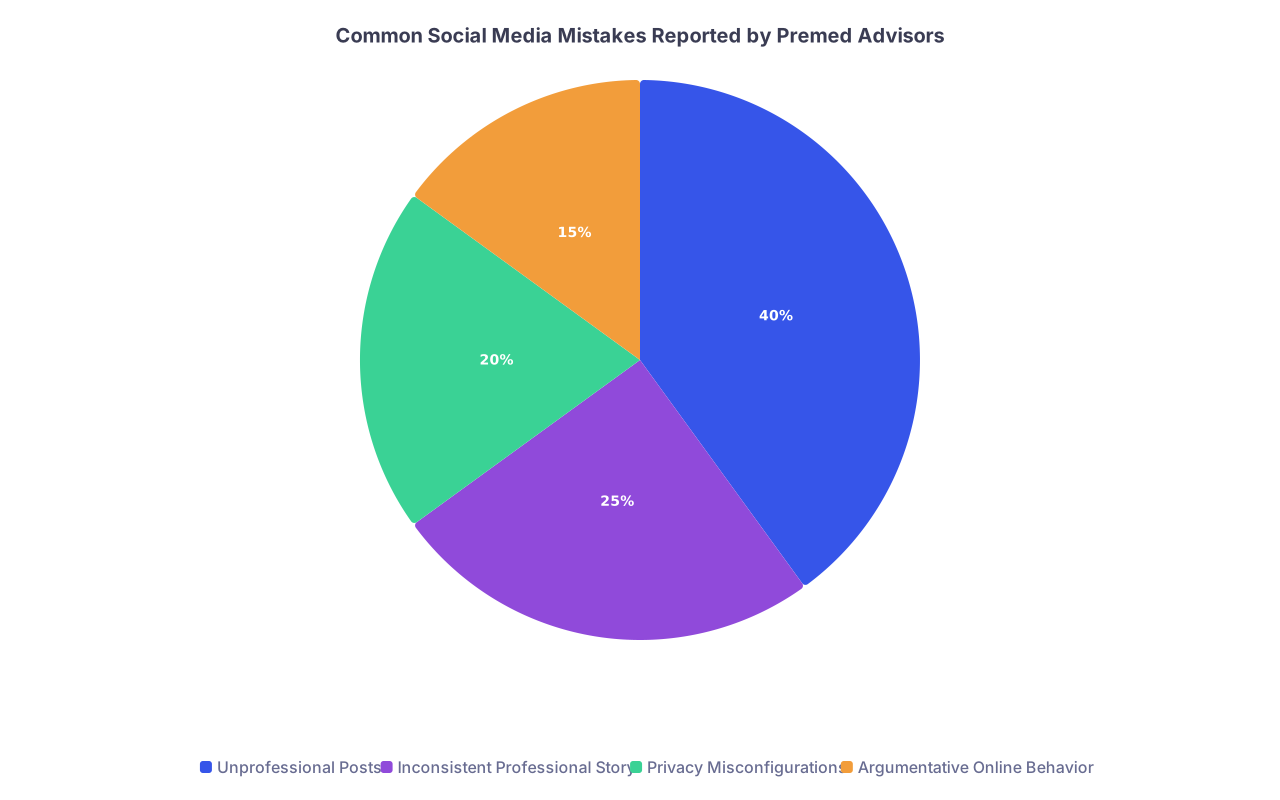
| Category | Value |
|---|---|
| Unprofessional Posts | 40 |
| Inconsistent Professional Story | 25 |
| Privacy Misconfigurations | 20 |
| Argumentative Online Behavior | 15 |
Social media will not “fly under the radar” just because you are older.
Too many late‑career premeds still think: “I am in my 30s/40s/50s, nobody is digging for my Instagram from 2014.” That belief is how smart, qualified applicants quietly end up on the “no” pile without understanding why.
Let me be blunt. You are more searchable than the average 21‑year‑old. Longer career, more accounts, more public documents, more people who can tag or review you. That digital exhaust does not disappear just because you decided to pursue medicine.
You are not being paranoid if you worry about your online footprint. You are being responsible. The mistake is assuming you can ignore it.
This is the stuff that gets non‑traditional applicants burned.
Mistake #1: Assuming “real life professionalism” cancels out old online behavior
I have heard this line from dozens of career‑changers:
“I have been a manager for 10 years, my references are stellar. Nobody will care about some old tweets.”
Wrong. They might not care. Or they might care a lot. You will not know which until it is too late.
Admissions and residency committees are not just checking whether you are competent. They are betting on your judgment, your impulse control, your ability to represent the institution. Seeing a pattern of questionable posts from your 20s, even if “everyone was doing it,” is exactly the kind of thing that makes an adcom say, “We can just take the next qualified person instead.”
Common offenders I have seen:
- Public posts mocking patients, coworkers, or “idiot customers” from your old job
- Political rants with demeaning language toward whole groups of people
- “Jokes” about drugs, partying, cheating, or cutting corners at work
- Aggressive comments on public Facebook or news articles (where your real name is obvious)
You may have grown. Matured. Learned. Good. But an admissions committee looking at 8,000+ applications does not have time to run a redemption arc for each applicant. They see a risk, they move on.
You are a late‑career applicant. That means:
- You have more years of content that can hurt you.
- You are held to a higher standard of judgment. “You were just a kid” is a weaker defense when you were 27.
Do not rely on your professional CV to “cancel out” old online behavior. Clean the old behavior up.
Mistake #2: Treating privacy settings as a magic shield
The biggest lie people tell themselves: “My Instagram is private, so I am safe.”
No, you are not. You are less exposed, but not safe.
Here is how late‑career applicants get burned despite “locked” accounts:
- They forgot about an old public Twitter, Tumblr, or blog
- Their name is tagged on someone else’s public photo or post
- They used the same username on a public forum, and that username links back to them
- Cached content or old screenshots are still floating around
- Their LinkedIn is professional, but their YouTube comments are unfiltered and public under the same Google account name

| Step | Description |
|---|---|
| Step 1 | Your Name |
| Step 2 | Public Profiles |
| Step 3 | Tagged Photos |
| Step 4 | Old Usernames |
| Step 5 | Adcom or Program Googles You |
| Step 6 | Quietly Downranked |
| Step 7 | No Issue Noted |
| Step 8 | Red Flags Found? |
The deeper issue: privacy settings control what you show by default. They do not control:
- What others share about you
- Old data leaks or scrapes
- Your own inconsistent behavior across platforms
I have seen applicants with immaculate, locked-down Instagram accounts… and a Reddit history that reads like a crash course in why not to admit them.
Action you should not skip:
- Google your full name (with quotes), your nicknames, old usernames, and email handles. Several pages deep.
- Check image search with your name and major institutions you are associated with (e.g. “John Doe + State University”).
- Ask a trusted friend to do a search for you and tell you what they find in 10 minutes. That is about how long a motivated screener might spend.
If you find something bad, do not shrug and say, “Well, it is behind privacy walls.” Assume it can surface and act accordingly.
Mistake #3: Letting your “pre‑med rebrand” look obviously fake
Late‑career premeds sometimes overcorrect. One week their online presence is a blend of family photos, sports takes, and career content. Then suddenly everything is scrubbed and replaced with inspirational quotes about healing and a freshly minted “Future MD” handle.
To an adcom or a physician interviewer, that looks transparent. And a little desperate.
You do not want your digital footprint to scream:
- “I am performing ‘ideal med student’ for you.”
- “I will reinvent my identity for whatever gatekeeper I am facing.”
- “I am more focused on optics than authenticity.”
The more drastic the shift, the more it raises eyebrows. Especially when your age and CV say one thing (10 years in sales management, minimal volunteering) and your public persona suddenly pretends you have always been some lifelong servant of the underprivileged.
The better approach:
- Quietly remove or lock down problematic content
- Do not oversaturate your feeds with “medicine cosplay”
- Let your real interests and history remain, just without obvious red flags
You do not need to pretend your past career did not happen. Committees like non‑traditional paths. They do not like pretending.
If someone looks you up, the goal is not “this person is 100% medicine all the time.” The goal is: “This person seems stable, professional, and coherent with the story in their application.”
Mistake #4: Underestimating how career‑related platforms can hurt you
LinkedIn, personal websites, old portfolios – these can be more damaging than Instagram.
Why? Because they carry an expectation of accuracy and professionalism. When an adcom, physician, or background check service looks at LinkedIn, they treat it as “official enough” unless something clearly contradicts it.
Here is where late‑career premeds screw this up:
- Dates of employment or education do not match what is on AMCAS/AACOMAS
- Overselling roles (“Director of Operations” on LinkedIn, “Team Lead” in application)
- A long blog post trashing a former employer, industry, or colleagues
- Public recommendations or endorsements that conflict with your narrative (“John is committed to rising through the ranks in corporate sales…”) while your personal statement claims you have been “pulled toward medicine for as long as I can remember.”
| Area | What LinkedIn Shows | What Application Claims |
|---|---|---|
| Job Titles | Senior Manager / Director | Mid-level role or vague description |
| Career Goals | “Aspiring VP of Sales” in headline | “Always wanted to be a physician” |
| Dates | Overlapping roles that are impossible | Clean, linear timeline |
| Tone | Aggressive, combative posts about work | “Collaborative, reflective” narrative |
I have watched adcom members pull up an applicant’s LinkedIn mid‑committee because something “did not feel right” in the narrative. When they find even minor inconsistencies, trust erodes.
You are not writing a legal affidavit, but you are building a coherent professional identity. Make your LinkedIn (and any personal site) match the basic truth of your application:
- Same dates
- Same titles (or at least compatible)
- No grandiose claims you cannot defend in an interview
- No posts that contradict your values statement
Do not forget old portfolio sites, conference bios, speaker pages, or consulting profiles. If they still describe you as deeply invested in a completely different career track, either update or remove them.
Mistake #5: Using “anonymous” platforms like you are truly anonymous
Older applicants often have long histories on:
- Specialty forums (tech, finance, fitness, gaming)
- Comment sections for industry news
- Old blogs under “pseudonyms”
And they assume none of this can be traced back. That is naive.
I am not talking about paranoid “they will subpoena your IP address.” I am talking about simple, dumb breadcrumbs:
- You mention a very specific city + job title + hobby
- You talk about a distinctive career event that is also on your CV
- You reuse the same handle or email hint across sites
Suddenly that “anonymous” rant about hating working with older patients or mocking “lazy coworkers” is not so anonymous.
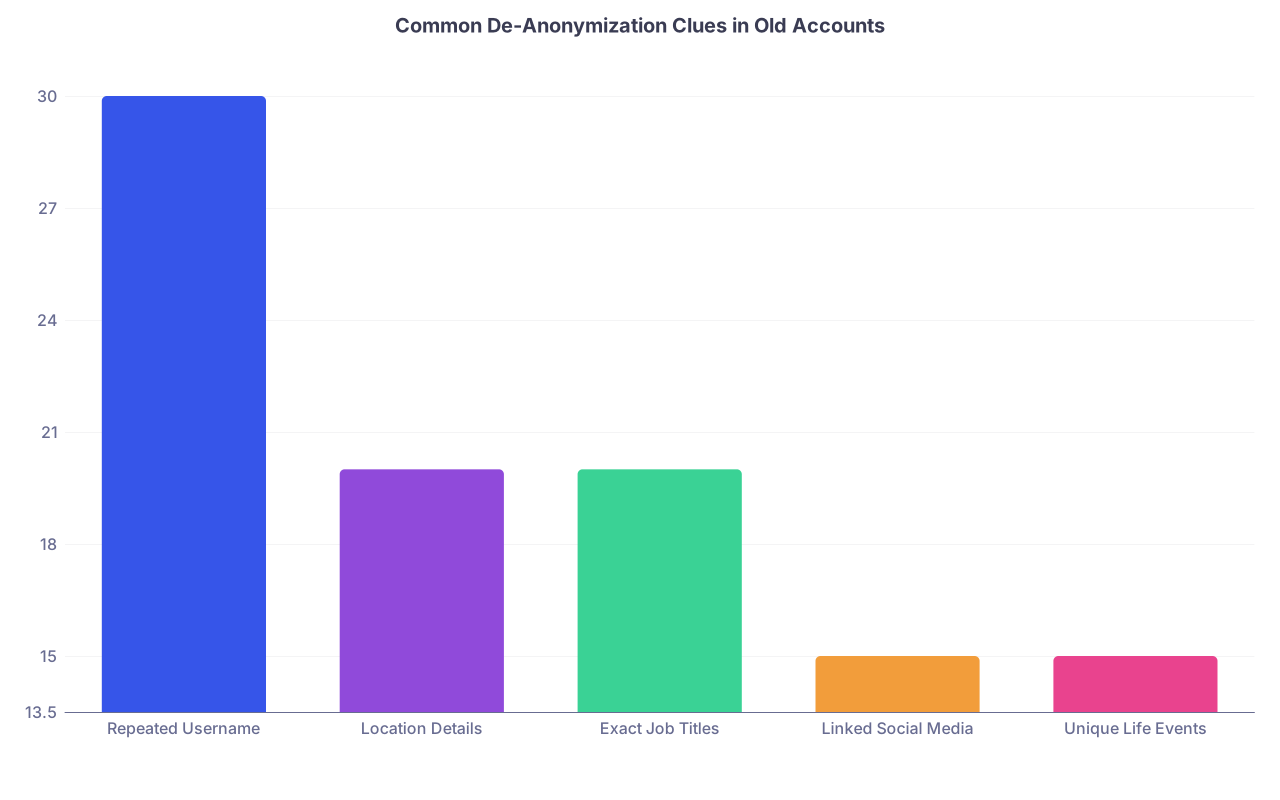
| Category | Value |
|---|---|
| Repeated Username | 30 |
| Location Details | 20 |
| Exact Job Titles | 20 |
| Linked Social Media | 15 |
| Unique Life Events | 15 |
I have seen forum posts where a mid‑career engineer described, in detail, a malpractice suit their spouse was involved in, complete with city, hospital, and year. That same applicant later tried to present a pristine, respectful‑of‑the‑profession persona in their med school application. Anyone who connected the dots would immediately question their judgment and discretion.
You do not have to erase your entire digital history. But if your anonymous persona is:
- Cruel
- Bigoted
- Reckless
- Extremely cynical about patients or the healthcare system
you have a problem.
Use basic discipline:
- Stop posting from those accounts now. Do not add new material to a risky archive.
- Remove or edit the worst content if the platform allows it.
- If an account is tightly linked to your real identity through usernames or bios, consider deleting it entirely.
You cannot control everything, but you do not have to hand people a loaded weapon with your name engraved on it.
Mistake #6: Being openly combative, political, or inflammatory under your real name
You are allowed to have political opinions. You are allowed to care deeply about social issues. Medicine in 2026 is unavoidably political in many dimensions.
The part that ruins applicants is not “has opinions.” It is:
- Calls entire groups “idiots,” “savages,” “leeches,” “garbage,” etc.
- Celebrates or jokes about violence, humiliation, or suffering
- Engages in long, unhinged Facebook battles in public threads
- Shares conspiracy theories or medical misinformation in your real name
If someone on the committee finds posts like that, they will not sit and parse your nuanced policy stance. They will see:
- Poor impulse control
- Poor professionalism
- Risk to patient trust and institutional reputation
I sat in on a discussion once where a strong applicant’s file stopped cold because someone found a string of comments under his real name calling a specific immigrant group “a drain” and “not worth helping.” The rest of his application was beautiful. It did not matter. Nobody wanted to be the one who explained that choice to patients or the press later.
As a late‑career applicant, your pattern of behavior carries more weight. This is not “a teenager posting edgy memes.” This is an adult making choices.
If your real‑name social media is full of:
- Hostile replies
- Quote‑tweet dunking people for sport
- Shared articles with inflammatory captions
you need a serious reset. Not because you must be neutral about everything, but because you cannot appear reckless with your public voice.
Mistake #7: Over‑sharing your application process online
Non‑trad premeds love to document. Blog posts. YouTube channels. TikToks about “my application stats” or “why I withdrew from X school.”
This can help others. It can also blow up in your face.
Common ways this turns toxic:
- You complain by name about specific schools, advisors, or programs
- You reveal more detail than you realize about interview questions or internal processes
- You share scores, metrics, and outcomes in a way that sounds arrogant, bitter, or unstable
- You vent during setbacks (“This process is a scam,” “These schools do not actually care about diversity,” etc.) under your real name
Then a year later, your application lands on the desk of someone at the very institution you trashed. Or a faculty member who is friends with the people you mocked. Or an adcom member who saw your “hot take” about how physicians are overpaid and lazy.
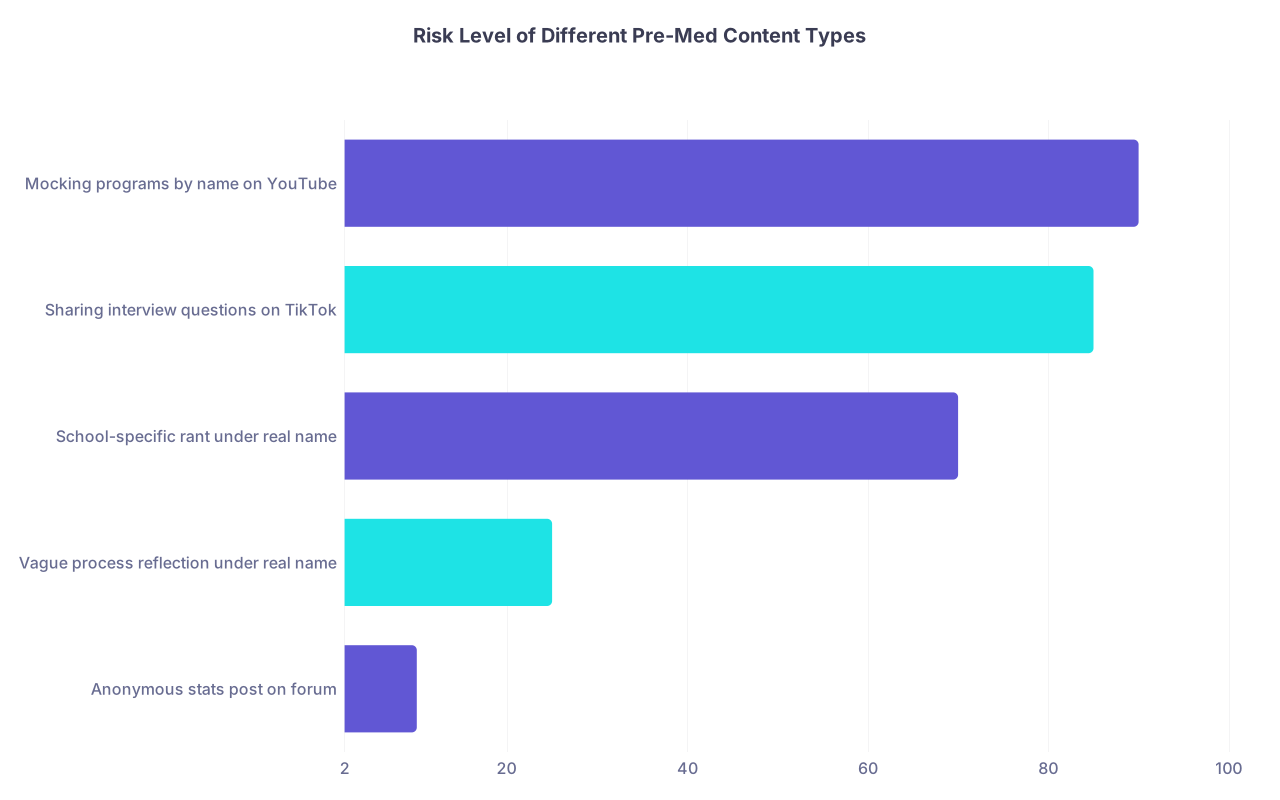
| Category | Value |
|---|---|
| Anonymous stats post on forum | 10 |
| Vague process reflection under real name | 25 |
| School-specific rant under real name | 70 |
| Sharing interview questions on TikTok | 85 |
| Mocking programs by name on YouTube | 90 |
You do not owe the internet a detailed play‑by‑play of your journey. Especially not in real time, with identifying details. If you want to share and help others:
- Do it after a cycle is complete
- Remove school names and specific personnel details
- Focus on what you did rather than what “they” did wrong
- Ask yourself, “If an adcom watched this tonight, would it help or hurt?”
If you cannot answer confidently, do not post it.
Mistake #8: Forgetting that “personal” accounts still reflect professional judgment
I hear this defense constantly:
“But that is my personal Facebook. It is just for friends.”
You are not a teenager anymore. By the time you are applying as a late‑career premed, the wall between “personal” and “professional” has thinned to almost nothing. Because:
- Your name is attached
- Your colleagues, supervisors, and patients (in clinical roles) may be in your network
- Screenshots exist
- People gossip
I have seen:
- Photos of wild bachelor/bachelorette parties posted publicly with full names and corporate tags visible
- Dark humor memes about patients posted by someone already working as a scribe or EMT
- Complaints about specific coworkers or supervisors that could easily be recognized
You do not have to sanitize your life. You do have to show that you understand what is appropriate to attach to your name when pursuing a profession built on trust.
Basic rule: if you would be uncomfortable seeing that post on a giant screen in front of an MMI panel, you either should not post it or it should be visible only to a tightly controlled list of trusted people.
Do not rely on “well my cousin would never leak that.” You are not just protecting yourself from malice. You are protecting yourself from stupidity – a friend casually sharing or liking something that exposes your content to a wider, unintended audience.
Mistake #9: Doing a superficial “cleanup” instead of a real audit
A lot of people do the lazy version:
- Scroll last 6 months
- Delete 3‑4 obviously bad posts
- Lock Instagram
- Call it a day
This is how older content, comments, tags, and profiles you forgot about continue to poison you quietly.
You need a one‑time, serious audit. Not forever, not every day. But once, properly.
This means:
- Make a list of platforms you have ever used under your real name or a consistent handle. Social, forums, blogs, comment systems.
- Systematically review and clean from oldest to newest. Not just the last few years.
- Search your email addresses and usernames directly on Google and within platforms.
- Ask one or two trusted, detail‑oriented friends to review what is visible from their accounts.
Then actually do the work: delete, untag, change privacy, or close accounts where needed. You are not scrubbing your identity. You are removing obvious landmines.
Mistake #10: Ignoring the positive side of a curated, honest footprint
This last point matters. The solution is not to vanish completely.
Some adcoms and interviewers will search you. If they find nothing at all, that is usually fine. If they find a small, consistent, professional footprint, that is often better.
For a late‑career premed, a reasonable public presence might look like:
- A LinkedIn that accurately reflects your career, updated with premed activities and volunteering, with no wild posts
- Maybe a modest, non‑cringey personal site or portfolio that aligns with your story
- Social media where public content is boring in the best way—family, hobbies, neutral content—without glaring contradictions to your application
You do not need to build a “doctor brand.” You do need to avoid looking chaotic, dishonest, or reckless.
The short version
Three things you cannot afford to get wrong as a late‑career premed:
- Do not assume your age or professionalism cancels out an old, messy online history. A real audit and cleanup is mandatory.
- Do not rely on privacy settings, “anonymous” accounts, or a rushed rebrand to protect you. Inconsistency and obvious performance are red flags.
- Do not post anything under your real name that would look bad on a screen in a selection committee room. Ever. You are building trust long before you wear a white coat.


