

You’re sitting at your desk on a random Tuesday when your manager closes the door behind them. They’ve got that “we need to talk” face. Then it comes out:
“So… I heard you’re applying to medical school.”
Your stomach drops. Maybe a coworker mentioned it. Maybe they saw an MCAT book in your bag. Maybe you asked someone for a letter and word traveled. Either way, the cat is out. You’re exposed, and you were not ready for this conversation yet.
Now you’re wondering: Is my job at risk? How much do I say? Do I lie and downplay? Do I lean in and be fully honest? How do I not blow up my income and references while still moving toward med school?
This is exactly the spot a lot of nontraditional applicants land in. You’re not a college junior. You have a job, bills, maybe a family, and a boss who suddenly knows you’re planning a major exit.
Let’s go step by step.
Step 1: Reality Check – What’s Actually at Stake?
Before you say anything else to anyone, get clear on your risk profile.
Here’s what you’re balancing:
- Your current income and job stability
- Your future applications (letters, explanation of activities, gaps)
- Your mental bandwidth and ability to study / prep
- Your reputation at work
Some employers are chill. Some are vindictive. Some are “supportive” until your productivity dips. I’ve seen all three.
Ask yourself, bluntly:
- Are you in an at-will employment state? (Most in the US are.)
- How much do you need this job for the next 6–18 months?
- How replaceable are you, realistically, in your company’s eyes?
- How dependent are you on your manager for a strong letter of recommendation?
This isn’t about fear; it’s about strategy. You do not need to martyr yourself at this job to “prove” you’re dedicated. You also don’t need to burn everything down in righteous pursuit of medicine. You’re playing a long game.
Step 2: Identify Which Scenario You’re In
Your next moves depend heavily on which bucket you fall into.
| Scenario | Employer Reaction | Risk Level | Strategy Priority |
|---|---|---|---|
| A | Supportive & Curious | Low | Maximize letters, flexibility |
| B | Neutral & Transactional | Medium | Protect workload, set boundaries |
| C | Threatened & Hostile | High | [Protect income](https://residencyadvisor.com/resources/nontraditional-path-medicine/handling-a-major-pay-cut-when-moving-from-industry-to-premed-student), document everything |
| D | “Supportive” but Unreliable | High | Assume talk ≠ action, back-up plans |
Scenario A: Supportive & Curious
Things your boss might say:
- “That’s awesome, how can we help?”
- “I always thought you were headed for something like that.”
You’ve hit the jackpot. Your risks aren’t zero, but they’re lower.
Your goals here:
- Keep performance solid so they stay supportive
- Leverage flexibility (time off for interviews, schedule adjustments)
- Secure strong letters and networking
Scenario B: Neutral & Transactional
Boss vibe:
- “Okay. When would this happen?”
- “We just need to make sure the work gets done.”
They’re not against you. They just care about coverage and productivity.
Your goals:
- Reassure them you’re not walking out tomorrow
- Set a rough (but not super detailed) timeline
- Show them you’re still engaged, while quietly building your exit plan
Scenario C: Threatened & Hostile
Red flags:
- “So are you checked out now?”
- “We’ve invested a lot in you, this is disappointing.”
- They immediately start talking about “transition planning” before you’ve even applied.
Your goals:
- Protect income
- Document interactions
- Reduce reliance on this employer for letters or future flexibility
- Start actively planning your exit timeline
Scenario D: “Supportive” but Unreliable
This one is tricky. Boss sounds encouraging but history shows they:
- Forget things they promised
- Don’t shield staff from upper management
- Say yes to your face, no in meetings
Your goals:
- Take verbal support as nice, not as a plan
- Get what you can in writing (time-off approvals, remote agreements)
- Build redundancy: other recommenders, alternative job options
Step 3: Script Your Immediate Response
If you’ve just been “found out,” you need a calm, confident script. Don’t over-explain. Don’t overshare.
Pick a basic frame and adapt:
Option 1: Calm Confirmation
“Yes, I am applying. This is something I’ve been working toward for a while outside of work hours. I’m still committed to doing my job well while I’m here.”
Option 2: Clarified Timeline
“Yes, I’m in the application process, but I won’t know decisions for many months. I expect to be here at least through [approximate time — e.g., next summer].”
Option 3: If You’re Not Applying This Cycle (just exploring)
“I am seriously exploring it, yes, but I’m still early. I’m taking classes / studying, and I haven’t made any final decisions on timing yet. I’m still fully engaged in my role right now.”
Do not:
- Promise you’ll stay “as long as they need”
- Announce an exact last day you can’t guarantee
- Apologize for having career goals
You’re allowed to outgrow a job.
Step 4: Decide What You Will and Won’t Share Going Forward
You need boundaries. The instinct to overshare to make them “understand” is strong. Don’t.
Here’s the information you control:
You can choose to share:
- General timeline (e.g., “I’d likely leave around [Month/Year] if accepted.”)
- That you’ll give ample notice if you get in
- That you’re not planning to disappear suddenly
You do not owe them:
- Your MCAT score
- Which schools you’re applying to
- Every interview date three months in advance
- A blow-by-blow of your application anxiety
A clean line you can use: “I’m happy to keep you updated at major milestones so we can plan for coverage, but I’ll keep most of the application details separate from work.”
That signals respect and boundaries at the same time.
Step 5: Protect Your Work Reputation While Quietly Rebalancing
Now that they know, your performance will be under a microscope. Fair? No. Real? Yes.
Here’s the move: short-term professionalism, medium-term rebalancing.
For the next 4–8 weeks, lock in
Show up on time. Finish deliverables. Don’t give them ammunition to say you’ve “checked out.” You’re buying yourself political capital.Start quietly declining new long-term commitments
If they try to stick you on a major 18-month project:
“Given my potential timeline, it might make more sense for me to support on a piece of this rather than lead the whole thing. I want to set the team up for continuity.”Protect evenings and weekends for MCAT / app work
Stop being the “hero” who always stays late. You cannot be a top-5% employee and a serious med school applicant and a human with a life indefinitely. Something will crack. Make sure it’s not your health.
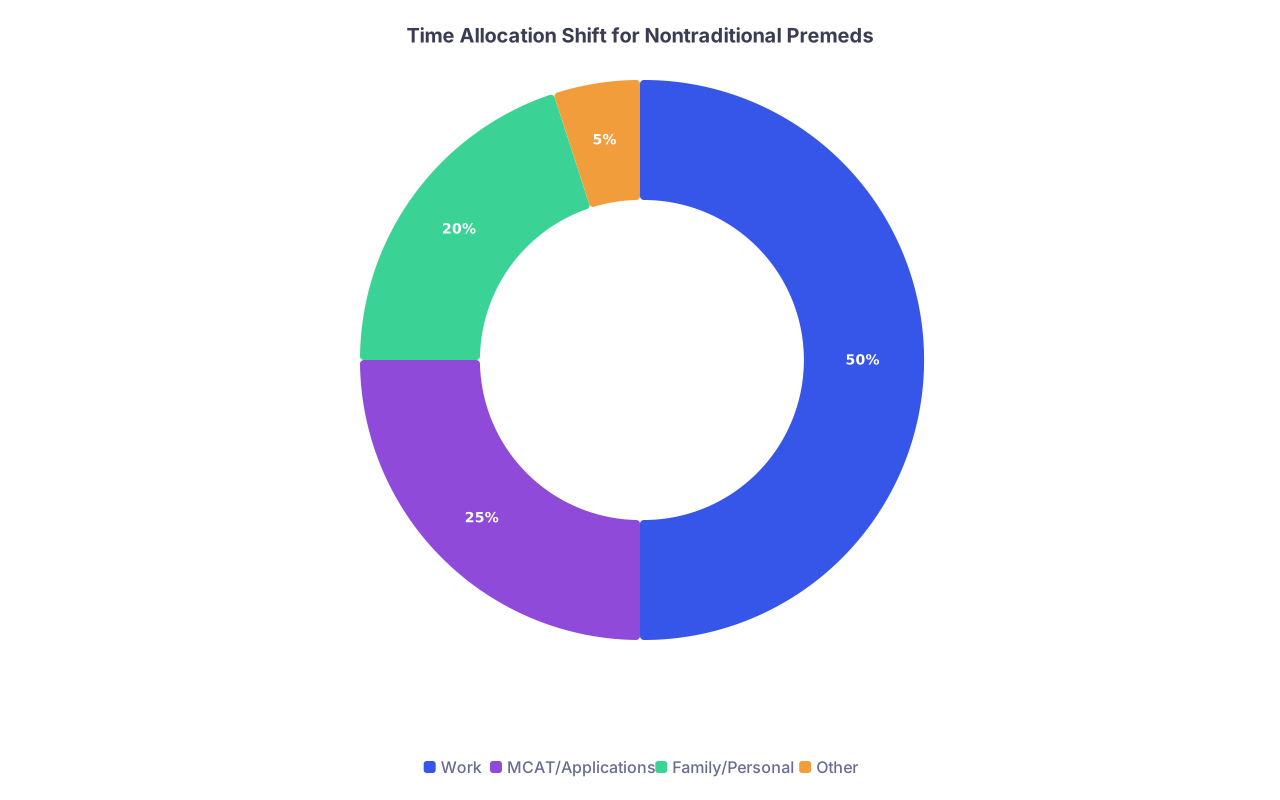
| Category | Value |
|---|---|
| Work | 50 |
| MCAT/Applications | 25 |
| Family/Personal | 20 |
| Other | 5 |
This is the rough reality for a lot of nontraditional applicants. You’re not going to be balanced. You’re going to be deliberate.
Step 6: Handle Time Off for Interviews, Classes, and the MCAT
Once you’re in the thick of it, you’ll need time off. This is where nontrad life gets complicated.
For the MCAT
If you haven’t taken it yet:
- Do not say “I need the day off for the MCAT” if your employer is weird about outside careers. Just use PTO or a personal day.
- Schedule the test on a day that causes minimal disruption if your job is fragile.
You can say: “I’ll be taking a personal day on [date] for an important exam I’m doing outside of work.”
That’s enough.
For Classes / Prereqs
If you’re working full-time and taking night classes:
- Don’t hide it completely, but also don’t frame it as “I’m already gone mentally.”
- You can: ask for a slightly earlier shift or stable schedule if your boss is at least neutral.
“I’m taking some evening courses to build a few skills. Is there any flexibility in keeping my shift consistent on [days] so I can plan around it?”
No need to say “organic chemistry” if that will trigger drama.
For Interviews
Once interviews roll in, you can’t hide it forever, especially if travel is involved.
You have choices:
- Use PTO, sick days, or unpaid days strategically
- Batch interviews when possible (for out-of-state travel)
- If your boss is supportive, you can be upfront:
“I have some medical school interviews coming up. I’ll schedule them with as much notice as possible and use PTO, but wanted to keep you in the loop.”
If your boss is hostile? Treat interviews like any other personal obligation. PTO is PTO. You do not owe an itemized list of your whereabouts.
Step 7: Letters of Recommendation from Your Employer
This is where being “found out” sometimes helps. Sometimes hurts.
You want a supervisor letter if:
- You’ve been at your job for a while (1+ years)
- You’ve had increasing responsibility
- You have decent rapport with your boss
But you don’t want a letter from:
- Someone who’s jealous, threatened, or dismissive of medicine
- A manager who gives generic, lukewarm references
- Someone who’s already hinted at being unhappy you’re leaving
You can ask like this: “I wanted to ask if you’d be willing to write a letter of recommendation for my medical school applications, focused on my work ethic, teamwork, and problem-solving here. I can provide a draft of my personal statement and some bullets on projects I’ve led if that’s helpful.”
Listen carefully to their response. If it’s anything less than an enthusiastic yes, back away and use someone else. A bad or vague letter will hurt you more than having one less.
Step 8: Legal and HR Reality (Don’t Overestimate Protection)
People love to say, “They can’t discriminate against you for wanting to go to school.” In practice? Good luck proving that.
If you’re in an at-will job, they can let you go for almost any non-protected reason.
So:
- Don’t rely on HR as your savior. HR exists to protect the company first.
- Do keep your communications calm, factual, and ideally in writing if things start to feel off.
- If your hours, duties, or treatment suddenly change after they find out, document it. Not necessarily to sue, but to help you make rational decisions about whether to stay, and for unemployment claims if it comes to that.
If things get really ugly:
- You may need to switch to a more flexible, lower-stress job while you finish your apps. Sucks in the short term. Often worth it in the long term.
Step 9: If You Get Fired or Pushed Out Early
Yes, it happens. Not always because of med school plans, but that can be the convenient excuse.
If you’re suddenly out:
Secure immediate logistics
- Unemployment eligibility
- Health insurance (COBRA, marketplace plans)
- Short-term expenses
Decide whether to pause, accelerate, or pivot your application plan
- If MCAT or apps aren’t ready, you might need to push to the next cycle.
- If you’re already deep in the cycle, consider a more flexible job (scribe, MA, per diem work, contract roles).
On applications, explain the gap like an adult, not a victim
“Due to organizational restructuring / role changes, my position ended in [month/year]. I used that period to complete prerequisite coursework, prepare for the MCAT, and gain additional clinical experience at [site].”
No need to write a manifesto about evil corporate overlords.
Step 10: Mentally Reframe What’s Happening
This moment—your employer knowing you’re applying—is uncomfortable. Sometimes ugly. But it’s also a line in the sand.
You are no longer pretending your current job is your forever plan. You’ve said the quiet part out loud. That’s power.
You’re going to feel:
- Guilty for “leaving your team”
- Worried about being “ungrateful”
- Tempted to overcompensate at work to prove your loyalty
Here’s the truth: companies survive people leaving. They always do. What will not survive indefinitely is your body and mind if you stuff this dream down for another 10 years to keep everyone comfortable.
You’re allowed to:
- Prioritize your applications over “optional” work projects
- Say no to new responsibilities that will chain you to a desk while you’re trying to study
- Be strategically selfish with your time and energy
You’re not flaking on a group project in high school. You’re restructuring your life.

| Step | Description |
|---|---|
| Step 1 | Employer finds out |
| Step 2 | Supportive |
| Step 3 | Neutral |
| Step 4 | Hostile |
| Step 5 | Unreliable |
| Step 6 | Secure letters & flexibility |
| Step 7 | Set boundaries & timeline |
| Step 8 | Protect income & plan exit |
| Step 9 | Get backup recommenders & job options |
| Step 10 | Reaction Type? |
What to Do This Week
If this just happened and your brain is spinning, here’s your short list for the next 7 days:
- Write down exactly what was said in the conversation with your boss (while it’s fresh).
- Decide your disclosure line: what you will and won’t share going forward.
- Audit your recommenders: Do you really need your current manager, or do you have stronger, safer options?
- Look at your finances and calculate how many months of runway you’d have if the job vanished tomorrow.
- Block off specific weekly time for MCAT / prereqs / applications and protect it aggressively.
One week of clear, adult decisions will calm down 60–70% of your anxiety about this.
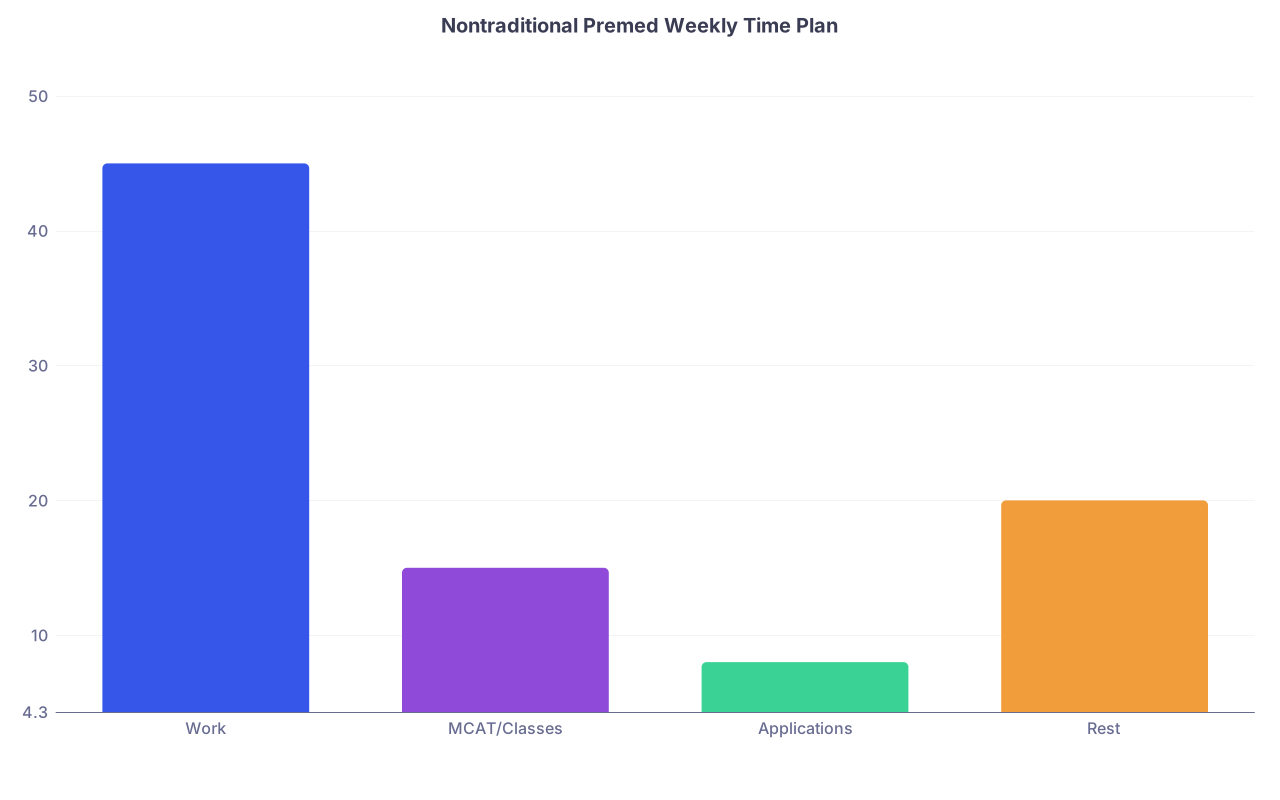
| Category | Value |
|---|---|
| Work | 45 |
| MCAT/Classes | 15 |
| Applications | 8 |
| Rest | 20 |
You don’t have to be perfect. You do have to be intentional.
FAQ (Exactly 4 Questions)
1. Should I tell my employer I’m applying to medical school if they don’t already know?
It depends on timing, your role, and how much you need them. If you’re 12–18 months out and in a politically fragile environment, I’d usually keep it quiet until you absolutely need a letter or schedule accommodations. If you’re senior, well-respected, and planning to ask your manager for a strong recommendation, earlier disclosure (with a calm, clear plan) can actually work in your favor. The red flag: never volunteer this info to a manager you don’t trust who’s already shown jealousy, micromanagement, or punitive behavior.
2. What if my boss offers to “help” but keeps piling on more work?
That’s Scenario D: “supportive” but unreliable. Take their kind words as pleasant background noise, not operational reality. Start saying: “Given my timeline and current workload, I can take on X, but not Y.” Push for clarity in writing—email recaps after meetings, clear project scopes with end dates. And build an exit option: other recommenders, a simpler job if you need to pivot, and a financial buffer to walk if the demands become incompatible with your application goals.
3. How do I explain leaving (or getting let go from) my job in my application or interview?
Keep it factual, short, and forward-looking. For voluntary departure: “I left my role at [Company] in [month/year] to focus on prerequisite coursework, MCAT preparation, and expanding my clinical exposure. During that time, I [brief concrete activities].” For being let go: avoid dramatics. “There were organizational changes / differences in expectations about my future plans, and my role ended in [month/year]. I used the transition to double down on my path to medicine by [specific, constructive actions].” Admissions committees care far more about what you did next than about office politics.
4. Is it a red flag to admissions if I don’t have a letter from my current employer?
Not automatically. Many nontraditional applicants don’t have a boss letter, especially if their environment is unsupportive or unrelated to healthcare. It becomes a concern only if you also lack strong letters from anywhere—professors, clinical supervisors, research mentors, etc. If you skip a supervisor letter, make sure your other writers clearly cover your work ethic, reliability, communication, and teamwork. And if asked, you can say: “My current workplace isn’t directly related to healthcare, so I prioritized letters from people who have seen me in clinical and academic contexts relevant to medicine.”
You’re in the messy middle right now—straddling your current life and the one you’re building. Your employer finding out you’re applying to med school forces that tension into the open, which is uncomfortable, but also clarifying.
Handle this phase with a mix of professionalism and unapologetic focus on your goals, and you’ll get through it with your income (mostly) intact, your references usable, and your path to medicine still on track.
Once this part stabilizes, the next battles are the MCAT grind, personal statement drafts, and actually hitting “submit.” But that’s a different situation—and we’ll handle that one when you’re there.


