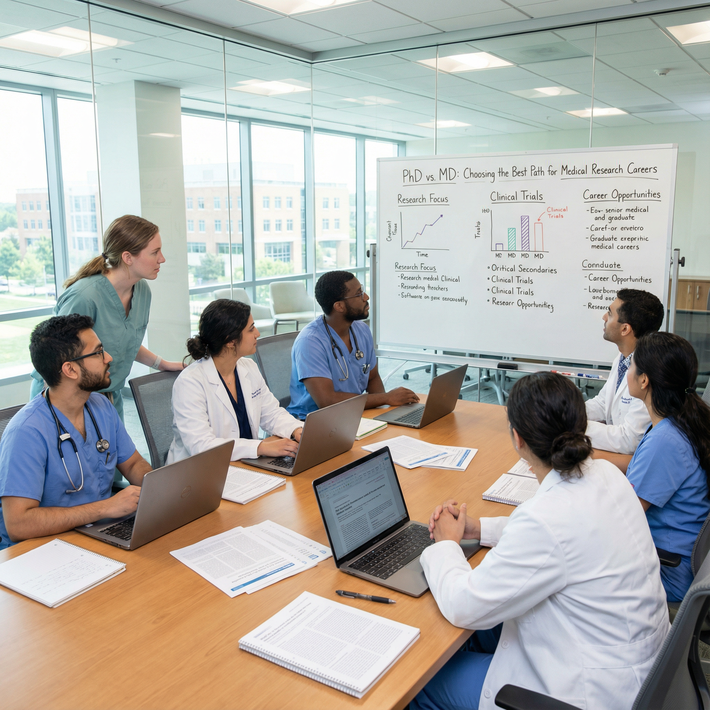
The idea that you “need a PhD” to build a serious academic CV as an MD student is wrong. You need a strategy, not another degree.
If you are in medical school and watching MD/PhD classmates rack up publications and grants while you are just trying to pass exams and not miss rounds, it can feel like you are already behind. You are not. But you will be behind if you wait for research and academic work to “just happen” on their own.
This is fixable. You can graduate with a strong, credible academic CV as an MD-only student. You just have to be ruthless about structure, sequence, and time.
Here is the playbook.
1. Understand What an “Academic CV” Actually Needs
You cannot build what you have not defined. A lot of students confuse “CV” with “random list of stuff I did.” That is amateur hour. Programs, PIs, and promotions committees look for specific signals.
At the MD-student level, your academic CV should clearly show:
- Consistent scholarly activity
- Ability to complete projects (not just “in progress” fluff)
- Some level of leadership or initiative
- A trajectory that makes sense for your career goals
The core sections you should be building toward:
- Education
- Honors and Awards
- Research Experience
- Publications
- Abstracts and Presentations
- Teaching and Mentoring
- Leadership and Service
- Professional Memberships
- Skills (research methods, languages, stats, software)
You are not trying to look like a 45-year-old NIH-funded PI. You are trying to look like a serious, upward-trending early trainee.
| Section | Priority Level | Earliest Start |
|---|---|---|
| Education | Required | Day 1 MS1 |
| Research Experience | High | MS1–MS2 |
| Publications | High | Aim by MS3–MS4 |
| Abstracts/Presentations | High | MS2–MS3 |
| Teaching/Mentoring | Medium | MS2–MS3 |
| Leadership/Service | Medium | MS1–MS2 |
| Honors/Awards | Variable | Anytime |
If your current CV is basically “Education + volunteer clinic + one shadowing experience,” you do not need despair. You need a 12–24 month build plan.
2. Use Your MD Timeline Like a Project Plan
PhD students have time. You have structure. Use that. A typical MD-only path gives you natural windows for academic work.
Rough windows you can exploit
- MS1 (first half): Light start. Learn the basics, find mentors, explore interests.
- MS1 (second half) – MS2: High-yield time for starting research projects and longitudinal activities.
- Dedicated research block / summer: This is where you push projects over the finish line.
- Clinical years (MS3–MS4): Focus on case reports, small projects, and turning earlier work into abstracts/papers.
Here is what this looks like as a simple flow:
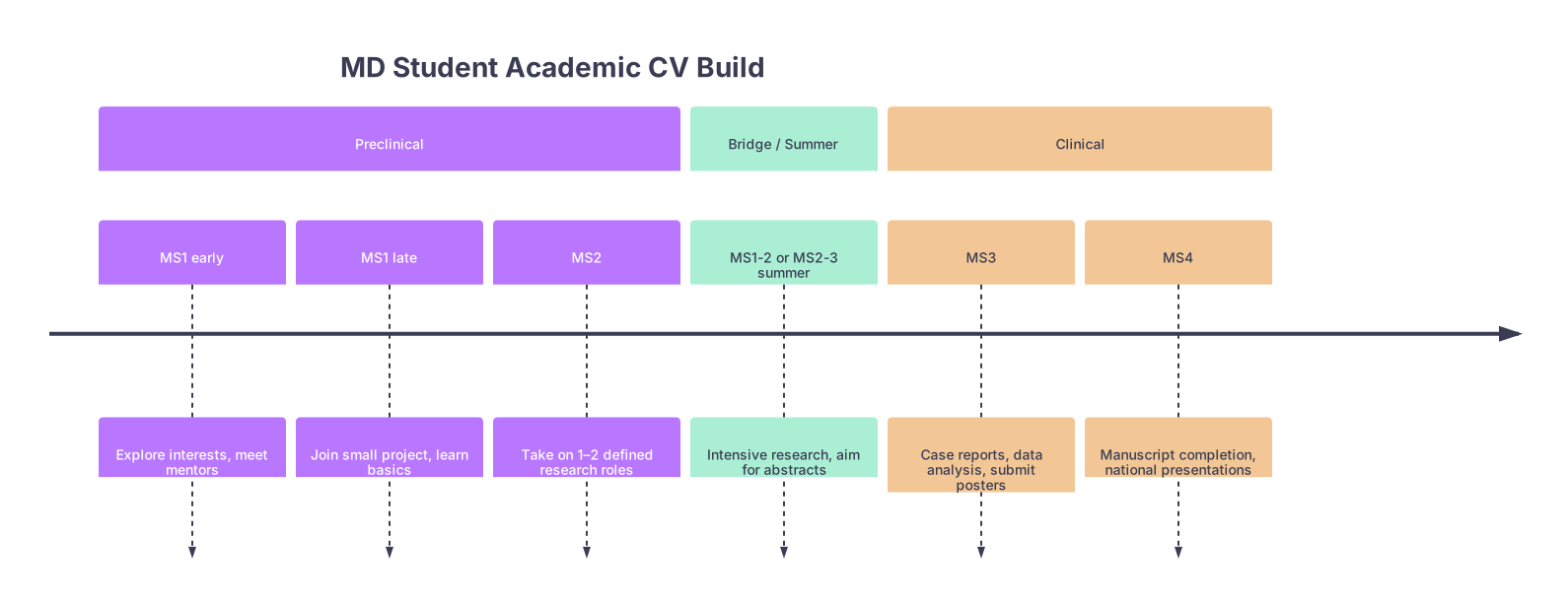
| Period | Event |
|---|---|
| Preclinical - MS1 early | Explore interests, meet mentors |
| Preclinical - MS1 late | Join small project, learn basics |
| Preclinical - MS2 | Take on 1–2 defined research roles |
| Bridge / Summer - MS1-2 or MS2-3 summer | Intensive research, aim for abstracts |
| Clinical - MS3 | Case reports, data analysis, submit posters |
| Clinical - MS4 | Manuscript completion, national presentations |
You are not going to run randomized controlled trials start to finish in med school. Stop fantasizing about that. Target:
- 1–2 substantive projects where you are meaningfully involved
- Several smaller contributions (chart reviews, case reports, posters)
The key is to always be moving something toward completion.
3. Pick a Strategy: Depth vs Breadth (and Stop Being Random)
The fastest way to waste your MD years is to bounce between random projects because “someone needed help.” That is how you end up with six half-finished projects and nothing on PubMed.
Decide: are you going for themed depth or pragmatic breadth?
A. Themed depth (what serious academic tracks prefer)
You build a coherent story in a specific area. For example:
- “Medical education and simulation in emergency medicine”
- “Quality improvement in perioperative care”
- “Outcomes research in stroke and neurocritical care”
Your CV then shows:
- 2–3 research experiences in the same sphere
- Multiple abstracts/posters in this domain
- A couple of manuscripts (even as co-author) on related topics
- Maybe some teaching activities connected to that theme
This looks very good to competitive academic residencies and fellowships.
B. Pragmatic breadth (still respectable if done right)
You are unsure of specialty or your institution is weak in one field. So you:
- Join a quality improvement project in internal medicine
- Help with a retrospective study in surgery
- Write a case report from a unique clinical rotation
- Present a poster in pediatrics
It is more scattered, but if projects actually finish and your role is clear, it still builds a credible scholarly profile.
The wrong answer: “I will say yes to everything and see what sticks.” That is how things do not get finished.
4. Find Mentors Who Actually Get Things Published
The gap between MD and MD/PhD is not intelligence. It is infrastructure. PhD trainees are plugged into systems where projects naturally turn into papers. You have to build your own mini-system by choosing mentors carefully.
Here is how you do that without wasting 18 months working for a black hole:
Step 1: Identify productive mentors
Use actual data, not vibes.
- Search PubMed for faculty in your department or interest area
- Check if they have recent publications (past 2–3 years, not 2009)
- Look for recurring med student or resident co-authors
- Ask upperclassmen, “Who actually gets papers out with students?”
Red flags:
- “I have a lot of ideas” but zero recent publications
- They blame “lazy students” or “reviewer 2” for why nothing is out
- They talk big about grants but cannot show you recent output
Step 2: Approach them professionally
You send a targeted email, not a generic desperation note.
Subject line:
“MS2 interested in [X field] – willing to help on existing projects”
Body (short version):
- Who you are (year, school, basic background)
- Your interest (specific to their work, not “I like cardiology”)
- Your capacity (e.g., 5–7 hours/week during semester, more in summer)
- Concrete ask: “Do you have any ongoing projects where a motivated student could help with [data collection / chart review / literature review]?”
Offer execution, not “I want you to give me my own project.”
Step 3: Clarify expectations early
On the first real meeting, ask:
- “What projects are currently in progress and how close are they to submission?”
- “What would my role be and what is realistic for authorship?”
- “What timeline are you aiming for on this project?”
If they cannot answer those clearly, proceed with caution.
5. Choose the Right Project Types for MD Students
You are not in a lab 60 hours per week like a PhD student. So stop picking projects that require that. You need MD-compatible projects.
High-yield categories for MD students:
-
- Time-flexible
- Data can often be pulled remotely
- Shorter path to abstract/manuscript than prospective trials
Case reports and small case series
- Great for busy clinical years
- Good for specialty-specific CV lines (neuro, derm, etc.)
- Best if tied to rare/interesting findings or novel management
Quality improvement (QI) projects
- Easy to align with hospital priorities
- Frequently presented at institutional or regional meetings
- Many journals welcome QI manuscripts
Medical education projects
- Curriculum development, simulation, assessment tools
- Good for people headed toward academic/teaching-heavy careers
Systematic or scoping reviews
- Heavy on reading and writing, less on scheduling patients
- Very doable across semesters if the team is competent
Compare them quickly:
| Project Type | Time Flexibility | Path to Publication | Ideal Phase |
|---|---|---|---|
| Chart Review | High | Moderate–High | MS1–MS3 |
| Case Report/Series | Very High | Moderate | MS3–MS4 |
| QI Project | Medium | Moderate–High | MS2–MS3 |
| Med Ed Project | Medium | Variable | MS2–MS4 |
| Systematic Review | High | Moderate | MS1–MS3 |
Pick 1–2 from this list that match your schedule and mentor availability. Then commit.
6. Build a CV-Worthy Workflow (So Projects Actually Finish)
MD students love “ideas.” PIs and PDs only care about finished output. That means you need a workflow that takes a project from idea to CV line item.
Use a simple four-phase approach for each project
Scoping and roles (Week 0–2)
- Clarify research question, design, and endpoints
- Lock in your tasks (e.g., data abstraction, stats liaison, drafting Results)
- Confirm authorship criteria and order in writing (even just a quick email recap)
Data + analysis (Weeks 3–12 for most small projects)
- Learn the data tool (REDCap, Excel, etc.)
- Set weekly micro-goals: “200 charts abstracted by Friday,” etc.
- Meet every 2–3 weeks with your mentor for course correction
Writing and submission (Weeks 12–20)
- Volunteer to write concrete sections: Methods, Results, first draft Discussion
- Use a shared document with clear versioning
- Push aggressively for submission—do not let it die at “almost done”
Presentations and follow-through
- Identify 2–3 relevant conferences early
- Prepare an abstract template for easy reuse
- Once accepted: build poster slides, rehearse brief talk, collect this as a CV line
Here is how your project pipeline should look visually:

| Step | Description |
|---|---|
| Step 1 | Join Project |
| Step 2 | Clarify Roles |
| Step 3 | Collect Data |
| Step 4 | Analyze Data |
| Step 5 | Draft Manuscript |
| Step 6 | Submit to Journal |
| Step 7 | Revise and Resubmit |
| Step 8 | Submit Abstract |
| Step 9 | Poster or Talk |
Every project you are on should be somewhere on this chart. If it is stuck between D and E forever, you have a problem to solve, not a situation to accept.
7. Format Your CV Like a Serious Academic, Not a College Applicant
You can have great content and still look amateur if your CV is sloppy. PhD students get drilled on this. You probably did not. Fix that.
A. Use a professional academic structure
Order your sections roughly like this:
- Name and contact information
- Education
- Honors and Awards
- Research Experience
- Peer-Reviewed Publications
- Abstracts and Presentations
- Other Publications (book chapters, blogs if reputable)
- Teaching Experience
- Leadership and Service
- Professional Memberships
- Skills
No “Objective” section. No photos. No color blocks.
B. List publications correctly
You follow standard citation style (often AMA) and separate them clearly:
- Published / In press
- Accepted / In revision (clearly labeled)
- Submitted (sparingly; do not list “drafts”)
Example:
Peer-Reviewed Publications
- Smith JT, YourLastName R, Johnson K. Title of the article. J Clin Oncol. 2024;42(5):123–129.
- YourLastName R, Patel S, Green A. Title of the article. Acad Med. In press. 2025.
If you only have one or two, that is fine. The point is accuracy and clarity.
C. Show your role in research experiences
Under Research Experience, do not just write:
“Research Assistant, Department of Surgery, 2023–present.”
That tells no one anything. Add 2–3 bullets that show:
- Context (what the project was about)
- Your specific tasks (data abstraction, IRB submission, analysis, manuscript drafting)
- Outcome (submitted manuscript, conference poster, in-progress abstract)
Example:
Research Assistant, Department of Neurology, Stroke Outcomes Lab, University Hospital
2023–present
- Performed chart review of 350 stroke patients for retrospective study on thrombolysis timing
- Built REDCap database and coordinated data quality checks with biostatistics team
- Co-authored abstract accepted to International Stroke Conference 2024
That reads like someone who knows how to function on a research team. PhD not required.
8. Add Non-Research Academic Content That Actually Counts
An academic CV is not just research. This is where MD-only students can quietly catch up to MD/PhD colleagues.
A. Teaching and mentoring
You can build this even as an MS1 or MS2:
- Small group leader for anatomy or clinical skills
- Peer tutor for underclassmen in specific courses
- USMLE tutor for students behind you
- Workshop facilitator (suturing skills, ultrasound basics, etc.)
Document it like this:
- “Small Group Tutor, MS1 Physiology, 2 hrs/week, 2023–2024”
- “Peer Mentor, Internal Medicine Interest Group, 2022–2023”
B. Leadership and service
Programs like to see you can function beyond the lab.
- Positions in student interest groups (President, VP, Education Coordinator)
- Organizing journal clubs
- Running a free clinic’s QI initiative
- Helping coordinate a regional conference or symposium
The trick: tie leadership to outcomes. Not just “served as treasurer,” but “organized X,” “launched Y,” “increased Z.”
C. Honors and awards
You probably underestimate what counts.
- Scholarships
- Departmental awards
- Poster prizes
- Travel grants
- Teaching awards
Each of those is an extra signal that people trust you to do academic work well.
9. Build Stats and Methods Skills Without a PhD
One quiet advantage PhD students have: they speak the language of methods and statistics more fluently. You will not match their depth in 4 years. You do not need to. But you do need to clear a basic threshold.
Here is a realistic skill set to aim for:
- Understanding of basic study designs (RCT, cohort, case-control, cross-sectional, QI)
- Comfort reading methods sections and identifying primary outcomes
- Familiarity with common statistical tests (t-test, chi-square, logistic regression basics)
- Ability to use at least one tool: SPSS, R, Stata, SAS, or even advanced Excel for simple work
How to get there without abandoning your other responsibilities:
- Take 1–2 short, targeted online courses (Coursera, edX, etc.) on biostats and R or SPSS
- Ask to sit in on your institution’s journal club and focus on the methods section each time
- When working with a statistician: ask them to walk you through the output instead of just handing you p-values
You then add a modest, honest “Skills” section to your CV:
- “Basic proficiency in R for data cleaning and simple analyses (t-tests, linear regression)”
- “Familiarity with REDCap, Qualtrics, and Excel for data management”
Do not oversell. If you cannot run a multivariate model without supervision, do not list advanced skills.
10. Protect Your Time and Choose What to Drop
Here is the harsh truth: you cannot be excellent at everything simultaneously. If you want an academic CV, something else gives. For MD-only students, that usually means:
- Fewer random volunteer events with no academic outcome
- Saying no to unstructured projects that have “no clear endpoint yet”
- In some cases, a slightly lower class rank in exchange for real scholarship (especially if you are not chasing ultra-score-obsessed specialties)
Use this rule:
If a commitment cannot realistically turn into a concrete CV line (publication, presentation, defined leadership, structured teaching), it is lower priority.
You still need to be a good clinician. You still need to pass exams and boards. But you do not need to be on every committee and in every club. MD/PhD students have more “protected time.” You compensate by being more selective.
11. Track Your Output Like a Researcher, Not a Student
The last piece: systematize. You do not want to be trying to remember in MS4 what you did in MS1.
Set up a very simple tracking system:
A spreadsheet (or Notion/OneNote) with columns for:
- Project title
- Mentor
- Your role
- Start date
- Current stage (idea, data collection, analysis, writing, submitted, accepted)
- Products (abstracts, posters, manuscripts, awards)
- Next action and deadline
A folder structure:
- /Research
- /Project_Stroke_QI
- /Project_MedEd_Simulation
- /CaseReports
- /Posters_And_Slides
- /Research
A quarterly review:
- Once every 3 months, sit down for 30–60 minutes and:
- Update the status of each project
- Decide which to push harder, which to abandon, and what new opportunities to pursue
- Update your CV file immediately
- Once every 3 months, sit down for 30–60 minutes and:
This is exactly what productive academic residents and attendings do. You just start earlier.
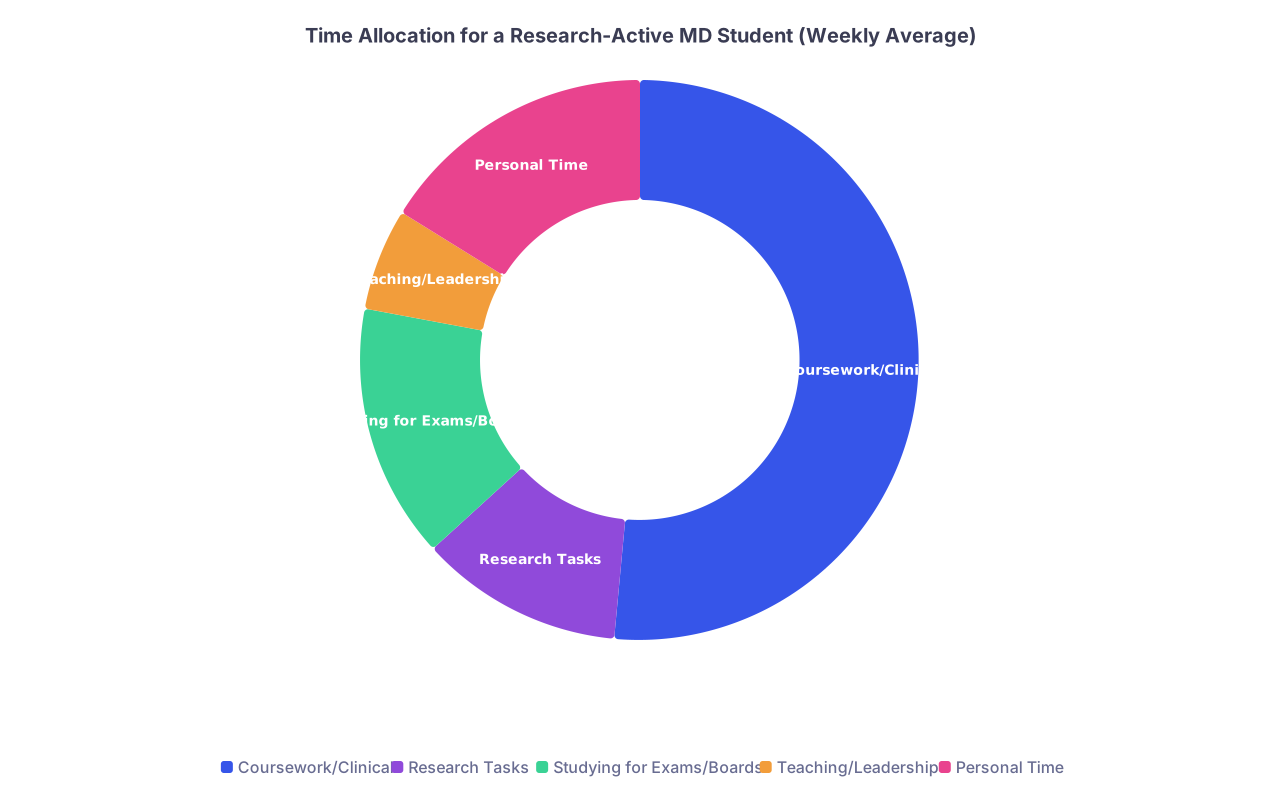
| Category | Value |
|---|---|
| Coursework/Clinical | 35 |
| Research Tasks | 8 |
| Studying for Exams/Boards | 10 |
| Teaching/Leadership | 4 |
| Personal Time | 11 |
You will not hit these exact numbers every week, but this is the basic shape of a sustainable, academic-focused MD schedule.
FAQs
1. How many publications do I “need” as an MD student to be competitive for academic residency?
There is no magic number, but I will be blunt: for most academic-leaning residencies, 2–4 meaningful scholarly products (not all need to be full manuscripts) put you in a solid position. That could look like:
- 1–2 peer-reviewed papers (even as middle author)
- 2–3 abstracts/posters at regional or national conferences
- A clear research theme with at least one ongoing project
If you are targeting very research-heavy or highly competitive specialties (derm, plastics, rad onc, some neurosurgery programs), their residents often have 5–15 total “publications/abstracts/presentations.” Many of those are posters and smaller pieces, not all first-author NEJM papers. Focus on quality and completion, not just inflating the count.
2. Is it worth taking a dedicated research year as an MD-only student?
Sometimes. Not automatically. A research year is worth considering if:
- You are targeting a hyper-competitive academic specialty and currently have little to no research
- You have identified a high-yield mentor or lab with a real track record of output
- You can articulate exactly what 12 months will produce (X manuscripts, Y abstracts, specific skills)
It is not worth it if:
- You vaguely “like research” but have no specific plan or mentors
- You expect the research year itself to impress programs without tangible outputs
- You will be doing mostly low-yield busywork with no authorship
If you take a research year, treat it like a job with deliverables, not a gap-year vacation with a fancy name.
3. I am a late MS3 with almost no research. Is it too late to build an academic CV?
No, but you need to be strategic and realistic. You are not going to generate five first-author manuscripts before ERAS. You can still:
- Get involved in 1–2 fast-turnaround projects (case reports, small chart reviews, QI)
- Push for abstracts and posters at regional or institutional conferences that occur before or during application season
- Leverage teaching, leadership, and clinical excellence to show you care about academic work and education
- Highlight any ongoing projects in your personal statement and interviews as evidence of current momentum
Your pitch becomes: “I realized later in training that I want an academic career, and in the last 6–12 months I have taken concrete steps in that direction.” People believe trajectories. Show one.
Open your current CV (or create a blank document) right now and write in section headers for Education, Research Experience, Publications, Abstracts/Presentations, Teaching, Leadership, and Skills. Then, under each, list what you have today and mark in bold the section that looks weakest. That is where your next 3–6 months of focused effort should go.