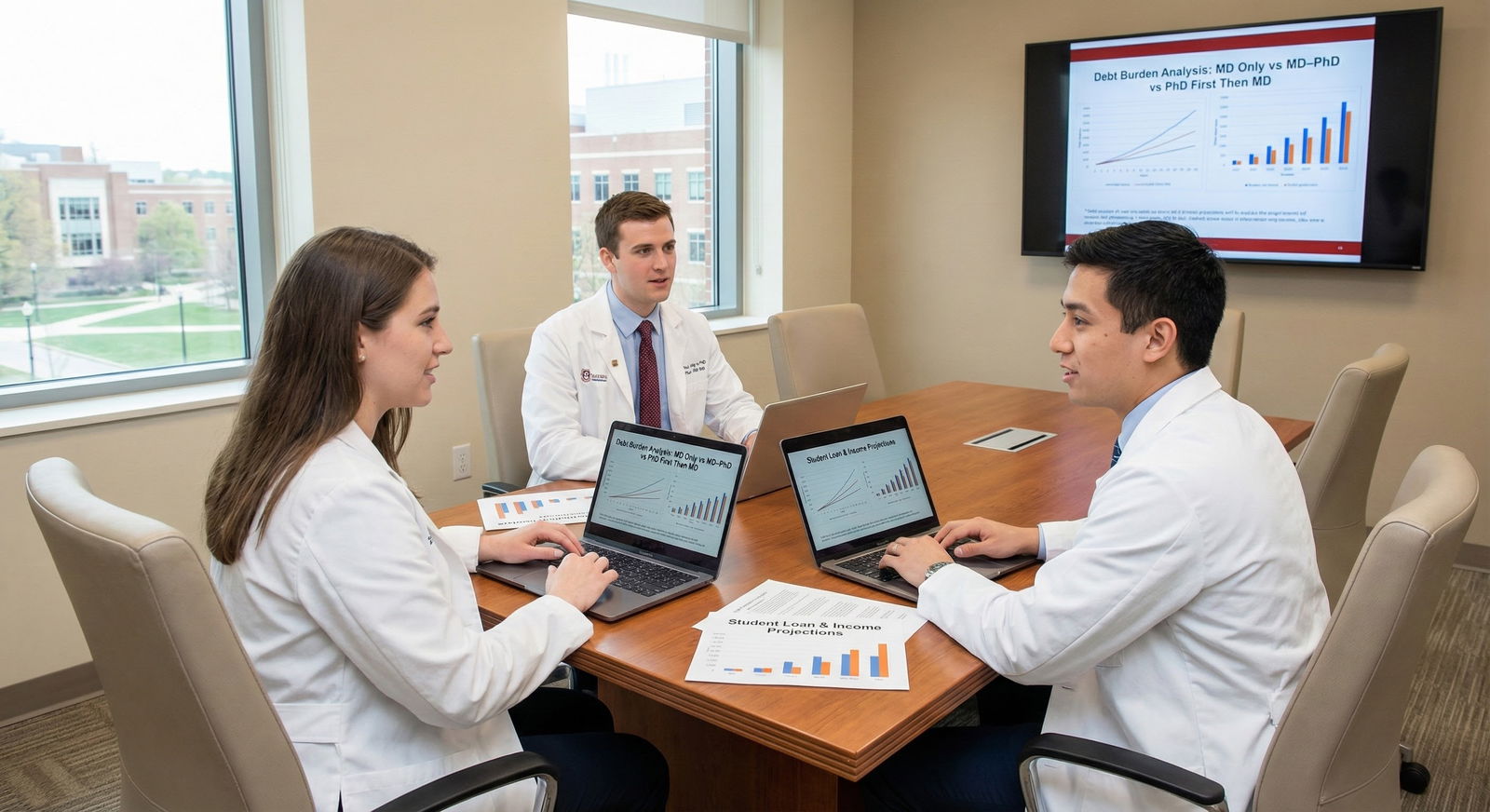
It’s 11:47 pm. You’re on question 56 of some random UWorld block you’re barely reading, and your brain is spiraling on something completely different:
“If I don’t get a PhD… am I just signing up to be just a clinician forever? Like I’ll round, write notes, click boxes in Epic, and watch everyone with a PhD do the interesting stuff?”
And underneath that:
“Am I already closing doors? Am I going to regret this in ten years when I’m a tired attending with no ‘impact’ beyond clinic notes and RVUs?”
Let’s pull that whole mess apart, because I’ve heard this from way too many smart, anxious students who are absolutely overestimating the “magic” of three extra letters and underestimating what an MD alone can actually do.
Where This Fear Comes From (You’re Not Imagining It)
You’re not crazy. The system kind of pushes this anxiety.
You hear stuff like:
- “Serious physician-scientists have PhDs.”
- “If you want to run a lab or get R01 funding, you really need the PhD.”
- “Clinician-educator tracks are for people who couldn’t hack it in research.” (Yes, I’ve heard people say this out loud in real life. Awful, but real.)
You see MD/PhDs introduced on rounds as “Dr. X, who did their PhD in immunology at Stanford and runs a basic science lab,” and everybody nods like this is the pinnacle of achievement. Meanwhile the MD-only hospitalist who quietly runs the residency program and actually keeps the place functioning barely gets a line in their intro.
On top of that, a lot of med schools worship R01s and Nature papers. So the hidden curriculum is basically: “PhD = serious academic. No PhD = just a clinician.”
The lie is in that word: just.
What “Just a Clinician” Actually Looks Like (Reality Check)
Let me be blunt: there are MD-only people with more power, more impact, and more interesting careers than plenty of MD/PhDs.
I’ve watched:
An MD-only cardiologist at a big-name place run multi-center clinical trials, sit on national guideline committees, and literally change how the entire country treats a disease. No PhD. Just relentless work, good ideas, and collaborators.
An MD-only emergency physician become system-wide director for quality and safety and rewrite protocols that changed outcomes for thousands of patients per year. Again: no PhD.
A med-peds doc with no PhD become the associate dean for curriculum, build new educational pathways, start a longitudinal research course, and essentially redesign how an entire school trains doctors.
None of these people were “just a clinician.” They still do clinical work. But “clinician” is not their whole job description.
So when you’re scared of being “just a clinician,” what you’re actually scared of is:
- Having no control over your schedule or career
- Being trapped in high-volume, low-autonomy work
- Doing mostly documentation and box-checking
- Feeling replaceable
That has almost nothing to do with PhD vs no PhD. That’s about what track you choose, what environment you land in, and how much you intentionally build a niche.
What a PhD Actually Changes (And What It Absolutely Doesn’t)
Let’s be precise, because vague fears are the worst kind.
A PhD can:
- Give you deep research training, especially in basic or translational science
- Make you more competitive for certain physician-scientist positions, especially in grant-heavy departments
- Help with credibility in academic/research-heavy circles
- Make grant-writing and study design less terrifying because you’ve lived and breathed it
A PhD does not automatically:
- Guarantee you a protected, cushy research career
- Prevent burnout
- Make clinical work optional
- Make you a “leader” by default
- Make you more impactful than an MD-only person who’s focused and strategic
And here’s the uncomfortable truth I’ve seen up close: plenty of MD/PhDs burn out, too. Plenty drift into almost entirely clinical roles because funding is brutal, or they realize they don’t actually like running a lab, or life happens. They’re not magically protected.
On the flip side, I’ve seen MD-only people build physician-scientist careers anyway. They:
- Did a research year or two during residency/fellowship
- Found strong mentors
- Started with clinical research or QI
- Built step-by-step toward more protected time and leadership roles
Did they sometimes have to work harder to be seen as “real” scientists? Yes. Is it impossible? No. Not even close.
The Hidden Truth: Most Academic Medicine Is Built on MD-Only Clinicians
Look at any major academic medical center. Who actually keeps the place running?
It’s overwhelmingly MD-only clinicians who:
- Run residency and fellowship programs
- Serve as clerkship directors and deans
- Lead hospital committees
- Drive quality improvement projects
- Direct service lines (stroke, heart failure, diabetes, etc.)
- Run big clinical trials with research coordinators and statisticians doing the heavy methodologic lifting
Are there MD/PhDs? Of course. Are they essential for certain types of basic/translational science? Yes.
But the idea that without a PhD you are somehow “other” in academic medicine is… just wrong. The majority of academic faculty are MD-only.
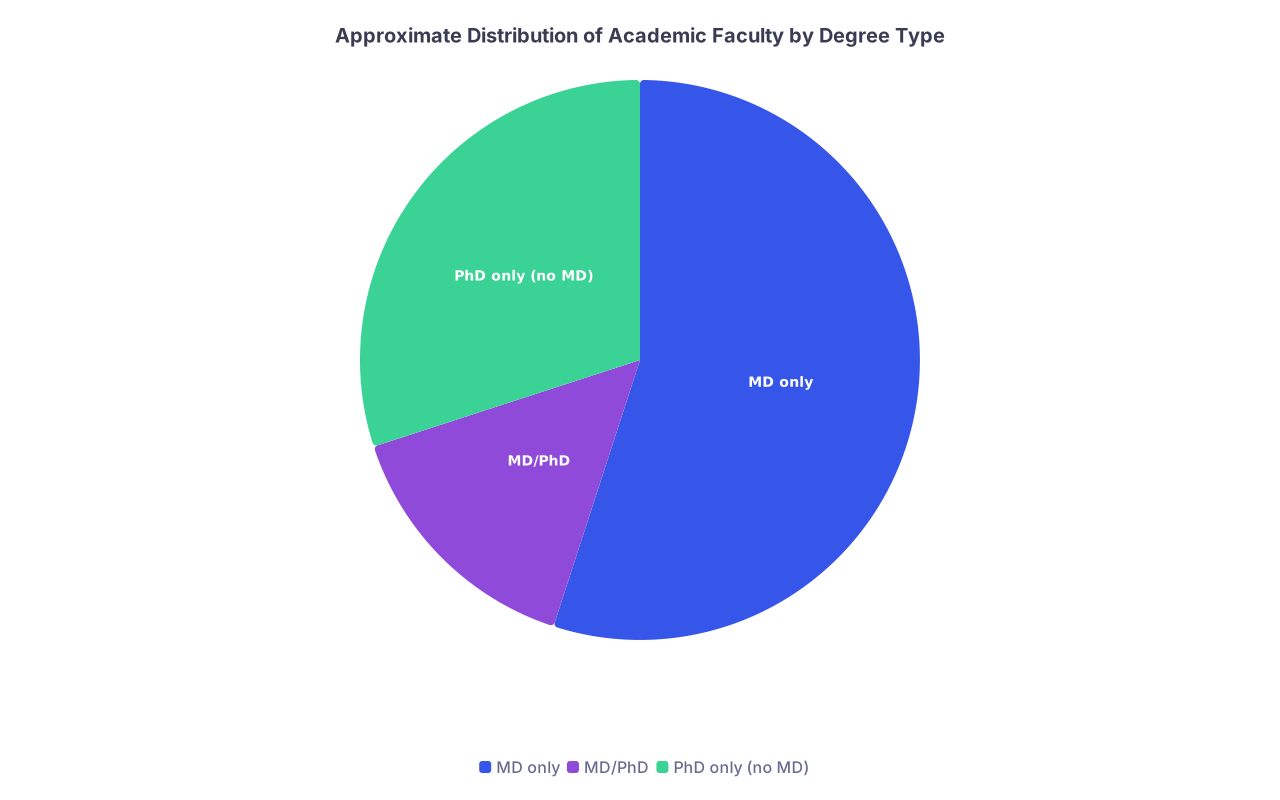
| Category | Value |
|---|---|
| MD only | 55 |
| MD/PhD | 15 |
| PhD only (no MD) | 30 |
Numbers vary by institution and specialty, but the pattern is consistent: MD-only physicians are the backbone of clinical and educational missions.
So if your fear is: “Without a PhD I’ll be stuck in a poorly paid community job grinding 60 RVUs a day forever,” that’s not how this works. Unless you choose that path. And some people do choose it, and even like it.
Career Tracks Where an MD Alone Is Enough (Or Even Standard)
Let’s look at some common roles where an MD without a PhD is totally normal—and often dominant.
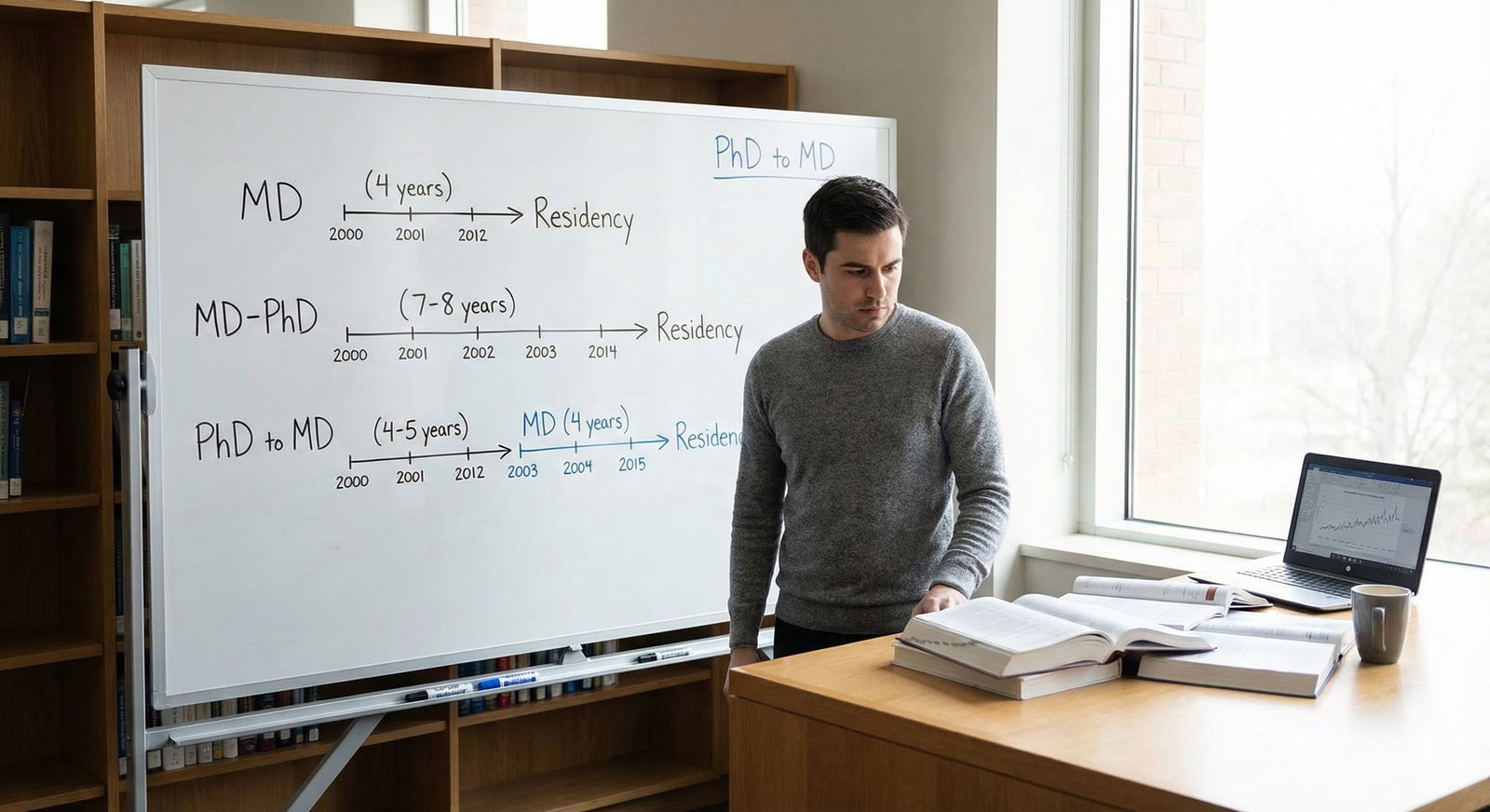
Academic clinician-educator.
Most program directors, clerkship directors, simulation faculty, and med ed leaders are MD-only. They publish, they redesign curricula, they speak at conferences. No PhD. Sometimes they get an MEd or MHPE later, but not required.
Clinical researcher.
Especially in fields like cardiology, oncology, EM, hospital medicine. A ton of clinical trial PIs are MD-only. They have research teams, statisticians, methodologists. What matters is: can they ask good clinical questions and execute?
Hospital/health system leadership.
Chief medical officers, service-line directors, quality and safety leaders, informatics directors. Some have MBAs or MPHs. Very few have PhDs in basic science.
Public health / policy.
MD + MPH is common. MD-only is still absolutely viable. People move into government agencies, nonprofits, think tanks, policy work.
So no, you are not locking yourself into an exam-room-for-life sentence without a PhD.
But What If I Really Want to Be a Physician-Scientist?
This is the one real scenario where your anxiety has some teeth.
If your dream is:
“I want to run a wet lab, write R01s, do mechanistic bench work, and spend 70–80% of my time on research”
then yeah, MD/PhD or at least PhD-level training makes life easier. Not mandatory, but easier.
Here’s how that path looks if you don’t do a PhD up front:
- You do serious research in med school (a full research year helps)
- You match at a residency with a strong research track
- You maybe do a research fellowship or T32 postdoc
- You get mentored like crazy, start with K awards or foundation grants
- You slowly build up protected time and independence
It’s doable. People do it. The timeline is just different, and you carry more clinical expectations earlier.
So the honest answer:
- If hardcore bench research is your non-negotiable life dream, consider the MD/PhD route seriously.
- If you just “generally like research” or “want to be academic,” an MD alone is not a career death sentence. You have alternate training paths later.
Can You “Add” Research or Extra Training Later? Yes.
You’re acting like the MD vs MD/PhD choice is the final boss of your career. It’s not.
There are so many later options:
| Pathway | Typical Timing | Common Degrees |
|---|---|---|
| Research year | Med school or residency | None / certificate |
| T32 research track | Residency/Fellowship | None / MS |
| Clinical research focus | Fellowship/Post-fellowship | MS, MPH |
| Med Ed focus | Residency/early faculty | MEd, MHPE |
| Admin/leadership | Mid-career | MBA, MHA, MPH |
You can build research skill as you go:
- Dedicated research year in med school or residency
- T32 research track in residency/fellowship
- Master’s in clinical research, epidemiology, or public health
- Formal mentoring programs and protected time from your institution
Will your path look different from someone who spent 4–5 years doing a PhD in a lab? Yes. But different isn’t worse. It’s just… different.
The Part No One Says Out Loud: Tradeoffs and Burnout
Here’s the cynical-but-true part.
Being only clinical can burn you out. But being a physician-scientist with constant funding pressure, grant rejections, and 60-hour weeks can also burn you out. Adding a PhD doesn’t magically fix the structural problems of medicine.
I’ve watched MD/PhDs:
- Spend most of their “protected” time chasing funding instead of doing science
- Get their labs shut down when grants dry up
- Take on more clinical time than they planned because the department needed money
- End up feeling just as trapped as any overworked hospitalist
So if your anxiety is really about: “I want a life with meaning and some control, not just endless clinic notes,” then the core problem isn’t the letters after your name. It’s career design, boundaries, and choosing an environment that matches what you actually want.
How to Think About This Without Spiraling
If you’re anything like me, your brain is probably doing this all-or-nothing thing:
“No PhD = doomed to boring outpatient clinic with no impact.”
That’s not analysis. That’s catastrophizing.
Try questions like:
- Do I actually enjoy designing experiments and thinking in mechanistic detail? Or do I just like the idea of being “a scientist”?
- When I imagine my ideal week 10 years from now, how much of it is clinical? How much is research? Teaching? Leadership?
- Am I chasing a PhD because I want it, or because I’m scared people won’t respect an MD-only path?
And then be honest with yourself. If you light up when you think about a lab meeting, maybe you are a good MD/PhD fit. If you light up thinking about teaching, running teams, or fixing broken systems, an MD alone is plenty to build something meaningful.

| Step | Description |
|---|---|
| Step 1 | Start - Worried about being just a clinician |
| Step 2 | Strongly consider MD PhD or later PhD |
| Step 3 | MD plus research tracks and mentors |
| Step 4 | MD focused on clinical, teaching, leadership |
| Step 5 | Plan for research integrated training |
| Step 6 | Design clinical career with boundaries |
| Step 7 | Want majority research career |
| Step 8 | Want some research or academic work |
You are not choosing between “impact” and “no impact.” You’re choosing how you want to spend your days getting to that impact.
A Few Concrete Realities To Hold Onto
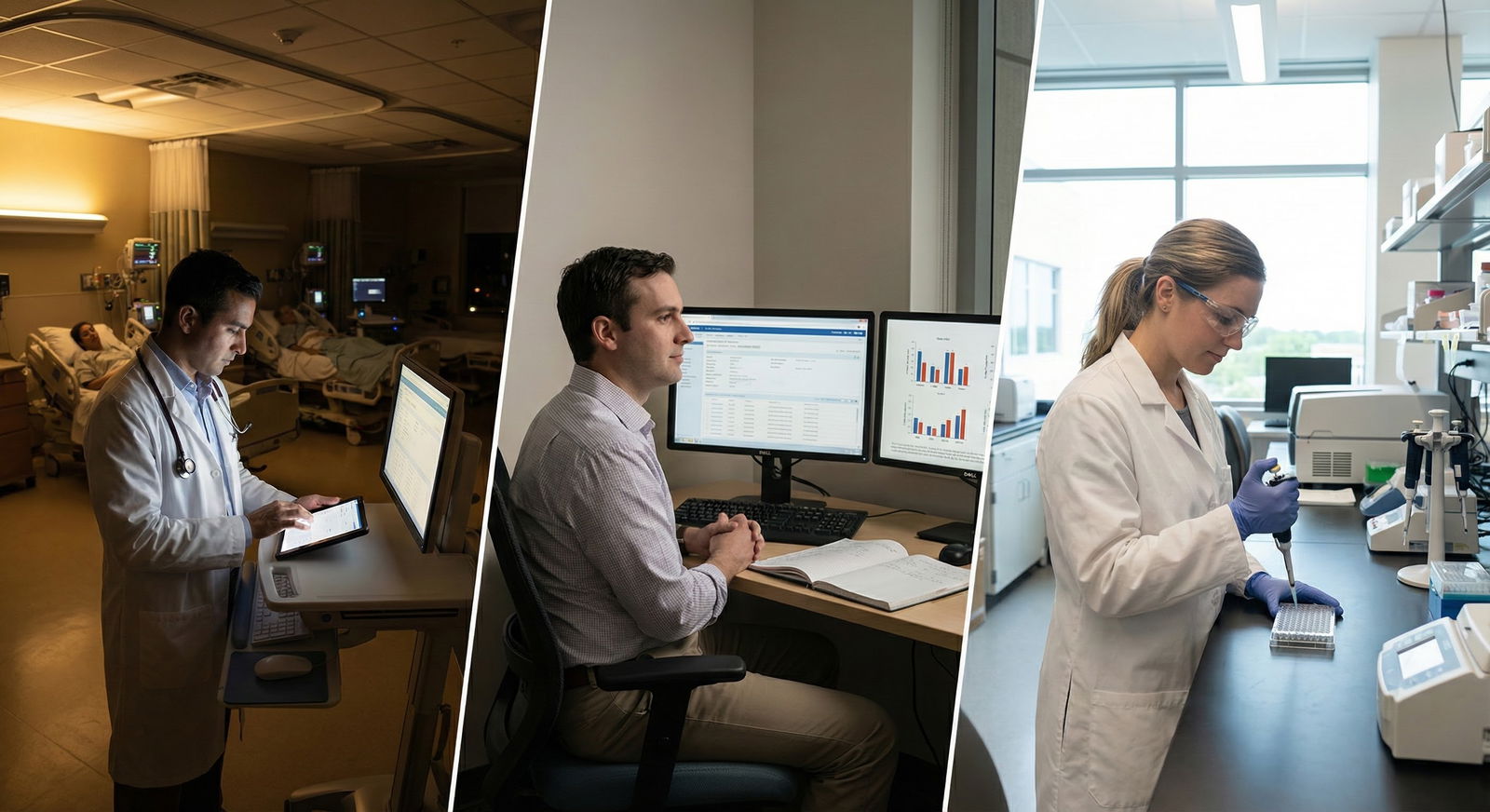
Three grounded truths so your brain stops spinning:
Most impactful physicians in the real world are MD-only. You just don’t always see them spotlighted when schools are trying to show off “NIH funding numbers.”
You can absolutely build research, education, leadership, or policy into your career later. The PhD is not the only on-ramp to “non-just-clinical” work.
You can build a deeply meaningful, high-impact career as “a clinician” alone. The word “just” is the lie.
If after all that, you still feel a pull toward the PhD, great—explore it for positive reasons, not fear. But don’t let vague dread about being “just a clinician” bully you into a decade-long training path you don’t actually want.
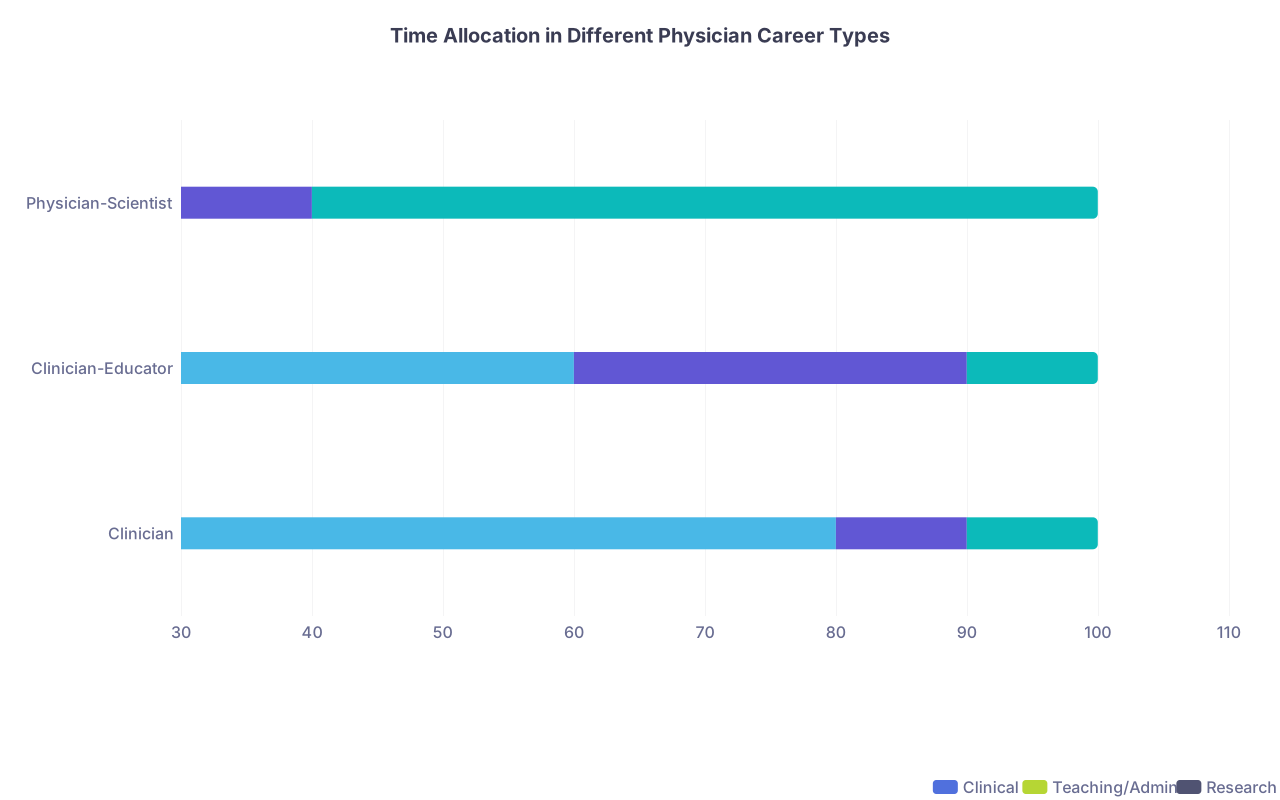
| Category | Clinical | Teaching/Admin | Research |
|---|---|---|---|
| Clinician | 80 | 10 | 10 |
| Clinician-Educator | 60 | 30 | 10 |
| Physician-Scientist | 30 | 10 | 60 |
You’re not choosing whether you’ll matter. You’re choosing what mix of clinical / teaching / research / leadership you want your life to actually contain. That’s moldable. Over time. Without a PhD if that’s what you decide.
FAQ: Worried I’ll Be “Just a Clinician” Without a PhD
1. Will not having a PhD hurt my chances of getting an academic job?
For most academic jobs, no. Being MD-only is the norm, especially in clinician-educator and clinical-research roles. What matters far more is: did you do meaningful projects, do you have mentors, do you fit the department’s needs? A PhD mainly helps when you want a grant-heavy, basic-science-focused physician-scientist role.
2. Can I still do research as an MD without a PhD?
Yes. Tons of clinical researchers are MD-only. You might start with retrospective studies, chart reviews, or clinical trials. As you gain experience and collaborators, you can move into more sophisticated work. You can also beef up your training with a research fellowship, MS in clinical research, or MPH if you want more formal skills.
3. Do residency program directors care if I have a PhD?
Most don’t, unless you’re applying to a very research-heavy track where they specifically want MD/PhDs or strong research backgrounds. For the average residency, they care more about Step scores (where applicable), letters, clinical performance, and evidence you’re responsible and not a nightmare to work with.
4. Is it harder to get NIH funding as an MD-only physician?
For classic basic science R01-style grants, yes, MD/PhDs often have an easier time because they’re trained like traditional scientists and departments design those roles around funding. But MD-only physicians do get NIH grants—especially in clinical, translational, and health services research. You may just need more explicit training and strong mentorship to get there.
5. If I skip the PhD now, can I go back for it later?
You can, but it’s not super common. What’s more common: you pursue structured research training during residency/fellowship (T32, MSc, MPH), which gives you many of the practical tools you actually need without committing to a full PhD. Going back for a PhD mid-career is possible, but it’s a major time and income hit, so people usually only do it if they’re absolutely sure.
6. How do I know if I actually want a PhD vs just being scared?
Look at your behavior, not your anxiety. Do you seek out lab meetings and genuinely enjoy troubleshooting experiments? Do you like thinking in mechanisms, designing protocols, working with data for long stretches? Or do you mostly like the idea of being a physician-scientist because it feels prestigious or “impactful”? If the day-to-day science work energizes you, MD/PhD is worth a hard look. If not, you’re probably better off building a customized MD-only path rather than forcing a decade-long detour.
Key takeaways:
You are not doomed to be “just a clinician” without a PhD. An MD alone can lead to research, teaching, leadership, policy, and genuinely high-impact work—if you shape your career intentionally. The PhD is one tool, not the only path, and chasing it out of fear instead of desire is how people end up miserable in very impressive jobs.