
It’s 7:40 p.m. You just finished a brutal clinic day. You’re halfway through your inbox when an email pops up from the managing partner: “Mandatory meeting tomorrow at 6:30 a.m. — practice update.”
Nobody calls a 6:30 a.m. “update” for good news.
The next morning you’re in a stuffy conference room, stale bagels on the table, and a tired-looking consultant with a PowerPoint. The slide says: “Strategic Partnership with [Private Equity Firm Name].” The words “liquidity event” and “future growth” are flying around. A couple of senior partners look oddly calm. Too calm.
You’re an employed associate with three years in. You have a contract. You have a non‑compete. You have RVU targets you’re barely hitting some months.
The question you’re really asking—quietly, under the table—is this:
What happens to my contract now that private equity bought in?
Let me tell you what actually happens. The stuff they do not say in that “all hands” meeting.
First: Legally, Your Contract Is Not “Erased” — But It’s Not Safe Either
Everyone’s first misconception: “New owner means old contract is void.”
Wrong.
In almost every PE deal I’ve seen, your existing employment contract is treated as an “assumed contract.” That means the entity you technically work for (often the practice’s professional corporation or a management services org) is bought or restructured, but your contract is simply assigned to the new owner.
You’re not asked. You’re told.
Your contract has a clause you probably skimmed on day one: “Assignment.” It usually says something like, “Employer may assign this Agreement to any successor entity in the event of merger, consolidation, sale, or reorganization.”
That one sentence? That’s how your job gets transferred to the new regime without you signing a single new piece of paper.
Behind closed doors, this is what the PE lawyers are doing:
- They get a list of every physician and every contract.
- They classify you as “must keep,” “replaceable,” or “do not renew.”
- They decide which contracts to assume as is for now and which to let expire or renegotiate.
If you’re a high‑producer with decent behavior and no major headaches, they’re almost certainly going to keep you. But “keep you” doesn’t mean treat you the same.
It means:
“Keep you long enough to extract your value, then move you onto the new template.”
That template is coming. Maybe not month one. But it’s coming.
The Timeline: How This Actually Rolls Out
Let’s pull the curtain back on the real sequence, because it’s almost comically predictable across deals.
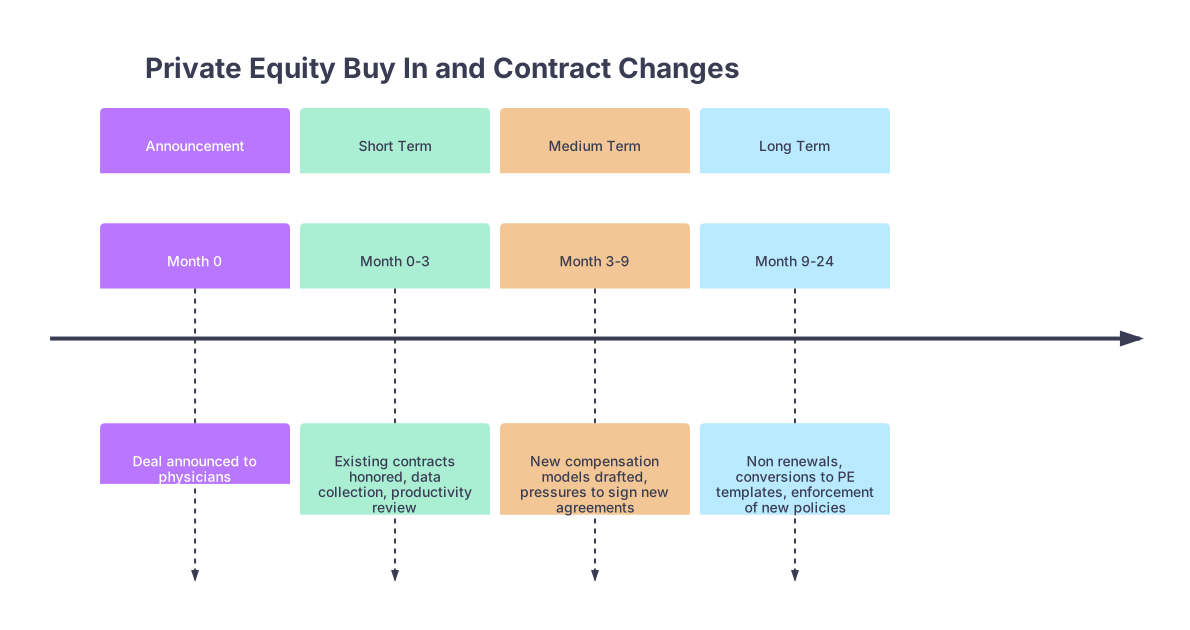
| Period | Event |
|---|---|
| Announcement - Month 0 | Deal announced to physicians |
| Short Term - Month 0-3 | Existing contracts honored, data collection, productivity review |
| Medium Term - Month 3-9 | New compensation models drafted, pressures to sign new agreements |
| Long Term - Month 9-24 | Non renewals, conversions to PE templates, enforcement of new policies |
Month 0–3: The Honeymoon
You’re told: “Nothing changes day‑to‑day. We value our physicians. Your existing contract remains in place.”
That part is technically true. For now.
What you do not see:
- PE is pulling every RVU report, payer mix report, no-show rate, procedure volume.
- They’re ranking physicians by profitability, not seniority, not reputation.
- They’re identifying who’s underpaid for their productivity and who’s “overpaid” for what they bring in.
They won’t touch your contract immediately. First, they need the numbers.
Month 3–9: The “Optimization” Phase
Now you start seeing hints.
New scheduling templates. “Productivity adjustment” emails. More metrics dashboards. The phrase “aligning incentives” shows up a lot.
This is when they start:
- Offering “new standardized contracts” at renewal.
- Incentivizing early signers with short‑term bonuses.
- Quietly tightening call expectations and clinic volume expectations.
If your contract expires during this window, you’re a test case. You’ll be offered the new model long before your colleagues who still have 2–3 years on their agreements.
Month 9–24: Full Conversion
By now, they have pressure points:
- Your contract is coming up for renewal.
- You’re tired, maybe burned out, maybe tied to the area by kids, spouse, or mortgage.
- They know your numbers. They know if they can replace you without losing much revenue.
This is when the lawyers come in with “updated” contracts. More on what those actually look like in a minute.
Some people are not renewed. Not fired on paper—just “no mutual renewal.” That’s how they clean up the outliers—low producers, those who openly resisted changes, anyone vocal about PE on email.
So no, your contract does not blow up on day one. But the fuse gets lit.
The Parts of Your Contract PE Actually Cares About
Here’s what they obsess over in your contract behind closed doors. I’ve sat in those meetings. I know the slides.
They are not reading your CME stipend section.
They are hunting for levers.
Compensation Structure
Your base salary and variable comp are the main course.
PE doesn’t always slash base day one; that’s how you spark revolt. The playbook is more subtle:
- Keep the base similar for now.
- Shift more total compensation into “productivity incentives.”
- Redefine “productivity” so it favors volume and specific high-margin services.
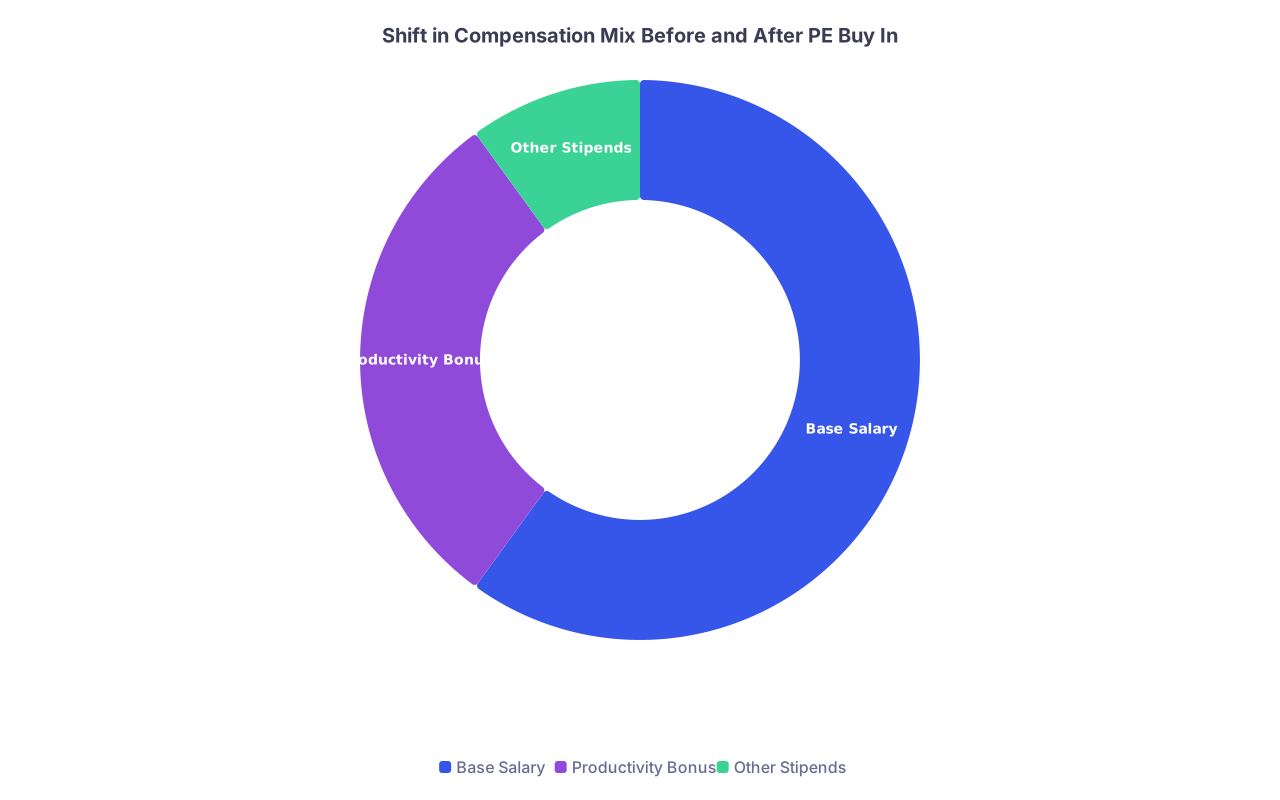
| Category | Value |
|---|---|
| Base Salary | 60 |
| Productivity Bonus | 30 |
| Other Stipends | 10 |
The pre‑PE mix might be more like 70–20–10. Post‑PE they push you toward a 50–40–10 or worse. More risk on you. More reward if you grind. Less stability.
They’ll sell it as “earn what you’re worth.” Translation: “We’re not eating your low volume anymore.”
For some high‑performers, this can actually be lucrative. But the group average? They usually save money.
Non‑Compete and Restrictive Covenants
If you think they’re going to soften your non‑compete, you’re kidding yourself.
Two things happen here:
- Whatever restrictive covenant you already have gets enforced much more aggressively. The PE firm has lawyers whose job is exactly this.
- New contracts creep toward:
- Larger geographic radius
- Longer durations
- Broader definitions of “competing practice”
Your previous managing partner might’ve said, “Yeah, but we’d never actually go after someone if they left.”
PE is not your managing partner. They sue to make an example. Quietly, often. Settlement plus agreed‑upon distance. Word gets around.
Term and Termination
They care deeply about their escape hatches.
- Term “auto‑renewal” clauses get tightened or removed.
- Termination “without cause” notice periods get standardized and clarified.
- They will not hesitate to use “without cause” termination if your numbers are bad and your attitude is worse.
You might think, “But they need doctors.” Yes. They need revenue. If they can replace you with a cheaper new grad or an NP-heavy model, you’re not as untouchable as you think.
Call and Workload Provisions
This is where many physicians get quietly crushed.
Your old contract might have vague language around “reasonable call” or “shared equally among partners.” PE reads that as: “room to tighten.”
Expect:
- More precise call expectations.
- Less compensation for call, relatively.
- Pressure to extend clinic hours, reduce blocked-off time, trim low-yield nonclinical tasks.
Not immediately. But the screws tighten year by year.
The Play for Existing Associates vs Senior Partners
Here’s the dirty little secret: in most PE deals, the senior partners already got theirs before you even heard the word “private equity.”
They negotiate their numbers in the deal structure. You negotiate yours in your employment contract. Very different worlds.
What Senior Partners Get
- Large upfront payout for selling their ownership.
- Equity or “rollover” ownership in the new entity.
- Often some guaranteed income floors for a transition period.
- Sometimes “consulting” arrangements to keep paying them after they fade clinically.
They walk into that meeting already knowing their number. That’s why they look calm.
What You, the Employed Associate, Get
You’re “key human capital” in the pitch deck. That’s literally how they talk about you.
But your leverage is weaker, unless:
- You’re a top‑quartile producer, and they can’t replace you easily.
- You’re fellowship‑trained in a high‑margin, scarce subspecialty.
- You’re in a geography they can’t recruit to (rural, hard‑to‑staff market).
| Physician Type | Likely PE Approach |
|---|---|
| Senior equity partner | Protect, pay out, keep short term |
| High‑volume associate | Retain aggressively, sweeten productivity |
| Average producer associate | Standard new contract, more risk |
| Low‑volume or “difficult” associate | Non‑renew or pressure to leave |
If you’re in that high‑value bucket, they will court you: “We want you on our leadership team,” “We’re building around physicians like you.”
That sounds flattering. It’s not love. It’s math.
You can use that to negotiate, but do not confuse it with loyalty.
What a “New Standardized Contract” Really Looks Like
Let’s walk through the usual changes when they hand you the new agreement and say, “We’re updating everyone to align across markets.”
I’ve reviewed dozens of these. Same skeleton. Different logos.
Compensation: Same Number, Different Risk
They often pitch something like:
- Slightly higher potential total comp.
- Same or slightly lower base salary.
- Heavy RVU or collections-based bonus with less guardrail.
Example: Your old contract:
- $300k base
- $50k quality / citizenship bonus
- Light RVU kicker
New contract offer:
- $260k base
- “Uncapped” productivity bonus “targeting” $90k+
- Quality bonus tied to system-level metrics you don’t control
On paper: $350k vs $350k+.
In practice: you’ll only see $350k+ if you run yourself into the ground or they push more procedures and volume your way.
Non‑Compete: From Annoying to Weaponized
I’ve watched contracts shift from:
- 10–15 miles, 1 year, limited to clinic sites
To:
- 25–50 miles, 2 years, any location owned / managed by the entity or its affiliates.
The word “affiliates” is the landmine. That can mean dozens of clinics across a region. Sometimes a whole state.
They know you won’t move states easily. That’s by design.
Duties and “Other Responsibilities”
Pre‑PE contracts often just say “full‑time clinical duties” and maybe a vague reference to “reasonable administrative tasks.”
Post‑PE, you start seeing language like:
- “Physician shall participate in initiatives reasonably required by Employer, including but not limited to quality programs, documentation initiatives, patient satisfaction efforts, and EMR optimization.”
That’s corporate code for: “We own your evenings when we push new documentation demands.”
Transparency: Less of It
You used to be able to walk into the managing partner’s office and ask, “What’s our payer mix? What’s our AR look like?”
Post‑PE, the financials move to a black box. You’ll see only what they decide to show in filtered dashboards.
It’s very hard to contest comp changes when you can’t see the real underlying numbers.
What You Can Actually Do When PE Buys In
Let me be blunt: You’re not going to stop the deal. By the time you hear about it, the LOI is probably signed and diligence is well underway.
But you’re not powerless. You just have to understand the game you’re in.
First: Pull and Re‑Read Your Current Contract
Tonight. Not next week. Tonight.
You’re looking for:
- Term and expiration date.
- Renewal mechanism (automatic vs mutual).
- Assignment clause (how easily they can transfer it).
- Non‑compete: radius, duration, trigger.
- Termination without cause: notice period (60–90 days?).
Once you know your dates, you know your window. The people who get steamrolled are the ones who don’t even know when their contract ends.
Second: Decide Which Path You’re On
Quietly ask yourself:
- Am I likely a “high‑value” or “expendable” physician in their eyes?
- How geographically trapped am I?
- How far into this system do I want my career tied?
If you’re mid‑career, kids in school, spouse with job locally, and modest leverage—you play a different hand than a single cardiologist in a shortage market with three offers in their inbox.
Know your leverage honestly. No bravado.
Third: Lawyer Up — But With the Right Kind
Do not hand your contract to your cousin who does real estate closings.
You need:
- A physician‑side employment attorney with actual experience in PE healthcare deals.
- Someone who will actually tell you what’s realistic vs fantasy.
The biggest mistake I see: people overestimate what they can negotiate after a PE deal closes. The more consolidated your market, the less you can demand.
Still worth negotiating. Just don’t walk in expecting to blow up their entire template.
Fourth: Negotiate the Right Things
Here’s the insider tip: you will not get them to dismantle their entire compensation model for you. That’s baked into their investment thesis.
You can often get:
- Carve‑outs or softening on non‑compete radius or duration.
- Transition guarantees (e.g., minimum salary floor for 1–2 years).
- Clearer, more objective productivity formulas.
- Narrower definitions of “cause” so they can’t easily fire you and invoke harsher terms.
Also, sometimes the strongest move is not a “win” on paper, but a clean exit timeline with your non‑compete modified or waived. I’ve seen that work when they’d rather keep the peace than drag a departing doc through court.
Red Flags That Mean “Start Planning Your Exit”
A few patterns that, when I see them, I quietly tell people: “You should have a Plan B in motion.”
- Radically expanded non‑compete with zero flexibility offered.
- Guaranteed base salary dropping significantly (20–30%) with hand‑wavy promises of bonus upside.
- Termination without cause with very short notice (30 days) and no severance.
- New “policies and procedures” that the contract forces you to follow—even if they’re changed unilaterally.
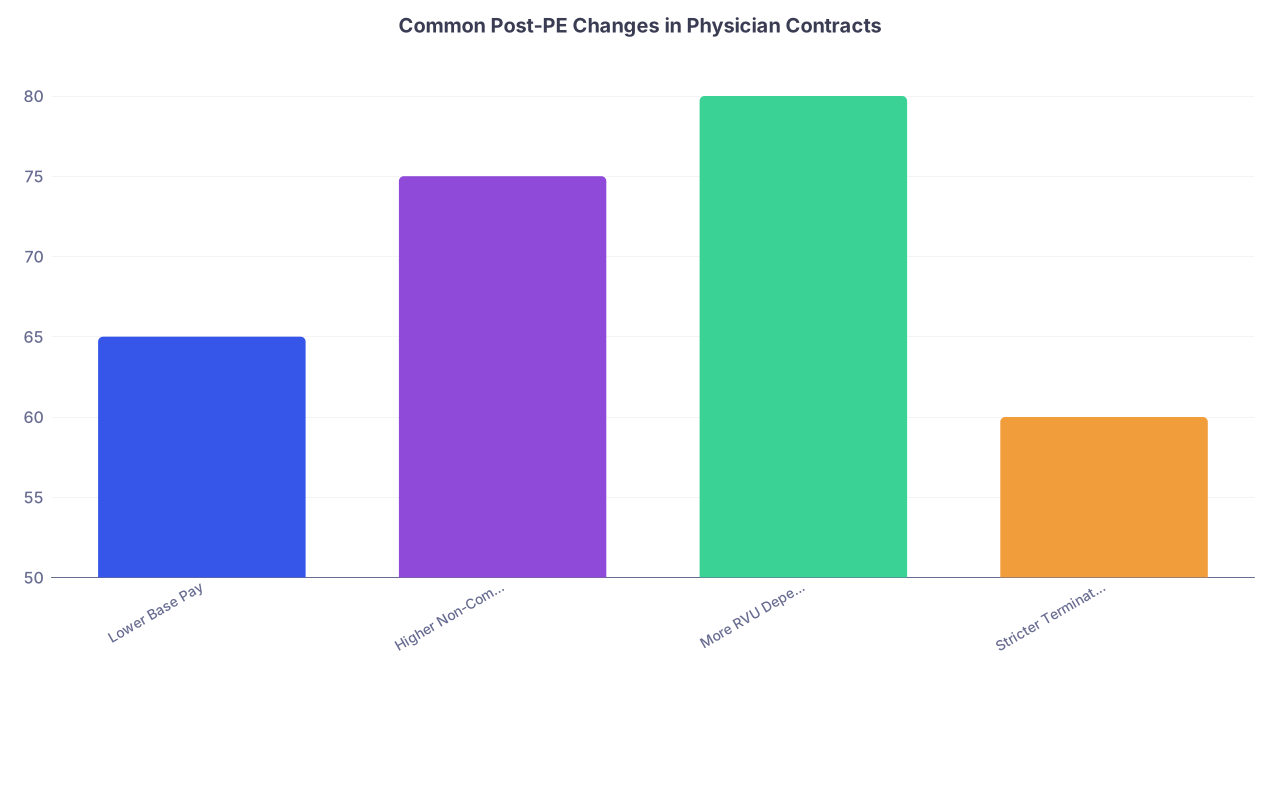
| Category | Value |
|---|---|
| Lower Base Pay | 65 |
| Higher Non-Compete | 75 |
| More RVU Dependence | 80 |
| Stricter Termination | 60 |
Those percentages are roughly how often I see that theme show up after PE involvement, not fantasy numbers. This is the pattern.
If your new contract has all four in aggressive form, they’re not planning on making you a long‑term partner in growth. They’re planning to burn through you or replace you at will.
Have your CV polished. Reach out quietly to other groups, hospitals, or academic centers before you sign anything.
One More Ugly Truth: Culture Rot Is Not in Your Contract, But It Will Affect You
You can negotiate every clause, but there’s something you cannot fix with red ink: culture.
Once PE drives the bus, watch for:
- Admins caring more about margins than patient relationships.
- Pressure to see more patients per hour, cut corners on counseling.
- Subtle retaliation against physicians who push back too hard.
You’ll have colleagues who say, “It’s not that bad, I’m making more now.” And that might be true for them, short term.
Just remember: they’re playing a 3–7 year window. Build up EBITDA, flip the asset to another PE fund or strategic buyer. You’re playing a 20–30 year career.
Those timelines are not aligned.
FAQs
1. Can the private equity group actually change my current contract before it expires?
Usually not unilaterally, unless your contract specifically gives them that right (rare, but I’ve seen “policy override” language abused). What they can do is change your working environment, schedules, and policies to make life uncomfortable and push you to “voluntarily” accept a new deal. The big structural contract changes usually come at renewal, not mid‑term. Your leverage is highest while your current agreement is still in force and you’re willing to walk if needed.
2. If I refuse to sign the new contract, can they fire me?
If you’re still in the term of your existing contract and you’re not in breach, they generally have to follow the termination provisions—usually “without cause” notice (60–90 days) or “for cause” if they can make a case. What they’ll often do instead is simply not renew you at the end of your term. That’s the quiet way they clear out resistance. So yes, you can refuse—but you need a realistic backup plan because “no renewal” is very much on the table.
3. Is there ever a scenario where a PE buy‑in is actually good for physicians?
For some, yes. High‑volume subspecialists, proceduralists in shortage markets, or younger docs who are aggressive about productivity can make more under a well‑designed RVU/collections model. Some groups get better negotiation power with payers and better infrastructure. But the aggregate trend is: stability down, autonomy down, financial upside skewed to owners and investors. You have to look at your numbers and your local market, not the sales pitch.
4. What should I ask directly when leadership announces a PE deal?
Ask specific, unemotional questions: “How long will existing contracts be honored as written?” “Will non‑competes or restrictive covenants be expanded in future contracts?” “Will productivity formulas or RVU thresholds change within the next 24 months?” “Will physicians have access to practice‑level financial data after the transaction?” The answers (and how evasive they are) will tell you almost everything about how this is going to go.
Two things to hold onto as you move through this:
- Your current contract is a shield and a timer. Know exactly what it says and when it ends.
- PE is playing a portfolio game. You have to play a career game. Stop pretending your incentives are aligned; negotiate and plan like they’re not.