

It’s July 1. First day of your final fellowship year. You just got your new ID badge, your pager is already blowing up, and somewhere in the back of your mind there’s a louder problem:
“I have no idea how to handle my first attending contract.”
This is where most fellows are. Behind. Programs rarely teach this well, and the job market does not care that you’re still trying to figure out RVUs, tail coverage, and non-competes.
So here’s the plan: month-by-month, what you should do in your final fellowship year to be ready to sign a smart contract instead of a desperate one.
We’ll assume a 12‑month fellowship ending June 30. Shift months if your end date is different.
July–August: Foundation and Reality Check
At this point you should stop hand-waving about “I’ll figure it out later” and get concrete on what kind of job and contract you actually want.
Week 1–2 (Early July): Clarify your target job
You can’t negotiate a contract if you don’t know what you’re aiming for.
Make three short lists:
Geography
- Must-have locations (e.g., “within 1 hour of Chicago,” “Northeast only”).
- Absolutely not (e.g., “no rural out of driving distance to an airport”).
- Flexible “maybe” zones.
Practice type
- Academic vs large health system vs private group vs hospital-employed vs locums.
- In your head, rank them:
- “I’d love this”
- “I’d tolerate this”
- “No chance”
Lifestyle and scope
- Call: max acceptable call frequency and type (home call vs in-house).
- Procedures vs clinic vs research vs admin.
- Full-time vs reduced FTE.
Write these down. Not in your Notes app chaos file. One clean document.
Week 3–4 (Late July): Learn the numbers for your specialty
You’re going to look foolish if you negotiate blind. Compensation has a range. You need it.
Do this:
- Pull at least two of these:
- MGMA or AMGA data (often your program or hospital library has access).
- Doximity or Medscape compensation reports for your specialty.
- Specialty-specific society surveys (e.g., AGA, ACC, AANS).
- Talk to 2–3 recent grads from your fellowship or similar programs:
- “What’s your base salary?”
- “Any signing/retention bonus?”
- “RVU or productivity thresholds?”
- “Partnership track details if private.”
Turn that into a simple range:
| Type of Practice | Typical Total Year 1 Comp |
|---|---|
| Large hospital system | $325k–$375k |
| Academic center | $250k–$300k |
| Private practice | $350k–$450k+ |
| Locums-heavy mix | $400k–$500k+ |
Do not fixate on the exact numbers above; they’re just positional. Your job now is to create your own table like this for your specialty and region.
August: Learn contract language before you’re staring at one
At this point you should get literate in physician contract basics. Not expert. Literate.
Focus on these elements:
- Compensation model
- Base vs RVU-based vs collections-based.
- How and when productivity bonuses are paid.
- Restrictive covenants
- Non-compete radius and duration.
- Non-solicitation of patients/staff.
- Malpractice
- Claims-made vs occurrence.
- Who pays for tail coverage and under what conditions.
- Termination
- Without cause notice period (60–180 days is standard).
- For cause definitions (actual list, not vague language).
- Call and workload
- Number of clinic sessions per week.
- Call schedule, weekend/holiday coverage.
- Expectations for procedures, teaching, admin.
Read 1–2 good resources (not Reddit drama threads):
- A straightforward physician contract book or guide.
- A couple of articles from known physician-lawyer practices.
You’re not trying to DIY the whole thing. You’re trying to be able to understand your lawyer when they point out problems.
To visualize the year you’re stepping into:
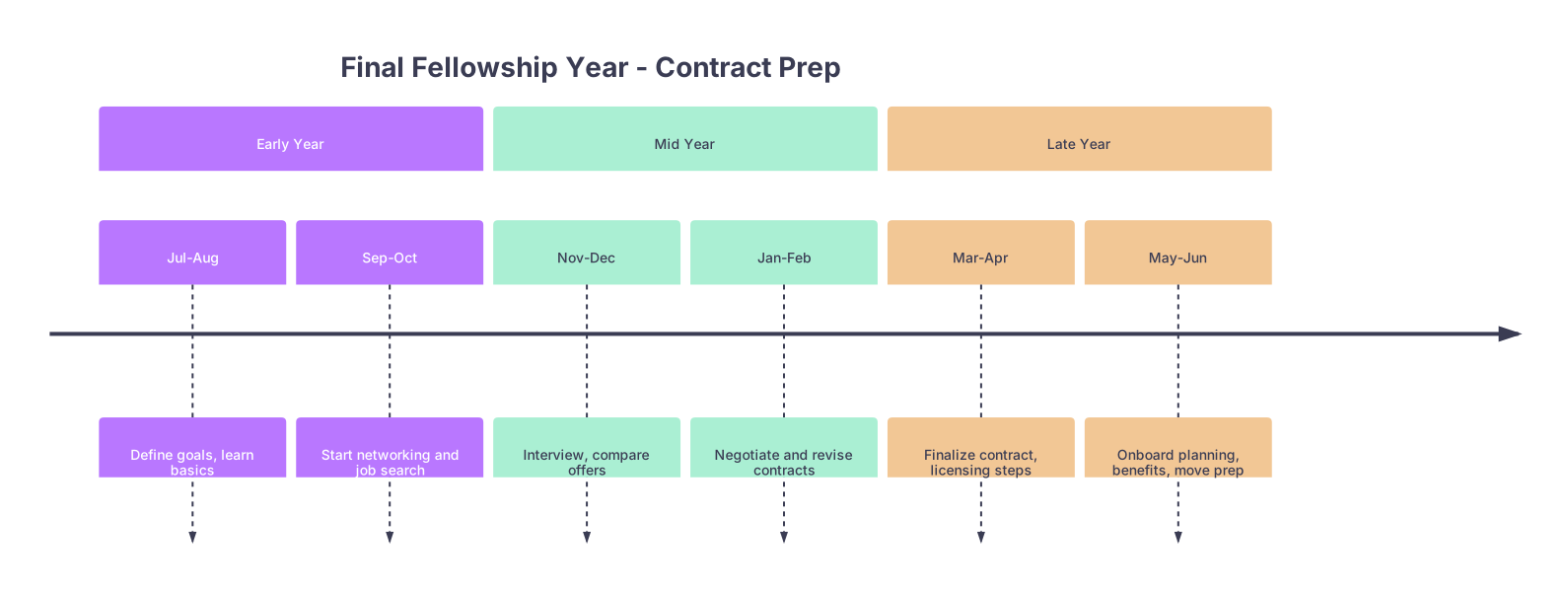
| Period | Event |
|---|---|
| Early Year - Jul-Aug | Define goals, learn basics |
| Early Year - Sep-Oct | Start networking and job search |
| Mid Year - Nov-Dec | Interview, compare offers |
| Mid Year - Jan-Feb | Negotiate and revise contracts |
| Late Year - Mar-Apr | Finalize contract, licensing steps |
| Late Year - May-Jun | Onboard planning, benefits, move prep |
September–October: Serious Job Search and Early Screens
By now you should actually be in the market, not just “thinking about it.”
September: Start the search deliberately
Week 1–2:
Update your CV:
- Add latest presentations, publications, leadership roles.
- Tight, 1–2 pages if possible (surgical subspecialties often run longer, fine).
Draft a template outreach email:
- 2–3 sentences on who you are.
- 1–2 sentences on what you’re looking for (location, scope).
- Attach CV.
Week 3–4:
Start targeted outreach:
- Hospital recruitment sites in your target regions.
- Emails to department chairs or section chiefs where you’d actually want to work.
- Alumni networks: “Anyone know of positions in X?”
Create a simple job tracking sheet:
- Date contacted
- Institution
- Contact person
- Status
- Notes (red flags, pay range mentioned, etc.)
October: First interviews and screening for obvious dealbreakers
At this point you should screen jobs as much as they’re screening you.
First-round calls or Zooms:
- Ask blunt but polite questions:
- “What does first-year compensation typically look like?”
- “How is call shared among physicians?”
- “Is this position due to growth or replacement?”
- “Who pays for tail if I leave?”
If a recruiter says, “We don’t really discuss compensation this early,” that’s usually code for “We’re going to lowball you later.” Not always, but often. Put a mental asterisk there.
Track early red flags:
- Non-compete mentioned up front and sounds huge (“30 mile radius, 2 years” in a metro area).
- Extremely vague answers about why the last physician left.
- “You’ll be very busy right away” with no numbers or data.
November–December: On-Site Visits and First Contracts
Now you transition from “exploring” to “deciding what’s viable.”
November: On-site interviews and reality testing
On in-person visits, you should:
Ask to see:
- Existing physicians in your specialty (without leadership sitting right there).
- Clinic space and ORs/procedure rooms.
- Call schedule structure.
Ask other physicians (privately if possible):
- “How close is your actual workweek to what they described to you when you were recruited?”
- “Are you hitting your RVU/collections targets?”
- “Would you sign your contract again?”
Keep a running “gut feeling” column in your tracking sheet. You’ll forget which group felt exploitative and which felt collaborative after five visits.
December: First contracts hit your inbox
At this point you should see your first real contract or at least a detailed letter of intent.
Your tasks, step-by-step:
Do a quick initial scan (same day):
- Base salary, signing bonus, relocation.
- Term (often 1–3 years).
- Non-compete radius/time.
- Tail coverage language.
Compare to your specialty benchmarks:
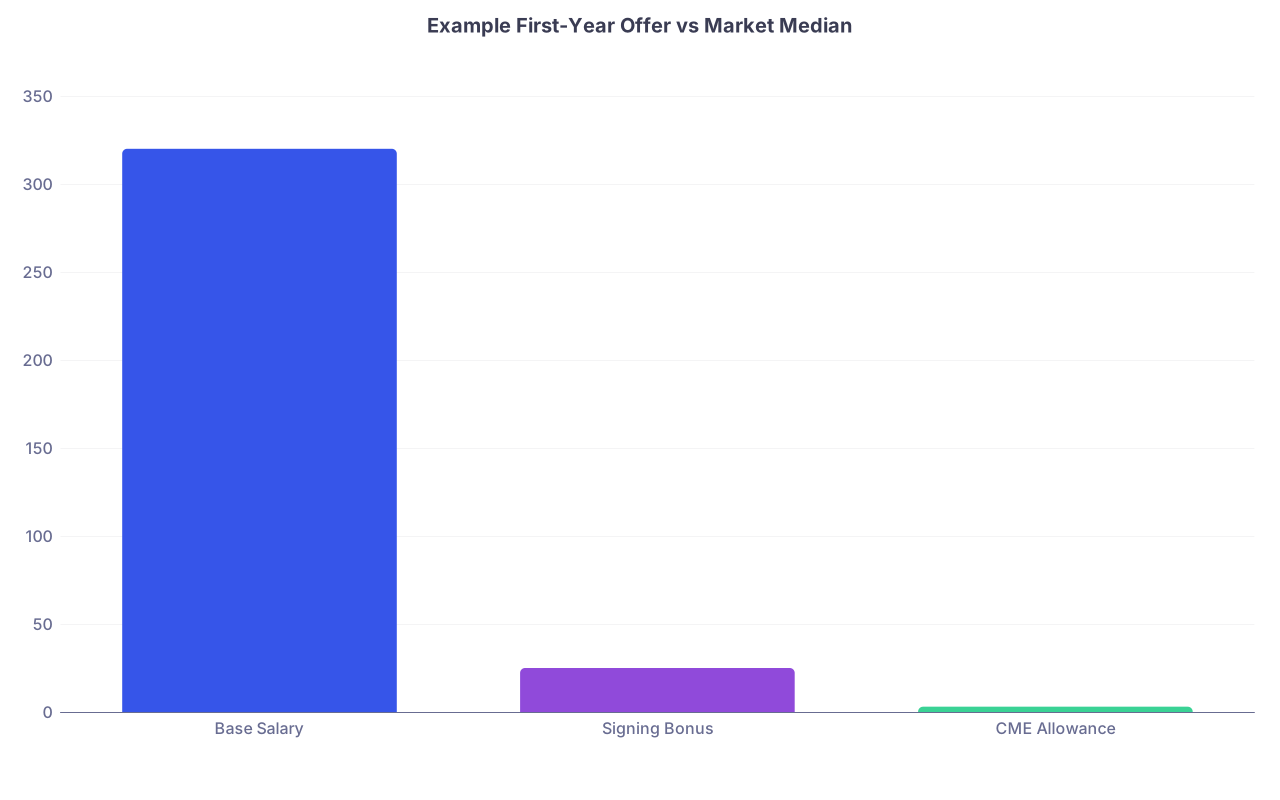
| Category | Value |
|---|---|
| Base Salary | 320 |
| Signing Bonus | 25 |
| CME Allowance | 3 |
Imagine the bar chart: your offer at $320k base, $25k signing, $3k CME; then compare that to your gathered data (maybe median is $350k, $30k, $4k). If your numbers are consistently below, that’s information.
- Identify “hard no” items:
- Non-compete that makes it impossible to work anywhere nearby if things go bad.
- You paying tail coverage in a high-risk specialty.
- Termination clause that lets them dump you fast with basically no notice.
Don’t send back markups yet. Just identify where you’ll need help.
January–February: Lawyer, Negotiation, and Iterations
Now we’re in the real contract work. This is where people either protect their future or set themselves up for a miserable 2–3 years.
January: Hire a physician contract lawyer and prioritize changes
At this point you should have at least one concrete offer and a short list of decent ones.
Steps:
Pick the right lawyer
- Someone who:
- Does physician contracts routinely (not your relative who “does corporate law”).
- Knows your state’s laws.
- Ask co-fellows or recent grads who they used and if they’d use them again.
- Someone who:
Send them:
- The contract (or LOI).
- Your compensation/research from earlier.
- Your priority list:
- What matters most: location, money, schedule, visa, academic time, etc.
Have a focused review call (60–90 minutes)
- You want:
- A summary in plain English.
- A short list: “If you only fix 5 things, fix these.”
- You want:
Typical high-yield negotiation targets:
Compensation
- Move base salary toward the median or slightly above for your experience.
- Clean structure for RVU or bonus (no moving goalposts).
Non-compete
- Reduce radius.
- Reduce duration.
- Narrow scope (e.g., only your subspecialty, not entire medicine).
Malpractice/tail
- Push for employer-paid tail, especially if they terminate you without cause or non-renew.
Schedule
- Clarify clinic/session expectations and call frequency in writing.
February: Actual negotiation with the employer
This is where people get scared and either go silent or get weirdly aggressive. Don’t do either.
At this point you should:
Decide your communication channel
- Usually email + scheduled call with recruiter or division chief.
- You or your lawyer can lead, but I prefer:
- You talk through the big points.
- Lawyer helps you script language and reviews revisions, not be the main combatant.
Group your asks
- Tier 1 (must-haves):
- Example: tail coverage, non-compete reduction, base salary floor.
- Tier 2 (nice-to-have):
- Example: more CME money, signing bonus bump, extra vacation week.
- Tier 3 (throwaways to trade):
- Things you ask for knowing you might “give them up” to win your Tier 1 items.
- Tier 1 (must-haves):
Negotiate like a colleague, not a hostage
- Phrases that work:
- “Based on my research for this region and specialty, I was expecting a base closer to X.”
- “This non-compete would require me to move my family if things don’t work out. Can we narrow the radius or duration?”
- “Given the malpractice environment in this specialty, I’m uncomfortable being solely responsible for tail if the group chooses to non-renew.”
- Phrases that work:
If they refuse to budge on every single meaningful term, you have your answer: you’re not a partner, you’re a commodity. Walk away if you can.
March–April: Finalizing and Lining Up the Logistics
By now, you should be either settled on one offer or down to your last 1–2 options.
March: Nail down the final contract details
This month, your checklist looks like this:
Confirm:
- Final base salary and bonus structure in writing.
- Clear definition of FTE and expected clinical hours/sessions.
- Specific call responsibilities (including weekends/holidays).
- Start date and any protected onboarding time.
Double-check “gotcha” sections:
- Termination without cause: notice period long enough to find another job (90–180 days).
- For cause: not vague; must list real, objective reasons.
- Non-compete: compare to what your lawyer said is typical/reasonable for your state.
Make sure all verbal promises made during recruitment are in the contract or an addendum. “We usually do…” doesn’t count.
April: Sign (if it’s right) and start parallel processes
At this point you should either sign or walk. Lingering in indecision for months helps no one.
Once signed:
Start:
- State license application in your new state (if different).
- DEA registration address change or new registration as needed.
- Hospital credentialing packet (this can drag; start early).
- Board certification exam planning relative to your start date.
Clarify benefits timelines:
- When health insurance starts (you don’t want a coverage gap).
- Retirement plan eligibility date.
- Short/long-term disability.

May–June: Last-Minute Checks, Future-Proofing, and Exit from Training
Now you’re mostly done with contract prep. Do not coast. This is cleanup time before Day 1 as an attending.
May: Run durability checks on your contract
At this point you should stress-test the contract with a few “what if” scenarios:
Ask yourself:
- If I hate this job in 12 months:
- Can I realistically work elsewhere in the same city/region?
- How expensive is it to leave (tail coverage, repayment of signing bonus, etc.)?
- If they terminate me without cause:
- How quickly do I lose income?
- Do I have enough notice to land somewhere else?
- If I love the job:
If any answer makes your stomach drop, talk with your lawyer one more time. Sometimes you can still add a clarifying addendum pre-start.
June: Transition from “fellow brain” to “contract owner brain”
Final month of fellowship. You’re exhausted. But you need to set yourself up for Year 1.
Do this:
Save all your contract documents:
- Signed contract (PDF in multiple backups).
- Any addenda.
- Email threads where they clarified anything important.
Create a “job reality” file for future renegotiation:
- Keep track (starting Month 1 as attending) of:
- Actual RVUs/collections.
- Call burden vs what was promised.
- Clinic volumes and panel growth.
- This is ammunition when you renegotiate after year 1 or 2.
- Keep track (starting Month 1 as attending) of:
Plan your financial runway:
- Gap between training pay ending and attending pay starting.
- Loan repayment timing relative to your first few months.
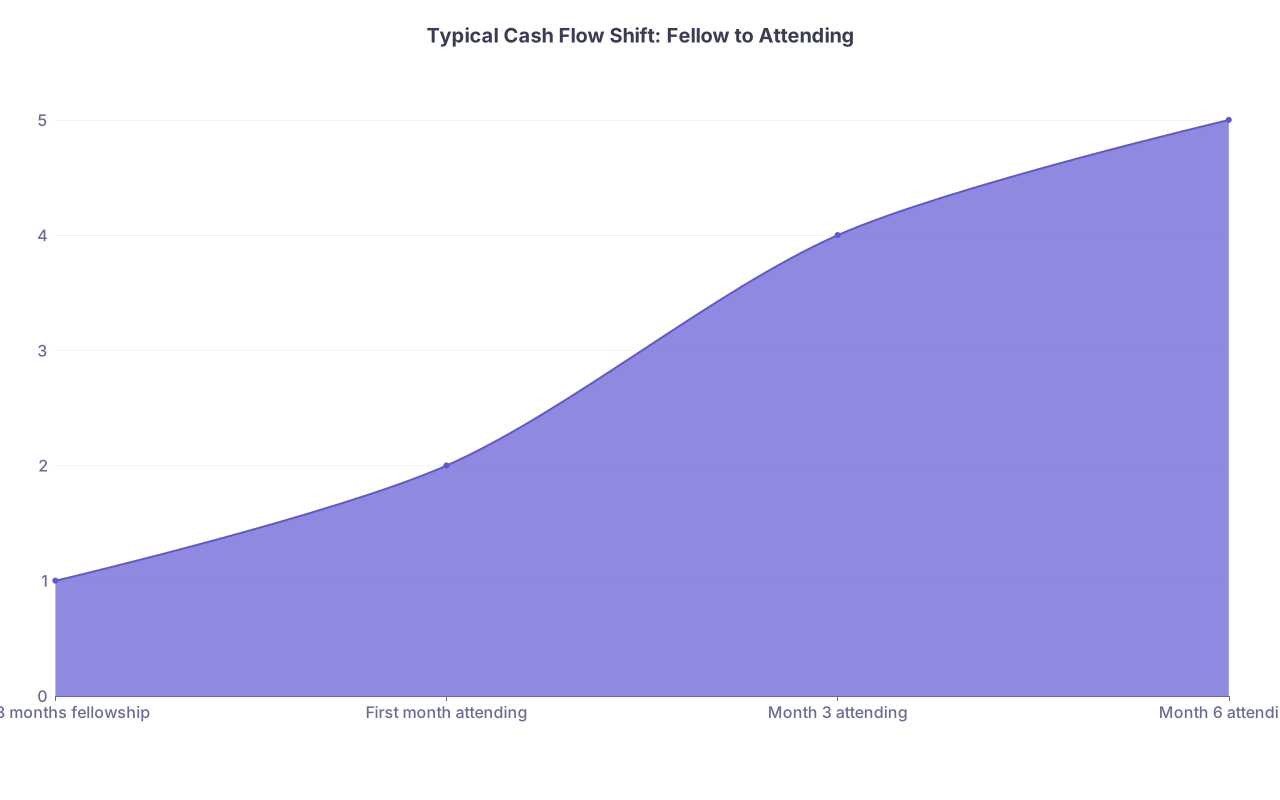
| Category | Value |
|---|---|
| Last 3 months fellowship | 1 |
| First month attending | 2 |
| Month 3 attending | 4 |
| Month 6 attending | 5 |
The area chart’s point is simple: your income should rise sharply, but your expenses and obligations will too (moving, board fees, childcare, etc.). Don’t assume the new salary makes you bulletproof.
Quick Month-by-Month Checklist
Use this as your snapshot.
| Month | Primary Focus |
|---|---|
| Jul | Define job targets, basic contract literacy |
| Aug | Compensation research, learn core clauses |
| Sep | Start job search, outreach, tracking |
| Oct | Early screens, virtual interviews |
| Nov | On-site visits, reality-testing jobs |
| Dec | Receive and prelim-review contracts |
| Jan | Hire lawyer, detailed contract review |
| Feb | Active negotiation, revisions |
| Mar | Finalize core terms, resolve red flags |
| Apr | Sign, start licensing/credentialing |
| May | Stress-test contract, adjust if needed |
| Jun | Document storage, financial + job runway |
FAQ (Exactly 3 Questions)
1. When is “too late” to start contract prep in fellowship?
If you’re in March of your final year with no serious offers and no lawyer, you’re late. Not doomed, but late. You’ll be more rushed, with less leverage and less time to walk away from bad deals. You can still salvage it: compress the steps, get a contract lawyer immediately, and be brutal about saying no to obviously bad offers.
2. Do I really need a physician-specific contract lawyer, or can I just use a friend who’s a lawyer?
Use someone who does physician contracts all day. I’ve watched bright, well-meaning corporate lawyers miss critical details like tail coverage responsibility, absurd non-competes, and productivity traps because they “looked fine” from a generic employment-law lens. The few hundred to couple thousand dollars you spend on a specialist is cheap compared to a six-figure mistake.
3. How hard can I push in negotiation without losing the offer?
You can push firmly on a short list of priorities if you’re professional, prepared, and realistic. Programs pull offers when you’re combative, scattered, or trying to overhaul everything. If you’re near market rates and you’re asking for reasonable protections (non-compete tweaks, tail coverage, clearer schedule), a healthy employer will at least meet you halfway. If they threaten to yank the offer for asking thoughtful questions, that’s not a place you want to spend your first attending years anyway.
Key points: start early, know your market, and never sign something you don’t fully understand. Your final fellowship year is busy, but this is the year you either protect your future self or hand them a mess.


