
The common advice that “you should buy a house in residency for the tax deduction” is usually wrong for physicians.
If you’re thinking about buying a home early in residency mainly for tax reasons, you’re solving the wrong problem. The math almost never supports “buying for the write‑off” at resident income levels, and the risks you’re taking on are a lot bigger than the tax benefit you’re getting back.
Let’s walk through this like adults and look at what actually happens on your tax return, your cash flow, and your long‑term flexibility.
The core question: Does buying in residency make sense as a tax move?
Short answer: For most residents, no. As a lifestyle move? Maybe. As a wealth‑building move in the right market? Sometimes. As a pure tax strategy? Almost never.
Here’s why.
1. You probably don’t get much (or any) extra tax deduction
The big “tax benefit” people talk about is the mortgage interest deduction and property taxes. Sounds great in theory: “Why pay rent when you can build equity and write off the interest?”
Reality: You only benefit if your itemized deductions are greater than the standard deduction.
For 2024, standard deduction (married filing jointly): $29,200
Single: $14,600
As a typical resident, your main itemized deductions are:
- State/local taxes (SALT) – capped at $10,000
- Mortgage interest
- Charitable giving (if you do enough of it)
- Maybe some medical expenses (but usually not enough to matter)
Let’s run a simplified married‑resident example.
- PGY‑2, household income: $75,000
- State income tax: ~5% → $3,750
- Property tax: $4,000
- SALT cap: you only get to deduct up to $10,000 of state + property tax, so here that’s $7,750 anyway (under the cap)
- Mortgage: $400,000 at 6.5% → roughly $26,000 interest in year 1
- Charitable contributions: $2,000
Itemized deductions:
- SALT: $7,750
- Mortgage interest: ~$26,000
- Charity: $2,000
Total: ~$35,750
That does beat the standard deduction of $29,200. So do you get $35,750 “off your taxes”? No. You’re only getting a tax benefit on the difference between itemizing and taking the standard.
Difference: $35,750 – $29,200 = $6,550 extra deduction over standard.
At a 22% marginal federal bracket, that saves you about:
- $6,550 × 22% ≈ $1,441 in federal tax
Maybe you save a bit more on state taxes. Call it roughly $1,800–$2,000/year combined in this kind of scenario.
Now compare that with what you’re actually paying in:
- Interest: ~$26,000
- Property tax: $4,000
- Insurance, maintenance, etc: easily $3,000–$5,000/year
You’re spending big real money to save small tax money. The tax tail is wagging the financial dog.
2. Many residents don’t itemize at all
Now take a more realistic (and common) scenario:
- Single resident, $65,000 income
- Condo: $250,000, 5% down, 6.5% interest
- Mortgage interest year 1: about $15,800
- Property tax: $3,000
- State income tax: ~$3,250 (5%)
- Charity: $500
Itemized:
- SALT: $3,000 + $3,250 = $6,250 (under $10k cap)
- Mortgage interest: $15,800
- Charity: $500
Total: ~$22,550
Standard deduction for single? $14,600.
Difference: $7,950. At 22% bracket → about $1,749 federal savings.
That’s not nothing. But you’re still paying over $19,000 in interest + property tax to get <$2,000 of tax savings. You’re not “making money” on taxes. You’re slightly reducing the pain of a large mortgage.
And a lot of residents don’t end up there at all. They:
- Buy a cheaper place with less interest
- Live in states with low/no income tax
- Get married later
- Have low enough SALT + interest that the standard deduction is still better
In those cases, your “great tax move” literally does nothing for you tax‑wise. You take the standard deduction, same as if you’d rented.
The real financial trade‑offs of buying in residency
Forget taxes for a minute. Here’s what actually matters.
Cash flow strain when you’re already tight
Residents are not swimming in free cash. Your budget usually looks something like:
- $60–80k gross
- Loan payments (maybe income‑driven, but still)
- High cost of living near a big academic center
- Childcare or partner’s situation if applicable
Owning brings:
- Down payment + closing costs (even with physician loans, you still pay closing)
- Higher monthly payment than renting in many markets
- Maintenance, repairs, HOA (if condo)
- Furnishing and “house stuff creep” that always runs higher than you expect
And the bank doesn’t care that “attending money is coming.” You miss payments now, you get burned now.
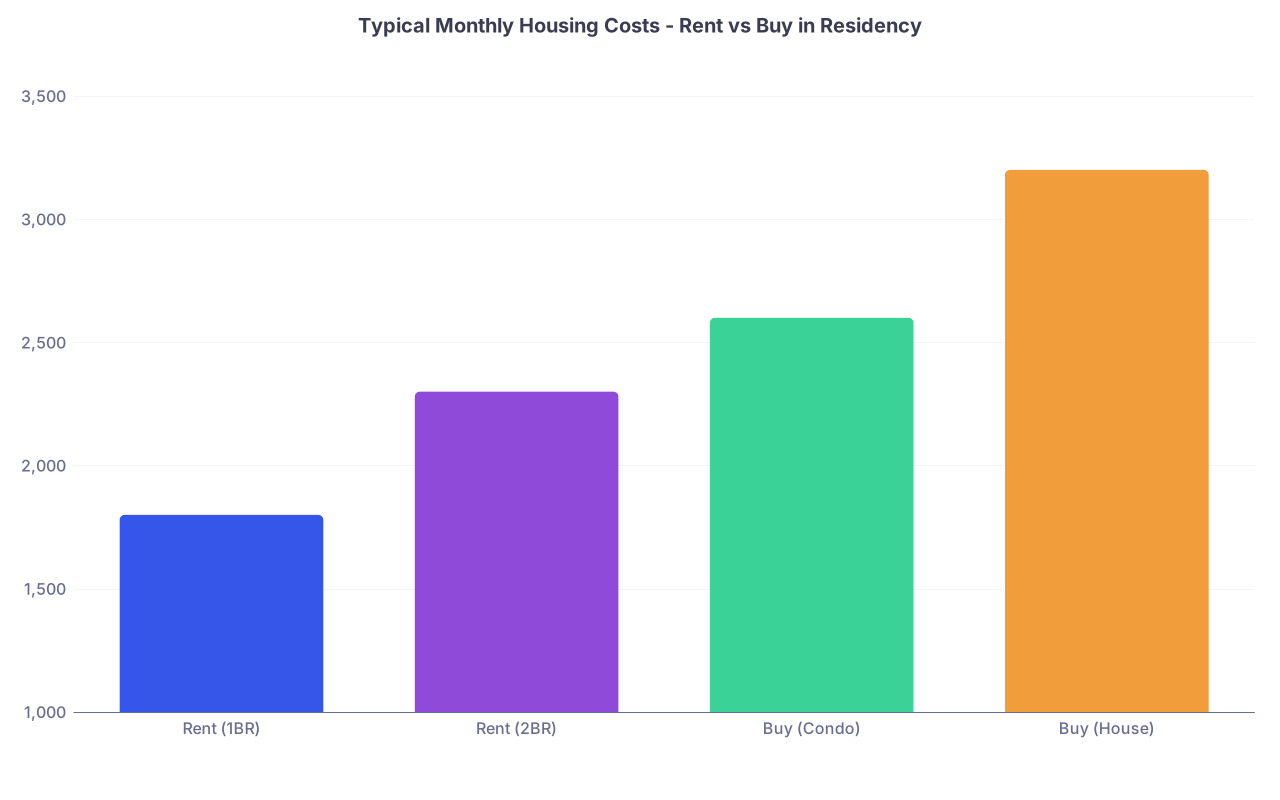
| Category | Value |
|---|---|
| Rent (1BR) | 1800 |
| Rent (2BR) | 2300 |
| Buy (Condo) | 2600 |
| Buy (House) | 3200 |
Mobility risk: match, fellowship, job market
You are not geographically stable yet. You have:
- 3–7 years of residency
- Possible fellowship in a different city
- First attending job often in a different city again
So you’re buying something you might need to sell or rent out in 3–5 years. That’s not “forever home” territory. That’s speculation.
Things that can go wrong:
- Market dips right when you need to move
- You can’t sell quickly at a good price
- You become an unintentional long‑distance landlord while starting fellowship or attending life
- You get stuck with a negative‑equity situation and have to bring cash to closing
On a $350,000 place with 5% down, you can get wiped out by:
- 5–10% market dip
- 6% realtor commissions
- Closing costs on sale
No “tax savings” is rescuing you from that.
Leverage and concentration risk
When you buy a house early:
- Massive leverage (small down payment on a big asset)
- One huge, illiquid position in a single local market
- At the same time your earning power is still capped and fragile
From a risk‑management standpoint, this is basically the opposite of diversification.
When buying in residency can be reasonable (even if not a “tax hack”)
I’m not anti‑homeownership. I am anti‑pretending it’s primarily a tax strategy. There are situations where I’d say, “Sure, this could make sense.”
Good signs:
- You’re in a low cost‑of‑living area where decent homes/condos are cheap relative to rent
- You’re in a long residency (5–7 years) and likely fellowship/same city job
- Rent is absurdly high while ownership is relatively affordable
- You’ve run the rent vs buy math and the break‑even is under your expected time in place
- You have an emergency fund after closing costs and move‑in
In that case, buy if:
- You want the stability
- You like the place and the location
- You understand the risks
But be honest: the main upside is lifestyle and potential long‑term appreciation, not tax magic.

| Step | Description |
|---|---|
| Step 1 | Resident thinking of buying |
| Step 2 | Probably do not buy |
| Step 3 | Leaning toward renting |
| Step 4 | Wait and save |
| Step 5 | Buying can be reasonable |
| Step 6 | Main reason is tax savings? |
| Step 7 | Plan to stay 5 plus years? |
| Step 8 | Rent vs buy math favors owning? |
| Step 9 | Still have 3 to 6 month emergency fund? |
How to evaluate this intelligently (framework, not feelings)
If you’re serious, don’t base this on vibes. Use a simple framework:
Run pure rent vs buy numbers
Use an online calculator and include:- Closing costs (buy and sell)
- Realtor commission on exit
- Maintenance (I use 1–2% of home value per year)
- Difference in utilities, insurance, HOA Ignore tax benefits at first. If owning looks worse before taxes, taxes probably won’t turn it around.
Then layer in realistic tax impact
Look at:- Your current marginal bracket (probably 12–22% federal, plus state)
- Whether you’d itemize with/without a mortgage
- Actual incremental deduction over the standard
The right question: “How much lower will my tax bill actually be?” Not “How big is my mortgage interest?”
Stress test your exit
Ask:- What happens if I have to move in 3 years instead of 5?
- What if prices are down 10%?
- Would I be willing to rent this out? Is there rental demand at a reasonable price?
Check your career timing
PGY‑1 just starting, no idea about specialty or fellowships? The odds of staying anchored to that location are low.
Senior resident in a 5‑year program, strong chance of staying on as faculty in same city? Different story.Remember: you’re about to get a massive income jump
You’ll never be punished for keeping flexibility now so you can make clearer choices as an attending with:
- Higher income
- Better credit
- Less lifestyle uncertainty
- More cash for a solid down payment
Residents love to over‑optimize tiny tax edges while ignoring the big picture: in 3–5 years your income will likely double or triple. Keeping options open is usually worth far more than capturing a $1–2k tax benefit.
Specific tax angles everyone gets confused about
Let’s quickly clean up a few myths I see all the time.
“The interest deduction makes your housing cheaper than rent”
No. The deduction means the government is subsidizing a fraction of your interest, not the whole thing.
If you pay $20,000 in interest and your marginal federal + state combined rate is 30%, your tax savings is at most $6,000. That’s still $14,000 you paid in interest. And that assumes you were itemizing already and the full thing is incremental, which often isn’t true.
“A physician mortgage loan is a tax advantage”
Physician loans help you qualify with low/no down payment and no PMI. That’s a financing tool, not a tax strategy. In fact:
- They often come with slightly higher interest rates
- Higher rate = more interest = more deduction…but also more money burned
Paying an extra $3,000 in interest to save $900 in taxes is a bad trade.
“I’ll get capital gains exclusion when I sell”
Maybe, but:
- You have to live in the home 2 of the last 5 years to qualify for the primary residence exclusion
- If you leave for fellowship and rent the place out for years, the timing can get messy
- Many residents simply don’t build enough equity/appreciation in such a short window for this to matter much
Yes, it’s a nice upside if you stay long enough and if prices rise. It’s not a reason alone to buy.
A practical bottom line for residents and early attendings
Here’s the clean version:
- Buying early in residency rarely makes sense primarily for taxes
- The main reasons to buy in residency should be:
- You’ll likely stay put at least 5+ years
- The math (including maintenance, transaction costs, and realistic rent) is at least competitive
- You have cash reserves even after buying
- You value the lifestyle benefits and are okay with the risks
If you can’t honestly check all four boxes, renting is usually the smarter move until you stabilize your career and location.
| Factor | Renting | Buying Early in Residency |
|---|---|---|
| Upfront cash needed | Low (deposit, maybe fees) | High (closing, move-in, repairs) |
| Flexibility to move | High | Low to medium |
| Tax benefit | Standard deduction only | Sometimes small, often overrated |
| Market risk | None | High (leverage + short horizon) |
| Complexity | Simple | High (loans, repairs, selling) |
FAQ: Buying a Home Early in Residency – Tax & Planning Edition
1. Is buying a house in residency ever a good tax move?
Only as a side effect of something that was already a good overall decision. If:
- You’ll be there 5+ years,
- The buy vs rent math is close or favors buying,
- And your itemized deductions clearly beat the standard,
then yes, you’ll get some tax benefit from the mortgage interest and property taxes. But it’s never the main reason to buy.
2. Do physician mortgage loans give me extra tax advantages?
No. They just change how you qualify and how much you put down. Tax treatment of interest is the same. In practice, a slightly higher interest rate can mean you get a bit more deduction—but you’re just paying more interest to get it. That’s backwards.
3. If I plan to buy “eventually,” is there any advantage to buying during residency instead of waiting?
The only real advantages would be:
- You lock in a good deal in a market you know you’ll stay in
- You start paying down principal earlier (building equity)
- You potentially capture more years of appreciation
From a pure tax standpoint though, waiting until you’re an attending usually (not always) means:
- Higher income → higher marginal tax rate → your deductions are actually worth more
- More cash → better down payment → better loan terms
So no, there’s no general tax advantage to rushing into ownership as a resident.
4. I’m in a no‑income‑tax state. Does that change the equation?
It makes homeownership slightly less attractive from a tax perspective. You don’t get state income tax deductions to help boost your itemized total. So your mortgage interest and property taxes have to do more of the work to beat the standard deduction. Often they won’t, especially on cheaper properties.
5. What about house hacking (renting out rooms) during residency?
That’s a different conversation and can be reasonable if:
- You’re comfortable being a mini‑landlord to co‑residents/med students
- You price it right and can reliably fill rooms
- You’re willing to deal with tax reporting on rental income and expenses
In that case, the “tax move” is about properly claiming depreciation and expenses on the rental portion—not about mortgage interest deduction alone. It can work, but it’s a business decision, not just “buy for the write‑off.”
6. How much emergency fund should I have before buying in residency?
I like 3–6 months of total expenses, not just housing, sitting in cash or very safe accounts, after you close on the house and pay moving‑related costs. If buying wipes out your savings and you’re one unexpected car repair away from a credit card balance, you’re not ready yet—tax benefit or not.
7. What’s one simple way to see if I’m fooling myself with the “tax benefit” argument?
Do this today:
Estimate your yearly mortgage interest + property tax, then multiply that number by your marginal tax rate (federal + state). That’s your max tax savings. If that number doesn’t clearly outweigh:
- Extra costs vs renting
- Loss of flexibility
- Stress of ownership during training
then you’re not buying a tax strategy. You’re buying a lifestyle choice and just trying to justify it.
Open a calculator (any decent rent vs buy calculator online) and plug in your real numbers: purchase price, rent in your area, interest rate, time in home. Then ask yourself honestly: “If there were zero tax benefits at all, would this still look smart?” If the answer is no, you’ve just made your decision.