

A generic CPA is one of the most expensive “cost‑savings” a high‑income physician can make.
If you’re earning attending‑level money and treating your taxes like a basic W‑2 employee, you’re lighting money on fire. Not once. Every single year.
This is preventable. But only if you stop assuming “a CPA is a CPA” and start recognizing that physician tax planning is its own specialty—just like cardiology vs. family medicine.
Let me walk you through the mistakes I’ve seen too many physicians make with well‑meaning, perfectly competent, totally wrong CPAs.
The Core Problem: Your Income Is Specialized, Your CPA Often Isn’t
You already know this: a dermatologist shouldn’t do your neurosurgery.
Yet many high‑earning physicians hand their finances to:
- The same CPA who does their neighbor’s small retail business
- A friend’s “tax guy” who mostly files returns for teachers and retirees
- The big box tax chain that markets to everyone with a W‑2 and a pulse
On paper, these CPAs can absolutely “do” your taxes.
And that’s the trap.
They will:
- File on time
- Avoid obvious errors
- Keep you compliant (most of the time)
But they will miss:
- Physician‑specific planning opportunities
- Timing and entity decisions that cost six figures over a career
- IRS audit risks unique to physicians with side gigs, locums, and complex compensation models
You don’t feel the pain immediately. You feel it slowly—in overpaid tax, missed deductions, avoidable penalties, and deals you never even knew you could structure better.
Mistake #1: Treating Yourself Like a Simple W‑2 Employee
This one is deadly for high‑income docs.
A generic CPA often looks at you and thinks: “Big W‑2. Easy return.”
So they:
- Plug in your W‑2(s)
- Maybe drop in a 1099 or two
- Ask if you have any donations, mortgage interest, property taxes
- Hit file
Done in 30 minutes. You think, “Nice, efficient.”
What you should be thinking is, “What did they not ask?”
Here’s what often gets ignored for physicians:
Compensation structure analysis
- Should you negotiate more of your comp as 1099 instead of W‑2?
- Is there an option to run income through an S‑corp or professional corporation?
- Are you missing legal ways to reclassify or structure income that reduce Medicare and Social Security taxes?
Review of multiple income streams
- Employed salary
- Locums
- Call pay
- Telemedicine
- Expert witness work
- Speaking/consulting
A generic CPA often throws all of this under “miscellaneous self‑employment income” and calls it a day.
That’s lazy and expensive.
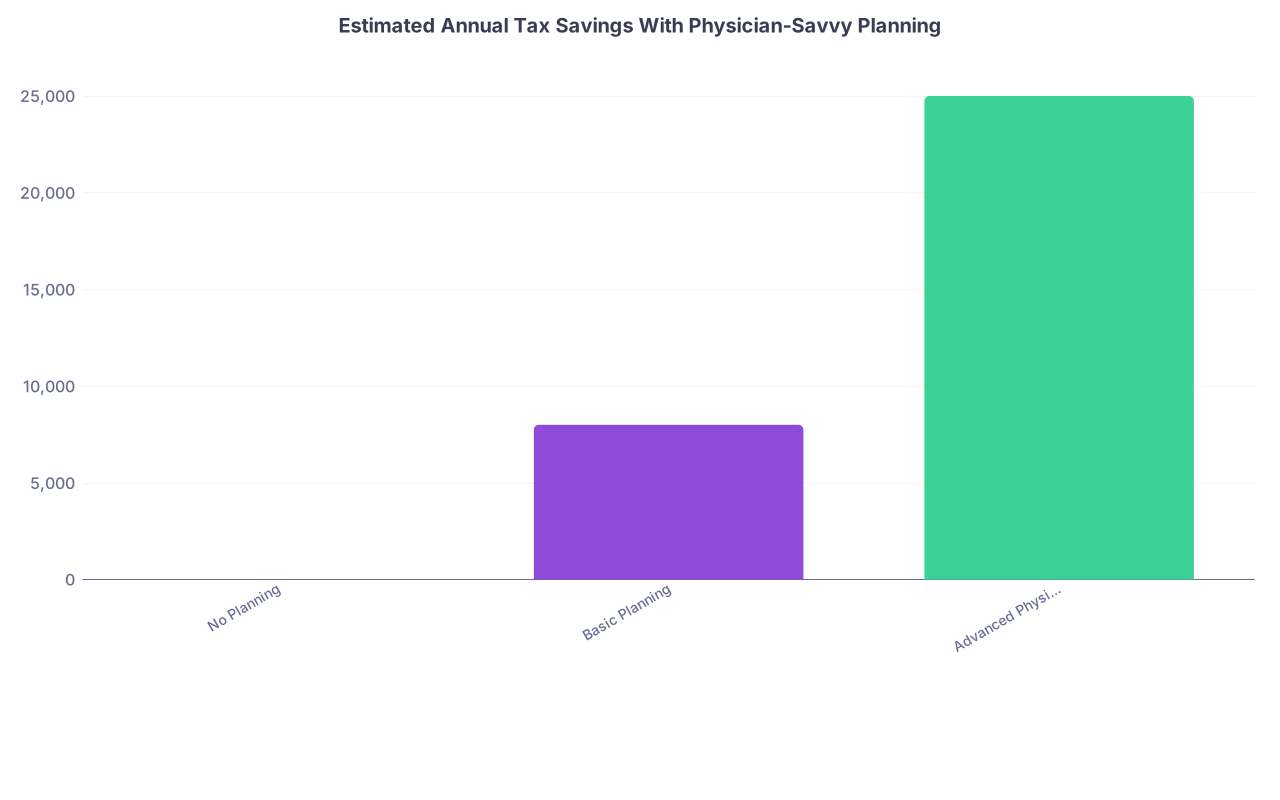
What this costs you
| Category | Value |
|---|---|
| No Planning | 0 |
| Basic Planning | 8000 |
| Advanced Physician-Specific Planning | 25000 |
For a typical attending earning $400k–$700k with a side 1099 stream, thoughtful planning vs. “just file the return” can easily mean:
- $8,000–$25,000+ per year in savings
- Compounded over 20 years, that’s hundreds of thousands of dollars lost because your CPA didn’t think like a strategist—just a filer
If your CPA has never once asked you:
- “Can we re‑negotiate any of this comp as independent contractor work?”
- “Should we be considering an S‑corp or PLLC for this side income?”
- “What’s your long‑term plan for clinical hours vs. non‑clinical work?”
You’re not working with a planner. You’re working with a typist.
Mistake #2: Ignoring Entity Structure and Leaving Everything in Your Personal Name
This one is rampant.
Physicians with:
- 1099 locums
- Telemed income
- Chart review
- Concierge practices
- Aesthetics side businesses
…who are still operating entirely under their Social Security number, Schedule C, no entity, no separation.
A generic CPA often shrugs and says:
“You don’t make enough yet to justify an entity.”
“An S‑corp is too complicated for you.”
“Let’s revisit when your income is higher.”
Translation: “I don’t specialize in this, and I don’t want the hassle.”
What a physician‑focused CPA should be thinking
- Should you have a professional corporation / PLLC / PC for your side work?
- At what point does an S‑corp election make sense for Medicare tax savings?
- Are you getting liability insulation where appropriate (even if malpractice is your main risk, not vendors)?
- Can we optimize retirement contributions using business structures?

A generic CPA often has one mental model: avoid complexity.
A good physician tax planner has a different one: use complexity wisely to cut taxes and manage risk without creating chaos.
The “too early for an S‑corp” lie
I’ve watched CPAs tell physicians making $120k–$150k of 1099 income that an S‑corp is “overkill.”
Then those physicians find a specialist CPA later and realize they could’ve:
- Saved $5,000–$12,000 per year in self‑employment taxes
- Opened a solo 401(k) with bigger contribution room
- Paid family members legitimately for admin help
- Cleanly separated business vs. personal expenses
Multiply that over 5–10 years. That’s not a small rounding error.
Mistake #3: Missing Physician‑Specific Deductions and Strategies
Here’s the subtle danger: generic CPAs know the rules.
What they don’t know are the patterns of a physician’s financial life.
So they miss deductions not because they’re dumb—but because they never think to ask.
Typical misses:
CME and board expenses
- Conferences, prep courses, exam fees
- Board certification and recertification
- Licensing costs across multiple states
Many generic CPAs treat some of this sloppily, especially once you own a business entity or shift to 1099.
Home office for telemed / admin
They hear “physician” and immediately think “no home office allowed.” Wrong.
If you’re doing telemedicine, charting, consulting, or non‑clinical work from home with proper documentation, a carefully structured home office can be legitimate.Professional equipment and technology
- Laptops, monitors, iPads used for charting and admin
- Medical reference subscriptions
- Telemedicine gear
Generic CPAs often don’t push you to track, categorize, and substantiate these cleanly.
Business use of vehicle for multiple practice locations
If you’re driving between hospitals, offices, clinics, or procedures, some of that may be deductible.
A strong physician CPA will push you toward mileage logs, not vague estimates.
Where physician‑specific planning really shines
A savvy physician CPA won’t just say “give me your numbers.” They’ll ask questions like:
- “Are you involved in any real estate deals with your practice?”
- “Are you renting your own building to your group?”
- “Are you doing any private practice ownership or ancillary services like imaging, labs, or surgery centers?”
These questions matter because now we’re talking:
- Real estate professional status planning for your spouse
- Cost segregation studies on practice buildings
- Separate entities for equipment and property
- Strategic depreciation to offset high‑income years
A generic CPA often has no playbook for this. They see a K‑1 and plug in the numbers. End of story.
Mistake #4: No Proactive Planning—Only Rear‑View Mirror Filing
This is where physicians get blindsided.
If your only contact with your CPA is:
- You upload documents in March
- They send you a return in April
- You sign it and pay
That’s not tax planning. That’s tax reporting.
It’s like treating a STEMI with ibuprofen. You’re arriving way too late to the problem.
A physician‑focused CPA should be:
- Meeting with you at least once or twice during the year
- Reviewing estimated tax payments and cash flow
- Looking at major expected changes:
- Partnership buy‑in or buy‑out
- Practice sale or merger
- Fellowship to attending transition
- Maternity/paternity leave
- Ramp‑up or ramp‑down of clinical work

| Step | Description |
|---|---|
| Step 1 | January - Baseline Review |
| Step 2 | Spring - Midyear Check |
| Step 3 | Fall - Year End Planning |
| Step 4 | Tax Filing Season |
A generic CPA who doesn’t live in the physician world often:
- Doesn’t know what your income volatility really looks like
- Doesn’t anticipate big events like RVU comp adjustments or partnership tracks
- Doesn’t ask about practice deals until it’s already in your rear‑view mirror
By the time they see it, your options have shrunk to almost nothing.
Mistake #5: Underestimating Audit Risk in Physician Patterns
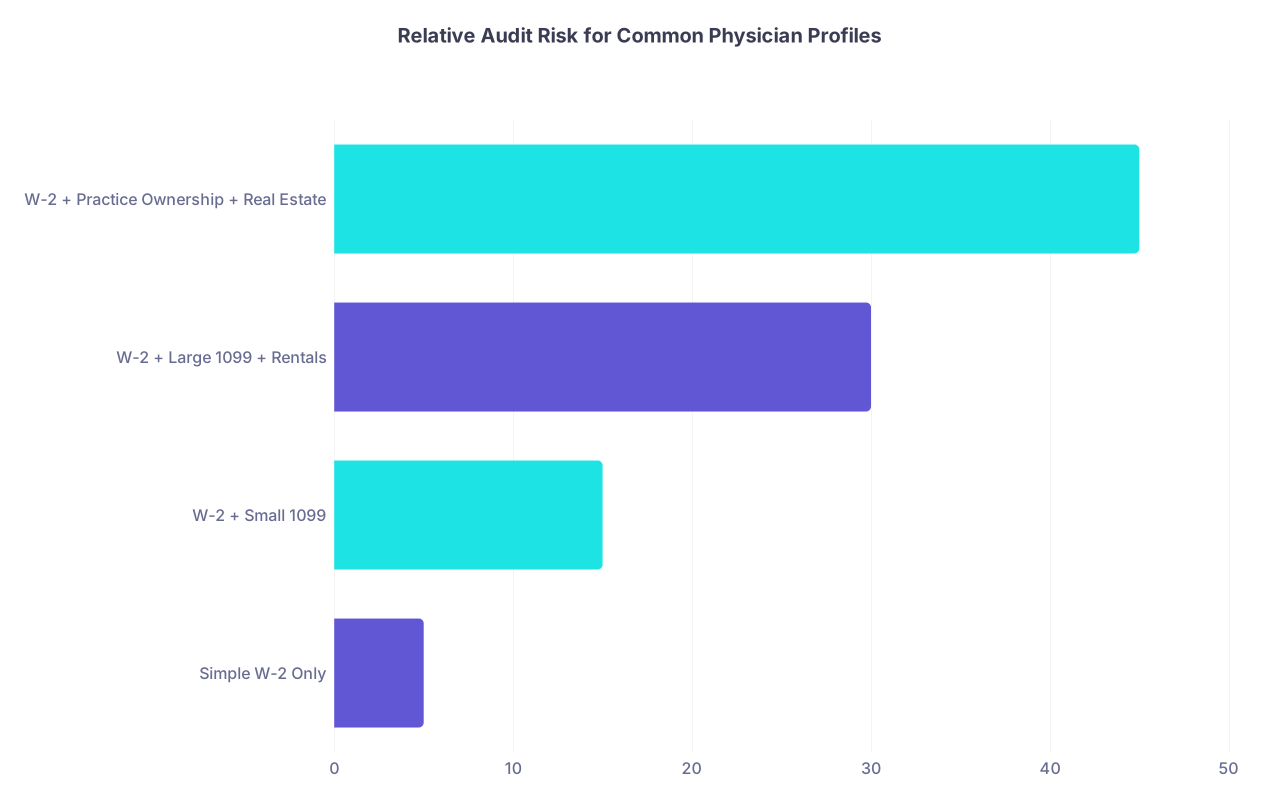
High W‑2. Lots of deductions. Side 1099 income. Real estate K‑1s. Maybe a surgery center interest.
This is the profile the IRS likes to “understand better.”
I’ve seen generic CPAs make three dangerous errors here:
They’re too aggressive on the wrong things.
- Sloppy home office deductions without logs
- Huge “miscellaneous” categories
- Poor documentation for meals/travel
They’re too conservative on the right things.
- They avoid legitimate strategies because “doctors get audited more”
- They refuse to touch physician‑owned real estate or cost segregation studies
- They steer clear of entity and S‑corp planning because they’re uncomfortable
They can’t defend what they file.
When an audit letter arrives, they panic. They never built a defensible file. They never took notes on your rationale. They never told you what to keep as backup.
A physician‑focused CPA is not just trying to minimize tax. They’re balancing:
- Tax reduction
- Audit risk
- Defensibility of the return
| Category | Value |
|---|---|
| Simple W-2 Only | 5 |
| W-2 + Small 1099 | 15 |
| W-2 + Large 1099 + Rentals | 30 |
| W-2 + Practice Ownership + Real Estate | 45 |
If your CPA never talks to you about risk vs. reward, and everything is either:
- “We can’t take that, too risky.” or
- “Sure, just write it off.”
…you’re dealing with someone who doesn’t understand the scrutiny that follows high‑income physicians.
Mistake #6: No Coordination With Asset Protection and Legal Planning
Here’s where generic CPAs really show their limits.
Physicians aren’t just high‑income. You’re high‑liability.
The right setup for a surgeon, anesthesiologist, or OB/GYN is very different from a low‑risk professional working from a laptop.
I’ve seen generic CPAs:
- Tell physicians “You don’t need an LLC, malpractice is all you need.”
- Ignore how practice ownership interacts with personal asset protection planning.
- Fail to coordinate with attorneys about:
- How to title real estate
- Whether to use separate entities for practice vs. property
- The interplay between trusts and tax planning
| Area | Generic CPA Approach | Physician-Focused CPA Approach |
|---|---|---|
| View of your income | Big W-2, maybe some 1099 | Complex, multi-source, plan-worthy |
| Entity structure | Usually avoided | Actively evaluated and optimized |
| Year-round planning | Rare, mostly April-only | Built-in checkpoints and forecasting |
| Audit mindset | Either fearful or reckless | Strategic, documentation-driven |
| Coordination with attorney | Minimal | Intentional and frequent |
A good physician tax planner doesn’t try to play attorney. But they do:
- Speak the same language as your asset protection lawyer
- Flag when a proposed legal structure will cause tax headaches
- Ask whether your estate planning is aligned with your practice interests
If your CPA has never asked whether you have:
- A malpractice judgment risk profile
- Significant non-retirement assets
- Exposure from practice ownership or side clinics
…then they haven’t internalized what it means to work with physicians.
Red Flags Your CPA Is Too Generic for Your Situation
If any of these sound familiar, take them seriously:
Your CPA never asks about:
- Your call coverage compensation
- Your moonlighting or locums arrangements
- Partnership tracks or buy‑ins
- Practice ownership or equity talks
They say things like:
- “Doctors are just W‑2 like everyone else.”
- “S‑corps are a headache, you don’t want that.”
- “Real estate is risky, let’s keep it simple and pay the tax.”
You:
- Only hear from them at tax time
- Have never had a 30+ minute conversation about planning
- Don’t know what their plan is if you get audited
Your return:
- Has no business entity despite significant 1099 income
- Has vague categories like “Other expenses – $28,000”
- Never changes strategy even as your income and situation change
This is not “fine.” It’s expensive complacency.
How to Choose a CPA Who Won’t Sabotage Your Future
You don’t need perfection. You need fit and competence.
Here’s what to look for, specifically for high‑income physicians:
They already have multiple physician clients.
Ask: “What percentage of your clients are physicians or medical practices?”They talk planning before filing.
Ask: “What does your year‑round planning process look like for a physician with W‑2 and 1099 income?”They’re comfortable with entities and practice structures.
Ask:- “How often do you recommend S‑corps for 1099 physicians?”
- “What kinds of practice ownership or real estate structures have you worked with?”
They’re realistic about audit risk.
Ask: “How do you think about balancing tax savings vs audit risk for high‑income physicians?”They’re not afraid to say ‘no’ to bad ideas.
You want pushback. If they say yes to everything you propose without nuance, that’s a problem.

And one more thing: price is not the main variable.
Paying an extra $2,000–$5,000 per year for the right CPA is a rounding error when they’re saving you $15,000–$30,000 and protecting you from disastrous mistakes.
A Simple Self‑Audit: Are You Overpaying Because of a Generic CPA?
Do this quick check:
- Pull last year’s tax return.
- Ask your CPA for a 20–30 minute call about planning, not filing.
- Ask them:
- “Where are my biggest tax savings opportunities over the next 3–5 years?”
- “What would you change if my goal is to reduce taxes and build wealth faster?”
- “Should my current entity structure change as my income and side work grow?”
If the answers are vague, generic, or avoidant—you’ve outgrown them.
FAQ (Read These Before You Make a Change)
1. My CPA seems nice and I’ve never had an IRS problem. Isn’t that enough?
No. “No IRS problem” is the bare minimum, not a success metric.
You can go 20 years without getting audited and still overpay hundreds of thousands in taxes through:
- Poor entity decisions
- Missed deductions
- Zero proactive planning
Think of it like medicine: “The patient didn’t code on the table” is not how you measure quality of care.
2. I only have W‑2 income right now. Do I still need a physician‑specific CPA?
Maybe not yet—but be careful.
Early‑career W‑2 only? A generic but competent CPA might be fine temporarily.
But if any of the following are coming within the next 1–3 years:
- 1099 moonlighting
- Practice ownership or equity
- Real estate investing
- Side consulting, speaking, or expert witness work
Then you want someone who can grow with you and help set it up right from day one. Fixing bad structures later is always more expensive.
3. How do I switch CPAs without burning bridges or screwing up my taxes?
Be direct and unemotional:
- Request copies of your last 2–3 years of returns and any workpapers they’re willing to provide
- Tell them you’re moving in a new direction that requires a firm specializing in physician planning
- Confirm there are no outstanding filings or extensions you’re unaware of
Then give your new CPA:
- Prior year returns
- Entity documents
- Compensation agreements
- Partnership/ownership documents if applicable
A good incoming CPA will review everything and tell you what needs fixing vs leaving alone.
4. What’s one concrete sign I should act on this year, not “someday”?
If you have more than $50,000 in 1099 income and:
- No entity
- No solo 401(k) or defined benefit plan discussion
- No clear strategy for estimated taxes
- No written summary from your CPA of “here’s how we’re optimizing this”
You’re already leaving money on the table. That’s not a future problem. That’s a right‑now problem.
Open your most recent tax return today and ask yourself one blunt question: “Does this look like something optimized for a high‑income physician—or just a bigger version of a basic W‑2 return?” If it’s the latter, your next step is clear: start interviewing CPAs who actually specialize in physicians before you file another expensive, generic return.


