
The conventional wisdom that “prelim medicine spots are easy back-ups” is no longer true. The NRMP data over the last decade show a quiet but very real shift: preliminary internal medicine has become more funded, more competitive, and less forgiving for complacent applicants.
Let me walk through the numbers and what they actually mean for you.
What a Preliminary Internal Medicine Year Really Is
Most people get the definition technically right and strategically wrong.
A preliminary internal medicine (IM) year is:
- A 1-year, mostly clinical internship in internal medicine
- Typically PGY-1 only, without guaranteed continuation in the same program
- Used as the required “base year” for advanced specialties (neurology, anesthesiology at some programs, radiology, derm, PM&R, radiation oncology, ophtho, some EM pathways, etc.)
But the market behaves differently from what the simplistic definition suggests.
A few key operational truths I have seen again and again:
- Many prelim IM positions are funded and staffed to function identically to categorical IM interns for 12 months. Same wards, same nights, same ICU rotations. No protected “lighter year.”
- Programs often use prelims to cover service-heavy rotations while allocating more electives and continuity clinic to categoricals. That means similar or higher workload for prelims.
- You are not on the internal pipeline for fellowship from that program. A prelim IM year is not a back door to their categorical residency. The data and program policies are quite clear on this.
Functionally, a prelim IM year is a one-year labor contract. For you: a required credential and clinical foundation. For the program: an extra set of hands to cover admissions and cross-cover.
The Supply Side: How Many Prelim IM Positions Exist?
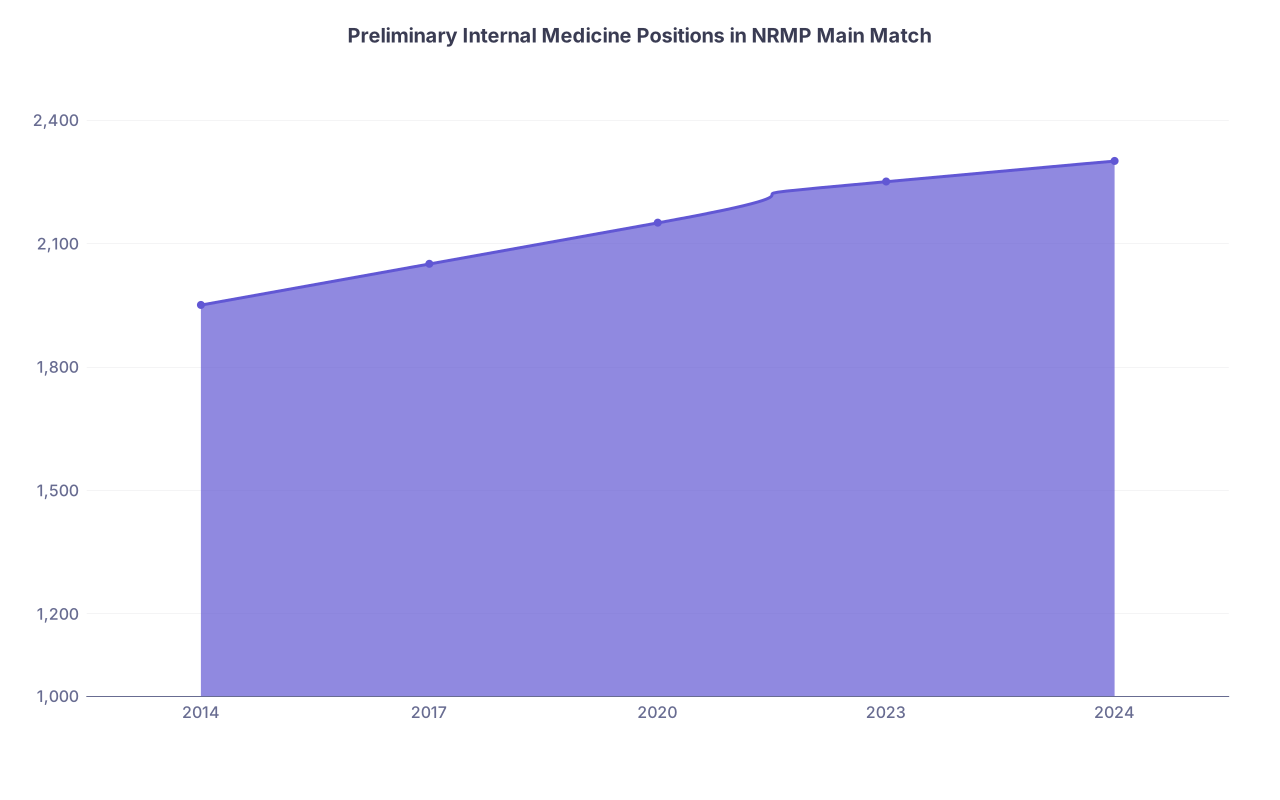
The NRMP’s “Results and Data” reports tell the story pretty cleanly. While exact numbers vary year to year, the pattern is consistent.
Preliminary Internal Medicine positions nationally (all NRMP-participating programs):
| Category | Value |
|---|---|
| 2014 | 1950 |
| 2017 | 2050 |
| 2020 | 2150 |
| 2023 | 2250 |
| 2024 | 2300 |
The data show three things:
- Total prelim IM positions have grown modestly (roughly 15–20% over the last decade in many NRMP cycles).
- Growth is much slower than:
- Categorical IM growth
- Growth in US medical school graduates + DO expansion
- The number of advanced positions that require a prelim year (especially in neurology, PM&R, anesthesia in some institutions, and radiology) has also increased, rising demand for internship slots.
So the market equation looks like this:
- Supply of prelim IM spots: Slow, incremental increase
- Demand from advanced-match applicants + SOAPers + “safety net” applicants: Faster increase
Result: higher fill rates, fewer unfilled prelim IM positions, and more pressure on marginal candidates.
Fill Rates: How “Safe” Are Prelim Internal Medicine Positions?
This is the piece people routinely misunderstand. They hear “prelim” and assume “easy to get”. The match data disagree.
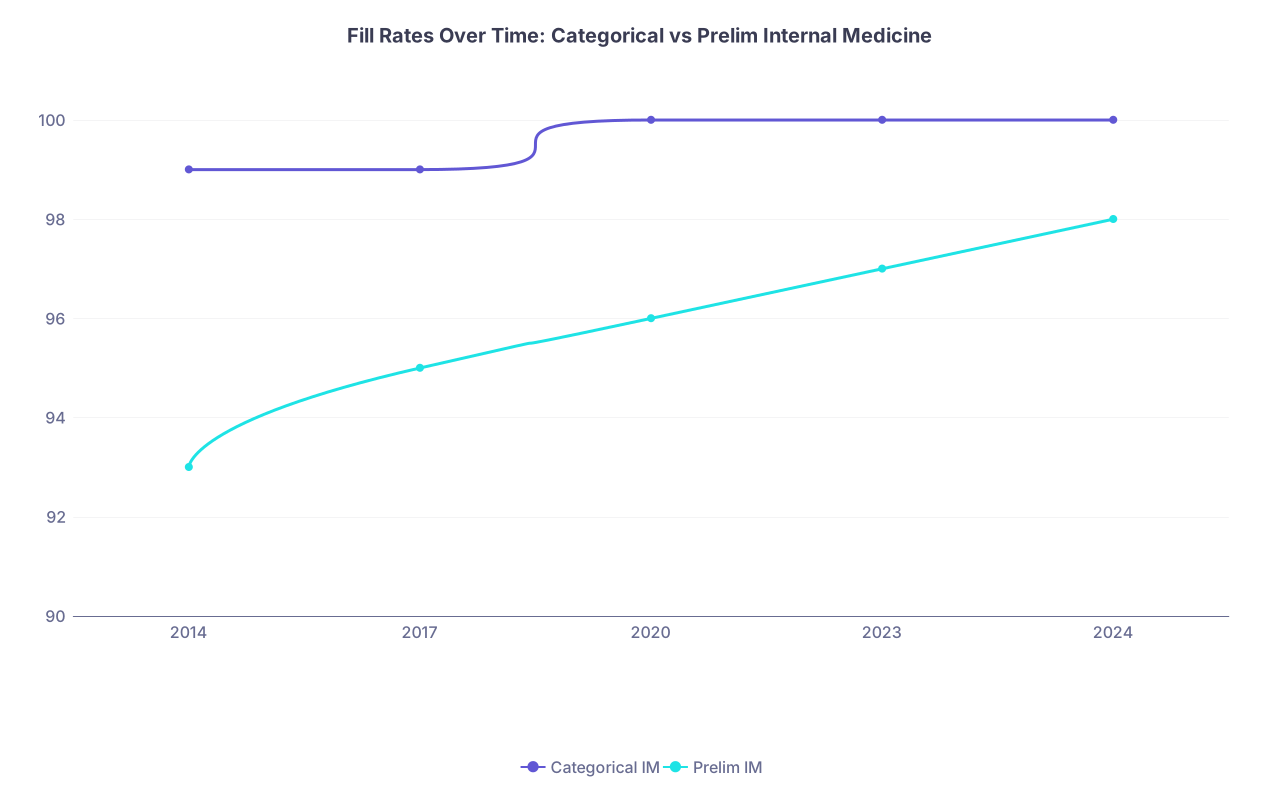
Let’s look at approximate fill rates for preliminary internal medicine versus categorical IM over time. (Numbers are rounded but directionally consistent with NRMP reports.)
| Match Year | Categorical IM Fill Rate | Prelim IM Fill Rate |
|---|---|---|
| 2014 | 99% | 93% |
| 2017 | 99% | 95% |
| 2020 | 99–100% | 96–97% |
| 2023 | 99–100% | 97–98% |
| 2024 | 99–100% | 97–98% |
Two clear trends:
- Categorical IM has been essentially fully subscribed for years. No surprise.
- Prelim IM has quietly crept up from “low-90s fill” to “high-90s fill” territory.
In other words, unfilled prelim IM positions in the main Match are now the exception, not the rule. You might see a cluster of unfilled prelim spots at a few community programs or less desirable locations, but broad “easy SOAP prelim safety” is gone.
| Category | Categorical IM | Prelim IM |
|---|---|---|
| 2014 | 99 | 93 |
| 2017 | 99 | 95 |
| 2020 | 100 | 96 |
| 2023 | 100 | 97 |
| 2024 | 100 | 98 |
The convergence toward near-complete fill for prelim IM is what matters for your strategy: there is not much slack left in the system.
Who Actually Fills These Prelim IM Spots?
Different from categorical IM, which is dominated by applicants intending to stay in medicine long term, prelim IM positions have a different composition.
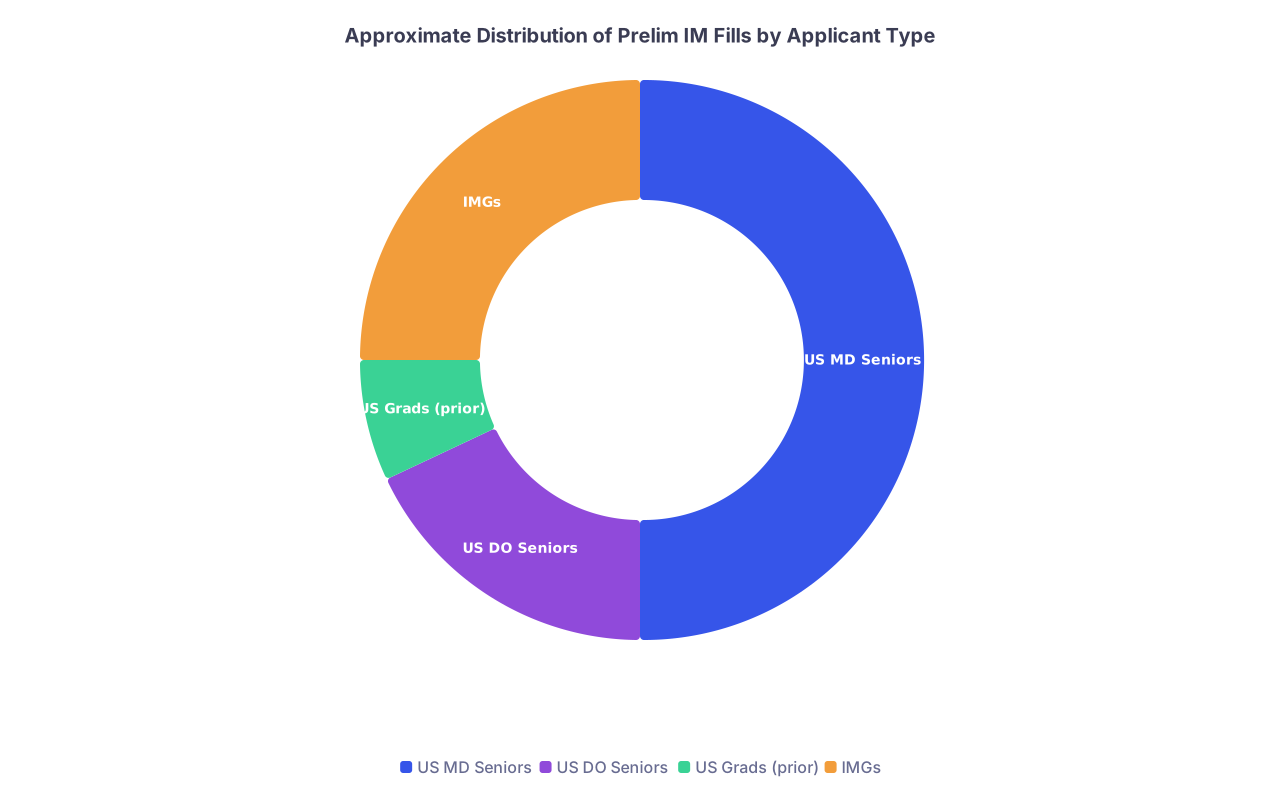
Nationally (again, approximated but consistent with NRMP patterns):
- Roughly 60–70% of prelim IM positions are filled by US MD or DO seniors. Most of these match into advanced specialties simultaneously and use the prelim as their internship year.
- The remaining 30–40% are filled by:
- Independent applicants (previous graduates, reapplicants)
- International medical graduates (IMGs)
- People who did not match their advanced position but still matched a prelim (a painful situation)
The fill-by-applicant-type breakdown tends to look something like this:
| Category | Value |
|---|---|
| US MD Seniors | 50 |
| US DO Seniors | 18 |
| US Grads (prior) | 7 |
| IMGs | 25 |
What that distribution tells you:
- Programs are not reserving prelim IM primarily as “rescue” positions for unmatched applicants.
- They are major components of planned training pathways for neurology, radiology, PM&R, derm, etc.
- If you come in as a SOAP applicant with weaker metrics, you are competing directly with people who already have an advanced spot in hand and very strong applications.
I have watched multiple SOAP cycles where advanced-match applicants fall back to independent prelim-only applications after missing in their advanced field. They come with high Step 2 scores, strong letters, and research. That pushes the bar up even for “just a prelim” role.
Funding and Financial Structure: How Prelim IM Positions Are Paid For
Here is where the word “funding” matters.
Most prelim IM positions in the U.S. are paid through Medicare GME funds or institutional funds. From the program’s perspective, a prelim position is:
- A 1-year cost center (salary + benefits)
- With near-immediate service value (covering wards, nights, ICU)
- Without the 3-year longitudinal educational investment of a categorical trainee
Some programs explicitly fund prelim slots as “service positions.” I have sat in meetings where leadership says, bluntly: “We need 5 more interns to cover the new hospital tower; we will add prelim IM slots, not more categoricals.”
Two funding realities shape the landscape:
Medicare DGME/IME caps
Many hospitals are at or near GME funding caps. Within that cap, they can shift a portion of funded FTEs to prelim rather than categorical if they want more service coverage without committing to 3 years of training each.Institutional willingness to pay above cap
Large academic systems (think big-name university hospitals) sometimes fund prelim positions partly or entirely from hospital budgets when:- Service demand is high
- They want to support linked advanced programs (e.g., radiology, neurology)
- They can justify it as necessary for coverage
The pattern I see:
- University and large tertiary centers are more likely to fund sizable prelim cohorts (10–20+ prelim IM interns).
- Smaller community programs may cap prelim numbers very tightly or have none at all because the marginal benefit is lower relative to the cost and administrative complexity.
From your vantage point as an applicant, that funding structure explains:
- Why prelim positions cluster around large academic centers.
- Why some programs seem to have 5 categorical interns and 12 prelims on the same service block.
- Why those same programs are sometimes less invested in career mentoring for prelims: the positions are primarily about service coverage.
Match Competitiveness: Prelim vs Categorical IM
This is where people ask: “Do I need the same scores for prelim IM as for categorical?” The data say: not exactly, but the gap is not huge anymore.
Looking at NRMP’s Charting Outcomes and program director surveys, patterns emerge:
For categorical IM:
- US MD Step 2 CK (or equivalent) averages in the mid 230s–240s at university programs, lower at community programs.
- DO and IMGs often need stronger scores to offset biases and visa constraints.
For prelim IM:
- At university hospitals, Step 2 CK expectations often track just slightly below their categorical cutoffs, not dramatically lower.
- If the prelim slot is part of a linked advanced program (e.g., neurology advanced + IM prelim at same institution), they may use very similar filters for both components.
The match logic many programs use (I have heard this said almost word-for-word):
“We are not going to bring in a weak intern just because it is ‘only a prelim’—they are covering the same ICU and night float.”
So the competitiveness gap is narrower than applicants expect.
Here is a rough conceptual comparison:
| Metric | Categorical IM | Prelim IM |
|---|---|---|
| Average Step 2 CK | Slightly higher | Slightly lower (~5–8 points) |
| Research expectations | Moderate | Moderate |
| Letters importance | High | High |
| US clinical experience (for IMGs) | Critical | Critical |
The key point: prelim IM is not the same as prelim surgery, where some programs still function as match “relief valves” with much lower fill rates. Prelim IM is tied directly to multiple advanced specialties and lives in a tighter market.
SOAP and Unfilled Positions: How Much Slack Is Left?
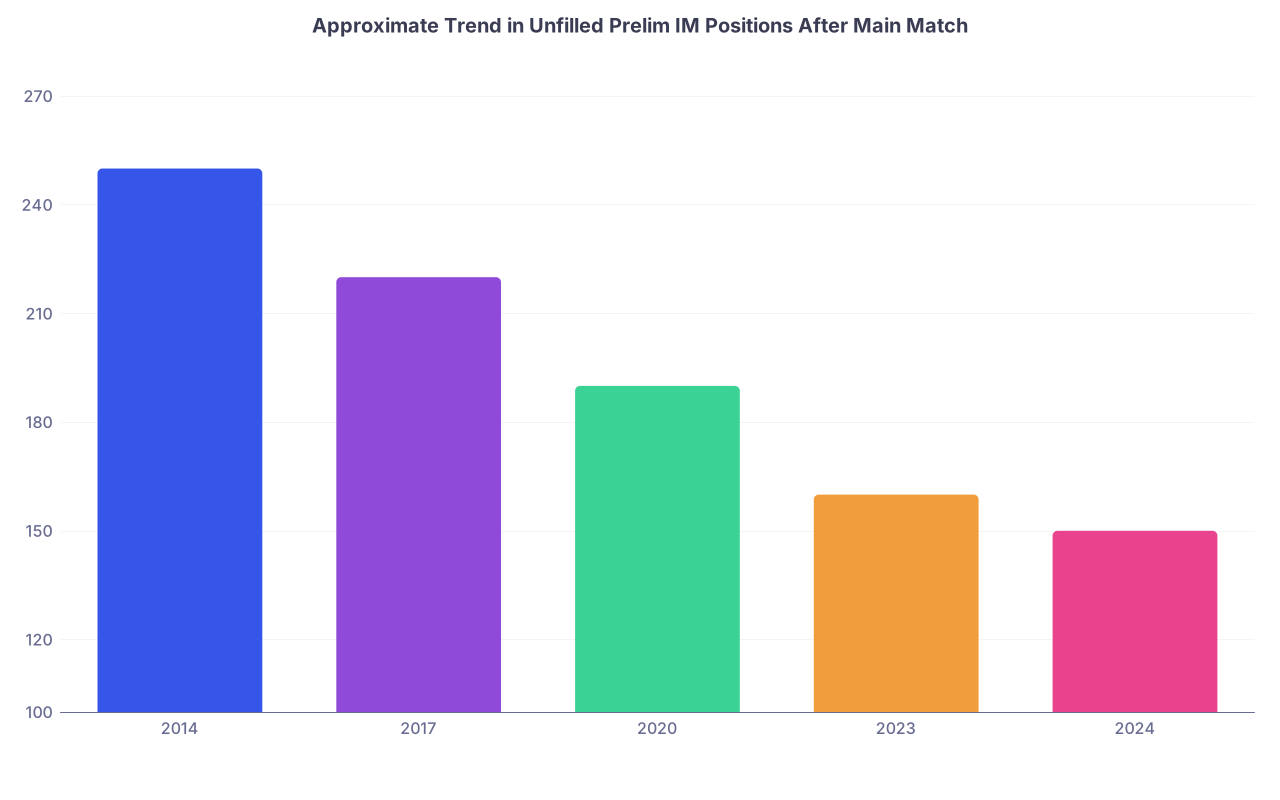
Every March, people panic-search “unfilled prelim IM positions.” The short version: there are fewer of them each year, and the competition in SOAP is brutal.
In many recent cycles:
- Unfilled prelim IM spots after the main Match: low hundreds nationally (sometimes under 200), often at smaller or less geographically desirable hospitals.
- Demand during SOAP: easily several times that number, particularly from:
- Unmatched advanced applicants needing any prelim year
- Unmatched categorical IM applicants willing to pivot to a 1-year role and reapply
If you are counting on SOAP to fix a failed match into an advanced specialty by “just picking up a prelim,” you are betting against the denominator.
| Category | Value |
|---|---|
| 2014 | 250 |
| 2017 | 220 |
| 2020 | 190 |
| 2023 | 160 |
| 2024 | 150 |
The decline in unfilled prelim IM positions mirrors rising fill rates. The market has become tighter and less forgiving.
Strategic Implications for Different Applicant Types
Here is where the data actually change what you should do.
1. Neurology / Radiology / PM&R / Anesthesia / Derm / Ophtho Applicants
You live and die by the combined pair: advanced position + prelim year.
What the numbers imply:
- You cannot treat the prelim IM application as an afterthought.
- Programs with linked advanced + prelim pathways will often cross-reference your file. A weak prelim application can sink your overall chances even with a decent advanced file.
- You should rank more prelim IM programs than you think you “need,” especially if your Step 2 CK or class rank is not top quartile.
I have seen applicants match a strong advanced radiology spot but not secure a prelim in the same city. They end up one state over doing a prelim at a non-linked institution, commuting families and spouses. All because they assumed prelim would “take care of itself.”
2. Marginal US Graduates Aiming for Categorical IM but Adding Prelim as Backup
Here is the harsh reality:
- If your metrics put you at risk of not matching categorical IM, they also place you at risk of not matching prelim IM.
- Adding a few prelim IM programs at the bottom of your rank list as “safety” is not a robust strategy unless they are truly less competitive programs in less desirable locations.
In NRMP data, unmatched US grads who listed “prelim IM as backup” but applied to only 3–5 prelim programs frequently ended up in SOAP anyway. The buffer was too thin.
You need to treat prelim as its own parallel track:
- Broader geographic spread.
- Willingness to consider less popular regions.
- Realistic assessment of where your scores actually stand.
3. IMGs Needing Any US-Based Clinical Year
For many IMGs, a prelim IM year is a foot in the door. But the market is not generous.
The data show:
- Prelim IM programs that sponsor visas and are IMG-friendly tend to be heavily oversubscribed.
- Many of those same programs also have large categorical IM tracks, and they prioritize categorical applicants first.
You must assume:
- Scores significantly above the mean for your region and IMG cohort.
- Strong US clinical letters (not just observerships).
- A very expansive application geography.
I have seen IMGs land an IM prelim year at mid-tier community programs with Step 2 scores in the high 240s–250s. That is the level of competition at some sites.
How Programs Use Prelim Interns (And How That Affects You)
Prelim internal medicine interns almost always share:
- Core ward rotations (general medicine, night float, MICU) with categorical interns
- Similar numbers of calls and cross-cover duties
- Little to no continuity clinic (that is usually reserved for categoricals)
- Fewer elective blocks, especially at service-heavy hospitals
Translated into workload:
- Service months: identical to categoricals
- Educational “extras”: attenuated relative to categoricals
- Career support: highly variable; some programs are excellent, others treat prelims as interchangeable.
This is not just an anecdotal pattern. The funding and staffing model push programs to assign prelims more toward high-service rotations to protect categorical residents’ clinic and elective time.
If you choose or accept a prelim IM spot:
- You will work hard.
- You may have less structured mentoring.
- You need a clear plan for Step 3, letters, and re-application (if you are trying again for a competitive specialty).
Practical Application Strategy: Turning Data into Decisions
Let me condense the numeric picture into concrete strategy.
For an advanced specialty applicant (e.g., neurology, PM&R, radiology, derm, ophtho):
- Apply to:
- A realistic spread of advanced programs
- At least as many prelim IM programs as advanced, often more (1.2–1.5x is a reasonable ratio for mid-competitive applicants)
- Include:
- A mix of university and community prelim programs
- Some programs outside your ideal metro areas
For a weaker or at-risk applicant in any pathway:
- Do not rely on SOAP for prelim IM.
- Rank-listing only 3–5 prelim IM programs as “safety” is dangerous in a near-98% fill environment.
- Consider whether a transitional year (TY) or prelim surgery at a less competitive site may actually be more attainable, depending on your goals and risk tolerance.
For everyone:
- Read individual program policies: some explicitly state they will not consider applicants who match advanced elsewhere; others love linked pathways.
- Understand whether the prelim slot is:
- Part of a large, hospital-wide service operation (more workload, more prelims, more competition)
- A small complement for a specific advanced department (often closely linked to that department’s needs)
A quick mental model that aligns with the data:
- Categorical IM: stable, fully saturated market.
- Prelim IM: slightly more flexible but tightening each year, with fill rates creeping towards categorical levels.
- SOAP: emergency patch, not strategy.
Timeline and Planning: Where Prelim Fits in Your Year
It helps to visualize where prelim applications sit in the broader sequence.
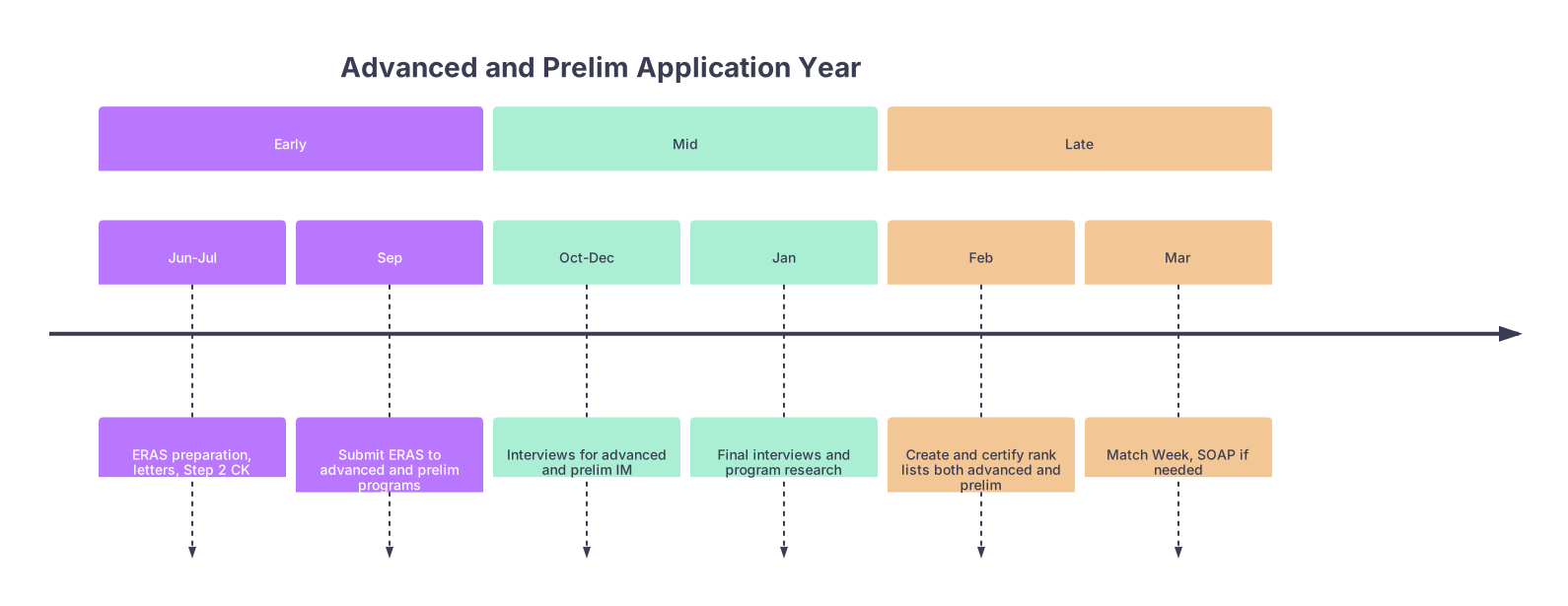
| Period | Event |
|---|---|
| Early - Jun-Jul | ERAS preparation, letters, Step 2 CK |
| Early - Sep | Submit ERAS to advanced and prelim programs |
| Mid - Oct-Dec | Interviews for advanced and prelim IM |
| Mid - Jan | Final interviews and program research |
| Late - Feb | Create and certify rank lists both advanced and prelim |
| Late - Mar | Match Week, SOAP if needed |
You are not doing a “primary” application for advanced and a “side quest” for prelim. You are running two tightly linked processes on the same calendar. Program directors are reading both.
Summary: What the Data Actually Say
Three core points, stripped of fluff:
- Preliminary internal medicine positions are increasingly funded, fully utilized service roles with fill rates now in the high 90% range. They are not a soft safety net.
- Competition has tightened because prelim IM is the backbone internship for multiple advanced specialties. Strong advanced applicants crowd the market and push up the bar for everyone.
- A rational strategy treats prelim IM as a serious, parallel match target—not an afterthought or SOAP contingency—with enough programs, geographic flexibility, and score awareness to reflect a near-saturated market.
If you plan around those realities instead of outdated myths, your odds of getting both the advanced spot and the prelim year you need increase dramatically.