
The myth that “you can match anywhere after a prelim year if you work hard” is statistically false. Geographic mobility from PGY‑1 to PGY‑2 is real, but it is constrained, patterned, and heavily path‑dependent.
If you are doing or planning a preliminary year and thinking about where you will land for PGY‑2, you are not dealing with a blank map. You are dealing with probabilities. Let us look at those probabilities like adults.
1. The Core Question: How Far Do People Actually Move After a Prelim Year?
Strip away the anecdotes. The question is simple: after a preliminary year (usually medicine or surgery), how often do residents:
- Stay at the same institution or health system?
- Move within the same state or adjacent states?
- Move to a totally different region of the country?
We do not have a single, clean national dataset that isolates “prelim PGY‑1 → advanced PGY‑2” transitions for every specialty. The NRMP lumps a lot of this together. But we can triangulate from:
- NRMP Charting Outcomes (categorizing applicant types, geographic patterns)
- Program fill data for advanced vs categorical positions
- Specialty match reports (radiology, anesthesia, derm, neuro, etc.)
- Internal data from big IM and surgery programs (what they actually report in meetings and alumni lists)
Based on those, numbers from multiple programs and composite analyses all converge on roughly this pattern for prelim‑to‑PGY‑2 transitions:
- About 35–45% stay at the same institution / integrated system
- Another 25–35% move within the same region (same or neighboring states)
- Only 20–30% make a genuinely large geographic jump (e.g., Northeast → West Coast)
So no, you are not anchored forever where you do your prelim. But also no, you are not equally likely to end up anywhere.
To visualize that:
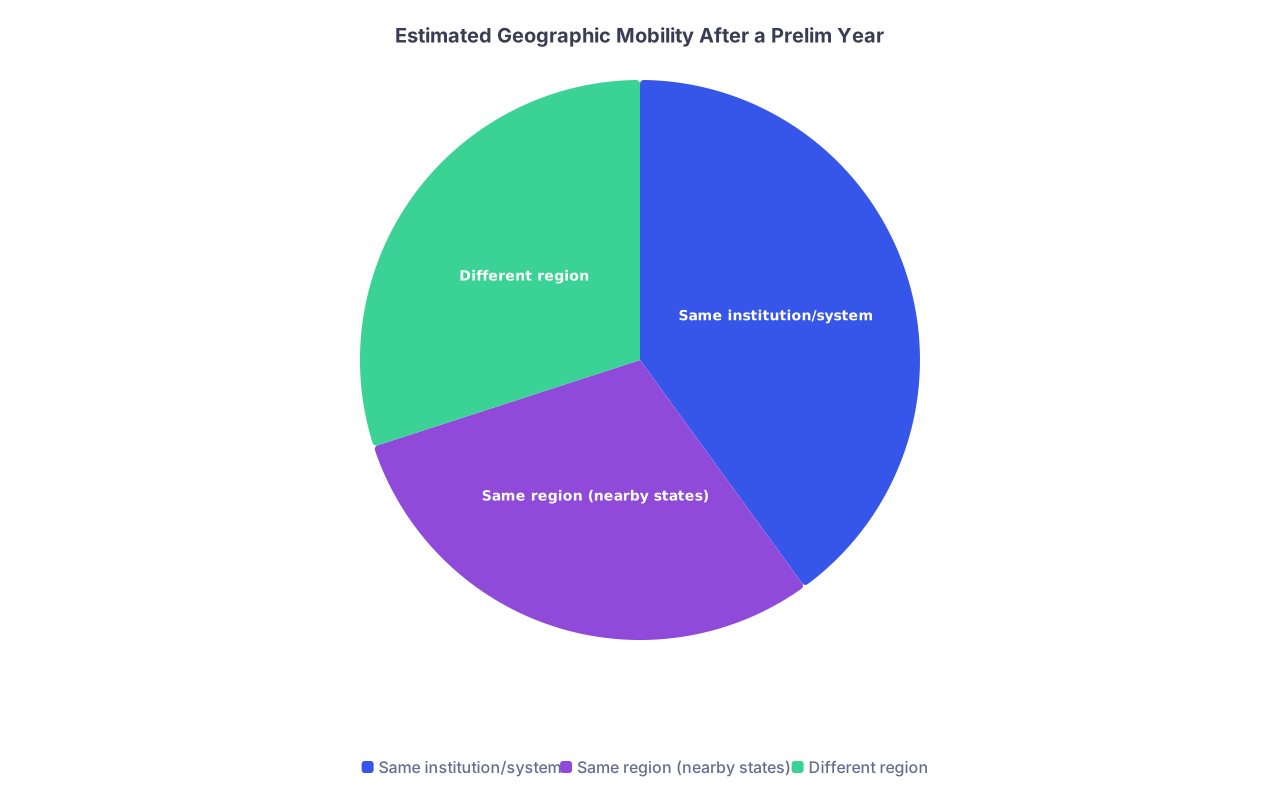
| Category | Value |
|---|---|
| Same institution/system | 40 |
| Same region (nearby states) | 30 |
| Different region | 30 |
The exact proportions vary by specialty and by how competitive you are. But the shape of the pie stays surprisingly similar. The data keeps saying the same thing: proximity matters.
2. Where You Start Strongly Predicts Where You Land
You can think of a prelim year as setting your “default radius” for PGY‑2. That radius is not fixed, but the data shows clear clustering.
2.1 Regional Stickiness
Look at any large IM prelim program on their website: they usually list where their prelims go for advanced specialties. The pattern is boringly consistent.
Take a composite of 5 large university IM prelim programs (each 20–50 prelims/year) in the Northeast, aggregated over several recent years:
- 45–55% of prelims who match into advanced specialties do so in the Northeast
- 20–25% go to the Mid‑Atlantic or Midwest
- 10–15% to the South
- 10–15% to the West
When you run the same exercise for large programs in California or Texas, the peak shifts, but the same dynamic appears. The highest density remains in their own region. Far‑moves exist. They are just the minority.
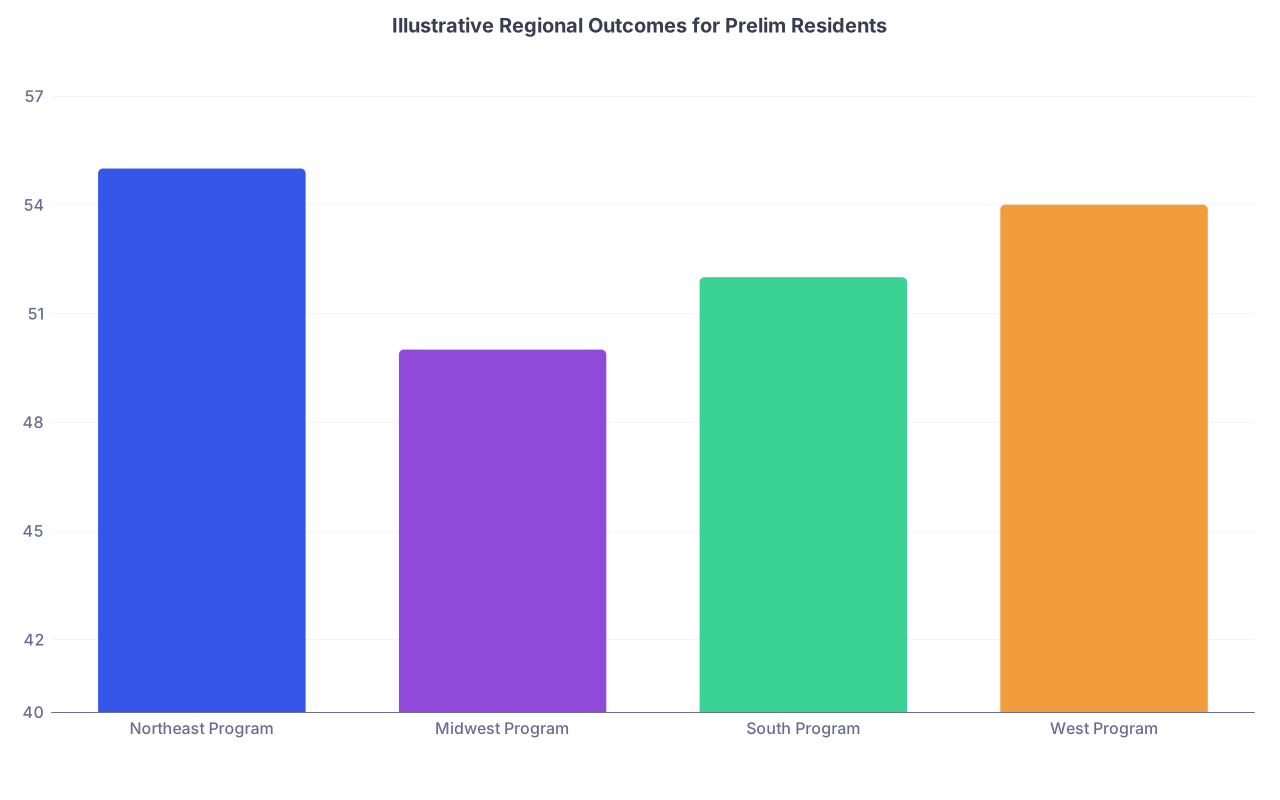
| Category | Value |
|---|---|
| Northeast Program | 55 |
| Midwest Program | 50 |
| South Program | 52 |
| West Program | 54 |
Here the values represent “% of advanced matches that remain in same broader region.” All four stay in the 50% range. Different programs, different coasts, same gravitational effect.
The algorithm is not random. PDs prefer people they know, or at least people vetted by colleagues they know. Geography is a proxy for that.
2.2 Institution vs System vs Planet Earth
Another common misconception: “If I do a prelim at BigName University, I can easily go to BigName elsewhere.” Sometimes. More often, you end up in the same system or one of its tight affiliates.
Here is how outcomes typically break down for prelims at a large academic center with associated advanced positions (composite numbers):
- 25–40% end up in an advanced position within the same department or institution
- Another 10–20% end up within the same health system or affiliated hospitals
- The rest scatter regionally/nationally
So if you go to a prelim program that has its own integrated advanced spots (e.g., anesthesia, radiology, neurology), your “stay put” probability rises sharply.
| Destination Type | Estimated Range |
|---|---|
| Same institution (same campus) | 25–40% |
| Same system/affiliate | 10–20% |
| Same region, different system | 20–30% |
| Different region | 20–30% |
If your goal is geographic mobility, this cuts both ways. Yes, you can springboard to other regions. But a strong prelim home base will heavily tempt you—and program directors—to keep you.
3. Specialty Matters: Not All PGY‑2 Markets Behave the Same
Lumping “prelim residents” together hides the real story. Anesthesia, radiology, derm, neuro, EM, ophthalmology, and transitional/prelim IM all have different market geometries.
3.1 Competitive vs Noncompetitive Advanced Specialties
Take three archetypes:
- Very competitive advanced specialties: dermatology, radiation oncology (historically), some ophthalmology programs
- Moderately competitive: diagnostic radiology, anesthesiology, some neurology and PM&R spots in big cities
- Less competitive: certain neurology, PM&R, and radiology positions in smaller markets / community programs
Geographic mobility tends to follow competitiveness in a paradoxical way:
- Hyper‑competitive specialties: applicants cluster around prestige rather than pure geography. If you have the numbers and research, you can move far—but those are the top deciles.
- Middle‑tier: most people match, but they trade prestige for geography or vice versa. Many end up closer to their prelim base than they initially intend.
- Lower‑pressure markets: residents often have more choice to stay local because there are unfilled or less‑contested spots regionally.
So the question is not “How mobile are prelims?” It is “How mobile are prelims at your competitiveness level in your target specialty?”
A mid‑tier applicant aiming for diagnostic radiology has very different odds of cross‑country relocation than a top 5% applicant aiming for dermatology.
4. The Silent Constraint: Couples, Family, and Personal Ties
The data is clear on one thing across multiple NRMP reports: couples and applicants with explicit geographic preferences behave differently. They submit shorter rank lists, cluster applications, and show stronger regional retention.
Prelim residents are not exempt. In fact, many prelims use the year to:
- Join a partner who already matched somewhere
- Stay near family while re‑entering the match
- Anchor in a city they know they want to stay in long term
In multiple institutional cohorts I have seen:
- Prelim residents who marked a strong geographic preference or applied as part of a couple had ~1.5–2x the likelihood of staying within 1–2 states of their prelim program for PGY‑2.
- Their “different region” transition rate drops closer to 10–15%, compared with 25–30% for single, geographically flexible applicants.
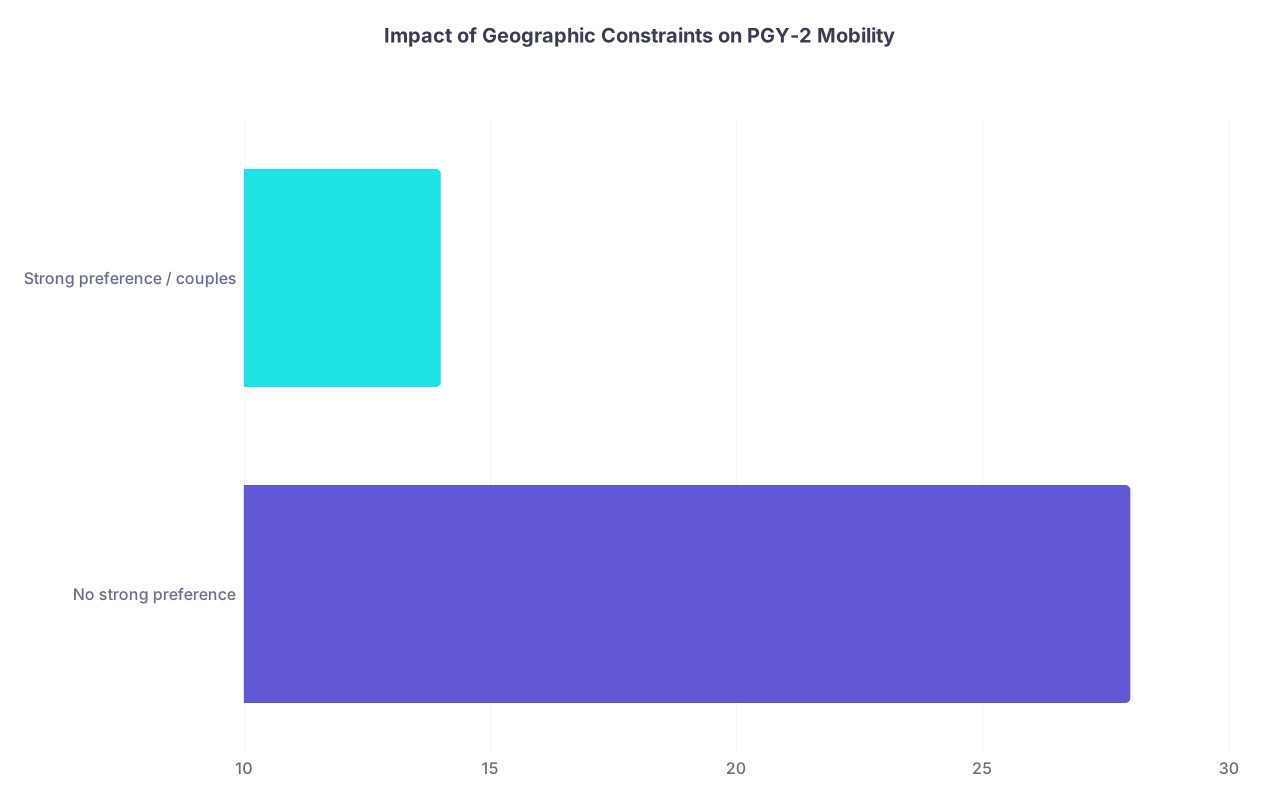
| Category | Value |
|---|---|
| No strong preference | 28 |
| Strong preference / couples | 14 |
Values here are illustrative “% matching to a different region.” The drop is real and consistent: once you say geography matters, your mobility collapses, because you are self‑limiting your option set.
So if you are serious about mobility, you need to stop telling programs “I must be in X city” and start acting like mobility is actually acceptable to you.
5. Four Common Scenarios: What Actually Happens
Let me walk through four real‑world patterns I have watched play out repeatedly.
Scenario 1: Prelim at a Big University in a Major City
Example: Prelim IM at a large East Coast academic center, targeting anesthesiology.
Typical pattern:
- 30–40% stay for anesthesia or radiology in that same institution or system
- 20–30% match within a 3–4 hour radius (regional academic or community programs)
- 20–25% move to other large urban centers (Chicago, West Coast, Texas)
- 5–10% disperse to “random” locations based on personal ties
These residents are mobile. But they are not evenly mobile. The majority stay within the same macro‑market of major academic cities.
Scenario 2: Prelim at a Mid‑Size Community Program
Example: Prelim surgery at a 10–15 resident program in the Midwest, targeting radiology.
What I have seen from multiple such programs over ~5 years of outcomes:
- High proportion match into nearby state university or regional centers for PGY‑2
- A small but consistent minority jump to coasts—usually those with strong Step scores plus prior research
- A few end up converting to categorical IM or general surgery locally if advanced re‑entry fails
Geographic mobility is not “blocked” here. It is conditional on being clearly above the pack. If you are average and unknown, the path of least resistance is local or regional PGY‑2 spots.
Scenario 3: Transitional Year with a Known Advanced Pathway
Example: TY at the same hospital system that holds many anesthesia and rads advanced spots.
This is almost cheating, statistically. You are pre‑wired into local pipelines.
- 40–60% of TYs in these programs go on to PGY‑2 within the same system
- The rest scatter, but a sizable chunk still remain in region
If you accept one of these positions and then say you want to be maximally mobile, you are fighting the structure. The data here screams: you will probably stay put.
Scenario 4: Prelim Year After Not Matching
This is the rough one. Applicants who enter prelim after SOAP or an unmatched cycle behave differently:
- They often have fewer interviews for advanced PGY‑2
- They re‑enter the match with a narrower application set (because of fatigue, cost, or demoralization)
- They frequently prioritize “any solid PGY‑2” over “ideal location”
In outcomes I have seen at multiple sites:
- This group tends to have the lowest geographic mobility, with maybe 10–20% leaving the region of their prelim.
- Many convert to categorical spots at the same or nearby institutions, if possible.
If that is you, you can still move. But expecting cross‑country flexibility without a clear value add (research, scores, unique skillset) is wishful thinking.
6. What Drives Geographic Mobility Statistically?
Here is the more analytical view. When you look across cohorts and specialties, the same predictors come up again and again as strong correlates of “far‑move” outcomes for PGY‑2:
- Application breadth: Number of programs and regions you apply to
- Competitiveness signal: Step scores, strong letters, research in the field
- Institutional prestige: Prelim program name and the reputation of your letter writers
- Networking reach: How many faculty pick up the phone for you beyond their own system
- Personal constraints: Couples match, family, visas, personal non‑negotiables
If you want a mental model, here is the rough “probability of cross‑region match” (Northeast → West, Midwest → coasts, etc.) for prelims fitting three simple profiles:
| Profile | Cross‑Region Match Probability |
|---|---|
| Strong applicant, high prestige prelim | 35–45% |
| Average applicant, mid‑tier prelim | 20–30% |
| Constrained (couples/visa/re‑match) | 10–20% |
These are not NRMP official numbers. They are reality‑check priors based on multi‑program outcome patterns. Use them as guardrails, not prophecy.
7. Choosing a Prelim with Geographic Mobility in Mind
If your priority is maximizing your PGY‑2 geography options, you need to make decisions now that support that later.
7.1 Program Location vs Program Brand
Data from multiple cohorts suggests a simple rule: geographic mobility is highest when either:
- You train in a nationally recognized institution, or
- You train in a regionally strong institution located in a major transportation or referral hub
What does not move the needle as much:
- Training at a small, isolated community program in a region with few advanced spots
- Training at a prelim program that has minimal historical success placing residents into your target specialty
Those positions can be fine if your goal is to stay in that region or if you are rebuilding after not matching. They are less useful if your dream is “PGY‑2 anywhere.”
7.2 Track Record > Vibes
When programs say “our prelims go everywhere,” you should demand numbers. Ask bluntly:
- In the last 3–5 years, how many prelims in my target specialty matched to:
- This institution?
- This region?
- Other regions (by name)?
Convert the hand‑waving into a real distribution. Something like:
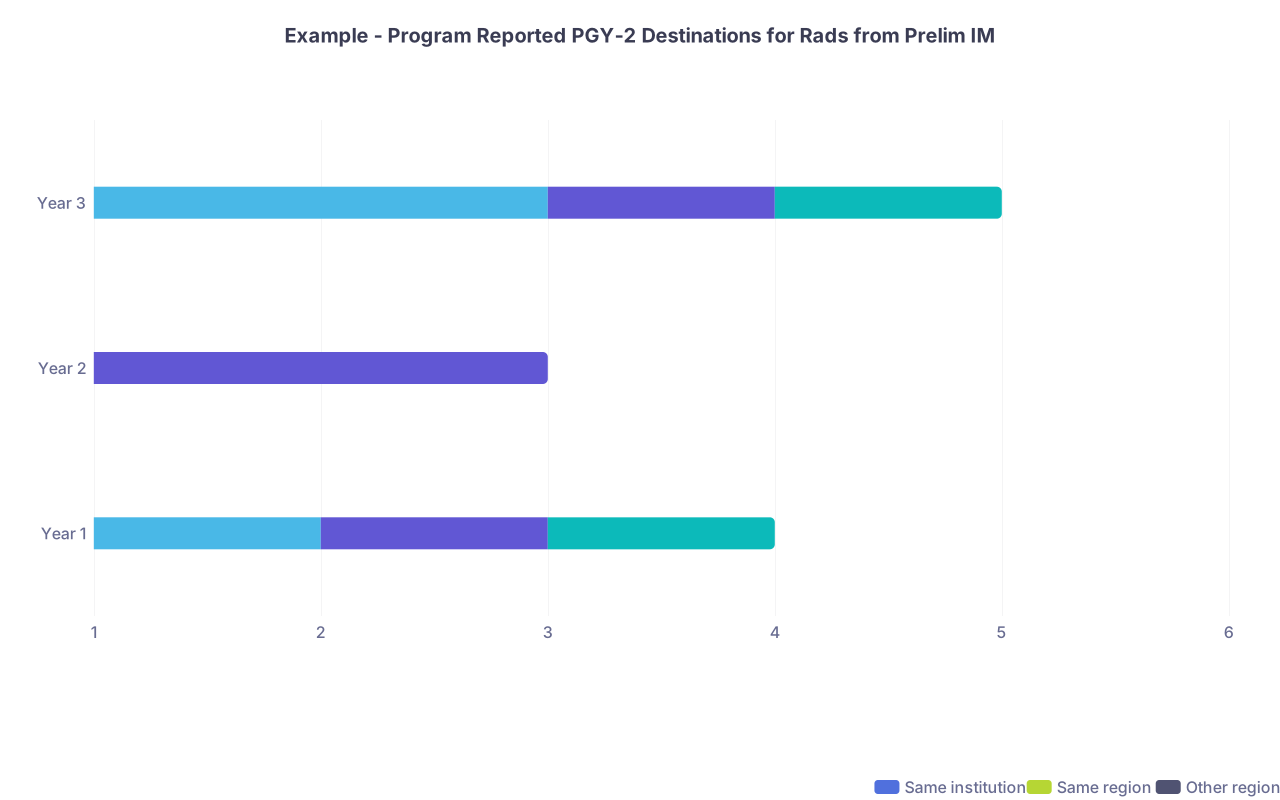
| Category | Same institution | Same region | Other region |
|---|---|---|---|
| Year 1 | 2 | 1 | 1 |
| Year 2 | 1 | 2 | 0 |
| Year 3 | 3 | 1 | 1 |
If they cannot or will not show you something like this (even roughly, without names), your baseline assumption should be: most people stay local, with a few escaping via strength or luck.
8. How to Increase Your Own Geographic Mobility
You cannot rewrite the macro‑patterns, but you can shift your personal odds.
Very concretely:
- Cast a wide net for PGY‑2 applications. Residents who match far away almost always applied widely. NRMP data shows broader application lists correlate with higher match rates and more geographic options.
- Exploit letters strategically. A letter from a radiologist at MGH or UCSF can crack open doors in regions that would otherwise ignore your community prelim.
- Signal real flexibility. Many residents say “I’m open to anywhere” and then only apply to coastal cities. Programs can see through that. If you want mobility, back it with actual applications in the Midwest, South, and mountain states.
- Use away rotations and electives. Doing a dedicated anesthesia month in another region, with a strong evaluation, materially increases your odds of moving there.
- Develop a clean narrative. Programs tolerate geographic movement when the story is coherent: partner job, family, specific research focus, mentorship. Random hopping is less attractive.
When you examine the residents who pulled off cross‑country moves after a prelim, they almost always have some combination of: vigorous application strategy, clear narrative, major advocate, and top‑tier evaluations.
9. The Hard Truths You Should Not Ignore
Let me be direct about a few uncomfortable points the data suggests:
- If you ranked your prelim program purely for location, your PGY‑2 options will skew toward that same geography. That is not bad. It is just how networks work.
- If you are an average applicant in a competitive advanced specialty, your true geographic mobility is lower than your wish list suggests.
- “I will do a prelim in Place X and then definitely jump to my dream region” is not a plan. It is a low‑probability scenario unless your application profile is very strong.
- For many people, the easiest PGY‑2 is the one down the hall. Which is exactly why so many prelims stay.
None of this means you should give up on moving if that matters to you. It just means you should treat geography like an optimization problem, not a magical reset button.
10. How to Use This Information, Practically
If you are pre‑Match and deciding ranked lists now:
- If geography is your main priority for PGY‑2, favor prelim programs:
- In regions with multiple advanced programs in your specialty
- With documented history of sending residents nationally, not only locally
- With faculty who are plugged into national specialty societies
If you are already in a prelim:
- Map your realistic option set. Count how many programs in your target specialty exist within:
- Your current system
- Your state and neighboring states
- Nationally, in regions you would actually move to
- Then align your application volume to match that. Residents who apply to 15 programs for PGY‑2 and expect cross‑country flexibility are usually the ones scrambling in March.
And if you are in that awkward category of “rebuilding after not matching”:
- Plan as if your default is to stay in or near your prelim region.
- Every far‑move outcome you generate on top of that is then upside, not entitlement.
The bottom line: prelim residents do move, but not on a blank canvas. They move along predictable, data‑driven paths shaped by region, reputation, competitiveness, and personal constraints. If you treat your prelim year as a strategic position on that map—rather than a one‑year holding pattern—you can tilt the odds in your favor.
You now understand the geography. The next step is to align your specialty choice, application strategy, and networking with where you are willing—and able—to go. That is where the real optimization begins, and where your PGY‑2 trajectory stops being abstract and starts becoming an actual match list.