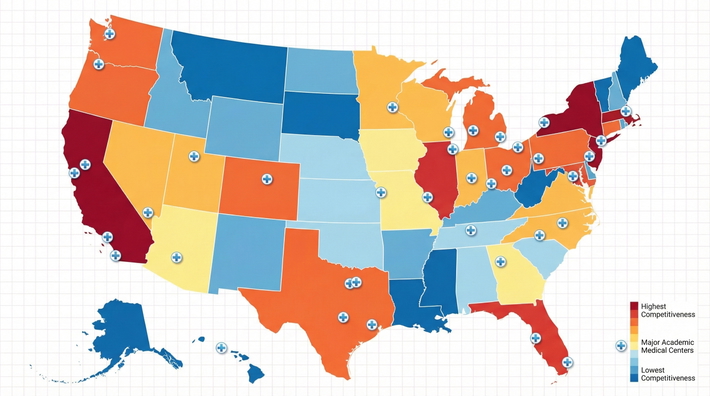
The headline PGY‑1 salary number is almost meaningless until you run it through a cost-of-living filter. A $68,000 stipend in Manhattan does not buy the same life as $62,000 in suburban Ohio. The data makes that painfully clear.
What you care about is real salary: how much purchasing power you actually get in the city where you will be working 60–80 hours a week. Not the marketing number on the GME website.
This is where cost-of-living–adjusted PGY‑1 salaries change the picture completely. Programs that look “generous” on paper fall to the bottom of the pack when you normalize for local prices, while some boring midwestern hospitals quietly rise to the top.
Let’s walk through the numbers region by region.
1. The Framework: How to Think About Cost-of-Living–Adjusted PGY-1 Pay
I am going to be explicit about the logic so you can reuse it with any program.
At its simplest, you are doing this calculation:
Real PGY‑1 salary = Nominal PGY‑1 salary ÷ Cost-of-living index
Where:
- Cost-of-living index is anchored at 1.00 for an “average” U.S. metro.
- Values > 1.00 mean more expensive (San Francisco, New York).
- Values < 1.00 mean cheaper (Midwest, many Southern cities).
If you want to visualize this:

| Step | Description |
|---|---|
| Step 1 | Program PGY1 salary |
| Step 2 | Find city cost index |
| Step 3 | Convert index to factor |
| Step 4 | Salary divided by factor |
| Step 5 | Real salary vs US average |
For illustration, I will standardize on:
- National “average” cost-of-living index = 1.00
- Real salary expressed as “equivalent salary in an average-cost city”
So if a program pays $70,000 in a city with index 1.25, your real salary:
- 70,000 ÷ 1.25 = $56,000 effective
That is the number you should compare across regions.
Of course, exact COL indices vary slightly by data source (BLS, BEA, Numbeo, etc.), but the rank ordering is remarkably stable. High-cost coastal cities are consistently 1.30–1.60+ relative to the U.S. average. Many interior metros sit at 0.85–0.95.
2. National Snapshot: Nominal vs Real PGY-1 Salaries
Let’s start with an illustrative cross-section of typical PGY‑1 salaries and regional cost indices. These are not official GME contracts, but they are realistic “typical” values based on commonly published ranges.
| Region | Example City | Nominal PGY‑1 | COL Index* | Real Salary (US=1.00) |
|---|---|---|---|---|
| Northeast Urban | New York City | $75,000 | 1.45 | ~$51,700 |
| West Coast Urban | San Francisco | $78,000 | 1.55 | ~$50,300 |
| Midwest Metro | Indianapolis | $62,000 | 0.90 | ~$68,900 |
| South Suburban | Atlanta suburbs | $60,000 | 0.95 | ~$63,200 |
| Mountain West | Salt Lake City | $64,000 | 0.98 | ~$65,300 |
| Smaller Midwest | Des Moines | $60,000 | 0.88 | ~$68,200 |
*COL Index is illustrative and normalized to 1.00 for the U.S. average.
The pattern is blunt:
- On paper, Bay Area and NYC stipends sit at the top.
- Adjusted for cost, the Midwest and many Southern/Mountain West cities deliver $15–20k more real purchasing power.
Put differently: a $62k salary in Indianapolis can feel like almost $69k in an “average” city, while a $78k SF salary feels like $50k.
Here is the same story in visual form:
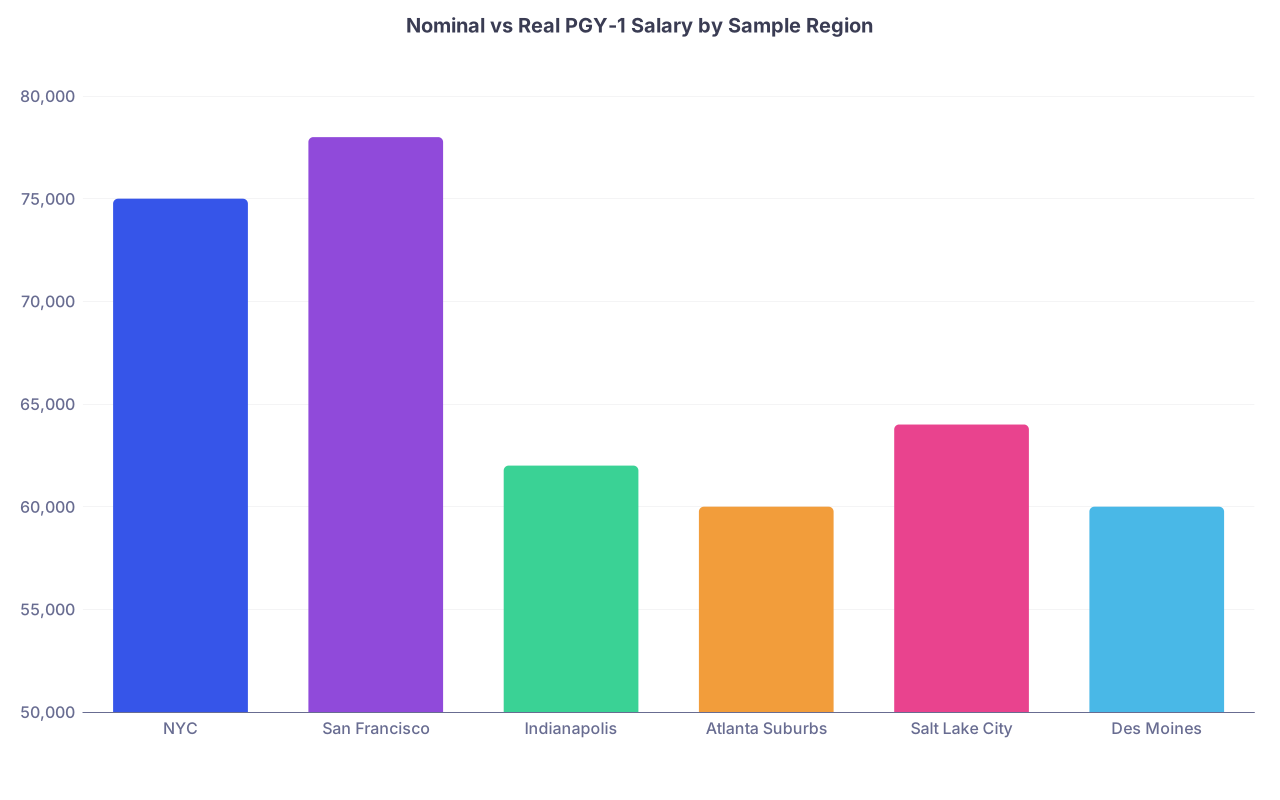
| Category | Value |
|---|---|
| NYC | 75000 |
| San Francisco | 78000 |
| Indianapolis | 62000 |
| Atlanta Suburbs | 60000 |
| Salt Lake City | 64000 |
| Des Moines | 60000 |
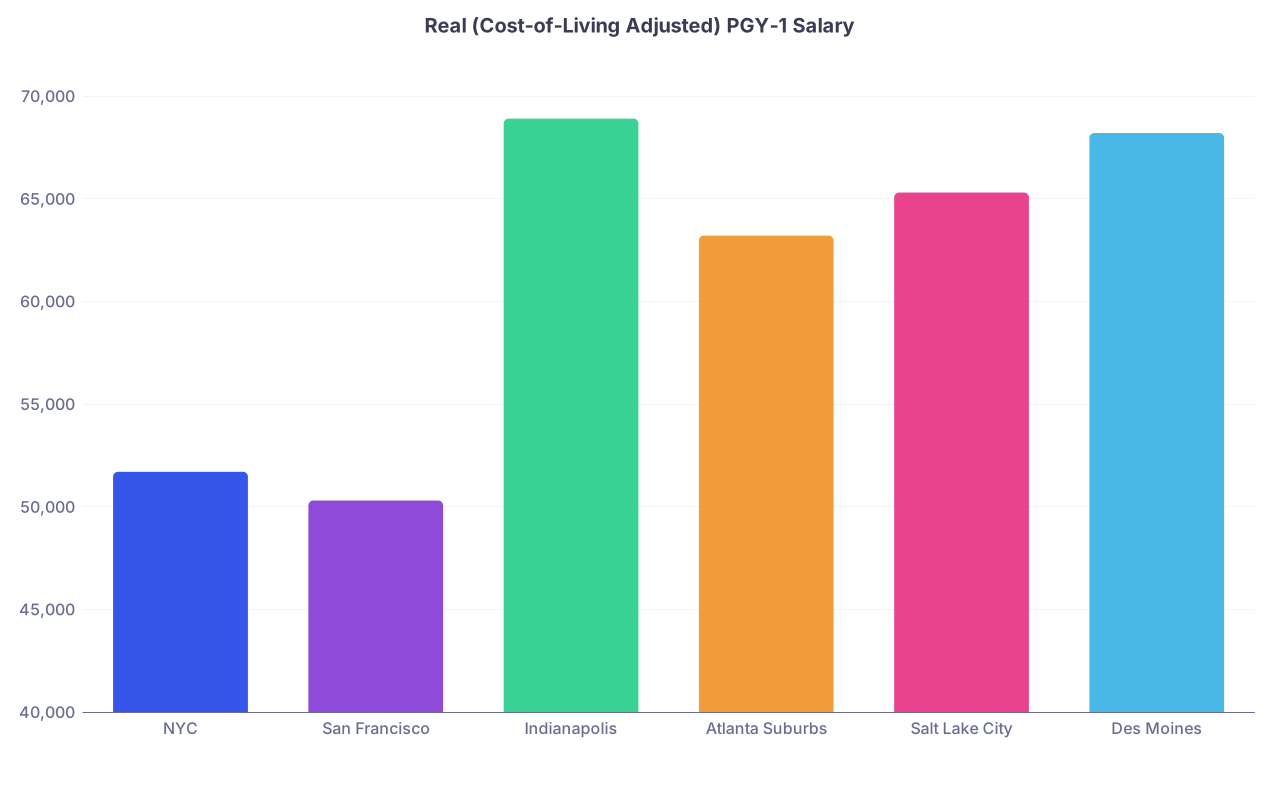
| Category | Value |
|---|---|
| NYC | 51700 |
| San Francisco | 50300 |
| Indianapolis | 68900 |
| Atlanta Suburbs | 63200 |
| Salt Lake City | 65300 |
| Des Moines | 68200 |
Look at those second bars. That is your lifestyle.
3. Northeast: Prestige vs Purchasing Power
Northeastern academic centers sell you on reputation. The compensation data is less flattering.
Think:
- New York City (Columbia, NYU, Mount Sinai, Montefiore, etc.)
- Boston (MGH, Brigham, BIDMC, BU)
- Philadelphia (Penn, Jefferson, Temple)
- DC/Baltimore corridor
Cost profile
- Core cities: COL index ~1.30–1.55
- Near suburbs: often still 1.15–1.30
- Affordable exceptions: more distant community programs (e.g., central Pennsylvania, upstate NY) dropping into 0.95–1.05
Typical PGY‑1 salary ranges:
- High-prestige academic: $70–78k
- Community programs: $60–67k
On paper, those $72–75k stipends look strong. Once you adjust:
| Location Type | City Example | Nominal PGY‑1 | COL Index | Real Salary |
|---|---|---|---|---|
| NYC Manhattan | NYC | $75,000 | 1.45 | ~$51,700 |
| Boston Academic | Boston | $74,000 | 1.40 | ~$52,900 |
| Philly Academic | Philadelphia | $70,000 | 1.20 | ~$58,300 |
| Upstate NY Comm | Rochester | $64,000 | 0.98 | ~$65,300 |
| Central PA Comm | Hershey | $62,000 | 0.95 | ~$65,300 |
What the data shows:
- Moving from Boston/NYC to upstate NY or central PA can add $12–14k in real annual purchasing power.
- In monthly terms, that is roughly $1,000+ more equivalent “spendable” money; that covers a car payment, daycare differential, or a large chunk of loans.
Tradeoffs
You do not pick MGH or Columbia primarily for lifestyle. You pick them for:
- Reputation/clout in competitive specialties
- Dense subspecialty exposure
- Research infrastructure
But from a pure economic angle, if your goal is primary care, hospitalist, or even a mainstream fellowship, you are paying a large hidden “prestige tax” to train in core Northeast cities.
4. West Coast: High Salaries, Yet Lower Real Pay
The West Coast is where a lot of applicants get misled by topline salary figures. You see $78k in the Bay or $75k in LA and think “Wow, that is generous.” The housing data disagrees.
Think main clusters:
- Northern California: San Francisco, Oakland, Palo Alto, Sacramento (somewhat cheaper)
- Southern California: Los Angeles, San Diego, Orange County
- Pacific Northwest: Seattle, Portland
Illustrative numbers:
- Bay Area COL index: ~1.50–1.60 (sometimes worse in specific pockets)
- LA/OC: ~1.25–1.35
- Seattle: ~1.25–1.30
- Portland: ~1.15–1.20
Typical PGY‑1 ranges:
- Big-name academics (UCSF, Stanford, UCLA, UW): $74–80k
- Community and inland programs: $62–70k
Let’s run the math.
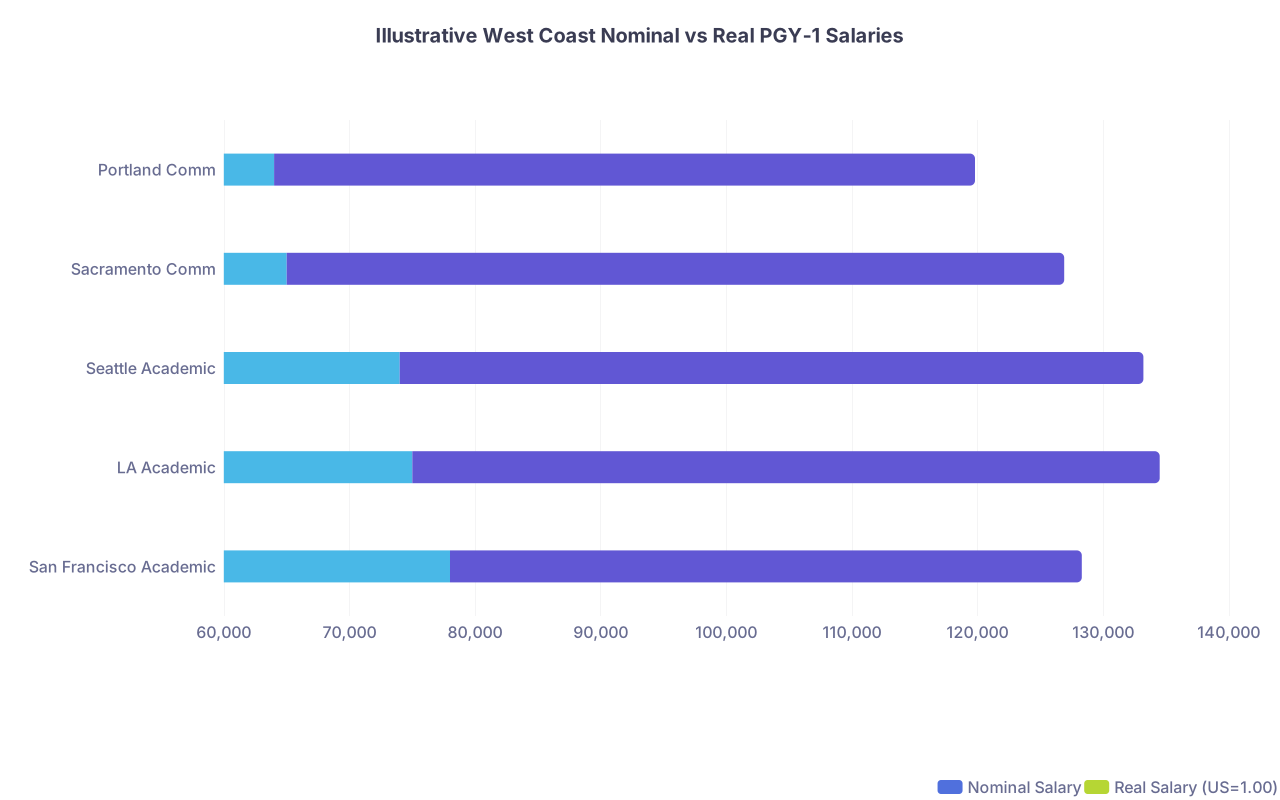
| Category | Nominal Salary | Real Salary (US=1.00) |
|---|---|---|
| San Francisco Academic | 78000 | 50300 |
| LA Academic | 75000 | 59500 |
| Seattle Academic | 74000 | 59200 |
| Sacramento Comm | 65000 | 61900 |
| Portland Comm | 64000 | 55800 |
Approximate real values behind that:
- SF Academic
- 78,000 ÷ 1.55 ≈ $50,300
- LA Academic
- 75,000 ÷ 1.26 ≈ $59,500
- Seattle Academic
- 74,000 ÷ 1.25 ≈ $59,200
- Sacramento Community
- 65,000 ÷ 1.05 ≈ $61,900
- Portland Community
- 64,000 ÷ 1.15 ≈ $55,800
So a “lower tier” Inland or smaller metro program can pay you more in real terms than the West Coast flagships.
Key West Coast pattern:
- The gap between nominal and real is among the worst in the country, especially in the Bay Area.
- Actual rent-to-income ratios among residents in SF/LA/Seattle are often brutal: >40–50% of take-home pay going straight to housing.
If you have a partner without a strong earning potential or you are single with loans and no family help, the West Coast “romance” often does not survive a spreadsheet.
5. Midwest: Quietly Dominating Real PGY-1 Pay
The Midwest is where the numbers become uncomfortable for coastal program directors. Because once you look at cost-adjusted salaries, a lot of their “competitive offers” are getting smoked by Midwestern community hospitals.
Key metros and profiles:
- Big academic hubs: Chicago (higher COL), Minneapolis, St. Louis
- Mid-size metros: Indianapolis, Columbus, Kansas City, Milwaukee, Omaha
- Smaller cities: Des Moines, Grand Rapids, Dayton, Peoria
Illustrative COL indices:
- Chicago: ~1.10–1.15
- Most others: 0.85–1.00
- Smaller cities: sometimes 0.80–0.90
Typical PGY‑1 salary ranges:
- Academic centers: $60–68k
- Community programs: $58–65k
Run the adjustments:
| City Type | City Example | Nominal PGY‑1 | COL Index | Real Salary |
|---|---|---|---|---|
| Chicago Academic | Chicago | $66,000 | 1.12 | ~$58,900 |
| Columbus Academic | Columbus | $62,000 | 0.92 | ~$67,400 |
| Indianapolis Comm | Indianapolis | $62,000 | 0.90 | ~$68,900 |
| Omaha Comm | Omaha | $60,000 | 0.88 | ~$68,200 |
| Des Moines Comm | Des Moines | $60,000 | 0.88 | ~$68,200 |
The conclusion is straightforward:
- Multiple Midwest programs are effectively paying you $67–69k real dollars, often outperforming Californian and Northeastern giants by $15–18k in purchasing power.
- Residents’ rent burdens are often lower, car insurance cheaper, childcare more feasible, and commutes shorter.
I have seen residents leave Chicago proper for nearby suburbs solely to arbitrage housing costs while staying in the same program. A move 45 minutes out can change the numbers by several hundred dollars a month.
The one downside: if you want pure big-city living (dense nightlife, coastal culture), parts of the Midwest will feel slow. But from a financial standpoint, it is the best region for real PGY‑1 pay, hands down.
6. South and Southeast: Decent Balance, But Highly Variable
The South is not one monolith. Houston is not the same as Jackson, Mississippi. You have to look more granularly.
Broadly, think:
- Large metros: Houston, Dallas, Atlanta, Miami, Nashville
- Mid-small: Birmingham, Greenville, Little Rock, Baton Rouge
- Rural / smaller cities: various state hospitals and regional centers
COL indices:
- Houston/Dallas/Atlanta: ~0.95–1.05
- Miami: often higher ~1.15–1.20 (housing + insurance)
- Many others: 0.85–0.95
Typical PGY‑1 salary ranges:
- Major academic: $58–65k
- Community/regional: $56–62k
Compute some scenarios:
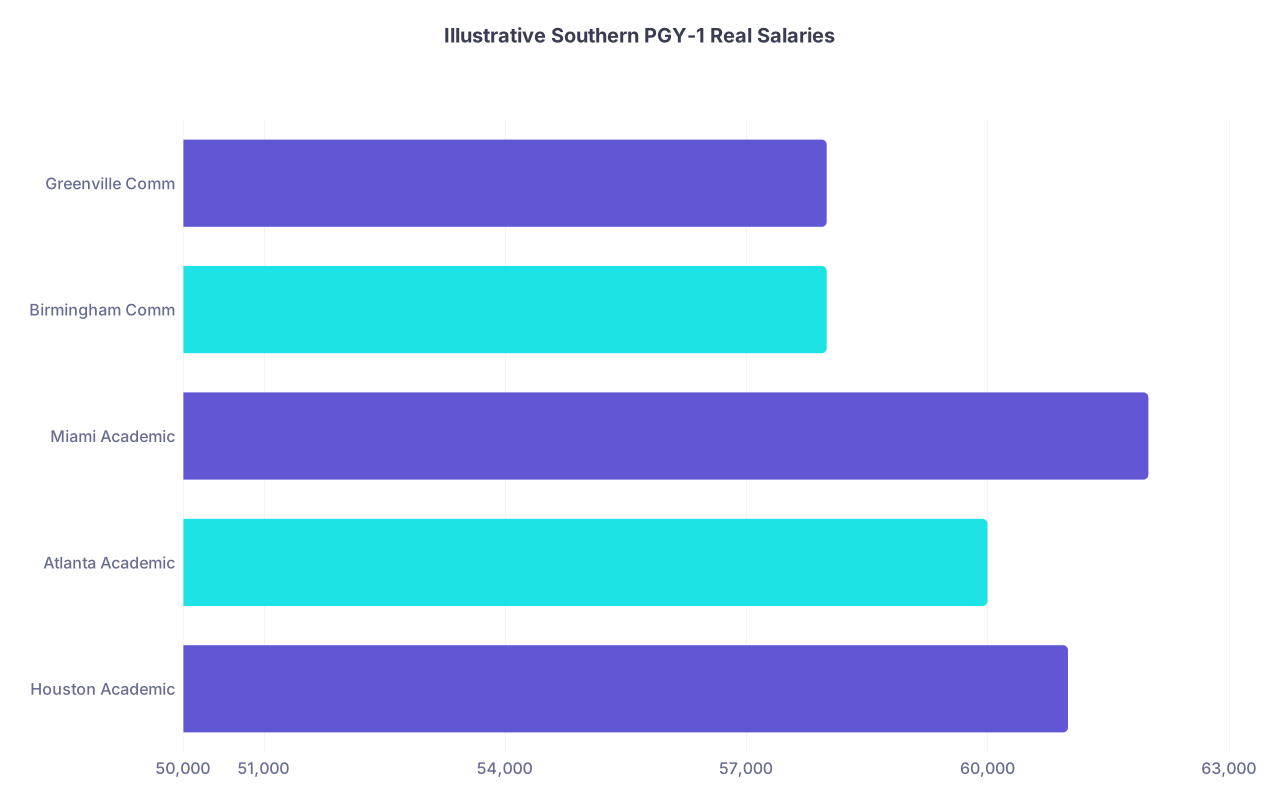
| Category | Value |
|---|---|
| Houston Academic | 61000 |
| Atlanta Academic | 60000 |
| Miami Academic | 62000 |
| Birmingham Comm | 58000 |
| Greenville Comm | 58000 |
Now adjusted:
- Houston Academic
- 61,000 ÷ 0.98 ≈ $62,200
- Atlanta Academic
- 60,000 ÷ 0.95 ≈ $63,200
- Miami Academic
- 62,000 ÷ 1.18 ≈ $52,500
- Birmingham Comm
- 58,000 ÷ 0.88 ≈ $65,900
- Greenville Comm
- 58,000 ÷ 0.87 ≈ $66,600
Split story:
- Interior South (Atlanta suburbs, Birmingham, much of Texas outside Austin): surprisingly strong real salaries, sometimes approaching Midwestern levels.
- Hot coastal / tourist markets (Miami, certain parts of Florida, increasingly parts of Nashville/Austin): COL inflation erodes a lot of the advantage.
Where the South often wins:
- No state income tax in states like Texas and Florida.
- Lower property taxes in many areas.
- Car-dependent but cheap gas and parking.
If you want a warmer climate with reasonably strong finances, many Southern metros beat the coasts easily and are competitive with the Midwest.
7. Mountain West and “Second-Tier” Metros: The Emerging Sweet Spot
The Mountain West and similar “second-tier” metros (not meant pejoratively; just population size) are where the economic and lifestyle curves intersect nicely for many residents.
Think:
- Salt Lake City
- Denver (though its costs have climbed)
- Boise
- Albuquerque
- Spokane
- Reno
COL indices:
- Denver: ~1.10
- Salt Lake: ~0.98–1.02
- Boise/Reno/Albuquerque: ~0.95–1.00
Typical PGY‑1 salaries:
- Academic centers: $60–66k
- Community: $58–64k
Example calculations:
| City | Nominal PGY‑1 | COL Index | Real Salary |
|---|---|---|---|
| Denver | $64,000 | 1.10 | ~$58,200 |
| Salt Lake | $64,000 | 0.98 | ~$65,300 |
| Boise | $60,000 | 0.96 | ~$62,500 |
| Albuquerque | $60,000 | 0.94 | ~$63,800 |
These are not Midwest-level real salaries, but they are substantially better than coasts and often aligned with interior South.
For many residents, this region offers:
- Good real pay
- Access to outdoors / recreation
- Less traffic and lower daily stress load
Again, the data pushes you away from the pure West Coast glamour regions and toward these “second-tier” metros if you care about financial breathing room.
8. Hidden Variables: Taxes, Parking, Moonlighting, and Benefits
Pure COL indices do not capture everything. A few other quantifiable factors move the needle.
State income tax
Take-home pay is what you spend. A nominal $60,000 salary in a no-tax state can match or beat $64,000 in a high-tax state.
Crude example:
- State A (no income tax): effective total tax rate (federal + payroll) maybe ~22–24% for a resident
- State B (high state tax): add 5–7% = ~27–31%
On $60k:
- No-tax state: keep ~$45,600–46,800
- High-tax state: keep ~$41,400–44,000
That is a $2–5k annual difference.
States like Texas, Florida, Tennessee, Nevada, and Washington quietly enhance real salaries.
Parking and transport
This sounds trivial until you do the math in Manhattan or Boston.
- Monthly parking in dense urban centers can run $250–$400.
- Over a year, that is $3,000–4,800 before tax.
- If the hospital does not fully subsidize this, your real salary drops accordingly.
Conversely, free or cheap parking in suburban or smaller-city hospitals is effectively a built-in raise.
Moonlighting
Some programs allow moonlighting starting late PGY‑1 or PGY‑2. The variability is huge:
- Some residents add $10–20k per year.
- Others get nothing due to policy or market saturation.
However, I have seen applicants overestimate this across the board. Many PGY‑1 schedules and local market realities simply do not support reliable moonlighting income, especially early.
Benefits and insurance
Health premiums, dental/vision, disability, and retirement matches vary, but for most residents the rent and tax line items dwarf these differences.
If you want to be rigorous, you can add:
- Employer health premium contribution: maybe worth $4–8k/year.
- Retirement match (if you actually contribute): often $1–2k/year.
But those are secondary compared to housing costs and tax differentials.
9. How to Run the Numbers for Your Specific Rank List
You do not need a PhD in econometrics to compare real PGY‑1 pay across your rank list. You need 15–20 minutes and a sane process.
Here is one that works:
- Build a table with rows = programs you are considering.
- Columns:
- City / Metro
- Stated PGY‑1 salary
- City cost-of-living index (relative to U.S. average = 1.00)
- State income tax bracket at your income (approximate)
- Typical 1‑bedroom rent within 30–40 minutes of hospital
- Compute:
- Real salary: PGY‑1 ÷ COL index
- Estimated annual rent
- Rent as % of take-home pay
You can sketch the workflow:

| Step | Description |
|---|---|
| Step 1 | List programs |
| Step 2 | Collect PGY1 salary |
| Step 3 | Find COL index |
| Step 4 | Estimate taxes and rent |
| Step 5 | Calculate real salary |
| Step 6 | Compare across programs |
If you want a quick heuristic:
- Aim for rent ≤ 30–35% of take-home pay.
- Look for programs where real salary is ≥ $60k equivalent in an average-cost city.
- Be wary when rent will consume >45% of your projected take-home; that is what you see in many SF/NYC setups.
Residents who do this systematically often rethink their rank lists, especially when they are not wedded to a specific prestige name.
10. Region-by-Region Bottom Line
The data tells a consistent story across all these comparisons.
Northeast core cities (NYC/Boston/DC):
Highest nominal salaries in some cases, but they get crushed by cost-of-living. Real PGY‑1 pay is typically $50–58k equivalent. Great if your priority is elite academic branding. Brutal if you care about savings or family budget.West Coast (especially Bay Area and coastal CA/WA):
Very similar pattern. Eye-catching stipends, but COL is so inflated that you are effectively making mid-$50k or worse in real terms.Midwest:
Consistently the best real-earnings zone for residents. Modest nominal salaries but low COL. Real PGY‑1 pay often lands in the mid- to high‑$60ks equivalent. Hard to beat if you are optimizing finances.Interior South and much of Texas:
Strong value, especially in non-tourist, non-coastal markets. Real salaries a bit below Midwest at times but still highly competitive, especially after factoring in lower taxes.Mountain West / “second-tier” metros:
Good compromise between livability and economics. Real salaries in the low‑ to mid‑$60ks equivalent are common, with easier access to outdoors and reasonable traffic.
You are trading prestige, geography, and lifestyle against a very real and often underappreciated financial gradient.
Cost-of-living–adjusted PGY‑1 salaries are not the only variable that matters, but they are one of the few you can quantify, line by line, before you sign on. If you ignore them, you are effectively gambling blind with three of the leanest earning years of your career.
You now have the framework to run the numbers yourself, program by program. The next logical step is to layer this financial picture on top of training quality, fellowship placement, and your long-term specialty plans—so that your rank list reflects both the doctor you want to become and the life you want to afford. That synthesis is where smart applicants quietly pull away from the pack—but that is a deeper strategy conversation for another day.