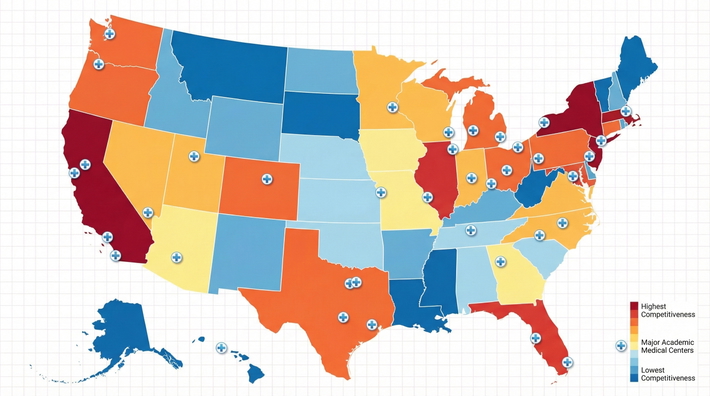
The idea that “if you train rural, you’re stuck rural” is mostly myth. The data just do not back up the horror stories people trade on Reddit and in call rooms.
Let me be blunt: a rural-focused residency can shape your career preferences, your skill set, and your network. It does not lock you out of urban jobs. When people say it does, they’re usually confusing three things: selection bias (who chooses rural programs), lifestyle shifts (people realize they like not sitting in traffic for 90 minutes), and prestige obsession (equating “urban” with “better”).
You want the evidence, not the folklore. So let’s walk through what we actually know from match data, workforce studies, and hiring behavior.
What the Evidence Really Shows About Rural Training and Later Practice
The best data come from family medicine, internal medicine, pediatrics, and some surgical fields—because those are the specialties that actually track rural workforce outcomes.
Studies from the Robert Graham Center, AAMC, and various state workforce reports consistently show a pattern that gets misquoted:
- Residents who train in rural track programs are more likely to practice in rural or smaller communities than residents from purely urban programs.
- But “more likely” is not “exclusively.” It’s a shift in probability, not a permanent zip code tattoo.
You’ll see numbers like: 40–60% of rural-track family medicine residents end up in rural or small-town practice. People love to quote that as proof you’ll be stuck. They conveniently ignore the flip side: 40–60% do not.
Let’s put some rough comparison numbers on the table.
| Training Site Type | % Practicing Rural | % Practicing Suburban/Urban |
|---|---|---|
| Rural Track FM | 40–60% | 40–60% |
| Mixed/Community FM | 15–25% | 75–85% |
| Large Urban FM | 5–10% | 90–95% |
These are ballpark ranges drawn from multiple workforce studies. The exact percentages vary by state and year, but the pattern is stable: rural training shifts the odds, not the rules.
I’ve watched grads from pretty small programs—like a 6–6–6 family medicine residency in a town you’d never visit on purpose—land jobs in major metros: Denver, Dallas, Seattle, Boston. Not theoretical. Actual job offers, group practices, major health systems. They were not punished for training rural. In some cases, they were preferred.
So no, the data do not say: “Rural residency = no urban job.” They say: “Rural residency = higher odds you’ll like and choose non-urban practice.”
That’s a choice, not a prison sentence.
How Hiring Actually Works in Urban Systems
Here’s what urban employers care about, in the real world, when they review your CV for a job:
- Are you board certified (or board eligible)?
- Is your training accredited (ACGME, properly recognized)?
- Any performance problems? Gaps? Red flags?
- Do your references say you are safe, functional, and not a nightmare?
- Do your skills match the job they need filled (pure outpatient, hospitalist, high-acuity, procedure-heavy, etc.)?
What almost never happens: “We don’t hire from rural residencies.”
Urban systems routinely recruit from community programs, mid-tier academic places, and yes, rural residencies. If anything, they worry more about:
- Narrow training: “You’ve only seen ultra-tertiary zebras and never managed bread-and-butter primary care.”
- Culture fit: “Are you going to bolt in 6 months because you hate our EMR and clinic schedule?”
A rural training background actually comes with a few advantages that hiring committees recognize—especially for generalist fields:
Broad clinical exposure
Many rural track residents manage wider scopes of practice: procedures, inpatient + outpatient, OB in some FM programs, ED coverage. Those skills are transferable. No one in an urban clinic is sad you can place lines or manage basic ortho and derm in-house.Comfort with autonomy
Urban residency often means there’s always a subspecialist down the hall. Rural settings force you to think critically and take real responsibility. Employers like seeing that.Strong continuity relationships
Rural programs usually emphasize long-term relationships with patients. That translates well to any outpatient setting, urban or not.
The misunderstanding comes from residents comparing their CVs to classmates from brand-name university hospitals and assuming prestige is everything. It is not. Outside a handful of hyper-competitive positions (faculty at top-10 academic centers, very specific subspecialty fellowships), the name of your residency is a minor factor compared with board certification, competence, and references.
The Real Limiter: Not “Rural vs Urban,” but Scope vs Match to Job
Where you may run into friction has less to do with location of residency and more with content of residency.
Hiring committees quietly ask three questions:
- Did this person’s training environment match what we do here?
- Will they need hand-holding to function in our system?
- Are they going to be miserable in our volume/acuity mix?
If you trained at a rural program where:
- You did broad-scope full-spectrum family medicine with OB, inpatient, ED shifts, and clinic,
- You’re applying for a pure outpatient job in a dense metro with 15-minute visits and heavy chronic disease,
You’re fine. You’re overqualified from a scope standpoint. They may question whether you’ll be happy giving up OB and inpatient, but they’re not doubting your clinical skills.
Where mismatch starts to matter:
- You trained in a small rural hospital that rarely saw high-acuity ICU-level cases, and now you’re trying to be an intensivist in a large urban tertiary center. That’s not about “rural,” that’s about case mix and fellowship quality.
- You did a surgical residency where volume in key index cases was barely at minimums, and now you want a job in a large urban surgery group that expects high-speed operative throughput. Again, that’s not “rural penalty,” it’s volume and competency.
In primary care, hospitalist medicine, psych, pediatrics, EM at smaller community hospitals—urban employers mostly don't care where you trained as long as your skills and references check out.
Name Recognition, Bias, and the Prestige Problem
Let’s not pretend bias does not exist. It does. But it’s different from the story people tell.
Some large academic centers and elite subspecialty groups do heavily favor:
- University-based residencies
- Big-name programs with heavy research footprints
- Applicants with strong academic CVs, publications, and fellowships
That bias is elite vs non-elite, not urban vs rural. There are plenty of utterly generic community programs inside big cities that have the same “name recognition” problem as a rural program two states away. And there are rural-affiliated university programs with strong reputations in their region.
So the mental model of “urban = prestigious, rural = backwater” is just lazy—and often wrong.
What usually happens:
- Urban academic jobs may care more about where you trained, rural or not.
- Urban community jobs (the majority) care more that you are competent, collegial, and not going to flame out.
If your long-term dream is: “I want to be a cardiology attending at Mass General,” then yes, choosing a marginal, tiny rural IM residency with limited research and exposure is probably a mistake. But that’s not because it’s rural. It’s because it doesn’t match your academic goals.
Different question than: “Will a rural residency block me from ever working in Boston?” No, it won’t.
Where Rural Training Actually Gives You an Edge
This is the part no one talks about because it doesn’t fit the anxiety narrative.
Rural training can be a strategic starting point if you want options, not instant cachet.
Here’s what I’ve seen play out over and over:
- Graduates from rural or semi-rural programs end up with multiple job offers, some rural, some suburban, some in smaller metros.
- Urban systems in physician-shortage areas (which is most of them) are perfectly happy to hire someone who’s used to working hard and managing a broad range of issues.
- When you are willing to start your career in the “less sexy” neighborhoods of big metros or second-tier cities, doors open quickly. No one cares that you did residency 3 hours from the nearest Trader Joe’s.
On top of that, rural training often builds exactly the skills health systems claim they want:
- Managing complex multimorbidity without excessive reflex referrals.
- Comfort with telehealth and cross-site collaboration.
- Problem-solving in resource-limited settings—yes, even big urban hospitals hit resource limits all the time.
It’s not glamorous, but it is marketable.
The One Scenario Where Rural May Bite You
There is a scenario where a rural residency can genuinely constrain your future urban options, and pretending otherwise is dishonest.
If you pick a weak rural program that has:
- Chronic ACGME citations or marginal accreditation status
- Poor board pass rates
- Very low clinical volume or serious gaps in core exposure
- A reputation locally for underprepared grads
Then yes, your job options—urban or rural—will be narrower. Weak training is weak training, no matter the ZIP code.
So the smart question isn’t “rural vs urban.” It’s:
- What do the case logs look like?
- How are the board pass rates?
- Where do recent grads work now?
- Do grads match into fellowships (if that’s your interest)?
- What do local hospitals actually think of this program’s graduates?
That’s how you protect your future options. Geography is secondary.
How to Keep Your Future Urban Options Wide Open from a Rural Base
If you’re seriously considering a rural or semi-rural residency but nervous about being “stuck,” here’s how you hedge:
Choose programs with strong clinical volume and solid outcomes
Check board pass rates. Ask about graduates. If recent grads have jobs in major cities or matched decent fellowships, your path is open.Do rotations in urban centers when possible
Many rural tracks are actually affiliated with bigger academic hubs. Use that. Electives, away rotations, subspecialty exposure—all help your CV and network.Maintain some academic profile
You don’t need twenty publications. A couple of QI projects, a poster or two, maybe a regional presentation—enough to show you’re engaged and can play in academic spaces if needed.Network outside your training site
Go to state or national specialty meetings. Meet people from the cities you might want to work in later. A 10-minute hallway conversation at a conference can matter more than your program’s street address.Be very clear on your narrative
When you interview for urban jobs, be ready to explain why you chose rural training, what you gained from it, and why you’re now aiming for an urban role. Employers listen to that story.
Do those, and a rural residency becomes a launch pad, not quicksand.
Quick Reality Check: What the Numbers Say About Doctor Supply
Urban areas, especially big-name cities, have more physicians per capita. But they also have:
- Growing patient populations
- Aging doctors retiring
- Burnout driving early exits
The idea that there’s this massive surplus of elite-trained urban residents fighting you off for every job is exaggerated outside a handful of super-desirable metro cores and ultra-academic roles.
Physician shortage is national. Urban systems are not in a position to snub an entire class of candidates just because they trained in a town of 40,000 instead of 4 million.
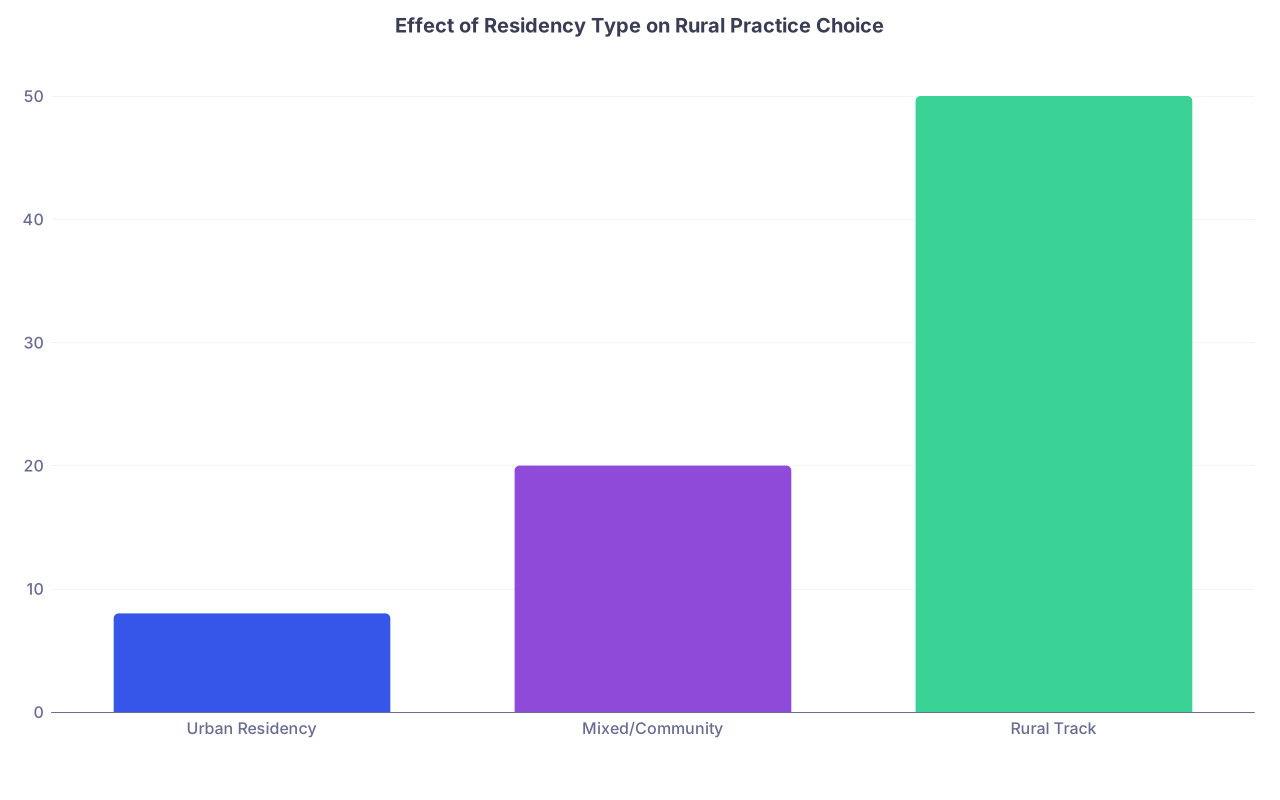
To visualize the pull of rural training vs final practice, think of it as shifting probabilities, not absolutes:
| Category | Value |
|---|---|
| Urban Residency | 8 |
| Mixed/Community | 20 |
| Rural Track | 50 |
Those bars are percentages of graduates entering rural practice. That 50% for rural track? Still leaves half going suburban or urban.
How Career Paths Actually Evolve After a Rural Residency
Let me map the pattern I’ve seen repeatedly in residents who start “rural” and end up in cities:

| Step | Description |
|---|---|
| Step 1 | Rural or Rural-Track Residency |
| Step 2 | Strong Clinical Skills |
| Step 3 | First Job - Small Town or Smaller City |
| Step 4 | Build Experience and Reputation |
| Step 5 | Apply to Urban or Suburban Position |
| Step 6 | Urban Job Offer |
A decent proportion don’t even do the “small town first” step; they leap directly into urban jobs. But even the ones who take the two-step route get where they wanted within a few years, if that’s what they actually still want by then.
The twist: a lot of them discover they like mid-size cities or edge-of-metro suburbs better than downtown urban cores. Not because they “can’t get in,” but because they change their own target.
Which is the real story behind many of the “you’ll get stuck rural” warnings: people project their own shifting preferences onto the training site instead of admitting their priorities changed.
FAQ: Rural Residency and Urban Job Options
1. Will a rural residency hurt my chances of getting an urban attending job?
Usually no. As long as the program is accredited, has solid board pass rates, and decent clinical volume, urban employers mostly care that you are competent, safe, and board certified. The “rural” label isn’t the problem; weak training is.
2. Is it harder to get academic or fellowship positions from a rural program?
For highly competitive academic fellowships or faculty roles at top-tier centers, yes, it can be harder if the rural program has limited research and academic infrastructure. That’s an academic-intensity issue, not a pure geography issue. Many rural-affiliated university programs still place people into fellowships.
3. Will recruiters or employers look down on rural residencies?
Community and health-system recruiters usually don’t. They care about performance, references, and fit. A few high-prestige academic departments may have bias toward big-name urban programs, but they’d have the same bias against a small community urban program too.
4. If I do a rural residency, do I have to start my career in a rural job?
No. Many residents from rural or rural-track programs go straight into suburban or urban practice. Others do a first job in a smaller community to pay loans and build experience, then move to cities later. The pipeline runs in both directions.
5. What should I prioritize when choosing a rural program to keep options open?
Focus on program quality: ACGME status, board pass rates, case volume, faculty stability, and graduate outcomes. Look at where graduates actually practice and whether anyone ends up in cities or fellowships. If those data look good, you’re unlikely to be boxed in by geography alone.
Key points: A rural residency shifts your odds toward rural practice because people self-select and often find they like it. It does not close the door on urban jobs. What actually matters for your future options is program quality, your clinical competence, and how well your training aligns with the jobs you eventually want—not whether the nearest Starbucks is five minutes away or fifty.