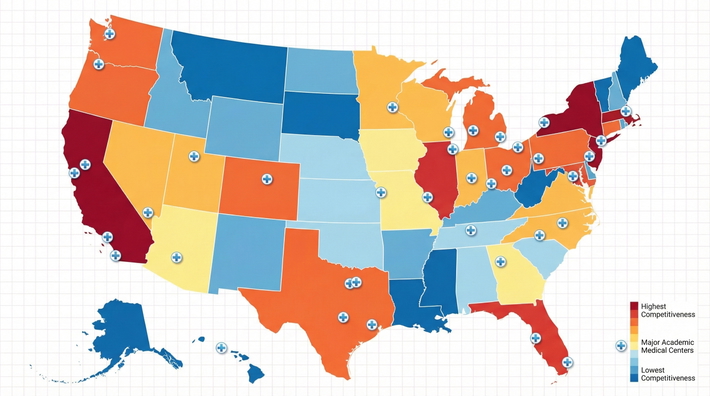
It is November 10th. You have 9 interview invites, 4 of them in a region you never thought you would actually live in, and the city you swore was “top priority” has not emailed you once. Your group chat is full of “Should I cancel this?” and “Maybe I should pivot to the Midwest?” You are not alone. This is exactly the point in the season when regional preferences stop being theoretical and start being dictated by who actually wants you.
Let’s walk through November to January, step by step, and rebuild your regional priorities around reality instead of fantasy.
Early November (Nov 1–15): Stop and Take Inventory
At this point you should stop reacting to every new email and do a hard, structured status check.
Week 1 of November: Build a Regional Snapshot
Take one hour. No phone. Just you, your calendar, and a spreadsheet.
At this point you should:
List every program and region
- Column A: Program name
- Column B: City
- Column C: Region (e.g., Northeast, Mid-Atlantic, Southeast, Midwest, Mountain West, West Coast, Texas, etc.)
- Column D: Interview status (Invite / Rejected / Silent)
- Column E: Interview date (if scheduled)
- Column F: Personal priority (High / Medium / Low – based on your gut before the season started)
Quantify where you actually have traction
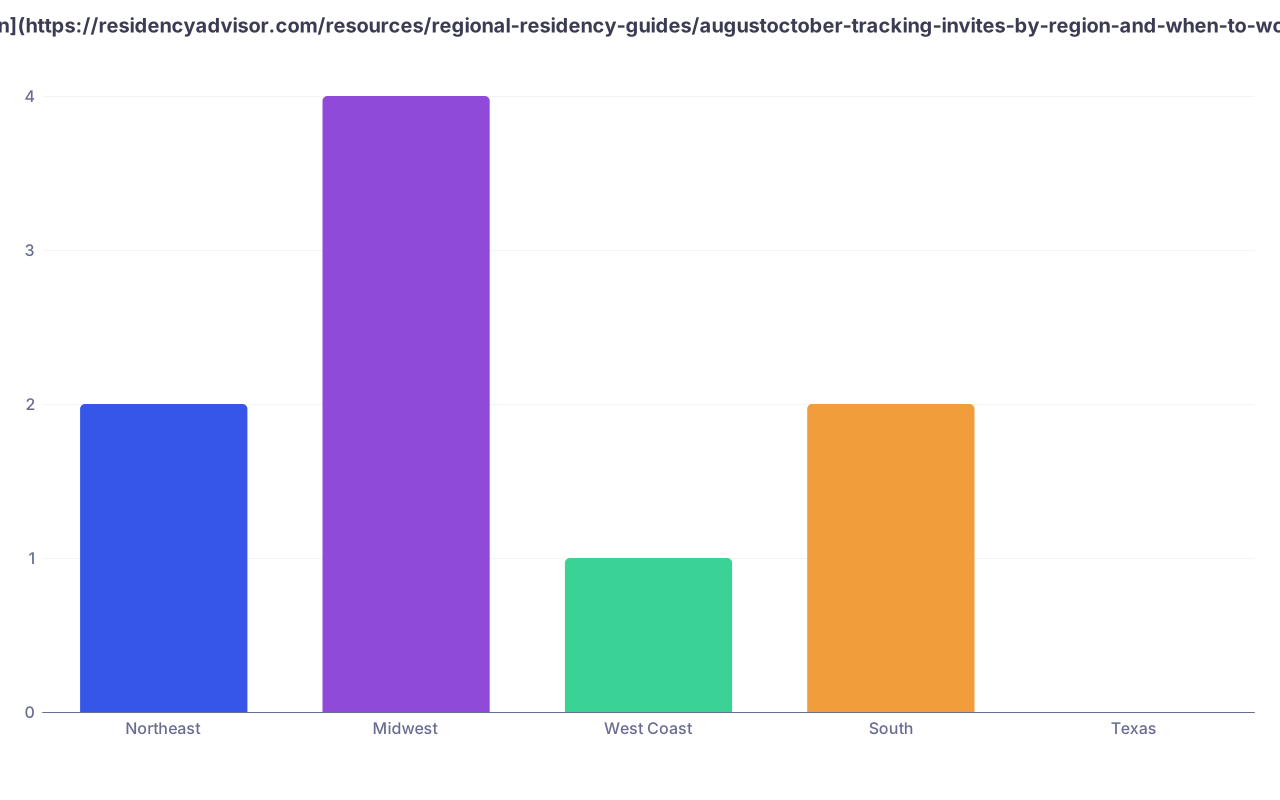
| Category | Value |
|---|---|
| Northeast | 2 |
| Midwest | 4 |
| West Coast | 1 |
| South | 2 |
| Texas | 0 |
If your chart looks anything like this, your “top region” might not be where your match probability actually lives.
- Flag your non‑negotiables
- Family care responsibilities requiring proximity
- Partner’s job constraints
- Visa needs (J‑1 vs H‑1B friendly regions / states)
- Cost-of-living limits that are not flexible
Programs that violate these are fantasy, not options.
- Create a “Hard No” and “Hard Yes” list by region
- Hard Yes: You would actually move there, no resentment, no long-term bitterness
- Hard No: You would be actively unhappy and it will show in training
If you are embarrassed to write “I do not want to live in rural anywhere,” then write it anyway. You are not submitting this to NRMP.
Mid November (Nov 15–30): Adjust Your Regional Strategy
By mid November, the first wave of interview offers has largely stabilized. Top-heavy programs may send a second wave, but the general contour of your season is clear.
At this point you should accept that the map you drew in July is outdated.
Step 1: Compare Original vs Current Reality
Make a quick comparison table.
| Region | Original Priority | Current Invites | Realistic Priority Now |
|---|---|---|---|
| Northeast | #1 | 1 | Medium |
| Midwest | #3 | 4 | High |
| West Coast | #2 | 1 | Medium |
| South | #4 | 2 | Medium-High |
| Texas | #5 | 0 | Low |
If your “#3” region is now the only place strongly interested in you, that region just got promoted. Pretending otherwise is how people end up under‑ranked and nervous in February.
Step 2: Reclassify Regions into Tiers
At this point you should define regional tiers based on both desirability and probability.
Tier 1: Core target regions
- You have multiple interviews
- You can see yourself happy there
- You have at least 3–5 programs across that region
Tier 2: Acceptable but not primary
- Limited interviews (1–2)
- You could live there for 3–7 years, not thrilled, not devastated
Tier 3: Keep only if desperate
- You would rank them, but they are bottom of the list
- Geography, climate, family distance, or culture are a poor fit
Do not put a region in Tier 1 if you have zero or one interview there. That is wishful thinking, not planning.
Step 3: Decide on Cancellations (Carefully)
At this point you should begin looking at your calendar with a scalpel.
Questions to ask for each interview outside your preferred regions:
- Does this region now sit in Tier 2 or 3?
- Is this program clearly malignant or has consistent negative reputation?
- Is this date blocking you from accepting a better‑fit program (by region or overall quality)?
If you have:
- Fewer than 10 interviews total: Do not cancel for regional reasons only unless it is truly a hard no.
- 10–14 interviews: You can selectively trim 1–2 that are clear geographic or program mismatches.
- 15+ interviews: You can be more aggressive. But do it methodically, not out of fatigue.
December: Weekly Course Corrections as the Calendar Fills
December is the chaos month. Interviews. Travel (or Zoom fatigue). Programs going radio silent. At this point you should be making small weekly adjustments rather than big emotional swings.
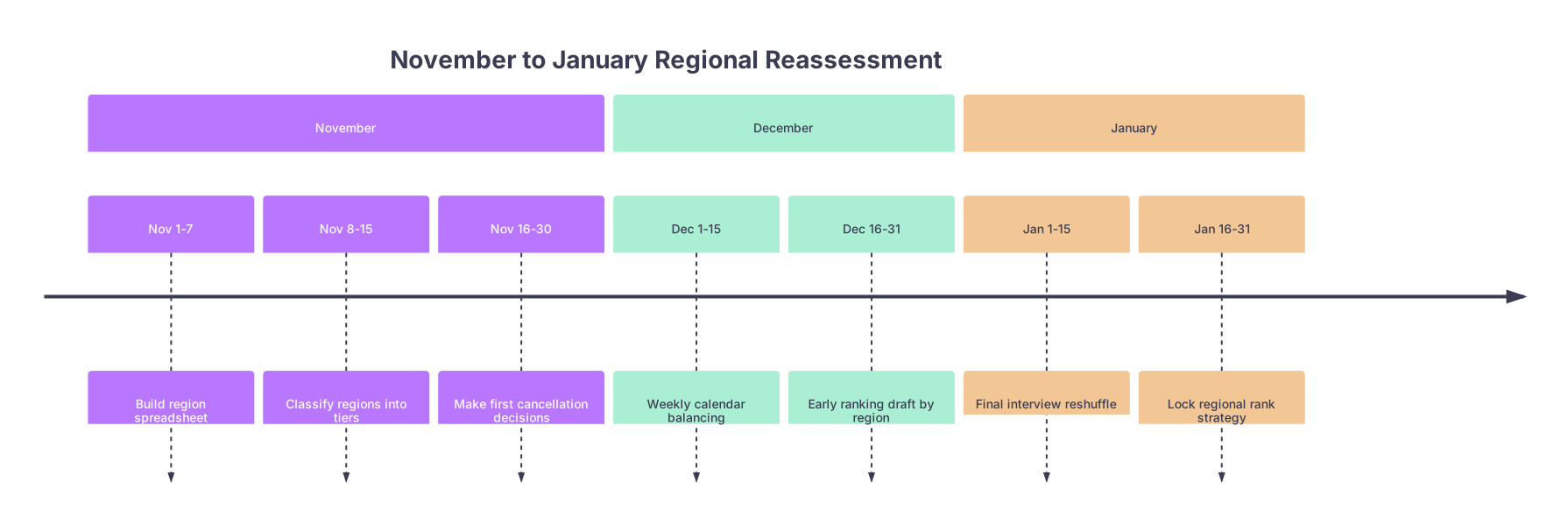
| Period | Event |
|---|---|
| November - Nov 1-7 | Build region spreadsheet |
| November - Nov 8-15 | Classify regions into tiers |
| November - Nov 16-30 | Make first cancellation decisions |
| December - Dec 1-15 | Weekly calendar balancing |
| December - Dec 16-31 | Early ranking draft by region |
| January - Jan 1-15 | Final interview reshuffle |
| January - Jan 16-31 | Lock regional rank strategy |
Early December (Dec 1–15): Weekly “Map Check”
Set a repeating reminder: Sunday night, 30 minutes, regional review.
At this point you should:
Update the spreadsheet
- New invites
- Rejections
- Waitlist/invite‑pending messages
Check regional balance week by week
- Are you inadvertently stacking all Midwest interviews into one insane travel week?
- Are you leaving open dates in regions you claim are important?
Identify “swing regions” The areas you were lukewarm on that are suddenly housing 30–40% of your realistic interviews. Example:
- You wanted New England.
- You have 1 New England invite, 5 Midwest, 3 Southeast.
- Midwest and Southeast just became “swing regions.”
For swing regions, at this point you should start:
- Reading more deeply about specific cities
- Talking to residents who actually live there
- Looking at partner / family job markets
- Evaluating cost of living, housing, and transit realistically (not through stereotypes)
Mid–Late December (Dec 16–31): Draft a Region‑Aware Rank Skeleton
You will not finalize your rank list yet, but you absolutely should not wait until February to think about regional ordering.
At this point you should:
Draft a region-based skeleton rank list Group programs by region in your notes app or spreadsheet. Within each region, rank programs roughly based on:
- Training quality and fit
- Call schedule / culture
- Where alumni end up (fellowship or job)
Compare “life happiness” by region, not just prestige
This is where people make big mistakes. They will put a slightly more famous program in a city they hate above a slightly less known program in a city they would thrive in.
Ask directly:
- Could I see myself living here on my one day off?
- Does this region get me closer to my long‑term life and career goals?
- If I had kids / serious partner / elderly parents, does this location make sense?
- Flag regions where you need one more option
You might realize:
- “If I add even one more interview in the South, this becomes a really strong backup region for me.”
At this point you should:
- Email programs in that region if you have any ties, updates, or genuine interest to share
- Have your mentor send a targeted note for 1–2 key programs, not 15

January: Locking Regional Strategy Before Final Interviews
By January, your invite list is mostly mature. Last-minute surprises still happen, but the backbone is set.
At this point you should stop fantasizing and commit to a regional structure for your rank list.
Early January (Jan 1–15): Final Interview Calendar and Region Positioning
Freeze cancellation decisions by ~January 10
- If you are going to cancel for geography, do it now.
- Late cancellations make you look bad and burn bridges you do not need to burn.
Check for regional over‑representation at the bottom of your calendar Look at the last 4–5 interviews you scheduled. If they are all in a region you already know will rank low, consider whether they add anything.
At this point you should ask:
- Does this region even crack the top half of my likely rank list?
- Could this program realistically climb above other regions I prefer?
If the answer is a clear no, and you already have a safe interview count (12–14+), you can justify trimming.
- Clarify “anchor regions” vs “backup regions”
- Anchor regions: Where you most want to be if everything falls your way
- Backup regions: Where you are very willing to be if anchor regions do not rank you high enough
Write it out explicitly:
- Anchor: Northeast, West Coast
- Backup: Midwest, Southeast
- Avoid if possible but would still rank: Deep rural anywhere
That clarity will make rank list construction in February a 1–2 hour task, not a 3‑day crisis.
Mid–Late January (Jan 16–31): Pre‑Rank Regional Rationalization
At this point you should be doing post‑interview debriefs with regional context in mind.
After each interview, jot down:
- City / region pros and cons
- Where this region slots compared to your other regions
- Would I put this program above a weaker program in a region I love more? Or below a stronger program in a region I like less?
You will notice patterns like:
- “Apparently I like medium‑sized Midwestern cities more than I expected.”
- “I thought I wanted big coastal cities, but I hated the commute stories and housing costs.”
This is exactly the point of mid‑season reassessment. To discover the real you, not the July‑you who romanticized some skyline.
Checklists by Time Point
November Quick Checklist
At this point you should:
- Build a master spreadsheet of programs and regions
- Classify each region into Tier 1 / 2 / 3 based on reality
- Identify hard‑no regions (will not rank)
- Make the first wave of cancellation decisions only if necessary
- Start noticing swing regions getting more of your invites
December Quick Checklist
At this point you should:
- Do weekly 30‑minute regional reviews
- Adjust your sense of “favorite regions” using actual interview data
- Research swing regions seriously (not just stereotypes)
- Draft a rough region‑grouped ranking skeleton
- Ask mentors for targeted outreach in 1–2 strategically important regions
January Quick Checklist
At this point you should:
- Freeze most cancellations by ~Jan 10
- Decide anchor vs backup regions explicitly
- Debrief each interview with regional notes
- Prepare a region‑aware rank list framework before February
- Accept that your final regional distribution reflects both your preferences and who actually wanted you
Common Pitfalls in Mid‑Season Regional Reassessment
You are not the first to go through this. I have watched the same mistakes repeat every cycle.
Clinging to dead regions
- You wanted Pacific Northwest. You have zero interviews there. Stop structuring your life around what will not happen this year.
Over‑penalizing entire regions based on one bad city
- Hated one city in the Midwest? Fine. That does not mean all Midwestern programs are the same. They are not.
Ignoring cost of living until March
- You rank a coastal program highest because of name recognition. Match. Then learn your future call room is nicer than anything you can afford to rent. Run the numbers now.
Canceling too aggressively below 10–12 interviews
- People talk confidently about “geographic fit” and then end up with 8 total interviews and a lot of regret. Err on the side of keeping chances open.
Not thinking about partner/family until rank list time
- If your partner is job‑hunting or your parents are aging, regions are not interchangeable. Loop those realities into the conversation now, not after Match.