It’s late August. You’ve submitted ERAS, your spreadsheet is ready, and you’re refreshing your email way too often. You know interviews are coming, and you also know: if you don’t plan this right, you’re going to waste money, time, and sanity hopping randomly between coasts.
You’re here: the pre-interview window. No invites yet, but this is the calm before the storm. This is exactly when you should be planning multi‑region interview tours—clustered routes that let you hit multiple cities or regions in 1–2 trips instead of 8 separate flights.
I’ll walk you through it chronologically: what to do now (months before), then week-by-week as invites trickle in, and finally day-by-day once you’re on the road.
2–3 Months Before Invites: Set Up Your Travel Strategy Backbone
At this point you should not be booking flights. That’s premature. You should be building the skeleton that will let you book fast and smart once invites hit.
Step 1: Group Your Programs into Logical Regions
Open your list of programs and sort them into clusters. Be aggressive about grouping; this is the foundation of your routes.
Think in terms of:
- Mega-regions (good for week-long tours):
- Northeast corridor (Boston–NYC–Philly–Baltimore–DC)
- Upper Midwest (Chicago–Madison–Milwaukee–Minneapolis)
- Texas triangle (Houston–Dallas–San Antonio–Austin)
- SoCal (San Diego–Orange County–LA)
- Pacific Northwest (Seattle–Portland–maybe Spokane)
- Single-hub regions (one city with many programs):
- NYC metro
- Chicago
- Boston
- Houston
- LA
Make a quick region tag for every program—NE, Midwest, South, West Coast, etc. Then break those down more:
- NE-NYC
- NE-Boston
- MID-Chicago
- SOUTH-Texas
- WEST-California-North / West-California-South
You want to be able to look at your list and instantly see clusters.
Step 2: Identify High-Priority “Anchor” Cities
At this point you should rank your anchors: cities you absolutely expect to visit because you have multiple programs there or they’re top choices.
For example:
- NYC (5 programs) → anchor
- Boston (3 programs) → anchor
- Houston (3 programs) → anchor
- One-off program in Portland → not an anchor, potential add-on
Anchor cities are the start or end points of your multi-region tours. You design routes around them.
Step 3: Decide Your Tour Structure: Few Long Trips vs Many Short Hops
You need a philosophy here. Commit to one of these primary approaches:
| Strategy Type | Description | Best For |
|---|---|---|
| Long Regional Tours | 1–2 week multi-city loops | Many interviews, flexible |
| Short Hops | 1–3 day in-and-out trips | Few interviews, tight schedule |
| Hybrid | 1–2 big tours + some short hops | Mixed density of regions |
My bias: hybrid wins for most applicants.
- 1–2 big tours (e.g., Northeast + Midwest)
- A few surgical in-and-out trips for outliers (like that random top program in Denver or Portland)
Write it down:
- Tour 1: Northeast (early–mid season)
- Tour 2: Midwest/South (mid-season)
- Quick trips: West Coast / others as needed
Step 4: Set Non-Negotiables and Hard Limits
At this point you should decide in advance what you won’t sacrifice. Interview fatigue and FOMO will make you irrational otherwise.
Pick your hard rules:
- Maximum interviews per week (3 in-person is usually the upper limit before you sound dead on day 4)
- No overnight flights before 8 a.m. interviews
- No back-to-back cities that require a 4–6 hour drive late at night
- A budget ceiling per route (e.g., “If this route climbs over $1,200, I drop a program or shift dates.”)
If you do not decide this now, you’ll end up doing something dumb like:
- LA interview → 9 p.m. flight to Chicago → 7 a.m. interview → zombie.
Seen it. It’s not impressive. Programs can tell.
Step 5: Build Your Tools Before You Need Them
You’re not planning flights yet. You’re building the infrastructure:
- One master spreadsheet with:
- Program name
- City
- Region tag
- Relative priority (1–3)
- Airport(s)
- Ideal month/week to visit (rough guess)
- Sign up for:
- One or two airline loyalty programs (Delta/United/AA or Southwest depending on your geography)
- A travel credit card with trip protection (if you’re going that route—many residents I know wish they had)
- Set up:
- Google Flights price alerts on major anchors only (e.g., NYC, Chicago, LA) for flexible date ranges in Nov–Jan
At this point you haven’t spent a dollar, but your system is ready.
4–6 Weeks Before Peak Invite Season: Pre-Build Your Routes
Invites usually start mid-late September and ramp in October/November (depends on specialty). You want route templates ready.
Step 1: Sketch “Ideal” Regional Circuits
Think like a road warrior for a second. For each major region, map a realistic loop:
Example: Northeast Corridor Loop (5–7 days)
- Fly in: Boston (BOS)
- Train: Boston → NYC
- Train: NYC → Philly
- Train: Philly → Baltimore/DC
- Fly out: DCA/BWI/IAD
Example: Texas Loop (4–5 days)
- Fly in: Dallas (DFW or DAL)
- Drive or short flight: Dallas → Houston
- Optional: Houston → San Antonio/Austin
- Fly out: Houston (HOU/IAH) or back via Dallas
You’re not locking dates—just mapping logical city order and typical transit modes (train vs flight vs car).
Step 2: Know Your Regional Transport Reality
At this point you should be honest about transport:
- Northeast: Train is king (Amtrak, regional rail, even buses for NYC–Philly–DC)
- Midwest: Many routes = short flights or drives
- Texas: A mix. Houston–Dallas–San Antonio/Austin is very driveable.
- California: SoCal cluster is drivable. NorCal vs SoCal = fly.
- PNW: Seattle–Portland by train or car, everything else is more spread.
Drop these into your notes: for each region, list primary mode and backup.
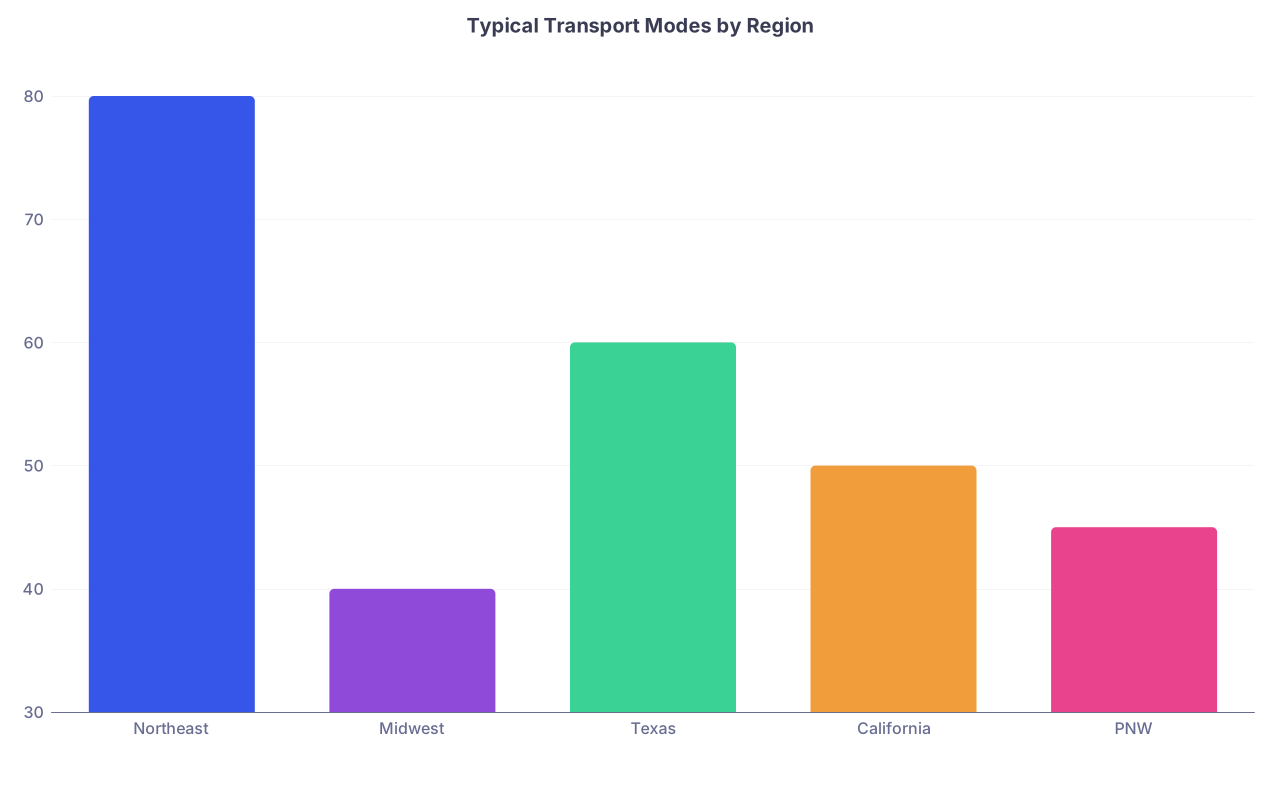
| Category | Value |
|---|---|
| Northeast | 80 |
| Midwest | 40 |
| Texas | 60 |
| California | 50 |
| PNW | 45 |
(Think of those values as “% of routes where ground transport makes sense” — Northeast wins.)
Step 3: Pre-Block Contingency Weeks
Look at your MS4 calendar (or PGY schedule if you’re a reapplicant):
- Identify 2–3 “tour windows” where you can be gone 5–10 days
- Block them mentally (and on your planner) as:
- “NE tour candidate week”
- “Midwest tour candidate week”
- “Float week – fill once invites known”
If your school uses required rotations this time of year, now is when you talk to your dean or clerkship office and signal that you may need:
- “Interview days” flexibility
- Some back-to-back days off clumped in late November–December
Do not wait until your third invite to realize you can’t leave for a week.
When Invites Start (Weeks 1–2): Triage and Slot by Region
First couple weeks of invites? Chaos for most people. You’re not going to be that person.
Step 1: Same-Day Triage Rules
At this point you should process each invite the day it arrives:
- Log it in your spreadsheet:
- Program
- City/region
- Date options
- Priority (upgrade if this is a dream program)
- Decide:
- Is this a must-go (top 1–2 tier)?
- Is this a flex (you’d like to go, but can drop if routing is terrible)?
- Slot the program into:
- A planned regional tour window
- Or a standalone trip bucket if it doesn’t cluster well
I’ve seen people accept dates impulsively, then realize three weeks later they’ve built a travel sudoku that’s impossible. Don’t click anything until you see how it fits your region plan.
Step 2: Anchor Your Tours with Highest Priority Programs
As soon as you have two or more invites in the same region in the same 2–3 week range:
- Choose the highest priority program as your anchor.
- Lock that interview date first.
- Arrange the others before or after it in the same trip window.
Example:
- You get invites for:
- MGH (Boston) – dates: Nov 28, Dec 1, Dec 5
- NYU (NYC) – dates: Nov 29, Dec 4, Dec 7
- Penn (Philly) – dates: Dec 2, Dec 8
- MGH is top choice. You pick Dec 1.
- Build around it:
- Nov 29–30 NYC
- Dec 1 Boston
- Dec 2 Philly
- That’s a clean 4–5 day Northeast run.
Step 3: Use “Soft Commitments” in Your Head Before Confirming
At this point you mentally place each interview on your route before you lock it:
- Sketch: “If I do Chicago on Dec 5, then Madison on Dec 7, can I still do Minneapolis Dec 9?”
- Only when the sequence works (flights, driving, hotel nights) do you actually confirm in each portal.
This is where 30 minutes on Google Flights and Amtrak saves you hundreds of dollars and 12 hours of misery.
Weeks 3–6 of Invites: Finalize and Optimize Your Multi-Region Routes
This is the peak chaos phase—mid October to early December for many. Now we turn your rough routes into lived itineraries.
Step 1: Commit: Book Flights for Regional Tours as Soon as the Spine Is Clear
At this point you should book the spine of each tour:
- Inbound flight to first city
- Outbound flight from last city
- One or two key intra-region flights if ground travel isn’t feasible
Leave small things flexible:
- Train tickets often can be bought later or changed cheaply
- Car rental can be booked with free cancellation
Try to anchor flights when:
- You have 3+ interviews locked in that region
- Or 2 interviews that are both high priority and clearly not moving
Step 2: Layer Lodging and Local Transport
Once flights are done, you build around them.
Hotels vs friends/family vs points
- High-cost cities (NYC, Boston, SF): this is where points or couch-surfing with med school friends pay off
- Cheaper markets (Midwest, South): standard chains with free breakfast help a lot
Stay near:
- Public transit lines if you’re in a train-heavy region (Northeast)
- Or near one central hub if multiple programs are spread in one metro area (e.g., central Chicago)
Local transport:
- If interviews in one city only: usually no car needed.
- If multiple satellite hospitals or neighboring cities: rent a car for that portion only.
Remember: you’re not a tourist. You need enough comfort and predictability to sleep and show up sharp. Multiple 40‑minute subway rides with luggage every day? That’s asking for stress.
7–14 Days Before Each Tour: Tighten the Details
You’ve got the flights and main dates. Now it’s about removing friction.
Day‑7 to Day‑10: Confirm Everything in One Sitting
At this point you should sit down and run a full route check:
- Flights:
- Seat assignments (avoid middle seats before big days if possible)
- Check airport → lodging transport options for late arrivals
- Email each program if:
- There’s a schedule conflict you didn’t catch earlier
- You need minor adjustments (e.g., avoid specific date due to exam)
Print or offline-save:
- All confirmations
- Interview day instructions
- Maps/addresses (yes, phones die)
Day‑3 to Day‑5: Pre-Pack for the Whole Route, Not Single Days
Multi-region tours expose a classic mistake: packing like you’re going on one interview at a time.
Pack assuming:
- Weather shifts (Houston + Minneapolis on same tour? You need layers.)
- Laundry access may be limited. Bring:
- 2–3 shirts/blouses
- 1–2 suits
- Travel-size steamer or wrinkle-release spray
- One small “interview day” kit:
- Folder with copies of CV and personal statement
- Notepad + pen
- Snacks (nuts, bars)
- Ibuprofen, eye drops
You don’t want to be hunting for an iron at midnight in a cheap hotel the night before you meet the PD.
On the Road: Day-by-Day Execution
Now you’re in the actual multi-region tour. Here’s how to survive the day-to-day rhythm.
Night Before Each Interview
At this point you should be in checklist mode, not improvisation:
- Confirm:
- Address and exact start time
- Transit time from your lodging (double it if in an unfamiliar city)
- Lay out:
- Suit, shoes, badge, portfolio
- Quick mental review:
- 3 things you like about the program
- 2 questions you haven’t asked yet
- 1 story that highlights a key strength (teamwork, resilience, leadership)
Set two alarms. If you’ve got early-morning travel to the next city after the interview, set a third.
Morning of Interview
- Eat something predictable (don’t experiment with new breakfast foods on the road).
- Re-check directions.
- Have a backup transit plan: if Uber cancels, what’s next? Walk? Taxi stand?
You’re not trying to be ultra-optimistic here. Assume one thing will go slightly wrong. Build in buffer.
Post-Interview: Same-Day Debrief and Logistics
As soon as you get back to your hotel or the airport:
- Write immediate notes:
- Vibe of residents
- PD’s main points
- Pros/cons that stood out
- Rate it quickly (1–10) while memory is fresh.
Then:
- Confirm your next leg of travel:
- Check-in for flight/train
- Confirm hotel for next city
- Map route from next airport/station to lodging
This keeps the trip from becoming a blur and protects your rank list later.

| Step | Description |
|---|---|
| Step 1 | Arrive in City |
| Step 2 | Check in to Hotel |
| Step 3 | Prep for Interview |
| Step 4 | Interview Day |
| Step 5 | Post Interview Notes |
| Step 6 | Confirm Next Travel |
| Step 7 | Travel to Next City |
Rest Days on Longer Routes
If your tour is more than 5–6 days and 3+ interviews, schedule at least one low-intensity day:
- Sleep in
- Light walk, simple meal
- Quick email catch-up and logistics planning
That day buys you back performance later. You’ll feel the difference in your energy and how sharp you sound.
Handling Late Invites and Route Disruptions
Something will blow up your perfect plan. It always does.
Late Invite in a Region You’ve Already Booked
Scenario: You’ve built a Northeast route Dec 1–6. On Nov 25, a top NYC program invites you… for Dec 8 only.
At this point you should:
- Ask—politely—if there are any alternate dates, explaining you’ll be in town earlier that week. Some programs will flex.
- If no flexibility:
- Compare costs:
- Extend your trip 2 extra days vs.
- Fly home and return again for a separate NYC trip
- Look at your energy budget too, not just money. Extra days on the road have a real cost.
- Compare costs:
If it’s truly a top choice, you may eat the cost. But decide consciously, not impulsively.
Conflicting Offers in Different Regions
You get:
- Houston invite for Dec 5
- Chicago invite for Dec 6
You can’t physically do both unless you want a brutal back-to-back.
Pick using your predefined priority + route logic:
- Which program/region matters more?
- Which trip is easier to rebuild?
You already defined non-negotiables (max interviews/week, no overnight flights). Honor them now.
Quick Reality Check: Common Mistakes to Avoid
I’ve watched people repeat the same errors every cycle. Don’t.
- Booking single-city flights too early before seeing regional patterns
- Trying to do 4–5 interviews in 5 days across multiple cities
- Ignoring weather risk (Denver in January with tight same-day connections? Bold.)
- Not leaving buffer between interview end and evening flights—then panicking when the day runs long
- Forgetting medical school responsibilities entirely and then spending half a tour emailing to clean up the mess
You’re smarter than that. Plan for friction.
2–3 Takeaways to Remember
- Plan by region, not by program. Your default should be multi-city tours anchored on high-priority cities, not random one-off flights.
- Define your limits early. Maximum interviews per week, no red-eyes before big days, and clear “must-go vs flex” tiers will save you from burnout.
- Build the structure before the chaos starts. If you set up regions, routes, and tour windows now, you’ll make fast, rational decisions when invites hit instead of scrambling city by city.