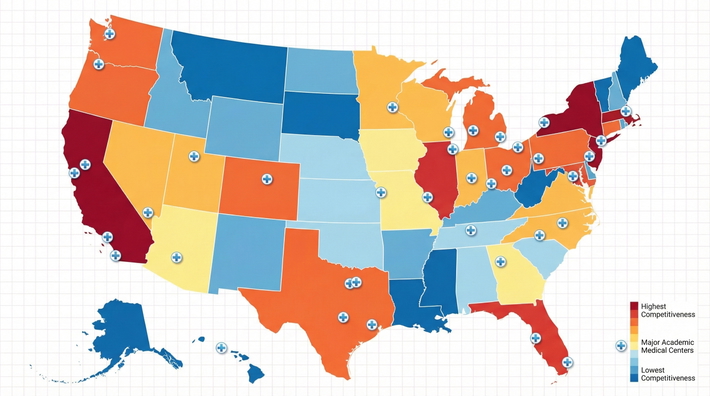
The biggest mistake six months before Match is pretending you still have “all the options.” You don’t. At this point you should be deliberately shifting from a national fantasy list to a regional, reality-based strategy.
You’re not choosing the country anymore. You’re choosing your commute, your call room, your support system. That means timing your pivot from “I’ll go anywhere” to “I’m targeting these 2–3 regions” matters. A lot.
Here’s how to do it, step by step, from six months out to Match Week.
Six Months Before Match: National Net, Regional Skeleton
At six months before Match (roughly September of MS4 for most), ERAS is in, interview season is starting/just about to start, and your fantasy map of the United States needs to grow a spine.
At this point you should:
- Define your true geographic tiers
- Audit your current interview mix
- Quietly start biasing toward regions, not individual programs
Step 1 (Week 1–2): Draw Your Geography Lines
You cannot think clearly about “regional focus” while saying “honestly, I’m flexible.” That phrase has tanked more rank lists than a bad away rotation.
Sit down and build three buckets:
Green Zones – Preferred Regions (2–3 max)
- Places you’d like to live: e.g., “Mid-Atlantic + Northeast corridor” or “West Coast + Mountain West.”
- Where you already have:
- Family or partner
- Strong professional connections
- Real lifestyle preference (weather, cost of living, culture)
Yellow Zones – Acceptable but not ideal
- Places you can tolerate for 3–7 years but wouldn’t choose if all else were equal.
- You’re open, but you’re not building your life there long-term.
Red Zones – Realistically out
- Places you’ll only go if the alternative is SOAP or going unmatched.
- Be honest. “I guess I could” is not enough for a 5-year surgery residency.
Put it on paper. Literally. I’ve seen students print a US map and color-code states—green, yellow, red. It forces decisions.

Step 2 (Week 2–3): Compare Your Interview Pool to Your Map
Now overlay reality on your preference.
Create a simple table of where interviews currently are:
| Region | Number of Invites | Green/Yellow/Red |
|---|---|---|
| Northeast | 5 | Green |
| Midwest | 7 | Yellow |
| South | 3 | Yellow |
| West Coast | 2 | Green |
| Mountain West | 1 | Red |
If your “preferred” regions are under-represented, you don’t panic—but you do adjust your strategy.
At this point you should:
Identify underrepresented green zones
Example: You prefer West Coast, but 80% of your invites are Midwest. That’s a gap.Clarify which yellow-zone regions you’re actually okay with ranking high
You might discover “I keep calling the Midwest ‘yellow’ but honestly, I’d be fine there for internal medicine.”Flag any red-zone interviews that you know you won’t rank high
You don’t cancel yet. But keep them mentally in the “safety” column.
Five Months Before Match: Subtle Pivot in Interview Strategy
Five months before Match (late October–November for most), interview invites are flowing. This is where national vs regional decision-making gets real.
At this point you should be sharpening how you schedule, not just where you’re interviewing.
Week 1–2: Start Prioritizing Interviews by Region + Realistic Fit
You’re not ranking yet, but you are silently ranking how much energy you’ll spend on each.
Build a priority list using three factors:
- Region alignment (Green/Yellow/Red)
- Program fit (your competitiveness vs their norms)
- Life logistics (support system, partner, kids, cost of moving)
If you’re competitive (e.g., Step 2 CK 250+ applying categorical IM), you can afford a slightly more aggressive regional focus. If you’re in a leaner application situation (average scores, no home program, or applying to something like orthopedics or derm), you keep a wider geographic safety net.
Here’s what a brutally honest sorting might look like:
- Tier 1: Green zone + realistic match chance
- Tier 2: Yellow zone + strong program fit
- Tier 3: Green zone + reach programs
- Tier 4: Red zone + realistic match chance
- Tier 5: Red zone + reach programs
Your interview energy should follow that order.
Week 2–4: Make Scheduling Decisions That Signal Priorities
This is where people quietly sabotage themselves: they say they want West Coast, but their early interviews are all East Coast, and they cancel the only San Diego date because of “travel.”
At this point you should:
Front-load Tier 1 and Tier 2 interviews
The places you’re most likely to rank high should see you when you’re fresh, not post-20 Zoom marathons.Keep Tier 4 as insurance, but don’t bend your life around them
Take them. Prepare. But do not kill yourself rearranging a high-priority regional interview for a red-zone backup.Be conservative about early cancellations
Unless you’re clearly overbooked (e.g., 25+ interviews in a less competitive specialty), do not start slashing interviews just because you’re tired. People do this in November and regret it in February.
Four Months Before Match: Data Check & Regional Reality
Four months before Match (roughly December), your interview landscape is mostly defined. A few late invites might trickle in, but your “national net” is visible.
At this point you should tighten your regional lens using hard numbers.
Week 1: Count Interviews by Region and Competitiveness
You’re past vibes. You need counts.
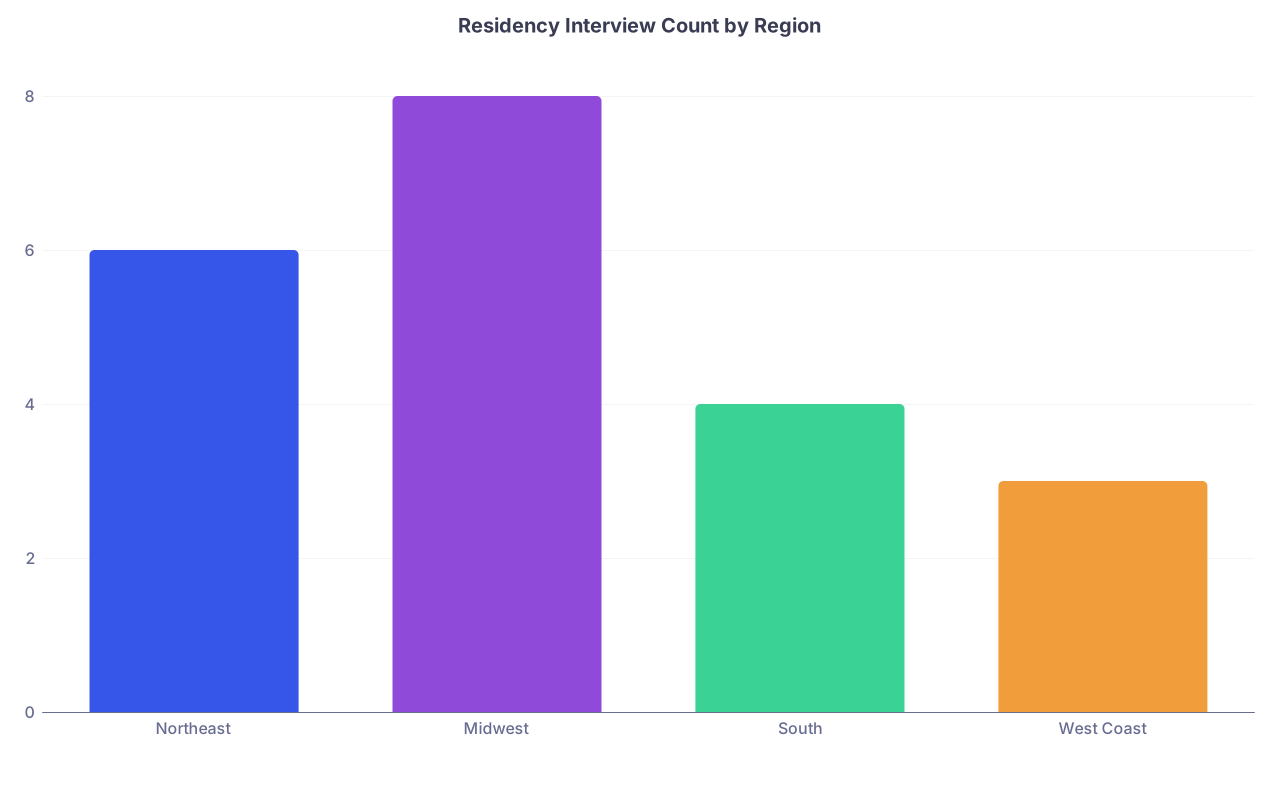
| Category | Value |
|---|---|
| Northeast | 6 |
| Midwest | 8 |
| South | 4 |
| West Coast | 3 |
Ask yourself:
- Do I have at least 8–10 solid interviews total in any specialty that’s moderately competitive or above?
- Do I have 3–5 interviews in my true green zone? If yes, you can afford to lean harder into that region on your rank list. If no, your rank list will not be region-dominant, no matter what you say now.
Week 2–3: Adjust Future Cancellations Using Region Logic
This is where you can start responsibly pruning. The key word is responsible.
At this point you should:
Consider canceling:
- Far red-zone programs where:
- You have >14–16 total interviews in a non-ultra-competitive specialty, and
- You have several interviews already in green/yellow zones
- Programs that are obvious bad fit (malignant reputation, terrible vibe, no support system nearby)
- Far red-zone programs where:
Keep (even if they’re not ideal):
- Solid mid-tier programs in yellow or red zones if your total interview count is under 12 for moderately competitive specialties or under 8 for very competitive ones
This is where your regional ego must shut up and your survival instinct must speak. I’ve watched people cancel “backup” Midwest IM interviews because they swore they’d only live on the coasts—then end up in SOAP.
Three Months Before Match: Regional Storytelling in Interviews
Three months before Match (often January), you’re mid–to late–interview season. This is when national vs regional focus is no longer just internal; it shows up in how you talk to programs.
At this point you should refine your narrative about geography.
Week 1: Decide Your Primary Narrative for Each Region
Programs do not like hearing “I’ll go anywhere.” It sounds desperate and unserious. They want to know:
- Why this region?
- For how long?
- With what connections?
Build 2–3 regional narratives you can deploy authentically:
Example: Northeast narrative
- “I grew up in New Jersey, did undergrad in Boston, and my family is still in Philly. I see myself building my career in this corridor long term.”
Example: Midwest narrative
- “Most of my clinical training has been in the Midwest, and I’ve really come to value the patient population and the collegial feel between programs here.”
Example: West Coast narrative
- “My partner is based in Seattle in tech, and our long-term plan is to settle on the West Coast, ideally within a quick flight or drive.”
You do not need one master national story. You need region-specific reasons that don’t sound fake.
Week 2–4: Use Region Signals Wisely (Without Lying)
At this point you should start layering in subtle regional commitment signals:
Mention family ties and concrete cities:
“My brother is in Portland and my parents are in the Bay Area, so this region is where I see myself long term.”Reference prior training in the region:
“My sub-I at [Regional Program] really sold me on training in the Southeast.”Show some understanding of local realities:
Weather, patient population, housing, commute styles. Not tourist fluff.
Do not say “this is my number one” to three different programs in the same city. People talk. And yes, they remember.
Two Months Before Match: Starting the Regional Rank Framework
Two months before Match (often early February), interviews are wrapping up, and you’re approaching rank list submission. This is where the actual narrowing from national to regional happens.
At this point you should be building a regional-first draft rank list, before obsessing over individual program hierarchies.
Week 1: Build a Regional Block Structure
Start with blocks, not line items. Think in clumps:
- Top block: Programs in your green zones that you’d be genuinely happy at
- Middle block: Strong yellow-zone programs & slightly weaker green-zone programs
- Safety block: Solid but less exciting programs, often in yellow/red zones where you can survive 3–5 years
Write them out without numbers first.
Then ask:
- “If I end up at the bottom of block 1, am I still content?”
- “If I end up at the top of block 3, can I live with that outcome?”
If the honest answers are “yes” and “yes,” your blocks are reasonable. If not, you reshuffle. Now.
Week 2–3: Translate Blocks Into a Draft Rank Order
Now you turn blocks into numbers.
At this point you should:
Take your green-zone favorites and place them in strict order based on:
- Training quality
- Culture
- Lifestyle
- Support system
Then interleave best yellow-zone programs where they truly belong.
Do not mechanically put all green before all yellow. A phenomenal yellow-zone program in a great city may outrank a marginal green-zone program in a miserable town.Finally, place red-zone programs you’re actually willing to attend at the bottom, in true order of preference.
If you would rather go unmatched than go there, do not rank it. Be honest with yourself.
One Month Before Match: Final Regional Reality Check
One month before Match (late February), NRMP rank lists are due. This is the point of no return.
At this point you should do one focused regional check before you click submit.
Week 1: Ask Three Brutal Questions
If I match at my #10 (or #15, or #20), can I build a life there for 3–7 years?
Look at that city, not the logo. Imagine your actual life there.If I match in a less-preferred region but at a clearly stronger program, will I resent it? Or accept it as a good trade?
For competitive specialties, high-caliber training in a “meh” city can open doors later. Make that choice consciously.Have I overweighted region over program quality… or the reverse?
The classic mistakes:- Putting a very mediocre program in favorite city #1 just because of the zip code.
- Burying a very solid program in a yellow-zone city that you’d actually be okay living in.
Week 2: Final Edits and Submission
You’re not re-building the list now; you’re fine-tuning.
At this point you should:
- Make at most one or two small swaps after deep thought
- Stop asking 10 different people for their opinion; it just scrambles your regional priorities
- Submit and walk away
No last-minute panic reshuffles based on rumors or anonymous forums. That’s how terrible decisions happen.
Match Week: Regional Outcome Autopsy (Quietly)
Match Week arrives. Whatever happened, use it as data for how you think about geography going forward—fellowship, job search, partner moves.
At this point you should:
If you matched in a preferred region
- Notice what worked: earlier regional focus? Strong ties? Prior rotations? That pattern will matter for fellowship/hospital jobs later.
If you matched in a neutral or less-preferred region
- Immediately start working your network within that region.
- Identify cities/hospitals nearby that could be long-term steps after residency.
If you didn’t match
- Geography becomes secondary to getting a position in SOAP.
- After the dust settles, dissect honestly:
- Did you over-constrict your region too early?
- Did you cancel too many out-of-region safeties?
- Did your narrative not match your actual rank strategy?
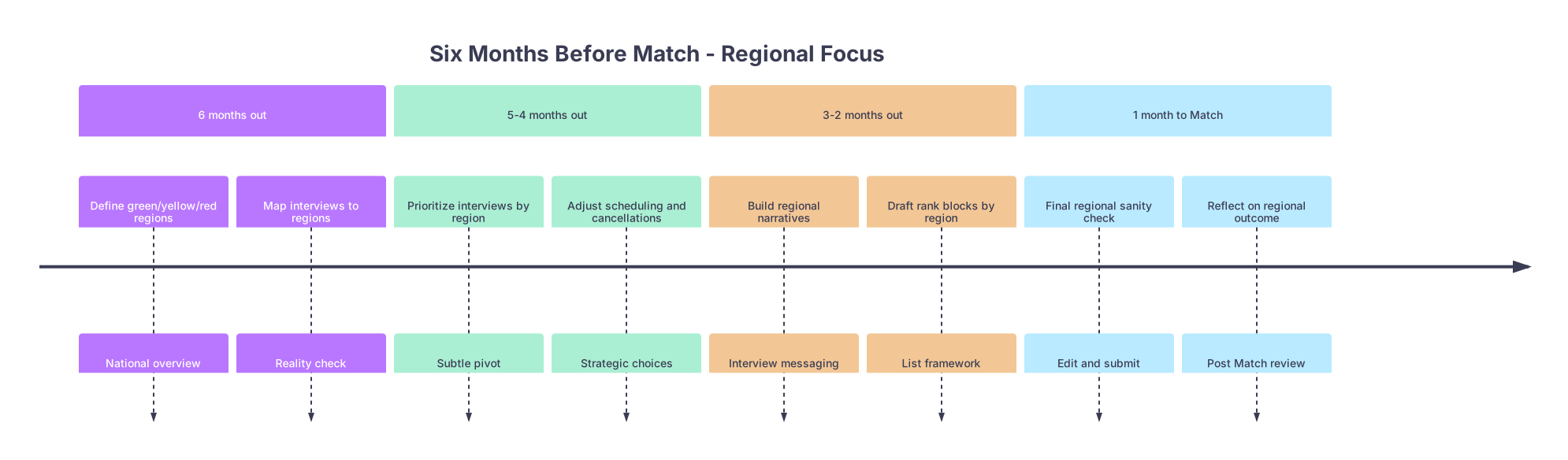
| Period | Event |
|---|---|
| 6 months out - Define green/yellow/red regions | National overview |
| 6 months out - Map interviews to regions | Reality check |
| 5-4 months out - Prioritize interviews by region | Subtle pivot |
| 5-4 months out - Adjust scheduling and cancellations | Strategic choices |
| 3-2 months out - Build regional narratives | Interview messaging |
| 3-2 months out - Draft rank blocks by region | List framework |
| 1 month to Match - Final regional sanity check | Edit and submit |
| 1 month to Match - Reflect on regional outcome | Post Match review |
Quick Visual: When to Shift from National to Regional
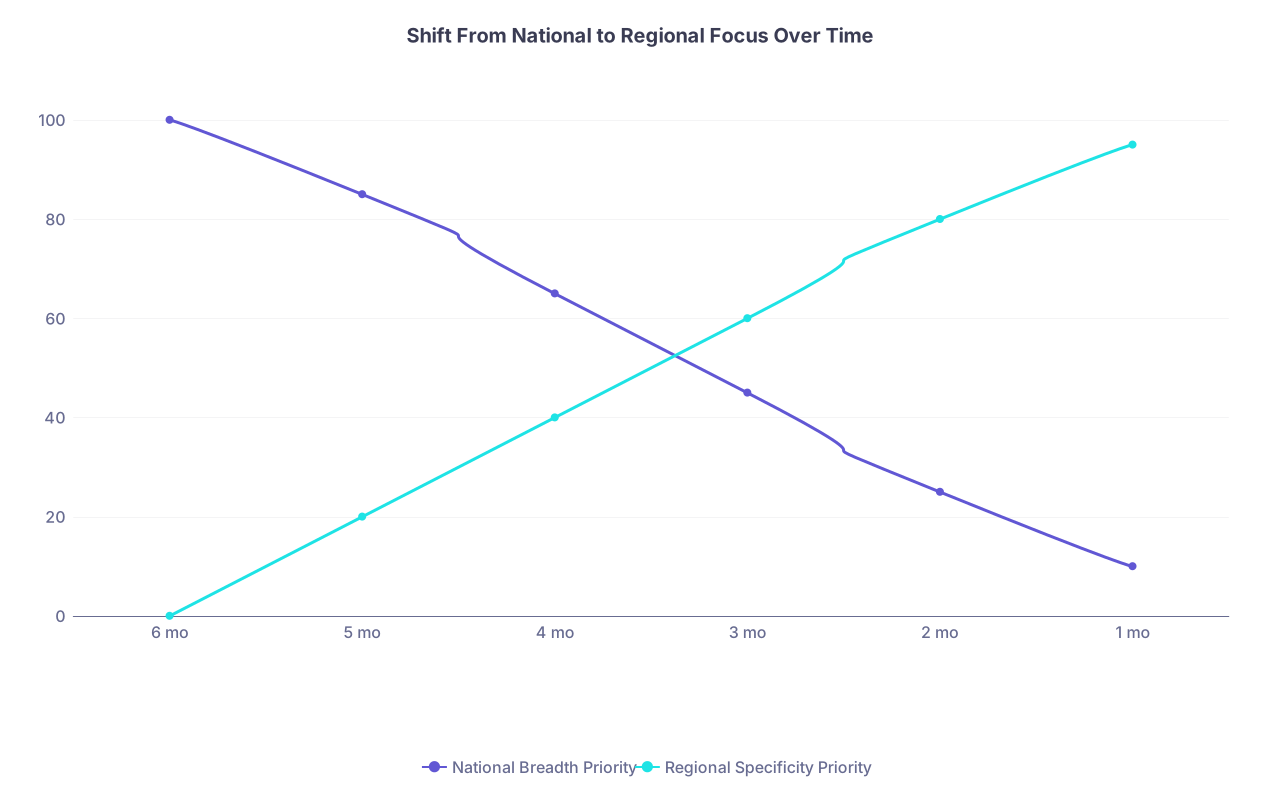
| Category | National Breadth Priority | Regional Specificity Priority |
|---|---|---|
| 6 mo | 100 | 0 |
| 5 mo | 85 | 20 |
| 4 mo | 65 | 40 |
| 3 mo | 45 | 60 |
| 2 mo | 25 | 80 |
| 1 mo | 10 | 95 |
Final Takeaways
- Six months before Match, you should stop pretending you’re “open to anywhere” and draw real green/yellow/red regional lines—then compare your interview pool to that map.
- By 3–2 months before Match, you should be using region both in how you present yourself to programs and how you structure your rank list blocks, with honest tradeoffs between training quality and location.
- One month before Match, the only changes you should make are small, deliberate tweaks grounded in whether you can actually live in your lower-ranked regions for several years—not panicked, last-minute national reshuffles.