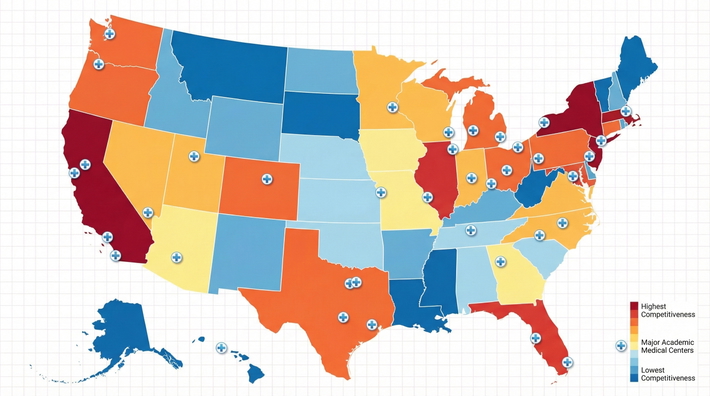
It’s Match Day +1. You know where you’re going. Let’s say you’re at NYU for med school and just matched in Seattle. 2,800 miles. New city. New system. You start residency in about three months, and right now you have…nothing figured out.
This is where people either calmly execute or spiral into last‑minute chaos. Your call. I’ll walk you month by month, then week by week, then (when it really matters) day by day so you don’t end up signing a garbage lease or driving a U‑Haul through the Rockies with no sleep and an orientation at 7 a.m.
Big Picture: Cross‑Country Move Timeline
Here’s the skeleton of what you’re about to do.
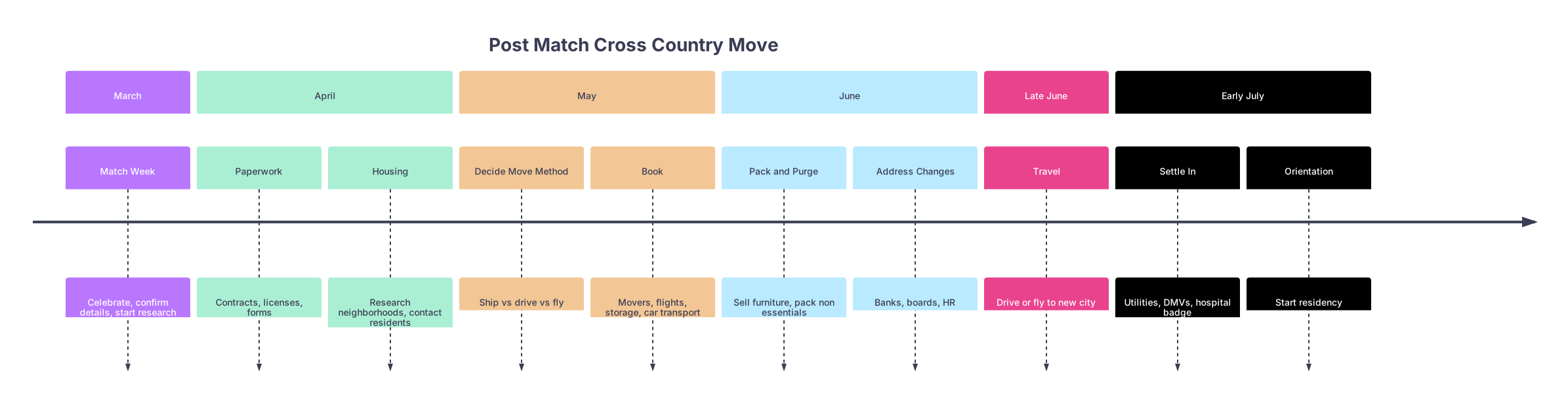
| Period | Event |
|---|---|
| March - Match Week | Celebrate, confirm details, start research |
| April - Paperwork | Contracts, licenses, forms |
| April - Housing | Research neighborhoods, contact residents |
| May - Decide Move Method | Ship vs drive vs fly |
| May - Book | Movers, flights, storage, car transport |
| June - Pack and Purge | Sell furniture, pack non essentials |
| June - Address Changes | Banks, boards, HR |
| Late June - Travel | Drive or fly to new city |
| Early July - Settle In | Utilities, DMVs, hospital badge |
| Early July - Orientation | Start residency |
Now we’ll fill in the blanks.
Match Week to March 31: Reality + Recon
At this point you should not be signing a lease or booking movers. You don’t know enough yet. You should be doing this:
Days 0–7 after Match
Confirm the basics with your program Email or check the welcome packet for:
- Official start date
- Required orientation dates
- Expected “on site by” date
- Any housing help or negotiated discounts
You’ll often see: orientation last week of June or first week of July, first real shifts July 1.
Get the contact info that matters You want:
- Program coordinator (goldmine of logistics knowledge)
- Chief residents
- A current PGY‑1 who also moved for residency
Your email can be blunt: “I’m moving from Boston to San Diego; when do I realistically need to be in town and where do most interns live?”
Rough‑cut your timeline Use your actual dates:
- Orientation date
- Start of benefits
- Lease end for your current place
- Graduation date
Then set a target: “I will be physically living in my new city by [date].” For cross‑country, I like 7–10 days before orientation. Less than 5 days is asking for pain.
Start geographic triage – where can you live? At this point you should:
- Map the hospital
- Draw a 30‑minute commute radius
- Cross‑check with:
- Public transit lines (if a thing in that city)
- Parking availability and cost
- Crime maps
- Resident tips
Ask residents directly:
- “If you had to be at the hospital at 5 a.m., would you feel safe walking from your apartment?”
- “Would you live there again as an intern?”
Money reality check Residency moving cross‑country isn’t cheap. Get a rough ballpark:
| Item | Typical Range (USD) |
|---|---|
| Professional movers | 3,000 – 8,000 |
| Rental truck + gas | 1,000 – 3,000 |
| Car shipping | 900 – 1,800 |
| One-way flight | 250 – 700 |
| Initial housing deposits | 2,000 – 5,000 |
Then ask GME or HR directly:
“Is there a relocation stipend?”
I’ve seen residents leave $1,000–3,000 on the table because they never asked.
April: Paperwork and Housing Intel (Not Commitments Yet)
By April 1, you should have your start date, orientation schedule, and rough arrival window nailed down. Next comes paperwork and serious reconnaissance.
Early April (Weeks 1–2)
At this point you should:
Lock in the administrative stuff When HR sends the tsunami of forms, prioritize:
- Contract / appointment letter signed and returned
- Background check, drug screen, vaccines / titers
- Licensing/permit paperwork (state license, training license, DEA timeline)
- Credentialing forms
Why this matters for the move: start date is sometimes conditional on completed credentialing. If that slides, your benefits and your plan can get messy.
Clarify work schedule expectations Ask:
- “Is there any mandatory in‑person stuff before official orientation?”
- “Are there night shifts in week 1?”
- “Any off‑site rotations during PGY‑1 (VA hospital, children’s hospital, etc.) that affect where I should live?”
Serious housing research Now you start to narrow neighborhoods. Look at:
- Commute in rush hour vs 3 a.m.
- Average rent for studio / 1BR / 2BR
- Parking cost (monthly garage vs street vs nothing)
- Safety after dark
- Noise levels (living over a bar + 24‑hour call = terrible)
Use resident‑specific intel:
- Ask for a map screenshot with circles: “Where do most interns live?”
- Ask: “Which complexes are basically intern dorms?” (often a couple of buildings stand out)
If you’re moving to a place like Durham, Ann Arbor, Madison: car is basically mandatory.
Manhattan, SF, Chicago core: car is optional, often a burden.Decide: car or no car Cross‑country with a car gives you three options:
- Drive it yourself
- Ship it
- Sell it and restart in new city
Quick comparison:
| Option | Pros | Cons |
|---|---|---|
| Drive | Control, extra cargo space | Time, fatigue, risk |
| Ship | Saves time, less wear | Expensive, schedule headaches |
| Sell & rebuy | May save money in some cities | Hassle, timing, no car gap |
If your new city has expensive parking and good transit, don’t be romantic about the car. Sell it.
Late April (Weeks 3–4)
At this point you should:
Define your housing constraints Hard lines:
- Max rent (base + parking)
- Minimum lease term you’ll accept (some places push 18 months)
- Commute cap in minutes (both driving and transit if relevant)
- Non‑negotiables: in‑unit laundry, safe street parking, etc.
Decide housing type You’re basically choosing between:
- Large complex with short‑term leases
- Small private landlord
- Roommate situation
- Hospital‑affiliated housing (if any)
New city + new job + call schedule? My bias: large, boring, well‑run complex for year one, if you can afford it. You need reliability more than character.
Start tentative viewing appointments (virtual) Ask leasing offices for:
- Live video walk‑throughs
- Floorplans with square footage
- Total move‑in costs line‑itemed
May: Commitments – Movers, Housing, Travel
By May 1, you should have serious shortlists:
- 2–3 housing options you’d sign tomorrow
- A preferred move method (movers vs truck vs ship/fly)
First Half of May (Weeks 1–2)
This is decision time.
- Choose your moving method
For a cross‑country residency move, these are the main plays:
Professional full‑service movers
- Good if: you have real furniture, no time, some financial cushion
- Bad if: your stuff is cheap IKEA and your budget is tight
Rental truck (U‑Haul/Penske) + self drive
- Good if: you’re young, have help, want control
- Bad if: you’re solo, hate driving, or moving in summer across mountains/desert
Container service (PODS, U‑Pack)
- Good middle ground: you pack, they move. Often nicest cost/control compromise.
Ship car, fly with luggage
- Good if: you don’t own much and will buy basics there
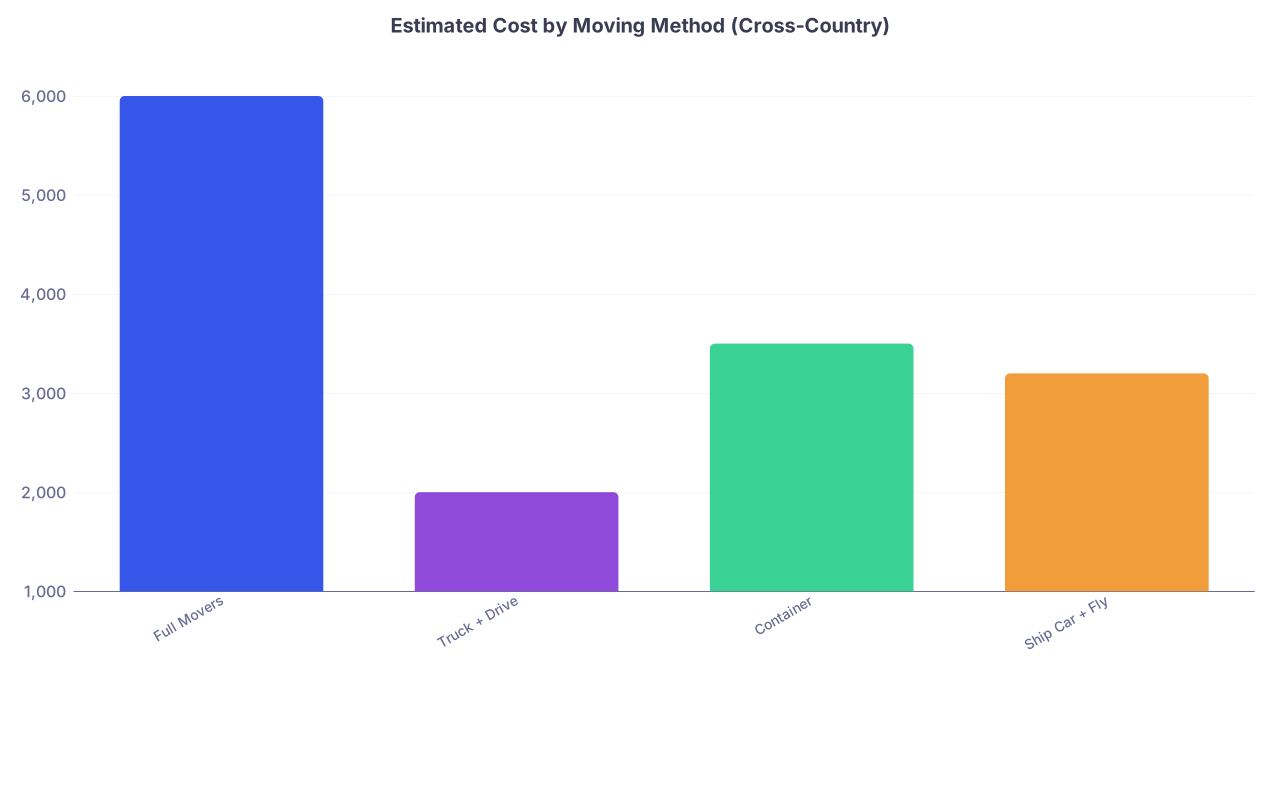
| Category | Value |
|---|---|
| Full Movers | 6000 |
| Truck + Drive | 2000 |
| Container | 3500 |
| Ship Car + Fly | 3200 |
Whatever you pick, book it by mid‑May for a late June move. Summer fills up. Bad pricing and no availability are what you get if you wait.
- Lock your housing by mid‑ to late May
Target: lease signed 4–6 weeks before move‑in.
At this point you should:
- Narrow to one or two buildings
- Confirm:
- Available move‑in dates
- Earliest you can get keys
- Parking details
- Whether they require you physically present to sign or accept delivery (annoying but common)
- Ask if you can:
- Start the lease 3–5 days before you arrive so you can have furniture delivered early
- Arrange “key pickup by proxy” if your movers will arrive before you
If you’re moving from a place with a rigid lease end (big city) to a new lease start, expect and plan for overlap. One or two weeks of “double rent” hurts, but moving straight from last day of old lease to first day of orientation is worse.
- Coordinate move dates
Line these up:
- Old lease end date
- New lease start date
- Move‑out day (truck loading or movers)
- Travel days
- Move‑in day (unloading)
- Orientation
A sane template for a July 1 start:
- New lease starts: June 20
- Load truck / movers: June 21
- Travel/driving days: June 22–25
- Unload/move‑in: June 26
- Buffer/set‑up days: June 27–29
- Orientation: June 30
- Start real work: July 1
Yes, that’s a lot of days. You’ll use them.
Second Half of May (Weeks 3–4)
At this point you should:
Book travel
- If driving: map realistic daily distances (400–600 miles/day, not 900)
- Reserve hotels on your route (safe areas, parking for truck)
- If flying: choose a flight that still gives you 3–5 days before orientation, not same‑week arrival
Start the purge Decide honestly:
- What will cost more to move than to replace?
- What won’t fit in a likely smaller apartment?
Typical casualties:
- Cheap couches and bulky dressers
- Old mattresses (just don’t move them across the country)
- Half your kitchen junk
List items for sale. Set a hard “if not sold by [date], I donate/trash it” rule. No extended emotional debates with your furniture.
June: Execution – Packing, Address Changes, Final Admin
By June 1, the crucial pieces should be booked:
- Lease signed
- Move method reserved
- Travel dates chosen
Now the grind: packing and admin.
Early June (Weeks 1–2)
At this point you should:
Start real packing Week 1:
- Box books, off‑season clothes, decor
- Sort documents (keep med school transcripts, vaccination records, Match/contact paperwork, anything licensing related)
Week 2:
- Pack infrequently used kitchen items
- Label boxes by room and priority (e.g., “Kitchen – daily use,” “Bedroom – linens”)
Create a “critical documents and supplies” kit This travels with you, not with movers:
- Passport, driver’s license, Social Security card
- Med school diploma or certification letter
- Licensing and credentialing paperwork copies
- Immunization record and TB results
- Contracts, offer letters, HR emails printed or saved offline
- Basic scrubs and one set of business casual clothes for orientation
- A few days of meds and toiletries
Put all of this in one backpack or carry‑on. If all your other stuff falls off a truck in Nebraska, you can still show up to orientation.
Address changes (start them now) Hit in this order:
- USPS mail forwarding (start date = move‑in or close)
- Banks and credit cards
- State medical board / licensing bodies
- NRMP, ERAS, AMA, USMLE
- Insurance providers
- Any subscription services
Don’t change your driver’s license address yet—that’s a DMV job in your new state.
Confirm all bookings
- Movers or truck: confirm date, time, address
- car shipper: pickup window and drop location
- Landlord: move‑in date, keys, elevator reservations if needed
- Orientation schedule: time/place/parking
Mid June (Weeks 3–3.5)
At this point you should be closing out your old life:
Lock in move‑out logistics
- Arrange cleaning (DIY or hire)
- Plan final walk‑through with current landlord
- Document apartment condition with photos
Finish selling / donating
- Last Facebook Marketplace/Craigslist pickups
- Everything unsold by now goes to:
- Goodwill / local charity
- Dumpster Do not cling. You will regret it on loading day.
Pack the remainder except true daily essentials Keep out:
- 5–7 days of clothes
- Toiletries
- Laptop and chargers
- One set of scrubs
- Bedding for your last few nights
Late June: The Actual Move (Day-by-Day)
Now we zoom in.
T‑3 to T‑2 Days Before Loading
At this point you should:
- Defrost freezer
- Take apart furniture (beds, desks)
- Pack “open first” boxes:
- Bedding and towels
- Shower curtain and hooks
- Few plates/cups/utensils
- Coffee setup if you’re that person
Mark those boxes clearly: “OPEN FIRST – BEDROOM” etc.
Loading Day (T‑0)
Whether it’s movers or a truck:
- Walk through each room and closet systematically before the truck leaves
- Photograph the truck license plate and any inventory list
- Tip the movers if they’re not terrible
- Keep your vital documents, backpack, and one small suitcase completely separate
If you’re driving out same day, don’t plan an eight‑hour drive. Do a short leg or stay one last night.
Travel Days (T+1, T+2, …)
Driving cross‑country:
- Cap daily driving at 8–10 hours max
- Book hotels with decent reviews and safe, well‑lit parking lots
- Keep a separate small bag with everything you need for overnights—don’t repack the trunk daily
Flying:
- Put documents, one set of orientation clothes, and basic toiletries in carry‑on
- Assume your checked bag could disappear for 48 hours
Arrival and Move‑In: New City, New Chaos
Move‑In Day
At this point you should:
Get keys and confirm unit condition
- Walk through yourself before any boxes come in
- Photograph existing damage
- Check:
- Locks work
- Hot water
- AC/heat
- Appliances turn on
Direct your stuff intelligently Call out:
- “Those three boxes to the bedroom.”
- “This stack is kitchen.” Minimizes chaos later.
Set up sleep first I don’t care if the plates are in the oven for a week. You must have:
- Bed or mattress set up
- Sheets, pillows, blanket
- Curtains or something to block light if you’re day‑sleeping soon
Unpack the “open first” boxes Priorities:
- Bathroom: shower curtain, towels, toilet paper, basic toiletries
- Kitchen basics: one pan, one pot, coffee/tea, plates, utensils
First 3–5 Days in New City
Use this window strategically. At this point you should:
Do the bureaucratic sprint
- DMV: new driver’s license and (if required) registration
- Hospital badging office (if open early)
- Employee health if they allow walk‑ins before official date
Walk your commute Literally do:
- Home → hospital at “worst case” time (5 a.m. or 6 p.m.)
- Hospital → home late (10 p.m.–midnight)
Learn:
- Where to park
- Which entrance is actually open at odd hours
- ID badge access points
- Where call rooms usually are (ask a resident)
Stock the apartment like a human, not a college student
- Groceries for quick meals and snacks you can eat at 2 a.m.
- Cleaning basics and laundry detergent
- Small emergency kit: Tylenol/ibuprofen, band‑aids, etc.
Scout your life radius In one afternoon:
- Nearest 24‑hour pharmacy
- Cheap takeout that’s open late and not total garbage
- Closest gas station
- Gym, if you’re that ambitious
Orientation Week: The Last Timing Trap
Orientation often feels fake, like “we’re not working yet.” Trap. Your schedule is already real.
At this point you should:
Protect your evenings and nights Don’t stack:
- Furniture deliveries
- Utility appointments
- Long IKEA runs
during orientation week if you can avoid it. You’ll be getting your login credentials, EMR training, call schedules. You’ll be tired anyway.
Finish remaining admin
- Final HR paperwork
- Direct deposit verification
- Parking permits
- Scrub access set up
If something in this bucket breaks, you’re suddenly paying $35/day to park and washing your one set of scrubs every night.
Make your apartment “post‑call ready” Before you start nights:
- Blackout curtains or good eye mask
- Earplugs or white noise
- Easy food in the fridge/freezer (not just cereal and protein bars)
Quick Sample Timeline: Match to Start
Here’s how a clean cross‑country move usually lays out if you start July 1.
| Timeframe | Primary Focus |
|---|---|
| Match week | Confirm dates, start research |
| Late March | Contact residents, learn neighborhoods |
| April | Paperwork, narrow housing options |
| Early May | Book movers/truck, sign lease |
| Late May | Book travel, start selling/purging |
| Early June | Pack non-essentials, address changes |
| Mid June | Final packing, move-out prep |
| Late June | Travel, move-in, local setup |
| Orientation week | Admin, minor unpacking |
Visual: Your Packing Priority Curve
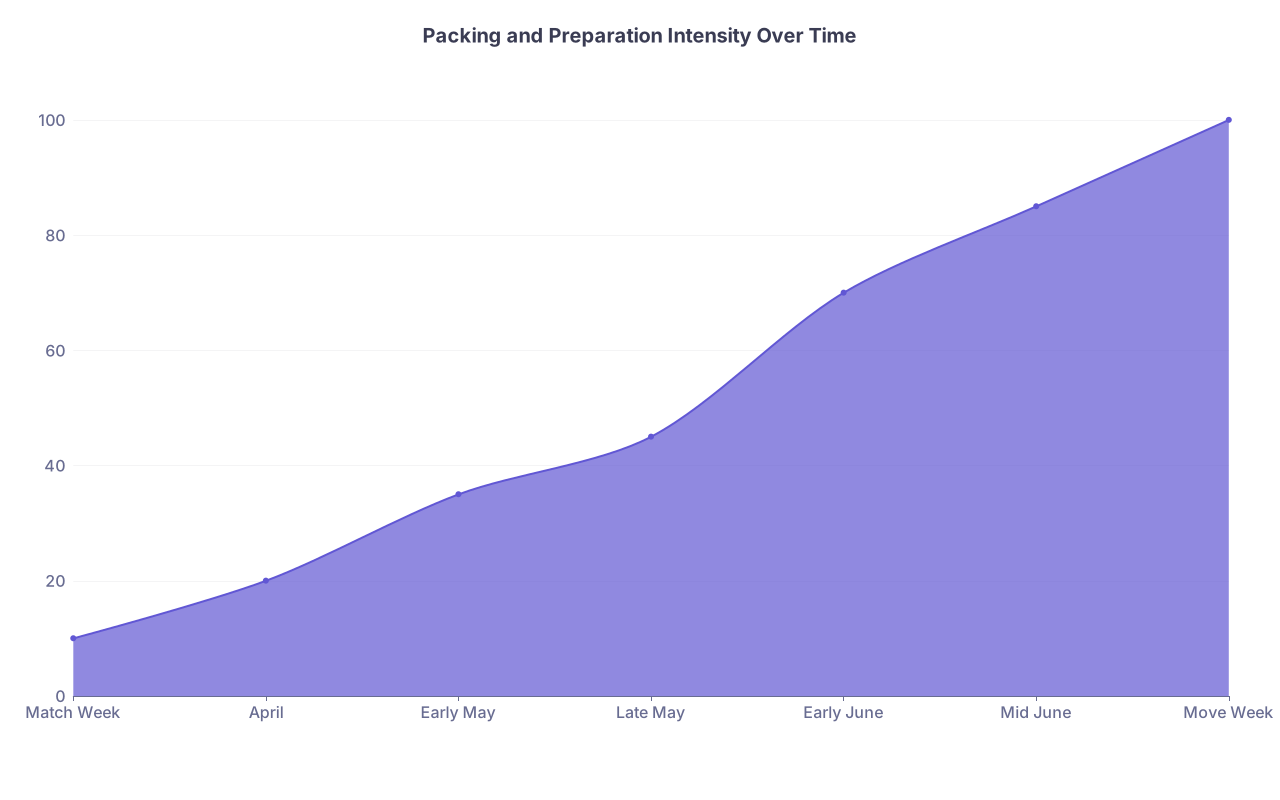
| Category | Value |
|---|---|
| Match Week | 10 |
| April | 20 |
| Early May | 35 |
| Late May | 45 |
| Early June | 70 |
| Mid June | 85 |
| Move Week | 100 |
The smart move is to let this ramp gradually—not flatline until mid June and then try to do everything in 10 days.
Final 3 Things To Remember
Decide early, don’t chase perfect. The “perfect apartment” or “perfect moving company” doesn’t exist. A good, early decision beats a last‑minute scramble every time.
Protect buffer days like a hawk. You want 5–10 days between move‑in and orientation. If stuff slips, let it slip earlier—not into that window.
Optimize for stability, not aesthetics. Year one of residency is about not having your life fall apart off‑shift. Short commute, reliable housing, and completed paperwork matter more than exposed brick and a rooftop pool.