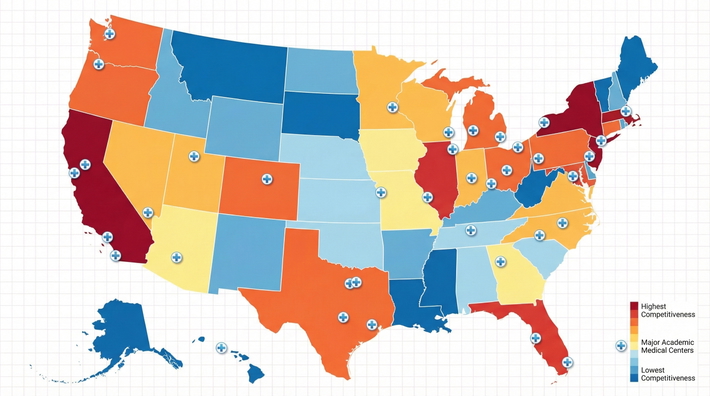
The week before rank lists lock is not for “manifesting” your dream city. It is for doing cold, unsentimental regional reality checks that most applicants skip—and regret later.
You are not choosing a fantasy version of a region. You are choosing parking, rents, winter storms, partner jobs, childcare waitlists, and flight connections for the next 3–7 years. At this point, you need structure, not vibes.
Below is a day‑by‑day plan for the final week before rank lock, focused entirely on regional factors. Follow it. By rank certification day, you will either confirm your current order—or move programs up or down with evidence instead of anxiety.
Overview: Your Final 7‑Day Regional Checklist
First, the structure. Here is what this final week should look like.
| Day | Focus Area |
|---|---|
| Day 7 | Cost of living and housing |
| Day 6 | Commuting, transportation, and call logistics |
| Day 5 | Partner/family, schools, and social support |
| Day 4 | Weather, lifestyle, and burnout risk |
| Day 3 | Program stability and regional health system trends |
| Day 2 | Deal-breakers, tiebreakers, and rank reshuffle |
| Day 1 | Final sanity checks and rank lock routine |
You can compress this into a weekend if you have to, but do not skip categories. The whole point is to force you to think about the region from every angle, not just “did I like the residents.”
Day 7: Cost of Living and Housing Reality
At this point, you should stop guessing about “expensive vs cheap” and run actual numbers.
Step 1: Pull salary and tax reality
Today, line up each region with approximate PGY‑1 income after taxes and typical rent. Use:
- Program or GME website for salary
- A take‑home pay calculator for the state
- A rental site (Zillow, Apartments.com, etc.) with filters:
- 1‑bed within 30–40 minutes of the hospital
- Or 2‑bed if you have a partner/family
Then, build a simple comparison:
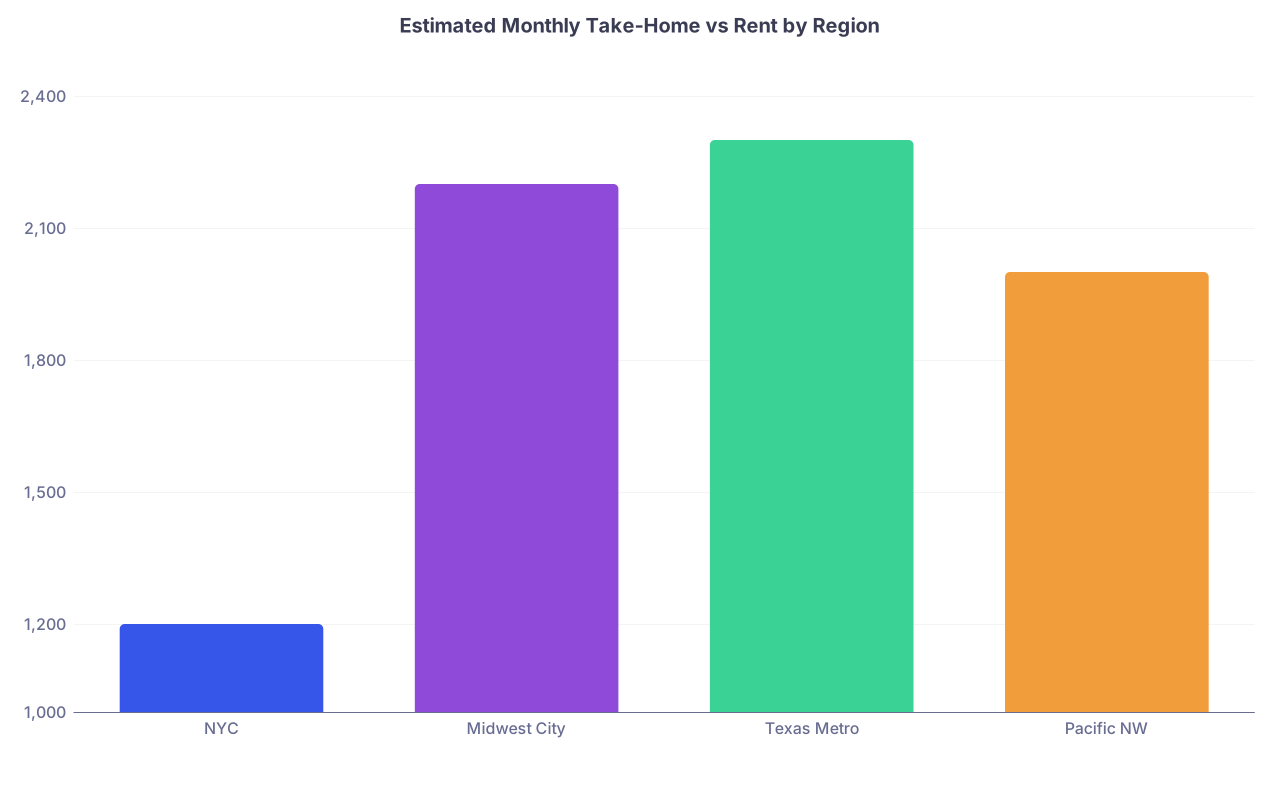
| Category | Value |
|---|---|
| NYC | 1200 |
| Midwest City | 2200 |
| Texas Metro | 2300 |
| Pacific NW | 2000 |
Assume bars represent leftover after average rent and utilities. The exact numbers will differ for you, but the pattern will not: some “prestige” regions will give you almost no financial breathing room.
At this point you should:
- Identify any region where:
- Leftover after rent + utilities < 1000 USD / month
- Or you would need 2–3 roommates to make it work
- Flag those programs. They are not automatic deletes, but they need to be consciously justified.
Step 2: Reality check on housing logistics
For your top 5–8 programs, quickly answer:
- How many realistic housing areas are within a 20–30 minute commute during rush hour, not at midnight?
- Are those areas actually safe for walking home post‑call?
- Are there widespread “parking horror” stories on Reddit, Doximity, or from residents you met?
You are looking for red flags like:
- “Most interns end up 45–60 minutes away because closer housing is unaffordable.”
- “Parking is 200–300 USD/month and still often full on nights.”
- “Everyone lives in the suburbs; city‑adjacent is a fantasy on resident salary.”
At this point you should mark:
- A “$” next to programs where housing is tight but manageable.
- A “$$$” next to programs where you would be constantly stressed about money or forced into long commutes.
Those $$ and $$$ later become tiebreakers between otherwise similar programs.
Day 6: Commute, Call, and Transportation Logistics
Today, you stop imagining the city as a tourist. You imagine it as a tired resident leaving the hospital at 9:30 pm in sleet.
Step 1: Map your actual shifts onto the region
For each region (or top 6–10 programs):
Look at the call structure (from interviews, websites, or resident slides):
- Many early starts? (5:30–6:00 am pre‑rounding)
- Night float vs 24‑hour calls?
- How many sites/hospitals will you rotate through?
Open Google Maps and:
- Map potential housing neighborhoods to each main hospital site.
- Check commute times:
- Weekday 6:00–6:30 am
- Weekday 4:30–6:00 pm
- Late night (just to see public transit options, safety)
You are not trying to be precise. You are trying to avoid being surprised.
Step 2: Car vs public transit decision
At this point you should be able to answer for each region:
- Do most residents have a car?
- Is street parking realistic, or will you be paying for a garage?
- Will you absolutely need snow tires, 4WD, or constantly pay for rideshares in winter?
And for transit‑heavy cities:
- Is the last train/bus before your usual post‑call departure?
- Are you comfortable waiting at that station at 11 pm in January?
If a program is in a region where:
- You will need a car you do not have, in a state with high insurance, and
- Parking is a financial or practical nightmare
Then that region drops a notch unless the training is truly exceptional.
Day 5: Partner, Family, and Social Support Reality
At this point, the question is not “Would it be fun to live here?” It is “Can I survive here with my actual support system?”
Step 1: Partner or spouse situation
If you have a partner, today they get a veto voice. Not the final say, but a strong one.
For each region:
- Job market:
- Are there realistic jobs for your partner’s field within 30–40 minutes?
- Are those jobs clustered in one part of the metro that conflicts with hospital location?
- Licensing or credentialing:
- Will they have to re‑license, re‑certify, or start at a lower level?
- Schedule compatibility:
- Night shifts plus their 9–5 commute in opposite directions = never seeing each other.
Document this in a quick grid. Not fancy. Just honest.
Step 2: Family proximity and backup support
Now look at your existing support network:
- Which regions put you within:
- 1–2 hours of family/friends by car?
- Or a cheap, direct flight?
](https://cdn.residencyadvisor.com/images/articles_svg/chart-travel-time-to-closest-family-by-region-6936.svg "Travel Time to Closest Family by Region")
| Category | Value |
|---|---|
| Northeast Program | 1 |
| Midwest Program | 10 |
| West Coast Program | 6 |
| [Southeast Program](https://residencyadvisor.com/resources/regional-residency-guides/why-southern-programs-quietly-prefer-home-grown-applicants) | 2 |
Ten hours by car or two connecting flights for every holiday or emergency? That is a very different life than being 90 minutes away on a highway.
At this point you should flag:
- Regions where you will have zero built‑in support.
- Regions where you can get help if you break your ankle mid‑ICU block or need childcare coverage suddenly.
This is not sentimentality. It is risk management.
Day 4: Weather, Lifestyle, and Burnout Risk
Today is about the parts of a region that destroy people slowly: chronic bad weather, isolation, or mismatch with your baseline personality.
Step 1: Weather you can actually tolerate
Do not roll your eyes at this. I have seen residents from Florida crash hard in their first Buffalo winter and vice versa.
For each region, quickly look up:
- Average high/low in:
- January
- July
- Average annual snowfall or number of “rain days”
- Heat index or humidity extremes if in the South
Then ask:
- Have you ever lived in something similar?
- What is your mental health like in long gray winters or oppressive summer heat?
If you have a history of seasonal depression and you are ranking Pacific Northwest or upper Midwest programs, you should acknowledge to yourself that this is a real risk. Not a deal‑breaker automatically, but it should push those programs down if others are close.
Step 2: Lifestyle fit outside the hospital
Your off‑time will be limited. That makes local options more important, not less.
For each top program’s region, answer:
- Do you prefer:
- Walkable urban neighborhoods with late‑night food?
- Quiet suburbs and parks?
- Outdoor sports (mountains, water, trails)?
- Does the region offer at least one of those within a 20–30 minute radius of likely housing?
If your only real decompression is live music and restaurants, choosing a small town two hours from the nearest airport and major venue is a setup for slow misery.
At this point you should create a gut‑level tag for each region:
- “Recharge‑friendly” (you can see yourself decompressing there)
- “Neutral”
- “Draining risk”
When you later compare two similarly strong programs, this flag matters more than prestige.
Day 3: Program Stability and Regional Health System Trends
This is where you stop acting like every hospital is on equal financial footing. They are not.
Step 1: Regional health system reality check
For each major region on your list, spend one focused hour:
- Google “[Hospital Name] budget cuts residents,” “[System Name] financial trouble,” “[System Name] merger,” “closure,” “bankruptcy.”
- Look at local news, not just glossy system press releases.
Major red flags:
- Recent or repeated layoffs, especially of nurses or support staff.
- Hospital closures or ER shutdowns within that system.
- Ongoing strikes or very public conflicts between administration and clinicians.
These things do affect residents: staffing, call burden, morale, access to cases.
Step 2: Specialty and regional future
Then zoom out one level:
- Is the region oversaturated with your specialty or under‑resourced?
- Are there known post‑residency jobs in the area?
- Are residents staying in the region or fleeing after training?
You can often find this on:
- Program websites listing alumni destinations
- Talking to residents (yes, you can still email with “one last question”)
- Specialty‑specific forums
If a program is in a region where:
- Everyone is leaving after graduation, and
- The health system is consolidating and closing sites
You should question putting that program at the top, unless the training is truly exceptional and you know you will not stay there long term.
Day 2: Deal‑Breakers, Tiebreakers, and Rank Reshuffle
By now, you have a pile of impressions and notes. Today you organize them into decisions.
Step 1: Create a brutal, simple score for each region
Do not overcomplicate this with a 20‑factor spreadsheet. Keep it to 5 regional dimensions that actually matter:
- Cost of living / housing
- Commute / transportation
- Support system (partner/family/friends)
- Weather / lifestyle fit
- Health system stability
Rate each on a 1–5 scale, for your top ~10 programs.
| Factor | 1 (Bad) | 3 (Mixed) | 5 (Strong) |
|---|---|---|---|
| Cost of living | Constant financial stress | Tight but manageable | Comfortable on PGY-1 salary |
| Commute/transport | >45 min or unsafe/chaotic | 20–40 min, some hassles | <25 min, reliable options |
| Support system | No one nearby | Some friends / distant family | Strong nearby support |
| Weather/lifestyle | Actively draining | Neutral | Feels natural / energizing |
| System stability | Repeated red flags | Some concerns | Stable or growing system |
Now sum each program’s regional score. You are not replacing your overall impression or training quality. You are adding a hard reality layer underneath.
Step 2: Apply the “3 a.m. on a Tuesday” test
For your top 5–6 programs:
Imagine you are:
- Post‑call
- It is 3 a.m. on a Tuesday
- You are walking out of the hospital in January rain or August humidity
- You have another shift tomorrow
Where would you rather be walking to your car / train / apartment?
Not where you would rather spend a perfect Saturday. Where you would rather drag yourself through a normal, exhausting week.
At this point you should:
- Move any program that clearly fails that test down at least one spot.
- Move any that suddenly feels “obviously livable” up if training is comparable.
This is usually where people admit they do not actually want to be as far from family as their early list suggested. Or that the ultra‑prestige coastal city feels more like a flex than a home.
Day 1: Final Sanity Checks and Rank Lock Routine
This is the day to stop tinkering and start committing.
Step 1: Run your final contradictions check
Look at your current draft rank list and ask:
- Does your #1 or #2:
- Sit in a region you scored as “1” or “2” on cost of living and support?
- Have multiple red flags from the stability check?
If yes, can you clearly articulate why you are still putting it that high?
“Brand name” or “nice city to visit” is not an answer. “Best fit mentors in my niche + partner’s ideal job market + willing to eat higher rent” is valid.
If you cannot explain it to yourself in two sentences, you are probably rationalizing.
Step 2: Talk it out once—with someone grounded
At this point you should schedule exactly one conversation with:
- A mentor who knows your specialty and trajectory, or
- A brutally honest friend or partner who is not obsessed with prestige
Walk through your top 3–5 choices, focusing on regional pros/cons, not “vibes.” Once. Not six more times in different group chats.
If you feel more confused after the conversation, not less, that is a sign you are overfitting other people’s priorities onto your life. Default back to your regional scores and your 3 a.m. test.
Step 3: Lock‑day ritual
On rank lock day, do not change your list 15 minutes before the deadline because of a random group text.
At this point you should:
- Re‑read your written notes for your top 5 programs—especially any big regional pros/cons.
- Confirm:
- You would be able to live, not just survive, in your #1’s region.
- You would not be devastated to end up at your #3.
- Then submit. Screenshot your confirmation. Close the browser.
After that, any more Googling of “[City Name] crime reddit” is self‑sabotage.
Quick Visual: Your Week at a Glance
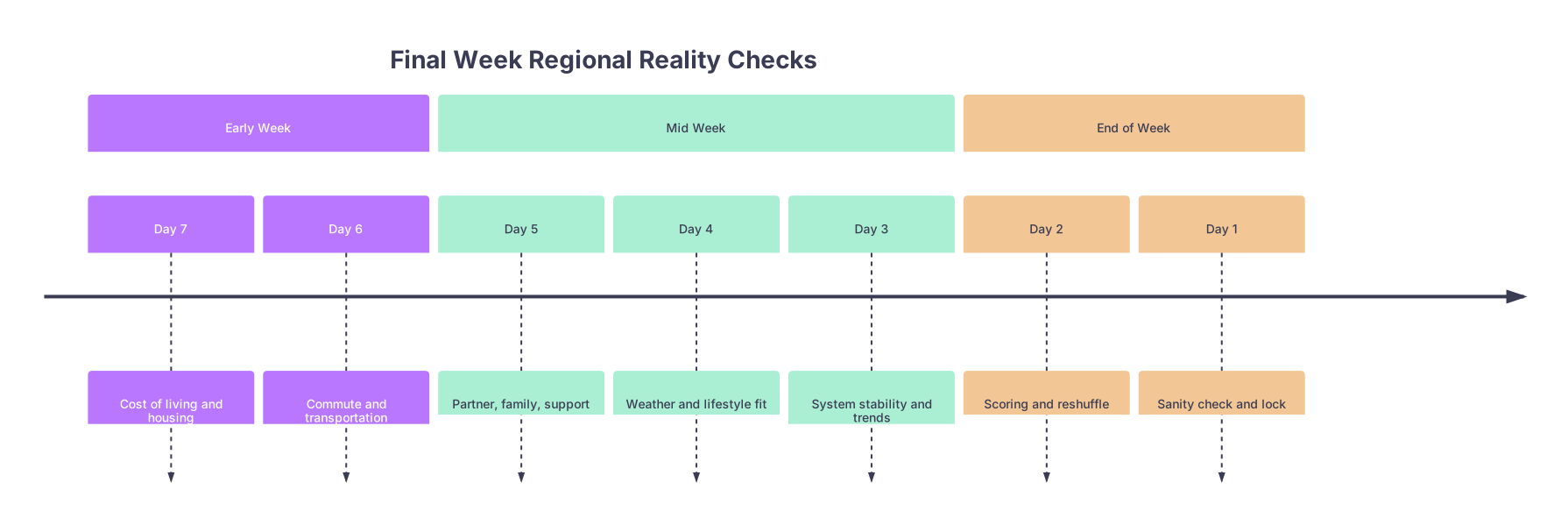
| Period | Event |
|---|---|
| Early Week - Day 7 | Cost of living and housing |
| Early Week - Day 6 | Commute and transportation |
| Mid Week - Day 5 | Partner, family, support |
| Mid Week - Day 4 | Weather and lifestyle fit |
| Mid Week - Day 3 | System stability and trends |
| End of Week - Day 2 | Scoring and reshuffle |
| End of Week - Day 1 | Sanity check and lock |
Two Things People Get Wrong About Regions
Before we finish, I want to head off two common mistakes I see every year.
Mistake 1: Overrating one “dream city”
Applicants fall in love with “Boston” or “Seattle” as a monolith. In reality:
- Specific neighborhoods matter more than the city label.
- Commute patterns, housing pockets, and call sites will define your life far more than “I live in X metro.”
Two internal medicine programs in the same city can feel like entirely different universes depending on which hospitals you rotate through and where you can afford to live.

Mistake 2: Treating regional factors as “soft” compared to program prestige
I have watched residents drop out, switch programs, or white‑knuckle their way through three years not because the program was bad on paper—but because:
- They were deeply isolated socially.
- The commute plus weather plus lack of support made everything harder.
- Financial pressure in a high‑cost city never let them exhale.
Training quality matters. Of course. But you do not practice medicine in a vacuum; you practice in a real city, in a real life. Pretending otherwise is naïve.
Final Snapshot
By the time you hit “Certify” on your rank list, you should have:
- Run a structured, region‑focused week: housing, commute, support, lifestyle, and system stability—no hand‑waving.
- Used those regional realities as explicit tiebreakers between similar‑quality programs, not as an afterthought.
- Locked a list that passes the 3 a.m. Tuesday test in your #1–3 regions, not just the “sounds cool on Instagram” test.
That is how you avoid waking up post‑Match wondering, “What was I thinking?” and instead say, “This is going to be hard—but I chose the right place to do it.”