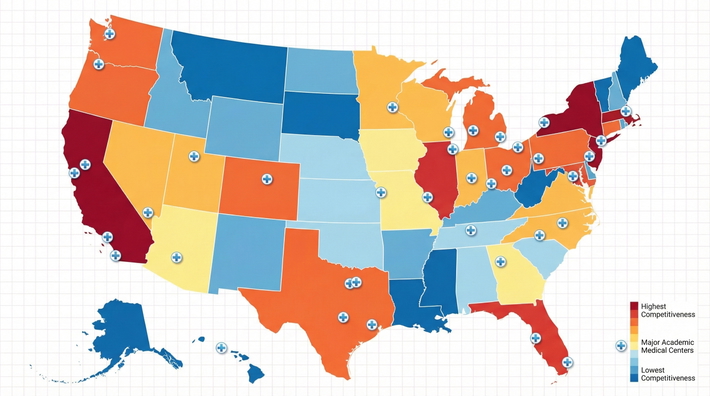
The worst rank lists are written in one frantic weekend. You’re not doing that.
You’re in Rank List Month. Here’s the stepwise, time-based process to balance region vs program tier without losing your mind or wrecking your future.
Week -4 to -3: Before Rank List Month Officially Starts – Set Your Non‑Negotiables
At this point you should not be touching your rank list. You’re laying groundwork.
Step 1: Draw Your Hard Lines (1–2 evenings)
Grab a sheet of paper (or a note on your phone) and answer these blunt questions:
- Where will you not live?
- Maybe you refuse:
- Winters below 10°F
- Cities without direct flights home
- Places more than 1 hour from an airport
- Maybe you refuse:
- Who or what are you tied to?
- Partner’s job anchored in one city
- Kids in school
- Elderly parents you actually see weekly, not “someday”
- Dealbreakers you’ve seen on interview trail
- Malignant vibes, unsafe call systems, blatant burnout
Write 3–5 absolute no-go rules. Not 20. Just the ones you’d regret ignoring.
Step 2: Define “Tier” for You (One focused session)
At this point you should stop using Reddit’s fake tiers.
Tier ≠ prestige alone. For rank list purposes, define concrete metrics:
- Training strength:
- Case volume (e.g., “I want big tertiary center with high acuity”)
- Subspecialty exposure (e.g., strong cards, heme/onc, trauma)
- Career doors it opens:
- Fellowship match track record
- Geographic job network afterward
- Safety and support:
- Board pass rates
- Culture (do seniors/attendings actually teach or just disappear?)
Make a short rubric: 3–5 items that define a “high tier” program for your goals.
Example rubric (0–2 points each):
- Fellowship placement in my top 2 subspecialties
- Level 1 trauma / tertiary center exposure
- Strong reputation in region where I want to work long-term
- Residents seem supported, not broken
Now region vs tier will mean something concrete, not vibes.
Week -3: Categorize Programs by Region and Tier
At this point you’re still 2–3 weeks from certifying. Good. You’re mapping the battlefield.
Step 3: Build the Master Grid (1 long session)
Make a table or spreadsheet:
| Program | City/State | Region Group | Tier (Your Rubric) | Family Proximity |
|---|---|---|---|---|
| A | Boston, MA | Northeast | High (7/8) | 2 hrs flight |
| B | Phoenix, AZ | Southwest | Mid (5/8) | No family |
| C | Chicago, IL | Midwest | High (6/8) | Nearby cousins |
| D | Raleigh, NC | Southeast | Mid (4/8) | Parents driving |
| E | Denver, CO | Mountain | High (7/8) | Far from all |
Assign each program to a region group that actually matches your life:
- “Near family”
- “Same time zone as partner”
- “Sunbelt / warm weather”
- “Anywhere with direct flight to home”
You can double-label (e.g., “Northeast + Near family”).
Step 4: Reality Check – How Many “High Tier in Preferred Region” Do You Have?
This is the first time you’ll feel whether you’re choosing between:
- High tier vs region
or - Fantasy vs reality.
Make a quick visual of what you’re dealing with:
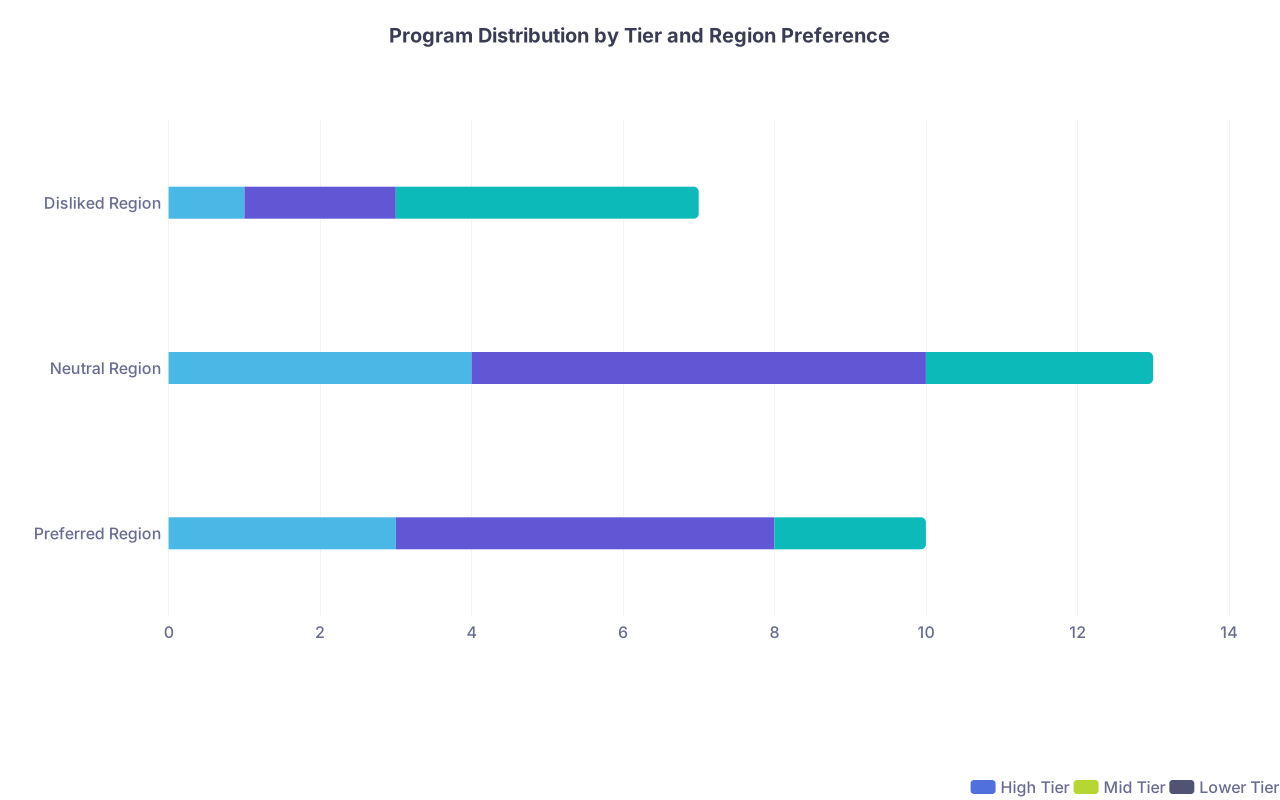
| Category | High Tier | Mid Tier | Lower Tier |
|---|---|---|---|
| Preferred Region | 3 | 5 | 2 |
| Neutral Region | 4 | 6 | 3 |
| Disliked Region | 1 | 2 | 4 |
If your “Preferred Region + High Tier” box is basically empty, the decision is already made for you: you’ll be trading region for tier whether you like it or not. Better to know now than the night before certification.
Week -2: Structured Reflection – Separate Emotion from Data
At this point you should not be rearranging your list every day. You’re collecting evidence.
Step 5: 20-Minute Debrief Per Program (Spread over the week)
Every evening, take 2–3 programs and quickly answer:
- How did I feel walking out of the interview? (1–5)
- Residents: genuine, neutral, or fake? (pick one)
- Could I see my non-medical life there? (1–5)
- Training quality vs my rubric score (0–2 each)
You’re trying to capture both:
- The gut (region, community, vibe)
- The brain (tier, training, outcomes)
Don’t write essays. Bullet phrases.
Examples I’ve seen applicants write:
- “Loved residents, city felt right, PD human, worried about fellowship name.”
- “Amazing prestige, but residents dead behind the eyes.”
- “City perfect, program mediocre but safe.”
That’s the gold. Keep it raw.
Week -1: Force the Tradeoffs – Scenario Planning
Now you’re in the week before Rank List Month is truly crunch time (NRMP deadline usually mid-late Feb). This is where region vs tier gets real.
Step 6: Build A/B/C Match Scenarios (1–2 sessions)
Pick representative pairs:
- Scenario A:
- Program 1: High-tier academic, far from everyone, brutal winters
- Program 2: Mid-tier, near your partner and support system
- Scenario B:
- Program 3: High-tier with elite fellowship pipeline, city you dislike
- Program 4: Lower-tier but perfect lifestyle and city
Write what your actual day-to-day would look like in each:
- Commute time
- Call frequency/structure
- Who you go home to
- Where you get groceries, go for a run, or decompress
- Weather when you leave the hospital at 9 pm in January
This is not fluff. This is your baseline happiness for 3–7 years.
Then ask one question:
“If both of these matched tomorrow, which version of my life would I be more relieved to get?”
Your relief response is usually more honest than your prestige response.
Rank List Week: Day-by-Day Plan
Now you’re in Rank List Month proper. This is the tight, sequential work.
Day 1–2: First Draft – “If the Match Ran Tonight”
At this point you should sit down and make a no-edit, gut-first rank list.
Rules:
- You must rank every program where you would rather go there than not match.
- Don’t overthink yet. Go top-to-bottom in an honest, quick pass.
This is your emotional list. Save it: “RankList_Gut_v1”.
Day 3: Pure Tier Re-order – Prestige-Optimized List
Now you swing to the other extreme.
Make a second list where you sort almost entirely by program tier / training power, ignoring region except for your non-negotiables.
Ask:
- If I were single with no geographic constraints, what order would I choose purely for training and career?
Save it: “RankList_Tier_v1”.
Day 4: Pure Region Re-order – Location-Optimized List
Now flip again.
Make a third list where you optimize for region:
- Proximity to family/partner
- City preferences
- Climate
- Long-term where-you-want-to-end-up
If a program’s training is dangerous or clearly poor, it can’t rise just for region. But otherwise, favor place over name.
Save it: “RankList_Region_v1”.
Day 5: Overlay the Three Lists – Conflict Points
At this point you should NOT just average them. You’re looking for decision nodes.
Look at where the three lists collide. These are your real fights:
- Program A vs B: tier-first vs region-first flips
- Program C jumps dramatically between lists
- Programs that stay in same general spot on all three → low conflict, low risk
Make a short list of 5–10 key comparisons that will determine your final structure.
Now you decide them one by one. Not all at once.
Rank List Week: Region vs Tier – A Stepwise Comparison Method
Step 7: Use a Simple Head-to-Head Scorecard
Take one conflict pair at a time. For each:
- Assign up to 5 points for training/tier
- Assign up to 5 points for region/life
Rough template:
- Training/Tier (0–5):
- 5 – elite fellowship outcomes in your field, high acuity, serious name recognition
- 3 – solid training, good exposure, average name
- 1 – concerning workload/board pass/volume
- Region/Life (0–5):
- 5 – ideal city + near critical people + reasonable cost
- 3 – decent city, no huge pros or cons
- 1 – actively dislike living there or severe isolation
Then add one more column: “Who do I become there?” (qualitative, not points)
- Program A: “I’d grind hard, push for big fellowships, risk burnout.”
- Program B: “I’d be balanced, more stable, maybe less “impressive” on paper.”
You’re not a spreadsheet. The numbers are a tiebreaker, not the boss.
Still, the act of scoring forces clarity. You’ll see patterns.
Rank List Week: Bringing in Reality Checks
Step 8: One Trusted Outside Perspective (Not a Committee)
At this point you should have a tentative order with marked conflict zones.
Bring in one person:
- A mentor in your specialty
- Or a senior resident who matched in a similar situation
- Or your advisor who actually knows how your field works (not your random anatomy TA)
What you ask them:
- “Between these two programs, how different are the career outcomes really?”
- “In this specialty, how much does geographic training region affect where you work later?”
- “Is this ‘tier jump’ actually meaningful, or mostly name-brand vanity?”
You’d be shocked how often the mentor says:
- “Those two programs are basically equivalent for jobs.”
or - “If you want to practice in the Midwest, going to that coastal name-brand may not help as much as you think.”
Then you adjust, program by program, where your life preferences can safely dominate because the training difference is marginal.
3–4 Days Before Deadline: Final Sorting and Sanity Check
At this point you should have a nearly final list. Now you clean it.
Step 9: Do a Top-Down “Would I Be Okay Matching Here?” Pass
Starting at #1:
- For each rank, ask:
“Would I be okay—truly okay—if the Match stopped here?”
If no:
- Either you’re over-ranking it for prestige
- Or you’re lying to yourself about region/family/burnout risk
Move that program down until you hit a spot where you can honestly say “Yes, I’d be okay matching here instead of any below.”
Keep going until the bottom.
Step 10: The Nuclear Question for Region vs Tier Conflicts
For each controversial pair, ask yourself:
“If I match at the higher-tier program far from my people and I’m miserable, will the name on my badge feel worth it at 3 a.m. on night float?”
Then the inverse:
“If I match at the closer, mid-tier program and later struggle getting a hypercompetitive fellowship, will living near my support system still feel worth it?”
Here’s where your own risk tolerance shows up. Neither answer is universally right. But one is more right for you.
1–2 Days Before Deadline: Locking It In
You should not be making huge changes now. Only surgical adjustments.
Step 11: Sleep On It, Then Do One Last Gut Pass
- Finalize list
- Close the computer
- Do something else for several hours or sleep overnight
Next day, open it and watch your instant reaction.
- If your stomach drops at #1–3, something’s off
- If your brain says “That’s not what I actually want,” fix it
Minor swaps at the margins are fine. Massive overhauls at this point usually mean you did not do the earlier work. Don’t undo weeks of structured thinking because of a random mood swing.
One Visual to Keep Perspective
Sometimes seeing it as a journey helps you stop obsessing over microscopic rank flips:
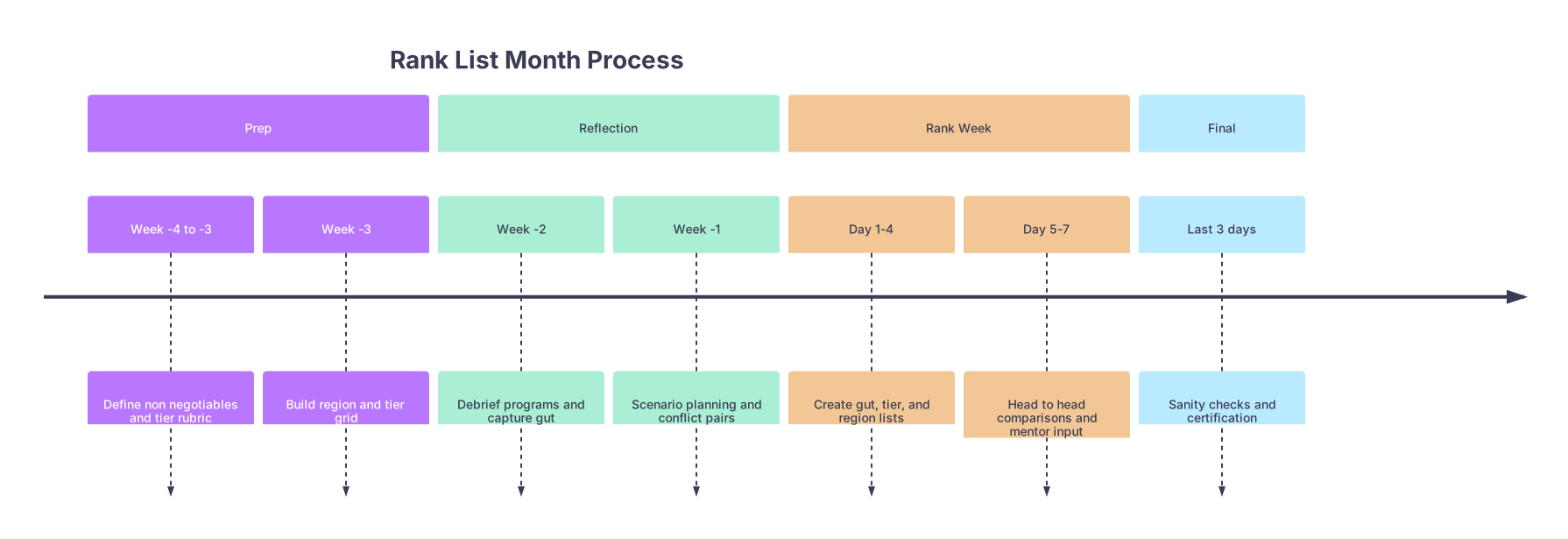
| Period | Event |
|---|---|
| Prep - Week -4 to -3 | Define non negotiables and tier rubric |
| Prep - Week -3 | Build region and tier grid |
| Reflection - Week -2 | Debrief programs and capture gut |
| Reflection - Week -1 | Scenario planning and conflict pairs |
| Rank Week - Day 1-4 | Create gut, tier, and region lists |
| Rank Week - Day 5-7 | Head to head comparisons and mentor input |
| Final - Last 3 days | Sanity checks and certification |
Residency is long. The process above keeps you thinking across weeks instead of panicking in hours.
Quick Note on Specialty-Specific Region vs Tier Weighting
You’re not all in the same game.
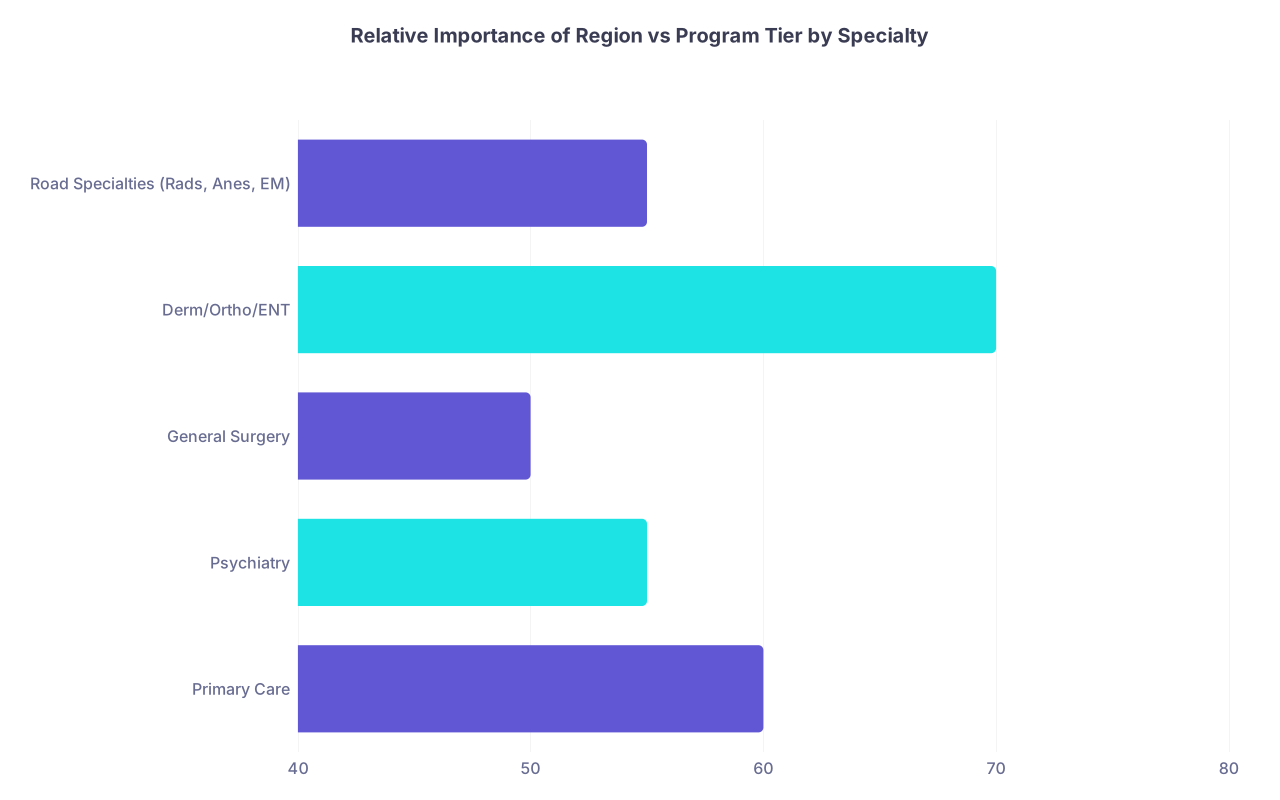
| Category | Value |
|---|---|
| Primary Care | 60 |
| Psychiatry | 55 |
| General Surgery | 50 |
| Derm/Ortho/ENT | 70 |
| Road Specialties (Rads, Anes, EM) | 55 |
Interpreting this qualitatively (not as hard numbers):
- Highly competitive, fellowship-heavy fields (derm, ortho, ENT, CT surgery):
- Tier matters more, especially for big-name fellowships
- Fields with more regional job markets (FM, IM, psych):
- Region and long-term network sometimes matter just as much as program tier
- If your ultimate goal is community practice near home:
- Training in that state or region can be more valuable than a slight prestige bump elsewhere
If you’re unsure which bucket your specialty falls into, that’s a question for your mentor in Step 8.
Final 24 Hours: Technical Lockdown and Emotional Detach
Last day. You’re not “rethinking.” You’re executing.
- Confirm every program is ranked accurately in ERAS/NRMP
- Check for:
- No unintentional omissions
- No flipped pairs from mis-clicks
- Take screenshots or save a PDF for your records
Then certify. Walk away.

You will feel like you should keep tweaking. That feeling is not data; it’s anxiety.
Two Anchors to Remember
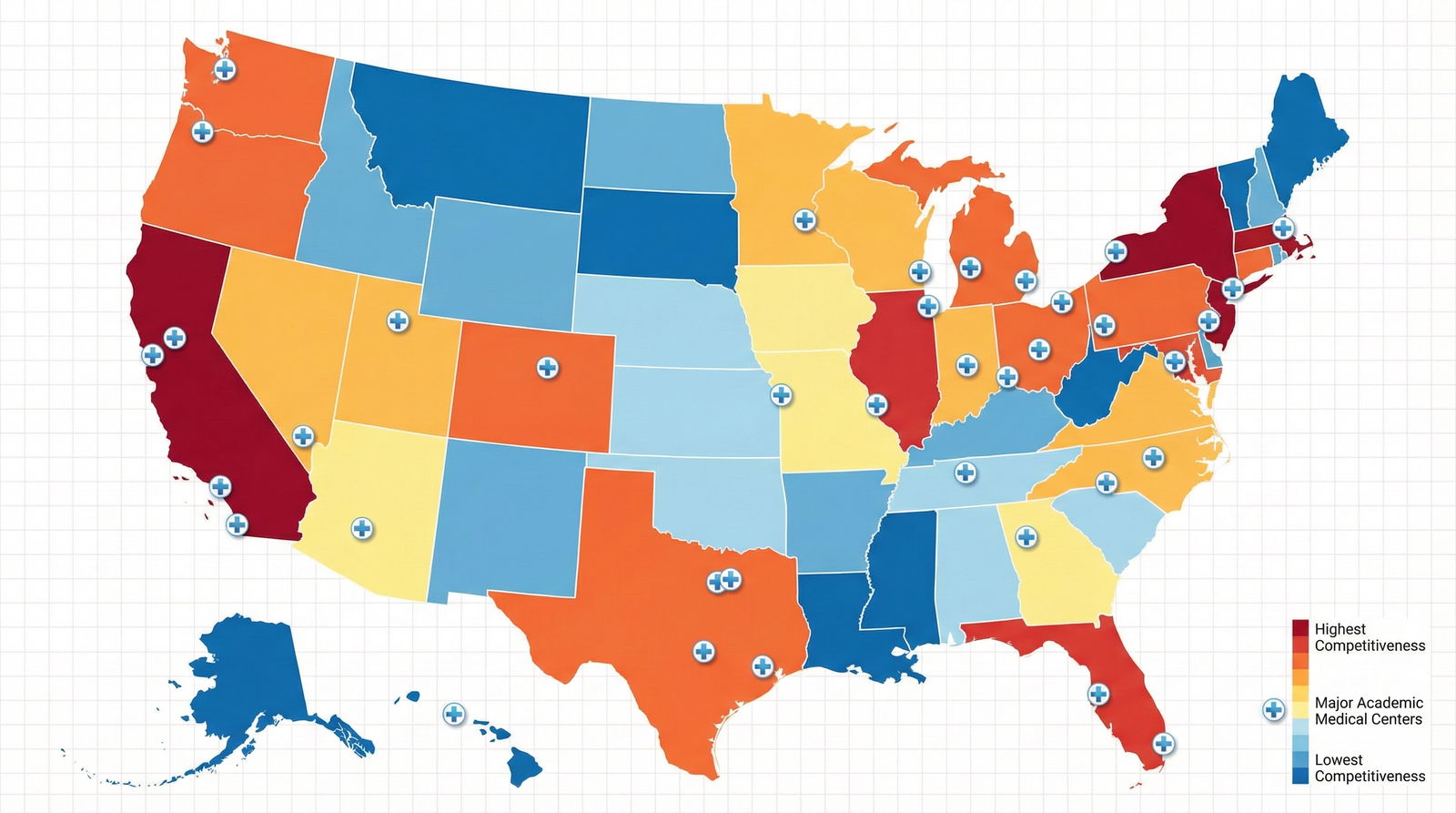


Three things to keep straight at the end:
- Your rank list should reflect who you are and what you want your life to actually look like, not Reddit’s idea of prestige.
- Decide region vs program tier pair by pair, not in the abstract. Concrete comparisons beat vague principles.
- Do the work early: non-negotiables, rubrics, scenarios, and head-to-heads. If you follow the week-by-week steps, Rank List Month becomes execution, not panic.