
It’s September. ERAS is about to open. You’re staring at the “Experiences” section and your stomach drops. No pubs. No posters. No “first-author manuscript under review.” Just some solid clinical work, maybe a part‑time job, some leadership, but… no research.
And now your brain is spiraling:
“Everyone else has publications. I’m dead.”
“Should I even apply this year?”
“Are programs going to auto‑filter me out?”
“Is my match already doomed and I just don’t know it yet?”
Let me say this right away: your match is not automatically ruined because you have no research.
But. It does matter. For some specialties more than others. And pretending it doesn’t would be lying to you.
Let’s pull this apart like we’re sitting in the call room at 1 a.m., refreshing our email and catastrophizing together.
How Bad Is “No Research” Really?
Short answer: it depends brutally on your specialty, the type of programs you want, and how strong the rest of your app is.
Here’s how programs tend to actually think about research, not the fluffy brochure version:
- For very competitive specialties (derm, plastics, ENT, neurosurg, rad onc, ortho): research isn’t a “bonus,” it’s a sorting tool. No research at all? That’s rough.
- For moderately competitive (radiology, EM at strong academic places, anesthesia at top programs, GI track IM spots, etc.): research is “strongly preferred,” especially at academic centers.
- For core specialties (IM, peds, FM, psych, OB at many programs): research is nice, but absolutely not mandatory at most community or mid‑tier academic places.
Let me make this less theoretical.
| Specialty Tier | Research Expectation |
|---|---|
| Super-competitive (Derm, Plastics, ENT, NSurg) | Basically expected |
| Competitive (Rads, Anesthesia, EM academic) | Strong plus |
| Core (IM, Peds, Psych, FM) | Helpful, not required |
| Community-focused programs | Usually not critical |
| Research-heavy academic programs | Strongly preferred/expected |
You can match with zero research in many fields. I’ve seen it. I’ve also watched people with 10+ pubs still not match derm.
Research helps. But it’s not magic. And not having it doesn’t automatically make you toxic.
The real problem isn’t “no research” in isolation. It’s “no research + average scores + generic application + aiming only at hyper‑academic programs.”
That combo? Yeah, that’s dangerous.
The Ugly Truth: Where No Research Hurts the Most
Let me be a little harsh here, because you don’t need sugarcoating.
If you’re applying this year and you:
- Want derm, plastics, ENT, neurosurg, rad onc, or ortho
- Have literally zero research (not even a case report, quality improvement, or poster)
- Don’t have sky‑high scores + strong home program connections
You’re skating on thin ice.
Programs in those fields see research as proof that:
- You’re serious about the specialty
- You can produce academic work
- You understand and buy into the field’s culture (which is heavily academic)
Is it impossible to match those specialties with no research? No. Rare? Yes. And usually involves some mix of: stellar board scores, insane letters, home program loyalty, or a mentor going to bat for you.
For things like IM, peds, FM, psych, many anesthesia and rads spots, especially at community or mid‑tier programs?
You can absolutely match with no research. You might be less competitive at the Harvards and UCSFs of the world, but that’s different from “you’re doomed.”
Here’s where people get tripped up: they confuse “top 10 academic program” with “the only programs worth going to.” And then they panic when their CV doesn’t look like a PhD candidate.
The “Is It Too Late?” Panic: You’re Applying Soon, What Now?
So you’re applying this cycle. You’re not going to magically conjure up a PubMed ID in the next three weeks. That ship has sailed.
So the actual question becomes: what can still be salvaged?
First: Stop Trying to Fake It
Do not:
- Slap some vague “research assistant” role from two weeks on a project you barely touched
- Overinflate chart review data entry into “independent investigator”
- Put “manuscript in preparation” when it’s just a Google Doc title and a dream
PDs can smell nonsense from a mile away. Faculty know what real research looks like because they actually do it. You’ll get caught, or at minimum, you’ll look flaky.
It’s better to be honest about minimal research than dishonest about big research.
Second: Reframe What You Do Have
You might have more “research adjacent” things than you think:
- QI projects on your clerkships
- A poster for a student research day that never made it to a regional conference
- Chart audits for a rotation
- Educational projects (creating a curriculum, simulation, etc.)
Those do count as scholarly activity. They’re not a 10‑impact‑factor paper, fine. But they’re still something.
If you can describe:
- A question or problem
- What you did
- What you found or changed
That’s a research‑like narrative.
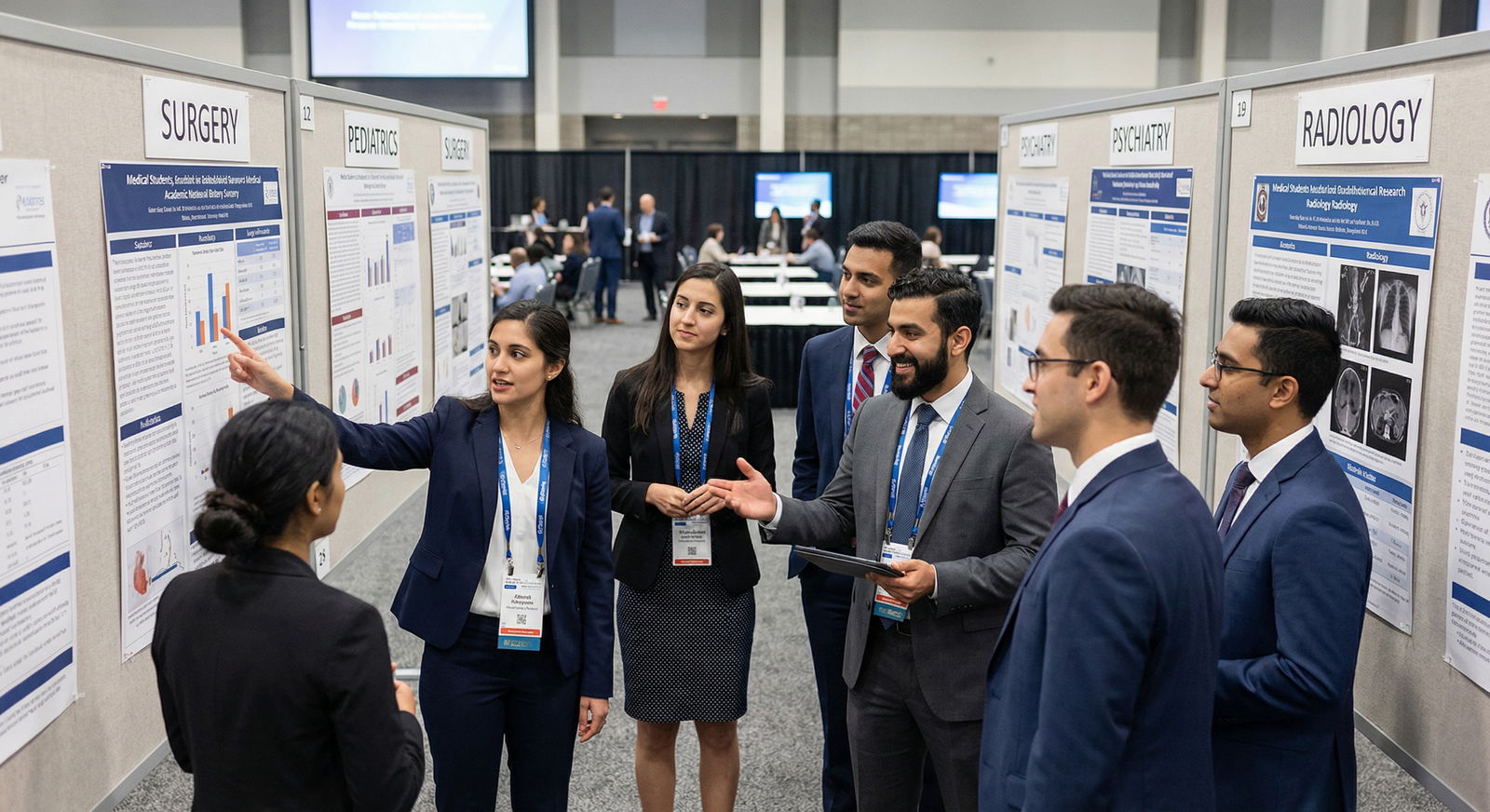
How Programs Actually Weigh “No Research” Against Everything Else
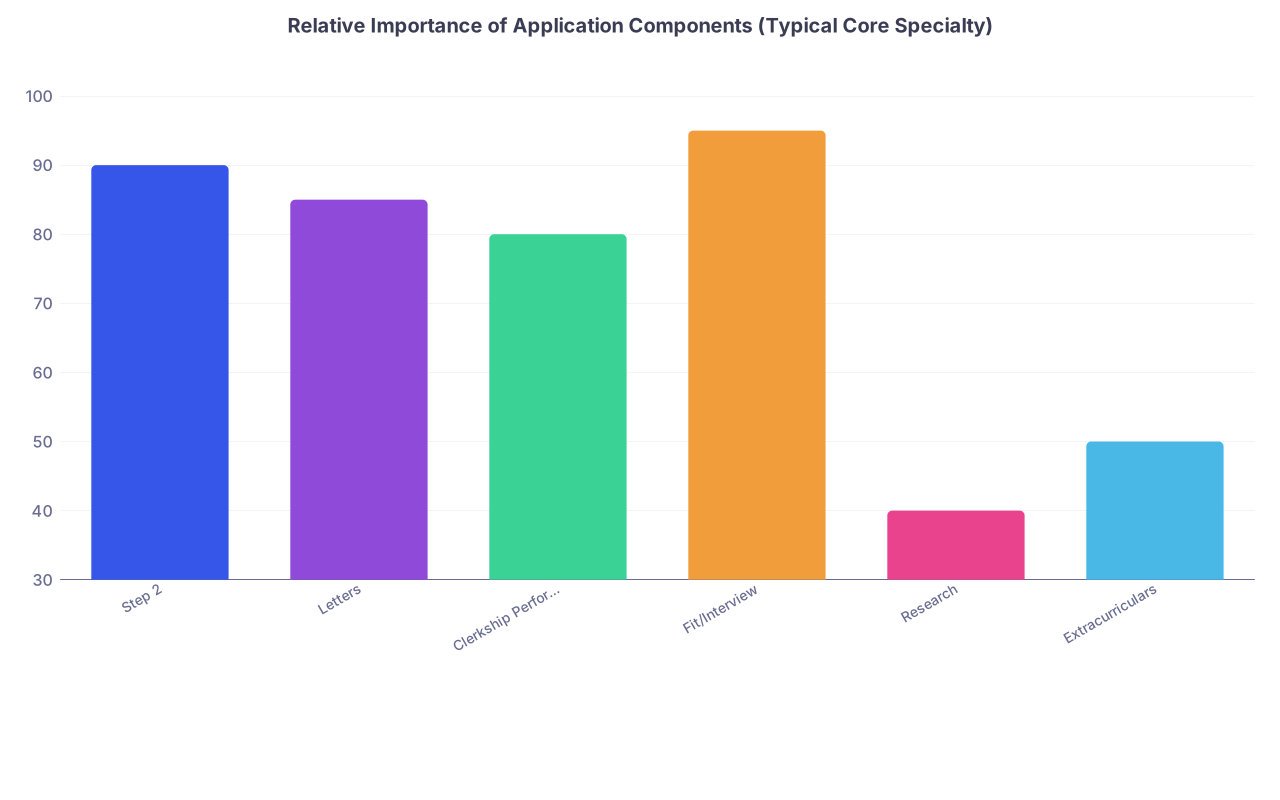
Think of your application like a bunch of dials on a board. Research is one dial. It’s not the only one.
Typical dials:
- Scores (Step 2 especially now)
- Clerkship grades / class rank
- Letters of recommendation
- Home institution / connections
- Personal statement
- Research / scholarly work
- Leadership / volunteering / work experience
- How well your story matches the specialty
Programs don’t reject people for “no research” in a vacuum. They reject them because, looking at the overall picture, they don’t see enough evidence this person fits what they’re building.
Here’s where it can hurt:
- Applying to research-heavy programs with no research → mismatch signal
- Applying to academic IM saying you “love academic medicine” but have zero scholarly anything → credibility problem
- Applying to derm with no research, no home derm, no derm electives → you look like a tourist
Where it matters less:
- Community FM / IM / peds where they care more about: are you normal, will you show up, can you take care of patients, will you stay in the area?
- Programs where lots of current residents also have minimal research (you can literally see this on their profiles).
If your other dials are strong, “no research” is a weakness, not a fatal flaw.
Worst-Case Scenarios You’re Probably Imagining (And What’s Real)
Let’s go straight into your intrusive thoughts.
“Programs will auto-filter me out if I don’t have publications.”
There is no “publications” filter on ERAS. They can’t click a button and only see people with X pubs.
They can sort by:
- Step 2 scores
- Whether you’re from their school
- Whether you’re IMG / AMG
- Maybe AOA/honors if they manually look
But auto‑filtering for “no research”? That’s not a feature.
What does happen is more subtle: when they scan your experiences and see nothing remotely scholarly, some places will quietly downgrade you, especially if they’re academic-heavy.
“I’ll be the only one without research.”
You absolutely will not.
Every year, a big chunk of people match with:
- Zero research
- Or one weak abstract from M1
- Or a QI thing that barely counts
You just don’t see them bragging on Reddit. You see the “I have 24 publications and 3 gap years of research” posts because they’re loud.
I’ve sat in rooms where we filtered apps for interviews. We absolutely interviewed people with no research when:
- Scores were solid
- Letters were strong
- The personal statement was grounded and clear
- They fit what the program needed (e.g., clinically solid, likely to stay local)
| Category | Value |
|---|---|
| Step 2 | 90 |
| Letters | 85 |
| Clerkship Performance | 80 |
| Fit/Interview | 95 |
| Research | 40 |
| Extracurriculars | 50 |
Concrete Moves You Can Still Make This Cycle
You can’t rewrite your past, but you’re not totally powerless.
1. Fix your story
If you have no research, don’t write a personal statement about how “research is my passion” unless you can actually back it up.
Instead:
- Lean into what you do bring: teaching, clinical maturity, underserved work, life experience, work ethic.
- If you’re aiming at academic-ish programs, you can say something like:
“While I haven’t had extensive formal research, I’m excited to engage with QI and scholarly work in residency, especially in [X area you actually care about].”
That’s honest without waving a giant “I hate research” flag.
2. Target the right programs
This is where a lot of smart people self‑sabotage. They apply to 60 ultra‑academic programs and then are “shocked” when no one bites.
You should be leaning hard into:
- Community programs
- Mid‑tier academic programs with lots of clinically oriented faculty
- Places where residents’ bios show minimal research
Stalk websites. Look at resident profiles. If every single resident has 10 publications and MD/PhD in their name… maybe don’t make that 15% of your list.

3. Use your letters to cover some of this
If you don’t have research, then your letters need to scream: “This person is excellent clinically and reliable.”
Ask for letters from people who can say things like:
- “One of the top students I’ve worked with in the last 5 years”
- “Takes ownership, follows through, cares about patients”
- “Functions at or above the level of an intern”
Those kinds of comments are more persuasive than “did one poster.”
4. If possible, add something scholarly-ish before interviews
You’re not getting a paper accepted by November. But you might be able to:
- Jump on a small QI or case report with a resident or attending
- Help with a quick chart review that turns into an internal poster
- Participate in a student/resident education project
If you do, you can honestly say during interviews:
“I recently started working on a QI project looking at [topic] with Dr. X, focused on [outcome]. We’re aiming to present this at [local/regional whatever].”
Is that going to suddenly make you Harvard‑level academic? No. But it changes the narrative from “no interest in scholarship” to “late start but willing to learn and contribute.”
The Nuclear Option: Should You Delay a Year Just for Research?
This is the big scary question no one wants to say out loud:
“Should I not apply this year and instead take a research year so I don’t ruin my only shot?”
Here’s my honest take.
A dedicated research year might be worth it if:
- You’re dead set on a hyper‑competitive specialty (derm, plastics, ENT, neurosurg, rad onc, ortho)
- Your school has zero presence in that specialty
- Your Step 2 is decent and you’re otherwise solid
- You have access to a legit research mentor who can actually get you projects and maybe a letter
Even then, it’s still a gamble. I’ve seen people take research years and still not match those fields. The research year isn’t a magic key.
For core specialties (IM, FM, peds, psych, most OB, most anesthesia, most rads):
Taking an entire year just to get research so you can go from “mid-tier academic/community” to “elite academic”? Usually not worth the lost year of salary, training, and time unless you have a very specific long‑term academic goal.
What is reasonable is:
- Apply this cycle with a smart list.
- If you don’t match, then reassess whether a research year or prelim year makes sense based on what happened.
You don’t need to pre‑catastrophize your unmatched scenario before you even submit.

| Step | Description |
|---|---|
| Step 1 | No or Minimal Research |
| Step 2 | Consider delay + research year |
| Step 3 | Apply broadly this cycle |
| Step 4 | Start Residency |
| Step 5 | Reassess: research year vs prelim vs reapply |
| Step 6 | Build strong research + mentorship |
| Step 7 | Specialty Type |
| Step 8 | Match? |
What You Should Actually Worry About (Instead of Just “No Research”)
Your brain’s probably latched onto “no research” because it’s concrete and visible. But there are other landmines that quietly kill applications faster:
- A generic personal statement that could be used for any specialty
- Sloppy ERAS with typos, copy‑paste mistakes, or vague descriptions
- Weak or lukewarm letters ( “did fine, showed up” vibes)
- An unrealistic rank list full of reach programs only
- Not having anyone look over your app before you submit
Fixing those will change your outcome more than one case report.
If you’re going to obsess over something, obsess over things you can still improve this cycle.
Bottom Line: Is Your Match Already in Trouble?
If you’re applying to a very competitive specialty with absolutely no research, and you don’t have some other huge strengths or connections? Yes, your odds are worse. I’m not going to lie to you.
But if you’re applying to core specialties, or a mix of community and mid‑tier academic programs, and your application is otherwise solid?
No. Your match is not “already lost” because you don’t have research.
You are not the only one. You are not automatically screened out. You are not doomed before you even hit submit.
You are going to have to:
- Be realistic about where you apply
- Tighten every other part of your app
- Be honest and thoughtful about your story
- Stop comparing yourself to the Reddit unicorns with 30 pubs and a 270
FAQ (Exactly 4 Questions)
1. I have zero research. Should I even bother applying to academic programs?
Yes, you can still apply to some. But be strategic. If a program’s residents all look like mini‑physician‑scientists with PhDs and 20 papers, your no‑research app is going to look out of place. Aim for academic programs where resident profiles show a mix: some research‑heavy folks, some more clinically oriented. Throw a few reaches on your list if you want, but don’t make them the backbone of your strategy.
2. Can I “spin” my quality improvement or teaching project as research?
You shouldn’t lie and label it “basic science research” when it’s not, but yes, QI and educational scholarship absolutely count as scholarly activity. Just be accurate. Describe what you did, what changed, and what you learned. A well‑explained QI project is more impressive than a vague “research assistant” line that means nothing.
3. Will talking about wanting an academic career hurt me if I have no research?
It can look mismatched if you go too hard on the “I want to be a physician‑scientist” angle with no track record. But you can absolutely say you’re interested in teaching, QI, or getting more involved in scholarly work during residency. Keep it grounded. “I’m excited to develop skills in QI and medical education during residency” sounds credible even if you’re starting late.
4. What’s one thing I can do this week to reduce the damage of having no research?
Find one attending or resident in your target specialty and ask for a quick meeting. Show them your draft ERAS and ask bluntly: “Given I don’t have research, how would you adjust my program list and what should I emphasize?” A 20‑minute conversation with someone who’s actually on the inside of your field will give you more precise guidance—and probably more reassurance—than 10 hours of doom‑scrolling.
Open your ERAS application today and go to your Experiences section. For each entry, ask yourself: “Does this clearly show what I did, what I learned, and why it matters?” Fix three of them so they’re specific and strong. That’s a real, concrete step that moves you forward—unlike just sitting there panicking about not having a PubMed link.