

Can burnout in residency actually change your personality long-term — like turn you into that bitter attending everyone’s scared of?
Because that’s the fear, right? Not just “I’ll be tired.” But, “What if this breaks me in some permanent way?”
Let me be blunt: yes, burnout in residency can lead to long-term depression or cynicism.
But that’s not the whole story. And it’s not an automatic sentence. It’s a risk, not destiny.
Let’s walk through the part nobody tells you when they’re busy saying “You’ll be fine, everyone gets through it.”
Because “getting through it” is a very low bar.
What burnout actually does to you (not the sugar-coated version)
Burnout isn’t just “tired but still okay.” It’s more like your brain slowly re-wiring itself under constant stress.
You know the three classic pieces:
- Emotional exhaustion
- Depersonalization (or what we politely call “cynicism”)
- Reduced sense of personal accomplishment
Everyone throws those words around. But in residency, they look like this:
You’re on week four of nights, you get a new admission at 5:45 am, you feel nothing when you see the patient — no fear, no compassion, just “please don’t be complicated.” You start calling people “the COPD in 12” instead of their name. You scroll your phone in the call room feeling dead inside, then go home and just lie there staring at the ceiling, unable to cry or move.
That’s not just “a bad block.” That’s early depersonalization + emotional exhaustion.
Here’s the part that should make you pay attention:
If that state goes on for months or years, it can harden into something that outlives residency.
Not always. But often enough that it’s dumb to ignore.
Can burnout cause long-term depression?
Short answer: It doesn’t automatically “cause” depression in everyone, but it absolutely raises the risk — a lot.
There’s plenty of research saying residents have way higher rates of depression and suicidal ideation than the general population. But forget the stats for a second. Look at what actually happens day-to-day.
You’re set up for a perfect storm:
- Chronic sleep deprivation
- Constant responsibility with limited control
- Repeated exposure to death, suffering, and angry families
- Humiliation or hostility from seniors or attendings
- No time to properly process any of it
Your brain learns: “The world is unsafe, I’m never enough, nothing I do actually fixes anything, and I don’t get to rest.” That is textbook fuel for depression.
And if you go long enough without pulling the brake, that depressive pattern can stick even after residency, because your brain has practiced those thoughts and feelings for years.
It can look like:
- You’re an attending but still feel like a fraud and failure, even when everyone says you’re good.
- You get a full weekend off and feel… nothing. No joy, no interest. Just emptiness.
- You avoid friends and family because “I’m too tired,” but really you don’t want to talk to anyone.
- You wake up with dread even when your schedule is reasonable now.
That’s when it’s not “burnout anymore.” That’s mood disorder territory.
Does everyone end up there? No.
Can you? Yes. Especially if you have a personal or family history of depression, anxiety, trauma, or perfectionism (so… most people who go into medicine).
The upside — and there is one — is that depression is treatable. Therapy, meds, time away, different environments — I’ve watched residents who were absolutely crushed on ICU rotations become functional and even happy again with real support.
So no, you’re not doomed to permanent damage. But yes, the danger is real if you keep dismissing every warning sign as “just residency.”
The cynicism piece: will this turn me into that bitter attending?
This is the one that scares people the most: not “Will I be sad?” but “Will I become someone I don’t even like?”
Let’s be honest: you’ve already met the warning examples.
The attending who:
- Calls patients “train wrecks”
- Rolls their eyes at every consult
- Laughs about families being “dramatic”
- Tells you “Don’t care so much, it’ll just make your life harder”
You walk out of those encounters thinking, “I will never be like that.” Then someone screws you over on call three nights in a row, and suddenly you hear yourself say, “Ugh, another drug seeker,” and feel this gross flicker of recognition.
That’s how it happens. Inch by inch.
Burnout-related cynicism starts as armor. You’re overwhelmed, you can’t emotionally absorb everything, so you pull back. You joke. You get sarcastic. You stop looking patients in the eye when you tell them bad news.
At first it’s temporary self-protection. But if all your coping is numbing and detaching, and nothing is replenishing your sense of meaning, it can calcify into your default way of being.
And yes, that can last long after residency.
The good news? People aren’t locked into that forever. I’ve seen the “old bitter attending” mellow out after:
- Changing jobs to a less toxic system
- Working with med students and realizing they’d become the monster they used to fear
- Getting called out (gently but clearly) by a colleague, therapist, or even a spouse
- Hitting rock bottom with burnout and actually getting help
Cynicism is a habit more than a core personality trait for most people. Habits can be broken. But they’re much easier to shift early than after 10 years of reinforcement.
Does residency have to damage you long-term?
No. But it will change you.
The question is: in which direction?
You’re not walking into a neutral environment. Residency is structurally set up to:
- Overwork you
- Normalize self-neglect
- Reward stoicism and perfectionism
- Punish vulnerability (or at least make it feel risky)
So if you go in with the mindset of “I’ll just tough it out like everyone else,” you’re basically handing the system a blank check to shape you however it wants.
But if you go in with, “I’m not sacrificing my entire mental health for this,” you have a fighting chance.
And no, that’s not naive. I’ve watched residents finish training:
- Tired? Yes.
- Changed? Definitely.
- Permanently depressed or bitter? No.
Those people weren’t magically tougher. They were strategic and, honestly, a little defiant about protecting themselves.
How to reduce the chance this wrecks you long-term
This is where people usually give you generic “self-care” nonsense. I’m not doing that. You already know “sleep, exercise, eat real food” is ideal. Residency sometimes makes that impossible.
So here’s the stuff I’ve seen actually matter when the wheels are coming off.
1. Early pattern recognition (this part is non-negotiable)
Watch for these shifts and take them seriously:
- You stop caring if you make mistakes. Not just tired — genuinely indifferent.
- You feel numb when patients die or get bad news. Not “handling it well.” Numb.
- You start dreading even good days off because you don’t know what to do with yourself.
- You’re more sarcastic and cold with patients than you used to be — and you kind of hate it, but keep doing it.
- You secretly hope for admissions to be less sick so you don’t have to think too hard.
You see this for more than a few weeks? That’s your check-engine light. Not something to power through.
2. Treat mental health like an actual medical problem, not a weakness
If you had chest pain every day, you’d get it checked. But daily dread, hopelessness, or intrusive thoughts? “Eh, it’s just residency.”
That’s how people slide from burnout into full depression and stay there.
You’re allowed to:
- See a therapist during residency
- Start meds during residency
- Ask for schedule adjustments
- Take medical leave if you’re not safe
And yes, people do this and still graduate and match and have careers. The horror stories you hear — “If you tell anyone, your career is over” — are usually half-truths from older generations or toxic programs.
Is it risk-free? No. Some programs suck. Some PDs are old-school and judgmental. But hiding and disintegrating isn’t risk-free either.
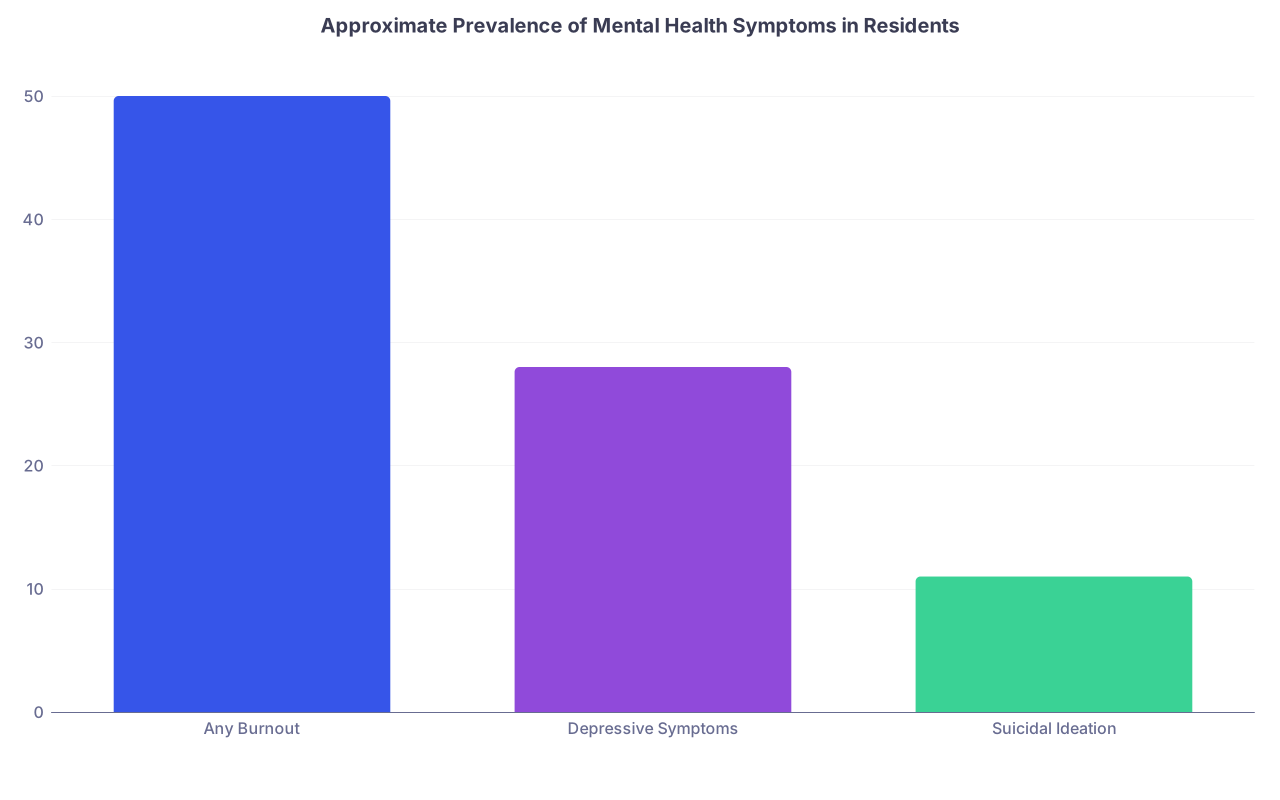
| Category | Value |
|---|---|
| Any Burnout | 50 |
| Depressive Symptoms | 28 |
| Suicidal Ideation | 11 |
Numbers vary by study, but you’re not the weird outlier if you’re struggling. You’re the norm.
3. Protect one small part of yourself from medicine
Residents who come out less broken almost always have something non-medical that they refuse to give up. Even in tiny doses.
Not some grand hobby that takes 10 hours a week. I’m talking:
- 20 minutes of guitar
- Running twice a week
- Reading non-medical fiction before bed
- Weekly call with a non-med friend who doesn’t care what “RVU” means
It’s not about being “balanced.” You will not be balanced. You’re in residency. It’s about keeping even a sliver of your identity separate from the machine.
You need a part of you that never learns to measure your worth in patient satisfaction scores, Step scores, or how many admissions you can churn through.
4. Find at least one person who sees the real you
The residents who slide into deep cynicism often feel utterly alone in it. Like everyone else is coping fine and they’re the only one falling apart.
Two protective factors I’ve seen over and over:
- One co-resident you can say anything to. “I hate everyone today. I wanted to scream at that attending. I feel like a monster for thinking this.”
- One person outside medicine who reminds you you’re more than your badge — partner, sibling, old friend.
If your program is toxic and no one feels safe? That’s its own red flag. Document stuff. Find community online. Join resident groups, therapy groups, whatever. It still counts.
Worst-case scenarios (since that’s what your brain is already doing)
Your brain is probably going here anyway, so let’s say it out loud.
“What if I burn out so badly I quit medicine?”
Honestly? Some people do. And sometimes that’s not a failure — it’s self-preservation.
I’ve seen residents:
- Switch specialties
- Change to less intense settings (outpatient, part-time, non-clinical roles)
- Leave medicine entirely
Some of them are happier than they’ve ever been. Some grieve it for a long time. But almost all of them say the same thing: “Staying would have destroyed me.”
This is not me telling you to quit. It’s me telling you the catastrophic “If I can’t handle this, my life is over” story your brain runs is fake. There are exits, detours, and ways to rebuild.
“What if I become permanently depressed?”
Permanent is doing a lot of work in that sentence.
Could you come out with depression/anxiety that doesn’t just vanish after graduation? Yes. I’ve seen it. Some attendings stay in treatment for years. Some use meds long-term.
Is that the same as being “ruined”? No. Plenty of excellent, kind, functional physicians live with mental illness and still have good lives, relationships, and careers.
Again: risk is real. Irreversible doom? No.
“What if I turn into the bitter, jaded attending and don’t even care anymore?”
If this scares you now, that’s actually a good sign. The truly gone people don’t care that they’ve changed.
The fact that you’re already worrying about this means you’ll notice the drift when it starts. That’s when you can course-correct: therapy, boundaries, different environment, different job, or just aggressively reconnecting with the parts of medicine that still feel meaningful.

| Step | Description |
|---|---|
| Step 1 | High workload and stress |
| Step 2 | Burnout symptoms |
| Step 3 | Prolonged burnout |
| Step 4 | Recovery and growth |
| Step 5 | Depression and cynicism |
| Step 6 | Long term patterns |
| Step 7 | Healthier coping |
| Step 8 | Support and intervention |
Quick reality check: what actually helps vs what’s nonsense
There’s a lot of fluffy advice out there. Let’s be a bit ruthless.
| Strategy | Actually Helpful Long-Term? |
|---|---|
| “Just push through, it ends” | No |
| Occasional vacations only | Weak |
| Regular therapy/medication | Strong |
| Supportive co-residents/mentors | Strong |
| Clear boundaries where possible | Strong |
| Alcohol to unwind daily | Actively harmful |
You don’t need a perfect wellness plan. You need a few things that actually move the needle and a willingness to admit when you’re not okay.
FAQs
1. If I feel burned out as a med student, does that mean I’ll definitely fall apart in residency?
No. It means you’re sensitive to stress and probably high on self-pressure, which is… most of us. If you take burnout seriously now and learn to set limits, ask for help, and challenge your perfectionism, you’re actually better prepared than the “I’m fine, I never struggle” people. Those are the ones who crash hardest when residency finally hits.
2. Can a single horrible rotation cause long-term depression or cynicism?
One awful rotation can absolutely leave a mark — I’ve seen people still flinch talking about a malignant surgery month years later. But one block alone usually doesn’t define you long-term. It’s more about chronic exposure without recovery. If you come out of that rotation shaken and then actually process it, talk about it, maybe adjust future choices? You’re unlikely to be doomed by that one month.
3. Will getting therapy or meds during residency hurt my future career?
In most cases, no. A lot depends on your specialty, your program culture, and how it’s documented, but many residents get treatment quietly and continue on to successful fellowships and attending jobs. The real career-ender is untreated, escalating impairment that leads to major errors, unprofessional behavior, or leaving in crisis. Getting help early usually protects your career, not harms it.
4. How do I know if I “just hate my program” vs “I’m actually depressed”?
Rough rule of thumb: if things that should feel good (time off, hobbies, good news, seeing friends) feel flat or pointless for weeks, that’s depression territory. If you feel okay outside the hospital but rage or dread every time you walk in, that’s more environment-specific. You can absolutely have both. A therapist can help you untangle which is which — you don’t have to be the judge and jury on your own brain.
5. Is it naive to go into residency hoping to stay kind and not burnt out?
It’s naive to think you’ll get through untouched. It’s not naive to fight to stay human. The residents who come out still kind aren’t the ones who “just stayed positive.” They’re the ones who got angry enough at the system to protect themselves, leaned on others, took their own suffering seriously, and refused to accept “this is just how it is” as the final story.
Key points:
Burnout in residency can lead to long-term depression or cynicism, but it’s not automatic, and it’s not irreversible. The outcome depends a lot on whether you recognize the slide early and treat your mental health like an actual medical priority, not a personal failure. You can’t make residency harmless — but you absolutely can stop it from rewriting who you are without your permission.


