

Most programs are arguing about the wrong thing.
“Night float vs 24‑hour call” is not the real question. The real question is: what flavor of burnout are you willing to create, and how are you going to treat it?
You already know both systems can be miserable. What you probably have not seen clearly laid out is how the burnout patterns differ, why some residents thrive in one and crash in the other, and what specific levers you can pull to make each model survivable.
Let me break this down specifically.
The Core Difference: Acute Exhaustion vs Chronic Erosion
The duty‑hour debate often gets reduced to a cartoon:
24‑hour call = unsafe and archaic; night float = progressive and humane. That is naïve.
Physiologically and psychologically, you are trading acute exhaustion for chronic erosion.
24‑hour (often 24+4) call:
- Massive sleep deprivation concentrated into brutal, discrete episodes.
- More recovery time between calls (if your program is not cheating the schedule).
- Burnout pattern: “boom‑bust” – you feel wrecked after call, semi‑functional by day 2, almost human by day 3, then repeat.
Night float:
- Moderate but persistent sleep fragmentation and circadian misalignment.
- Fewer crash‑and‑burn episodes, more quiet, relentless fatigue.
- Burnout pattern: “slow leak” – no dramatic collapses, just steady loss of energy, empathy, and enthusiasm.
That is the high‑level frame. Now let’s get precise.
What Actually Happens To Your Brain and Body
You do not need a physiology lecture, but you do need the applied version.
Sleep Architecture: How Each System Breaks You Differently
24‑hour call:
- You often get:
- A partial night of fragmented sleep on a couch or call room bed.
- Short bursts (20–90 minutes) constantly interrupted.
- Result:
- Acute total sleep deprivation post‑call.
- A brain that the next day functions like it has a blood alcohol level around 0.08–0.10, especially at 24–28 hours awake.
- But then, if scheduling is honest, you sometimes get 1–2 nights of relatively normal sleep.
Night float:
- You are sleeping during the day, in short or misaligned windows.
- Your circadian rhythm (melatonin, cortisol rhythms) never fully shifts in a 5–7 night block, and often cannot in 2–3 night “mini‑blocks.”
- Result:
- Chronic partial sleep deprivation (you keep getting 4–6 hours of low‑quality, daytime sleep).
- No single catastrophic crash, but cognitive performance rides at a steadily lower level.
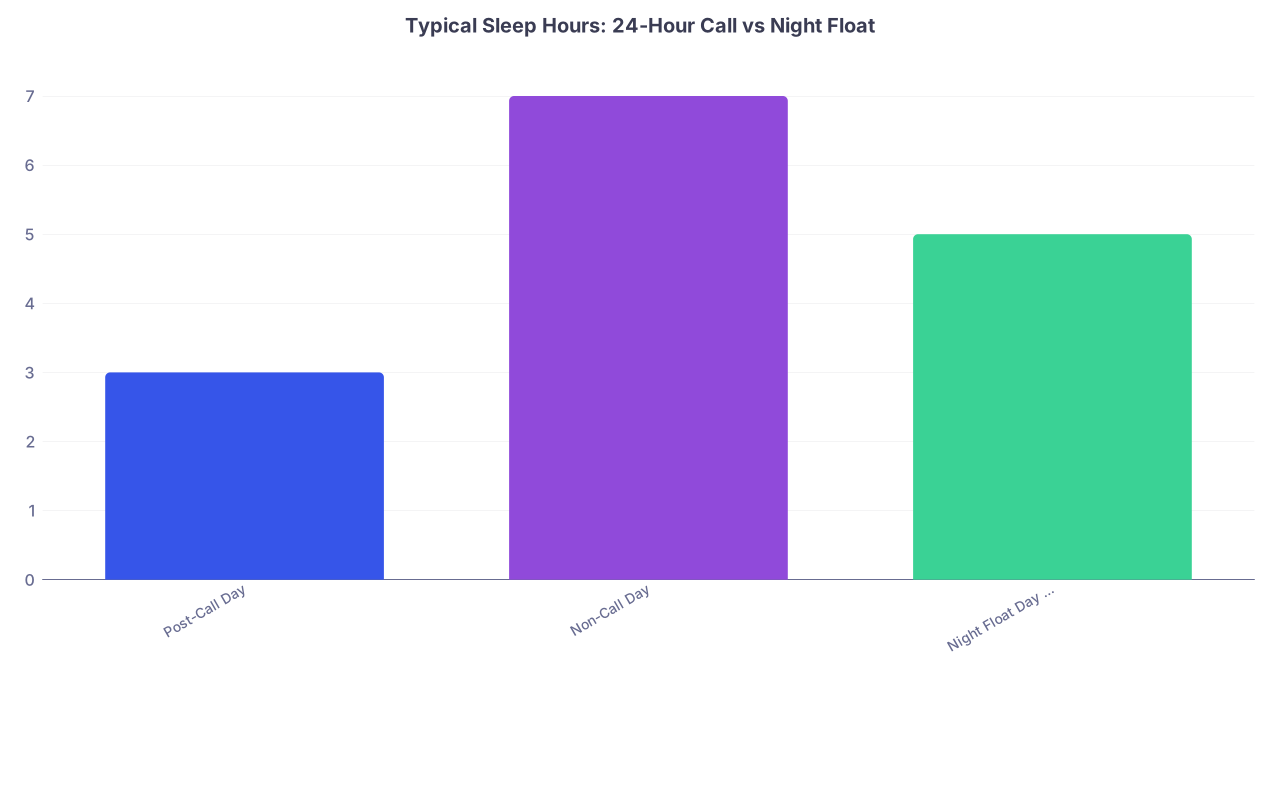
| Category | Value |
|---|---|
| Post-Call Day | 3 |
| Non-Call Day | 7 |
| Night Float Day Sleep | 5 |
On paper, night float “wins” because you never go 30 hours straight. In lived experience, many residents feel worse 7 days into night float than after a single 24‑hour call.
Cognitive Load and Error Patterns
24‑hour call:
- Highest risk windows:
- 04:00–08:00 during call.
- 08:00–12:00 post‑call rounds.
- Typical failure modes I have seen:
- Missed subtle data (overlooking a small creatinine bump).
- Executive function collapse (forgetting to complete simple but non‑urgent orders).
- Emotional lability (snapping at a nurse at 06:30 over something trivial).
Night float:
- Highest risk windows:
- 02:00–04:00 on night 3–5, when the novelty has worn off.
- First day or two after night float when you try to flip back.
- Failure modes:
- Slower processing speed; everything takes longer.
- Reduced working memory – you forget what the third problem on that cross‑cover patient was.
- “Flattened” empathy – you handle the problem correctly but with zero emotional bandwidth.
Both are dangerous. They just fail differently.
Burnout Pattern #1: 24‑Hour Call “Boom‑Bust”
On 24‑hour (or 28‑hour) call models, burnout tends to look like this:
- You dread the call day. The day before you are already conserving energy.
- During call: you run on adrenaline, caffeine, and fear of missing something.
- Post‑call: you feel inhuman. Noise is physically painful. You half‑sleep from noon to dinner.
- The next day: your mood rebounds slightly, but there is a hangover effect—irritability, emotional blunting.
- By the third or fourth day post‑call, you almost feel normal. Then the cycle restarts.
Psychological Signature
Features that show up again and again:
- Anticipatory anxiety: not just “this will be hard,” but catastrophizing.
- Guilt: “I am a worse doctor post‑call; someone will suffer because of it.”
- Anger at the system: especially when you can see no reason for 24‑hour coverage beyond hospital inertia.
Residents with a strong perfectionistic streak do particularly badly here. They know they miss things post‑call and cannot forgive themselves.
Who Tolerates 24‑Hour Call Better?
Patterns I have noticed:
- People with naturally “short sleep” tendencies (who feel fine on 5–6 hours) cope better.
- Ex‑ICU nurses / paramedics / military medics often adapt because they are used to acute sleep deprivation.
- Residents with stable, low‑drama home lives (supportive partner, no young children waking them) recover more efficiently post‑call.
If you are already an insomniac, or catastrophize around making mistakes, 24‑hour call magnifies your worst tendencies.
Burnout Pattern #2: Night Float “Slow Leak”
The night float version of burnout is subtler and more insidious.
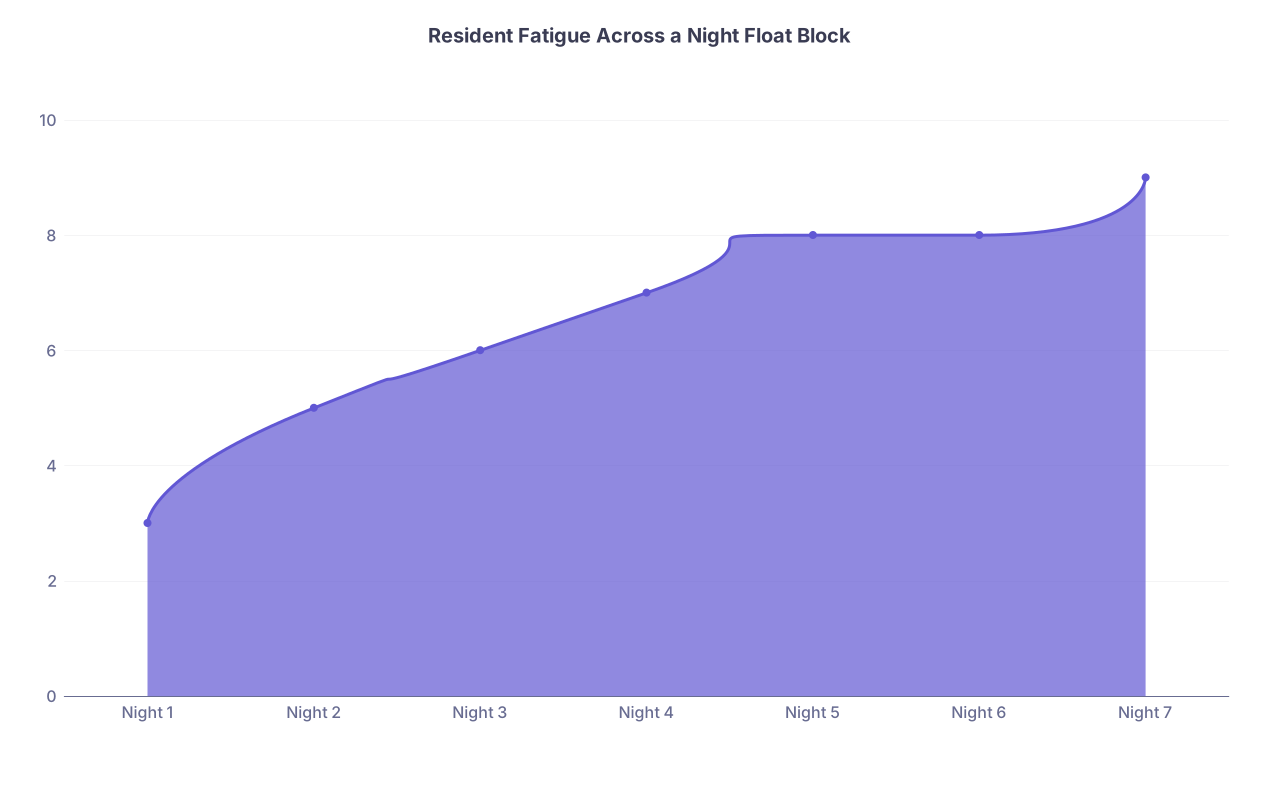
Typical pattern across a 5–7 night block:
- Night 1–2: You feel awkward but slightly energized. Different team, different pace. “Weirdly fun.”
- Night 3–4: The novelty is gone. Sleep debt is accumulating. Your sense of time blurs.
- Night 5–7: You lose track of which day it is. Personal life is on pause. You feel emotionally flat and mildly detached from everything.
Psychological Signature
Common features:
- Depersonalization: you feel like an observer in your own life. Work, home, hobbies all seem distant.
- Anhedonia: you stop doing anything outside of work because flipping back and forth between schedules is brutal.
- Disconnected relationships: you are out of sync with your partner, friends, kids. Their active time equals your crash time.
Unlike 24‑hour call, you rarely get the big rebound. You finish a block and then go right back onto days, often with no real recovery.
| Category | Value |
|---|---|
| Night 1 | 3 |
| Night 2 | 5 |
| Night 3 | 6 |
| Night 4 | 7 |
| Night 5 | 8 |
| Night 6 | 8 |
| Night 7 | 9 |
(Think of 1 as “rested” and 10 as “utterly exhausted.” This curve is what most people describe.)
Who Tolerates Night Float Better?
- Natural “night owls” who already sleep at 02:00 and wake at 10:00 manage the circadian part better.
- Residents without dependents at home, or with partners on similarly weird schedules, feel less social disruption.
- People good at setting strict boundaries (sleep environment, phone off, blackout curtains) do better. Night float is unforgiving to sloppy habits.
If you are a morning person, need regular social contact, or have young kids, night float can be emotionally harder than 24‑hour call.
Workload and Autonomy: Same System, Different Feel
Both systems can be run well or badly. The burnout effect is not just about hours; it is about how those hours are structured.

Call Nights: Intensity and Chaos
On 24‑hour call, the typical pattern:
- Front‑loaded chaos from 17:00–23:00 with admissions.
- A mix of admissions and cross‑cover 23:00–06:00.
- Morning rounds 06:30–11:00, often with minimal backup.
Psychologically, call feels like a “hero shift”:
- You are the point person for almost everything.
- There is a strange pride: “We survived that call.”
- The burnout risk is tied to peak stress and decision density.
When call is badly staffed (e.g., 1 resident carrying 30–40 patients plus ED admits), the line between “heroic” and “unsafe” vanishes.
Night Float: Volume and Drudgery
On night float:
- You often carry a massive census (40–80+ patients across services in some places).
- Less teaching, less structure. The job is:
- Admit the new ones.
- Keep the old ones alive until 07:00.
- Do not rock the boat.
You are usually:
- Less integrated into the daytime academic experience.
- Less likely to get meaningful feedback.
- More likely to feel like a service worker rather than a learner.
That “drudgery plus isolation” is fertile ground for burnout even when hours are technically better.
Program Design: How To Make 24‑Hour Call Suck Less
Let me be blunt. If a program insists on 24‑hour call and then does not modify it with safety valves, that is lazy leadership.
Here is how you actually fix the model.
1. Hard Caps on Census and Admissions
Nothing burns residents faster than uncontrolled volume. You need explicit, enforced numbers.
| Service Type | Max Patients on Call | New Admits per Call |
|---|---|---|
| General Medicine | 12–16 (team total) | 6–8 |
| ICU | 8–10 | 4–6 |
| Surgery Floor | 20–25 | 6–8 |
| OB Triage/L&D | Variable by unit | Protocol based |
If your chief or attending says “we do not cap because the ED never closes,” what they mean is “we use residents as a pressure valve for hospital capacity.” That is not education. That is exploitation.
2. Protected Post‑Call: Real, Not Theoretical
True fixes:
- No scheduled clinics post‑call.
- No “you can leave after rounds if we finish notes” nonsense. Hard out time, enforced.
- Attending‑level sign‑out by a specific hour (for example, 11:00). You do not keep the pager “just in case.”
Residents should never be directly caring for patients after 28 hours. No “stay to do one more procedure” exceptions.
3. Backup and Help Structure
On call nights, there must be:
- A named in‑house or easily reachable backup (senior resident or nocturnist).
- Clear thresholds for calling for help: unstable vital signs, multi‑service disasters, mass casualty, etc.
- An understanding that asking for help at 03:00 is a sign of professionalism, not weakness.
Some of the worst burnout I have seen was in residents who had backup on paper but had been socially conditioned not to use it.
4. Micro‑Recovery During Call
You are not a martyr. During slower windows:
- Take 20‑minute actual naps. Door closed, pager with a colleague, phone silenced.
- Hydrate and eat real food early (17:00–19:00) before admissions explode.
- Use minimal caffeine after 02:00 so you can crash post‑call; front‑load intake between 20:00–01:00.
Tiny changes here can make the post‑call crash less nuclear and help mood stability.
Program Design: How To Make Night Float Not Soul‑Crushing
Night float is often implemented lazily: “We made it compliant with duty‑hours so we are done.” No. You just created a slow‑boil burnout factory if you ignore the details.
1. Block Length and Flip Strategy
Optimal design:
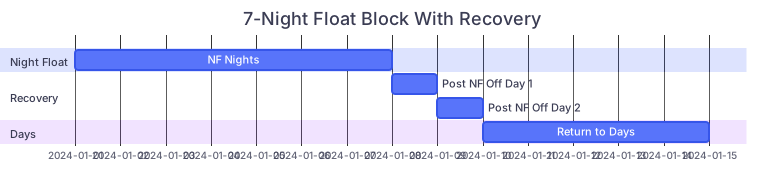
- 4–7 consecutive nights.
- Then true recovery days, not a hard flip directly into normal days.
What does “true recovery” look like?
- At least 2 days with no clinical duties.
- The first “off” day should not start with a 07:00 simulation or mandatory lecture.
| Task | Details |
|---|---|
| Night Float: NF Nights | a1, 2024-01-01, 7d |
| Recovery: Post NF Off Day 1 | a2, 2024-01-08, 1d |
| Recovery: Post NF Off Day 2 | a3, 2024-01-09, 1d |
| Days: Return to Days | a4, 2024-01-10, 5d |
Bad idea: 3 nights on, 1 day off, back on days. That keeps your body permanently confused.
2. Circadian‑Smart Scheduling
Help residents shift at least partially:
- Fixed start and end times (for example, 20:00–08:00 every night, not random 19:00–07:00 then 22:00–10:00).
- Encourage consistent pre‑night routine:
- Light exposure in late afternoon.
- Strategic caffeine at start of shift only.
- Strict dark environment post‑shift (blackout curtains, eye mask, ear plugs).
Daytime didactics for night float residents should be optional and recorded. Forcing a 13:00 conference on someone sleeping 09:00–15:00 is nonsense.
3. Social and Educational Integration
Night float residents often feel like ghosts:
- Not part of morning report.
- Not present for teaching rounds.
- Invisible to attendings except via notes.
Fixes:
- Scheduled, brief night‑time teaching by nocturnists or on‑call attendings (15‑minute case discussions).
- Rotating attendings spending 1–2 nights per month with night team for feedback and teaching.
- Formal debriefs at the end of a block: “What patterns did you see? What did you learn?”
That turns night float from “service only” into genuine educational time, which buffers burnout.
4. Census and Task Management
Same principle as call: volume caps.
- Cap cross‑cover lists per resident.
- Cap new admissions per night.
- Use ancillary staff (phlebotomy, transport, unit clerks) effectively at night. If residents are drawing all their own labs, wheeling every patient to CT, and answering every phone call, you are doing it wrong.
Personal-Level Fixes: Tailoring To Your Burnout Pattern
You cannot redesign your entire program. But you have more control than you think over how you burn out, and how fast.

If You Are Mostly On 24‑Hour Call
Think of it like interval training. You are managing sprints and recovery.
Pre‑Call Day Strategy
- Sleep: Go to bed 1 hour earlier the night before call. Not suddenly at 20:00, but shave an hour off normal.
- Logistics: Front‑load life tasks. Pay bills, meal prep, laundry before the call block.
- Nutrition: Bring actual meals, not just snacks. Protein + complex carbs early in the night beats sugar bombs at 03:00.
During Call – Protect Your Future Self
- Aggressively triage your own attention. Not every problem needs intern‑level micromanagement at 02:00.
- Cluster tasks: If you are going to 7W for a rapid, clear two cross‑cover issues while you are there.
- Be disciplined with micro‑naps when the pager quiets.
Post‑Call – Non‑Negotiable Rules
- Do not drive home if you are fighting to keep your eyes open. Arrange occasional ride swaps or sleep 60–90 minutes in the call room first.
- Eat something light and then sleep. No doom‑scrolling “for a few minutes.”
- Cap your post‑call nap at 4–5 hours. If you sleep 10 hours straight, you wreck the next night’s sleep.
Emotional Debriefing
- If something went badly on call—near miss, code, conflict with a nurse—debrief it with a peer or attending within 24–48 hours.
- Suppressed guilt and anger from call nights is like wet wood; it smolders and fills everything with smoke.
If You Are Mostly On Night Float
Here your enemy is drift—in schedule, in mood, in relationships.
Sleep Discipline
- Choose a consistent sleep window (for example, 09:00–15:00) and protect it like an ICU bed.
- Dark, cool, quiet room. Ear plugs. Phone on “emergency only.”
- Tell your family / roommates: during this window, unless someone is bleeding or the house is on fire, do not wake you.
Light and Caffeine Timing
- Bright light exposure on your commute in and first hours of shift.
- Dim light and zero blue light 30–60 minutes before leaving in the morning (sunglasses if it is bright outside).
- Caffeine only in the first half of the shift. If you are chugging coffee at 05:00, your 09:00 sleep will be trash.
Social Anchors
- Plan at least one intentional social contact every 2–3 days: quick video call with partner, 15‑minute breakfast with a friend post‑shift, etc.
- Without this, residents on night float begin to feel like they do not exist in anyone’s life. That isolation accelerates burnout.
Transition Days
- On the last night, limit post‑shift sleep to 3–4 hours, then force yourself to stay awake until a normal bedtime.
- Use physical activity and sunlight that afternoon to help reset.
- The first “normal” day after block, avoid heavy commitments. Your brain is still mush.
Choosing Between Systems: What You Should Actually Ask
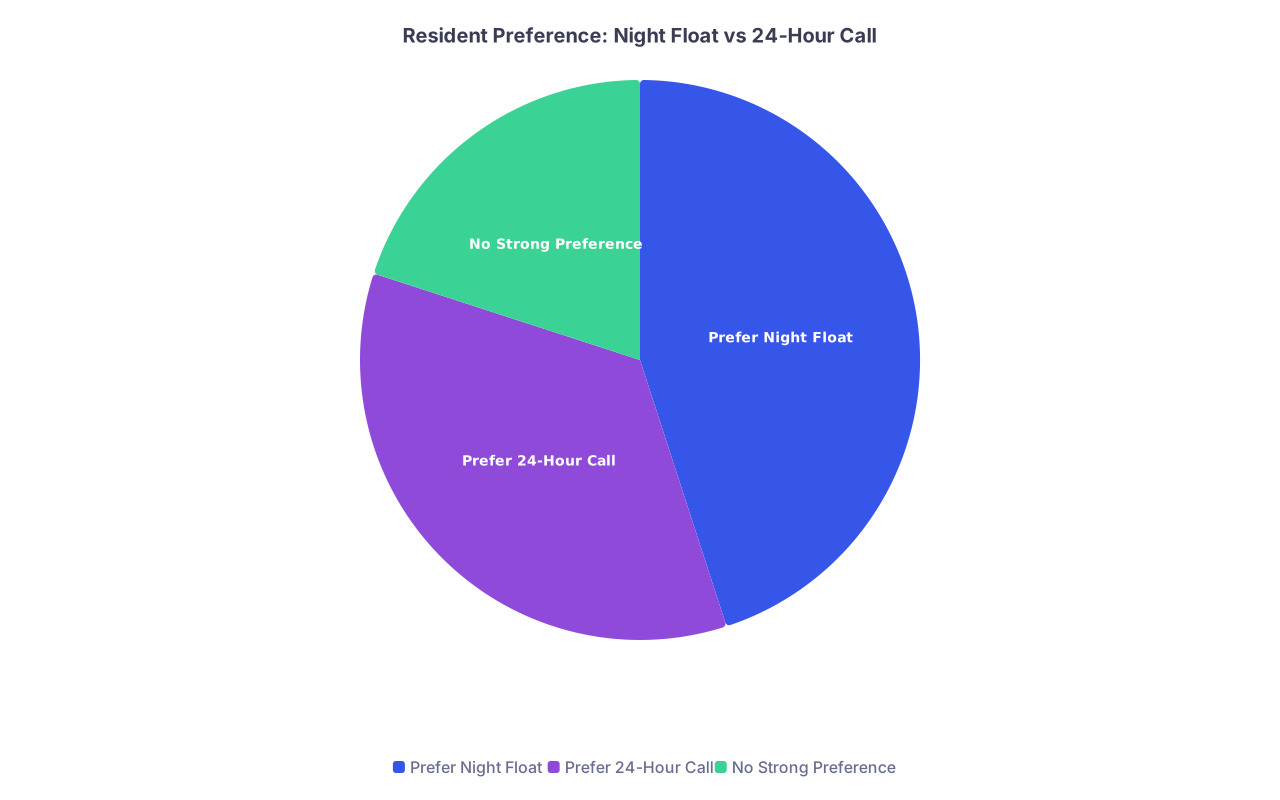
You may not have a choice between night float and 24‑hour call at your program. But when you rank programs or consider electives, you can ask smart questions.
| Category | Value |
|---|---|
| Prefer Night Float | 45 |
| Prefer 24-Hour Call | 35 |
| No Strong Preference | 20 |
Do not just ask, “Do you use night float?” Ask:
For 24‑hour call systems:
- How many patients does a call team typically carry?
- What is the average number of admissions per call?
- What time do post‑call residents reliably leave?
- Is there an in‑house attending or senior backup overnight?
For night float systems:
- How long are night float blocks, and how often do they occur?
- Do night float residents attend daytime conferences? Are those mandatory?
- How are night float residents evaluated and included in teaching?
- What support staff is available at night?
Programs that cannot answer those questions with specifics either have not thought it through, or are hiding something.
Matching Fixes To Patterns: Quick Summary Map
Here is the condensed decision tree. If you feel:
Sudden, intense crashes, feel like a danger to patients post‑call, but bounce back between calls:
- Your main target is improving the 24‑hour call environment: caps, backup, micro‑recovery, and stricter post‑call protection.
Constant low‑grade fatigue, blunted mood, worsening relationships, but no single catastrophic shift:
- Your main target is making night float livable: sleep discipline, social anchors, block design, and controlled flips.
Both patterns at different times of the year:
- You are normal. You are also at real risk. Combine both playbooks and push your chiefs for structural changes, not just wellness lectures and pizza.

Three Things To Remember
- Night float and 24‑hour call are not “good vs bad” – they create different burnout phenotypes. You need to recognize which one you are developing.
- System design matters more than the label. Caps, backup, recovery days, and real autonomy change everything.
- You cannot fix duty‑hours alone, but you can change your micro‑environment: sleep discipline, task triage, brief debriefs, and intentional connections. Those are the levers that keep you in the game long enough to see attendinghood.


