

Last week a chief resident texted me at 1:17 a.m. She’d just finished dealing with a moonlighting request, a resident conflict, and a patient transfer—and still had 20 unread admin emails flagged “high priority.” Her actual shift had ended 5 hours earlier. “I think my job is now 30% medicine, 70% putting out fires,” she wrote. “And I’m always on the clock. What do I even count as work hours anymore?”
If that sounds uncomfortably familiar, you’re in the right place. Being chief + de facto administrator is two full jobs smashed into one GME salary. If you do not get ruthless about how you manage your work hours, you will burn out and you’ll drag your co-residents down with you.
Let’s get very concrete about how to survive this without destroying your health, your relationships, or your residency program’s ACGME report.
1. First, Get Clear: What “Counts” as Work When You’re Chief
The fastest way chiefs get into trouble: pretending half their admin work “doesn’t count” as duty hours.
If you’re doing anything that you wouldn’t be doing if you weren’t chief or in your residency role, it’s work. Period.
That includes:
- Fixing the schedule at 10 p.m. because someone called out
- Answering resident texts about coverage, workflow, or policies
- Meetings with program leadership, GME, or hospital administration
- Emailing back and forth about program issues
- Preparing lectures, noon conferences, or M&M as part of your chief role
- Interview days, recruitment dinners, retreat planning
- QA/QI and committee work that is part of your assigned chief/admin responsibilities
What usually does not count:
- Optional career stuff you chose (side research not required by program, personal teaching opportunities you volunteered for)
- Purely social group chats and hangouts
- Studying for boards (your own time, unfortunately)
You need a mental rule:
If your PD could realistically say, “We need you to do this as part of your chief responsibilities,” then log it.
Because what happens when you do not track it?
You slide into 70–80 hour weeks while your official numbers say “56–58.” Then you get:
- Silent resentment
- Hidden burnout
- And worst: no leverage to ask for help, because “the numbers look fine.”
Fix that on day one.
2. Build a Work-Hours System That Actually Works
You’re not going to magically remember what hours you worked. Your brain is fried and your day is fragmented. You need a simple system.
Step 1: Decide Your Tracking Categories
Make it dirt simple or you won’t use it. Three buckets is usually enough:
- Clinical
- Admin/Chief
- Education/Teaching (if substantial and expected as chief)
| Category | What Goes Here |
|---|---|
| Clinical | Rounds, admissions, nights, clinics |
| Admin/Chief | Schedules, emails, meetings, staffing |
| Education | Lectures, curricula, eval review |
You can lump education into Admin if your reporting tool is annoying. The point is mainly: clinical vs. non-clinical, so you see where your time is going.
Step 2: Use a Real-Time Capture Tool
Pick one of these and commit:
- Notes app with 3 pinned lines: “Clinical: , Admin: , Education: ”
- A recurring calendar (Google/Outlook) where you block admin chunks
- A quick spreadsheet on your phone (ugly but effective)
Your rule:
Whenever you switch into admin mode for >10 minutes, jot a timestamp.
Example:
- “0700–1500: Clinical day float”
- “1530–1700: schedule changes + coverage emails”
- “2100–2145: resident issue + PD call”
Is this tedious? Yes. For a week or two. Then it becomes automatic. And it gives you data you can actually use when you say, “I’m over 80 hours. We need to adjust.”
Step 3: Weekly Review, 5 Minutes Max
Every Sunday, look at your week. Rough total.
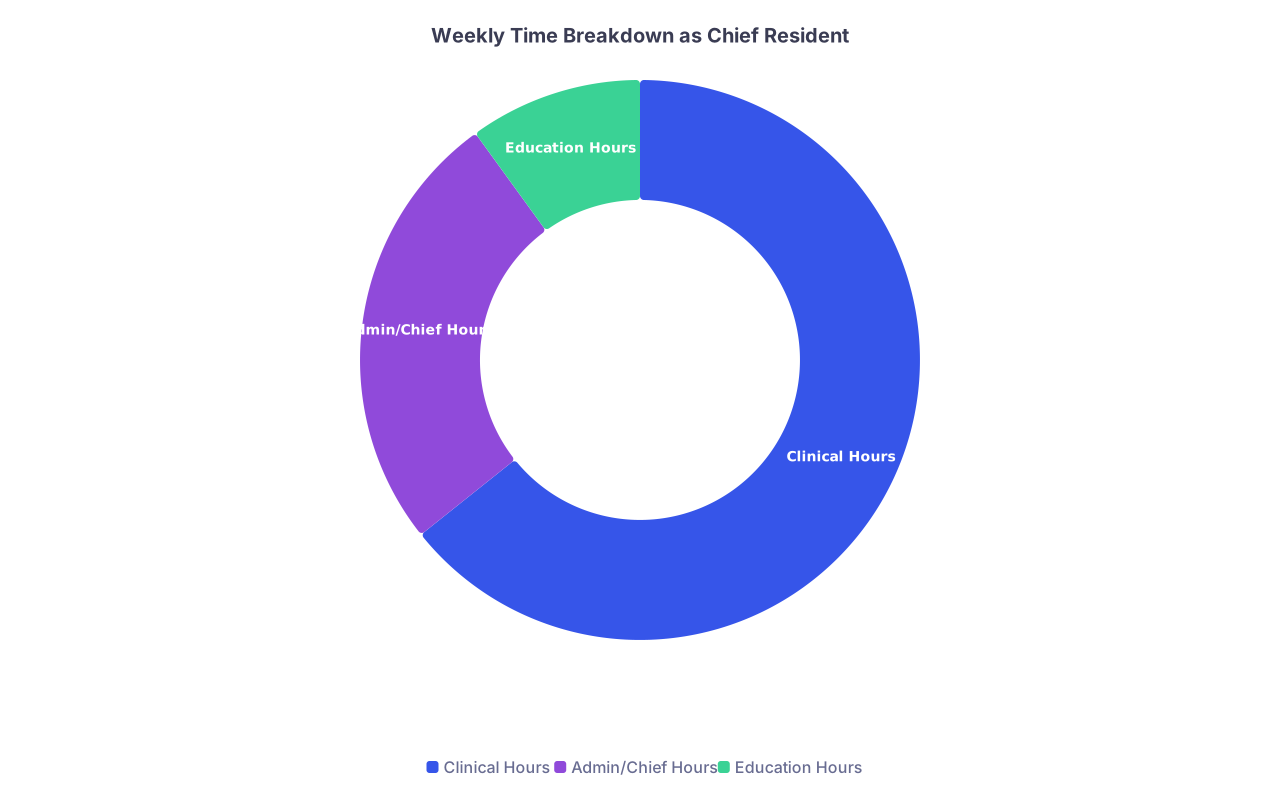
| Category | Value |
|---|---|
| Clinical Hours | 45 |
| Admin/Chief Hours | 18 |
| Education Hours | 7 |
Ask three questions:
- Did I exceed 80 hours total (clinical + admin)?
- Did any single day feel dangerous (fatigue-wise)?
- What specific admin tasks ate time that could be reduced/outsourced/shared?
Then you walk into your next meeting with PD/APD with numbers, not vibes.
3. Protect Yourself from “Always On” Chief Syndrome
The core problem as chief isn’t the 9–5 admin work. It’s the constant ping-ping-ping outside those hours. Slack, WhatsApp, GroupMe, emails, phone calls. You’re basically an on-call manager 24/7 if you let it happen.
You need very explicit boundaries and escalation paths.
Define Your “Availability Zones”
Think of your week in three zones:
Green zone – Fully available
- During your scheduled chief/admin blocks and normal work hours.
- You answer texts, emails, calls promptly.
Yellow zone – Limited availability
- Early morning, post-call, some evenings.
- You check messages at defined times, not continuously.
- Non-urgent stuff waits.
Red zone – Do not contact unless safety/coverage emergency
- Post-night, your one day off, protected time with family, therapy, etc.
- Only true emergencies break through.
You communicate these. Out loud. In writing. To residents and faculty.
Example script for your chief welcome email or start-of-year meeting:
“Here’s how to reach me: During weekdays 7 a.m.–6 p.m., text is best and I’ll usually respond within 1–2 hours. After 6 p.m., I batch replies once in the evening unless it’s a true coverage or safety emergency—then call me. On my scheduled day off, I’m offline except for urgent coverage issues, so please route routine questions to the chief inbox or wait until the next day.”
And then you stick to it.
Create a Clear Escalation Rule
People ping chiefs for nonsense because there’s no clear escalation rule.
Set something like:
- Text or email for: routine schedule swaps, policy clarification, evaluation issues, minor workflow questions
- Call for: unexpected call-outs within 24 hours, no-show residents, major interpersonal conflict on shift, anything affecting patient safety
- Do not contact chief directly for: IT issues, cafeteria complaints, badge access, EMR password issues (route those to the right department or coordinator)
Put it in writing in the resident manual. Talk through it at orientation. Remind people mid-year.
4. Structuring Your Week When You’re Both Clinical and Admin
Being chief + administrator means you’re constantly tempted to “just do admin things whenever there’s a gap.” That’s the fastest way to lose your mind and let your clinical skills deteriorate.
You need structure.
Carve Out Admin “Clinic Blocks”
When possible (I know, not every program is sane), negotiate actual, named admin blocks on the schedule.
Example:
- Monday: Wards day, no admin time
- Tuesday: 8–12 admin, 1–5 clinic
- Wednesday: 7–5 wards
- Thursday: Interview/admin day
- Friday: Light clinical, 2–4 protected admin
Even if your program can’t formally give you “admin days,” you can often create mini-blocks.
- Post-call mornings: 1–2 hours for pure admin, then home
- Noontime: 30 minutes admin three days/week while someone else covers pager
- End-of-day: 4–5 p.m. once or twice a week reserved for schedule + email
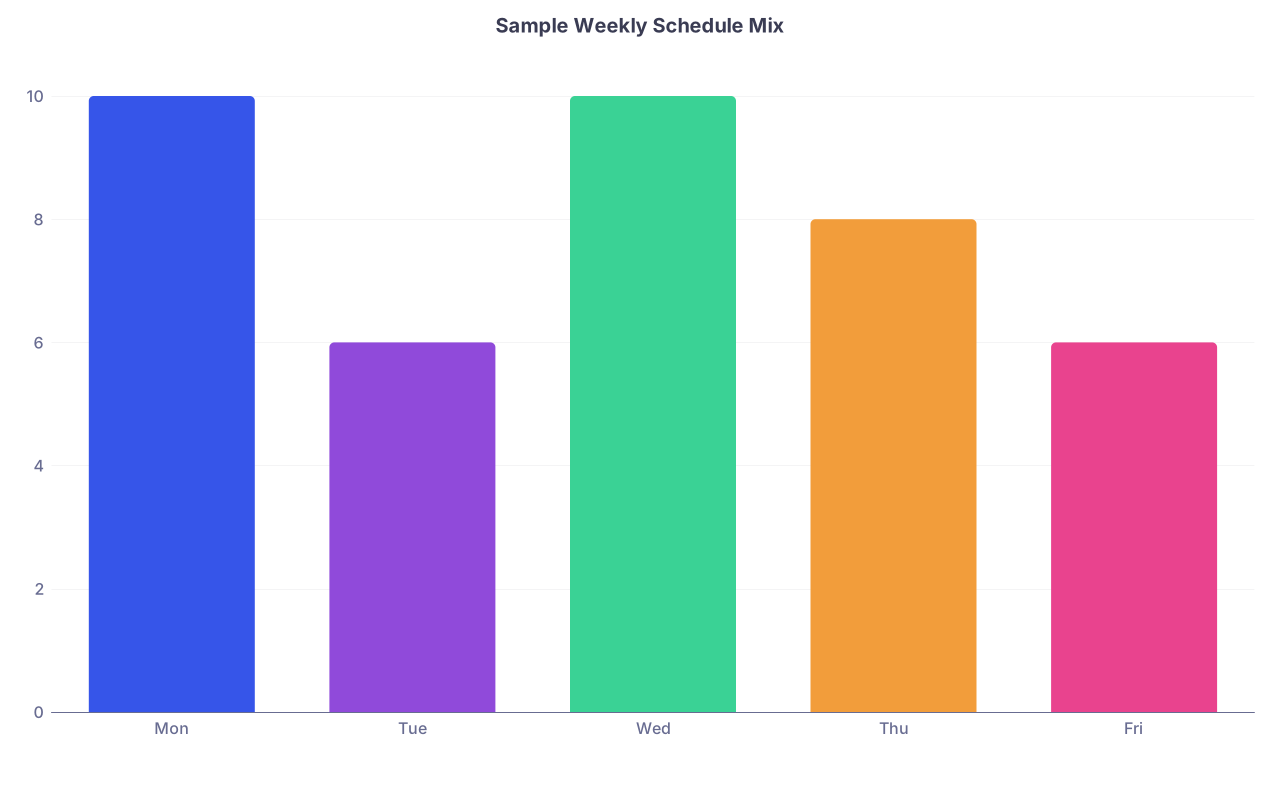
| Category | Value |
|---|---|
| Mon | 10 |
| Tue | 6 |
| Wed | 10 |
| Thu | 8 |
| Fri | 6 |
(The point isn’t the exact numbers—it's seeing that you’re not sprinkling admin across all 16 waking hours every day.)
Hard Rule: No Admin During High-Stakes Clinical Work
If you’re:
- On nights
- In the ICU on a heavy day
- Running a busy ED admit shift
You are not doing schedule changes, reading long emails, or mediating resident drama in real time. You acknowledge, you triage, you park it.
A simple auto-response text works:
“I’m on a heavy ICU shift today and will be slower to respond to non-urgent chief issues. If this is about coverage or patient safety, CALL me. Otherwise I’ll handle it after 6 p.m. or tomorrow.”
This isn’t selfish. It’s safe. When chiefs try to be administrator + senior resident + therapist simultaneously, their clinical performance suffers.
5. Saying “No” and “Not Now” Without Nuking Relationships
A lot of chief burnout is actually “I said yes to everything because I thought I had to.” You don’t. In fact, a good chief says no often.
Use These Phrases Verbally and in Email
“I can do X or Y this week, but not both. Which is higher priority for you?”
- Forces PD or admin to choose. You’re not the bottleneck—they are.
“That’s a great idea for next year. I don’t have bandwidth to build that from scratch right now.”
- For the 24th “initiative” someone wants you to pilot.
“I’ll need dedicated time blocked on my schedule to do that safely.”
- Ties any new ask to concrete hours.
“Right now my total hours are at about 75/week when I combine clinical and chief work. If we add this, something else will have to come off my plate to remain compliant.”
- Uses ACGME as your shield. Always smart.
This is where your actual tracked time pays off. You aren’t whining. You’re reporting.
6. Handling Specific High-Stress Situations
Let’s run through some of the common nightmare scenarios and how to handle them in a way that protects your hours and your sanity.
Scenario 1: Last-Minute Call-Out and You’re Already Maxed
It’s 5:30 a.m. A resident calls out sick. PD is unreachable. Everyone looks at you.
What you do not do: reflexively plug yourself into the schedule every time.
Instead, follow a pre-agreed coverage algorithm. If you don’t have one, build it this month.
Basic example:

| Step | Description |
|---|---|
| Step 1 | Resident calls out |
| Step 2 | Check backup pool |
| Step 3 | Ask for voluntary swap |
| Step 4 | Assign backup |
| Step 5 | Escalate to PD/APD |
| Step 6 | Confirm and update schedule |
| Step 7 | Chief steps in clinically |
| Step 8 | Negotiate temporary redistribution |
| Step 9 | Within 24 hours? |
| Step 10 | Backup available? |
| Step 11 | Volunteer found? |
| Step 12 | Patient safety risk now? |
If you do end up plugging in yourself:
- Log every hour as clinical
- Immediately communicate with PD: “I picked up X shift(s) to maintain safe coverage. This pushes my total hours to approx Y this week; we’ll need to pull back admin/other duties to stay compliant.”
Scenario 2: Endless Emails at Night
You finish your clinical work at 6 p.m. You open email “just to clear a few things.” Suddenly it’s 9:45 p.m. and you’ve done 3 hours of unpaid, uncounted work.
Fix:
- Set an evening email “window” (e.g., 8–8:30 p.m. on 2–3 set nights)
- Anything that comes outside that window waits until the next one unless it’s clearly urgent
- Turn off push notifications on your phone for email. Yes, actually do it.
You’re chief, not a 24/7 call center.
Scenario 3: PD Keeps Adding Projects
PD: “Can you also lead a wellness initiative, revamp didactics, and oversee recruitment social media?”
You: already at 65–70 hours.
You say:
“I’m excited about [one of those]. Right now I’m averaging about 18–20 hours/week of chief/admin work on top of clinical. If we add these, my total will exceed ACGME guidelines. Can we prioritize 1–2 and defer or reassign the others?”
Then shut up and let them respond. Do not fill the silence by volunteering solutions for them.
7. Using Data and Structure to Your Advantage
Programs respect what they can see. You want to be the chief who brings receipts, not vibes.
Track and Show Your Load
Once a month, make a one-slide summary for yourself (and, if you’re smart, for your PD):
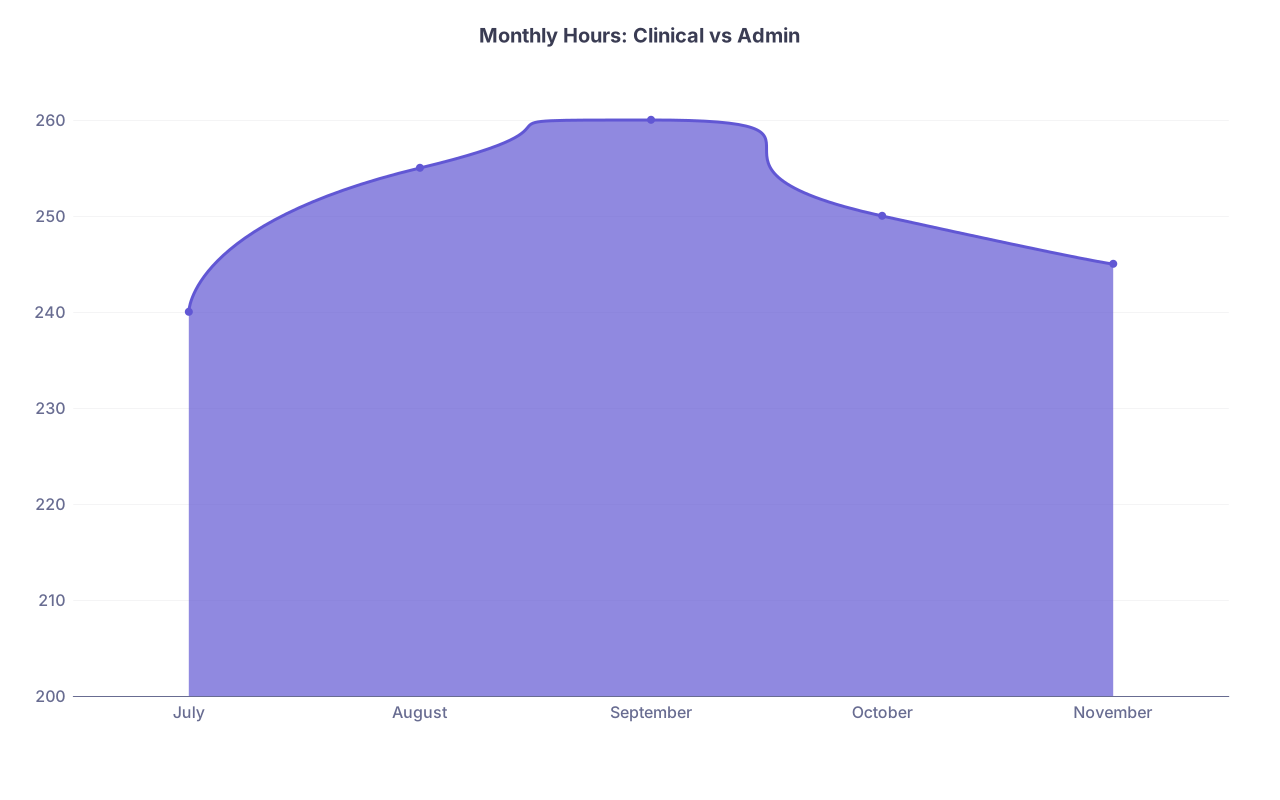
| Category | Value |
|---|---|
| July | 240 |
| August | 255 |
| September | 260 |
| October | 250 |
| November | 245 |
And maybe a second chart:
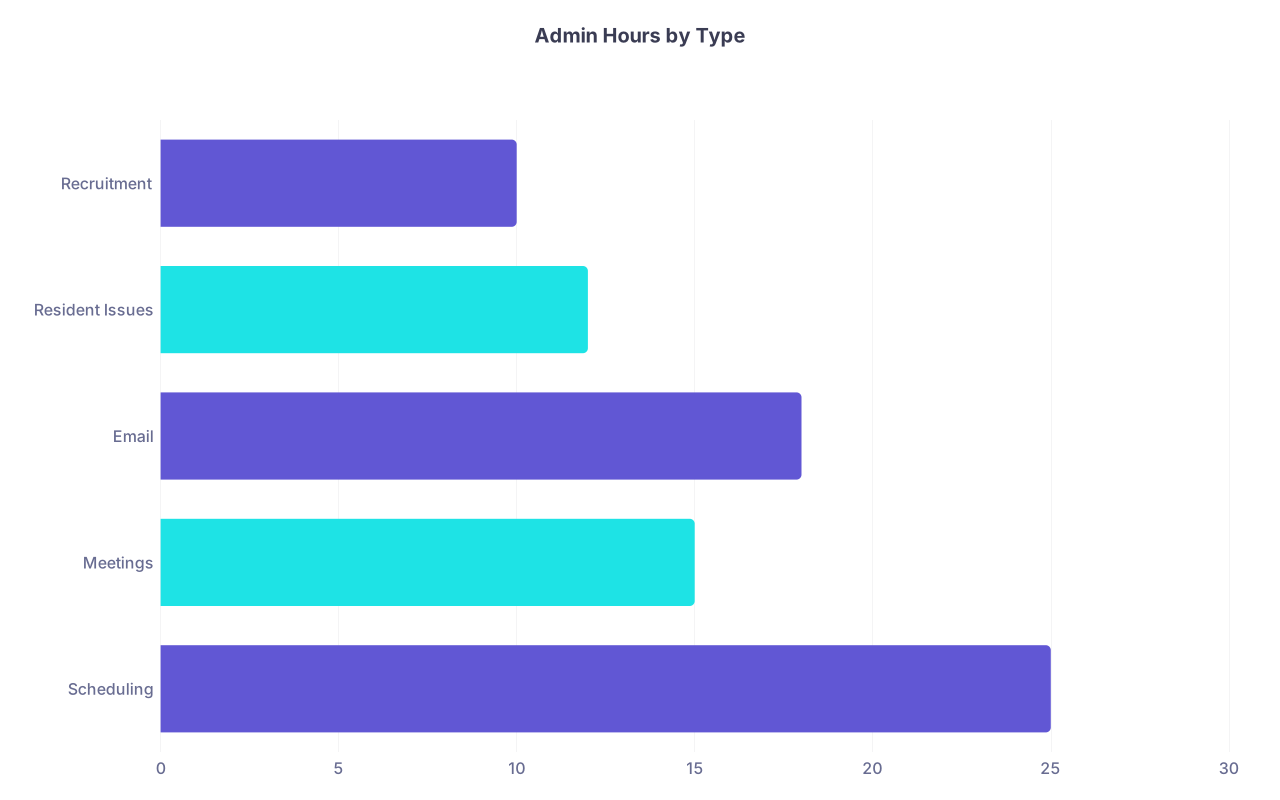
| Category | Value |
|---|---|
| Scheduling | 25 |
| Meetings | 15 |
| 18 | |
| Resident Issues | 12 |
| Recruitment | 10 |
You don’t have to show all of this formally. But it gives you language like:
- “Scheduling alone is ~6 hours/week. If we had coordinator support for swaps, that’d drop by half.”
- “Email is eating 3–4 hours/week. We could compress decision-making by having a short weekly standup with PD instead of endless threads.”
Administration understands this kind of language. It sounds like what they say to their own bosses.
8. Taking Real Time Off Without the World Collapsing
If you’re never truly off, your judgment decays. You become worse as chief and as physician. You need true off-the-grid time.
Build a Chief Coverage System
You shouldn’t be the sole chief point person 365 days a year. Rotate.
If you have co-chiefs:
- Divide weeks or days: e.g., “A chief” and “B chief” of the week
- Whichever chief is off is really off except for mass-casualty-level events
If you’re the only chief (I’ve seen this; it’s brutal):
- Negotiate backup coverage with PD/APD for your vacations and at least some weekends
- Be explicit: “For the week of [dates], Dr. X will be point person for coverage and urgent issues. I’ll be fully offline unless ED/hospital disaster.”
When you’re off, leave:
- A short document: “If X happens, do Y. If you’re unsure, call PD.”
- Clear instructions in the chief email auto-reply
Actually Disconnect
On your off day(s):
- Sign out of email on your phone
- Mute or hide chief-related group chats
- If you must, check once at a set time with a 15-minute limit
You are modeling boundary-setting for your residents. If the chief works 24/7 and never disconnects, what do you think interns learn?
9. Mental Health, Guilt, and Letting Go of Perfection
Almost every chief I’ve worked with has said some version of: “I feel guilty any time I’m not available. I’m supposed to take care of everyone.”
Here’s the truth:
You are responsible. You are not infinite.
Signs you’re slipping into dangerous territory:
- You’re charting or answering admin messages while driving home
- You’re so tired you don’t remember details of handoffs
- You’re short-tempered with residents you actually like
- You’re fantasizing about quitting medicine entirely, not just being done with chief year
You need:
- One non-negotiable thing each week that’s for you only (therapy, workout, weekly dinner, religious practice, long walk with no pager)
- Someone outside your program you can vent to without consequence
If your mood or sleep tanks for more than 2–3 weeks, that’s not “chief year.” That’s a problem. Get real help—PCP, therapist, whoever. And yes, tell your PD if your functioning is compromised. A serious program would rather adjust your role than watch you crash.
FAQ (Exactly 5 Questions)
1. Do I really have to log every little admin thing as work hours?
No, not every 2‑minute text. Use a threshold. Anything that, in total, takes more than 10–15 minutes or requires you to sit down and focus (emails, calls, schedule edits, meetings) should be counted. You’re aiming for reasonable accuracy over the week, not stopwatch-level precision.
2. What if my PD basically ignores my concerns about total hours?
Then you escalate strategically. First, bring concrete data to a second meeting and propose specific solutions (redistributing tasks, protected admin time, coordinator help). If nothing changes and you’re clearly over ACGME limits, document your attempts, loop in the program coordinator or GME office, and consider involving your resident council. This is about safety and accreditation, not being “difficult.”
3. How do I stop residents from texting me about every small thing?
You train them. Repeatedly. Share a written “When to text vs when to email vs when to call” guide. When someone texts something minor at midnight, answer the next morning with, “For future, email works best for non-urgent things like this.” Praise people who use the right channels. Habits shift over a few weeks if you’re consistent.
4. Is it normal for chief year to feel harder than any other year of residency?
Yes. Almost everyone underestimates how draining the invisible work is—managing people, conflict, and logistics on top of clinical duties. Harder does not mean “I must destroy myself to prove I’m committed.” The line is whether it’s sustainable and safe. If you’re constantly beyond 80 hours or feel unsafe, that’s not just “chief is hard,” that’s a structural problem to address.
5. What if my co-chief isn’t pulling their weight and I’m doing all the admin work?
First, get specific: track tasks and time so you’re not just relying on frustration. Then have a direct, private conversation: “Here’s what I’m handling right now; here’s what I need more help with.” If things don’t change, bring the issue—with concrete examples—to your PD and suggest clearer division of duties or scheduled check-ins. Do not quietly absorb the entire workload; that breeds resentment and burnout and the program may not even realize there’s a problem.
Keep three things front and center:
You must count all your work as work. You need real structure—admin blocks, escalation paths, and boundaries. And you’re allowed to say “no” or “not now” without failing as chief.
Protect your hours, and you not only survive chief year—you’ll actually leave it as a better doctor and leader instead of a burned-out cautionary tale.


