
The story you have heard about “everyone is burned out in residency” is statistically wrong. The data show something more nuanced: burnout is widespread, but not evenly distributed. Your risk depends heavily on what you train in, how your program runs, and where you sit in the call hierarchy.
Let me walk through the numbers, not the anecdotes.
1. What The Data Actually Measure When They Say “Burnout”
Most serious studies use the Maslach Burnout Inventory (MBI) or a close variant. They usually define “burnout” as high scores on:
- Emotional exhaustion
- Depersonalization (cynicism, detachment)
Sometimes they also track low personal accomplishment, but the first two domains are the workhorses.
Key point: different studies use slightly different cutoffs and populations, which is why reported prevalence ranges are wide. But when you look across multiple large surveys of residents and early-career physicians (ACGME surveys, Medscape reports, JAMA and Mayo Clinic Proceedings studies), consistent patterns emerge.
At a high level, national data across trainees show:
- Roughly 35–60% of residents meet criteria for burnout at any given time
- Certain specialties regularly sit 15–25 percentage points above or below that average
So yes, burnout is common. But “common” is not the same as “guaranteed.” And specialties are not interchangeable.
2. Burnout Prevalence by Specialty: The Comparative View
Here is a simplified synthesis of published ranges for residents across several specialties, anchored to midpoints from large multi-center studies and physician surveys that report resident-level data when available.
| Specialty | Approximate Burnout Prevalence (%) |
|---|---|
| Emergency Medicine | 55–65 |
| General Surgery | 50–60 |
| OB/GYN | 50–60 |
| Internal Medicine | 45–55 |
| Anesthesiology | 40–50 |
| Pediatrics | 40–50 |
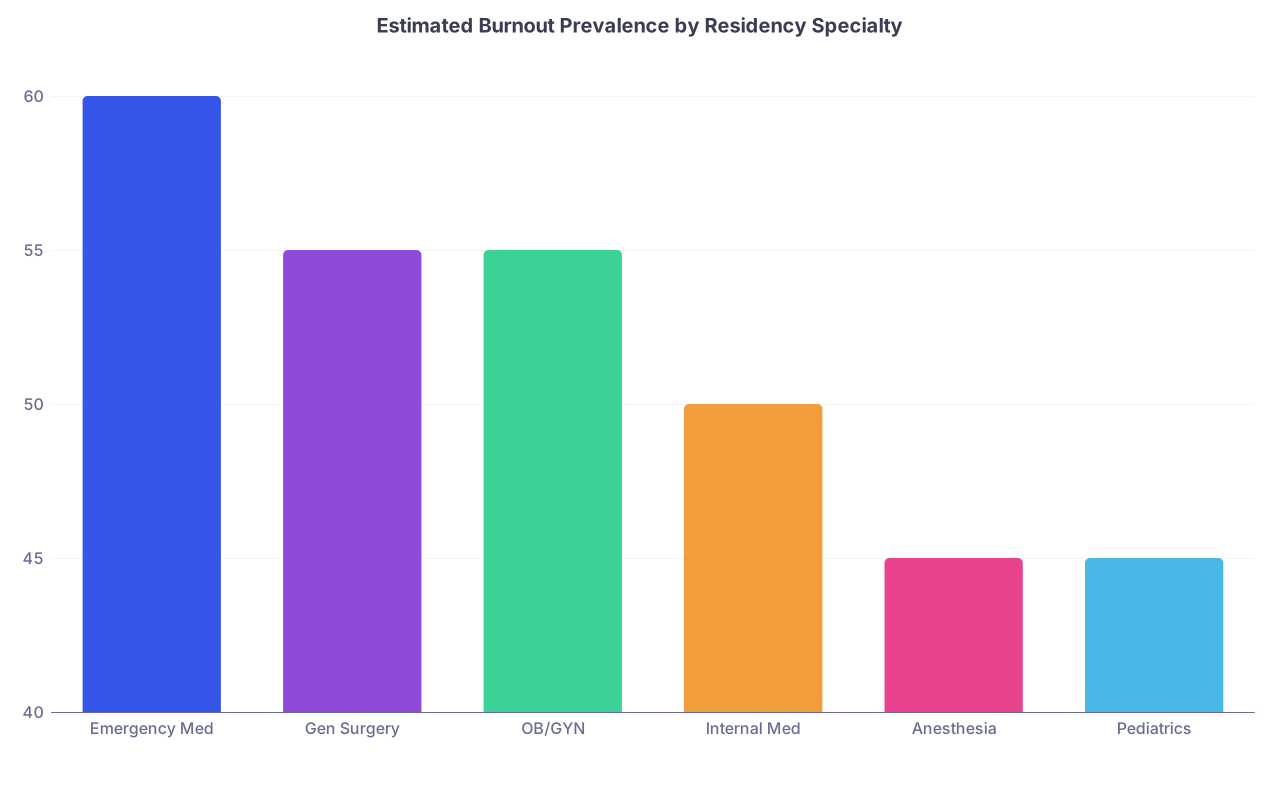
To visualize the relative risk by specialty:
| Category | Value |
|---|---|
| Emergency Med | 60 |
| Gen Surgery | 55 |
| OB/GYN | 55 |
| Internal Med | 50 |
| Anesthesia | 45 |
| Pediatrics | 45 |
Notice two things:
- No category is “low.” Even the “better” specialties hover around 40–45% prevalence.
- Procedural and high-acuity fields (EM, surgery, OB/GYN) sit consistently at the top.
Now let’s break down why.
3. High-Burnout Specialties: What The Numbers Point To
Emergency Medicine
Emergency medicine residents almost always land near the top in burnout surveys.
Drivers the data keep pointing back to:
- Shift work with circadian disruption: rotating days, evenings, nights
- High patient volume and short encounter times
- Continuous exposure to trauma, violence, and death
- Frequent moral distress (boarding, lack of downstream beds, resource constraints)
Many EM resident cohorts show burnout rates in the 55–65% range. I have seen programs where night-heavy blocks push that even higher during specific months. When residents are logging irregular 50–70 hour weeks with unstable sleep windows, the odds stack quickly.
One EM chief once summarized their block schedule to me as “two weeks to wreck your sleep, one week to try to recover, repeat.” The MBI scores in those months mirrored that rhythm.
General Surgery
General surgery is another perennial high-risk field, and the reasons are not mysterious:
- Long hours, often flirting with the 80-hour cap
- High-intensity operating days combined with demanding pre- and post-op work
- Strong hierarchical culture in many programs
- Constant performance pressure; major complications feel personal
Multi-center surgical residency studies regularly report burnout in the 50–60% range, sometimes higher in PGY2–PGY3 when responsibility spikes but autonomy is still constrained. Work hours correlate with burnout, but culture and feedback quality often explain variance between programs with similar hours.
Obstetrics and Gynecology (OB/GYN)
OB/GYN sits in that same high-burnout band (roughly 50–60%), driven by a hybrid of surgical and high-acuity call stressors:
- Unpredictable, high-consequence emergencies (shoulder dystocia, hemorrhage, fetal distress)
- Overnight labor and delivery coverage with relentless pages
- Combination of OR, clinic, and L&D call → fragmented days and nights
- Emotional intensity of perinatal loss and poor outcomes
The data show OB/GYN residents with some of the highest rates of emotional exhaustion among all trainees, even when controlling for hours. It is not just the time; it is the stakes and unpredictability.
4. Moderate-Burnout Specialties: The “Middle” Is Not Safe
Internal Medicine
Internal medicine (IM) usually lands in the 45–55% burnout range among residents.
It is the classic “workhorse” specialty:
- Heavy inpatient censuses on ward and ICU rotations
- Frequent cross-cover, night float, and admission shifts
- High administrative load: notes, orders, coordination with multiple services
- Ongoing exposure to chronic, complex, and often socioeconomically disadvantaged patients
Two patterns keep appearing in datasets:
- ICU and ward months spike burnout metrics versus electives and clinic
- Programs with chaotic paging systems, poor ancillary support, and weak attending support show significantly higher burnout even with similar duty hours
Burnout in IM is very sensitive to workflow design. Not just the raw number of hours.
Anesthesiology
Anesthesia residents usually fall a bit lower, in the 40–50% band, but that is still roughly half of trainees.
Key contributors:
- Early mornings and long OR days
- High vigilance, low margin for error, especially in sick patients
- Call-heavy rotations (trauma, cardiac, transplant) with overnight cases
- Less continuity with patients → detachment can cut both ways (less emotional load, but also less reward)
Residents in anesthesia report moderate to high emotional exhaustion, but often somewhat lower depersonalization compared to EM or surgery. The environment tends to be more controlled than the ED or surgical floor, yet the pressure is constant.
5. Lower-Relative (But Still High) Burnout: Pediatrics and Others
Pediatrics
Pediatric residents often report burnout rates in the 40–50% range, which is not “low,” just relatively better than EM or surgery.
Data and resident feedback point to:
- Heavy emotional burden dealing with very sick children and distressed families
- Lower perceived institutional power and resources compared to adult services in some hospitals
- Typically strong collegial culture and mission alignment, which may buffer burnout
There is a clear pattern: pediatrics residents frequently rate higher on “sense of meaning” and “team camaraderie,” which mitigates the same structural stressors that would drive even higher burnout elsewhere.
Other Specialties (Psych, Radiology, Pathology, etc.)
Where data exist for residents in psychiatry, radiology, pathology, and certain smaller specialties, burnout prevalence can drop into the 30–45% range in some reports.
The drivers are predictable:
- Less overnight call or more predictable call structure
- Lower physical workload and somewhat more control over pace
- Yet significant cognitive and emotional load (psych) or diagnostic pressure (radiology, pathology)
No specialty is immune; there are simply different types and intensities of stressors.
6. Beyond Specialty: The Multipliers That Change Your Risk
If you only look at specialty averages, you miss half the story. Within any given specialty, I routinely see 20–30 percentage point swings in burnout prevalence between programs.
The data repeatedly identify the same amplifiers and buffers.
A. Workload and Hours (But Not Just “80 vs 60”)
Residents are capped at 80 hours per week on paper, but:
- A consistently 75–80 hour program with high efficiency, strong attending support, and decent post-call protection can have similar or lower burnout than a chaotic 55–60 hour program with constant interruptions and poor staffing.
- What actually predicts burnout better than raw hours in several datasets:
- Perceived unfair workload
- Time pressure and “impossible” task lists
- Frequency of work compression (e.g., 8 admissions in 3 hours)
A resident who spends 11 of a 14-hour day charting and calling consults for things that feel bureaucratic will rate much higher on depersonalization than one who spends the same number of hours doing meaningful clinical work.
B. Autonomy and Supervision
Burnout increases when residents feel simultaneously over-responsible and under-supported. The worst quadrant is:
- High responsibility
- Low control
- Inconsistent or punitive supervision
Residents in that quadrant show higher emotional exhaustion and more errors. Surgical and OB/GYN settings fall here too often when attendings oscillate between micromanagement and abandonment.
C. Program Culture and Psychological Safety
This sounds soft, but the effect size is not small. ACGME and institutional surveys repeatedly show:
- Programs with strong teaching culture, regular feedback, and approachable leadership have markedly lower burnout rates, even in specialties with intense work.
- Humiliation, public shaming, or “malignant” reputations correlate with high depersonalization and attrition.
You can quantify this. Residents who “strongly agree” that they are treated with respect by faculty often show 15–20 percentage point lower burnout rates than those who disagree, within the same specialty.
D. Support Services and System Design
Two hospitals with similar case mix and hours can diverge sharply:
- One has robust nursing support, pharmacists readily available, effective EHR templates, and 24/7 phlebotomy
- The other pushes all of this onto residents
Guess which one produces higher burnout metrics.
In regression models, lack of support staff and poor EHR usability independently predict burnout even after controlling for hours and specialty.
7. Temporal Patterns: PGY Year and Rotations
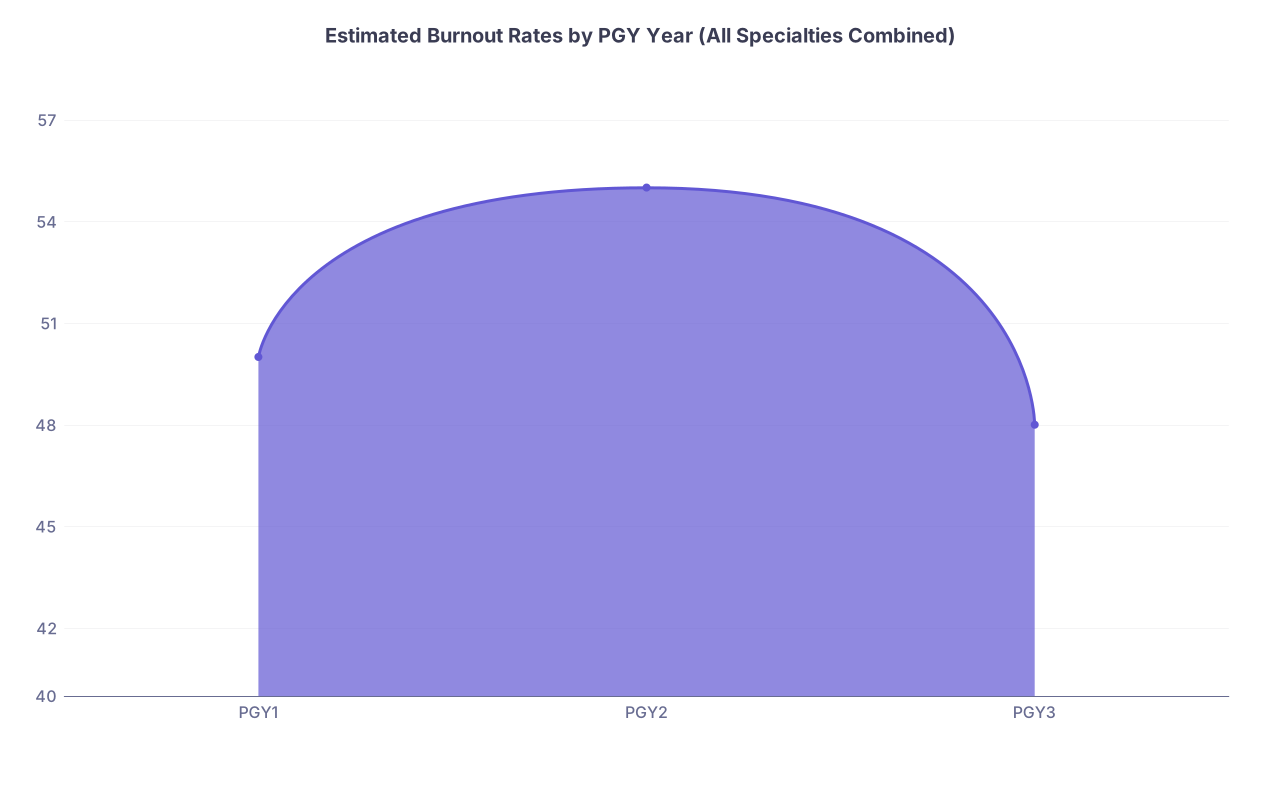
Burnout is not flat across residency years.
| Category | Value |
|---|---|
| PGY1 | 50 |
| PGY2 | 55 |
| PGY3 | 48 |
The pattern many programs see:
- PGY1: High exhaustion from transition, learning curve, and new responsibilities
- PGY2: Often the peak burnout year in many specialties as expectations rise and supervision relaxes
- PGY3 and beyond: Slight improvement with increased competence, better workflow mastery, and more control over schedules and electives
Another layer: rotation type.
Burnout spikes correlate with:
- ICU months
- Night float rotations
- High-admission services (ED rotations, admitting teams in IM)
- Trauma or heavy L&D blocks
Residents will tell you this anecdotally; the numbers confirm it. I have seen MBI emotional exhaustion scores double between an elective clinic month and a MICU month in the same cohort.
8. Specialty Choice: How Much Should Burnout Data Drive It?
Let me be blunt. Choosing a field you dislike because you think it has “lower burnout rates” is statistically dumb.
Here is why:
- Even “lower burnout” specialties still run 30–45%. That is not a safe haven.
- Within-specialty variance between programs is huge. A malignant low-call program can be worse than a well-run high-intensity one.
- Personal fit (interest, values, tolerance for uncertainty, desired pace) strongly modifies burnout risk.
That said, the data can inform your expectations:
- If you choose EM, surgery, or OB/GYN, you are signing up for a specialty with systematically higher burnout risk. You need to plan for that from day one: sleep strategy, boundaries, program selection, and support systems.
- If you choose IM, anesthesia, or pediatrics, you still face substantial risk, but with somewhat more room for program culture and design to make or break your experience.
- If you prefer specialties where circadian rhythm is more stable and stakes are more controlled (radiology, pathology, some outpatient-heavy psych programs), the baseline burnout risk is lower, though far from zero.
In other words: pick the work you can see yourself doing for decades, then use burnout data to choose the right environment to train in.
9. System-Level Trends: Is It Getting Better Or Worse?
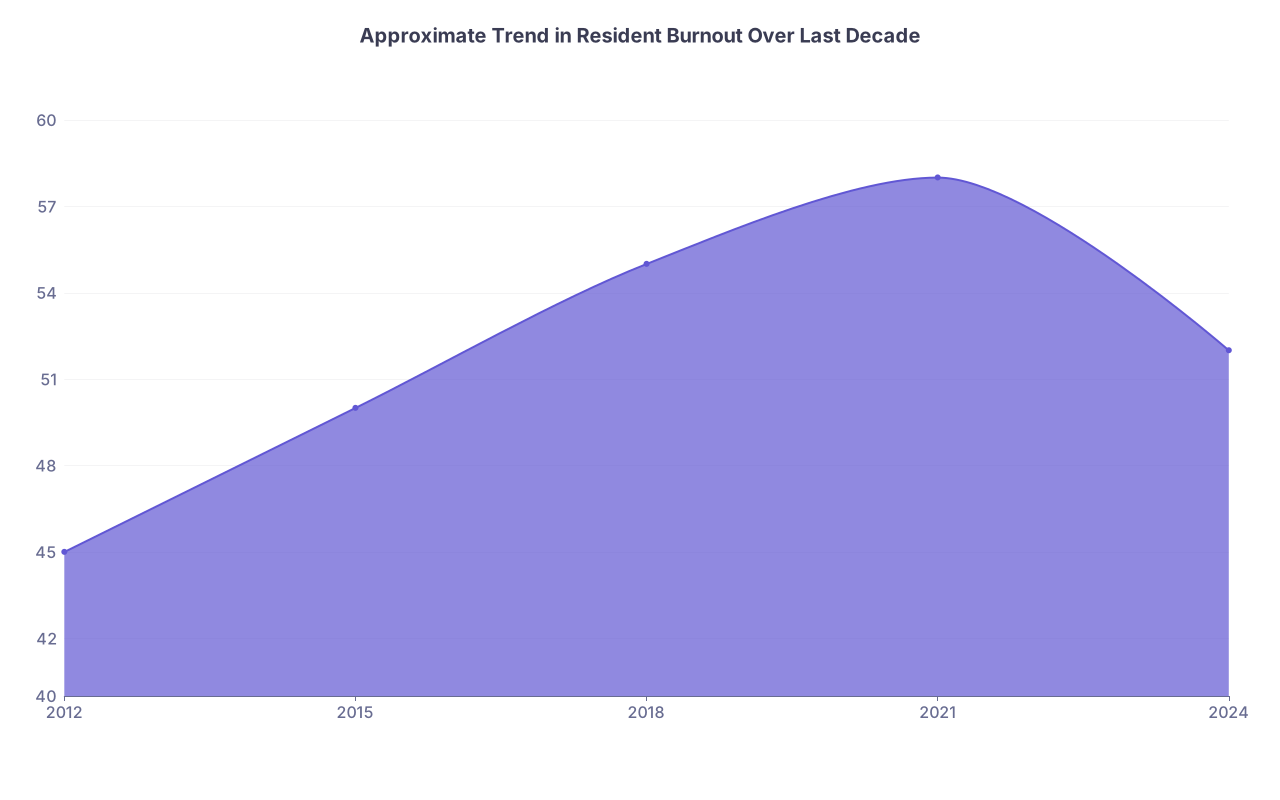
The honest answer: mixed.
| Category | Value |
|---|---|
| 2012 | 45 |
| 2015 | 50 |
| 2018 | 55 |
| 2021 | 58 |
| 2024 | 52 |
From early 2010s to late 2010s, multiple studies documented rising burnout among physicians and trainees, driven by:
- Expanding EHR demands
- Increasing patient complexity
- Gradual erosion of perceived autonomy
The COVID-19 pandemic then pushed burnout rates to record highs, especially in ICU-heavy specialties, EM, and IM. Residents covered surges, staff shortages, and moral injury on a scale not seen in recent decades.
Post-peak pandemic, some programs have implemented more wellness initiatives, better scheduling practices, and formal mental health support. The limited post-2021 data suggest a modest improvement from the absolute worst points but not a return to pre-2015 levels.
The underlying structural issues (productivity pressures, documentation burden, staffing) have not vanished. Expect “chronic high baseline with acute spikes” more than a steady decline.
10. What Residents Can Actually Control (And What They Cannot)
You cannot personally fix the EHR, redesign the call schedule, or hire more nurses. But the data and lived experience do suggest a few levers that materially shift individual risk, within a given specialty:
Program selection:
- Look at former residents’ trajectories and satisfaction, not just brand name.
- Ask specific questions on interview day: overnight coverage structure, ancillary support, culture around sick call, attitudes to parental leave.
Rotation scheduling and electives (once in programs):
- Front-loading the absolute worst rotations in PGY1 without buffers is associated with steeper burnout curves. Some programs will let you adjust sequencing.
- Strategic placement of lighter or interest-driven electives after ICU or night float blocks helps blunt sustained exhaustion.
Boundary setting and time protection:
- Residents who defend small but non-negotiable blocks of off-time (sleep, exercise, family time) consistently score lower on burnout, even at similar workloads.
- It is not about elaborate wellness plans. It is about disciplined protection of 1–2 core non-work anchors.
None of this makes EM suddenly “safe” or surgery “easy.” But it changes your odds within the environment you choose.
11. Quick Comparative Snapshot
One more view, by stress profile rather than just percentages.
| Specialty | Hours/Workload | Emotional Intensity | Circadian Disruption | Typical Burnout Band (%) |
|---|---|---|---|---|
| Emergency Med | High | High | Very High | 55–65 |
| Gen Surgery | Very High | High | High | 50–60 |
| OB/GYN | High | High | High | 50–60 |
| Internal Med | High | Moderate-High | Moderate-High | 45–55 |
| Anesthesia | Moderate-High | High | Moderate | 40–50 |
| Pediatrics | Moderate-High | High | Moderate | 40–50 |
This is simplified, but it matches what the survey data and resident stories line up to: different specialties stress the system in different ways, but very few are gentle.
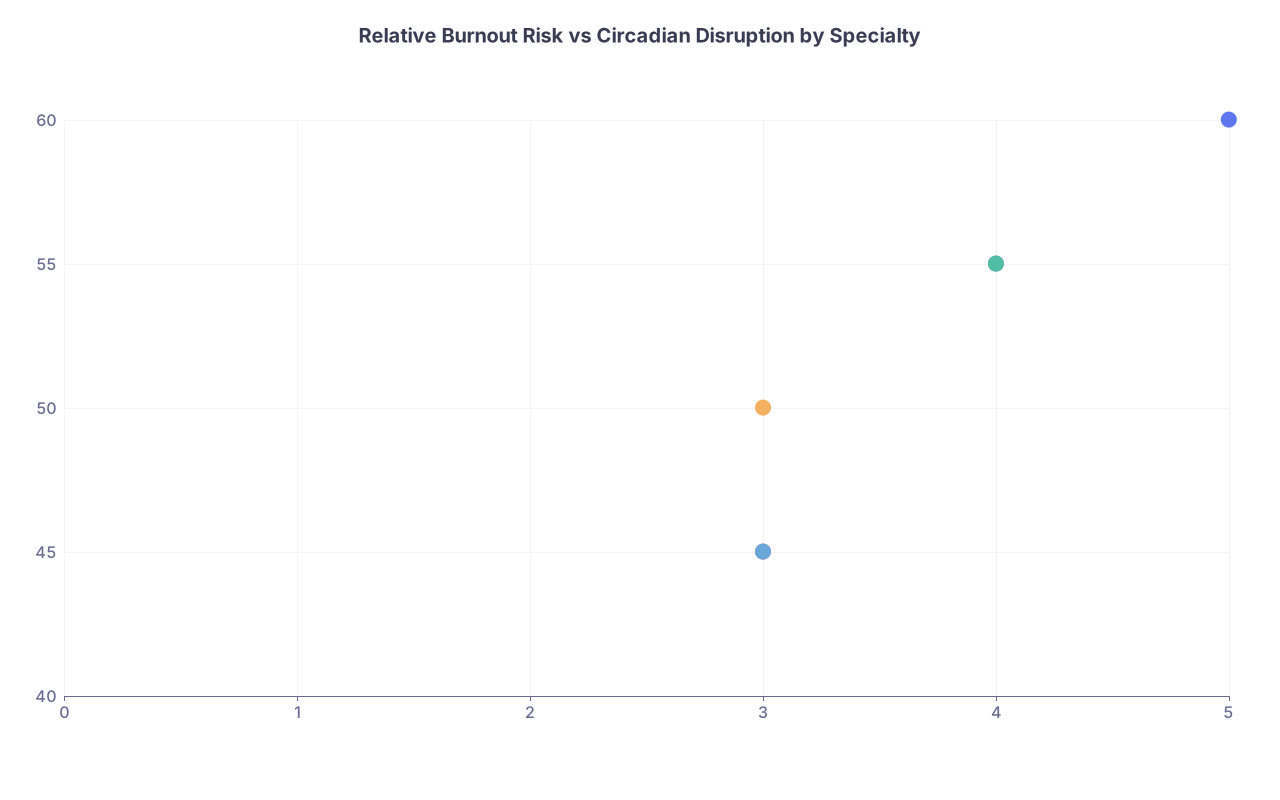
To tie the patterns together visually:
| Category | Value |
|---|---|
| EM | 5,60 |
| Gen Surg | 4,55 |
| OB/GYN | 4,55 |
| IM | 3,50 |
| Anesthesia | 3,45 |
| Peds | 3,45 |
(x-axis is a rough 1–5 circadian disruption score; y-axis is approximate burnout prevalence.)
The point is simple: lifestyle structure and circadian rhythm are powerful drivers, and they move in lockstep with burnout risk.
FAQs
1. Which residency specialty has the highest burnout rate?
Emergency medicine usually tops the list, with resident burnout prevalence commonly in the 55–65% range. General surgery and OB/GYN are close behind, often in the 50–60% band, depending on the study and program.
2. Are “lifestyle” specialties free from burnout?
No. Even in calmer fields such as radiology or pathology, burnout rates can sit around 30–45%. Workload, isolation, and diagnostic pressure still take a toll. You might see fewer 3 a.m. traumas, but you will not see a zero-burnout environment.
3. Does choosing a lower-burnout specialty guarantee I will avoid burnout?
It does not. Specialty choice shifts your baseline statistical risk, but program culture, workload design, and personal fit modulate that risk substantially. Within any specialty, you can find programs with both very high and relatively lower burnout rates.
4. Is resident burnout getting better with new wellness initiatives?
The data show a modest improvement from the worst peaks during the COVID-19 era, but burnout levels remain higher than early 2010s baselines. Wellness initiatives help at the margin, but structural issues like documentation burden, staffing, and workload intensity still drive high burnout across many specialties.
Key takeaway 1: Burnout during residency is common but not uniform; specialties like emergency medicine, surgery, and OB/GYN consistently show the highest prevalence.
Key takeaway 2: Within any specialty, program design and culture can shift burnout risk by 20–30 percentage points, often outweighing small differences in weekly hours.
Key takeaway 3: Use the data to set expectations and choose environments wisely, but do not pick a field you dislike purely for “lower burnout” stats; there are no zero-risk options.