
You are here
It is late June. You are halfway through a brutal stretch of PGY-1 wards. The emails about “PGY-2 schedules” and “rising senior responsibilities” are landing in your inbox. Chiefs are asking what electives you want. Your co-interns are quietly panicking about night float as a senior.
And you are thinking one thing:
“If intern year already broke my balance, how am I supposed to be a senior and have a life?”
You are not overreacting. The PGY-1 → PGY-2 transition is one of the biggest shifts in training. Your pager load changes. The kind of stress changes. The hours might be slightly better, but the mental load is heavier. The only way this does not run your life is if you redesign how you work and how you live, on purpose.
So here is your roadmap. Month-by-month, then week-by-week around July 1, then day-by-day in that critical first senior month.
3–4 Months Before PGY-2 (March–April): Reality Check and Design
At this point you should stop telling yourself you will “fix balance later.” This is the planning window.
Step 1: Brutally honest PGY-1 audit (1 weekend)
Take one weekend afternoon. Phone off. Do this on paper or a doc.
List your rotations so far. For each, jot:
- Average weekly hours
- Sleep quality (1–5)
- Burnout level (1–5)
- What wrecked you (cross-cover chaos, notes at home, constant texts)
- What actually felt sustainable
Identify your top 3 energy drains that are under your control:
- Example:
- Charting bleeding into off-hours
- Saying yes to every swap and committee
- Scrolling your phone instead of real downtime, then sleeping late
- Example:
Define what “balanced” realistically means for PGY-2:
- Not some fantasy. Actual constraints.
| Area | Intern Year | PGY-2 Target |
|---|---|---|
| Sleep | 5–6 hrs | 6–7 hrs |
| Exercise | 0–1x/week | 2–3x/week |
| Meals prepped | Rarely | 2 days/week |
| Social time | 1x/month | 2x/month |
| Work at home | Most days | Max 2 days/week |
If your target is “I will not be exhausted,” that is useless. Be specific.
Step 2: Map your PGY-2 year structure (late March–early April)
At this point you should reach out to your chief residents or coordinator and actually see your PGY-2 skeleton schedule (or at least rotation blocks).
- When are your:
- ICU months?
- Ward senior blocks?
- Clinic-heavy months?
- Lighter electives?
Label each month:
- Red = high-load (ICU, heavy wards, nights)
- Yellow = medium (wards with good ancillary support, ED)
- Green = lighter (electives, research, ambulatory)
Now overlay life:
- Vacations already assigned?
- Any major life events: weddings, partner’s schedule, exams (Step 3, in-training, boards prep), moving, kids?
Your PGY-2 balance will come from:
- Protecting green months ruthlessly
- Making red months survivable instead of catastrophic
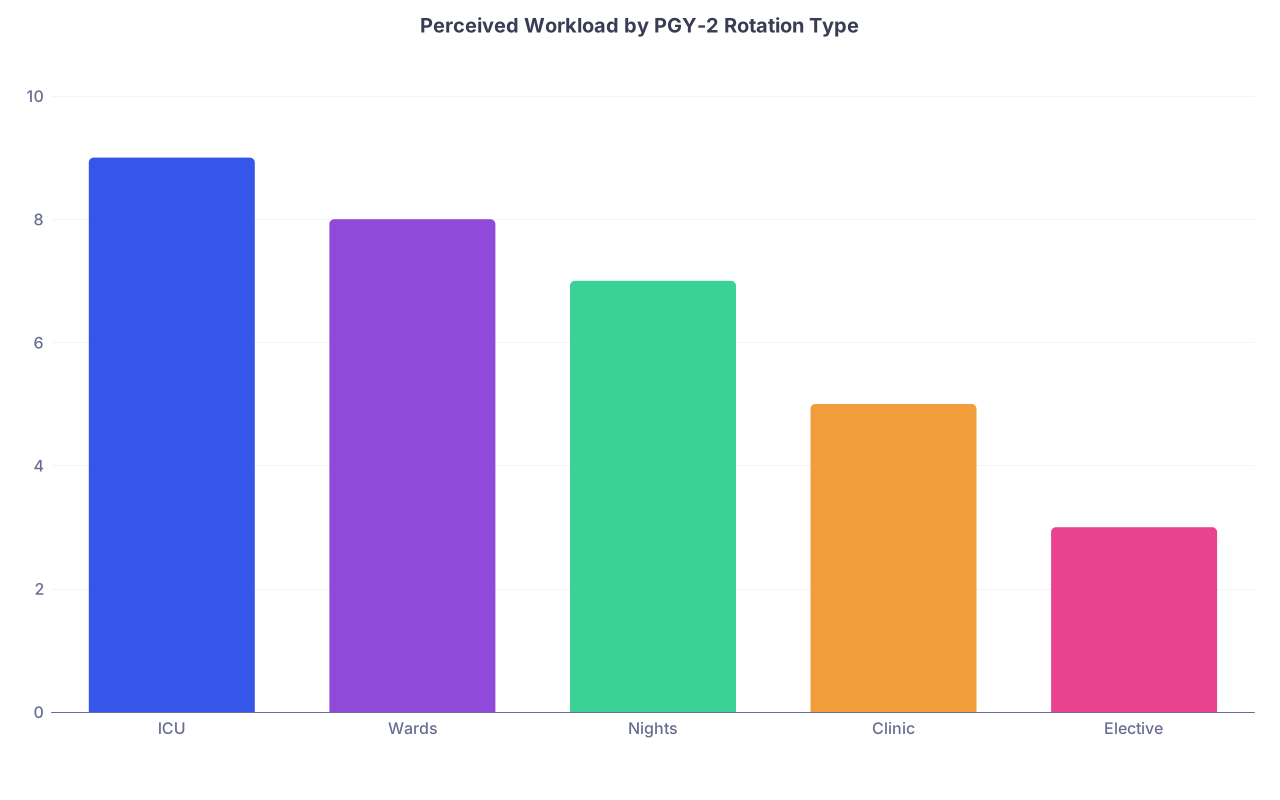
| Category | Value |
|---|---|
| ICU | 9 |
| Wards | 8 |
| Nights | 7 |
| Clinic | 5 |
| Elective | 3 |
Step 3: High-level redesign decisions (April)
By the end of April, you should have answers to:
Non-negotiables for the year
- Example:
- One protected evening per week with your partner, no work.
- One workout on every non-call weekend.
- No charting in bed. Ever.
- Example:
Professional priorities
- Are you aiming for chief? Fellowship? Research productivity? Or just survival?
Your “yes/no” filter depends on this.
- Are you aiming for chief? Fellowship? Research productivity? Or just survival?
Communication with key people
- Partner / family:
- “July, August, and October are going to be brutal. I will be more human in September and December.”
- Mentor:
- Quick meeting: “I want to avoid repeating the PGY-1 burnout pattern. Here are my targets.”
- Partner / family:
Write these down. Do not keep them as vague mental wishes.
1–2 Months Before PGY-2 (May–June): Systems, Not Willpower
At this point you should stop relying on “I will just be more disciplined.” That failed you all PGY-1.
Week 1–2: Build your work systems
Pick 2–3 systems that will directly reduce chaos when you are the senior.
Examples:
A structured signout template
- You should not be improvising this in July.
- Decide now:
- How you will organize:
- Sick list
- Unstable but not crashing
- Floor “to-do” list
- What you expect from interns in signout (concise, problem-based, anticipatory guidance)
- How you will organize:
Note and inbox rules
- “All notes done before leaving post-call unless a true emergency.”
- “Inbox cleared every Monday and Thursday at lunch, no exceptions.”
- Use templates and smart phrases aggressively. Anything you type more than 3 times a day gets a shortcut.
Teaching micro-structure
- 1–2 fixed teaching moments daily:
- Pre-rounds huddle: “One 2-minute pearl.”
- Post-call: 5-minute debrief on one case.
- Put recurring blocks in your calendar now as “Teaching – 2 minutes.” You will ignore it some days. But it will exist.
- 1–2 fixed teaching moments daily:
Week 3–4: Life infrastructure
At this point you should set up the boring-but-crucial things that support balance.
Food
- Rotate through 5–7 fast, repeatable meals.
- Set up:
- Grocery delivery (Instacart, etc.) linked to a saved “call week” order.
- A default post-call food plan that does not rely on 2 a.m. DoorDash.
Sleep environment
- Blackout curtains, eye mask, earplugs, or a white noise app. Yes, even if you “can fall asleep anywhere.” That is intern bravado talking.
- Decide your night float sleep routine now and write it down.
Movement
- Not “get ripped.” That is fantasy.
- Set a minimum viable exercise rule:
- 10-minute walk or stretch on every non-call day.
- If you like classes, pre-purchase a small pack at a gym near the hospital or home.
Relationships
- Send a message to your inner circle:
- “PGY-2 starts July 1. I am trying to be less MIA than last year. Can we set up a standing monthly hangout / call?”
- Send a message to your inner circle:
Lock the recurring events in your calendar before July hits.
2 Weeks Before July 1: Mental Reframe and Micro-Plan
This is the “last calm” before you are the senior who gets called when something goes sideways.
10–14 Days Before: Define your senior persona
At this point you should decide what kind of senior you are trying to be. Not in theory. In actual behaviors.
Pick 3 adjectives:
- “Calm, decisive, protective of my interns”
- Or “organized, teaching-focused, efficient”
Then translate each into 1–2 observable actions:
- Calm → You do not raise your voice on the phone to nurses, even when annoyed.
- Decisive → You do not spend 20 minutes waffling on every borderline admission. You pick a plan, reassess.
- Protective → You cut off extra tasks at 6 p.m. so your interns can get out unless it is critical.
Write these in your call room or on the back of your ID.
7–9 Days Before: Logistics and boundaries
You should:
- Confirm your first PGY-2 rotation start time, location, and on-call structure.
- Ask the outgoing seniors:
- “What constantly blindsides new seniors here?”
- “If you were starting senior year again, what would you do differently in month one?”
Then set explicit boundaries for your first 4 weeks:
- Example:
- No extra committee meetings during the first month.
- No covering extra moonlighting until you finish your first senior ward block.
If you do not set this now, you will say yes to everything.
First Month of PGY-2: Week-by-Week Roadmap
Let us assume you start on a ward senior rotation. Adjust the specifics if you begin in ICU or nights, but the structure holds.
Week 1: Survival and Observation
At this point you should not aim to be a heroic teacher. Your aim is to stay afloat and watch your own patterns.
Day 1–2: Learn the flows
- Arrive 20–30 minutes earlier than you think you need.
- Focus on:
- Resident workflow
- How admissions are triaged
- How your attending likes presentations and notes
- Tell your team explicitly:
- “This is my first week as a senior. I care most about you feeling supported and safe. We will tweak as we go.”
Day 3–4: Start simple structure
Begin doing the following:
Morning:
- 5-minute huddle:
- “Sickest patient?”
- “Any overnight disasters to debrief?”
- “One focus for today: discharges / teaching / procedures.”
- 5-minute huddle:
Midday:
- Choose one 2–3 minute teaching point from a real patient.
- Do it as you walk, not as a 30-minute session you do not have time for.
Evening:
- Cut off new non-urgent tasks at a fixed time (e.g., 6 p.m.).
- Decide what absolutely needs to be done tonight vs tomorrow.
Day 5–7 (including weekend if on call): Audit your own stress
End of first week, take 15 minutes:
- Ask:
- What time did you actually get out each day?
- How many times did you leave with unfinished notes?
- When did you feel most overwhelmed?
You are not fixing everything yet. You are just gathering data.
Week 2: Intentional Work-Life Guardrails
At this point you should start tightening the screws on both work efficiency and life outside.
At work:
Standardize your daily rhythm:
- Same rounding order when possible.
- Same time for discharge pre-charting.
- Same time for touching base with nurses.
Delegate deliberately:
- Interns:
- Pre-round on specific patients
- Draft notes and orders
- You:
- Higher-level decisions, complex family meetings, triaging admissions
- Do not hoard tasks “because it is faster.” That kills your time and their learning.
- Interns:
Practice the “one screen rule”:
- If you are doing something cognitive (call with consultant, teaching, family meeting), close the laptop. Multitasking is a lie; you are just doing both things badly.
Outside work:
Pick two of the following and actually do them this week:
Schedule:
- One coffee / meal with someone non-medical.
- One workout >20 minutes.
- One real day off with no charts, no inbox.
Protect your post-call day:
- Hard rule: No errands before you sleep.
- Plan something small but positive after your main sleep (walk, good meal, 30 minutes of a show).
By the end of week 2, your life should feel slightly more intentional than intern year. If it does not, you are ignoring your own boundaries.
Week 3: Refining Your Senior Style
At this point you should feel less panicked and more able to shape how your team functions.
Work focus: Team culture
Set expectations explicitly in a 5–10 minute meeting:
- Timing:
- “Interns should text me before 10 p.m. if they are drowning in cross-cover.”
- Communication:
- “Page me early about sick patients. I will never be mad for over-calling.”
- Teaching:
- “I will aim for one quick teaching point daily. You can always say, ‘Can we skip today? I am drowning.’”
- Timing:
Protect your interns:
- When a service or attending tries to dump non-urgent tasks late in the day:
- “We can start that tomorrow; the team is wrapping up.”
- You will feel a tug to say yes to look “hard-working.” That is how people burn out their teams.
- When a service or attending tries to dump non-urgent tasks late in the day:
Life focus: Micro-habits
Refine your minimums:
Sleep:
- Aim for a regular target bedtime on non-call nights.
- Use an alarm for “get ready for bed,” not just wake-up.
Movement:
- Attach it to an existing habit:
- Walk during a daily phone call.
- Stretch while listening to signout recordings (if your program uses them).
- Attach it to an existing habit:
Phone use:
- One simple change:
- No social media in bed.
- Or, no doomscrolling within 30 minutes of wake-up.
- One simple change:
These sound trivial. They add up.
Week 4: Stability Check and Reset
Now you have almost a month of data as a PGY-2. At this point you should step back and adjust before bad patterns harden.
End-of-rotation (or end-of-month) review – 30–45 minutes
Do this on a post-call afternoon or an off day.
Look at your schedule:
- How many days did you:
- Work >14 hours?
- Sleep <5 hours?
- Skip any form of movement?
- How many days did you:
Ask yourself frankly:
- Compared with intern year:
- Are you more in control? Less? About the same?
- Where did work bleed unreasonably into home life?
- Notes?
- Worrying about cases all night?
- Messaging / group chats that never stop?
- Compared with intern year:
Adjust 2–3 concrete things for next month:
- Example:
- Institute a hard “no checking Epic after 9 p.m.” rule.
- Cap yourself at one extra shift per month.
- Create a weekly 15-minute sync with your partner / roommate to look ahead at the week.
- Example:
Document these as commitments, not wishes.
The Mid-Year Reset: December–January
Fast forward. It is winter. You have had some good rotations, some hellish ones. You are not the same PGY-2 you were in July.
At this point you should do a mid-year redesign.
Month 6–7: Strategic recalibration
Look at the remaining PGY-2 calendar
- Identify:
- The last truly brutal blocks.
- The lighter ones where you can recharge or advance career goals.
- Identify:
Decide your mid-year priority
- Maybe:
- Preserve mental health and make it to PGY-3 without hating medicine.
- Or pivot to research / fellowship preparation.
- Your non-work life may also have shifted: relationships, kids, finances.
- Maybe:
Health and burnout check
- Ask yourself plainly:
- Are you consistently exhausted and numb?
- Any creeping signs of depression, cynicism, or unsafe practice?
- Ask yourself plainly:
If yes, you do not “power through.” You:
- Talk to:
- A trusted attending or PD
- Occupational health / mental health services
- Make at least one schedule or duty-days change:
- Move one elective earlier
- Reduce moonlighting
- Drop non-essential committees
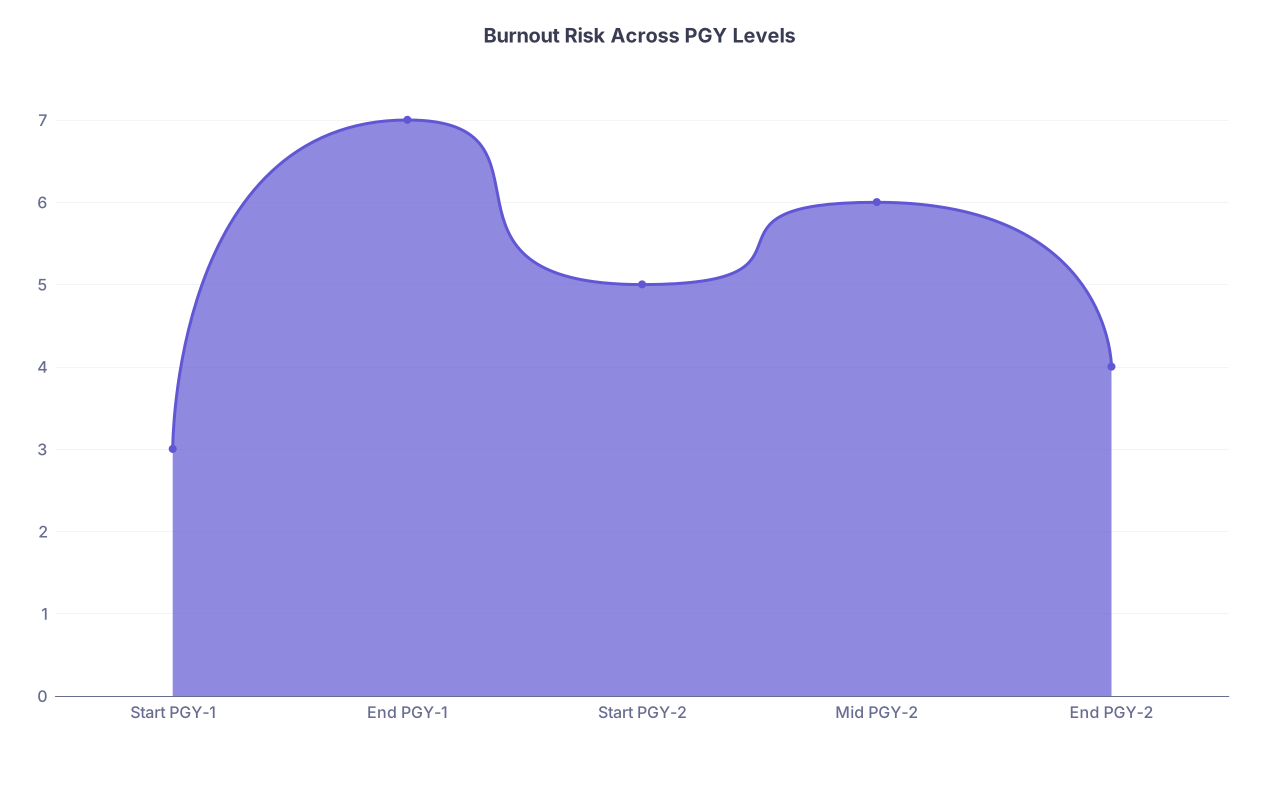
| Category | Value |
|---|---|
| Start PGY-1 | 3 |
| End PGY-1 | 7 |
| Start PGY-2 | 5 |
| Mid PGY-2 | 6 |
| End PGY-2 | 4 |
A Quick Visual: Your PGY-2 Balance Timeline
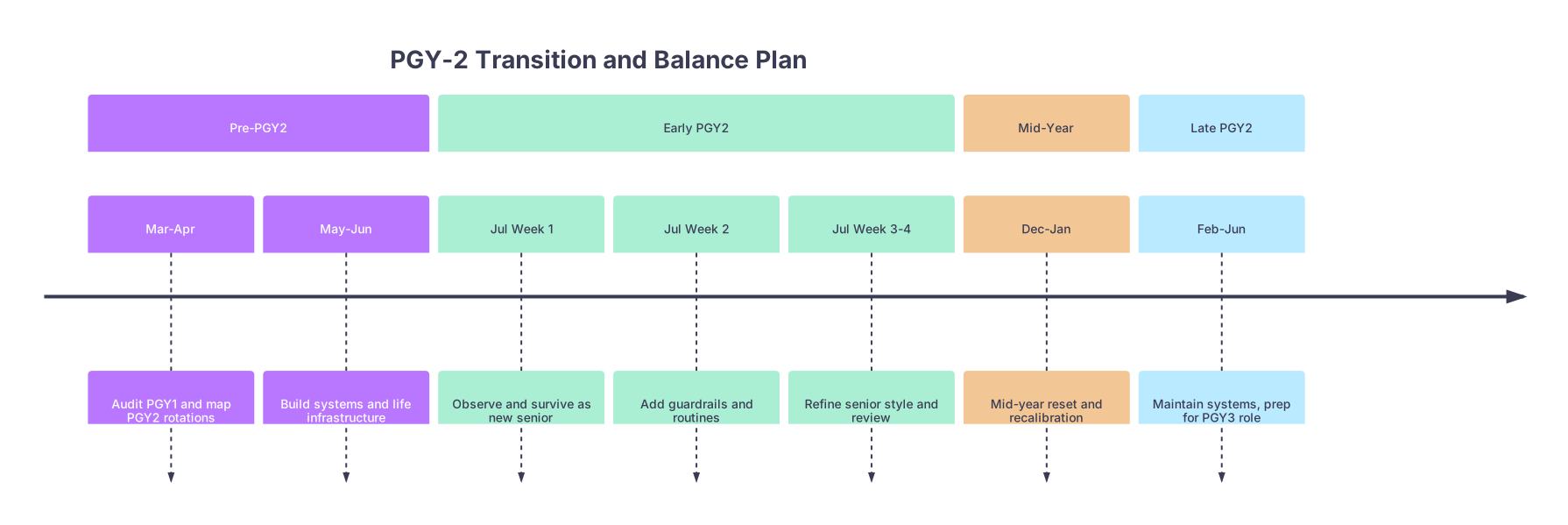
| Period | Event |
|---|---|
| Pre-PGY2 - Mar-Apr | Audit PGY1 and map PGY2 rotations |
| Pre-PGY2 - May-Jun | Build systems and life infrastructure |
| Early PGY2 - Jul Week 1 | Observe and survive as new senior |
| Early PGY2 - Jul Week 2 | Add guardrails and routines |
| Early PGY2 - Jul Week 3-4 | Refine senior style and review |
| Mid-Year - Dec-Jan | Mid-year reset and recalibration |
| Late PGY2 - Feb-Jun | Maintain systems, prep for PGY3 role |
Late PGY-2 (Last 3–4 Months): Transitioning to PGY-3 Without Imploding
Toward the end, you stop being “new” and start being the person juniors look to. That changes the work-life equation again.
3–4 Months Left: Pre–PGY-3 planning
At this point you should:
- Meet with your PD or mentor:
- “Here is where I am energy-wise. Here is what I want PGY-3 to look like.”
- Decide on:
- Leadership roles you will accept.
- How much teaching you want to formalize (morning reports, chalk talks).
- Any exam or fellowship application timelines.
You also tighten your non-work commitments:
- PGY-3 will not magically be free.
- Guard your last PGY-2 electives for:
- Recovery
- Research
- Career-building, not random scut support.
Final Month: Locking in habits
You should leave PGY-2 with systems that survive rotation changes:
Non-negotiable systems to carry forward:
- A standard morning and evening routine on any rotation.
- A set way you handle inbox and notes.
- A minimalist exercise / sleep plan that actually fits during ICU and wards.
- A default plan for bad weeks:
- Who you text when you are spiraling.
- What you cut first (extra shifts, social events, side projects).

A Note on Saying No (Because PGY-2s Are Terrible at It)
You will be asked to:
- Cover extra shifts “just this once.”
- Join wellness committees.
- Help rewrite some guideline.
- Take on “small” QI projects.
You are allowed to say:
- “I would like to, but this year I am focusing on not repeating my PGY-1 burnout level. I have to decline.”
- “Ask me again in 6 months; my schedule is packed until then.”
If that feels uncomfortable, good. You are building an actual boundary.

Sample Weekly Structure for a “Balanced Enough” PGY-2 Senior
Not perfect. But better than chaos.
| Time | Mon–Thu | Fri | Sat/Sun (if on call) |
|---|---|---|---|
| 5:30–6:30 | Wake, quick stretch | Wake, stretch | Varies by call |
| 6:30–7:00 | Commute, coffee | Commute | Commute |
| 7:00–17:30 | Work (rounds, teaching) | Work + early signout | Call / rounds |
| 17:30–18:00 | Finish notes only | Finish notes, signout | Call duties |
| 18:00–19:00 | Dinner, decompress | Dinner out / takeout | Short break |
| 19:00–19:20 | 20-min walk/stretch | Social time / call friend | N/A if on call |
| 19:30–21:30 | Light TV / reading | Relax | Call |
| 21:30–22:30 | Wind-down, sleep prep | Wind-down | Post-call: sleep |

Final Thoughts: What Actually Matters
Keep three points front and center:
PGY-2 balance is designed, not discovered. You will not stumble into a better life. You build it with specific systems and boundaries, starting 3–4 months before July.
Aim for “sustainable enough,” not perfect. If you are sleeping a bit more, moving a bit more, and bringing a bit less work home than PGY-1, that is a win. Iterate monthly.
Your senior year role is to protect both patients and your team, including yourself. A burned-out senior is unsafe. Guard your time and energy as aggressively as you guard your interns and your sickest patient.
That is the roadmap. At this point you should pick one action to do today—schedule a planning session, email your chief for your PGY-2 calendar, or write down your three senior adjectives—and start.