
The belief that “good residents never struggle” is nonsense. And not harmless nonsense, either. It’s directly at odds with what performance data, mental health outcomes, and patient safety research show.
The residents who never seem to struggle are usually one of three things: hiding it, lying (to you or themselves), or under-challenged. The high performers? They struggle. They just recover, adapt, and keep moving. That’s what competence actually looks like in residency.
Let’s dismantle this myth with what outcomes actually show—burnout rates, error data, attrition, remediation results, and long‑term career trajectories. Not vibes. Not hallway gossip. Numbers.
The Myth vs. The Reality: What “Struggle” Actually Predicts
The hidden assumption behind “good residents never struggle” is simple: difficulty = deficiency. If you’re overwhelmed, if you need help, if you fail an exam or get critical feedback, you’re not cut out for this.
Reality is almost the exact opposite.
The literature on physician performance and training overlaps with three key findings:
- Struggle is common among competent residents.
- Early difficulty rarely predicts long-term failure when support exists.
- The real red flag is unaddressed struggle that turns into disengagement or avoidance.
Multiple studies across specialties show that at any given time, a large chunk of residents are wrestling with something non-trivial: burnout, depression, performance gaps, major personal stress, or all of the above. Yet most of them complete training and function well in independent practice.
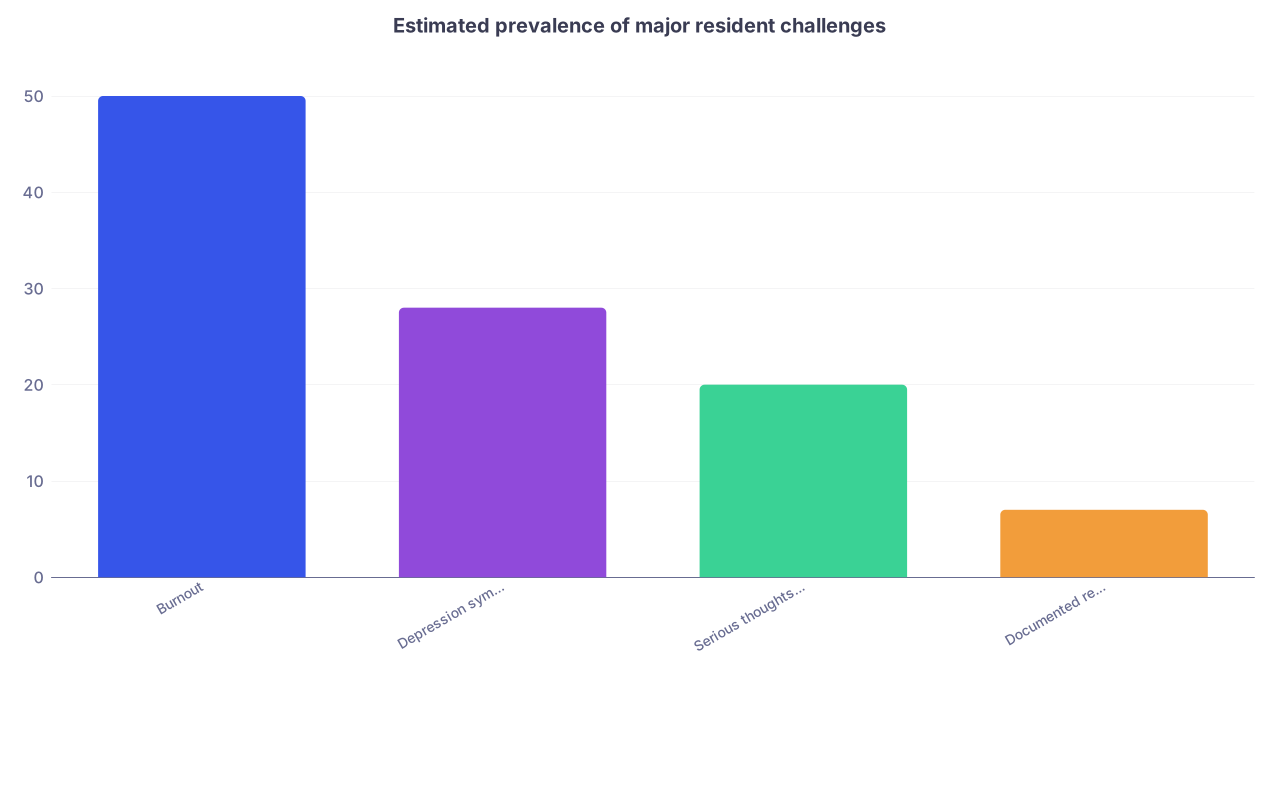
| Category | Value |
|---|---|
| Burnout | 50 |
| Depression symptoms | 28 |
| Serious thoughts of leaving | 20 |
| Documented remediation | 7 |
Those numbers are from pooled or representative findings:
- Burnout: often 45–60% depending on specialty and year.
- Depressive symptoms: around 25–30% in meta-analyses of residents.
- Serious thoughts of leaving: 15–25% in many program surveys.
- Formal remediation: 5–10% depending on how strictly defined.
If “struggle” meant “not good,” half of your colleagues should never have graduated. Yet they do. And they practice. And many become your go-to consultants.
So the core myth isn’t just wrong—it’s mathematically impossible.
What Outcome Data Actually Shows About “Struggling” Residents
Let’s strip away the moralizing and look at outcomes.
Clinical performance and error risk
There’s a fantasy that the residents who struggle are walking malpractice cases and the ones who never falter are safe. The data doesn’t play along.
Yes, severe cognitive or professionalism problems can be linked to higher error risk. But a huge share of clinically significant errors arise not from the “weakest” residents, but from:
- Fatigue
- System failures
- Poor supervision
- Workload overload
- Communication breakdowns
Residents who openly acknowledge when they’re in over their heads and ask for help actually reduce error risk.
The “never struggle” culture pushes people into silent failure: not calling the senior because “I should know this,” not asking the nurse to double-check a dose, not speaking up during a bad plan on rounds.
That’s not excellence. That’s ego plus fear.
Remediation and long-term success
I’ve seen this firsthand: the intern who failed Step 3 and quietly thought they were doomed. The PGY-2 put on a formal remediation plan for notes and organization. The categorical resident with a bad 360 review about communication. All convinced that “good residents don’t struggle,” so they must be bad.
Now look at what programs quietly track. Many residents who end up on documented remediation plans:
- Finish training successfully
- Pass their boards
- Get jobs they like
- Are not overrepresented in future serious complaints
In other words, remediation is often a course correction, not a terminal diagnosis.
| Outcome at graduation | Approximate pattern in many programs |
|---|---|
| Successfully complete training | Majority |
| Need extension of residency | Minority |
| Do not graduate from program | Small minority |
| Board certification eventually achieved | Majority of completers |
| Long-term serious performance issues | Small subset |
You never see this table during residency because programs don’t advertise it. But if you sit on Clinical Competency Committees (CCC) long enough, the story is clear: struggle with support is usually compatible with a completely normal career.
The Mental Health Reality: “Never Struggle” Is a Risk Factor
Here’s where the myth gets dangerous, not just wrong.
Mental health research on residents is not subtle. Burnout and depression are common. Suicidal ideation is higher than in age-matched peers. And what consistently makes things worse? Stigma and silence.
Residents who buy into “good residents never struggle” are more likely to:
- Conceal symptoms of depression, anxiety, or burnout
- Delay seeking therapy or treatment
- Avoid disclosure to PDs until things are catastrophic
- Self-treat with alcohol, stimulants, or urgent-care benzos
- Keep working beyond a safe limit
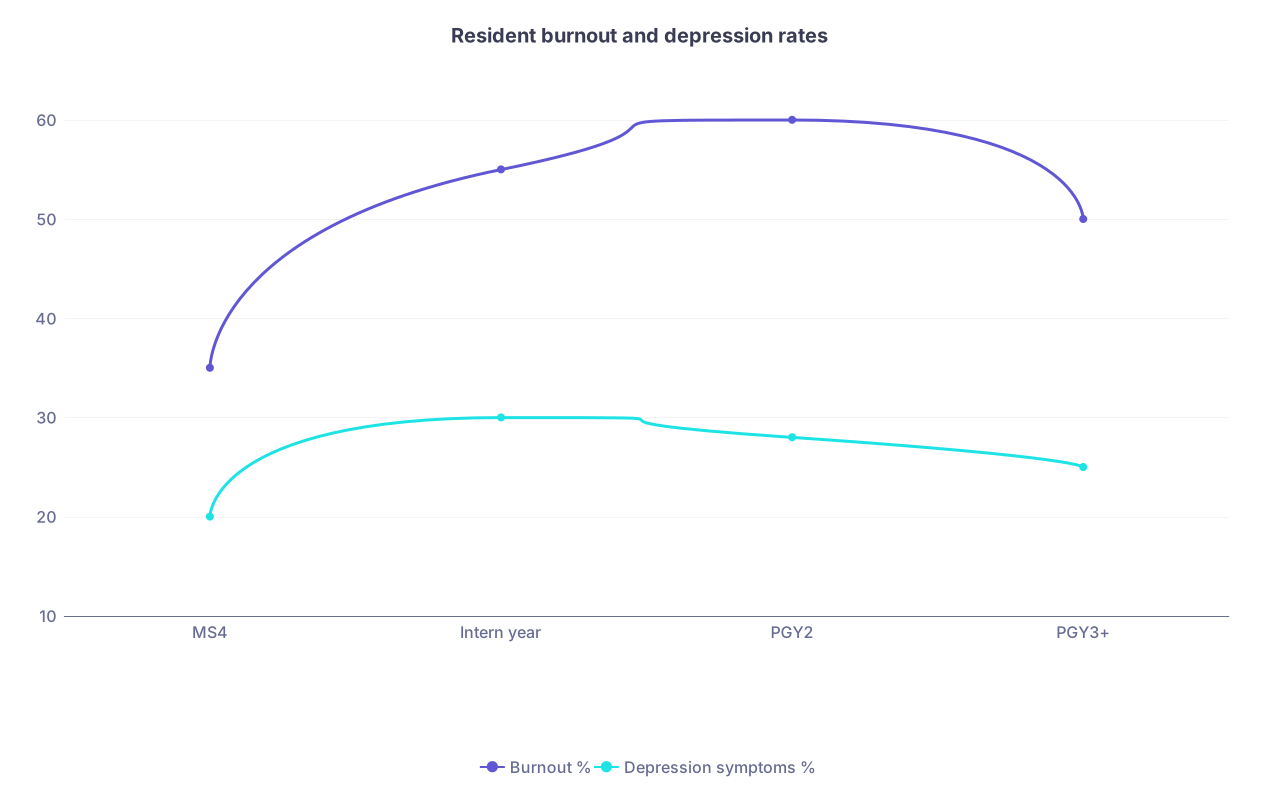
| Category | Burnout % | Depression symptoms % |
|---|---|---|
| MS4 | 35 | 20 |
| Intern year | 55 | 30 |
| PGY2 | 60 | 28 |
| PGY3+ | 50 | 25 |
Those numbers track with multiple longitudinal cohorts: distress peaks early in residency and improves slightly later, but never returns to a low baseline. That “peak” period is also when people are working the hardest to appear like they’re not.
The residents I worry about most are not the ones who come to a PD or chief saying, “I’m not okay and I need help.” They usually do fine once supported.
It’s the ones whose brand is “unflappable,” who joke constantly about “just pushing through,” who shrug off concerning feedback with humor. Then one day they vanish for an extended “leave” that everyone pretends not to notice.
If you internalize that good residents never struggle, you’ll treat your own humanity like a defect. That’s a direct path to burnout, cynicism, or worse.
Struggle vs. Incompetence: Two Very Different Patterns
Let’s separate two things everyone around you casually conflates.
There’s struggle, and there’s persistent incompetence.
Struggle looks like:
- Being overwhelmed by a new rotation or higher responsibility
- Needing more time to develop procedural skills
- Getting critical feedback on notes, communication, or efficiency
- Failing a test, then passing after a structured study plan
- Having personal crises that temporarily affect performance
- Feeling emotionally drained and needing time/therapy/support
Persistent, uncorrected incompetence looks different:
- Repeatedly making the same serious clinical mistakes after feedback
- Blaming everyone else, never owning a role in problems
- Dishonesty, cover-ups, or falsifying documentation
- Dangerous behavior (substance use on duty, boundary violations)
- Refusal to respond to remediation structures
The first group? Common and salvageable. Often highly salvageable. The second group? Much smaller, and that’s where non-promotion or dismissal usually lives.
Lumping them together under the vague banner of “struggling residents” is lazy and harmful. It’s also a convenient way for insecure peers to feel superior.

The Hidden Problem: Survivorship Bias in Who You See
Another reason this myth persists: survivorship bias and self-presentation.
You mostly see:
- The residents who stayed and adapted
- The ones who learned to hide their fear and fatigue
- The polished seniors who once were terrified interns
You don’t see:
- The late-night crying in call rooms
- The remediation meetings that ended in genuine growth
- The therapy appointments squeezed between shifts
- The internal medicine PGY-1 who nearly quit surgery as an MS3 after a disastrous sub-I
- The OB resident who failed Step 3, repeated it, and now teaches for a board review company
I’ve watched an intern who bombed their first ICU month come back a year later as the rock-solid senior everyone wanted on nights. If you only knew their senior-year version, you’d say, “Great resident. Never struggles.” And you’d be completely wrong.
You’re misled by the polished end product and blind to the messy middle where all the growth happened.
What Programs Actually Care About (Hint: Not Perfection)
Despite how some attendings talk, most residency programs don’t expect you to be a flawless machine. CCC notes and PD debriefs tend to revolve around a different set of questions:
- Are they improving in the specific areas we flagged?
- Do they take feedback seriously or become defensive?
- Do they show up reliably? Do they own their mistakes?
- Do they ask for help appropriately?
- Are they safe with patients, especially when tired or stressed?
That’s it. That’s the core.
| Resident fear | What programs actually look for |
|---|---|
| “If I ask for help, they’ll think I’m weak.” | Timely escalation is viewed as maturity and safety. |
| “If I fail something once, I’m doomed.” | Repetition with improvement matters more than one failure. |
| “If I admit burnout, I’ll be labeled unstable.” | Early disclosure allows accommodations; silence until crisis draws far more concern. |
| “If I’m on remediation, I’ll never get a job.” | Many remediated residents match into fellowships and jobs without issue. |
The resident who pretends not to struggle and hides everything? That’s the wildcard. From a patient safety and professionalism standpoint, that’s actually more concerning than the one who’s transparent.
Practical Implications: How to Struggle Productively (Instead of Quietly Imploding)
You’re not going to avoid struggle in residency. The question is whether you do it in a way that leads to growth or to burnout.
A few blunt truths:
Stop comparing your insides to other people’s outsides. The senior who looks effortless now may have had disastrous feedback as a PGY-1.
Struggle out loud in controlled ways. Say to a senior, “I’m not comfortable managing DKA alone yet—can I run things by you?” That sentence alone separates safe from unsafe.
Treat feedback like free consulting, not a verdict on your worth. I’ve seen residents double their effectiveness over a year just by leaning into hard feedback rather than avoiding it.
Use the actual resources you’re given. Employee assistance programs, resident wellness counseling, schedule accommodations, remediation plans—these are structural signals that the system assumes struggle will happen.
And yes, sometimes the system is toxic. Sometimes you have malignant attendings or a PD who worships stoicism. But even there, the outcome data still says: hiding everything is worse.
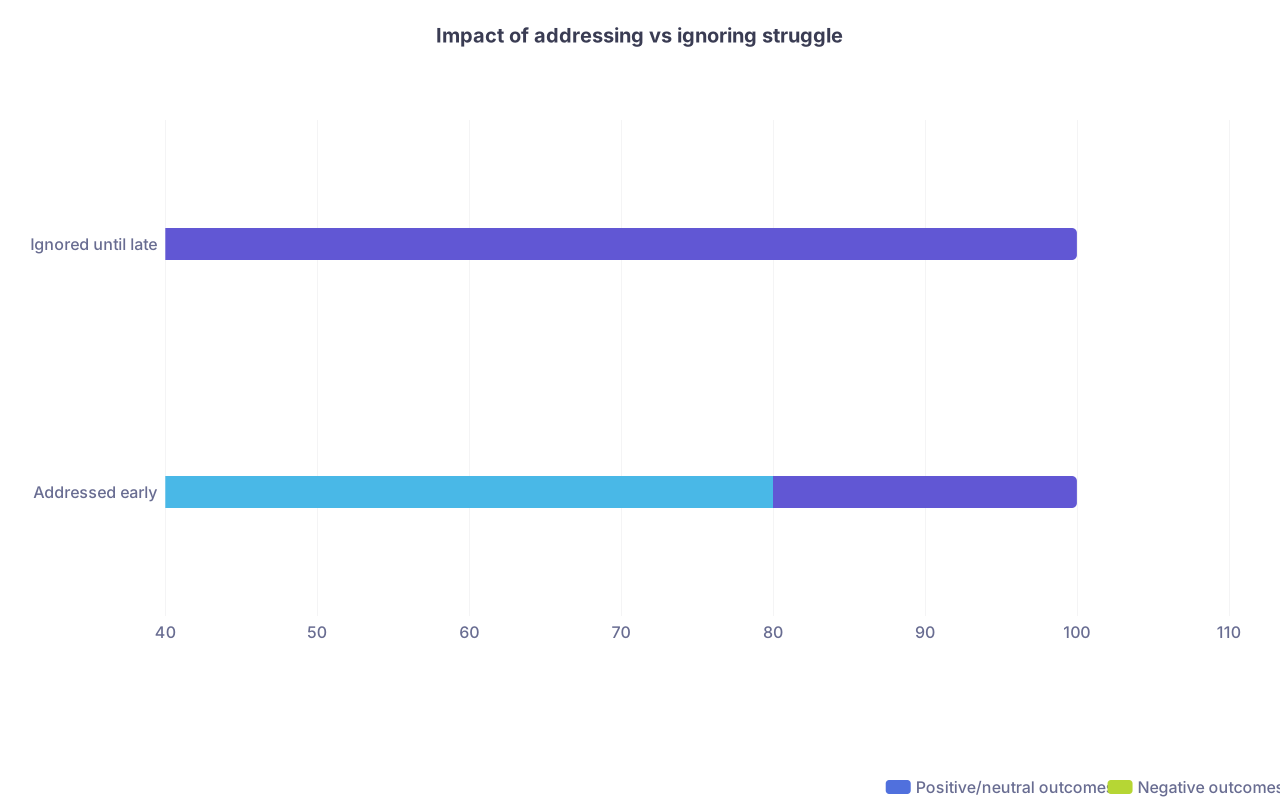
| Category | Positive/neutral outcomes | Negative outcomes |
|---|---|---|
| Addressed early | 80 | 20 |
| Ignored until late | 40 | 60 |
The exact numbers will vary by program, but the pattern is consistent: early, honest engagement with problems correlates with far better outcomes than quiet deterioration.

| Step | Description |
|---|---|
| Step 1 | Resident notices struggle |
| Step 2 | Gets support or remediation |
| Step 3 | Hides and pushes through |
| Step 4 | Improves and progresses |
| Step 5 | Further intervention or extension |
| Step 6 | Burnout or major error risk |
| Step 7 | Leave of absence or crisis |
| Step 8 | Tells someone? |
| Step 9 | Responds to support? |
Where you land on that diagram is far more predictive of your outcome than the mere fact that you struggled.
Why This Myth Needs to Die
The “good residents never struggle” story survives because it flatters a certain image of the profession: resilient, perfect, always composed. It also gives some people cover to be judgmental without engaging with data or nuance.
But it fails every serious test:
- It doesn’t match prevalence data on burnout, depression, or remediation.
- It doesn’t match what CCCs and PDs actually track and care about.
- It doesn’t match long-term outcomes for residents who had early difficulty.
Here’s the cleaner version reality keeps screaming:
- The majority of excellent residents struggle—sometimes badly—at some point in training.
- What predicts outcomes isn’t whether you struggle, but whether you recognize it early and let it shape your learning, help-seeking, and behavior.
- The residents who pretend not to struggle are not “better.” They’re just better at acting. And that act can be dangerous—for them and for patients.
If you’re in the thick of it and you think struggle means you are not a “good resident,” you’re not just wrong. You’re believing a myth that the evidence has already shredded.