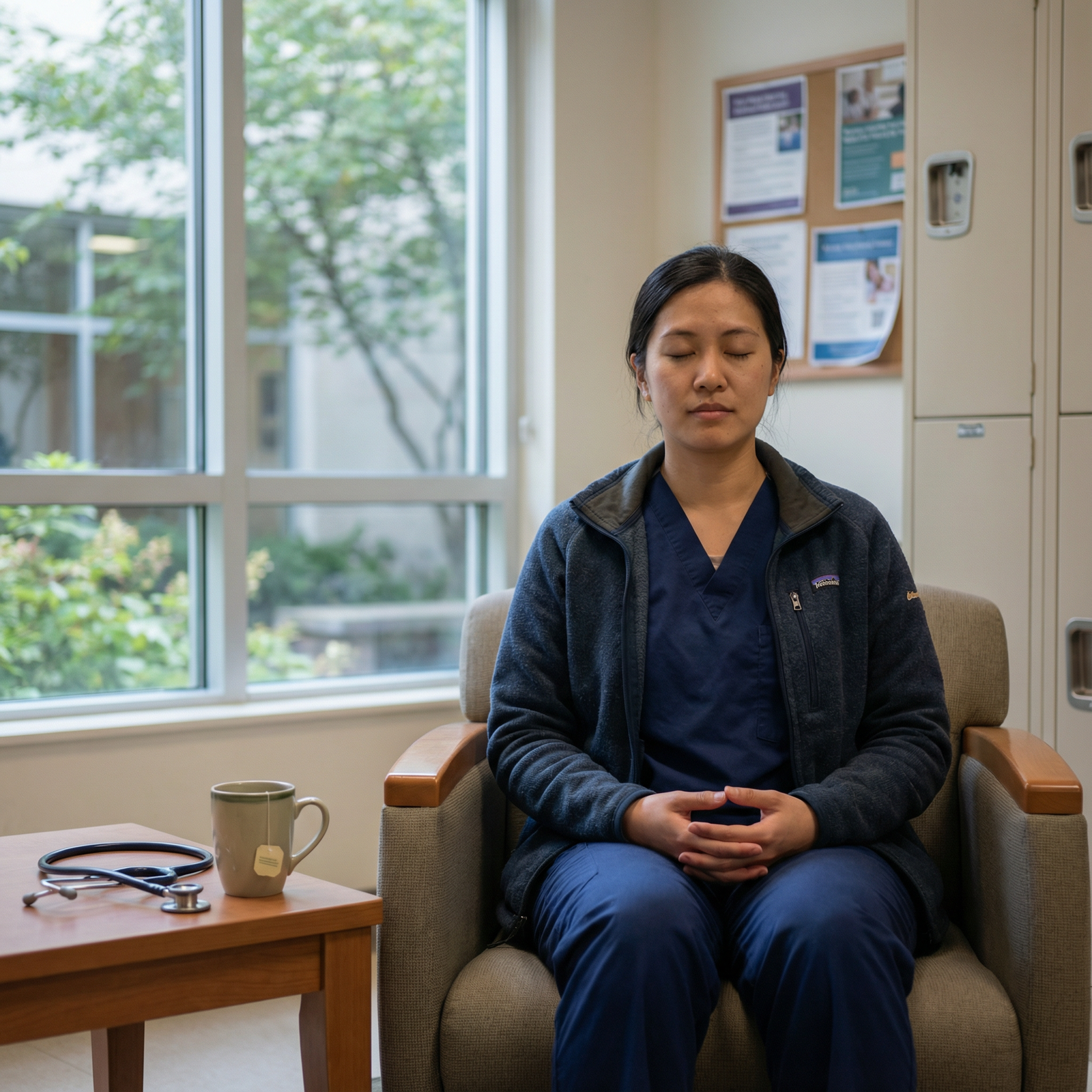
The “natural clinician” is a comforting fairy tale—and it is sabotaging residents every day.
You do not magically become “good with patients,” “have great clinical judgment,” or “just know what to do.” The data are brutally clear: clinical skill is built, not born. Slowly. Unevenly. Through repetition, feedback, and more error than people like to admit.
Yet I still hear attendings whisper, “She’s a natural,” or residents mutter, “I’m just not a natural clinician like my co-intern.” That language is poison. It distorts how you see yourself, how programs evaluate you, and even how safe patient care is.
Let’s dismantle this myth properly.
The Talent Myth: What People Think a “Natural Clinician” Is
When people say “natural clinician,” they usually mean some hazy mix of:
- Instantly calm at the bedside
- Seamlessly juggling multiple tasks and pages
- Rarely flustered, always “on top of things”
- Reading the room socially, charming patients and staff
- Making quick, confident decisions
Sounds nice. Also sounds like a composite superhero.
Here’s the problem: none of those things map cleanly onto stable, innate traits. They map onto prior exposure, deliberate practice, psychological safety, and—this part nobody likes to say—how similar you look and sound to the people currently in power.
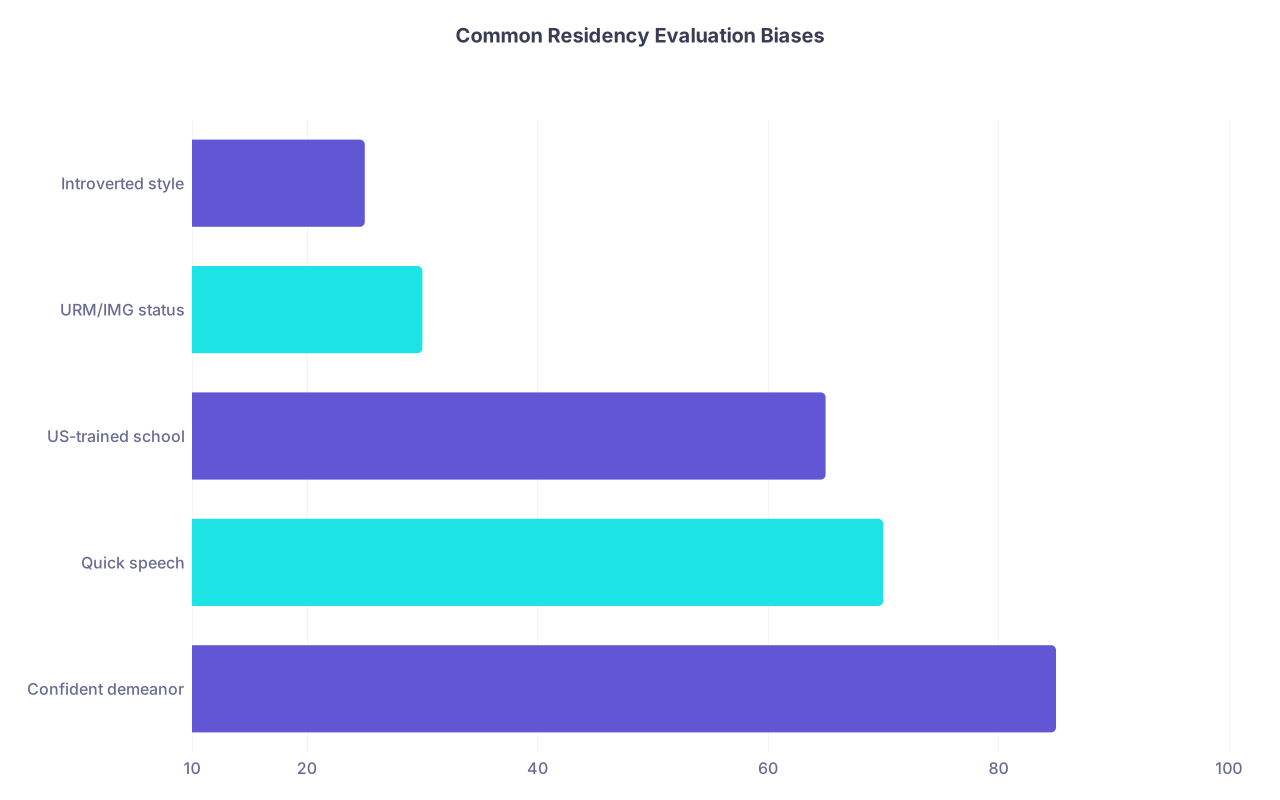
The shy IMG with heavy chart-review discipline and meticulous follow-up is often labeled “slow” or “not a natural.” The charismatic U.S. grad who rounds loudly and guesses with confidence is “impressive.” Until you open the chart and audit the actual care.
The “natural clinician” label is almost never about carefully measured performance. It’s vibes. And vibes are biased.
What the Data Actually Show About Clinical Skill
We have decades of research on clinical reasoning, communication, and performance. The “gifted clinician” myth doesn’t survive contact with it.
1. Experience matters far less—and far more specifically—than people think
Raw years in training don’t automatically improve diagnostic skills. A meta-analysis in JAMA and multiple follow-up studies show something uncomfortable: beyond a basic threshold, more experience does not guarantee better diagnostic accuracy. In some domains, older clinicians perform worse because they rely on fossilized heuristics and skip updating.
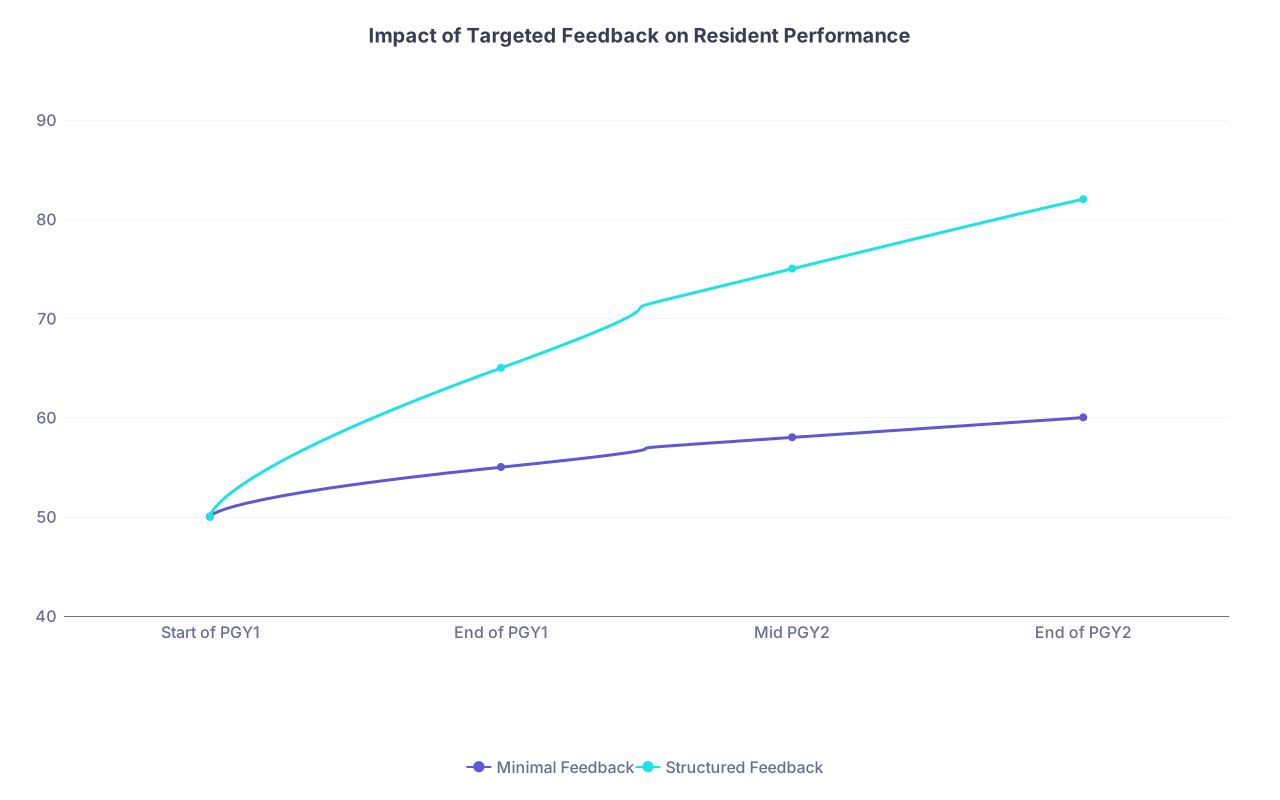
What improves performance is targeted experience with feedback. When clinicians see similar patterns repeatedly, receive timely feedback (labs, imaging, outcomes), and actually adjust their mental models, performance climbs. That’s not personality. That’s cognitive calibration.
You know what looks like “natural clinical judgment”? A second-year resident who’s seen 50 borderline septic patients and now recognizes the 3 early subtle signs the intern misses—because they were forced to follow up, see who crashed, and change their thresholds.
2. Pattern recognition is trained, not gifted
People love to mythologize “gestalt.” The attending who walks into the room, glances once, and says “this is bad” before anyone sees the lactate. Feels magical.
Reality: that “gestalt” is pattern recognition carved by thousands of prior encounters and encoded as subconscious heuristics. Gary Klein’s work on naturalistic decision making (firefighters, military, clinicians) shows this over and over. Experts aren’t doing fancy conscious analysis; they’re matching patterns based on past experience and then checking for mismatch.
You cannot shortcut that with talent. You can only accelerate it with:
- Repetition
- Feedback on outcomes
- Reflection when you are wrong
The residents who journal cases, look up follow-up imaging, check cultures, and revisit decisions? They don’t stay “average” for long. They look “natural” by PGY-3. Shocking.
3. Communication “talent” is mostly technique and norms
The idea that some people are born “good with patients” is lazy.
Of course temperament plays a role. If you’re naturally extroverted and comfortable with small talk, the first five minutes with patients may come easier. But core communication skills—framing bad news, aligning goals of care, de-escalating conflict, negotiating safety on discharge—those are learned behaviors with trainable components.
Randomized trials on communication training are clear: even brief, structured workshops on things like SPIKES for bad news or NURSE statements for emotion measurably improve patient satisfaction and clinician confidence. Residents don’t magically discover those frameworks in the wild. Somebody teaches them. Or they go unsaid and we pretend whoever stumbles closest is “a natural.”
What Actually Builds Clinical Skill in Residency
Strip away the mythology and you’re left with a much less glamorous truth: clinical skill grows like any other complex expertise.

| Step | Description |
|---|---|
| Step 1 | Repetitive Clinical Exposure |
| Step 2 | Pattern Recognition |
| Step 3 | Hypothesis Generation |
| Step 4 | Decision and Action |
| Step 5 | Feedback from Outcomes |
| Step 6 | Reflection and Adjustment |
Let’s go through the main levers that actually move the needle.
Structured repetition: volume with awareness
Not all volume is equal. A resident drowning in pages, running from room to room, barely charting, may rack up a giant “patient count” with very little actual learning. They’re in survival mode, not deliberate practice mode.
What builds skill is repeated exposure to similar problems with enough cognitive bandwidth to notice patterns:
- That COPD patient that “feels different” from simple CHF
- The DKA case where something’s off about the mental status even though numbers look okay
- The post-op day 2 patient whose subtle tachycardia made you order that extra CBC
Residents who pause, predict, and check outcomes turn volume into learning. “I think this is X; I expect Y to happen in the next 6–12 hours. Let me see if I’m right.” That loop is where “judgment” comes from.
Feedback: the piece most programs botch
Without feedback, your brain will happily reinforce wrong patterns.
And residency is notorious for terrible feedback structures. Vague end-of-rotation comments, rushed “you’re doing fine,” or unhelpful criticism like “be more confident.”
Real feedback is specific, timely, and anchored in observable behavior. Things like:
- “Yesterday you anchored on pneumonia and didn’t reopen the differential after the CT. Let’s go through that.”
- “You’re excellent at empathic statements but you don’t summarize the plan clearly. Patients are leaving confused.”
- “Notice how you always call for help late at night but not during the day? That’s a pattern worth examining.”
Learners who seek out that level of detail accelerate. The ones who only collect generic “strong resident” labels? They plateau and hope nobody notices.
Reflection and metacognition: thinking about your thinking
The difference between the resident who slowly improves and the one who jumps levels is metacognition: the ability to watch how you think, not just what you think.
This is the resident who, after a near-miss, asks:
- “Why did I anchor on that diagnosis?”
- “What information did I ignore because it didn’t fit my story?”
- “At what point could I have safely escalated sooner?”
There’s research on “self-explanation” in medical education: forcing yourself to articulate why you chose a diagnosis or plan leads to better knowledge organization and transfer. That’s a skill, not a trait. You can build it with habits like:
- Brief written reflections after hard cases
- Case debriefs with peers (actually analyzing thinking, not just venting)
- Asking attendings to walk you through their thought process, and then comparing it to yours
Psychological safety: the hidden accelerator
The “natural clinician” in your program is often just the person who feels safest to make decisions, speak up, and be visibly wrong.
If you’re from a background underrepresented in medicine, an IMG, or from a non-elite school, you may second-guess more, speak less, and avoid risk. That doesn’t mean you are less capable; it means your environment is taxing your cognitive bandwidth with constant self-monitoring.
Psychological safety—knowing you can ask questions or say “I’m not sure” without being humiliated—dramatically alters learning rate. Teams with higher psychological safety error-report more, correct faster, and improve more quickly. That’s been shown across industries, and medicine is no exception.
So no, that loud, breezy resident is not necessarily a “natural.” They’re just playing on easy mode culturally.
How the Myth Harms Residents (And Patients)
This isn’t just semantics. The “natural clinician” story has real consequences.
| Category | Value |
|---|---|
| Confident demeanor | 85 |
| Quick speech | 70 |
| US-trained school | 65 |
| URM/IMG status | 30 |
| Introverted style | 25 |
It creates a fixed mindset
If you secretly believe clinical ability is mostly innate, your internal monologue sounds like:
- “I’m just not as sharp as my co-resident.”
- “I’m bad at procedures.”
- “I’ll never be good at end-of-life conversations.”
Then you avoid challenging cases, you don’t ask for targeted feedback, and you protect your ego instead of your growth. Classic fixed mindset behavior.
Contrast that with the resident who sees skill as trainable: “I botched that family meeting. I need a framework and more reps. Where can I get that?” Same event, different trajectory.
It excuses lazy teaching
Calling someone “a natural” is a way for attendings to compliment without mentoring. It’s also a way to blame learners: “He just doesn’t have it.”
I’ve watched faculty shrug off repeated resident struggles with, “She’s not a clinician; she’s more academic.” Translation: “I don’t know how to teach her and I’m not going to try.”
If instead we frame everything as skill, the conversation changes:
- Not “He’s bad with patients”
- But “He needs coaching in empathic language, silence tolerance, and expectation-setting.”
That’s actionable. The myth lets teachers off the hook.
It amplifies bias and gatekeeping
Who gets labeled “natural”? The person who mirrors the majority.
Fluent in the dominant language and idioms? Confident speaking in front of groups? Similar socioeconomic background as attendings? You’ll be read as “sharp” faster.
That’s not clinical talent. That’s cultural fluency.
Meanwhile, the thoughtful, methodical, slightly awkward resident with strong follow-through might save more patients long-term. But early in training, they don’t get the glittering labels. Sometimes they get underestimated so consistently they start believing it.
How To Actually Get Better (Even If You Feel “Not Natural”)
Now the part you can control.
You can’t rewrite your personality. You can absolutely rewire your skill set. Here’s the unromantic, efficient way to do it.
1. Pick one skill domain at a time
“Be a better clinician” is useless as a goal. “Get better at acute dyspnea workups on nights” is not.
Narrow it down:
- Diagnostic reasoning in one high-frequency complaint
- One communication scenario (e.g., code status, discharge education)
- One procedure (paracentesis, central line, ultrasound basics)
Then go hunting for reps in that lane.
2. Build a feedback loop, not a praise loop
You don’t need more “You’re doing great.” You need:
- “What’s one thing I did well today, and one thing I should change?”
- “At what point during that case did you start worrying? Compare that to my timeline.”
Ask in those terms. Force specificity. Write it down the same day.
3. Track your judgment, not just your outcomes
Outcomes lag. You need to grade your thinking in real time.
Before you sign out or crash into bed, pick one interesting patient and answer:
- What did I think was going on?
- What did I predict would happen in the next 12–24 hours?
- Was I right when I checked?
This is tedious. It is also where your brain updates its internal models.
4. Steal frameworks shamelessly
Natural clinicians supposedly “just know what to say.” In reality, many are unconsciously using structures:
- For bad news: SPIKES model
- For goals of care: ask–tell–ask, then values–options–recommendation
- For presentations: SOAP with a fixed “assessment first sentence” template
Ask seniors and attendings: “What exact phrases do you use in this situation?” Copy them. Modify later.
The less cognitive overhead you spend on how to talk, the more you can spend on what to decide.
The Uncomfortable Truth: You’ll Always Feel Behind
One last myth: that at some magical PGY level you’ll feel like a “natural clinician.”
I’ve watched outstanding chief residents walk out of family meetings and say quietly, “That was clumsy. I still don’t know the right way to phrase that.” I’ve heard superstar hospitalists admit they second-guess their gestalt for days after a miss.
The internal experience of expertise doesn’t feel like swagger. It feels like constant, calibrated doubt. You’re more aware of what you don’t know. You just have better tools to manage it.
So if you feel clumsy, slow, or “unnatural”—that’s not proof you’re in the wrong field. It’s proof you’re early in the learning curve and still paying attention.
| Myth | Reality |
|---|---|
| Some residents are just naturals | Skill comes from repetition and feedback |
| Experience alone makes you better | Only targeted experience improves judgment |
| Communication is innate personality | Communication techniques are trainable |
| Confidence equals competence | Confidence often reflects safety, not skill |
| Feeling unsure means you’re not good | Calibrated doubt is a sign of expertise |

FAQs
1. What if I truly feel I’m not cut out to be a clinician?
Feeling that way during residency is extremely common. Sleep deprivation, chronic stress, and constant comparison warp your self-assessment. Before you decide you “aren’t a clinician,” run a more objective test:
- Ask three faculty for specific strengths and weaknesses
- Identify one concrete domain to improve over 3–6 months
- Track your own cases and see if your predictions and decisions improve
If, after serious, focused effort with honest feedback, you still hate the day-to-day work—not just feel insecure, but genuinely dislike clinical practice—then career pivots are reasonable. But do not let a vague sense of “not being a natural” push you out prematurely.
2. Why do some interns look so much better on day one?
They’re not magical. They’ve usually had:
- Heavier sub-I responsibilities
- Prior work as scribes, nurses, EMTs, or techs
- Extra exposure to the local EMR or workflow
- Cultural and language familiarity with the hospital environment
In other words: head start, not higher ceiling. By the end of PGY-2, the residents who are deliberate about practice and feedback often surpass the early “stars.”
3. How can attendings stop reinforcing the “natural clinician” myth?
Stop using that language. Replace “She’s a natural” with “She has strong pattern recognition in X and communicates clearly; we should give her harder cases and more feedback.” When a resident struggles, shift from “He doesn’t have it” to “Which specific skills are missing, and how do we train them?” Also, model your own uncertainty and thought process openly. That demystifies judgment and shows it as a buildable skill.
| Category | Minimal Feedback | Structured Feedback |
|---|---|---|
| Start of PGY1 | 50 | 50 |
| End of PGY1 | 55 | 65 |
| Mid PGY2 | 58 | 75 |
| End of PGY2 | 60 | 82 |
4. What concrete habit should I start this week to build “clinical intuition”?
Pick one: either a daily prediction log or a weekly case review.
- Daily prediction log: choose one patient per day, write down your diagnosis, what you expect to happen in 12–24 hours, and your confidence. Check back and see how reality compares.
- Weekly case review: with a peer or senior, dissect one case, focusing purely on thought process—where you anchored, what you missed, when you could have escalated.
Do that consistently for 3 months. You will not feel like a “natural clinician.” You will simply, quietly, be better.
Two points to walk away with.
First, clinical skill is not a personality trait. It is the compound interest of repetition, feedback, and reflection. Anyone willing to engage those levers can get markedly better.
Second, every time you catch yourself saying “natural clinician,” translate it: “someone whose prior experiences and environment have given them a head start.” Then get back to the unromantic work of building your own.