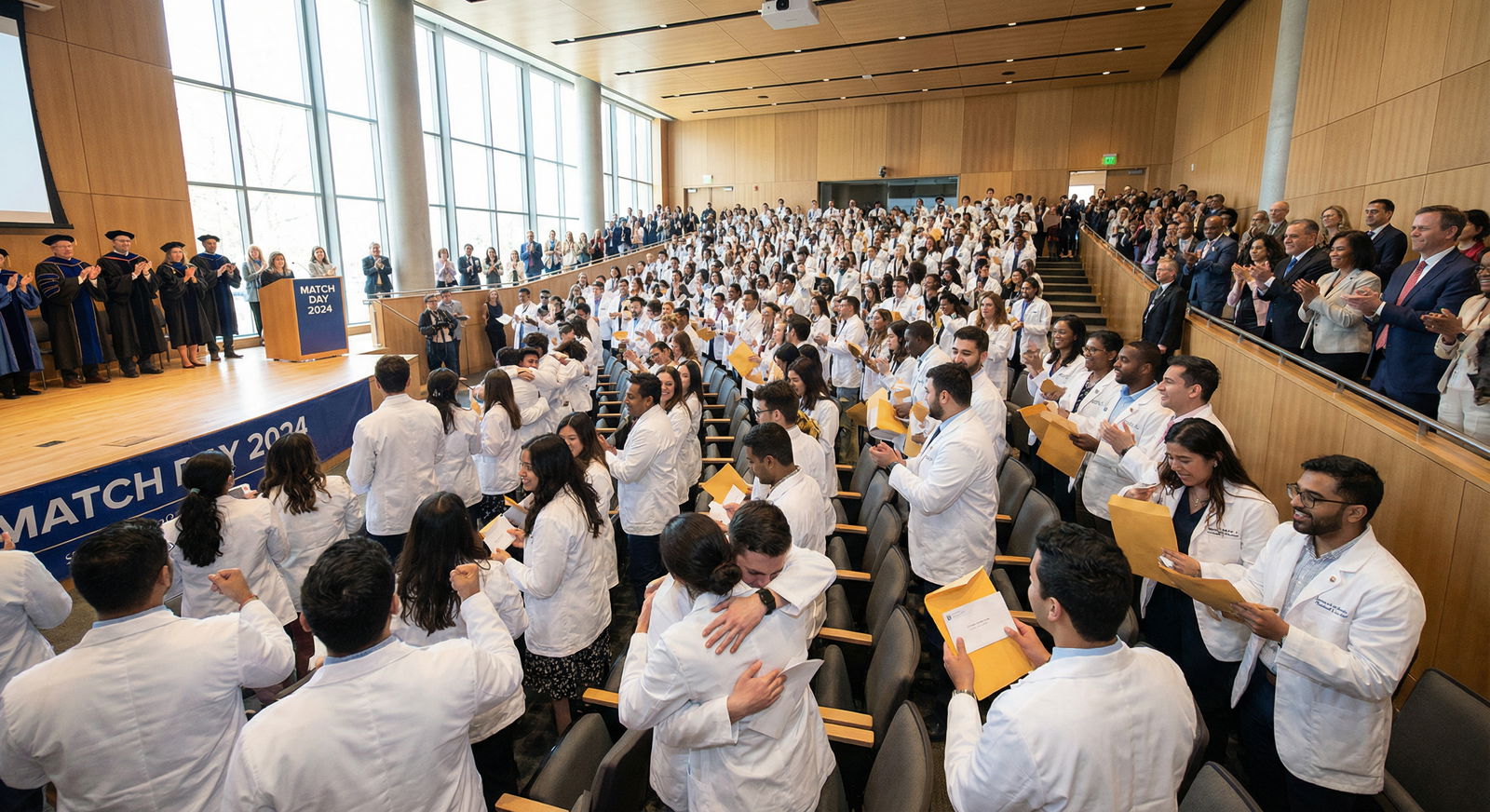
The idea that your Match Day happiness is basically a direct function of your board scores is wrong. Not just simplistic—wrong.
High scores buy you options. They don’t guarantee satisfaction. And they absolutely do not immunize you against regret, burnout, or hating your life in PGY‑2.
Let’s separate what actually has data behind it from what you hear whispered in the library.
What Board Scores Actually Predict (And What They Don’t)
First, the part everyone keeps roughly right: board scores matter for getting in, especially to competitive specialties and “top-tier” programs.
Program directors aren’t hiding this. The NRMP Program Director Survey (pre–Step 1 pass/fail) consistently showed USMLE Step 1 and Step 2 CK near the top of “importance” lists for interview offers—especially in competitive fields like dermatology, ortho, plastics, ENT. Step 2 CK still plays that role.
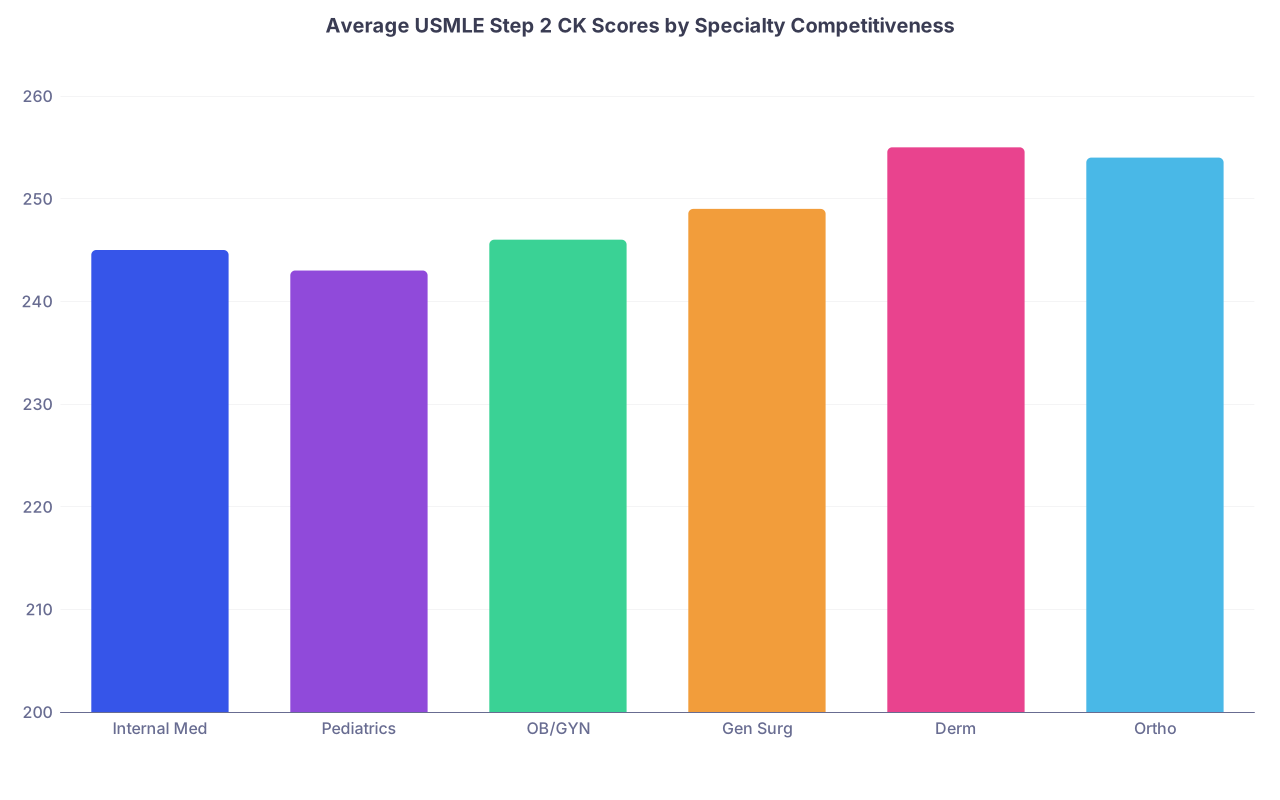
| Category | Value |
|---|---|
| Internal Med | 245 |
| Pediatrics | 243 |
| OB/GYN | 246 |
| Gen Surg | 249 |
| Derm | 255 |
| Ortho | 254 |
So yes, better scores correlate with:
- Higher probability of matching in more competitive specialties
- Higher probability of matching at “more competitive” programs within a specialty
- Lower probability of going unmatched
But here’s the pivot most students miss: those studies stop at matching. They rarely follow you into residency and ask, “Are you happy you landed where you did?” or “Are you thriving or miserable?”
On that level, the data gets a lot murkier—and a lot more interesting.
The research we do have on resident well‑being, burnout, and satisfaction keeps circling back to different culprits:
- Workload and schedule control
- Culture and support in the program
- Mentorship and autonomy
- Alignment between actual day‑to‑day work and what the resident values
Board scores barely show up in those analyses.
The scores get you in the door. After that, the predictors of well‑being shift dramatically.
Match Day Happiness vs. Long‑Term Satisfaction
People confuse the emotional spike on Match Day with durable satisfaction. Those are not the same outcome.
Match Day is an acute event. Huge build‑up, binary outcome in your mind: “I matched somewhere I wanted” vs “I didn’t.” That emotion is heavily influenced by expectation management and comparison with peers, not by your numerical scores.
I’ve watched students with 260+ Step 2 CK walk out of Match Day looking vaguely disappointed because they got their second choice at a prestigious program, while a classmate with a much lower score is in tears of joy because they matched their #1 community program near family.
Same building. Same specialty. Similar objectively strong outcomes. Completely different emotional states.
What’s actually driving that?
1. Expectation vs. Reality Gap
This is brutal but true: the higher your scores, the more people (including you) assume your trajectory “should” look a certain way.
If you’ve been told for two years, “With those numbers, you can go anywhere,” suddenly a top‑20 program becomes your new baseline. Anything “below” that feels like a loss, even if the program is excellent and a fit for your values.
Psychology has a name for this—relative deprivation. You do not evaluate outcomes in a vacuum; you compare them to what you expected and to what others around you got.
Board scores feed that dynamic. They inflate expectations. They do not guarantee the outcome will feel good.
2. Fit vs. Prestige
Most Match Day happiness research focuses on “did you match your top choices?” And often, “top” on your list is driven by prestige and location more than fit.
Residents later, when surveyed anonymously, talk very differently. They mention:
- How much they trust their chiefs and attendings
- Whether they get destroyed or supported on bad days
- How malignant the call schedule feels
- Whether education is protected or always sacrificed to service
Plenty of people with monster scores deliberately choose slightly less competitive programs because they liked the residents, the vibe, the city, or the resources for their partner/family. On Match Day, they look happy. Then they continue to look reasonably happy 18 months later. Funny how that works.
The myth is: “If you have high scores and don’t go as big as possible prestige‑wise, you wasted them.”
Reality: using your scores to widen your options so you can choose for fit is exactly how to squeeze happiness out of them.
What the Studies Actually Suggest About Well‑Being
Let’s talk data, not folklore.
Most empirical work around residency satisfaction and burnout is not designed to measure board scores as a happiness variable. When they do look at background academic metrics, the effect size is tiny compared to program environment.
Common consistent themes in the literature and large surveys:
- Residents in specialties with heavy workload and poor control over schedules (general surgery, OB/GYN, some IM programs) have higher burnout, regardless of their Step scores coming in.
- Supportive program culture, responsive leadership, and good mentorship reduce burnout risk and increase satisfaction.
- Being in the specialty you actually wanted matters more than the “tier” of the program for psychological outcomes.
- Geographic and social support—near a partner, family, or a strong friend network—protect mental health.
Board scores? Mostly absent from those predictive models.
| Factor | Predictive Strength for Well-Being |
|---|---|
| Program culture & support | Strong |
| Work hours / schedule control | Strong |
| Specialty choice alignment | Strong |
| Geographic / social support | Moderate–Strong |
| Program prestige brand | Weak–Moderate |
| USMLE / COMLEX scores | Weak |
Could a high‑scoring cohort correlate with certain program features? Sure. Big academic centers with selective metrics may also have better research infrastructure, more subspecialty exposure, etc. But on the human side—whether you feel like a replaceable cog or a supported learner—there’s no consistent “high score = happier” story.
In fact, there’s a subtle trap: high‑scoring students overconcentrate in hyper‑prestigious, high‑demand programs. Those programs can be incredible training environments—or complete meat grinders. On average, they are not magically better at protecting your mental health.
The Uncomfortable Truth About “Unhappiness Risks”
Let me flip the question: who’s actually at higher risk of Match Day disappointment?
Not “low scorers” as a monolith. The real risk groups:
1. The Mismatched Dreamers
Students who chase a specialty mainly because “I can with my scores” instead of “I actually enjoy the day‑to‑day.” Classic pattern: competitive Step 2 CK, gets told by half the faculty, “You should go derm/ortho/ENT/etc; you’d be a lock,” and drifts into that lane without honest self‑assessment.
On Match Day, they might still be ecstatic. In PGY‑2, some of them are quietly browsing other specialties at 2 a.m. on call.
The myth equates matching competitive = winning. Long‑term, matching misaligned = slow burn toward dissatisfaction.
2. The Prestige‑Anchored
Students who internally believe happiness ≈ name brand. They rank programs first by “USNWR vibes,” then by geography, then maybe by features that actually affect their lives.
I watched one person collapse into tears on Match Day because they “only” matched a very solid mid‑tier university program in the same specialty they wanted, in a decent city, with good fellowship placement. Their Step 2 was in the 250s. Their friends were confused; faculty were baffled.
That wasn’t a board‑score problem. It was a distorted expectation problem fed by years of tying self‑worth to numbers and prestige.
3. The Under‑Informed Rankers
This one cuts across scores. Students who barely interrogate program culture. They attend the dinner, ask a few polite questions on interview day, then rank based on location and name.
Months later: serious mismatch between what they value (teaching, humane scheduling, operative experience, research time) and what the program truly offers.
Scores didn’t hurt them or help them here. Lack of due diligence did.
Where Scores Indirectly Affect Match Day Happiness
Let’s be fair. Scores aren’t meaningless to happiness. They just don’t act the way the myth says.
The more accurate model looks like this:

| Step | Description |
|---|---|
| Step 1 | Board Scores |
| Step 2 | Specialty Options |
| Step 3 | Program Options |
| Step 4 | Choice Alignment with Interests |
| Step 5 | Choice Alignment with Values |
| Step 6 | Resident Satisfaction |
| Step 7 | Match Day Happiness |
Scores expand or limit your choice set. Within that set, what you choose—and why you choose it—drives happiness.
If your scores are low for your dream specialty, you may have to:
- Recalibrate to a backup specialty
- Add a prelim or transitional year strategy
- Be aggressive about location flexibility
That can absolutely sting on Match Day, especially if you’ve spent two years anchored to a single identity (“I’m going to be an orthopedic surgeon”) and then pivot to something else.
But even here, long‑term satisfaction is not doomed. Plenty of people “settle” for IM, EM, anesthesia, PM&R, or FM and later are extremely relieved they did. Not because they lowered their standards, but because those fields fit their personality, values, and preferred lifestyle better than their original “dream.”
The pain on Match Day can be real. The eventual happiness often has very little to do with the MCAT/USMLE/COMLEX spreadsheet you tortured yourself over.
A More Rational Way to Think About Your Scores
Let me be blunt: the anxiety around “Will my scores determine if I’m happy on Match Day?” is a distraction from the questions that actually matter.
Useful questions your future self would rather you ask:
- Am I choosing this specialty for the work itself, or for status and external validation?
- Among programs I can realistically reach with my application, which ones actually match how I want my life to look?
- Do I understand the culture and workload of the programs on my list, or just their reputation?
- If my outcome is slightly worse than my aspirational target—say I match my #3 instead of #1—can I still build the career I want from there? (Usually yes.)
Here’s the part most students do not want to hear: you can be miserable with a 270 and you can be content with a 220. You can be devastated matching a “reach” program because it’s not the reach program you worshipped. You can be overjoyed matching a solid community program that no one on Reddit flexes about.
Scores are data. Use them strategically. They’re not a happiness algorithm.
So, Is Match Day Happiness Tied to Board Scores?
Only in the shallowest, most indirect way.
Higher scores:
- Increase your probability of matching
- Expand your specialty and program choices
- Inflate expectations—sometimes dangerously
They do not reliably:
- Predict your emotional reaction on Match Day
- Protect you from regret about specialty or program choice
- Determine whether you feel supported, valued, or burned out as a resident
What does the evidence lean toward instead?
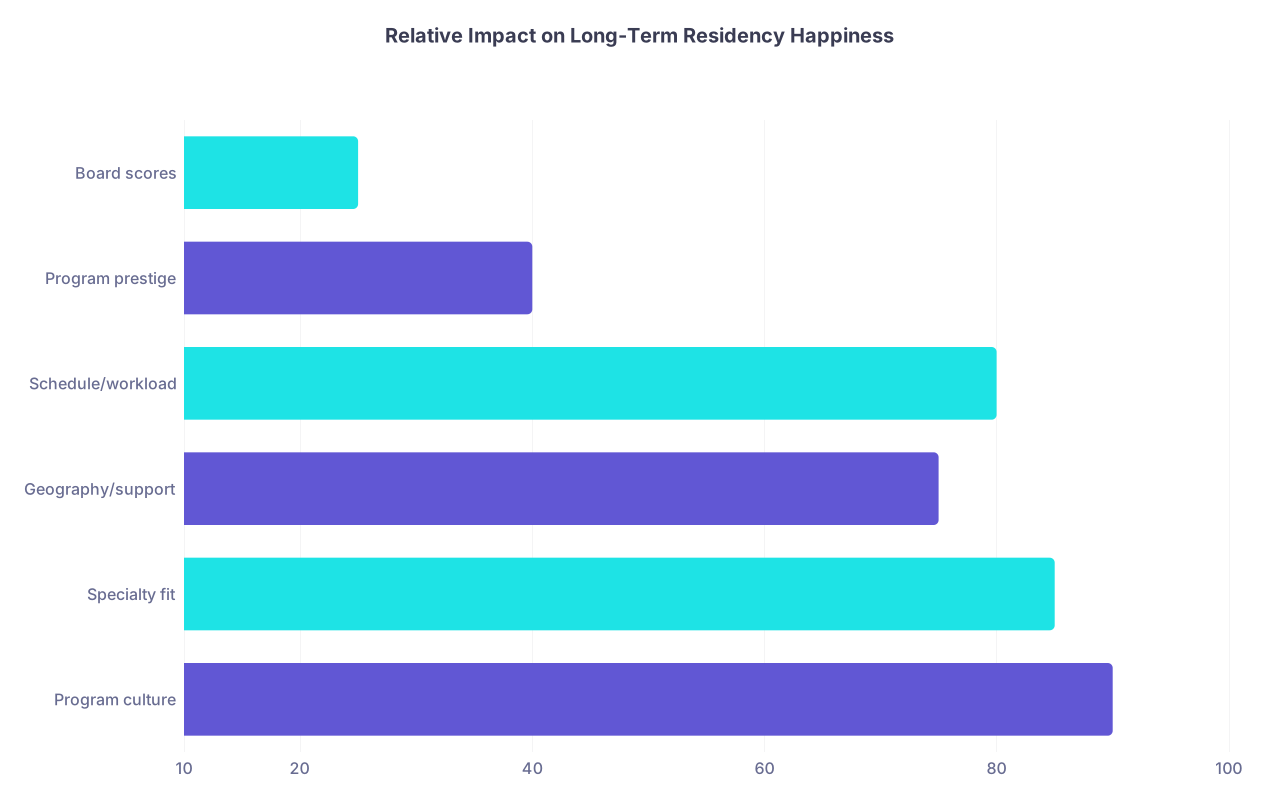
| Category | Value |
|---|---|
| Program culture | 90 |
| Specialty fit | 85 |
| Geography/support | 75 |
| Schedule/workload | 80 |
| Program prestige | 40 |
| Board scores | 25 |
Those numbers are conceptual, but they match the thrust of the literature: environment and alignment dwarf metrics.
So if you want to optimize for Match Day happiness and beyond, stop obsessing over whether your 241 should have been a 253. Start doing the hard, less glamorous work:
- Get brutally honest about what you actually enjoy daily
- Investigate programs as ecosystems, not brand names
- Build a rank list around fit, support, and realistic expectations
Summed up:
- Board scores buy you optionality, not happiness.
- Fit, culture, and expectations drive how Match Day feels and how residency lives.
- If you treat scores as the main determinant of success, you’re aiming at the wrong target—and setting yourself up to be disappointed even with “good” outcomes.