
Myth: Everyone Is Thrilled on Match Day—What Surveys Actually Reveal
Why does every Match Day photo look like a confetti commercial when you personally know people who cried in the bathroom, ghosted social media, or quietly left the ceremony midway through?
Because the public narrative about Match Day is sanitized. And the data does not match the marketing.
Let’s tear into that.
The Instagram Lie vs. Actual Numbers
Most students walk into Match Week with a subconscious script: Monday email—“You Matched.” Friday—tearful hugs, champagne, group photos, screaming, relief. Everyone is happy. Cue sentimental music.
Except that’s not what the surveys show.
The National Resident Matching Program (NRMP) publishes pretty unromantic statistics every year. They’re not trying to sell you joy. They’re just counting bodies and positions.
Here’s the rough picture for recent cycles (U.S. MD seniors—the group that has the “best odds”):
| Outcome | Approx % of U.S. MD Seniors |
|---|---|
| Matched to PGY-1 position | 92–94% |
| Matched to preferred specialty | ~85–88% |
| Matched to first-choice program | ~45–50% |
| Went unmatched initially | 6–8% |
So even in the “most secure” group:
- About half do NOT get their first-choice program.
- Around 1 in 7–8 do NOT get their preferred specialty.
- 6–8% don’t match at all on Monday.
Yet every March your feed looks like 100% first-choice champagne explosions. Why?
Because the people having a bad day do not line up for group photos. They close their laptop. They step outside. Some don’t show up to the ceremony at all.
To make that visual:
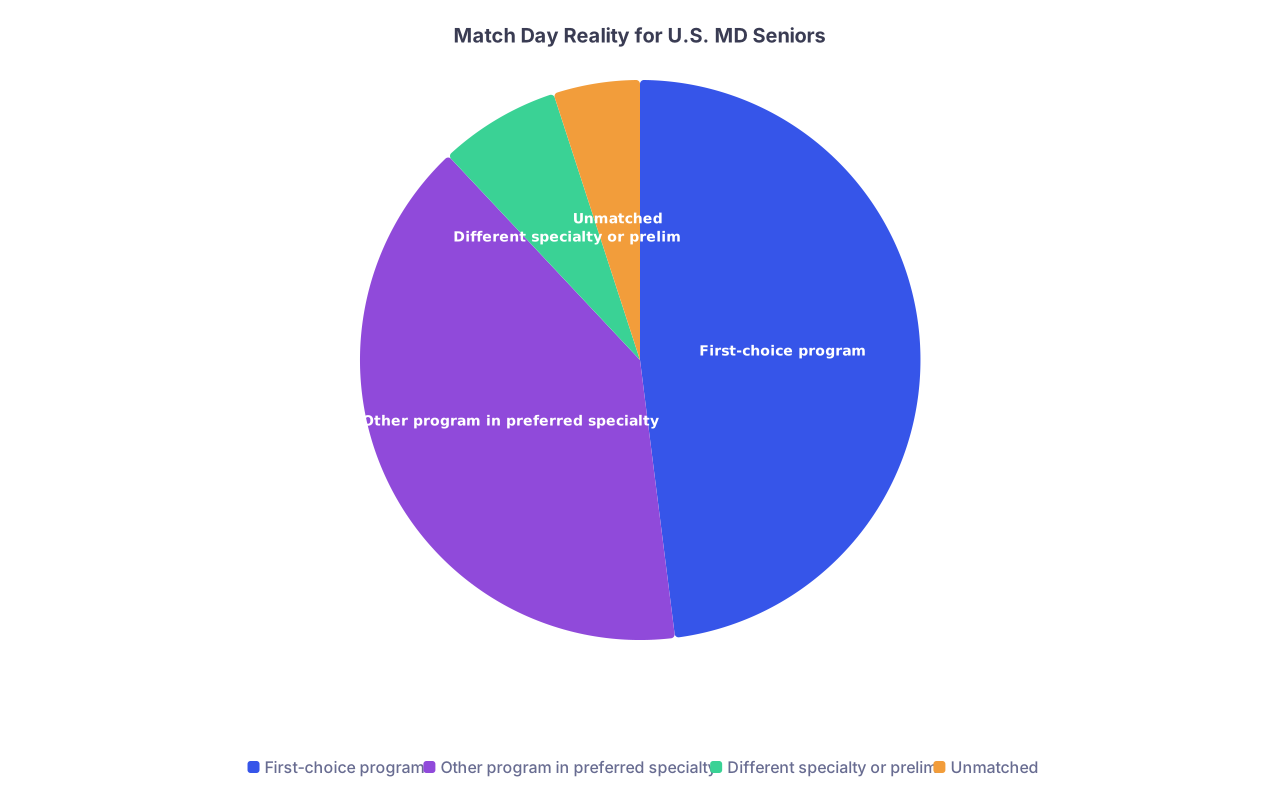
| Category | Value |
|---|---|
| First-choice program | 48 |
| Other program in preferred specialty | 40 |
| Different specialty or prelim | 7 |
| Unmatched | 5 |
So no, “everyone is thrilled” is not just wrong. It’s mathematically impossible.
What Surveys Actually Say About Satisfaction
People assume:
- If you matched → you’re happy.
- If you didn’t match → you’re devastated. Reality is messier.
Several follow-up studies and internal program surveys show:
- Plenty of applicants who matched are disappointed, embarrassed, or quietly angry.
- Some applicants who scramble into SOAP or switch specialties later report being happier than they expected.
I’ve seen this play out repeatedly:
- The student who matched into their “safety” program looks euphoric in the photo. They were in my office two weeks later saying, “I’m grateful, but I feel like I failed.”
- The unmatched student who SOAPed into prelim medicine ended up reapplying and matching anesthesia the following year. He called it the “most brutal gift” of his career.
The hidden segments on Match Day
You don’t see these groups in the brochure shots, but they’re there in almost every class:
Matched, but to a lower-ranked program
They smile on stage. Then later: “I did not work this hard for my #7.”
Emotion: relief + shame + self-questioning.Matched, but wrong geography
Long-distance partners. Far from family. Underserved regions they rank for strategy, not desire.
Emotion: cognitive dissonance. “I know this is good for my career, but my life just got harder.”Matched, but not to their original dream specialty
The “I pivoted late to IM/FM/Path/PM&R because my Step score tanked” crowd.
Emotion: complicated. Some later discover they love their field. Some never stop wondering “what if.”Unmatched but present in the room
They already know they’re unmatched from Monday’s email. They show up anyway to support friends.
Emotion: raw, exposed, and performing composure in a room full of cheering.Unmatched and absent
The ones no one posts about.
Emotion: isolation + logistical panic (SOAP, emails, CV updates in real time).
If you assume everyone is thrilled, you will misread the room and misjudge yourself.
Mental Health: Match Day Is Not Pure Joy
Let’s talk anxiety and depression around Match.
Multiple studies have shown:
- Applicant stress spikes during interview season and Match Week.
- A sizable minority meet thresholds for clinically relevant anxiety or depressive symptoms during this period.
One example pattern you see across studies:
- High baseline stress in M4 fall.
- Peak anxiety around rank submission and Match Week.
- Residual emotional fallout for some unmatched or disappointed students that can last months.
Now put that on top of:
- $5–10k in application/interview costs for some students.
- Years of sunk effort into a target specialty.
- Social comparison on steroids (everyone’s results announced simultaneously).
So no, this is not a universally “happiest day” situation. For some, it’s an inflection point where serious mental health issues surface.
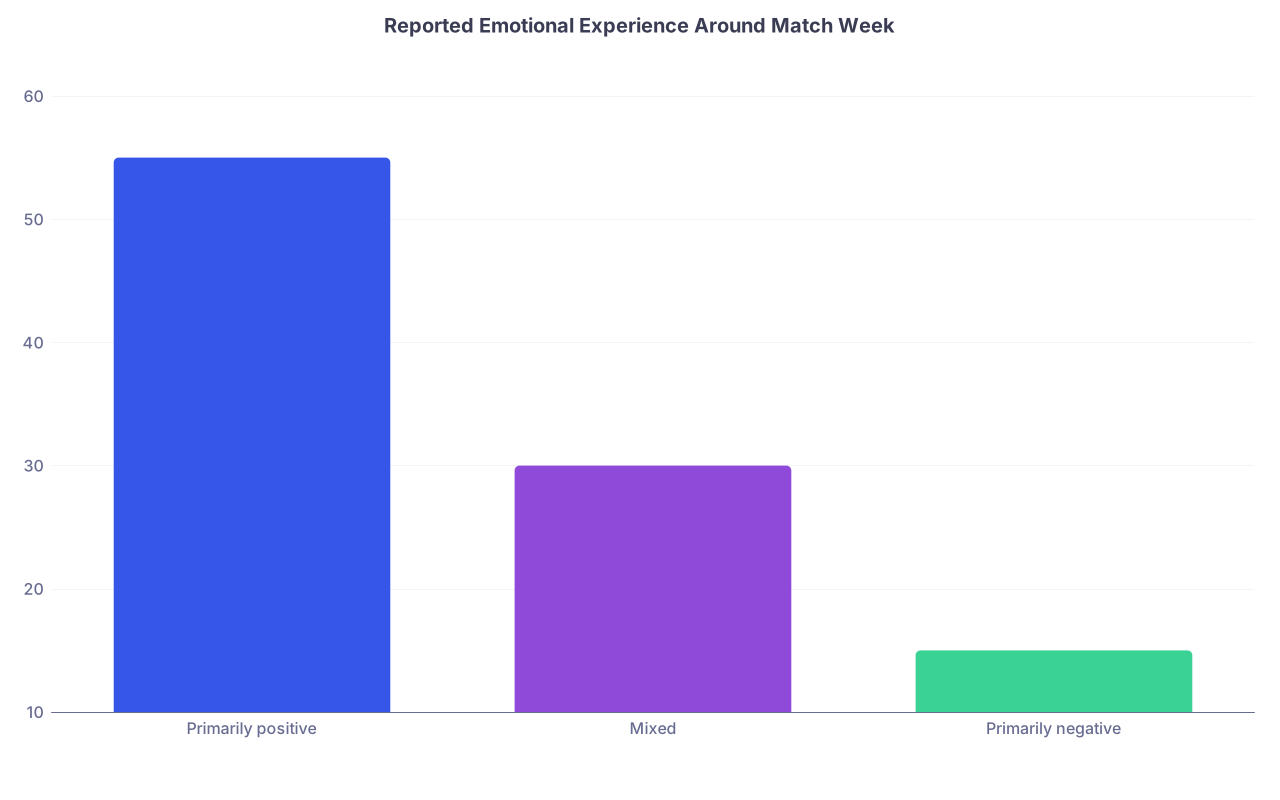
| Category | Value |
|---|---|
| Primarily positive | 55 |
| Mixed | 30 |
| Primarily negative | 15 |
Those are generous, rounded estimates based on patterns in multiple survey cohorts and program feedback. The main point: a huge chunk—maybe a third—have mixed or negative reactions. That doesn’t show up in the PR videos.
The Ceremony Itself: Designed For Optics, Not Nuance
Let’s be honest about the ceremony. The typical script:
- Dean speech about “culmination of your hard work.”
- Envelopes. Countdown. Screams. Families filming.
- Microphone line: “I’m going to Harvard for ortho!” repeated variations.
This format is built to highlight wins. It does not handle nuance well:
- There is no mic spot for: “I matched at my #6 and I’m still processing that.”
- There is no line for: “I didn’t match; I’ll be in SOAP and I’m scared but hopeful.”
- There’s definitely no segment for: “I think I picked the wrong specialty and I might change later.”
So what happens? People self-censor. They smooth their story in real time.
I’ve watched students rehearse their announcement line: “I’m thrilled to be going to…” when I know from advising sessions they were praying for a different program. The ceremony rewards the performance of pure joy. Mixed feelings don’t fit.

| Step | Description |
|---|---|
| Step 1 | Pre-Match Expectations |
| Step 2 | Public joy |
| Step 3 | Mixed feelings |
| Step 4 | Distress |
| Step 5 | Social media posting |
| Step 6 | Smile in public |
| Step 7 | Private processing later |
| Step 8 | Logistical scramble |
| Step 9 | Shame and withdrawal |
| Step 10 | Outcome vs Expectations |
Nothing about this is crazy or pathological. It’s a totally predictable response to a high-stakes, public, binary-looking event.
SOAP, Reapplication, and the “Failed Match” Myth
Another nasty side-effect of the “everyone’s thrilled” myth: it frames SOAP and reapplication as catastrophic life failures instead of detours.
Look at outcomes:
- Every year, thousands of unfilled positions go into SOAP.
- Many unmatched applicants fill a position that week.
- Plenty of students go unmatched → SOAP prelim/transitional → reapply and match categorical the next year.
The NRMP’s own reports show that many reapplicants do eventually match, especially if they:
- Adjust specialty choice realistically.
- Strengthen their application (research, STEP/Level 2 performance, extra clinical work).
- Get real advising instead of magical thinking.
| Path | Likely Outcome in 1–2 Years |
|---|---|
| SOAP into categorical | Start residency same year |
| SOAP prelim / transition year | Reapply with improved CV |
| Research / MPH year + reapply | Higher odds if realistic |
| Switch to less competitive field | Often successful |
So no, “didn’t match on Friday” does not equal “career over.” But if you only consume the party narrative, it feels that way, because there’s no visible script for “I’m regrouping and coming back.”
How to Prepare Emotionally for Match Day (Without Drinking the Kool-Aid)
Let me be blunt: the problem is not that Match Day is emotional. The problem is walking into it with a Disney script in your head.
Here’s how people who cope better usually approach it.
1. Expect a range of feelings, not one
You might be:
- Relieved you matched at all.
- Grateful for a solid program.
- Quietly mourning the place or specialty you did not get.
All at once. That’s normal. I’ve seen genuinely thrilled students crying for two reasons simultaneously: joy and loss. The myth says this is “weird.” The reality: it’s standard.
2. Decide ahead of time how public you want your moment
You don’t owe anyone:
- A stage announcement
- A live-streamed opening
- A carefully posed envelope photo
Some students:
- Open with 1–2 close friends in a side room.
- Text their result to their advisor and step out for a walk.
- Tell their family they’ll call once they’ve processed.
That’s not “dramatic.” That’s boundary-setting.
3. Have a plan for bad or mixed outcomes
This is where most people fail. They plan only for victory.
Before Match Week:
- Identify 1–2 people (advisor, mentor, friend) you’d contact if you’re unhappy or unmatched.
- Decide where you’ll go physically if you need space—outside, a car, empty classroom.
- Have a concrete next step written down: “If things go badly, at 1 pm I will call X and go over options.”
That reduces the “free fall” feeling.

| Step | Description |
|---|---|
| Step 1 | Open Result |
| Step 2 | Share with friends/family |
| Step 3 | Take 10 minutes alone |
| Step 4 | Call trusted mentor |
| Step 5 | Leave ceremony |
| Step 6 | Contact advisor |
| Step 7 | Review options and next steps |
| Step 8 | Reaction |
4. Stop using other people’s faces as your metric
The loudest reactions in the room are not the full sample. They’re just the most photogenic.
You have no clue:
- Who quietly matched at #8 and is processing.
- Who’s in SOAP and still smiling for friends.
- Who’s posting “so grateful” while feeling gutted inside.
Psychologically healthy move: judge your reaction against your own expectations and values. Not against whose parents screamed loudest at the front of the auditorium.
What Programs Actually Care About (Spoiler: Not How Ecstatic You Look)
Here’s another myth: if you’re not over-the-top thrilled, you’re somehow insulting the program or dooming your future with them.
No.
- Whether you show up in June.
- Whether you’re engaged, reliable, and teachable when you start.
- Whether you learn, grow, and treat people decently.
They do not build some secret resentment file because you didn’t cry on stage or hashtag them 14 times on Instagram.
I’ve seen residents who:
- Admitted they were initially disappointed with where they matched.
- Later became chief residents at those same programs.
Your Match Day performance is not your residency evaluation.
Reframing What “Success” on Match Day Actually Means
The mature framing is not:
“Success = first-choice program, maximum visible joy.”
A more reality-aligned definition:
- You secured a viable training position that moves you toward becoming a physician.
- Or, if you didn’t, you engaged seriously with SOAP and/or a reapplication plan instead of disappearing.
Match Day is a waypoint, not a verdict from the universe. Plenty of careers you admire did not start with “#1 choice, dream program, instant euphoria.”
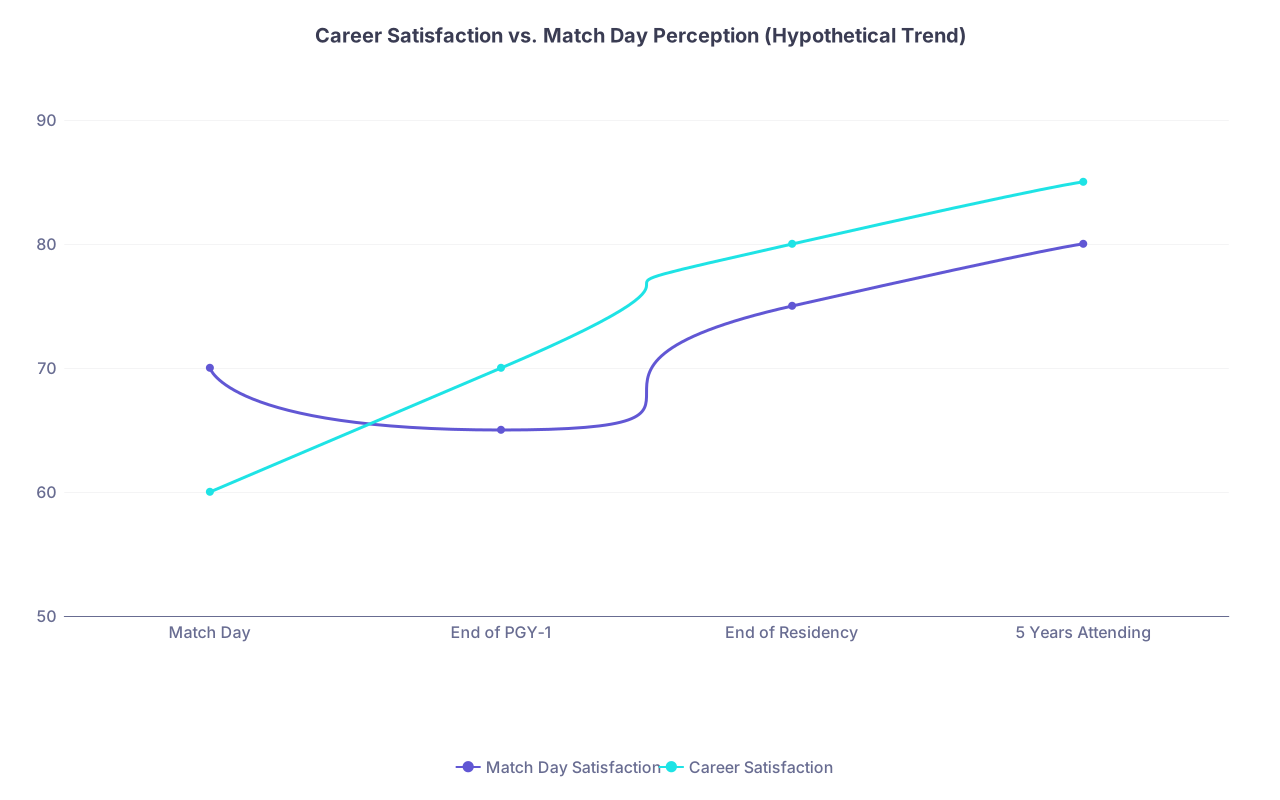
| Category | Match Day Satisfaction | Career Satisfaction |
|---|---|---|
| Match Day | 70 | 60 |
| End of PGY-1 | 65 | 70 |
| End of Residency | 75 | 80 |
| 5 Years Attending | 80 | 85 |
The big picture: some of the most satisfied physicians started with chaotic, disappointing, or non-linear Match outcomes.
Strip Away the Myth, Keep the Meaning
You do not have to pretend Match Day is pure joy to appreciate its meaning.
Three things to keep in your head as you walk into it:
- The public script is curated. Around half of people are not at their first-choice program, and a very real minority are struggling hard that day—even if you never see them.
- Mixed emotions do not mean you’re ungrateful or broken. They mean you’re a human being who just got a life-altering email in a performative setting.
- Match Day is a checkpoint, not a final judgment. Whether you’re thrilled, conflicted, or scrambling, what matters is what you do in the weeks and months after—not how you look in a 10-second video clip.