
What if I told you most people don’t actually match at their top three programs—yet still end up exactly where the data predicted they would?
Let’s kill this myth cleanly: no, your fate is not entirely decided by the first three lines of your rank list. That belief is one of the more stubborn, anxiety‑fueling lies that circulates every Match season. I have heard versions of it from MS4s every year:
“If I don’t match in my top 3, I’m basically at the mercy of the algorithm.”
“The rest of the list is just formality, right?”
Wrong. And the NRMP data is brutally clear on this.
What the Match Algorithm Actually Cares About (Hint: Not Just Your Top 3)
First, understand the core truth: the algorithm is applicant‑proposing and rank‑order driven. That means it’s designed to favor your preferences, and it is perfectly happy to move way past your top three. Or your top eight. Or your top twelve. It does not get bored. It does not stop trying.
Here’s the reality of how it works, without the hand‑wavy “magic algorithm” nonsense.

| Step | Description |
|---|---|
| Step 1 | Start with applicant top choice |
| Step 2 | Try next program on list |
| Step 3 | Tentatively match here |
| Step 4 | Replace lowest applicant |
| Step 5 | Lowest applicant tries next program |
| Step 6 | Move to next applicant |
| Step 7 | Program ranked applicant? |
| Step 8 | Program full? |
| Step 9 | Applicant more preferred than lowest? |
The key point: the algorithm will:
- Start with your #1 program.
- If that does not work, move to #2.
- If that fails, move to #3.
- Then #4. Then #5. Then #17. Then #24. And so on.
- And at every step, it still considers your preference order.
It never says, “Well, they missed their top three, so now we dump them wherever there’s a hole.” That’s a student rumor, not reality.
The only time you’re “at the mercy of the algorithm” is when you stop ranking programs that you’d actually be willing to attend. That’s a rank list problem, not an algorithm problem.
What the Data Actually Shows About Rank Position
Let’s look at actual NRMP data, not hallway mythology.
For U.S. MD seniors, across all specialties, the NRMP Charting Outcomes and Main Match reports show something that surprises a lot of students: a huge chunk of people do not match at #1–3.
Yet they still match strongly—and the match positions are all over the list, not clustered just at the top.
To make this less abstract, let’s look at a simplified example consistent with NRMP trends for U.S. MD seniors:
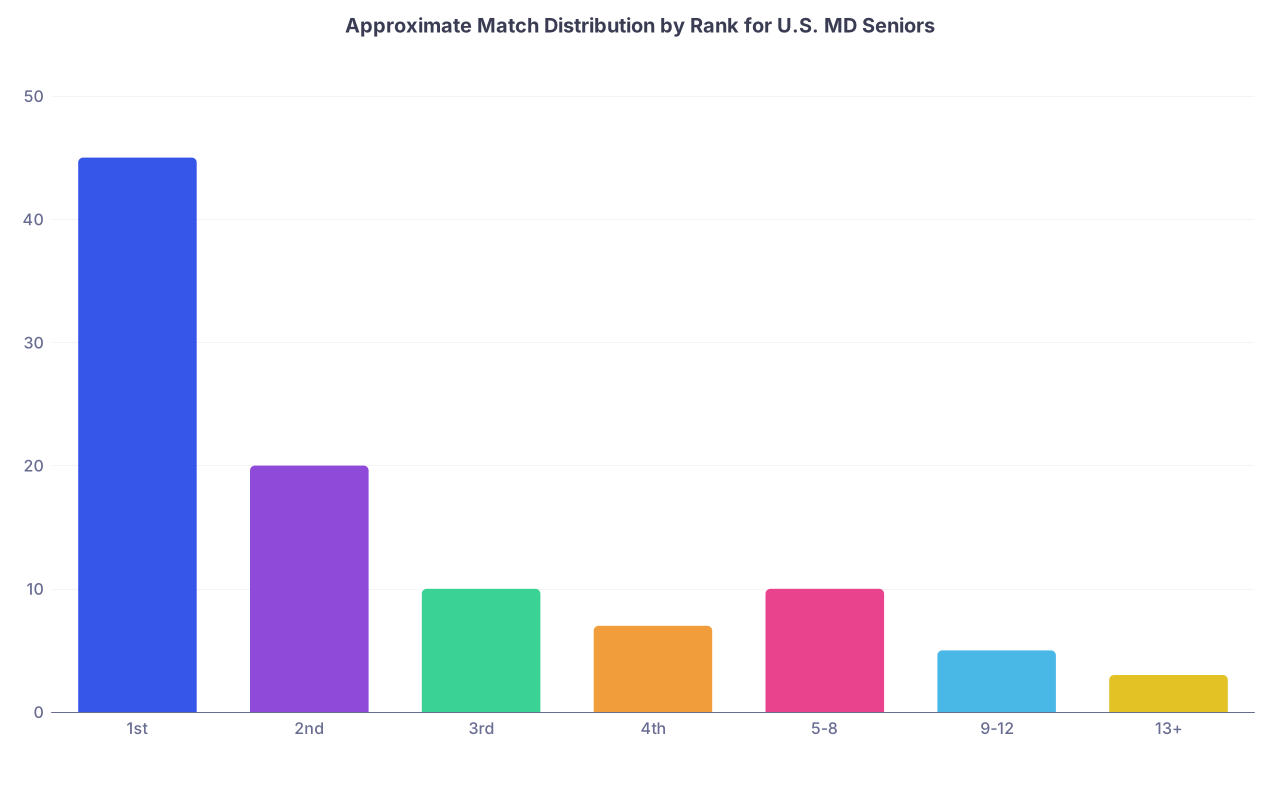
| Category | Value |
|---|---|
| 1st | 45 |
| 2nd | 20 |
| 3rd | 10 |
| 4th | 7 |
| 5-8 | 10 |
| 9-12 | 5 |
| 13+ | 3 |
What this type of distribution shows (exact numbers vary by year and specialty, but the pattern is consistent):
- A lot of people do match at #1. Great.
- A substantial number match at #2 or #3.
- Then there’s a long tail. People match at #5, #7, #10, #14.
If “only your top 3 matter,” that tail shouldn’t exist. But it does. Every year.
And the more competitive the specialty, the more that tail matters. In highly competitive fields (derm, ortho, plastics, ENT), plenty of successful applicants match at programs that were not in their top three slots, because their top three were dream / aspirational choices stacked with 260+ Step 2 scores and elite research.
The algorithm didn’t punish them for that. It just kept walking down their list and found the first program that also liked them enough to rank them high enough.
The Dangerous Psychology of the “Top 3 or Bust” Myth
This myth doesn’t just stress people out. It actively makes their match outcome worse in three ways.
1. People sabotage themselves by making artificially short lists
I’ve seen this more than once:
- Student interviews at 14 programs in internal medicine.
- Ranks 7 “I really liked these” and leaves the rest off.
- Justifies it with, “Well, if I don’t match in my top 5–7, I probably won’t match at all, right?”
No. That is exactly backwards.
The data is clear: adding more programs that you’re actually willing to attend increases your chance of matching. NRMP’s “Impact of Length of Rank Order List” figures show a monotonic relationship: longer lists, higher match rates, particularly in more competitive specialties.
Here’s a simplified, conservative rendition of that pattern:
| Specialty Type | ~5 Programs | ~8 Programs | ~12+ Programs |
|---|---|---|---|
| Competitive (e.g. Derm, Ortho) | 55% | 75% | 85–90% |
| Moderate (e.g. EM, Anes) | 70% | 85% | 90–95% |
| Less Competitive (e.g. FM) | 90% | 96% | 98–99% |
Numbers vary by year and applicant profile, but the direction doesn’t change: longer real lists help you. Short lists are how strong applicants end up in SOAP.
2. People over‑weight fantasy “tier jumping” in the top 3 spots
Another classic pattern:
- Applicant with a solid but not superstar profile (say 225–230 Step 2, average research, no home program) ranks three dream academic powerhouses first.
- Then puts the realistic but slightly less “prestigious” programs further down.
They do this thinking the top three are “the only ones that count,” so they may as well swing for the fences there.
What they ignore: those top three programs probably ranked them low or not at all. The algorithm can’t “sneak you into” a program that did not rank you high enough, no matter how much you love it.
The match then happens where the first intersection of mutual interest occurs. That’s often program #5, #6, #9—whatever is the earliest point where your love for them and their ranking of you overlap.
3. People interpret anything below #3 as “failure”
I have watched MS4s open their Match Day envelopes, see “Program #4,” and visibly deflate. Then I check their list:
- #1: absolute dream, way above their competitiveness.
- #2: reach.
- #3: reach.
- #4: realistic sweet spot program that actually fits their goals.
Objectively, they matched where they were most likely to—among the highest realistic programs that liked them back. But because we’ve told them “only your top 3 really matter,” they walk away thinking they “barely” matched, when in reality the algorithm did them a favor.
What Happens After Your Top 3? The Data Says: A Lot.
Let’s be blunt: most of your actual match insurance—the thing that keeps you out of SOAP—is sitting below your top three.
Those “middle tier” programs you felt neutral about on interview day? They’re the ones that quietly save people every year.
To make this concrete, think about a typical applicant who ranks 12 programs:
1–3: Dream / reach
4–7: Realistic strong fits
8–12: Solid safety‑ish but acceptable options
If they match at #6, what happened? Not an algorithm failure. Just this:
- 1–3: either did not rank them high enough or did not rank them at all.
- 4–5: maybe filled with higher‑ranked applicants before the algorithm got down to them.
- 6: first realistic program high enough on both lists for a tentative match that stuck.
I have literally watched people match at #10 on a 15‑program list and then go on to fantastic fellowships. Nobody cares after PGY1 what line number that was.
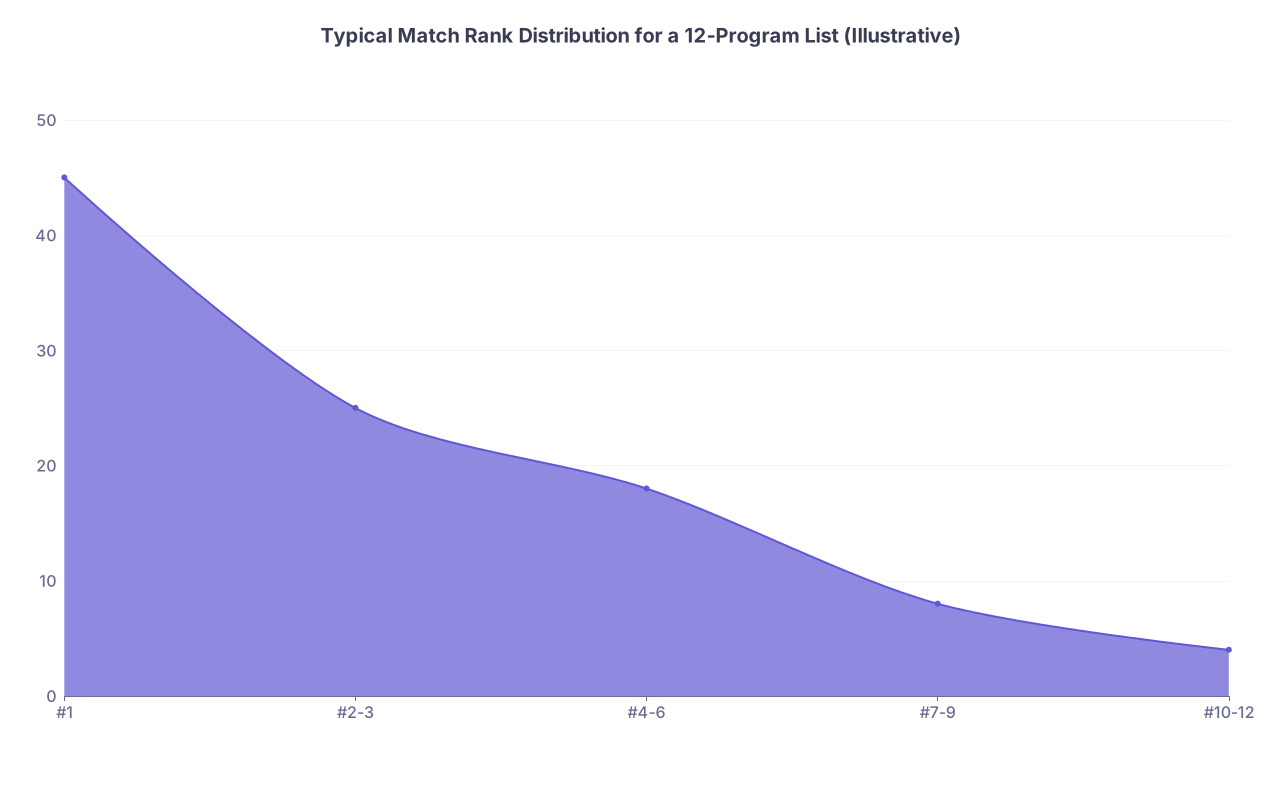
| Category | Value |
|---|---|
| #1 | 45 |
| #2-3 | 25 |
| #4-6 | 18 |
| #7-9 | 8 |
| #10-12 | 4 |
Again, the exact percentages change by specialty, but the concept stays: a nontrivial number of matches happen after the first few lines.
Common Myths About Rank Lists—And Why They’re Wrong
Let’s burn through the usual bad ideas that flow from the “top 3 only” myth.
“I should only rank where I’d be thrilled to go”
No. You should only rank where you’d be willing to go.
There’s a difference between “thrilled” and “this would be acceptable for three to seven years of my life.” If you restrict your list to only the euphoric choices, you’re playing roulette with your future.
Reality check: a lot of residents grow to love programs that were mid‑list on Match Day. Because colleagues, faculty support, and day‑to‑day culture matter more in the long run than the initial emotional buzz you got on interview day.
“Ranking more programs makes me look desperate or weak”
Programs don’t see your full list. They only see where you ranked them on your list, and technically they do not even see your numeric rank position. They see only the relative order if someone violates chart rules to leak it, which is another issue entirely.
The NRMP doesn’t broadcast your rank length as a sign of your “desperation.” That’s fiction.
What a longer list actually signals is that you understand probability better than your classmates who treated their rank list like a vibe check instead of a risk‑management exercise.
“If I rank a program lower, they’re less likely to rank me”
This is a persistent, stubborn myth. The Match is structured to forbid this kind of gaming in a meaningful way. Programs do not know where you placed them when creating their rank list. They submit their list before they ever see yours.
If a program is trying to play psychic and guess where you’ll rank them, that’s their problem. The algorithm still protects you. Your best move is always to rank programs in the exact order of your true preference.
“If I miss my top 3, it means those interviews were a waste”
No. Those were attempts at higher‑ceiling outcomes. Just because a reach did not convert does not make it a mistake.
But here’s the nuance: if your entire list is built out of reaches—because you assumed your top few slots were all that matter—that’s when you get into trouble. The fix is not fewer reaches. It’s more total programs including realistic and safety options.
How To Actually Build a Rank List That Uses the Algorithm Correctly
This is where people want a 3‑step magic template. There is not one. But there is a clear logic that works better than the emotional chaos I see every February.
Step one: stop thinking in “tiers” like a sports fan.
Step two: start thinking in probabilities and personal fit.
Ask yourself:
- If I matched here, would I go and complete training?
- Are the red flags real (malignant culture, unstable leadership) or just prestige insecurity?
- If I disappear from Instagram, would I still feel okay about my training here when I’m 40?
Then order programs by genuine preference—not by how good you think they’ll look on LinkedIn or how your classmates will react.
The programs at the top should be those you deeply want and are at least semi‑realistic for you. The programs in the middle should be the ones you’d be content with, where your profile matches or slightly exceeds their typical resident. The ones near the bottom should be your “I can live with this and become a competent physician” options.
The cut line is simple: if you’d be miserable or consider dropping out rather than go there, do not rank it at all.

Why The Middle of Your List Matters More Than You Think
Here’s the quiet truth nobody glamorizes: your mid‑rank programs are where a huge amount of actual matching happens.
Think about the supply‑demand balance:
- Your very top programs are usually everyone else’s very top too.
- Your very bottom (true safeties) might not even be necessary if the middle absorbs you.
What really carries you is the 4–10 range—whatever that is for your specialty volume. These are programs that:
- You liked enough to be happy there.
- You’re actually competitive for.
- Have a realistic shot of ranking you decently.
That’s where the algorithm often settles you. That’s where your future co‑residents, mentors, and training live. Not just in slots 1–3.
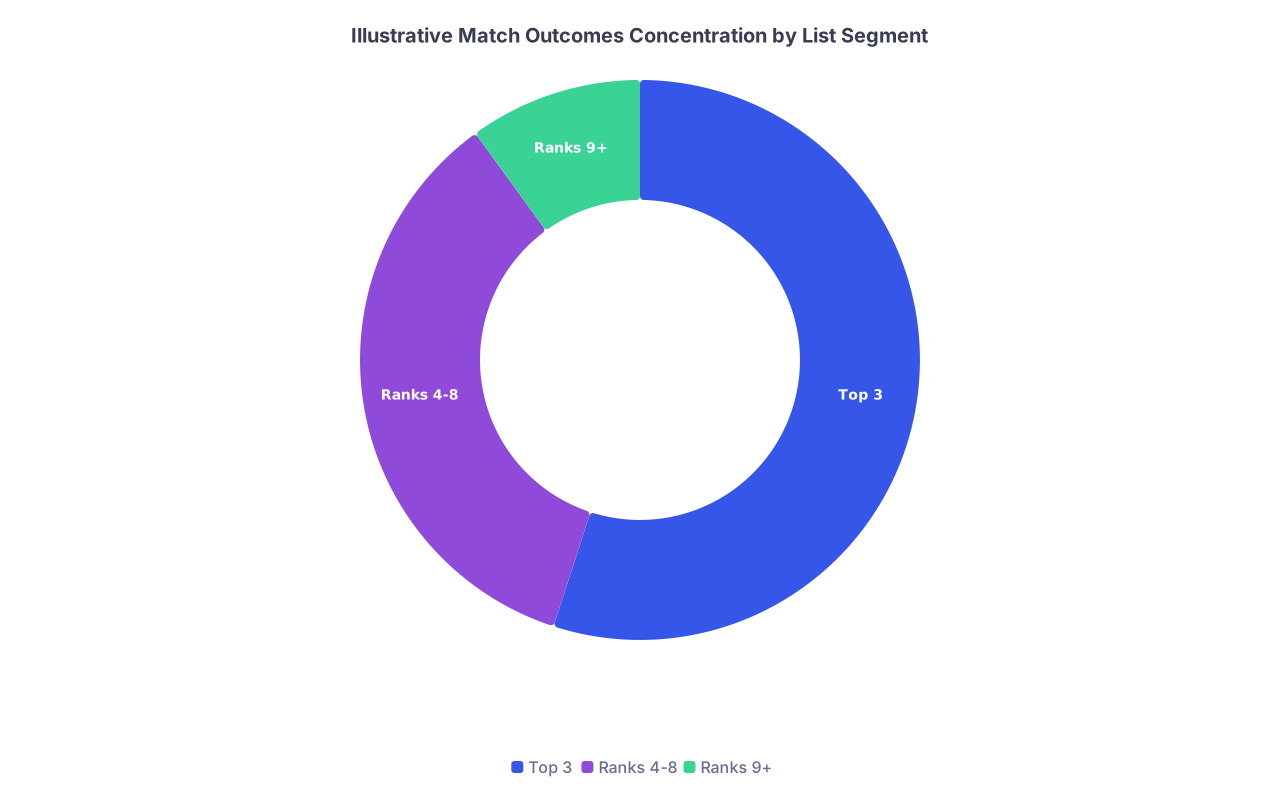
| Category | Value |
|---|---|
| Top 3 | 55 |
| Ranks 4-8 | 35 |
| Ranks 9+ | 10 |
Again: you can argue over exact percentages, but the idea is consistent—nontrivial matches happen outside the top 3 every year, and many land in that middle band.
The Match Day Emotional Trap
On Match Day, people zoom straight to one number: “What rank did I get?” Then they assign a value judgment to it.
Top 3? “Success.”
Below 3? “Almost failed.”
Below 8? “I’m doomed.”
None of that maps to how the algorithm or reality works.
Two weeks into intern year, nobody is walking around saying, “I’m a #2 match and you’re just a #5.” They’re too busy trying not to miss sepsis and figuring out which nurse will actually save them at 3 AM.
Your brain loves neat stories. “Top 3 or bust” is a neat story. The data is messier: you’re far more likely to match where probability, mutual fit, and a halfway sane rank list intersect than where your ego demanded you must.

The Real Myth Busted
The myth says:
Only your top 3 programs matter. If you have to go beyond that, you basically lost.
The data says:
Your entire realistic rank list matters. The algorithm respects every line. And a large fraction of real, successful careers start at program #4, #7, or #11.
What actually determines your outcome?
- The length and realism of your list.
- Whether you included programs you’d genuinely attend.
- Whether your top spots were plausible or pure fantasy.
Not some mystical power of the top three.
Years from now, you will not introduce yourself as “Hi, I’m Dr. Lee, matched at my #2.” You’ll just be the physician who either did or did not use Match data intelligently when it mattered.
Match Day is one moment. Your career is decades. Focus less on what number you land on, and more on whether you built a rank list that lets the algorithm do what it was designed to do: give you the best possible outcome across your entire list, not just the first three lines.