

The worst-case Match Day scenario you keep replaying in your head is not the end of your career.
I know that sounds like something people say to calm you down. But I mean it in a very literal, practical, step‑by‑step way. You can hate where you matched, feel sick to your stomach, cry, rage, spiral… and still end up okay as a doctor and as a human.
Let’s actually talk about the nightmare version: you open the email, you see the program, and your first thought is, “Oh no. Anywhere but there.”
The Gut Punch: When The Email Feels Like A Life Sentence
You click “view results.”
It’s the program you ranked but didn’t really want. Or it’s in a city you swore you’d never live in. Or it’s a community place when you dreamed of academic. Or it’s your “safe” rank #11 when you were fantasizing about your #1–3.
And your brain instantly does that catastrophic thing:
- “I ruined my life.”
- “I’m never getting a fellowship now.”
- “Everyone will know I wasn’t competitive.”
- “I should have ranked differently.”
- “I can’t do four years there. I just can’t.”
There’s this gap between what everyone on Instagram is posting (happy couples in matching T‑shirts, balloons, popping champagne in the student lounge) and how you actually feel (borderline nauseous and weirdly ashamed).
You’re not broken. You’re just honest.
The Match is brutal because it takes all your work and boils it down to one line of text and a logo. Of course it feels like a verdict on your worth. Of course your brain jumps to panic.
Let me be blunt: the first 24 hours after a disappointing match are a psychological war zone. You are not supposed to make rational, permanent decisions in that state.
So your goal right now isn’t “fixing” anything.
Your goal is survival.
What Actually Happens If You “Hate” Your Match?
Let’s define “hate,” because it’s a big word and your brain loves extremes.
It could mean:
- You hate the city (far from family, unsafe, boring, tiny, too big, too cold, too hot).
- You hate the program type (community vs academic, small vs huge).
- You had a bad vibe on interview day.
- Your partner can’t easily move there.
- You feel it’s “beneath” your stats and ego hates that.
- You’re scared about training quality and your future options.
Your fear is that this is permanent. Final. No way out.
Reality is messier and quieter than that.
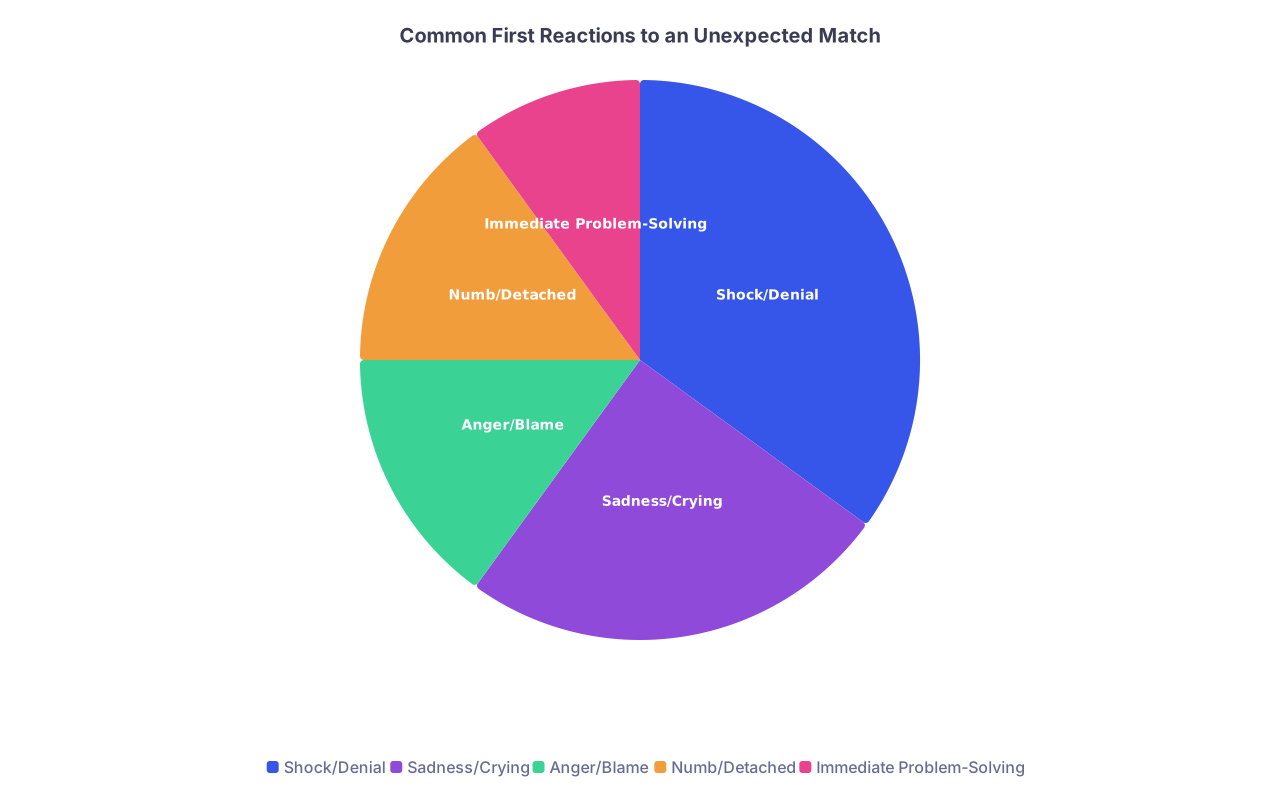
| Category | Value |
|---|---|
| Shock/Denial | 35 |
| Sadness/Crying | 25 |
| Anger/Blame | 15 |
| Numb/Detached | 15 |
| Immediate Problem-Solving | 10 |
In the residents I’ve watched go through this (and there have been many), I’ve seen four rough paths:
- They hate it at first, then end up… fine. Not obsessed, but functional and okay.
- They’re lukewarm, then find their people and really like it.
- They stay unhappy but power through, finish, and still match into decent jobs or fellowships.
- Rarely, they transfer or reapply and move somewhere else.
That’s the part nobody says during the shiny Match Day speeches: your career is not locked to this one program the way your anxiety is telling you it is.
The next 24 hours are about not letting panic drive you to do something impulsive and irreversible.
The First 24 Hours: What To Do (And Not Do) While You’re Panicking
Let’s break the day into chunks, because that’s how it actually feels—waves of panic with tiny pockets of clarity.
Hour 0–2: The Hit
You see the result. Your heart sinks. Time feels weird.
What NOT to do:
- Don’t immediately email the program director something you’ll regret.
- Don’t blast your disappointment to your whole class GroupMe.
- Don’t start telling people you’re going to “quit medicine” or “refuse to show up.”
- Don’t Google “how to break a Match contract” in a frenzy and believe every Reddit post.
Those first two hours are pure emotion. Your brain is drunk on cortisol. That’s not when you make decisions; that’s when you keep yourself from doing damage.
What you actually can do:
Let the physical reaction happen. Shake, cry, swear, curl up on the floor. You’re not overreacting—you’re reacting to something that has felt like the center of your universe for four years.
Then do one grounding thing that requires almost no brain:
- Eat something (even half a granola bar).
- Walk around the block and rage‑walk.
- Sit in the shower until the water runs cold.
You’re not trying to feel better. You’re just trying not to sink deeper.
Hour 2–6: The Social Minefield
People start texting:
“So where did you match?!”
“Congrats!!! Where are you going??”
Maybe your school has a ceremony. Maybe you skip it. Maybe you go and do the plastered smile thing.
Here’s permission: you’re allowed to have boundaries.
You can answer vaguely: “Matched at a program that’ll be good training, still processing.”
You can delay posting on social for a day or two.
You can tell one or two trusted friends, “Hey, I’m having a rough time with my result, can we keep the questions minimal?”
And yes, you can lie to the people who are just asking out of nosiness. “Matched in [specialty], I’ll share details later!” and move on.
The fear here is, “Everyone will know I got a ‘bad’ match.” Reality check: in 6 months, everyone will be too busy struggling through intern year to care where you are. The gossip shelf-life is shockingly short.
Hour 6–12: The Obsession Spiral
This is when you start Googling like a maniac.
“[Program name] malignant?”
“[Program] fellowship match”
“Residents hate [city]”
“Transfer out of residency first year”
You will find horror stories. You will also find people who loved it. Reddit and SDN will happily feed whatever narrative your brain wants to see.
Read this carefully: you are only collecting anxiety fuel right now, not useful data.
If you absolutely must search, limit yourself. Set a 20‑minute timer. After that, you close the laptop.
Better use of that restless energy? Write down your concrete fears in one messy list. Not poetic, not filtered. Just: “I’m scared I won’t get cards fellowship from there.” “I’m scared I’ll be alone and depressed far from family.” “I’m scared the program is malignant and I’ll burn out.”
You’re not fixing them. You’re getting the storm out of your head and onto paper where it’s at least visible.
Hour 12–24: The First Sliver of Perspective
You probably haven’t slept well. Your brain’s fried.
This is the window where a tiny bit of rational thought starts creeping back in. Use it carefully.
Now is when you:
Tell at least one faculty mentor honestly how you feel.
Not in a “trash the program” way, but: “I matched at X. I’m grateful to have matched, but I’m struggling because I had concerns about Y and I’m worried about Z. Can we talk about what this realistically means for my future?”Reach out to one current resident (if possible).
Short, respectful message: “Hi Dr. __, I just matched at [program] in [specialty]. I’m excited to train but also a bit anxious because it wasn’t initially high on my list. Would you be open to sharing what you think are the biggest strengths and challenges of the program?”
They don’t need to sugarcoat things, but you’re going to get reality instead of your brain’s Netflix disaster movie.
And no, you do not start emailing program directors saying you want out, or begging other programs to take you. Not today. Almost never, actually—but definitely not today.
But What If It’s Actually A Bad Program?
Let’s talk about that deeper fear: not just “I don’t like this,” but “I think this place will hurt my career or my mental health.”
There are programs with serious issues: malignant culture, dangerously high workload, zero support, chaotic leadership. They exist. I’m not going to gaslight you and say, “Every program is wonderful in its own way.”
But you need data, not vibes.
Here’s how to start sorting that out in the days after Match (not in the first 3 hours, when you’re shaking):

- Ask residents about hours, culture, how leadership responds to problems, whether people get into fellowships, whether graduates pass boards.
- Look at the program’s board pass rate (if available), not in isolation but as a pattern.
- Ask, “If you could go back, would you choose this program again?” and actually listen to the hesitation or enthusiasm.
Here’s the part your anxiety won’t believe: people come out of “non‑top‑tier” programs every year and match into competitive fellowships and good jobs. Because they worked hard, found mentors, did research where they could, and didn’t let the nameplate define them.
Is it fair? Not really. It is sometimes harder from a smaller or less known place. But “harder” is not the same as “impossible.”
What if the program truly sounds dangerous to your physical or mental health? That’s when, over the next few weeks, you quietly talk with a trusted dean or GME advisor about options: documenting issues, considering transfers later, understanding what “Match contract” actually means. You move from panic to strategy.
Not in the first 24 hours. That’s survival mode time.
The Myth Of “I Should Have Ranked Differently”
This one hurts, because your brain will not shut up about it.
“If I’d ranked that other program higher…”
“If I hadn’t put that reach program at #1…”
“If I’d done more aways / one more Step 2 point / one more paper…”
You’re imagining some alternate universe where one small tweak on your list gave you your dream program.
Reality: the algorithm is more complex and less personal than that, and you will never actually know how tiny changes might’ve played out. Your brain is trying to get a sense of control by rewriting history. It’s brutal and pointless.
The Match doesn’t reward you for self‑blame. It just locks in where you’re going July 1. That’s it.
You can either keep re‑litigating every decision you made the past two years, or you can say, “Okay. This sucks. I wouldn’t have chosen this outcome. But it’s mine. Now what can I control inside it?”
That’s not “toxic positivity.” That’s survival.
A More Honest Picture of Your Future Than Your Brain Is Showing You
Let me zoom you out past the first 24 hours.
Here are several things that are probably true even if right now you think your life is over:
- The first 6 months of any residency, even your “dream” one, are hard and often miserable. Everyone questions their choices at 3 a.m. on call. You’re not uniquely doomed if you have those thoughts.
- You will find at least one attending who likes teaching, notices you, and will write you a strong letter someday.
- You will have co‑interns who become your people. Panic right now can’t imagine that, but I’ve watched it happen in objectively “meh” programs over and over.
- You will get better at your specialty. A lot better. You’ll start to care more about how you’re growing than what your email said on Match Day.
- The world of attending jobs and fellowships is much bigger and more flexible than your MS4 brain can even see.
| Timeframe | Common Emotional State |
|---|---|
| First 24 hours | Shock, panic, shame, denial |
| 1–2 weeks | Sadness, comparison, anger |
| 1–3 months | Numb acceptance, logistics |
| First 6 months | Overwhelmed, adapting, tired |
| 1–2 years | Competent, finding mentors |
| End of residency | Focused on next step, not Match Day |
Notice that “permanently destroyed, never recovers” is not on that list.
The One Thing You Actually Have To Do Today
So, back to the title: “What if I hate where I match?”
Here’s the non‑sugarcoated answer:
You can hate it today. You can hate it tomorrow. You can still show up July 1 and become a good doctor.
The Match is not asking you to love your program. It’s asking you to commit to starting there.
Your only actual job in the first 24 hours is:
Don’t blow up your future because of a temporary emotional state.
Don’t send rage emails. Don’t swear to your entire class that you’re not going. Don’t catastrophize your way into paralysis.
You’re allowed to feel everything you’re feeling. It’s not disloyal. It doesn’t make you ungrateful. You can be both grateful to have matched at all and deeply disappointed at where.
Both things are true. At the same time. Welcome to adult life.
In a week, you’ll start looking for apartments, connecting with co‑interns, maybe noticing a couple of good things about the city or the hospital. In a month, you’ll be so focused on “how do I not kill anyone on day one” that the zip code will matter a little less.
And in a couple years, you’ll be sitting where I am now, watching another batch of MS4s panic, and you’ll recognize every word of this.

| Step | Description |
|---|---|
| Step 1 | See Match Result |
| Step 2 | Grounding Task |
| Step 3 | Limited Sharing With Trusted People |
| Step 4 | Write Down Specific Fears |
| Step 5 | Short Online Research Limit |
| Step 6 | Sleep or Rest |
| Step 7 | Next Day - Talk With Mentor |
| Step 8 | Emotional Shock |
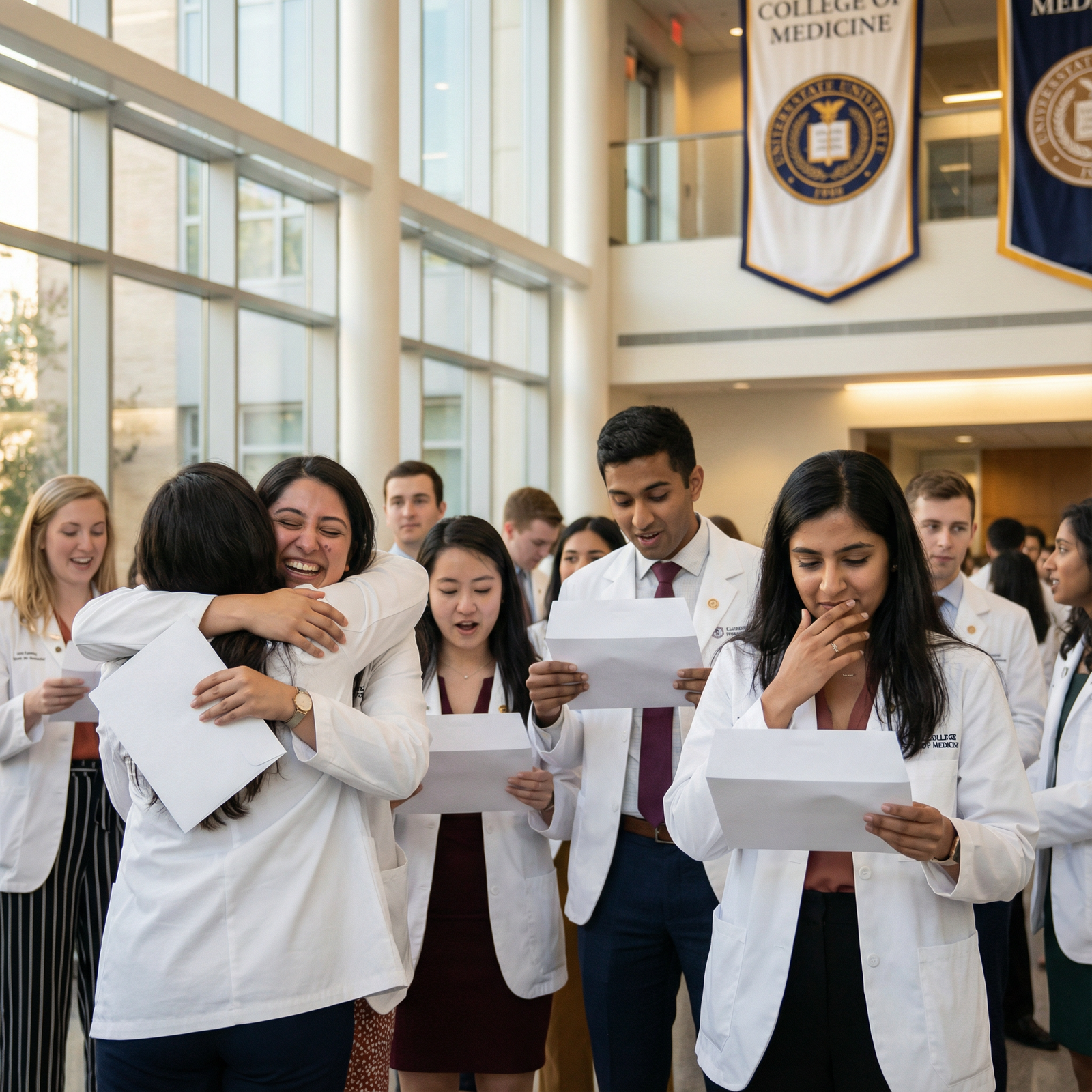
FAQ: Panic Edition (Exactly the Stuff You’re Afraid to Ask Out Loud)
1. Can I refuse to go to the program where I matched?
Technically you can refuse to show up; no one will physically drag you there. But the Match is a binding agreement. Breaking it can get you labeled as having violated a contract with NRMP, which can seriously complicate any attempt to match again or get into another program. Most people who don’t show end up in a much worse position, not a better one. If you’re even thinking about this, you need to talk to your dean or GME office before you do anything impulsive.
2. Is it possible to transfer to another residency later?
Yes, but it’s not common, and it’s not something you can plan on as an escape hatch. Transfers usually happen when a position unexpectedly opens somewhere else and you have a compelling reason and good standing at your current place. That means you still have to show up, work hard, and be the kind of resident another program would want. Translation: even if you dream of transferring, step one is not blowing up your relationship with your matched program before you’ve even started.
3. Did matching at a “lower-tier” or community program ruin my chances for fellowship?
No. It might mean you have to be more intentional—seek mentors, do research projects with whoever is willing, go to conferences, network early—but I’ve watched residents from small community programs match into GI, cards, heme/onc, you name it. Program name on its own is rarely a total dealbreaker. Your performance, letters, and initiative carry a lot more weight than your Match‑day anxiety wants to admit.
4. What if I’m genuinely worried about my mental health at this program?
That’s real, and serious. If your concern is based on specific red flags (malignant rep, awful vibes, clear history of burnout), write them down. In the next few days, talk to your dean, student wellness, or a trusted attending. Ask candid questions of current residents. Start planning support systems now—therapy, friends, family visits, routines that keep you tethered. If things end up truly unsafe or unsustainable once you’re there, there are formal processes to get help, but you’ll navigate those best with documentation and allies, not from a place of pre‑Match panic.
5. Everyone else seems thrilled with their match. Is it normal that I’m not?
Way more normal than it looks on Instagram. A lot of people are performing happiness because that’s what’s expected on Match Day. Some are privately disappointed with location, cost of living, specialty they ended up in, or how far down their list they matched. Feeling numb, underwhelmed, or upset doesn’t make you ungrateful; it makes you human. Your feelings don’t invalidate your achievement of actually matching.
6. What’s the single most useful thing I can do today if I’m spiraling about my match?
Open a blank note and dump every fear, unfiltered. Then pick one person—mentor, dean, older resident, therapist—and send a message asking to talk in the next few days. Not to solve everything. Just to reality‑check your situation with someone who’s seen people succeed from all kinds of programs. That one conversation often does more for your anxiety than ten hours of doom‑scrolling ever will.
Specific, actionable next step:
Right now, set a 10‑minute timer, open your Match email again, and write down exactly what you’re scared of about this program—no editing. When the timer ends, pick one mentor or dean and draft a short email asking for a meeting to talk through your concerns. Don’t send your panic to Reddit first. Send it to someone who actually knows you and the system.


