
The way most people use social media on Match Day is brutal and unnecessary.
Let me just say it plainly: if you do exactly what everyone around you seems to be doing—doomscrolling Twitter, watching Instagram stories, sitting in a group chat where people flex their matches in real time—you’re basically volunteering to get punched in the brain for several hours straight.
And yeah, I know, that sounds dramatic. But I’ve watched it happen.
The ugly truth about social media on Match Day
Here’s what everyone pretends: Match Day is this wholesome, collective experience where you “celebrate together” and “share the joy.”
Here’s what actually happens in a lot of people’s heads:
You open Instagram. First story: someone from your class, sobbing with happiness, matched at their #1 dream program. Cool, you’re happy for them. Sort of. Second story: collage of smiling couples holding envelopes, champagne popping. Your chest tightens a little. Third story: someone who skipped half of third year, who you were sure would struggle, matched at a place you didn’t even get an interview from.
Suddenly it’s not “community celebration” anymore. It’s a comparison Olympics you never signed up for.
I’ve watched people ruin their own Match Day this way. I’ve watched someone go from excited, hopeful, and nervous to shut down and nauseous in under ten minutes because they started scrolling through other people’s posts before they even opened their own email.
And the awful part? They knew it was going to make them feel like that. They opened the app anyway. Because the FOMO is real and loud and everyone else seems to be “part of it.”
You are allowed to not be part of it.
Why Match Day + social media is such a toxic combo
You’re already in a massively vulnerable state. Sleep-deprived. Overanalyzing every interview. Replaying that one awkward answer from December. Wondering if that PD’s face looked… disappointed?
Then you add social media. Which is:
- Highly curated
- Asynchronous
- Brutally fast
No one posts a story of themselves sitting alone in their car, hands shaking, refreshing the NRMP page. No one films the five minutes after they read “We are sorry to inform you…” and just stare at the wall.
You get 0% of the messy middle and 100% of the highlight reel.
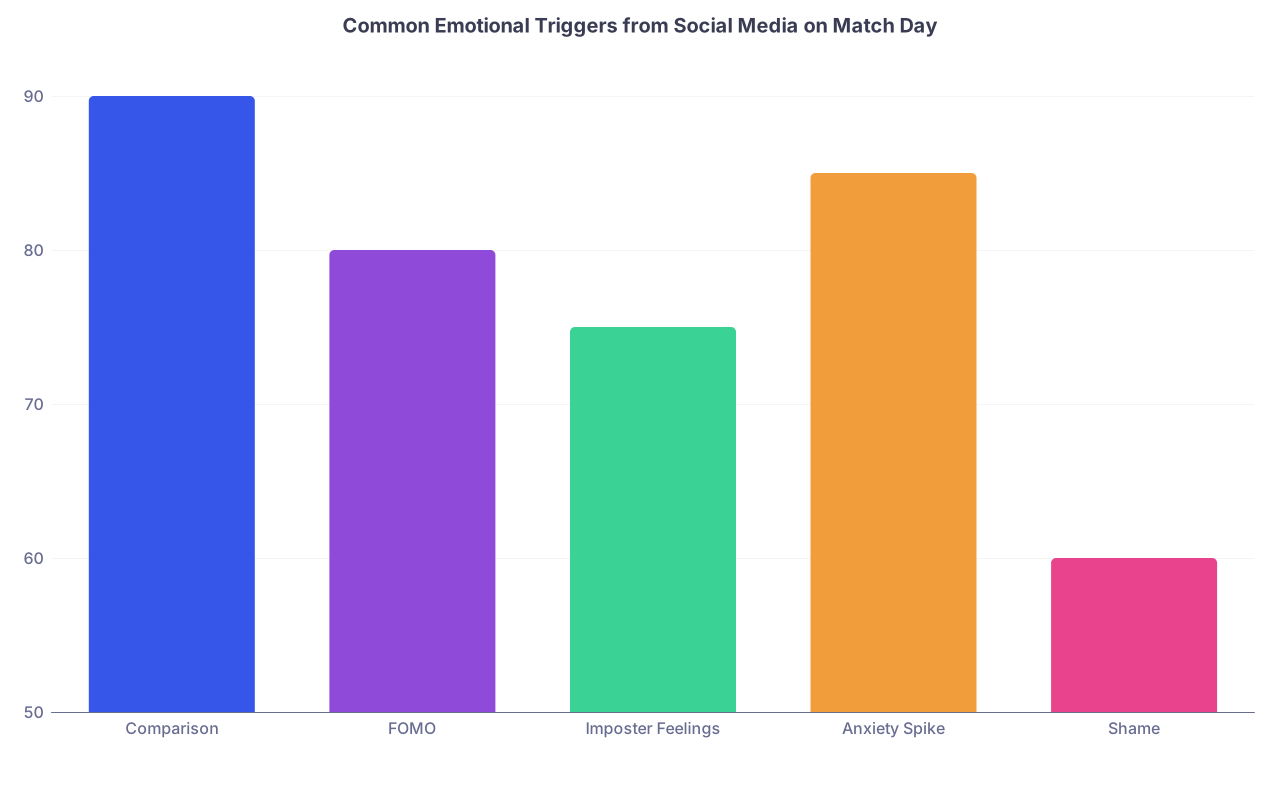
| Category | Value |
|---|---|
| Comparison | 90 |
| FOMO | 80 |
| Imposter Feelings | 75 |
| Anxiety Spike | 85 |
| Shame | 60 |
So your brain, which is already on high alert, now has “evidence” that:
- Everyone else is doing better than you
- You’re behind
- You’re less deserving
- You “should” feel a certain way
It doesn’t matter if it’s true. In that moment, it feels true. And that’s what wrecks you.
You know what one of my classmates said out loud when they saw a string of posts from friends matching at big-name places?
“I feel like I’m failing at celebrating correctly.”
Not failing the Match. Failing at being happy enough on the internet.
That’s what social media does to your brain on a day like this.
Worst-case thinking: what if I don’t match?
Let’s drag the worst fear into the light instead of dancing around it.
What if you don’t match and you have to see everyone else’s “I’m thrilled to announce…” posts?
There’s a special level of cruelty in how that feels. I’ve seen it up close.
One of the most put-together students I knew went unmatched in a competitive specialty. They found out Monday, had a whole SOAP week from hell, ended up scrambling into a prelim position. On Friday—actual Match Day—their entire feed was flooded with people celebrating. They told me later:
“I deleted all my apps that morning because I knew if I saw one more story with confetti, I’d throw up.”
That wasn’t overreacting. That was self-preservation.
Let me be clear: if you don’t match, social media can go from “emotionally risky” to “psychologically dangerous” fast. It can flip from comparison to shame in about three posts.
You do not owe anyone your presence online. Not that day. Not that week. Maybe not that month.
You’re allowed to design your own rules for Match Day
Here’s the part people forget: there’s no official rulebook for how a “normal” resident-to-be uses social media on Match Day.
Program directors are not sitting there thinking, “Huh, weird, this person didn’t post a grid pic with a white coat and balloons, maybe we should revoke their spot.” They don’t care. They’re at their own ceremony, trying to remember all the intern names.
So if you want permission to treat Match Day like a mental health emergency drill instead of a content opportunity, here it is: you’re allowed. And you’re not dramatic for wanting that.

| Step | Description |
|---|---|
| Step 1 | Plan Before Match Week |
| Step 2 | Delete or log out of apps |
| Step 3 | Limit to specific hours |
| Step 4 | Set strict boundaries |
| Step 5 | Ask friend to text major news |
| Step 6 | Turn off notifications |
| Step 7 | Hide stories or mute triggers |
| Step 8 | Recheck mood after each use |
| Step 9 | Continue with caution |
| Step 10 | Do I want to be online Match Day |
| Step 11 | Feeling worse |
If you’re like me, though, you probably can’t just flip a switch and feel fine about stepping back. The anxiety voice starts up:
“What if my friends think I don’t care?” “What if people think I didn’t match?” “What if I look bitter?” “What if I actually do match somewhere great—shouldn’t I be posting that proudly? Am I disrespecting myself by hiding?”
Yeah. I know that spiral.
So instead of “just get offline,” let’s talk about how to actually protect your mental space in a way that feels intentional, not just avoidant.
Building a real social media plan for Match Day
The worst plan is “I’ll just see how I feel that morning.” That’s how you end up refreshing Twitter at 8:58 a.m. with sweaty hands, hate-watching people’s pre-written “dreams do come true” captions.
You need a real plan before Match Week starts. Not perfect, just deliberate.
Step 1: Decide your default
Pick one: Offline by default, or online by default with tight limits.
If your anxiety baseline is high (and I’m guessing it is, if you’re reading this), I’d argue you should default to offline. Not forever. Just for the window when your brain is most fragile.
For a lot of people, that’s:
- Monday 11 a.m. ET (did I match / not match email)
- Friday 10 a.m.–noon local time (envelope / email)
- The evening after, when everyone posts their long captions
Your mental health does not have to be available for public viewing during those times.
Step 2: Pre-commit to your boundaries
Literal, written boundaries. Something like:
- “I’m deleting Instagram and Twitter from my phone Sunday night. I will reinstall them Saturday afternoon if I want to.”
- “If I do check social media, it will be after I’ve opened my Match email, talked to [Name], and eaten something.”
- “No scrolling through other schools’ hashtags. Only checking my messages.”
If you wait until your anxiety is already spiking, you’ll negotiate with yourself. You’ll say, “I’ll just check one story.” And you know how that ends.

Step 3: Identify your personal triggers
Specific people. Specific accounts. Specific platforms.
You probably already know who makes you feel like garbage when you see their posts. The classmate who humblebrags. The influencer who turned their whole application cycle into content. The person whose life always seems unfairly perfect.
Mute them. Now. Before Match Week.
You don’t have to block. You don’t have to explain. Muting just removes their stuff from your feed and stories. They’ll never know.
If Instagram is your worst platform, maybe you keep iMessage and WhatsApp but delete IG for the week. You don’t have to nuke everything to protect yourself.
Step 4: Design who gets your energy
You don’t have to disappear. You can just be intentional about where you show up.
For example:
- Respond only to your close friends’ texts that day
- Stay in 1–2 small group chats instead of the entire class GroupMe
- Let your family post and tag you if that feels easier than creating your own post
- Or ask them specifically not to post, if that thought makes your skin crawl
You’re not responsible for feeding the content machine. You’re responsible for staying intact.
If you do want to post: doing it without wrecking yourself
Honestly, it’s okay if a part of you wants that Match Day photo. That “I made it” moment. That’s not shallow. You’ve bled for this.
But you have to protect yourself from becoming your own PR team on a day when your emotional stability is already running on fumes.
A few things I’ve seen that help:
Write your post after you’ve processed privately
I’ve watched people hit “post” before they’ve even told their closest friends where they matched. Then they see the likes and comments roll in before their own brain has caught up. It’s disorienting.
Tell your people first. Say it out loud. Let yourself cry or sit in silence or laugh or whatever you do. Then, if you want, write the post.
Keep it simple
You don’t owe anyone a novel. You don’t have to publicly unpack your childhood trauma or your exact rank list logic. Something basic like:
“Matched into internal medicine at [Program]. Grateful and exhausted.”
is enough.
Schedule your posting window
You can decide: “If I post, it’ll be in the evening after dinner, not in the first five minutes.” That alone can lower the pressure and keep you from frantically drafting captions before you even know the outcome.
What if people misinterpret your silence?
Let’s be real. Some will. Someone in your class group chat will say, “Has anyone heard from [you]? Did they match?” Someone’s aunt will assume weird things because you didn’t put it on Facebook.
Here’s the part that’s easy to say and hard to feel: their speculation is not your emergency.
You can preempt some of it by telling a couple of trusted people: “Hey, I’ll probably be mostly offline on Match Day for my sanity. If anyone asks, you can just let them know I’m okay and I’ll share when I’m ready.”
That’s enough.
| Approach | Mental Load Level |
|---|---|
| Constant scrolling | Extreme |
| Limited checking with rules | Moderate |
| Offline with close texts | Low |
| Fully offline | Lowest |
Someone else can handle the curious relatives. You don’t have to personally manage other people’s discomfort with not knowing.
If you don’t match, your only job is survival
I’m not going to sugarcoat this. If you open that email Monday and it says you didn’t match, there is no “healthy way” to be on social media that day. There’s just varying degrees of self-harm.
Delete the apps. Not log out. Delete.
You can always download them again later. They’re free. Your nervous system, on the other hand, is not so easily reset.
Tell one person you trust, “I’m not going to be online. I don’t want to see anything. If something urgent comes up, text or call me instead.” Then let yourself be offline for as long as you need.
One of the strongest, smartest people I know unmatched, did SOAP, and then did not post anything publicly about their ultimate position for months. Not once. They matched into their specialty the next year and still never did a big “I’m thrilled to announce” post. They just lived their life.
No one meaningful thought less of them for that.
Quiet joy is still real joy
This is the part I wish more people believed: your Match Day happiness counts just as much if zero people see it online.
If your perfect version of the day is:
- Opening the email alone or with one person
- Crying from relief
- Texting your inner circle
- Going for a walk
- Eating something good
- Not touching social media for 24 hours
That’s not “hiding.” That’s not “small.” That’s a legitimately beautiful way to experience one of the biggest days of your life.
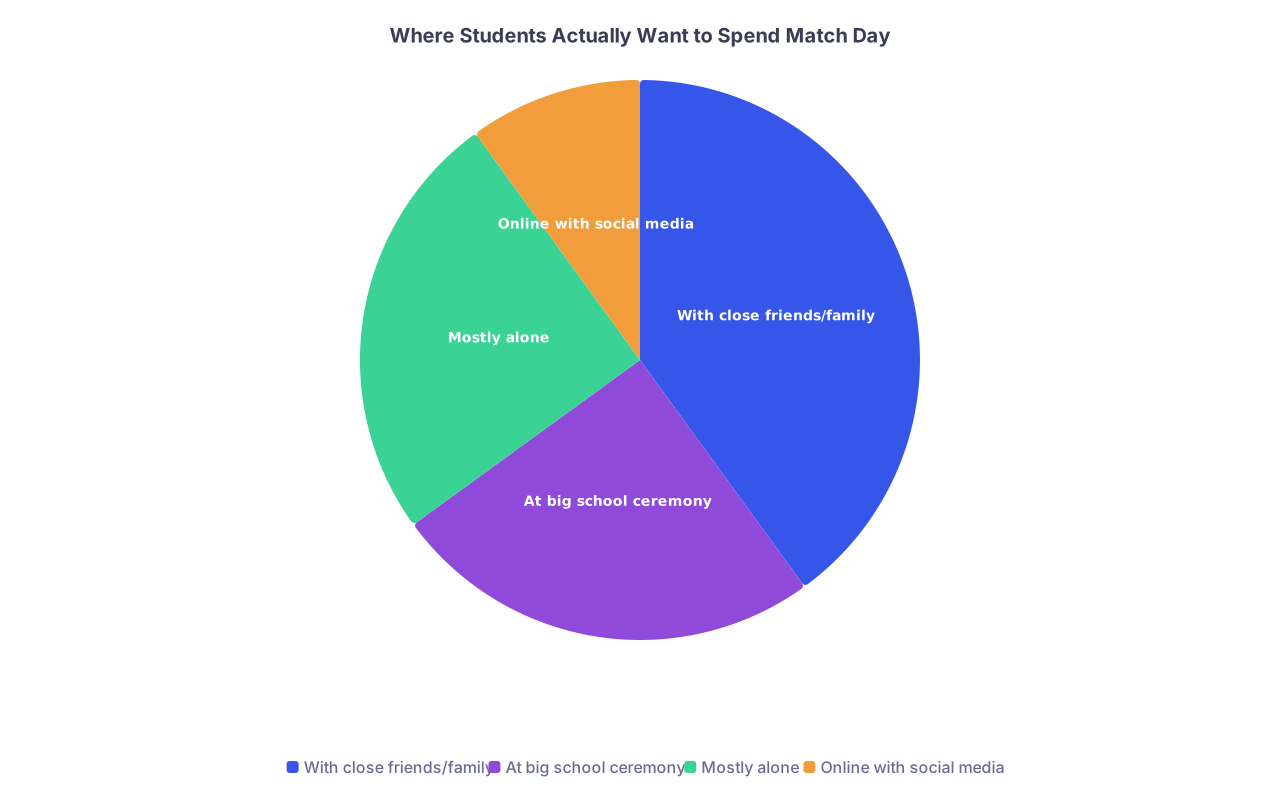
| Category | Value |
|---|---|
| With close friends/family | 40 |
| At big school ceremony | 25 |
| Mostly alone | 25 |
| Online with social media | 10 |
Most people, if you really ask them, don’t actually want the giant performative version. They want connection, safety, and a sense of being seen by the people who matter.
The algorithm does not matter.
How to talk back to the anxious voice
If your brain is anything like mine, you might be thinking: “Okay, yes, all of this makes sense logically. But I know that the morning of Match Day I’ll be tempted anyway.”
So write down a few lines now that you can come back to. Something like:
- “I’m not weak for needing protection from social media on a brutal day.”
- “Real life comes first. The internet can wait.”
- “If I match, I’m still a doctor-in-training whether I post or not.”
- “If I don’t match, I deserve gentleness, not more pain.”
Put it in your Notes app. Or write it on an actual sticky note and stick it to your laptop.
When your thumb automatically moves toward Instagram out of habit, stop and ask: “Is what I’m about to do likely to make me feel better or worse in the next 10 minutes?” Be honest. If the answer is “worse,” back away.

The point of all of this
You don’t have to win Match Day on social media. You don’t have to project joy, or resilience, or gratitude, or anything else on a timeline that pleases other people.
You just have to get through it without shredding your own mind more than necessary.
So here’s what I want you to remember:
- Social media on Match Day is optional, not mandatory. You’re allowed to step away completely, or set strict limits, without being “weird” or “dramatic.”
- Your job is to protect your nervous system, especially if things don’t go as planned. Deleting apps, muting people, and staying quiet online are all valid coping strategies.
- Quiet, private joy (or quiet, private grief) is still real. Your Match outcome is real whether or not the algorithm ever sees it.
Design the day for your sanity, not for your feed. You’re the one who has to live in your own head after the confetti settles.


