The biggest mistake residents make with GI bleeds on night call is treating them like “a consult” instead of “a time‑critical resuscitation with a source somewhere between mouth and rectum.”
You are not calling GI. You are running an airway–breathing–circulation drill with blood leaking out of the system. The endoscopy is the epilogue.
Let me break this down specifically.
1. The Only Question That Matters First: “Is This Patient Crashing?”
Before you think “upper vs lower,” you must answer one binary question:
Is this patient hemodynamically unstable from blood loss?
That decision guides everything: where you stand, who you call, how fast you move.
On night call, you often get a vague page: “Hey, this guy in 8-12 had some dark stool…maybe a GI bleed?” Your immediate triage framework:

Red-flag instability signs (treat as crashing until proven otherwise)
- SBP < 90 mmHg or MAP < 65
- HR > 110–120, especially with orthostasis
- Altered mental status, diaphoresis, or acute confusion in an older patient
- Ongoing brisk hematemesis or large-volume hematochezia
- Tachypnea, hypoxia, or signs of shock (cool extremities, delayed cap refill)
- Lactate elevated (if you have a recent value)
If “yes” to any of these: you are now in resuscitation mode, not “assessment mode.”
Sidebar: What “stable” actually means
Residents overcall stability. “BP 100/60, HR 105, looks okay.” That patient is not stable if:
- They are on 2 vasodilators
- They have end-stage cirrhosis with baseline SBP 110
- They dropped from 150 to 100 in an hour
Stability is trajectory-based, not snapshot-based.
2. First 5 Minutes at the Bedside: Scripted and Ruthless
You walk into the room. You do not start with “Tell me more?” You start with a tight ABC assessment and eyes on the monitor.
Step 1: Airway and Breathing
- Look at the patient, not the computer. Are they:
- Vomiting blood right now?
- Gurgling, unable to clear secretions?
- Too drowsy to protect airway?
- Check SpO₂ and work of breathing:
- If SpO₂ < 92% or tachypneic with blood in mouth → high risk for airway loss.
- Get nasal cannula or NRB on early if saturations borderline.
If someone is actively exsanguinating with repeated hematemesis or clearly cannot protect their airway, you need:
- Rapid anesthesia/critical care involvement for intubation.
- You do not try to “wait and see” while they aspirate blood.
Step 2: Circulation
Walk straight to:
- BP, HR, RR, SpO₂
- Telemetry if available
- Look at:
- IV access: size, number, quality
- Ongoing bleeding: bed, emesis basin, commode
Your mental checklist:
- Do they look shocked? Pale, diaphoretic, cool, clammy, altered.
- Can I trust this BP cuff? (If it looks inconsistent with the clinical picture, repeat manually.)
3. Stabilize Before You Diagnose: Resuscitation Bundle
If there is any hint of instability, your next moves are protocolized. You can almost run this on autopilot.

| Step | Description |
|---|---|
| Step 1 | Page about GI bleed |
| Step 2 | Go to bedside immediately |
| Step 3 | Review vitals and labs |
| Step 4 | ABCs, IVs, labs, fluids, TXA per protocol |
| Step 5 | Assess, focused history, orders |
| Step 6 | Call ICU and GI early |
| Step 7 | Unstable? |
IV Access: Do it right the first time
Your minimum for a real GI bleed:
- Two large-bore peripheral IVs (16 or 18 gauge) in forearms or ACs
If access is bad:
- Consider rapid response for help w/ US-guided IVs
- If critically unstable and an ICU team present → central line may be needed, but do not delay fluids and blood while waiting
Labs you send immediately
You do not “add on later.” You send a full bleeding panel:
- CBC with differential
- BMP (BUN especially), Mg
- Coagulation: PT/INR, aPTT
- Type and screen (or type and cross if obviously severe)
- LFTs (AST, ALT, ALP, bilirubin)
- Fibrinogen if bleeding is massive or coagulopathy suspected
- Lactate and VBG/ABG if unstable or altered
- Troponin if older or cardiac history and hypotensive (demand ischemia is real)
And you repeat CBC/chem q4–6 hours (or sooner) depending on severity.
Fluids and Blood: What actually makes sense
Do not drown them in crystalloids. This is a hemorrhage, not sepsis.
- Initial: 500–1000 mL balanced crystalloid (e.g., LR) for hypotension while you wait for blood.
- If ongoing instability or obvious large-volume blood loss:
- Early PRBC transfusion, goal usually Hgb > 7 g/dL
- In cardiovascular disease or active ischemia → Hgb goal often 8–9 g/dL (program and attending dependent)
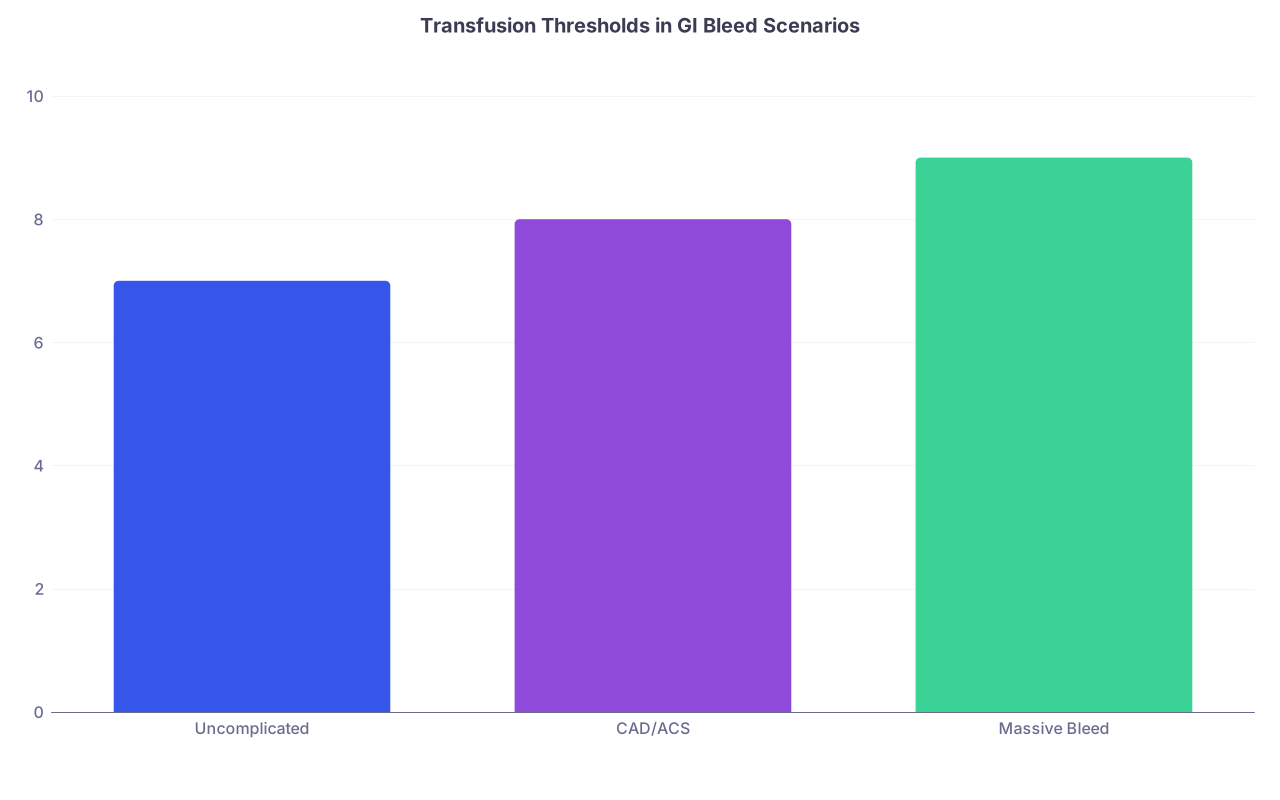
| Category | Value |
|---|---|
| Uncomplicated | 7 |
| CAD/ACS | 8 |
| Massive Bleed | 9 |
For massive or rapid hemorrhage:
- Activate your massive transfusion protocol (MTP) if available.
- Aim for ~balanced resuscitation (PRBC:FFP:platelets approximating 1:1:1 as per your hospital’s protocol).
Reverse what you can
You do not wait for GI to fix coagulopathy.
- Warfarin:
- PCC (e.g., Kcentra) if significant bleeding + elevated INR
- Vitamin K IV (5–10 mg)
- DOACs:
- Apixaban/rivaroxaban: consider andexanet alfa or PCC depending on hospital protocol
- Dabigatran: idarucizumab if available
- Heparin:
- Stop infusion, give protamine if clinically significant ongoing bleeding
- Thrombocytopenia:
- Platelets if < 50K and active bleeding or invasive procedure expected
4. Rapid Bedside History and Exam: Focused, Not Fancy
Once ABCs and immediate resuscitation orders are running, you can afford 3–5 minutes for a targeted history and exam. Not a full H&P.
History: Things that actually change management
You want specifics that alter your triage and empiric therapy.
Onset and character of bleeding
- Hematemesis: bright red vs coffee ground?
- Melena vs maroon stool vs bright red hematochezia?
- Syncope, presyncope, chest pain?
Volume and frequency
- “How many times have you vomited blood?” Cups? Bowls?
- “How many stools and what did they look like?”
Medications
- Anticoagulants: warfarin, heparin, LMWH, apixaban, rivaroxaban, dabigatran
- Antiplatelets: aspirin, clopidogrel, ticagrelor
- NSAIDs, steroids
- Recent antibiotics (C. diff risk)
Liver disease / portal hypertension history
- Known cirrhosis? Varices? Prior banding?
- Ascites, encephalopathy, alcohol use?
Prior GI history
- Prior ulcers, GI malignancy, previous GI bleed?
- Prior endoscopy results if they recall.
Co-morbid conditions
- CAD, CHF, CKD, severe COPD, dementia (affects thresholds and locations of care).
Physical exam: Zero fluff
You are checking:
- Mental status (A&O? drowsy? confused?)
- Conjunctival pallor
- JVP (flat in hypovolemia vs elevated in CHF patients)
- Heart rate, rhythm, murmurs (baseline cardiac reserve)
- Lungs (pulmonary edema vs dry)
- Abdomen:
- Tender? Peritoneal signs? Hepatomegaly? Ascites?
- Rectal exam:
- Melena vs bright red vs normal
- Hemoccult if uncertain (though frankly, in a true GI bleed the story is usually obvious)
And you look at their vomit or stool when possible. Residents skip this. It is dumb to skip it. Your eyes tell you what the note never will.
5. Sorting Upper vs Lower GI Bleed (and Why It Matters Right Now)
You do not need 100% certainty, but your pre-test suspicion directs empiric therapy and consult priority.
Key clues:
- Hematemesis (especially bright red): Upper GI almost by definition
- Coffee-ground emesis: Upper source, slower or partially digested
- Melena: Usually upper, but can be right colon or small bowel
- Bright red hematochezia:
- Commonly lower
- But in a patient who is hypotensive and tachycardic? Think massive upper with rapid transit
- BUN/Cr ratio:
- Elevated BUN with normal-ish Cr can suggest upper GI bleed (digested blood → increased urea)
| Feature | Upper GI Bleed | Lower GI Bleed |
|---|---|---|
| Emesis | Hematemesis/coffee-ground | Usually absent |
| Stool appearance | Melena common | Bright red/maroon common |
| BUN/Cr ratio | Often elevated | Usually normal |
| Common causes | Ulcer, varices, gastritis | Diverticular, angiodysplasia |
| Initial test | EGD | Colonoscopy/CTA |
6. Empiric Medications You Can and Should Start Overnight
You do not need GI’s permission to start these. In most hospitals it is expected.
1. PPI therapy
For suspected upper GI bleed:
- IV pantoprazole 80 mg bolus, then 8 mg/hour infusion
or - 40–80 mg IV BID (depending on institutional practice)
You start this as soon as you suspect an upper source. It stabilizes clots and may reduce need for urgent intervention.
2. Variceal bleed coverage (if cirrhosis / portal HTN suspected)
If the patient has known cirrhosis, portal hypertension, or strong suspicion of varices (massive hematemesis, known liver disease):
- Start octreotide:
- 50 mcg IV bolus, then 50 mcg/hr infusion
- Start prophylactic antibiotics:
- Typically ceftriaxone 1 g IV daily (or equivalent) for 5–7 days
Do not wait for endoscopy to confirm varices. Get these on board early.
3. Prokinetic (sometimes)
Some services like erythromycin IV before urgent EGD to clear the stomach of blood/clots. This is more planning-stage with GI, not your first-line overnight move unless protocolized.
7. Disposition and Level of Care: Floor vs Step-down vs ICU
You are often the one deciding where the patient will physically go in the next 1–2 hours. Residents consistently under-triage early, then spend the rest of the night cleaning up.
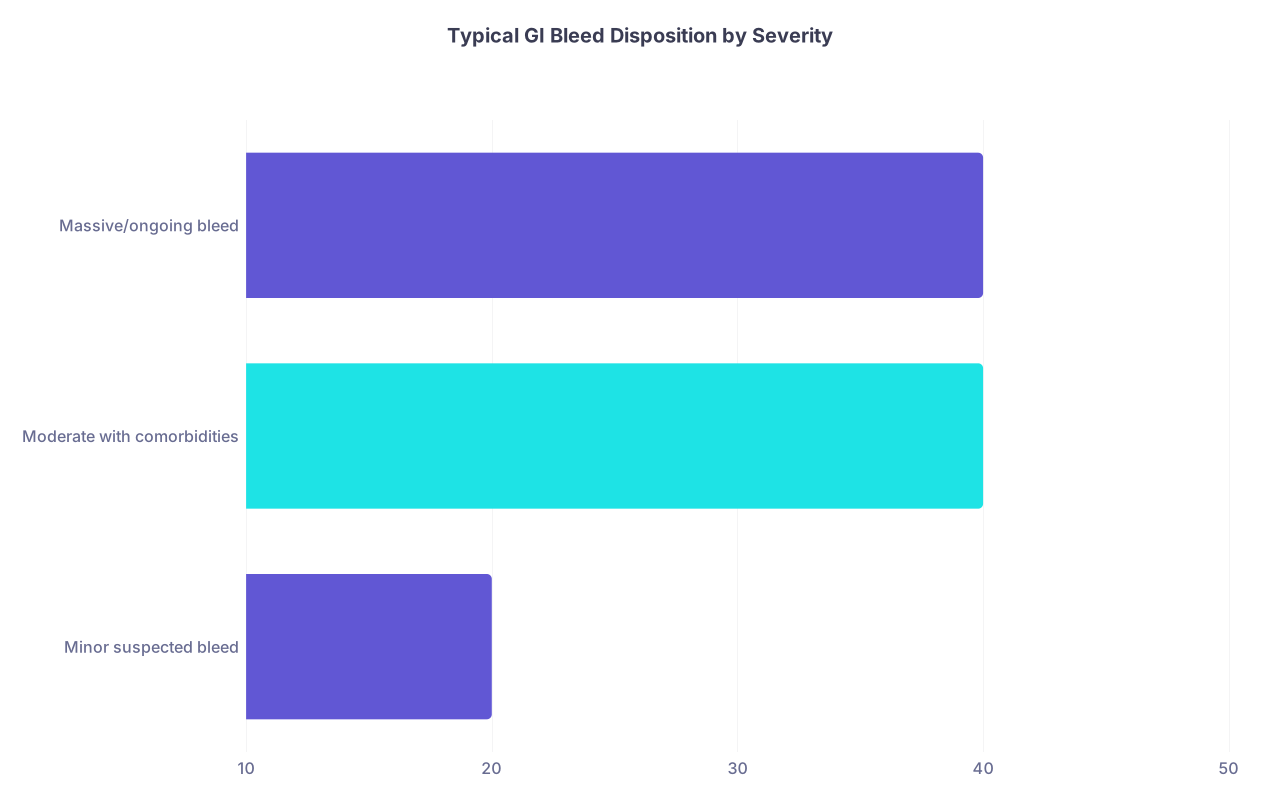
| Category | Value |
|---|---|
| Minor suspected bleed | 20 |
| Moderate with comorbidities | 40 |
| Massive/ongoing bleed | 40 |
Clear ICU candidates
Send or keep in ICU if:
- Active massive bleeding (ongoing hematemesis or large-volume hematochezia)
- Hemodynamic instability despite fluids / initial transfusion
- Need for pressors
- High aspiration risk / need for airway protection
- Severe comorbidities + bleed (e.g., CHF with pulmonary edema, severe COPD with hypoxia)
Step-down / intermediate care
Appropriate for:
- Significant bleed but currently stabilized after initial resuscitation
- Transfusion requirement but not crashing
- High risk for deterioration (cirrhotics, elderly with CAD)
Regular floor
Only if:
- Hemodynamically stable, minimal or self-limited bleed
- Hgb stable and above threshold
- No evidence of active ongoing bleeding
- Low risk comorbidity profile
When in doubt at 2 a.m., err toward a higher level. Moving them up after they crash at 4 a.m. is much uglier.
8. Imaging and Endoscopy Timing: What You Actually Need to Order at Night
Residents often panic-order CT scans that add nothing and delay real care.
For suspected upper GI bleed
Priority:
- Urgent EGD within 24 hours (sooner, often < 12 hours, for high-risk features or ongoing bleeding).
Your job at night:
- Resuscitate and stabilize
- Start PPI ± octreotide/antibiotics
- Page GI with a clear, concise presentation and assessment
- Clarify timing: “Does this patient need endoscopy overnight or first case in the morning?”
You generally do not need a CT scan for straightforward upper GI bleeds.
For lower GI bleed
More nuanced.
If they are:
- Actively bleeding briskly
- Hemodynamically unstable
- Hgb dropping despite transfusion
Then CT angiography (CTA) can be useful to localize active bleeding for IR; this is often done in collaboration with GI and/or surgery.
If they are:
- Stable
- Not actively bleeding
Then colonoscopy can often wait until bowel prep and daytime.
Don’t forget: IR and surgery
If the patient:
- Continues to bleed massively despite transfusion
- Has failed endoscopic therapy
- Is too unstable for endoscopy
You will be talking to:
- Interventional radiology (for embolization)
- Surgery (exploratory laparotomy / segmental resection)
At night, what matters is you recognize failure of non-operative management early and make those calls. You are not the hero for “giving it more time” while they bleed out.
9. Hemoglobin, Trend, and the Big Misconception Residents Have
The worst habit: treating the initial hemoglobin as meaningful in acute bleeds.
A patient can lose a liter of blood in an hour and still show Hgb 13, because equilibration with extravascular volume has not occurred. If nursing calls you because “his Hgb is 12.5, so I do not think it is real bleed,” and the man is hypotensive and vomiting bright red blood, you ignore the number.
What actually matters:
- Hemodynamics and visible bleeding now
- Trend of Hgb over hours (not a single value)
- Transfusion response (do they stabilize or keep dropping?)
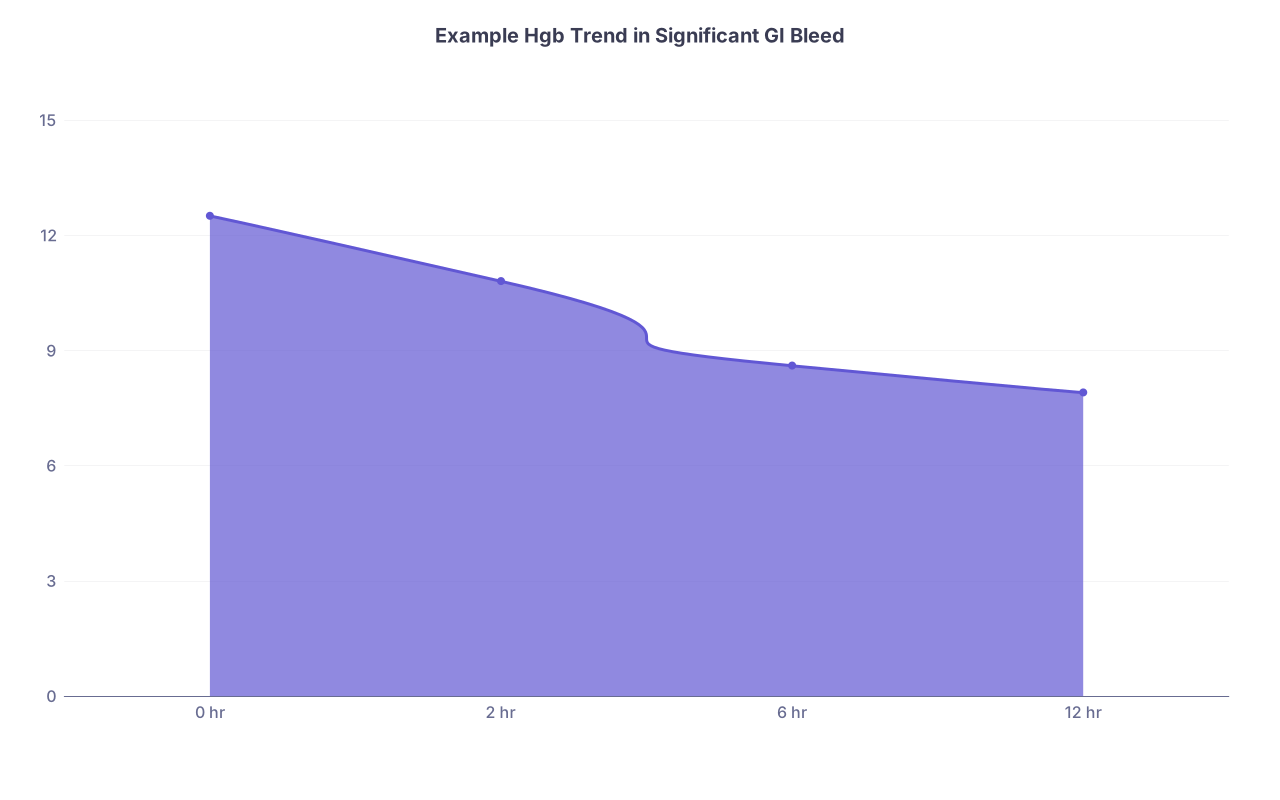
| Category | Value |
|---|---|
| 0 hr | 12.5 |
| 2 hr | 10.8 |
| 6 hr | 8.6 |
| 12 hr | 7.9 |
You repeat Hgb:
- Every 4–6 hours in moderate bleeds
- Every 2 hours or after each unit transfused in severe, ongoing bleeds
10. Special Scenarios Residents Routinely Mishandle
Let me call out a few landmines.
1. The cirrhotic with “just some coffee-ground emesis”
This is not a “minor bleed” by default.
Risks:
- Variceal bleeding can escalate shockingly fast
- They already have coagulopathy and low reserve
- Infection risk is high (hence antibiotics)
You:
- Start octreotide and ceftriaxone early
- Get GI involved early, even if they look okay now
- Admit to step-down/ICU rather than floor if any instability
2. The elderly patient with melena but normal vitals and Hgb 9.8
Common trap: “They are stable, floor admission, we will see tomorrow.”
Reality:
- Elderly, especially with CAD, may decompensate quickly
- Occult or slow bleed may already be subacute
- They need at least:
- Telemetry
- Serial Hgb
- PPI started
- GI plan for early EGD or colonoscopy depending on suspicion
I usually push for step-down if I have any whiff of ongoing bleeding or significant comorbidities.
3. The brisk hematochezia patient with hypotension
Many residents anchor: “Lower GI bleed.”
But:
- Massive upper GI bleed with rapid transit can present as bright red blood per rectum and shock.
- If they are hypotensive and you see bright red stool, do not assume lower source until proven otherwise.
You:
- Resuscitate as for massive bleed
- Engage GI urgently for probable urgent EGD
- CTA or colonoscopy come later depending on EGD results and ongoing bleeding
11. How to Present a GI Bleed on Night Call Like You Know What You’re Doing
Your phone call to GI or ICU should be concise and organized. No rambling.
Template:
Demographics and context
“This is a 64-year-old man with CAD and alcohol-related cirrhosis, MELD 15, admitted with hematemesis and melena.”Bleed description and timeline
“Started 3 hours ago with three episodes of bright red hematemesis, about a cup each, and one melena stool.”Vital signs and stability
“On arrival BP was 85/50, HR 125, now after 1 L LR and 2 units PRBC he is 102/60, HR 108 on 2L NC with SATs 96%.”Key labs and trends
“Hgb dropped from 10.2 this afternoon to 8.1 now, platelets 70, INR 1.8, BUN 38, Cr 1.0, lactate 3.2.”Interventions done
“He has two 18-gauge IVs, on pantoprazole bolus and drip, octreotide gtt, ceftriaxone, PCC given for INR, repeat Hgb pending.”What you want from them
“I am concerned for variceal upper GI bleed. I would like ICU transfer and urgent EGD overnight if feasible.”
That kind of presentation gets immediate respect. And faster, safer care.
12. Documentation That Actually Protects You (and Helps Day Team)
Your note does not need to be long, but it must be clear and time-stamped.
Key elements:
- Time you evaluated the patient
- Initial vitals, mental status, and exam highlights
- Description of bleeding (hematemesis vs melena vs hematochezia)
- All interventions:
- IV access, fluids, transfusions
- Medications started (with doses)
- Reversal agents given
- Level-of-care decisions (and why: unstable, high risk, etc.)
- Consults paged, time, and response
- Your working diagnosis and plan for serial labs and monitoring
If the patient crashes at 5 a.m., your 2 a.m. note will be dissected. Make it tight.
13. Building a Mental “Rapid GI Bleed Checklist”
You will get better if you run the same mental script every time.
Here is a lean version you can keep in your head:
At the page
- Ask: “Current vitals?” “How much blood?” “Any active vomiting now?”
- If unstable → go immediately.
At the bedside
- ABCs: airway risk? O₂? monitors?
- Look at patient, IV lines, bucket/bed/commode.
Orders within first 5 minutes
- Two large-bore IVs
- CBC, BMP, LFTs, coags, type & screen/cross, lactate, +/- troponin
- Fluid bolus (while arranging blood)
- PPI IV
- Octreotide + ceftriaxone if cirrhosis/varices suspected
- Reversal of anticoagulants/antiplatelets per protocol
- Serial Hgb orders
History and exam (focused)
- Character and timing of bleed, meds, liver disease, prior GI history
- Rapid exam with rectal
Disposition decision
- ICU vs step-down vs floor
- Call GI (and ICU/IR/surgery if appropriate) with a clean, organized story.
FAQ (4 Questions)
1. When should I activate a massive transfusion protocol (MTP) in a GI bleed?
Activate MTP when there is ongoing large-volume bleeding with hemodynamic instability and an expectation of needing multiple units of blood quickly. Typical clues: SBP persistently < 90 despite fluids, heart rate > 120, visible active hematemesis or hematochezia, Hgb dropping fast, lactate rising, or a need for ≥4 units PRBC within a short window. Do not wait until the patient has already received 6 units; trigger MTP early when the trend and clinical picture clearly point toward massive hemorrhage.
2. Should I hold aspirin or clopidogrel in all GI bleed patients?
No. This is where nuance matters. For life-saving indications (recent coronary stent, recent ACS, high-risk CAD), you involve cardiology early before stopping dual antiplatelet therapy. In lower-risk settings (primary prevention aspirin, remote stent from years ago), it is generally reasonable to hold aspirin temporarily during active bleeding. Clopidogrel and other P2Y12 inhibitors are usually held during active significant bleeding, but you document the indication and timing and get explicit input from cardiology as soon as possible.
3. How fast should I transfuse PRBCs in a significant GI bleed?
In unstable patients, you transfuse rapidly, often over 1–2 hours per unit initially, or even faster if directed under MTP in ICU-level care. In relatively stable patients with moderate anemia, units may go over 2–3 hours. The point is this: do not let a clearly unstable patient sit with “PRBCs at 150 mL/hr” like a chronic anemia admission. Match your transfusion rate to the acuity of blood loss and hemodynamics, and reassess clinically after each unit.
4. When is it reasonable to defer endoscopy until morning?
You can defer to daytime endoscopy if the patient is hemodynamically stable, has no ongoing significant bleeding, hemoglobin is relatively stable or falling slowly, and you have initiated appropriate medical therapy (PPI ± octreotide/antibiotics in cirrhotics). Classic example: melena with stable vitals, no active hematemesis, Hgb 9.5 from 10.2, resuscitated and comfortable. You still call GI overnight, outline the picture, and let them decide exact timing, but you do not push for emergent middle-of-the-night scopes in stable, non–high-risk cases.
With this framework drilled into your brain, you will stop feeling blindsided by “GI bleed in 7-16” at 3 a.m. The next step is getting just as sharp on your post-resuscitation care and how you hand these patients off so the day team can actually build on your work instead of redoing it. But that is a conversation for another night on call.