The belief that you’ll “just remember it” during residency is not confidence. It’s self-sabotage dressed up as bravado.
You’re not an exception. Your memory is not special. And in a system built on sleep deprivation, interruptions, and information overload, relying on recall instead of systems is how smart residents make dumb, dangerous mistakes.
Let’s pull this apart.
Your Brain Is Not Built For Residency-Level Recall
The story residents tell themselves is always the same: “I’ve seen this consult before, I’ll remember the dose / criteria / workup next time.”
Then it’s 3:27 a.m., you’ve just been paged three times in a row, the nurse is waiting, and that “I’ll remember it” fact is nowhere to be found.
This isn’t a character flaw. It’s biology.
Cognitive psychology has hammered this for decades:
- Working memory can hold around 4–7 chunks of information at a time. That’s under ideal, well-rested conditions.
- Sleep deprivation—which you experience basically every call—slams attention, working memory, and decision-making.
- Multitasking and interruptions cut performance even further.
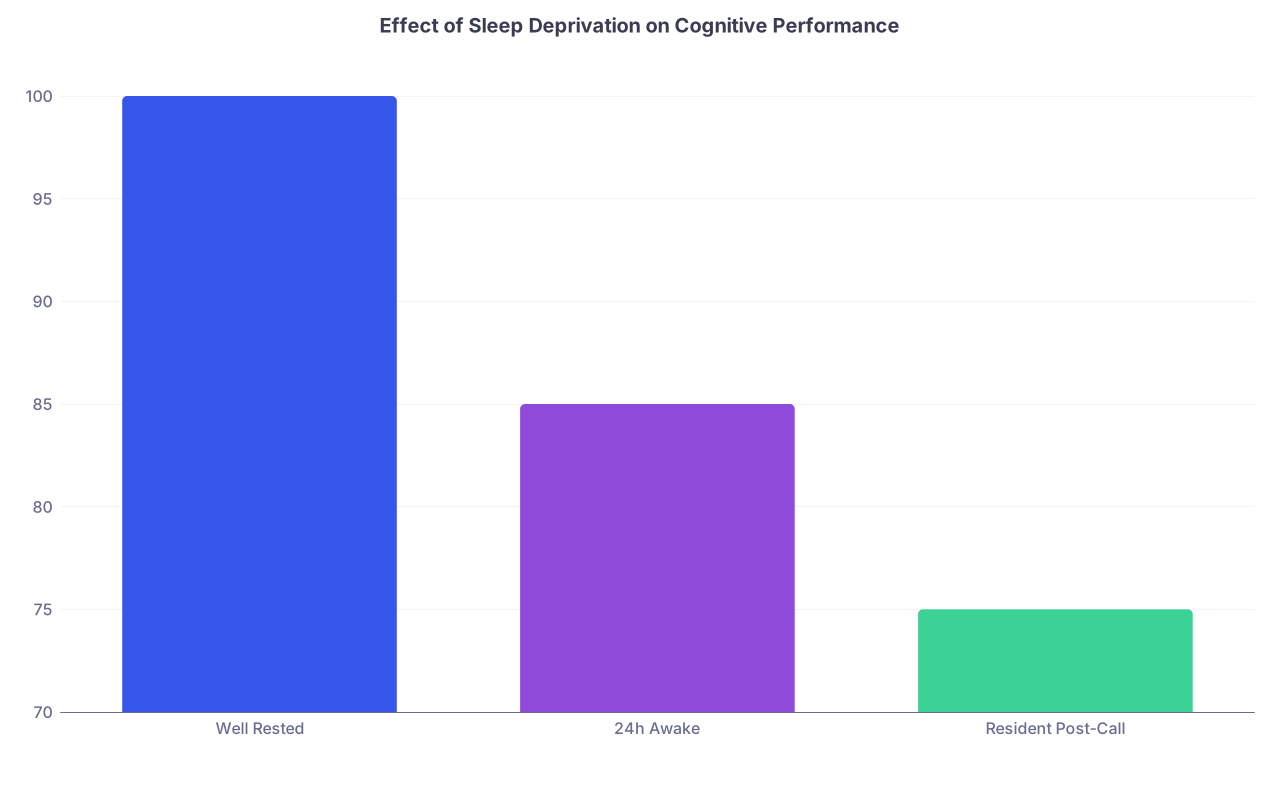
| Category | Value |
|---|---|
| Well Rested | 100 |
| 24h Awake | 85 |
| Resident Post-Call | 75 |
That last bar isn’t a real “measured” value from a single study, but it reflects what multiple sleep and performance studies show: you think you’re functioning at 90–95%; you’re actually down around 70–80%.
Yet residents behave like they’re running on exam-day brains instead of post-call brains. They trust recall in situations where pilots, nuclear techs, and ICU nurses use checklists.
I’ve watched interns say, “Oh, I know that,” then botch:
- Heparin dosing because “I’ll remember the infusion rate” turned into “wait, was it 18 or 20 units/kg/hr?”
- Correct hyperkalemia treatment order because they half-recalled a lecture and forgot the calcium.
- Transfusion thresholds because they “knew” the Hb cutoff… in outpatients. Not in septic ICU patients.
Here’s the hard truth: residency is designed to overwhelm your unaided memory. Pretending otherwise is not resilience. It’s denial.
The Data: Experience Does Not Immunize You Against Forgetting
The myth usually hides behind another myth: “Once I see it enough, I won’t need to write it down.”
No. Repetition helps, but only if it’s spaced, reinforced, and retrieved in a deliberate way. Random clinical chaos doesn’t magically convert experience into reliable memory.

Spaced repetition research is brutally clear on this. If you don’t:
- review information at increasing intervals, and
- actively retrieve it (not just reread it),
you will forget it. Even if you “knew it cold” for an exam six months ago.
Meanwhile, what does residency give you?
- Fragmented exposures (one DKA on day 3, then nothing for 2 months).
- Variable teaching (one attending wants aggressive insulin, another is terrified of hypoglycemia).
- Constant context-switching (DKA → chest pain → code blue → discharge summary).
That’s not a memory-friendly environment. That’s a forgetting machine.
So your brain does what it always does under overload: it generalizes, confuses, and approximates. You remember the gist and lose the numbers, thresholds, and exceptions. Which in medicine are often the part that matters.
| Belief | Reality |
|---|---|
| I’ll remember after one exposure | You’ll recall the vibe, not the details |
| Experience replaces references | Systems + references amplify experience |
| Forgetting means you’re weak | Forgetting is default without reinforcement |
| Others don’t need cheat sheets | The best ones quietly build them |
The best residents I’ve worked with weren’t the ones who “just remembered.” They were the ones quietly accumulating their own systems—folders, OneNote files, pocket cards, templated dot phrases—because they’d already been burned by their memory once or twice.
They learned. The others just got lucky. Until they didn’t.
“I’ll Just Remember It” Becomes “I Hope I Don’t Get Caught”
Let’s zoom in on how this myth actually looks on a real shift.
You get a page: “New admit, possible GI bleed, can you put in orders?”
You think, Yeah, I remember the workup. So you:
- Order CBC, type and screen, GI consult, proton pump inhibitor
- Forget to check anticoagulants and reversal
- Half-remember the transfusion threshold and overshoot or undershoot
- Don’t order the right prep before the scope
Do you always get harmed for this? No. Patients are resilient. Nurses double-check. Attendings tweak orders.
But every “I’ll remember” gap is a chance to:
- Miss one key piece of workup
- Delay correct treatment
- Lose credibility with the team when someone else catches it
And the worst part: you feel you can’t admit you don’t remember. Because you’ve sold yourself the story that you should.
So instead of saying, “Give me 20 seconds, I have a checklist,” you start stalling, guessing, or quietly Googling something you should “know.”
That’s how the myth mutates—from overconfidence to shame.
I’ve overheard versions of this more times than I can count:
- “I didn’t want to look stupid in front of the new attending, so I just put what I thought was right.”
- “I knew I’d seen the ACS guideline, I just couldn’t pull the exact numbers.”
- “I was pretty sure it was 4 hours NPO. I think.”
All of those situations had a better answer available in 15 seconds. A saved note. A dot phrase. A photo of a protocol. A bookmarked PDF.
But only if you had the humility to admit that “I’ll just remember it” is fantasy and build a system instead.
Cheat Sheets Are Not Cheating. They Are Protective Equipment.
This is where the contrarian part comes in: the hero worship of the resident who “knows everything off the top of their head” is stupid.
That person either:
- has quietly built excellent systems, or
- is dangerously overestimating their own recall.
Every high-risk, high-complexity field hit this wall before medicine admitted it had a problem:
- Aviation turned hard toward checklists, standard operating procedures, and memory aids after fatal crashes blamed on “pilot error.”
- Industrial safety uses lockout-tagout, double-check protocols, and written procedures precisely because memory and habit are unreliable.
- Even professional chess players use opening books and prep files, despite having world-class memory.
But in medicine, too many residents still act like pulling UpToDate at the bedside is a moral failing.
Let me be blunt: the residents who build and use external memory systems are safer, faster, and less stressed. The ones who rely purely on “I’ll remember” are signing themselves up for slower growth and more painful mistakes.
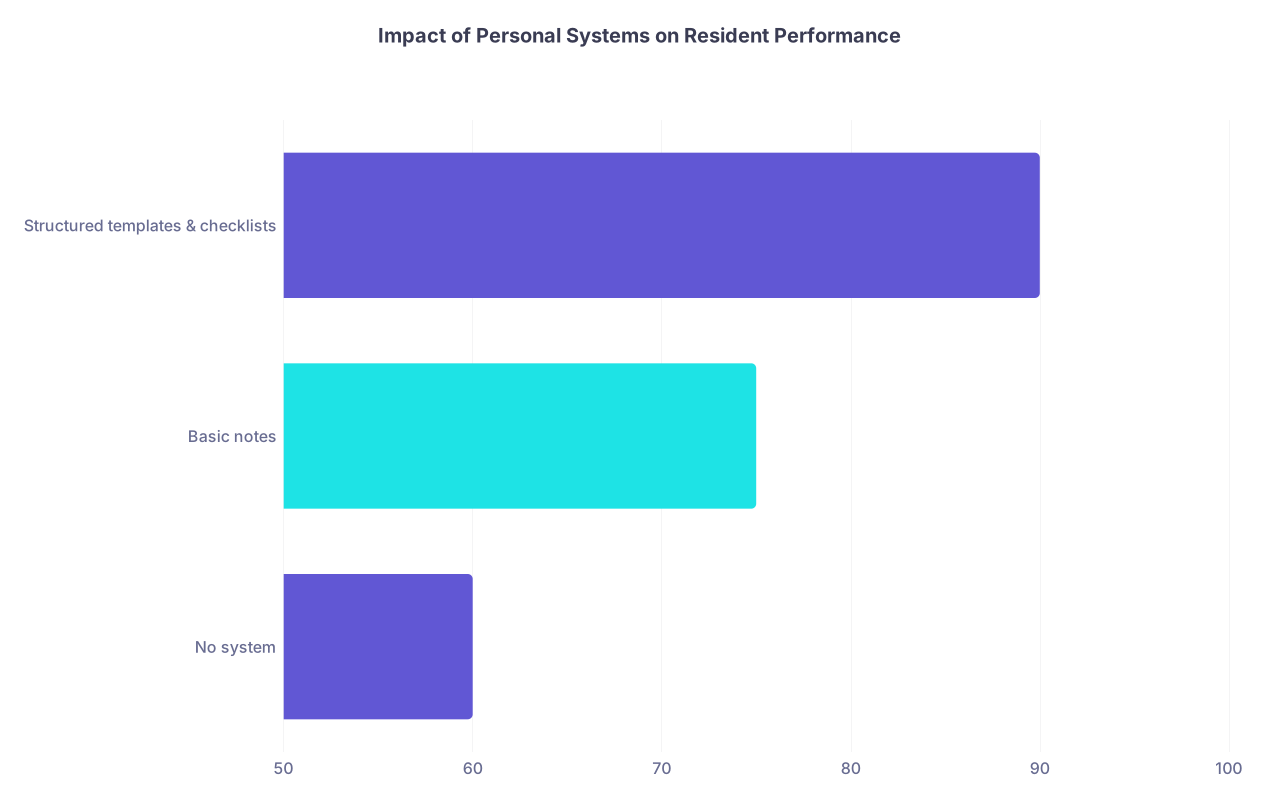
| Category | Value |
|---|---|
| No system | 60 |
| Basic notes | 75 |
| Structured templates & checklists | 90 |
Again, not from a single RCT, but representing a pattern every program director quietly knows: system builders outperform “wing it” people over time.
So what actually works?
- Micro-checklists: Not 4-page monsters. One-line sequences for common but high-stakes problems: chest pain, stroke code, DKA, febrile neutropenia, GI bleed.
- Personal guidebook: A digital notebook (OneNote, Notion, Apple Notes, whatever) where you paste protocols, your own explanations, and links.
- Smart dot phrases: Templates for admits, consults, and discharge summaries that double as cognitive scaffolding.
- Physical crutches: A small laminated card or badge card with the stuff that really must be right: ACLS doses, insulin drips, anticoag reversal, pressors.
None of this means you stop learning. It means you build scaffolding so your brain can focus on thinking instead of juggling raw data.
There’s a huge difference between outsourcing thinking and outsourcing recall. The people who can’t see that difference are the ones who eventually drown in their own false confidence.
The Memory Myth Also Destroys Your Study Time
Let’s talk about off-shift learning. Because the “I’ll remember” myth doesn’t just show up in clinical care. It warps how residents study.
I’ve seen this pattern over and over:
- Intern reads about sepsis for 2 hours after a hard call night.
- Feels “okay, I’ve seen it, I’ll remember that now.”
- Two weeks later, can’t recall the lactate threshold or when to stop broad-spectrum antibiotics.
That’s not because they’re lazy or dumb. It’s because passive reading feels like learning and decays fast. They never converted that reading into a system.
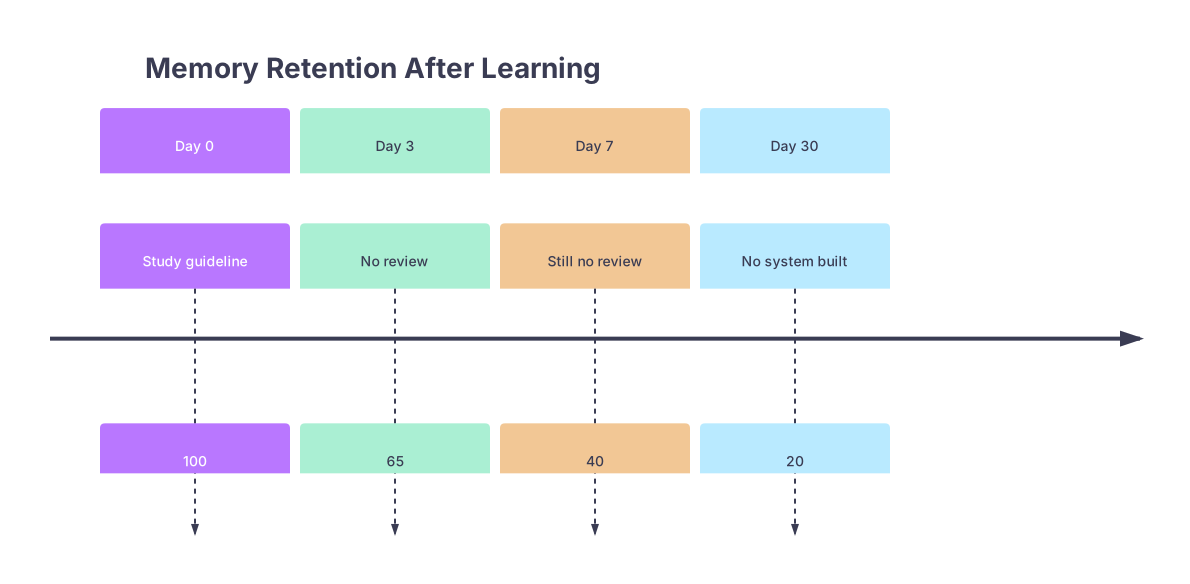
| Period | Event |
|---|---|
| Day 0 - Study guideline | 100 |
| Day 3 - No review | 65 |
| Day 7 - Still no review | 40 |
| Day 30 - No system built | 20 |
The residents who accelerate their learning do something different: they treat each study session as raw material to be turned into external tools.
Read sepsis guidelines? They don’t just highlight. They:
- Distill 5–10 key triggers and cutoffs into a tiny checklist.
- Insert that checklist into their admit note template.
- Maybe write a 3–4 line “mini-teaching script” they can use on rounds.
Now every time they admit a septic patient, they’re reinforcing the guideline, because they literally reread those 4–5 lines inside their own system. That’s spaced repetition embedded in your workflow.
You want to pass in-service, Step 3, or boards without feeling like you’re relearning everything from scratch? Stop trusting raw memory and start building these external memory hooks early.
Culture Is Lying To You. Don’t Play Along.
One more uncomfortable truth: residency culture often rewards the wrong thing.
You’ve heard variations of this:
- “You should know this by now.”
- “You don’t need to look that up, you’ve seen it before.”
- “Back when I trained, we didn’t have UpToDate on our phones.”
This is insecurity disguised as “old-school toughness.” The same people will quote Atul Gawande on checklists and then shame interns for… using checklists.
The data on human factors, medical error, and complex systems is absolutely unambiguous: unaided human memory under fatigue and stress is unreliable. Full stop.
| Topic | Culture Says | Evidence Shows |
|---|---|---|
| Using checklists | For novices and weak residents | Reduces error, helps experts most |
| Looking things up | Shows you don’t know enough | Increases accuracy and safety |
| Forgetting details | Personal failing | Predictable under sleep deprivation |
| Building templates | Overkill, slows you down | Speeds decisions, standardizes quality |
So you have a choice:
- Conform to the myth, pretend your memory is a superpower, and quietly underperform while blaming yourself.
- Or reject the myth, build visible systems, and force the culture to adapt to you.
The residents I’ve seen soar—fast independent practice, strong evaluations, real confidence—are the second group. They’re the ones saying on rounds, “I have a quick checklist I use for this, let me just pull it up,” and then walking through it calmly while everyone else scrambles to remember.
Do a few attendings roll their eyes? Sure. But most eventually realize they can trust that resident’s orders more than the macho “I got this” intern who’s constantly one step behind.
How To Replace “I’ll Remember” With Something That Actually Works
You do not need a perfect system. You need something better than your exhausted brain.
Here’s a simple way to start without making your life harder:
- For the next week, every time you catch yourself thinking “I’ll remember that,” assume you won’t. That’s your trigger.
- Decide where that fact belongs: checklist, dot phrase, or quick note.
- Capture it in under 60 seconds. No essays. Just enough you-from-2-weeks-later will understand.
- Link it to reality: tie that item to one patient or case in your mind. “This was like Mrs. X with the submassive PE.”
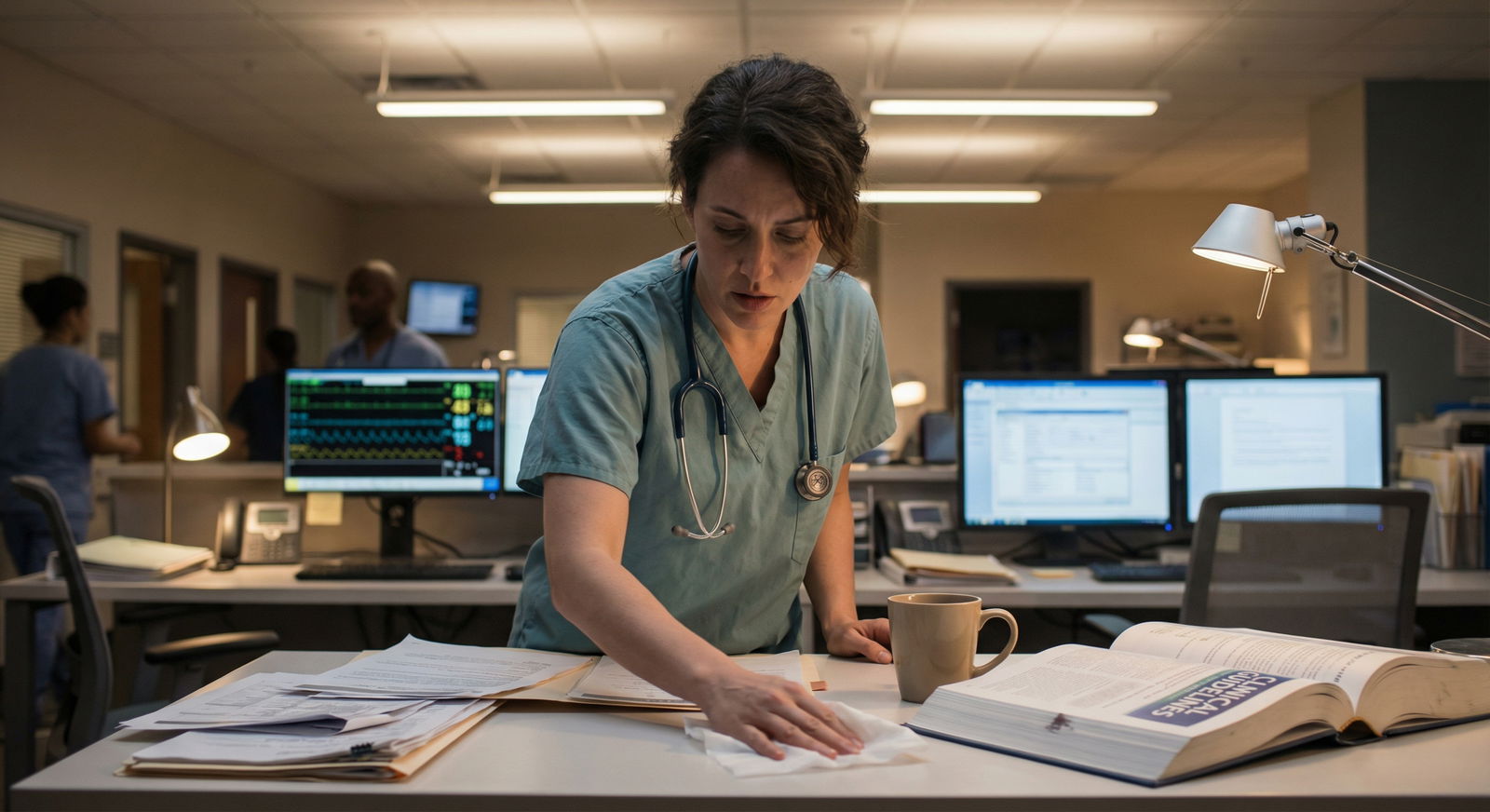
Within a month, you’ll have a small but powerful personal playbook. Not a textbook. Not a board review book. A set of tools tailored to the chaos you actually see.
And you’ll feel something you probably haven’t felt much in residency: genuine cognitive relief. You’ll stop burning energy trying to brute-force recall things that could be offloaded to a note you wrote 3 weeks ago.
The punchline
“I’ll just remember it” sounds efficient. It feels fast. In practice, it is:
- Slower than pulling up a system you built once and reuse 100 times
- Less accurate than a short reference you trust
- More stressful than admitting your memory is fallible and planning around it
You do not get bonus points for suffering through cognitive overload without tools. You just get more tired and more error-prone.
Key points:
- Your residency brain is overloaded, sleep-deprived, and constantly interrupted; relying on raw memory in that environment is asking for mistakes.
- The best residents are not the ones who “remember everything,” but the ones who systematically offload memory into checklists, templates, and notes.
- Treat every “I’ll remember that” moment as a red flag—and a cue to build a system that will still be there when your memory inevitably fails.