
You’re in the hotel lobby after a solid interview day. You liked the program. They seemed to like you. But as you scroll through group chats and Reddit, you see it: everyone talking about second looks, “showing interest,” “sealing the deal.”
Now your brain is spinning:
“Should I schedule another visit?”
“Should I send that faculty member a detailed follow-up?”
“Do I need to do something so they don’t forget me?”
This is the exact moment people blow it.
Not because they’re lazy or rude. Because they’re overeager. They confuse “demonstrating interest” with “acting desperate,” and programs notice. I’ve watched applicants go from “strong consider” to “hard pass” purely based on how they handled second looks and post-interview contact.
Let’s walk through the 10 overeager second-look moves that quietly tank otherwise good applications—and how to avoid every single one.
1. Treating a Second Look Like a Required Step
The first mistake happens before you even book a flight: acting like a second look is mandatory.
For most specialties and programs, second looks are:
- Optional
- Neutral at best
- Mildly risky if you handle them badly
Yet applicants behave like not doing a second look is equivalent to not showing up to the interview.
Here’s what programs actually hate:
- Applicants asking, “Will it hurt me if I don’t do a second look?” over and over
- People forcing awkward visits into already strained schedules
- Candidates clearly showing up just to “check a box,” offering nothing new and draining faculty time
You should not:
- Assume second looks are an unwritten rule
- Go “just because everyone else is”
- Try to attend second looks at every program you interviewed at
You should:
- Only consider a second look if:
- You’re legitimately torn between a small number of programs
- You have specific questions you couldn’t answer virtually or on interview day
- The program explicitly says second looks are welcome and clarifies they’re informational, not evaluative
Bottom line: thinking “no second look = doom” is a rookie mistake. Programs rank plenty of people highly who never set foot there again after interview day.
2. Turning a Second Look Into a Shadow Interview
Here’s another way people tank their image: they treat a second look like Interview Day 2.0.
They dress super formal, rehearse “Why this program?” speeches again, try to network aggressively, and act like every interaction is being scored.
Programs notice this. And it feels…off.
Residents and faculty expect second looks (when allowed) to be:
- More relaxed
- Educational for you
- A chance for you to see workflow, culture, and real life
Not:
- A second audition
- A performance
- An attempt to “game” the system
Overeager tells:
- Trying to sit next to the PD at every moment
- Over-answering questions on rounds to show knowledge
- Turning casual resident conversations into mini-interviews: “So do you see me as a good fit?”
This makes people uncomfortable. And they will talk about it later.
If you go, act like a colleague shadowing, not like an actor reading for a callback role. Ask honest questions. Observe. Don’t pitch yourself.
3. Emailing Every 3 Days “Just to Check In”
Programs do not forget you exist. ERAS didn’t lose your file. The coordinator is not “ignoring” you because they haven’t responded in 24 hours.
Excessive second-look related emails scream insecurity and lack of professional boundaries.
The worst patterns:
- “Just checking in about possible second look dates” sent 2–3 times in a week
- Following up with multiple people (coordinator, PD, APD) about the same question
- Sending long, emotional essays about how much you love the program before anyone has agreed to host a visit
A reasonable pattern looks like:
- One concise email to the coordinator or specified contact asking:
- Whether second looks are offered
- What the structure usually is
- Any available dates
- One follow-up if you haven’t heard back after 7–10 days
- Then you stop.
Anything beyond that moves you from “interested” to “high-maintenance.” Programs are not signing up for daily inbox drama.
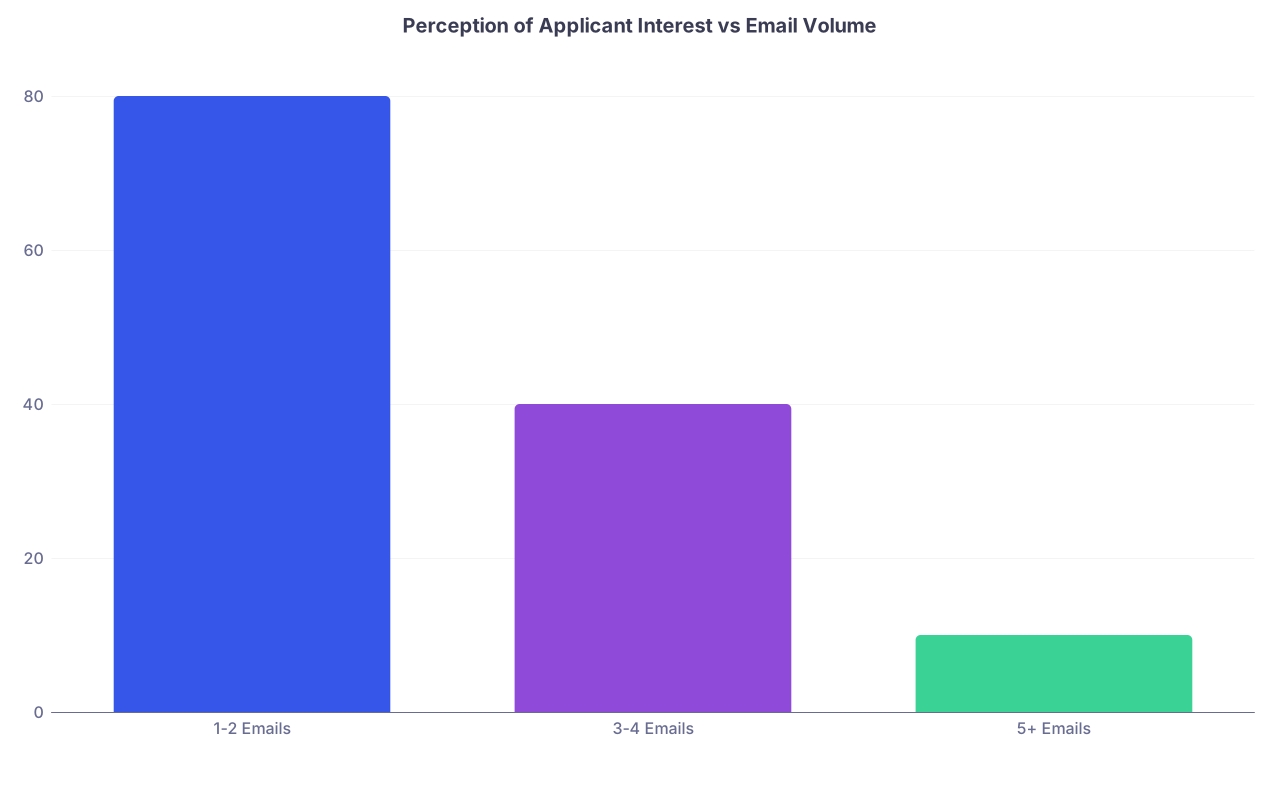
| Category | Value |
|---|---|
| 1-2 Emails | 80 |
| 3-4 Emails | 40 |
| 5+ Emails | 10 |
(Think of it this way: your perceived professionalism drops sharply once you cross the line into repeated nudging.)
4. Fishing for Rank List Information
This one gets people blacklisted fast.
On second looks, some applicants start probing:
- “So…do you think the PD liked me?”
- “Where do you think I stand compared to other applicants?”
- “Am I competitive for your top tier?”
- “If I rank you highly, am I likely to match here?”
It’s not subtle. And it’s not appropriate.
Programs are bound by match rules and ethics. Trying to corner residents or faculty into hinting about ranking is a big red flag. At best, it makes them uncomfortable. At worst, it makes them tell the PD, “This person doesn’t understand boundaries.”
Another version: trying to get residents to “sell” you to the PD in real time.
Example of what residents complain about later:
“He literally asked me, ‘If I send you my CV, can you put in a good word with the program director?’ during noon conference.”
Do not do this. Ever.
Second looks are for:
- Clarifying fit
- Understanding call, workflow, culture
- Seeing clinic, OR, inpatient flow
They are not for mining people for backchannel intel on your rank position.
5. Oversharing Personal Logistics and Emotional Pressure
Here’s where desperation really shows.
Some applicants try to manipulate perceived empathy:
- Sharing long stories about family illness to pressure programs into liking them more
- Telling multiple people, “I need to match close to X city or my life will fall apart”
- Overexplaining their partner’s job, lease dates, finances, etc. in detail no one asked for
I’ve heard this in real debriefs:
- “I felt bad, but it felt like emotional blackmail”
- “They seemed like they wanted us to feel guilty if they didn’t match here”
Do you have real constraints? Sure. But there’s a line between relevant context and a pressure campaign.
Okay:
- “My partner is based in this city, so location is a big factor for me.”
- “I have family support nearby which is important for childcare.”
Not okay:
- “If I don’t match here, my relationship might not survive.”
- “I can’t afford to move again, so I really need this.”
Your personal life isn’t leverage. When you use it like leverage, you look unstable, not relatable.

6. Forcing Your Way Into Clinical Work
Another overeager move: trying to “show value” by inserting yourself into clinical care during a second look.
Common mistakes:
- Volunteering to write notes or place orders (this is usually not allowed for second-look visitors)
- Trying to examine patients without clear permission from staff
- Presenting patients uninvited on rounds
- Offering unsolicited clinical opinions in front of patients
Programs are very sensitive to:
- Liability
- Patient privacy
- Workflow disruption
If your presence adds work instead of removing it, you’re hurting yourself.
Your role during a second look is observer and learner, not quasi-sub-intern. If a resident invites you to do something and it’s clearly within policy—fine. But don’t push it.
Ask this once and early:
“Are there any limitations on my role today regarding patient care or documentation?”
Then follow whatever they say. Rigidly. You will impress them more by respecting boundaries than by trying to act like a pseudo-resident.
7. Overdoing Thank-You and “Love Letter” Messages
You should already know: obsessively emailing everyone after interviews is a bad look. Second looks tempt people to double down.
I’ve seen applicants send:
- A thank-you email after the interview
- Another after a second look
- A “this program is my #1” email
- Yet another follow-up one or two weeks before rank list deadline
- And sometimes a final “just wanted to reiterate” note
Too much.
| Situation | Reasonable Contact | Overeager Contact |
|---|---|---|
| After interview | 1 thank-you email | 3+ emails to multiple faculty |
| After second look | 1 brief thank-you | Long emotional letter + follow-up |
| Declaring interest | 1 clear, honest message | Multiple “reaffirming” emails |
| Questions | 1 concise email | Serial minor questions weekly |
What programs actually want:
- One concise, professional thank-you when appropriate
- Maybe one later message if:
- You genuinely decided they’re your #1
- You can truthfully say so (watch your ethics here)
- You keep it short and not dramatic
They do not want:
- A manifesto
- Your life story
- Repeated pleas for reassurance
When in doubt: shorter, later, fewer.
8. Trying to “Out-Second-Look” Other Applicants
You will hear this kind of nonsense:
“She did a second look and then a research day there.”
“He visited twice and met with the PD both times and now they love him.”
Do not play this game.
Trying to outdo everyone with:
- Multiple second looks at the same program
- Extended “unofficial” visits
- Dropping by unannounced “just to say hi”
- Showing up again in town and asking if you can “swing by for a couple hours”
This reads as neediness + poor judgment. PDs and coordinators are already stretched thin. The last thing they want is someone manufacturing extra touchpoints just to be more visible.
If you already did:
- An interview
- A formal or semi-formal second look
That’s enough. More visits will not push you up the rank list. They’re more likely to push you into the “this will be a lot to manage for four years” mental bucket.

| Step | Description |
|---|---|
| Step 1 | Interested in Second Look |
| Step 2 | Skip Second Look |
| Step 3 | Schedule One Visit |
| Step 4 | Stop Here |
| Step 5 | Email Questions Instead |
| Step 6 | Clear Purpose? |
| Step 7 | Program Encourages? |
| Step 8 | Need More Info After? |
9. Acting Differently With Residents vs Faculty
Programs pay a lot of attention to this during second looks: how you treat residents versus faculty.
Classic overeager pattern:
- Over-the-top polite, enthusiastic, and deferential with PD, APDs, and attendings
- More casual, boundary-pushing, or even complaining with residents
- Fishing for “what do you really think of this program?” in an overly aggressive way
What you forget: residents report back.
Quotes I’ve heard almost verbatim:
- “They were so polished in front of the PD, but with us they badmouthed other programs.”
- “They kept asking us to be ‘brutally honest’ and it felt like they wanted us to trash our program.”
You do not want the label: “two-faced” or “tries too hard with leadership, weird with peers.” That ruins you, even if your scores and letters are great.
Be consistent. Treat residents as future colleagues, not gossip sources or “friends you can let your guard down with” on day one. You’re still being evaluated informally.
10. Ignoring Clear Program Signals About Second Looks
Some programs spell it out:
- “We do not offer second looks.”
- “Second looks are informational only and do not affect ranking.”
- “Due to equity concerns, we are discouraging second looks.”
The overeager mistake is thinking, “They say that, but they don’t mean it.” And then trying to find side doors:
- Asking residents to “unofficially” show you around anyway
- Emailing faculty directly to set up one-on-one visits despite clear program guidance
- Dropping lines like, “I know the policy, but I’m just so interested in the program…”
That doesn’t make you passionate. It makes you disrespectful of stated boundaries and tone-deaf to equity concerns.
If a program says:
- No second looks → believe them
- Second looks don’t affect rank → assume they’re trying to avoid disadvantaging those who can’t travel
Want more information but they don’t want visitors? Ask for:
- A short Zoom with a resident
- Clarification via email
- Any existing informational resources
Play inside the lines. Ignoring their lines is exactly the kind of behavior that makes people say, “Imagine this person as a resident when we tell them ‘no’ about something important.”
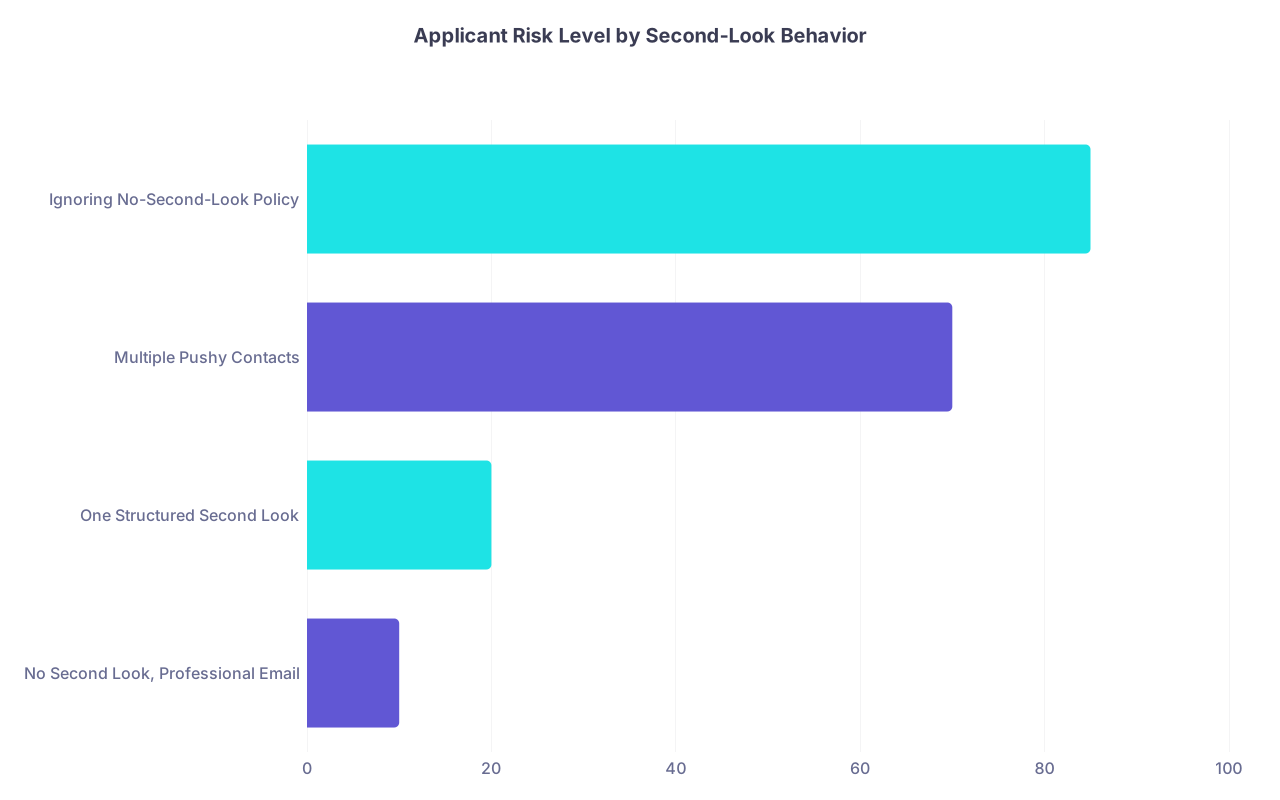
| Category | Value |
|---|---|
| No Second Look, Professional Email | 10 |
| One Structured Second Look | 20 |
| Multiple Pushy Contacts | 70 |
| Ignoring No-Second-Look Policy | 85 |
The more you push, the more you risk.
How to Do This Without Looking Desperate
Let me simplify what not to screw up.
A sane, non-desperate second-look strategy:
- Only consider a second look for a small number of top programs
- Email once, politely, to ask if they:
- Allow second looks
- Have a recommended structure or day
- If they say yes, go once, observe, ask real questions
- Thank the relevant people once afterward
- If they say no or discourage it, respect that fully
And if you never do a single second look?
You’re fine. Plenty of people match at their #1 without ever stepping back on campus.
FAQs
1. Will not doing a second look hurt my chances of matching at a program I love?
No. Programs do not systematically downgrade applicants who skip second looks. In many places, second looks are barely tracked or explicitly labeled as non-evaluative. A strong interview performance, solid application, and genuine professional communication matter far more than a return visit. If funds, time, or policies make second looks hard—do not panic. You’re not secretly sabotaging yourself.
2. If I’m ranking a program #1, should I always tell them in a post-interview email?
Only if you can say it honestly and you can do it once, clearly, and professionally. “Your program is my top choice” in a single, concise message is fine. What crosses the line is: repeated affirmations, emotionally heavy language, or vague “I’ll rank you highly” spam to multiple programs. Lying about being someone’s #1 is both unethical and, frankly, something programs can usually smell.
3. What’s a normal number of people to email after a second look?
Usually one or two: the main organizer (often the coordinator) and maybe the primary faculty or resident you spent the most time with. A short thank-you, not an essay. You do not need to email every person you encountered, the PD, the APD, the chief residents, and half the clinic staff. That looks like performance, not gratitude.
4. How do I know if my second-look questions are reasonable or overstepping?
Ask yourself: Would this question be appropriate in a professional setting with future colleagues? Reasonable: specifics about call schedules, clinic volume, education structure, research or fellowship placement, wellness resources. Overstepping: rank list details, confidential resident complaints, personal gossip, or anything that pressures them to speak negatively about their own program. If you’d be embarrassed seeing your question quoted in a PD’s email thread, do not ask it.
Key points:
- Second looks are optional, not a secret ranking weapon. Overeager behavior does more harm than skipping them altogether.
- Respect boundaries—program policies, resident comfort, and email volume all signal your professionalism.
- One solid interview + sane follow-up beats a frantic campaign of visits, messages, and pressure every single time.