
72% of SOAP positions in 2023 were in ACGME‑accredited programs that successfully filled most of their spots in the main Match.
So no, SOAP is not some separate dumpster fire full of “fake” residencies. Most SOAP positions are in the very same hospitals and systems you spent the last year chasing. You’re just encountering them from the side door instead of the front lobby.
Let’s dismantle this “SOAP = low‑tier only” myth properly.
What SOAP Actually Is (And Isn’t)
The narrative you hear in hallways is usually some version of: “If you end up in SOAP, you’re stuck with bottom‑of‑the‑barrel programs nobody wanted.”
That’s not what the process is or how the data shake out.
SOAP is just a structured, time‑boxed redistribution of unfilled accredited positions. Same NRMP, same accreditation system, same institutions. Different timing and rules.
Programs end up in SOAP for reasons that have nothing to do with being “trash”:
- They expanded class size and overshot their ranking strategy.
- They ranked aggressively competitive applicants and got burned when those people matched elsewhere.
- They’re in a geographic region that’s perennially harder to fill.
- They got hit with late issues (loss of a faculty member, new ACGME citations, hospital merger) that scared applicants off.
I’ve seen very solid community IM programs in big systems (HCA, HCA‑UCF, Kaiser, large state hospitals) wind up with a couple of open slots despite having dozens of interviewees and a reputation their own residents are protective of.
Are there weak programs in SOAP? Absolutely. There are weak programs in the main Match too. SOAP is not a separate universe; it’s the same one under time pressure and less polish.
What the Data Actually Show About SOAP Programs
Let’s anchor this in numbers instead of anecdotes.
NRMP publishes detailed data on unfilled positions by specialty and program type every year. The punchline: most SOAP spots are in fully accredited, non‑malignant, utterly normal programs that just did not fill.
Here’s a simplified look (approximate but representative) of how SOAP positions tend to cluster:
| Program Type | Share of SOAP Positions |
|---|---|
| Community Hospital (ACGME) | 45% |
| University‑Affiliated | 30% |
| University‑Based | 15% |
| Rural / Critical Access | 10% |
That “community hospital” category is where people unfairly dump the “low tier” label. Reality: tons of these are perfectly solid training environments that send grads into fellowships and decent jobs every single year.
To visualize how SOAP positions spread across specialties:
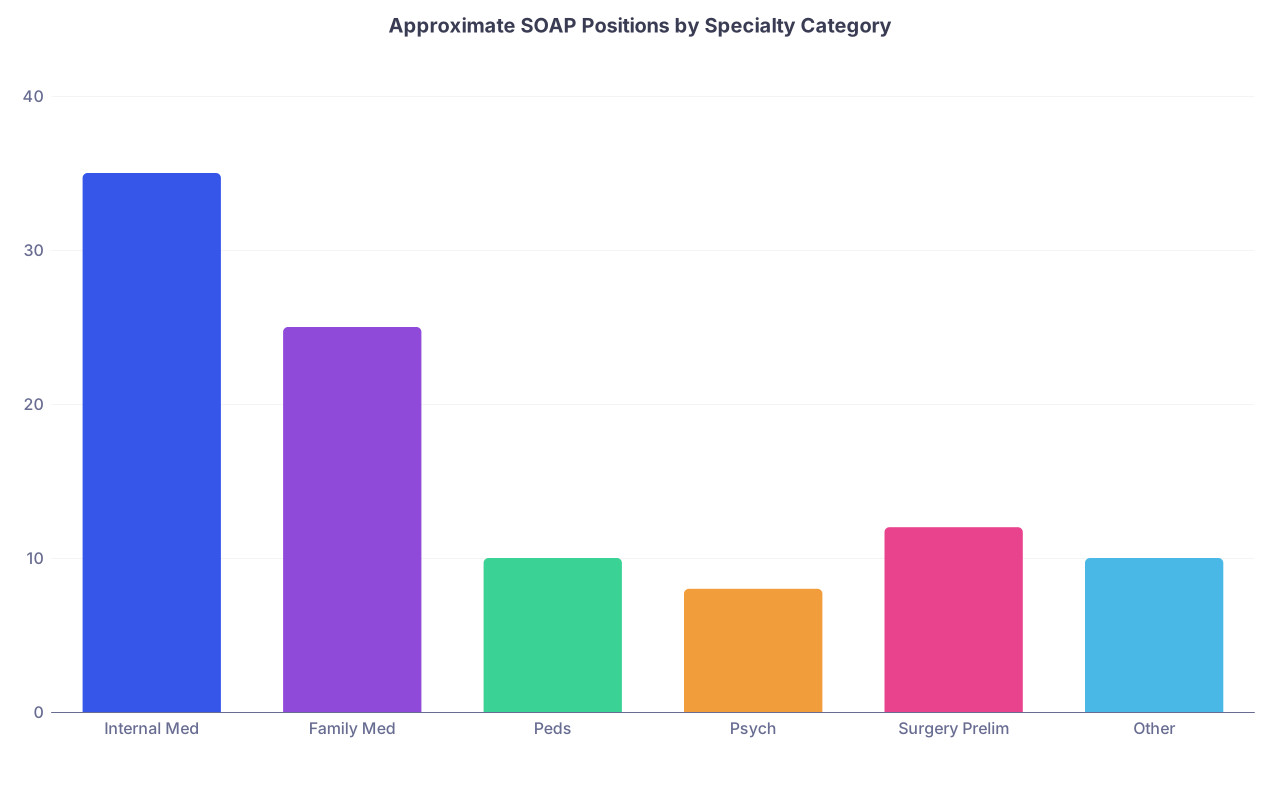
| Category | Value |
|---|---|
| Internal Med | 35 |
| Family Med | 25 |
| Peds | 10 |
| Psych | 8 |
| Surgery Prelim | 12 |
| Other | 10 |
The consistent pattern:
- Core specialties dominate SOAP: internal medicine, family med, pediatrics, psych.
- Most are categorical. Yes, there are prelim surgery and medicine blocks, but categorical IM/FM make up a fat chunk of SOAP.
You may not find a categorical derm spot magically open on Wednesday morning. But you absolutely will find fully legitimate, career‑building IM/FM/Psych/Peds categorical positions at places that send people to cardiology, GI, heme/onc, child psych, hospitalist jobs, etc.
Where the “Low‑Tier” SOAP Myth Comes From
The myth isn’t random. It grows out of a few half‑truths that get repeated so often they harden into “facts.”
1. SOAP = Places Nobody Ranked
You’ll hear: “If a program’s in SOAP, it means no one wanted it.”
Technically? No. It means the program didn’t fill all its positions based on its rank list.
Very common scenario I’ve watched up close:
- Program interviews 100 people for 12 spots.
- They rank 70.
- They get surprisingly popular one year. Their top 50 all match elsewhere because they overshot.
- Their bottom 20 rankers don’t rank them at all (swinging for “higher tier”).
- They fill 9/12. Three positions roll into SOAP, despite having dozens of applicants who would have trained there happily.
Those 3 SOAP spots are not “unwanted” in some global sense. They’re victims of ranking math and applicant overconfidence.
2. SOAP Has Lower Minimums (So It Must Be Lower Tier)
Programs in SOAP often loosen their filters. You’re not hallucinating that.
- That IM program that initially cut off Step 2 at 225 might accept 215 in SOAP.
- That FM program that preferred “top 50% of class” now looks at bottom half if everything else looks good.
But that’s not magically turning them into a different tier of program. It just means they’re being pragmatic under time pressure. They’d rather have a slightly lower‑scoring but hardworking resident than run with a chronic vacancy.
You benefit from that pragmatism if you’re the 215‑score applicant who got frozen out of traditional interviews.
3. Survivorship Bias From Your Social Circle
People broadcasting SOS stories on social media are not a representative sample. Your friend who SOAPed into a dysfunctional program will absolutely warn you. The four people who SOAPed into a solid community IM program and are now happy hospitalists don’t monologue about it on Reddit.
I can think of a specific example:
- University‑affiliated IM program, Midwest, good fellowship track record.
- Went into SOAP one year for 2 spots because they over‑ranked IMGs who matched into East Coast programs.
- Both SOAP residents from that year matched GI and cards fellowship respectively. Program never saw themselves as “low tier”; neither did the fellowship PDs who read their letters.
Those stories are real. They just don’t get airtime.
SOAP vs Main Match: Program Quality Is Not Binary
Let’s put some structure on this instead of hand‑waving.
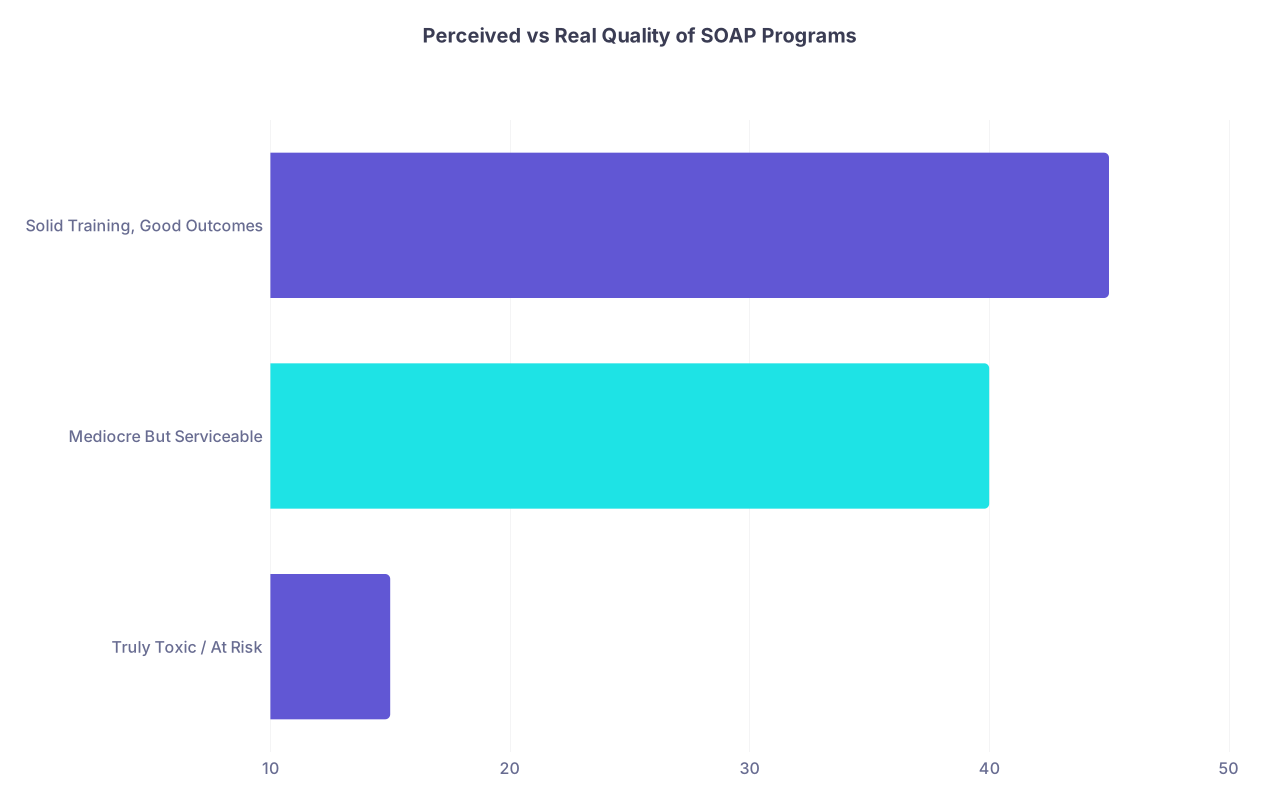
| Category | Value |
|---|---|
| Truly Toxic / At Risk | 15 |
| Mediocre But Serviceable | 40 |
| Solid Training, Good Outcomes | 45 |
My rough breakdown from years of watching this:
- Around 10–15% of SOAP options are genuinely concerning. Chronic unfilled positions year after year, serious ACGME issues, clearly unhappy residents, high attrition.
- Maybe 40% are middle of the road. Service‑heavy, maybe not glamorous, but you graduate board‑eligible and employable.
- Another ~40–50% are honestly fine or better. Solid teaching, decent fellowships, great jobs afterward. They had a bad Match year, a geographic disadvantage, or an expansion.
That last group is completely invisible if you buy into “SOAP = trash only.”
Are they all Mass General and UCSF? Of course not. But almost none of the programs in the country are. The more you cling to a fantasy tier structure, the more you misjudge real opportunities.
How to Tell a Solid SOAP Program from a Dumpster Fire
This is the part that matters if you’re in SOAP with limited interviews. You don’t have weeks to overanalyze. You have hours.
You cannot use prestige as a shortcut here. You need better heuristics.
Start with this: ignore the label “community” vs “university” for the first pass. Instead, ask:
- Do residents graduate on time and pass boards?
- Do any get fellowships? In what fields?
- What are call schedules and workload actually like?
- Do residents sound tired but proud? Or bitter and trapped?
You can’t do a full ethnography in 10 minutes, but you can do a quick triage:
Red flags worth taking seriously
- Multiple residents telling you privately: “People keep quitting.”
- Recent ACGME probation or major citations that are glossed over by leadership.
- Wildly unbalanced service:education ratio with no plan to fix it.
- Chronic, multi‑year unfilled positions in the same program, not just one weird year.
- Prelim IM/Surgery spots selling themselves as “basically categorical” with no track record of people converting to categorical spots or landing guaranteed PGY‑2s.
Green flags in SOAP that people overlook
- Transparent PD who can clearly state where recent grads went (jobs and fellowships).
- Mid‑level community programs whose former residents are now cardiologists, GI docs, intensivists… not just primary care in nowhereville (unless that’s what you want).
- Programs that filled in previous years but expanded class size this year.
- Residents who say some version of: “It’s busy, but we’re treated fairly, and I’d choose it again.”
In other words: judge like you would at any other time. Just faster and without the prestige goggles.
SOAP is Bad for Ego, Not Necessarily for Your Career
This is the real friction. SOAP feels like public failure. The system literally sends you: “You did not match to any position.” Then you’re in a compressed bidding war for the leftovers. It stings.
But the emotional hit is not a clean proxy for program quality or your long‑term outcome.
Some patterns I’ve actually seen:
- Applicant A: 240 Step 2, mid‑tier US MD, 4 IM interviews, over‑ranked “top tier” programs, under‑ranked safer ones. Didn’t match. SOAPed into a community IM in the South. Now a cards fellow at a well‑known university.
- Applicant B: 215 Step 2, US DO, struggled to get interviews. SOAPed into FM at a “no‑one‑has‑heard‑of‑it” hospital. Current job: employed by a big system, making more than her peers in academia, zero educational debt left, happy.
- Applicant C: 248 Step 2, IMG, matched EM in a well‑known academic center via main Match. Burned out, switched specialties, lost years, ended up in a different program that—if you looked only at name—you’d call “lower tier.” It’s where he thrived.
The question is not “Is this SOAP program as shiny as my #1 rank list dream?” It’s: “Does this program give me the training and credential I need to become the doctor I want to be?”
For many, the SOAP answer is yes.
The Strategic Truth: SOAP Is Often the Rational Move
With limited interviews, many applicants cling to the hope of a miraculous scramble straight into next year’s cycle instead of taking a SOAP offer they feel is “beneath” them.
Sometimes taking a year to reapply is smart. But plenty of people overestimate their “improvement potential” and underestimate the real risks.
Here’s a sober way to think about it:
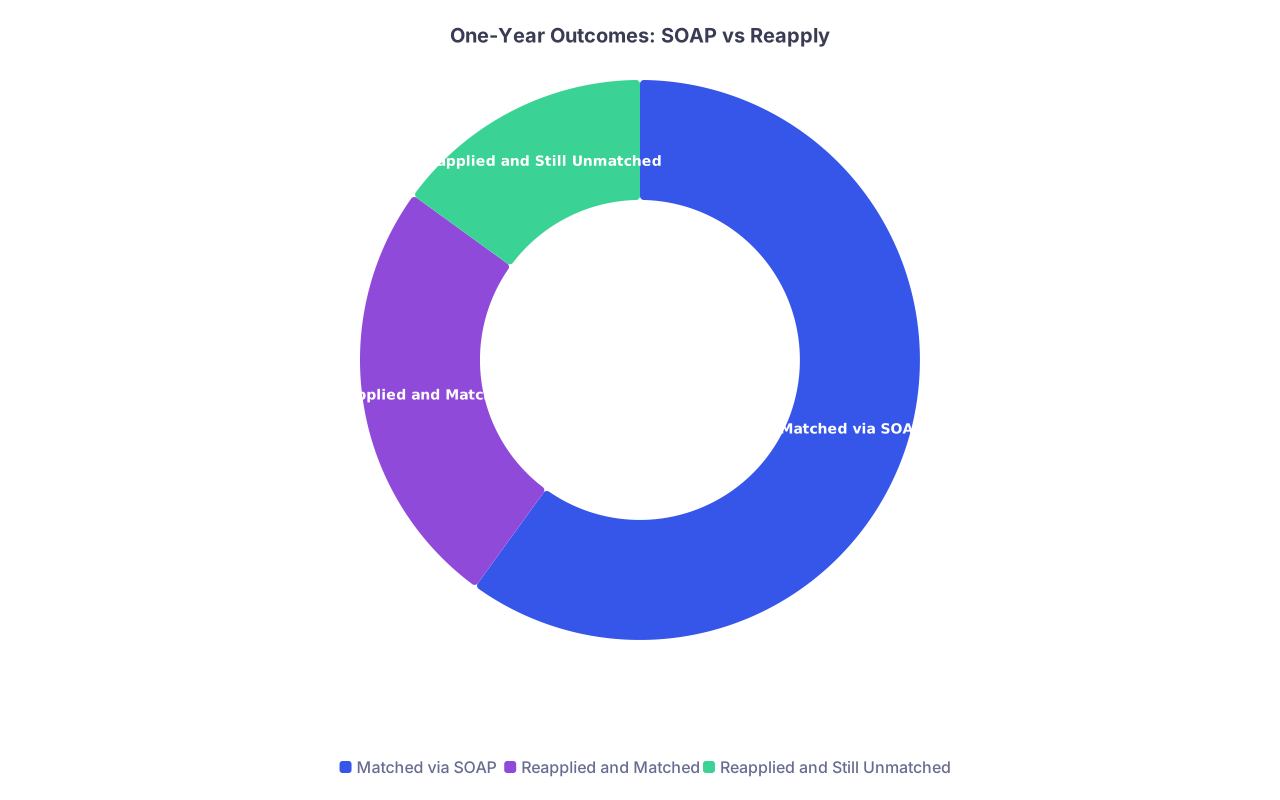
| Category | Value |
|---|---|
| Matched via SOAP | 60 |
| Reapplied and Matched | 25 |
| Reapplied and Still Unmatched | 15 |
If you have:
- No US MD/DO degree (IMG),
- Borderline scores,
- Limited or mediocre clinical evals,
- Or red flags (fails, long gaps),
walking away from a decent SOAP position to gamble on a “better” program next year is usually magical thinking. Not strategy.
On the other hand, if:
- You had very few interviews because you applied late,
- Your scores and application are objectively strong,
- You have a clear plan to fix obvious weaknesses (letters, USCE, networking, Step 3, research),
then skipping truly bad SOAP options might be reasonable. But that’s not “SOAP is low tier.” That’s “some SOAP options are actually bad,” which is common sense.
How to Use This If You’re Heading Into SOAP With Few Interviews
If you’re in the crosshairs of this category—limited interviews, high anxiety—here’s the mindset reboot you actually need:
First, stop asking: “Is SOAP low tier?” Start asking: “Which SOAP programs are acceptable bets for my career trajectory?”
Second, don’t anchor on your original rank list. SOAP is a different game:
- You’re trading optionality for certainty.
- You’re optimizing for “good enough + guaranteed training” rather than “perfect prestige + high risk of zero.”
Third, decide in advance where your line is.
Literally draw it out for yourself the night before:
- Above this line: programs I would accept, even if they bruise my ego.
- Below this line: situations so bad I’d rather regroup and reapply.
That line will be different for every person. But draw it based on training quality, not name recognition.
And recognize this uncomfortable truth: A lot of what people call “low tier” is actually above that line if you strip the ego out.
Two Things to Remember
SOAP is not a parallel universe of “fake” residencies; it’s mostly the same normal, accredited programs you chased all season, just on a bad year or in a less popular zip code.
Your job in SOAP isn’t to avoid “low tier” at all costs; it’s to quickly separate truly dangerous programs from the many unglamorous but solid ones that will get you trained, boarded, and employed.