
It’s Monday of Match Week. 10:59 a.m. Eastern. You’re refreshing your email over and over, palms sweaty, trying to convince yourself it’ll be fine.
11:01 a.m. — “We are sorry, you did not match to any position.”
Your brain goes white‑noise for a minute. Then you remember: SOAP. You think, “Okay, at least I have that. I’ll jump in at noon and start applying.”
If you’re like a lot of people I’ve watched go through this, you are about three bad assumptions away from completely sabotaging your SOAP chances before they even start.
Let me be direct:
Misreading or half‑understanding SOAP eligibility rules is one of the fastest ways to turn an already stressful week into a total disaster.
You don’t get a do‑over. You get hours, not weeks, to fix mistakes.
This is the article I wish more people read before Match Week.
1. The Core SOAP Eligibility Rules People Get Wrong
First, the basics people routinely screw up or only “sort of” understand.
Mistake #1: Assuming “didn’t match” = “automatically SOAP eligible”
No. Not everyone who doesn’t match is eligible for SOAP.
To participate in SOAP, by NRMP rules you generally must:
- Be registered for the Main Residency Match with NRMP
- Have certified a rank order list (or have one certified on your behalf)
- Be unmatched or partially matched at 11:00 a.m. ET on Monday of Match Week
- Be eligible for appointment in that year (graduation timing, exams, etc.)
If you withdrew from the Match, or never submitted a rank list, or were barred/sanctioned by NRMP — you’re not in SOAP, no matter how badly you want it.
Common painful scenario I’ve seen:
Student decides in February they don’t like their options. They withdraw their rank list thinking they’ll just “try again next year or scramble this year if needed.”
Match Week comes. They don’t match (obviously). They try to “enter SOAP.” They can’t. Because they are not in the Match anymore.
Do not make that move lightly. Pulling your rank list kills SOAP eligibility.
Mistake #2: Not checking your official SOAP eligibility status early
You don’t find out if you matched until Monday.
But your SOAP eligibility status is visible earlier in your NRMP account.
NRMP will mark you as:
- Eligible for SOAP
- Not eligible for SOAP
I’ve seen students assume, “I registered and applied, so I’m fine,” and then realize on Monday they’re flagged “Not eligible” because:
- They never paid full fees or completed registration
- Their med school never verified their status
- There was an NRMP policy violation issue they ignored
Do not wait until Match Monday to see what your status actually says.
What to do now (before Match Week):
- Log into NRMP → check “SOAP Eligibility” status
- If anything seems off, go straight to:
- Your Dean’s office (or IMG office/ECFMG)
- NRMP support (and document the communication)
Waiting until Match Monday to figure this out is how people lose entire cycles.
Mistake #3: Misunderstanding “partially matched”
You can be:
- Fully matched (all positions filled)
- Partially matched (e.g., advanced position but no prelim, or vice versa)
- Unmatched
Partially matched = still SOAP eligible for specific types of positions.
But here’s where people get it wrong:
- If you matched to an advanced PGY‑2 position, you can generally SOAP into PGY‑1 prelim or transitional positions only.
- You can’t go try to “upgrade” into a categorical position in the same specialty through SOAP. Your advanced spot is locked.
I’ve watched people waste SOAP time chasing things they absolutely cannot have by rule. They think, “Well, I matched an advanced anesthesia, but maybe I can SOAP into a categorical IM as backup.” No. That’s not how this works.
If you’re partially matched, you need to know exactly what you’re allowed to apply for. Your school GME or NRMP FAQ can clarify. Don’t rely on roommate gossip.
2. The Exam Status Traps: Step/COMLEX and Graduation Timing
This is the other huge landmine field.
Mistake #4: Assuming “I’ll probably pass” is good enough
For SOAP and for most programs, your exam status matters more than you think.
Common wrong assumptions:
- “My Step 2 CK score is pending, but programs will trust I passed.”
- “I failed COMLEX Level 2 once but I’m retaking next month, I can still SOAP now.”
- “They’ll be flexible; it’s Match Week.”
No. They will not.
Most programs have hard filters:
- Must have passed Step 1 (or COMLEX 1)
- Many require a passed Step 2 CK / COMLEX 2 by the time of SOAP offers or by July 1 start date
If your pending or failed exam means you may not be eligible for licensure or start date, some programs simply cannot offer you a spot, even if they like you.
| Situation | Risk to SOAP Eligibility |
|---|---|
| Step 2 CK score pending | Many programs auto-screen you out |
| Recent Step 2 failure | Offer blocked until pass posted |
| COMLEX 2 retake after July 1 | Contract/credentialing problems |
| No CS or OET equivalent | Visa/licensure complications |
Mistake #5: Not aligning graduation date with SOAP rules
If you haven’t officially graduated yet, your school must be able to:
- Certify you’ll meet all graduation requirements
- Confirm you’ll be done in time for a July 1 start
Common screw‑up:
Student is behind on a requirement (e.g., one remaining clerkship, missing documentation, incomplete remediation). They assume the school can “just sign off later.” Administration says no — they can’t truthfully verify you’re ready, so programs back away.
If there’s any doubt about:
- Delayed graduation
- Extensions
- Leaves of absence
- Remediation courses
Get explicit answers from your school before Match Week. Don’t assume “they’ll help me because SOAP is urgent.” Bureaucracy doesn’t speed up just because you’re panicking.
3. Application Limits and Communication Rules: Where People Accidentally Break Policy
This is where “I didn’t read the fine print” becomes a career‑threatening issue.
Mistake #6: Ignoring the 45‑application cap
In SOAP, you get a limited number of applications per round (commonly 45). Not 100. Not infinite.
And no, you cannot get more because “your situation is special.”
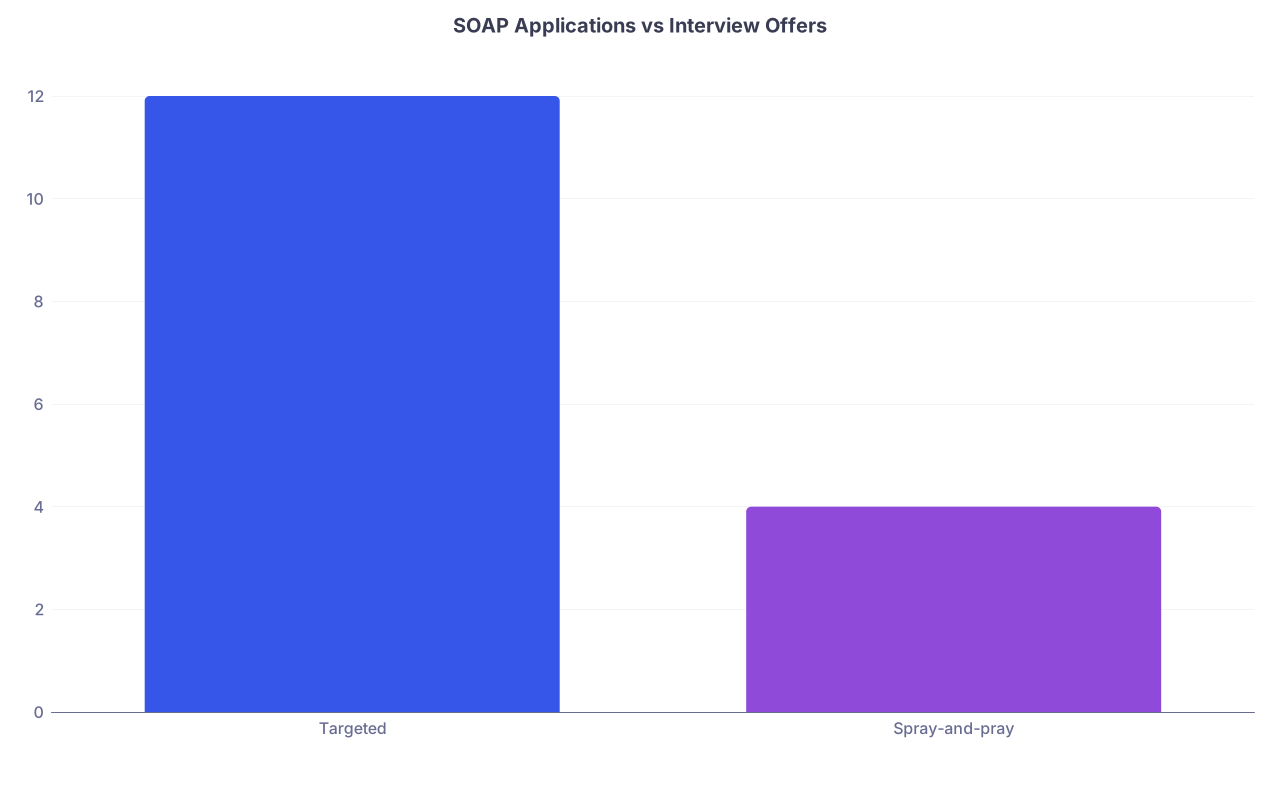
| Category | Value |
|---|---|
| Targeted | 12 |
| Spray-and-pray | 4 |
I’ve seen two flavors of self‑sabotage:
Spray‑and‑pray:
- They apply to 45 random programs with zero attention to fit, visa status, or requirements.
- Half of those programs don’t sponsor their visa.
- A chunk are insanely competitive or specifically say “no IMGs / no prior fails.”
- Result: No interviews. No second round options because the cap is blown.
Overly picky:
- They apply to only their “dream” programs in SOAP.
- Ignore community, rural, or less prestigious options that actually need people.
- Wind up with nothing because SOAP is not about prestige; it’s about employment.
Your goal in SOAP is not “best possible dream job.” Your goal is “solid training and a paycheck in July instead of being unemployed.”
You should be ruthlessly realistic about where you’re actually competitive.
Mistake #7: Breaking the no‑contact rules
SOAP has strict communication rules:
- You cannot reach out to unfilled programs unless they contact you first
- Programs can contact you after receiving your application
- Your school officials (dean, advisors) can reach out on your behalf in some situations
I’ve seen students:
- Cold email PDs on Monday/Tuesday saying “I saw you’re unfilled; I’m interested”
- DM programs or residents on social media to “just introduce myself”
- Ask family/friends at hospitals to call the PD directly
This can get programs in trouble and you blacklisted. Some PDs are already looking for excuses to cut their applicant pool. Don’t hand them a clean violation from you.
If you’re tempted to write, call, DM, or “just drop by” — stop. Ask your dean’s office what is allowed. Let them be the bad cop if needed.
4. Program Requirements You Didn’t Read (But Should Have)
SOAP is frantic. That does not give you permission to stop reading.
Mistake #8: Ignoring specialty‑specific requirements
Examples I’ve seen blow up applications:
- SOAPing into Psychiatry with no psych letters and zero psych exposure
- Applying to General Surgery when the program’s SOAP posting says “prior US clinical experience in surgery required”
- Applying to Pathology with a personal statement talking only about Pediatrics
During SOAP, programs get flooded. They look for fast reasons to say no.
If the posting lists any of these:
- Minimum Step/COMLEX scores
- “US experience required”
- “Graduation within X years”
- No visa sponsorship
…and you ignore them, you’re voluntarily throwing away applications.
Mistake #9: Overlooking visa details (for IMGs)
For IMGs, visas during SOAP are brutal if you’re not paying attention.
Common bad assumptions:
- “They sponsored J‑1 three years ago, so they still do.”
- “If I’m strong, they’ll figure out the visa later.”
- “Any program can do H‑1B if they want.”
Reality:
- Many programs state clearly: “No visa sponsorship” or “J‑1 only”
- Some institutions are locked into specific visa types due to GME or hospital policies
- HR and legal don’t have time in SOAP week to do anything “creative”
If you need sponsorship and you apply to programs that say “US citizen/green card only,” you’re burning limited applications on places that legally can’t touch you.
5. Timing & Process: How People Lose Hours They Can’t Afford
SOAP runs on a tight, non‑negotiable schedule. People still try to negotiate with time. Time always wins.
Mistake #10: Not being ready before Monday 11:00 a.m.
This is the student I see every year:
- They don’t pre‑write SOAP‑specific personal statements
- They never update their ERAS for alternative specialties
- They haven’t made a plan with their dean’s office
- They start from zero at 11:02 a.m. on Monday
SOAP schedule gives you:
- 11:00 a.m. Monday — you learn match status
- 12:00 p.m. Monday — SOAP list of unfilled programs released
- Then a few hours to submit your first batch of applications
If you’re still brainstorming “why family medicine?” at 1 p.m., someone else is already in that interview slot.
You should have prebuilt materials for:
- Your primary specialty
- At least one realistic backup specialty (FM, IM, prelim, etc.)
At minimum:
- Alternate personal statements
- Customized CV bullets emphasizing that specialty
- A list of programs/types you’d target in SOAP
Mistake #11: Misunderstanding the offer rounds
SOAP has multiple rounds of offers. Basic pattern:
- You apply
- Programs review and build preference lists
- Offers go out in timed rounds
- You accept/reject within a short window
- Unaccepted spots roll into later rounds
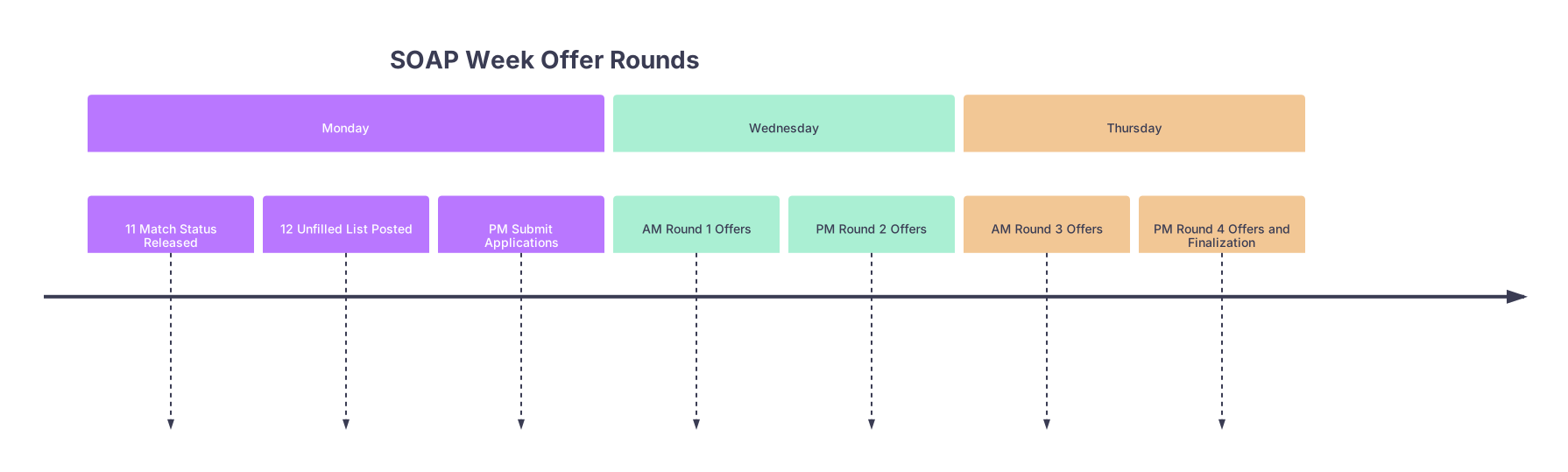
Common mental errors:
- Thinking “no early offer = I’m done” and emotionally checking out
- Rejecting an offer because they’re “waiting for something better” in a later round
- Misreading deadlines and missing the accept window by minutes
If you get an offer that is:
- In a specialty you can tolerate (even if not ideal)
- In a location that’s not dangerous or impossible for you
- At a program that’s accredited and reasonably stable
You strongly should consider accepting. Rolling the dice on later rounds when you have limited interviews is how people wind up scrambling for non‑ACGME jobs in May.
6. Mental Framing Mistakes: Pride, Denial, and Magical Thinking
This part isn’t written into any NRMP document, but it wrecks people every year.
Mistake #12: Treating SOAP as a “lesser” path and hesitating
I’ve heard this one, verbatim:
“I’ll only SOAP if it’s something as good as what I wanted. Otherwise I’d rather wait and reapply.”
Here’s the reality:
- A solid, less‑prestigious categorical IM or FM spot this year > No spot and reapplicant stigma next year
- Reapplying is possible, but it’s harder, more expensive, and emotionally brutal
- Many PDs quietly prefer fresh grads over reapplicants
Your ego might hate the idea of SOAP. Your career will not.
You can always improve your situation from inside a residency: fellowships, laterals, research, leadership roles. That’s much easier than improving it from your parents’ couch.
Mistake #13: Refusing to pivot on specialty when needed
If you have:
- Limited interviews
- Marginal scores
- No strong home program support
And you’re unmatched in something like Ortho, Derm, ENT, Rad Onc, Neurosurgery — the chance that SOAP is going to fix that by giving you a categorical PGY‑1 in that exact field is essentially zero.
What I’ve seen work:
- Pivoting to IM, FM, Psych, Path, or prelim spots through SOAP
- Proving yourself, then exploring later pathways (fellowships, transfers)
What I’ve seen crash and burn:
- Doubling down on the original hyper‑competitive specialty during SOAP
- Ignoring programs in more accessible fields
- Ending the week with nothing because reality never matched the fantasy
Mistake #14: Doing this alone
SOAP is not a solo sport. The students who implode are often the ones trying to:
- Interpret NRMP rules alone at 1 a.m.
- Make specialty decisions without any honest outside opinion
- Hide their situation from classmates and faculty out of shame
Your dean’s office, advisors, and sometimes even PDs from your own school can:
- Confirm your eligibility
- Help you prioritize specialties
- Make calls (the kind you are not allowed to make)
- Flag programs that are good fits or major red flags
I’ve seen more than one applicant rescued because a dean picked up the phone and said, “You should look at this student.” That’s not guaranteed. But it’s not possible if you shut everyone out.
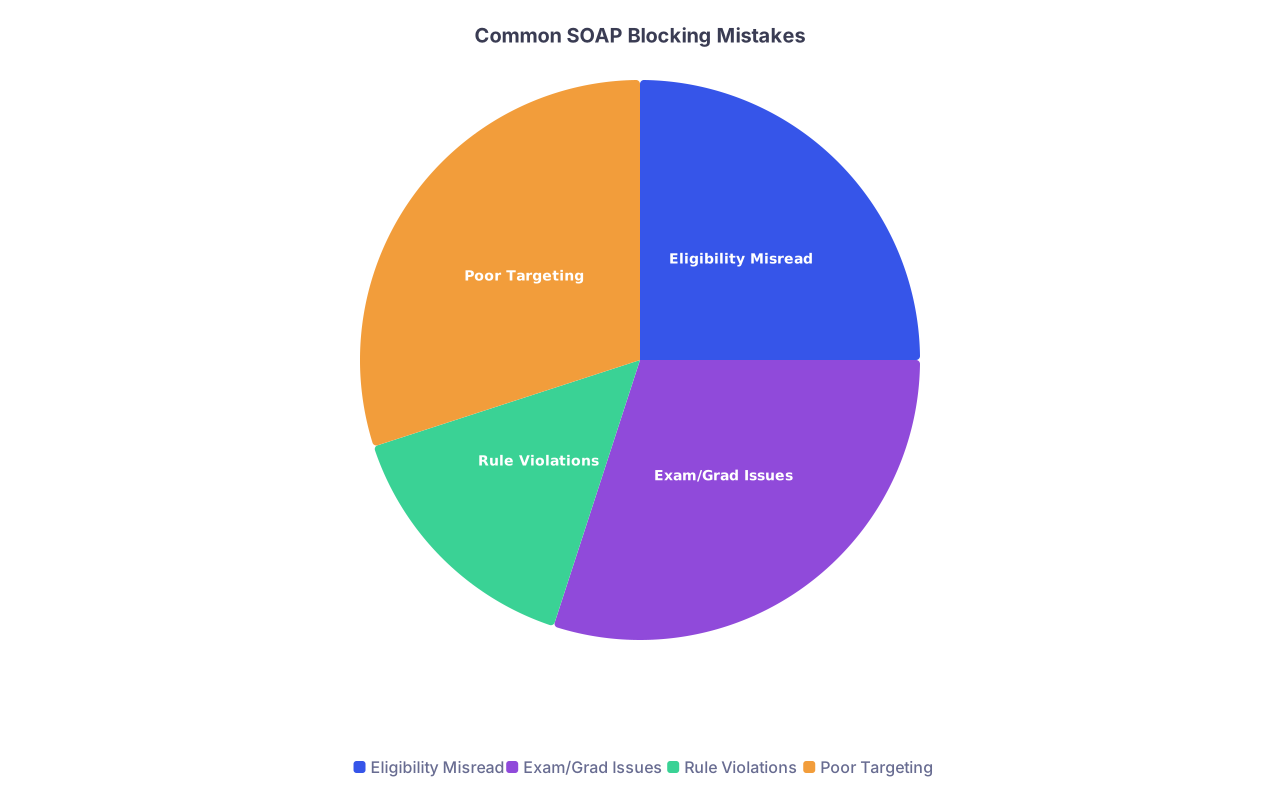
| Category | Value |
|---|---|
| Eligibility Misread | 25 |
| Exam/Grad Issues | 30 |
| Rule Violations | 15 |
| Poor Targeting | 30 |

Quick Reality Check: Red Flags You Need to Fix Before Match Week
If any of this applies to you, you need to act now, not Monday at 11:01 a.m.:
- Your NRMP account does not clearly say “SOAP eligible”
- You considered (or already did) withdraw your rank list
- You have a recent exam failure or pending score
- Your graduation timeline is shaky or conditional
- You’re an IMG who hasn’t mapped programs by visa type
- You have zero backup personal statements ready
- You’re expecting to cold‑email programs during SOAP
Fix these now, or at least know exactly what your constraints are.

FAQ (4 Questions)
1. How do I confirm if I’m actually SOAP eligible before Match Week?
Log into your NRMP account and look for your Match/ SOAP status section. It should explicitly say whether you are eligible for SOAP. If it doesn’t, or if anything is confusing, contact NRMP support and your dean’s office immediately. Do not wait for Monday’s “you did not match” notification to sort this out.
2. Can I still do SOAP if I failed Step 2 or COMLEX 2 recently?
You might technically be SOAP eligible through NRMP, but many programs won’t rank or offer you a spot with an unresolved failure or pending retake, especially if that retake will push your start date at risk. Talk with your dean or advisor now about whether to target prelim spots, less competitive specialties, or whether waiting to reapply with a fresh pass makes more sense.
3. Am I allowed to email or call programs during SOAP to express interest?
You personally are not allowed to initiate contact with unfilled programs during SOAP. Programs can contact you after receiving your application. Your dean or designated school officials may be able to reach out under specific conditions. If you’re unsure, assume “no” and ask your dean’s office to clarify. Do not freelance this; NRMP violations follow you.
4. If I get a SOAP offer from a program I’m not excited about, should I decline and wait for something better?
You can, but you need to be brutally honest about your competitiveness and risk tolerance. With limited interviews and an already unmatched status, declining a solid, accredited program in hopes of a dream spot later in the week often ends with no offer at all. In SOAP, a good‑enough training spot now usually beats a theoretical better spot that may never appear.
Key takeaways:
- Don’t assume you’re SOAP eligible — verify it in NRMP and with your school before Match Week.
- Respect the rules: application caps, no‑contact policies, exam and graduation requirements are not suggestions.
- Have a realistic, backup‑friendly SOAP plan ready before Monday, or you’ll spend the crucial hours of Match Week fixing mistakes instead of accepting offers.