

Starting med school broke is not a personal failure. It is the default.
The mistake is pretending you can “wing it” and hoping the money part magically works out. It will not. You’re dealing with tuition that looks like a mortgage, housing that feels like rent in a tech city, and a schedule that destroys the idea of a normal side job.
Let’s treat this like what it is: a resource problem with constraints. You can’t conjure money out of nowhere, but you can control three things:
- How fast you burn money
- How much invisible financial stress stalks you every day
- Whether you set yourself up for four years of chaos or four years of controlled damage
I’ll walk you through this as if we’re sitting at your kitchen table with your award letter, your rent estimate, and your bank app open. Because that’s basically what you need right now.
1. First, Get Real: Know Your Numbers in Brutal Detail
If you start med school with limited savings and no plan, your brain will run constant background anxiety: Am I okay? Am I going to run out? You kill that by getting precise.
Step 1: Map the academic year cash flow
Pull out your financial aid award and a calendar.
You want one clear view of: when money arrives vs when big bills hit.

| Step | Description |
|---|---|
| Step 1 | Loan Disbursement Day |
| Step 2 | Tuition & Fees Paid |
| Step 3 | Remaining Refund to You |
| Step 4 | Monthly Rent & Utilities |
| Step 5 | Groceries & Essentials |
| Step 6 | Books, Equipment, Exam Fees |
| Step 7 | Next Disbursement |
Do this:
- Take your total refund (what you get back after tuition/fees are paid each semester).
- Divide it by the number of months it needs to last until the next disbursement.
- That’s your maximum monthly spending. Not vibe-based. Math-based.
If it’s, say, $8,000 for 4.5 months, your ceiling is ~$1,777/month. If your housing alone is $1,400, you already know you’re in trouble. Good. Better to know now and adjust.
Step 2: Separate “school costs” from “life costs”
You’re not a typical grad student buying random textbooks. Med school has specific chunks:
| Category | Low End (USD) | High End (USD) |
|---|---|---|
| Required equipment (steth, tools) | 300 | 800 |
| Textbooks / resources | 200 | 800 |
| Exam fees (NBME, shelf prep, etc.) | 100 | 400 |
| Health insurance (if required) | 1,500 | 4,000 |
| Laptop/tech replacement cushion | 0 | 1,500 |
You cannot eat your stethoscope, but you also cannot practice lung exams on air. The trick is buying just enough and not getting sucked into over-purchasing because “everyone in my group chat bought X.”
Circle what is truly required by your school. Everything else is negotiable for now.
Step 3: Decide your non-negotiables
With limited savings, you do not get to treat everything as a must-have. Pick 2–3 non-negotiables:
- Maybe it’s: a room that feels safe, decent internet, and a cheap gym.
- Maybe it’s: occasional therapy, decent coffee at home, and noise-canceling headphones.
But be honest: you cannot have a luxury studio, weekly DoorDash, and $200/month in subscriptions and still complain you’re broke. That’s not poverty. That’s denial.
2. Build a Med-Student-Realistic Budget (Not a Fantasy One)
Normal budgeting apps assume a normal job. You won’t have that. Your life runs on disbursement cycles and exam blocks.
Structure your budget around blocks, not months
First-year is usually broken into exam blocks (3–8 weeks). Your energy, your stress, your spending—everything follows that.
Here’s the move: create two modes.
- Baseline weeks (not right before exams)
- Crunch weeks (2 weeks pre-exam)
During crunch weeks, you will spend more on convenience: prepared food, coffee, parking, maybe Uber. Plan for it on purpose instead of being shocked.
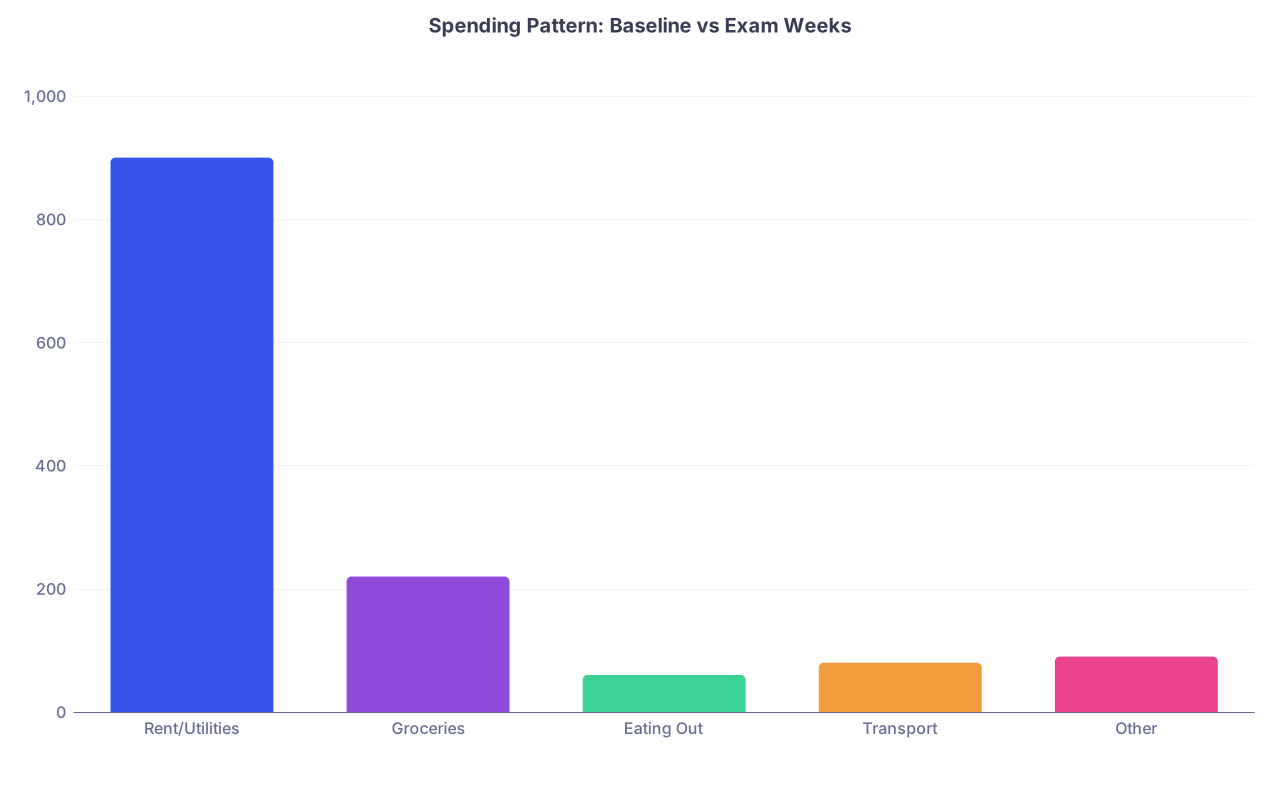
| Category | Value |
|---|---|
| Rent/Utilities | 900 |
| Groceries | 220 |
| Eating Out | 60 |
| Transport | 80 |
| Other | 90 |
Now imagine during crunch weeks that “Eating Out” bar doubles or triples. That doesn’t mean you failed. It means you didn’t plan. So do this:
- Define a monthly cap for “exam week splurges” (e.g., $80–$120/month).
- When you’re not in exam mode, you live under that cap, knowing you’ll spike near exams.
Core budget categories that actually matter for M1
Here’s a reasonable skeleton for a “limited savings” student (per month):
- Housing + utilities
- Food (groceries + eating out + coffee in one combined number)
- Transportation (gas, bus, metro, Uber)
- School-related (resources, printing, occasional fees)
- Health/mental health (copays, meds, therapy)
- “Sanity” money (social life, hobbies, small treats)
If there’s no line for “sanity,” you’ll overspend on it subconsciously. Budgeting for zero fun is how you guarantee overspending and shame.
Aim for one simple rule: every dollar has a job before it leaves your account. If you’re too tired to maintain a fancy spreadsheet, use a simple envelope approach:
- Create separate checking account or digital “buckets” for:
- Rent + utilities
- Essentials (food, transport)
- Discretionary (everything else)
Once a month, split your refund into those buckets. When the discretionary bucket hits zero, you’re done. No mental math needed.
3. Housing: The Decision That Makes or Breaks Your Year
Housing is where most first-years blow their budget.
You have three main levers: location, roommates, and length of lease.
If you’re starting with almost no savings
You should aggressively favor:
- Roommates (2–4 total people in a place is usually the sweet spot)
- Walking distance or quick bus to campus (saves parking, gas, and time)
- Shorter initial lease if you’re moving blind (6–9 months, then reassess)

The “I deserve my own studio” narrative is strong. Sure. You also deserve 8 hours of sleep, a functional pancreas, and a world without prior authorizations. Still not happening.
If your refund barely covers tuition + rent, you cannot justify living alone. Not in first year.
Concrete housing tactics
- Ask upperclassmen where people actually live on your budget. Not the glossy brochure.
- Join your school’s admitted students group and explicitly post your range:
“Starting M1 with limited savings, looking for rent ≤ $700 including utilities, prefer to be within X minutes of campus.” - Research bus routes, walking paths, and parking fees before choosing “cheaper but far.” That 30-minute drive each way is a hidden cost.
And do not forget move-in costs: deposit, first month’s rent, furniture. If your savings are thin, that first month will feel brutal. Plan to survive that spike on purpose.
4. Food, Coffee, and the “I Don’t Have Time to Cook” Lie
You have time to cook. You may not have the time to cook daily. So you batch.
Minimum viable meal system
You don’t need to become a meal-prep influencer. You need three things:
- One cheap breakfast you can eat 5 days a week
- Two or three easy lunches/dinners you can rotate
- A snack strategy that keeps you out of vending machines
Example setup:
- Breakfast: overnight oats + peanut butter + banana. Costs ~ $0.80–$1.20 per meal.
- Lunch/dinner options:
- Big batch chili or lentil stew
- Sheet pan chicken + potatoes + frozen veggies
- Pasta + jarred sauce + frozen spinach + cheese
- Snacks: big bag of nuts, string cheese, carrots + hummus, apples.
Sunday or whatever your lightest day is: 90 minutes. Two sheet pans. One pot. You’re done.
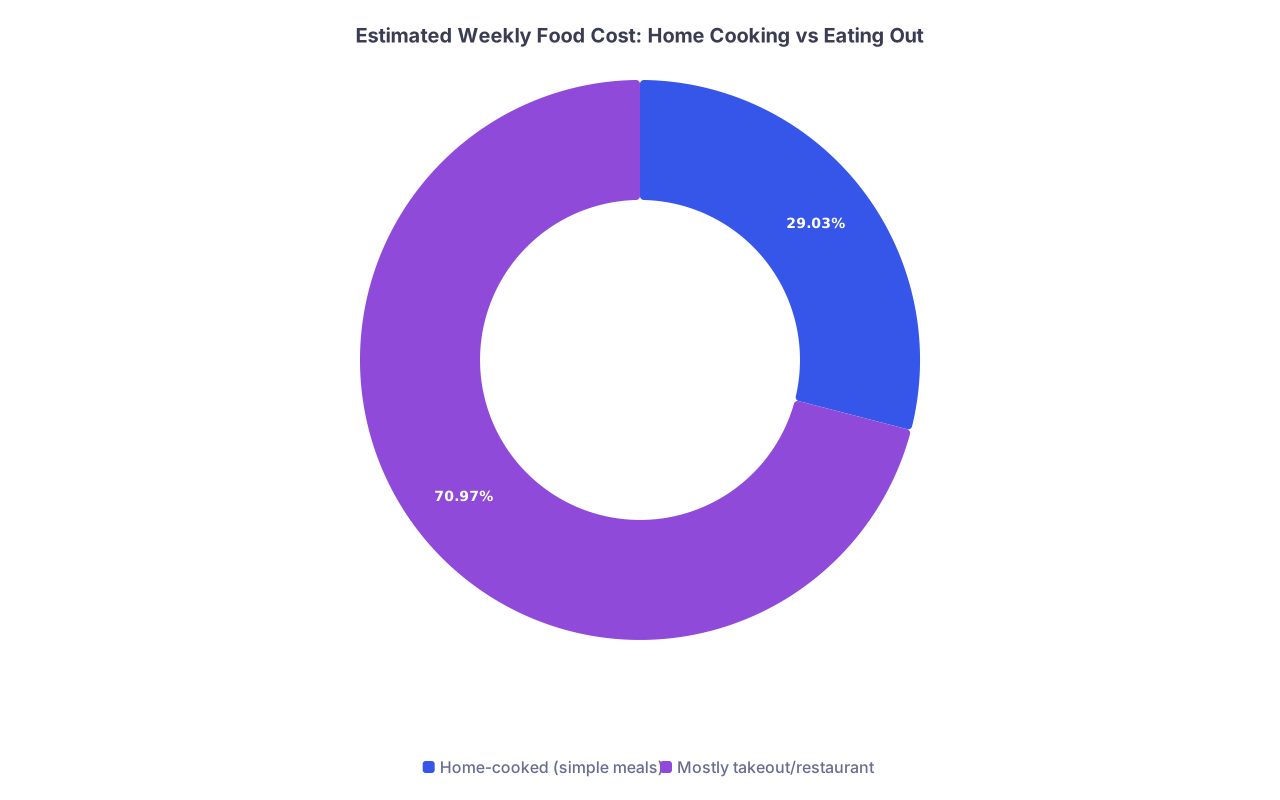
| Category | Value |
|---|---|
| Home-cooked (simple meals) | 45 |
| Mostly takeout/restaurant | 110 |
Coffee reality check
The “I need Starbucks to survive” line is expensive. Run the math:
- $4 drink × 4 days/week × 4 weeks = $64/month.
- That’s $768/year. After interest on loans, it’s more later.
If money is tight, buy a decent coffee maker or French press and make it at home. Let Starbucks be an exam-week treat, not the default.
5. Required Gear, Textbooks, and Not Getting Scammed by FOMO
First-years burn hundreds of dollars on stuff they touch twice.
Equipment
What you actually need early on:
- Stethoscope (mid-range is fine, e.g., Classic III level, not cardiology luxury)
- Basic physical exam kit if required (tuning fork, reflex hammer, penlight)
- Comfortable shoes
Here’s the target: used or discounted whenever possible.
- Ask M2/M3 students if anyone is selling their gear.
- Skip engraving and “special edition” nonsense. It doesn’t help you hear heart sounds better.
Textbooks and resources
Hard truth: most “required” textbooks are used as reference a handful of times. Your main lifelines will likely be:
- Lectures + slides
- Anki decks
- Question banks
- A small number of concise review books
You should not buy every recommended book on day one. Instead:
- Wait through the first 2–3 weeks.
- Ask people who just took that block: “What did you actually use?”
- Buy used/older editions or share with a classmate.

6. Side Income in Med School: What’s Realistic, What’s Dangerous
If you’re starting with limited savings, you’ll feel pressure to “just pick up a side job.” Be careful here. Consistent hourly work during M1 can wreck your grades and your sanity.
What usually does NOT work well
- Bar/restaurant jobs with late nights
- Continuous 15–20 hours/week of any job
- Uber/Lyft if your car is old and you live in a high-traffic city (wear and tear + exhaustion)
You’re not in college anymore. If you tank an exam, it’s not a cute story. It can snowball into remediation, lost summers, and more loans.
Viable low-friction income options
Aim for flexible, low-hour, high-leverage work. For example:
- Online tutoring (MCAT, SAT, high school sciences)
- Remote TA/grading gigs if your school or undergrad offers them
- Occasional weekend shifts in a low-intensity role you already know (e.g., CNA, scribe)—only if commute is short
- Paid research assistant roles with understanding mentors (rare, but gold if you find them)
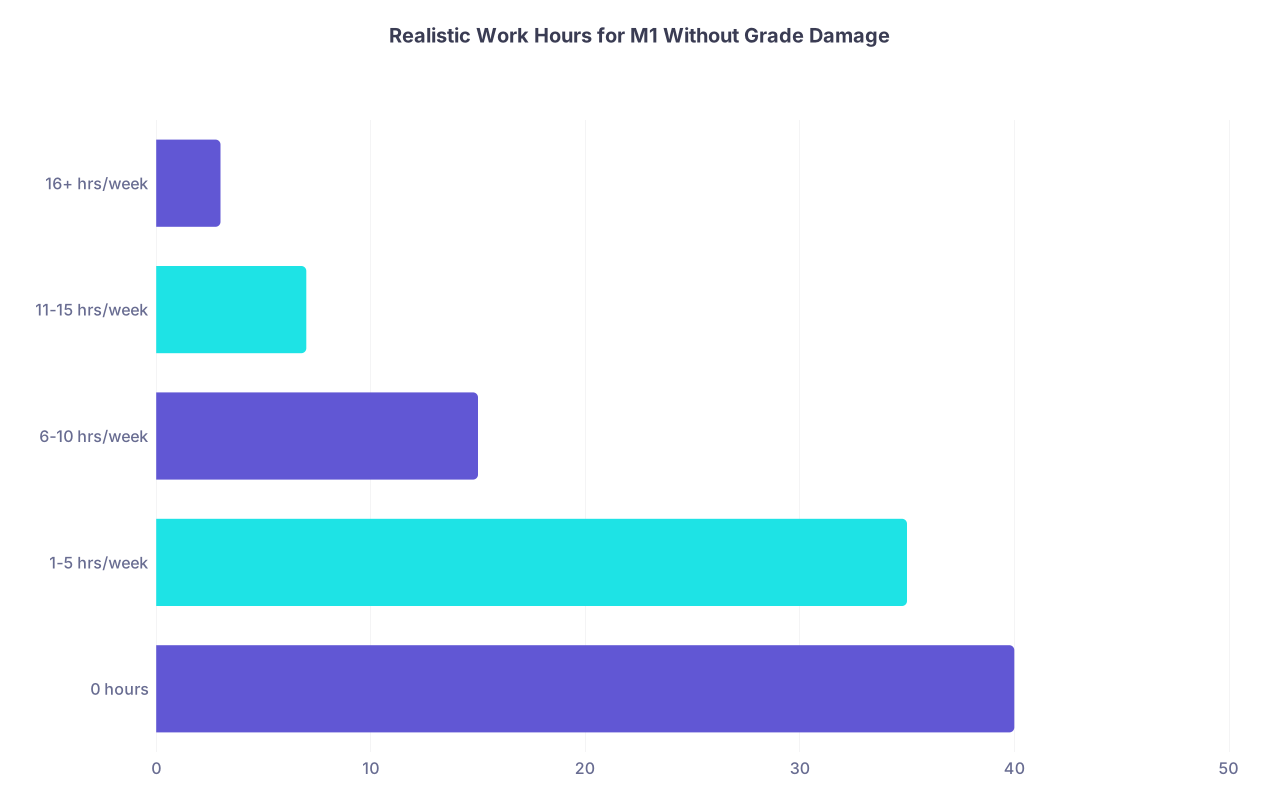
| Category | Value |
|---|---|
| 0 hours | 40 |
| 1-5 hrs/week | 35 |
| 6-10 hrs/week | 15 |
| 11-15 hrs/week | 7 |
| 16+ hrs/week | 3 |
That chart is not a formal study; it’s basically what I’ve seen and heard over and over. Once people creep past ~10 hours/week regularly, something cracks: sleep, exercise, relationships, or grades.
So if you must work, cap it hard and pick something you can drop during exam weeks without being fired.
7. Managing Stress When You’re Constantly Worried About Money
Let me be blunt: financial stress will eat cognitive bandwidth you need for anatomy and path.
You’re not just fighting numbers; you’re fighting shame, fear, and comparison. Your classmate whose parents pay their rent is living a different reality. Comparing yourself to them is pointless and corrosive.
Tactics to reduce mental load
Automate what you can.
- Auto-pay rent and minimum payments.
- Auto-transfer from your refund account to your “spending” account monthly.
Decide in advance what’s allowed.
- “I can eat out twice a week, up to $X per meal.”
- “I can take an Uber home after 10 pm for safety without guilt.”
Schedule one ‘money hour’ per month.
- Once. Not every night at 2:00 a.m.
- You open your accounts, check your pace against your plan, adjust for next month, then close it and move on.
Use your school’s resources without embarrassment.
- Financial aid office: ask for a budget worksheet, cost-of-attendance appeal if your situation changed, emergency loan info.
- Counseling center: yes, money anxiety is a valid reason to see someone.
Mental framing that helps
Repeat this to yourself when the loan numbers make you sick:
“I am not buying lattes. I am buying access to a career with lifetime earning potential that can repay this if I do not sabotage myself.”
You should still avoid waste. But do not torture yourself over every $5 expense and try to memorize glycolysis. That’s a terrible use of brain cells.
8. Emergencies and “Oh No” Moments
You will have at least one: your laptop dies, your car explodes, your tooth needs a root canal, your roommate bails on the lease.
With limited savings, you can’t build a massive emergency fund right away. You can build a minimal buffer and a playbook.
Minimum emergency plan
- Try to grow a $300–$500 buffer over the first semester. Small, but it turns crises into annoyances.
- Know in advance:
- Who you would borrow a small amount from in a true emergency
- Whether your school has short-term emergency loans or grants
- Where the nearest urgent care / dental school clinic is for cheaper care
If something big hits:
- Protect continuity of school first (housing, laptop, basic health).
- Push everything non-essential down the road (vacations, new phone, fancy gear).
- Email financial aid and explain the situation. Yes, seriously. Many schools can adjust cost of attendance or point you to help.
9. Social Life Without Social Bankruptcy
You’re going to get invited to dinners, bar nights, weekend trips. Saying yes to everything is financially suicidal. Saying no to everything is socially isolating.
The balance is intentional participation.
Concrete tactics
- Be the person who suggests cheaper plans: potlucks, cooking nights, movie nights in, walks, free events.
- Pick a social budget per month (e.g., $40–$80) and commit. When it’s gone, you switch to free options.
- Be honest with a few close classmates:
“I’m watching my budget hard this year, so I might skip some dinners out, but I’m down for cheaper stuff.”
Most people will respect that. And you’ll quietly be the one not in credit card hell by M3.

10. When You’re Already Behind: Overdrafts, Credit Cards, and Damage Control
If you’re reading this halfway through the year and the situation is already bad—overdraft fees, cards near maxed, panic—that’s fixable. But you need to stop the bleeding.
Immediate triage
Stop using the worst card.
The one with the highest interest and fees. Freeze it if you have to.Call the bank/issuer.
Ask for:- Removal of recent overdraft/late fees (be polite, firm, and specific)
- A temporary reduced payment plan
- Moving your due date to after your disbursement date
Talk to financial aid.
- Ask about increasing loans up to the cost-of-attendance limit if you didn’t max them.
- Ask about emergency assistance funds. These exist more often than people think.
Make one simple debt plan.
- Minimums on all cards.
- Any extra you can spare goes to the highest-interest one next time you have a bit of space.
This is not the time for shame. It’s the time for logistics. Lots of med students quietly go through this; the ones who recover are the ones who treat it as a math problem, not a moral failing.
FAQs
1. Should I take out the full loan amount even if I’m scared of the debt?
If your savings are minimal, yes, you usually should take close to the full cost-of-attendance for that year, then under-spend it. It’s safer to return unused money at the end of the year than to live in constant crisis and rack up 24% credit card debt because you “tried to borrow less.” Federal loans at ~5–8% beat credit cards every time. Fear of debt is normal, but under-borrowing and then compensating with high-interest debt is financially worse.
2. Is it realistic to work a part-time job and still do well first year?
For most people, working a consistent 15–20 hours/week is not realistic without something important breaking. A small, flexible side gig—5–8 hours/week, remote, and pausable near exams—can be okay if you’re disciplined and already handling the academic load well. If you’re struggling in classes, the correct move is almost always to cut work hours, not add more. Protect your ability to advance; failing or remediating years is vastly more expensive long-term than borrowing a bit more.
3. How much “fun money” is reasonable when I’m on loans?
If you’re starting with limited savings, a reasonable target for “fun” (eating out, hobbies, non-essentials) is often 5–10% of your monthly budget. On a tight $1,500/month budget, that’s $75–$150. That may not feel like much, but used intentionally—one dinner out, a movie, a small monthly hobby—it keeps you sane without pretending you’re living on a resident’s salary. The key is deciding the amount in advance and not pretending you’re “being good” while quietly ignoring the numbers.
Key points:
- Treat money like another course: know your numbers, have a plan, and adjust by exam block, not by vibes.
- Housing and food decisions do most of the damage; get those right and everything else gets easier.
- Financial stress is real but manageable if you automate what you can, set hard limits, and use the resources your school already has for students in your exact situation.


