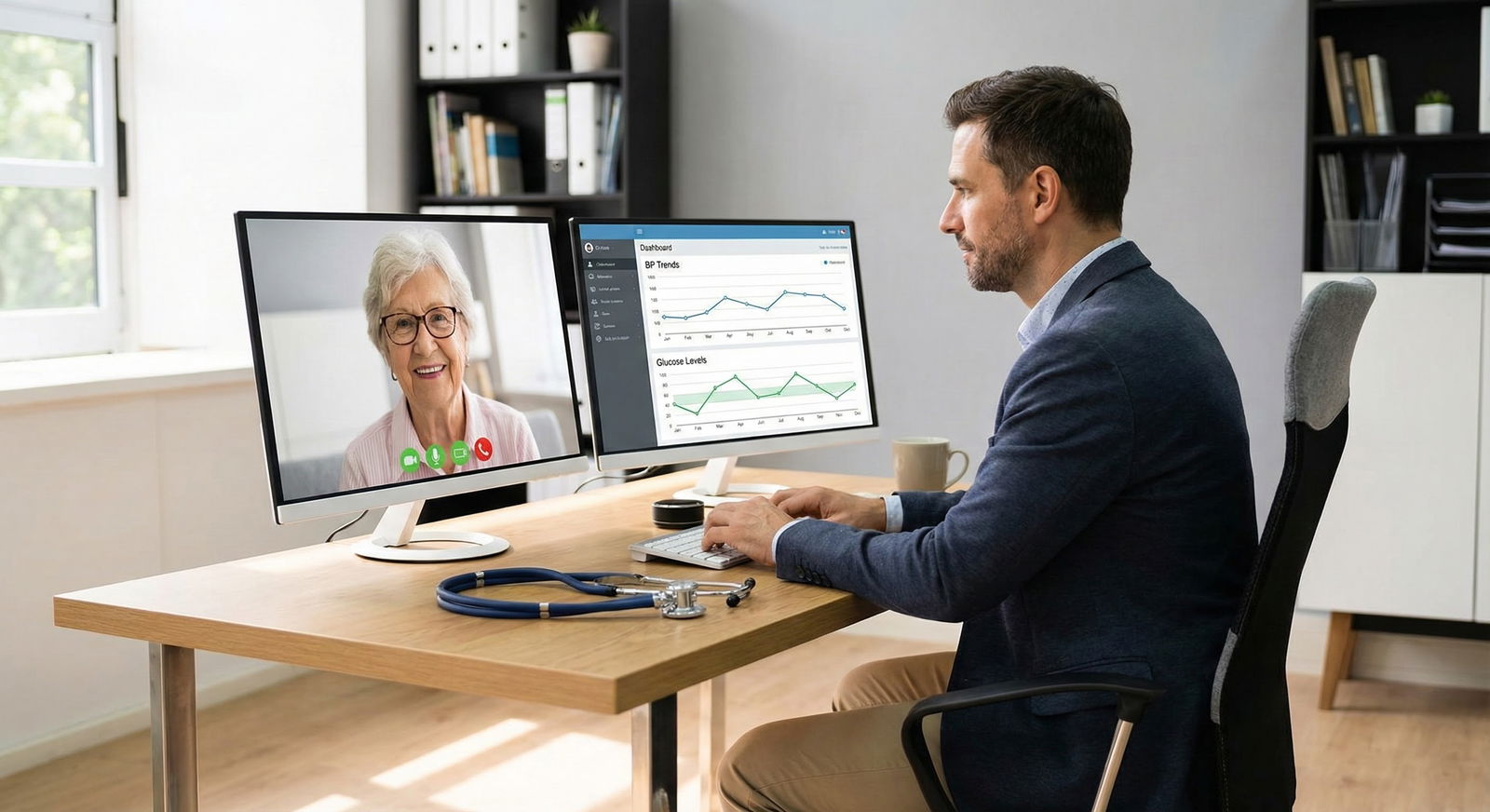
Most telemedicine doctors are doing chronic disease management wrong. Not because they are bad clinicians, but because they are trying to copy in‑person medicine through a webcam.
If you want a real career edge post‑residency, you need a different frame: think like a remote population manager, not a “FaceTime internist.” Hypertension and diabetes are the backbone of this work. If you can run these two conditions efficiently, safely, and at scale, you become very valuable to telehealth companies, health systems, and value‑based groups.
Let me break this down specifically as a practical playbook.
1. The Telemedicine Market Reality: Why Hypertension and Diabetes Rule
Telemedicine companies talk about “digital front doors” and “virtual first care,” but the money and stability live in chronic disease management. Acute Care video visits spike and crash. Chronic care is recurring revenue, predictable panel sizes, and measurable outcomes.
Here is what recruiters will not always say out loud, but I have heard in job calls over and over:
- “We need someone comfortable managing large hypertension and diabetes panels.”
- “Have you worked with RPM (remote patient monitoring) for BP or CGM data?”
- “Are you comfortable with protocol‑driven titration remotely?”
You want your answer to be “yes” with receipts.
, Other](https://cdn.residencyadvisor.com/images/articles_svg/chart-common-chronic-conditions-in-telemedicine-panels-1468.svg "Common Chronic Conditions in Telemedicine Panels")
| Category | Value |
|---|---|
| Hypertension | 30 |
| Type 2 Diabetes | 25 |
| Dyslipidemia | 15 |
| [Depression/Anxiety](https://residencyadvisor.com/resources/telemedicine-careers/telepsychiatry-practice-models-evaluation-followup-and-crisis-protocols) | 15 |
| Other | 15 |
Hypertension and diabetes dominate because:
- They are highly prevalent.
- They lend themselves to metrics: BP control rates, A1c control, time in range.
- Guidelines are relatively clear, algorithmic, and protocol‑friendly.
- They drive downstream costs (strokes, MIs, CKD, amputations). Payers care. A lot.
If you can speak the language of:
- “Percent of panel with BP <130/80”
- “A1c <7 vs high‑risk outliers”
- “Medication adherence and therapy intensification rates”
…you sound like someone who understands both medicine and the business model.
2. Core Infrastructure: What You Need Before You Start Clicking “Start Visit”
Telemedicine chronic disease management lives or dies on infrastructure. If the company you are joining is weak here, either negotiate for support or understand your ceiling.
Think in four buckets:
- Data acquisition
- Data triage
- Clinical decision support
- Patient communication and follow‑up
2.1 Hypertension Infrastructure
At a minimum, you need:
- Validated home BP monitors (ideally integrated)
- A clear BP protocol
- A defined escalation pathway
The bare‑bones protocol most decent telehealth programs use follows this pattern:
- Require patients to use an upper arm, validated cuff (ideally listed on validatebp.org or similar).
- Standardize measurement instructions: seated, 5 minutes rest, back supported, feet flat, arm at heart level, no caffeine/smoking 30 minutes prior.
- Collect readings as averages over several days, not one‑off numbers:
- Diagnosis/confirmation: 2–3 readings, morning and evening, for 3–7 days.
- Ongoing control: at least 1–2 days per week, more if titrating.
Then you define control thresholds:
- General nonpregnant adults:
- Target: <130/80 for most with ASCVD risk and diabetes (assuming guideline alignment with ACC/AHA).
- Acceptable: <140/90 in some older/frail patients or when postural hypotension risk is high.
- Outliers:
- SBP ≥180 or DBP ≥120 with concerning symptoms → emergent care, not tele follow‑up.
And you need remote escalation rules written down, not just in your head. Example:
- Nurse reviews BP feeds daily.
- If three‑day average SBP ≥160 or DBP ≥100 → flagged to physician within 24 hours.
- If SBP ≥180 OR DBP ≥120 twice within 24 hours → immediate outreach; if symptomatic → send to ED.
2.2 Diabetes Infrastructure
For diabetes, the minimum viable toolkit is broader:
- HbA1c tracking (with lab integration or mailed lab kits).
- SMBG (self‑monitoring blood glucose) logs or CGM feeds.
- Medication reconciliation with attention to:
- Renal function
- Hypoglycemia risk
- Cardiovascular status
You need at least two flows:
- Non‑insulin, simpler Type 2 patients
- Insulin‑treated or complex patients (multiple comorbidities, advanced CKD, recurrent hypo)
For non‑insulin Type 2:
- A1c every 3–6 months depending on stability.
- Fingerstick logs:
- If diet‑only or metformin only: occasional fasting glucose checks may be fine.
- If adding sulfonylurea, GLP‑1, or SGLT2: more regular fasting + pre‑meal data.
- Clear message templates:
- “Your A1c is 8.2, we target generally <7, but based on your age/comorbidities our target is X. Here is what we will adjust.”
For insulin‑treated:
- CGM is king if coverage allows (Libre, Dexcom, etc.).
- At minimum, 3–4 fingersticks per day with photo uploads or connected meters.
- A written titration framework (more on this later).
If the telemedicine employer has not invested in devices, labs, or data integration, chronic disease “management” devolves into random check‑ins with no leverage. That is fine for short‑term work, but not for a serious long‑term telemedicine career.
3. Remote Hypertension Management: A Practical Clinical Playbook
Now the guts of this: concrete patterns, not vague talk.
3.1 Initial Telemedicine Hypertension Evaluation
Your first visit must overcompensate for the lack of hands‑on exam.
I structure it like this:
History focused on risk and secondary causes
- Duration and previous readings.
- Current meds, adherence, side effects.
- OSA symptoms: loud snoring, witnessed apneas, daytime fatigue.
- Renovascular flags: abrupt onset, resistant HTN, flash pulmonary edema.
- Endocrine flags: episodic headaches/palpitations (pheo), muscle weakness (hyperaldosteronism), Cushingoid features (if video shows).
- Substance review: NSAIDs, stimulants, decongestants, steroids, oral contraceptives, alcohol.
Remote exam
- Visual: body habitus, respiratory distress, edema in ankles if visible.
- Ask patient to self‑palpate ankles for pitting edema and describe.
- Neurologic screen: speech, facial asymmetry, gross motor symmetry.
- If they have a home BP cuff and pulse oximeter, get live vitals.
Baseline labs/imaging (arranged through labs/radiology near them)
- BMP, fasting lipids, A1c.
- Urinalysis and urine ACR (albumin/creatinine ratio).
- Consider EKG via local facility or prior records.
Always clarify measurement process. Half of “resistant hypertension” is sloppy home readings.
3.2 Treatment Algorithms That Actually Work Remotely
You want a default, reproducible sequence. Something like:
- Step 1 (no compelling indication): Start with a thiazide‑type diuretic (e.g., chlorthalidone) or ACEi/ARB depending on demographics and comorbidities.
- Step 1 (diabetes, CKD with albuminuria, CAD): ACEi or ARB.
- Step 2: Combine ACEi/ARB + thiazide or ACEi/ARB + dihydropyridine CCB.
- Step 3: Triple therapy: ACEi/ARB + thiazide + CCB.
- Step 4: Evaluate for secondary HTN, refer locally, consider spironolactone as fourth agent.
You are not reinventing guidelines; you are tightening how they play out remotely:
- Time your follow‑ups: every 2–4 weeks during titration, not 3 months.
- Use messaging + nurse outreach to adjust more rapidly based on home logs.
- Hardstop rules:
- If home BP rising despite three classes, check adherence and measurement first.
- If still uncontrolled → label as “apparent resistant hypertension” and coordinate in‑person evaluation (renal artery imaging, endocrine workup, sleep study).
| Phase | Target BP | Visit Interval | Typical Action |
|---|---|---|---|
| Initiation | <140/90 | 2–4 weeks | Start 1 agent |
| Intensification | <130/80 | 2–4 weeks | Add 2nd, then 3rd agent |
| Maintenance | Stable target | 3–6 months | Monitor, reinforce |
3.3 Red Flags and Telemedicine Limit Lines
You will occasionally be the first clinician who hears about:
- New neurologic deficits with high BP.
- Chest pain with severe hypertension.
- Acute shortness of breath with orthopnea and leg swelling.
- SBP consistently >200 at home.
Your job is not to manage hypertensive emergencies over video. Your job is to recognize and redirect fast. I have had visits where I literally stayed on video while the patient’s spouse called EMS, just to keep them calm and ensure they actually went.
If a job or company pressures you to “keep them in our system” in situations that clearly warrant ED, that is a red flag about the employer, not the patient.
4. Remote Diabetes Management: Tight Game, Safe Boundaries
Telemedicine is excellent for diabetes. You have numbers, trends, lifestyle levers, and often better communication than a rushed in‑person clinic.
4.1 Initial Telemedicine Diabetes Workup
Again, first visit is comprehensive:
- Type clarification:
- Age of onset, DKA history, rapid weight loss → suspect Type 1/LADA.
- Family history, obesity, gradual onset → more likely Type 2.
- Complication screen:
- Neuropathy symptoms: burning, numbness, balance issues.
- Vision changes, floaters.
- Foot exam is limited, but you can at least see gross deformities or ulcers on camera if the patient can show their feet.
- Current control:
- Last A1c, typical fasting and post‑prandial values.
- Hypoglycemia episodes: frequency, severity, awareness.
Order baseline labs and studies if not recent:
- A1c, fasting lipids, BMP, urine ACR.
- Consider LFTs (for NAFLD, medication tolerability).
- Eye exam referral if >1 year since last.
- Neuropathy and foot risk evaluation; if worrisome → local podiatry/endocrine.
4.2 Non‑Insulin Type 2 Diabetes: The Remote Protocol
Most telemedicine panels have a lot of metformin + “something else” patients whose A1c is 7–9%. That “something else” can be where you distinguish yourself.
Rough, practical framework:
Lifestyle, but not performative counseling
- Ask: “What is one meal you eat most days?” and work from there.
- Identify low‑hanging fruit: sugary beverages, late‑night snacking, portion sizes.
- Set 1–2 specific, measurable changes, not 10 vague goals.
Medication sequencing
- Base: Metformin if tolerated and no major contraindication.
- Next agents (depending on cost, coverage, comorbidities):
- ASCVD or high risk → GLP‑1 RA or SGLT2 if possible.
- CKD or heart failure → SGLT2 prioritized.
- Cost constraints → Sulfonylurea (accepting higher hypo risk).
- Avoid polypharmacy chaos. Add one agent at a time and reassess within 8–12 weeks.
Follow‑up rhythm
- New therapy or major titration → visit in 4–6 weeks, messages in between based on SMBG.
- Stable, at target → every 3–6 months.
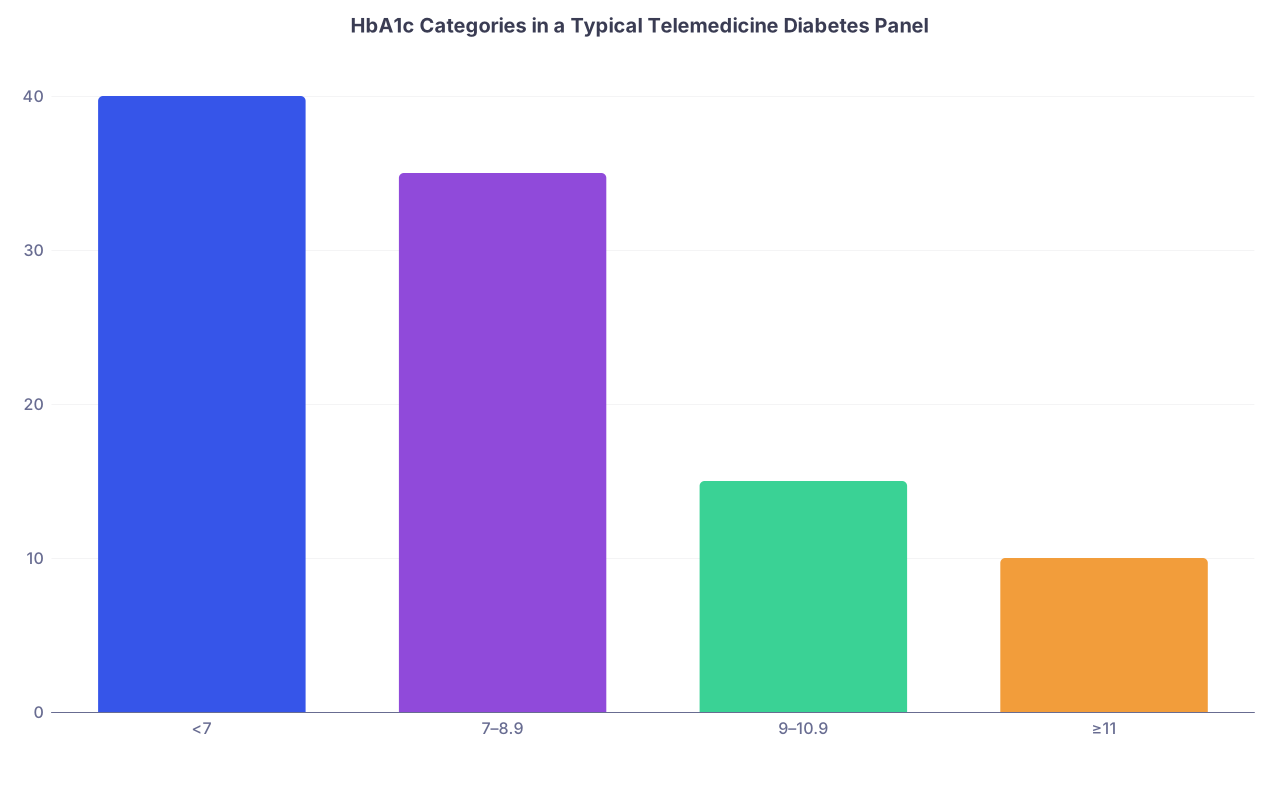
| Category | Value |
|---|---|
| <7 | 40 |
| 7–8.9 | 35 |
| 9–10.9 | 15 |
| ≥11 | 10 |
Your job in telemedicine is often to push for appropriate intensification that primary care has delayed. Many patients have been sitting at A1c 9–10% for years. With remote checks and frequent touchpoints, you have no excuse to keep them there.
4.3 Insulin Management at a Distance
This is where some telemedicine physicians get nervous, but you can manage a substantial subset safely if you are disciplined.
You need clear policies from your employer about:
- Which insulin regimens are allowed in pure virtual care.
- When in‑person endocrine referral is mandatory.
- How hypoglycemia is triaged and escalated (after‑hours coverage, nurse triage, ED threshold).
Basic remote rules that have served me well:
- Avoid initiating complex basal‑bolus in completely unstable patients without local support.
- Basal insulin titration for Type 2 is usually safe if:
- Patient is cognitively intact.
- They can check glucose reliably.
- You give simple titration instructions (e.g., “Increase by 2 units every 3 days until fasting averages 90–130, unless you hit a low.”).
- Use CGM whenever feasible. It transforms remote insulin management because you see time‑in‑range, not just random points.
Red lines:
- Recurrent severe hypoglycemia (requiring assistance) → local endocrine, possibly in‑person.
- Suspected Type 1 or LADA with labile sugars → get antibodies, C‑peptide, but involve local endocrine early.
- Foot ulcers, infection, or other complications that absolutely require hands‑on evaluation.
5. Operational Playbook: Panels, Workflows, and Not Getting Crushed
Clinical knowledge is one part. Operational sanity is the other. This is what decides whether you burn out or build a real telemedicine career.
5.1 Managing Large Panels without Losing Control
Telemedicine chronic care jobs will often tout:
- “You will manage a panel of 1,000–2,500 patients.”
That number is not insane if you have real support. It is totally insane if you are also the nurse, MA, data analyst, and customer service line.
Ask very pointed questions before you sign:
- Who reviews RPM alerts first: nurse, MA, algorithm?
- What is the expected message response time (e.g., 24 hours)?
- How many chronic care visits per day + messaging + admin?
- Who manages refill requests and simple protocol‑driven changes?
Then you arrange your own practice rhythm:
- Set “review blocks” for BP and glucose alerts rather than reacting piecemeal all day.
- Use templates for:
- Medication titration instructions.
- Lifestyle recommendations.
- Lab result explanations.
- Push work to the top of your license:
- Do not write paragraphs for every refill when a smart phrase and a checkbox will do.
- Let nurses handle standard education scripts and basic triage.

| Step | Description |
|---|---|
| Step 1 | Patient home readings |
| Step 2 | Data upload |
| Step 3 | Auto reassurance message |
| Step 4 | Nurse review |
| Step 5 | Protocol titration |
| Step 6 | Physician review |
| Step 7 | Televisit or message plan |
| Step 8 | Within target? |
| Step 9 | Meets protocol? |
The physicians who thrive in telemedicine do not manually chase every single number. They build or lean on systems.
5.2 Documentation That Protects You in a Remote Setting
You document defensively but succinctly. Key things to always include for hypertension and diabetes visits:
- Data source:
- “Home BP readings via validated cuff, 7‑day average 138/84.”
- “CGM download reviewed: time in range 65%, hypoglycemia <70 is 2%.”
- Education:
- “Reviewed signs of hypertensive emergency and instructed to seek ED care for X/Y.”
- “Reinforced hypoglycemia recognition and treatment; patient able to repeat instructions.”
- Shared decision‑making:
- “Discussed GLP‑1 vs SGLT2 vs basal insulin. Patient prefers injection once weekly, accepts GI side effects.”
- Follow‑up plans with specific timeframe:
- “Follow‑up video visit in 4 weeks; patient to send BP readings weekly via portal.”
This protects you when things go sideways, which eventually they will.
6. Career Strategy: Turning This Skill Set into Leverage
You are not learning tele‑hypertension and tele‑diabetes management as a hobby. You are doing it because it gives you options.
Here is how you translate this into job market advantage.
6.1 Types of Employers That Value These Skills
You will see variations of:
- National telehealth companies (e.g., Teladoc, Amwell, Doctor on Demand variants).
- Health system virtual primary care programs.
- Payer‑aligned groups and ACOs running “virtual first” panels.
- Virtual specialty clinics focused on metabolic health, weight management, or cardiometabolic disease.
They care about:
- Stability and adherence of panels.
- Improvement in BP/A1c metrics.
- Reduced ED visits and admissions for hypertensive crisis, DKA, HHS, etc.
- Patient satisfaction and retention.
If you can point to:
- “Managed a panel of 800 hypertensive and 500 diabetic patients.”
- “Improved BP control from 55% to 72% over 12 months.”
- “Expanded use of CGM and GLP‑1 therapy for high‑risk diabetics with documented A1c improvements.”
…you are no longer just “another telemedicine doc.” You are someone who can lead programs, mentor others, and justify higher pay.
6.2 Compensation Models and How Chronic Care Fits
You will see three main compensation structures:
Straight hourly/visit rate (common in big national telehealth)
- Stable but detached from outcomes.
- Your chronic care expertise helps you negotiate for more responsibility and possibly specialty tracks (e.g., “virtual cardiometabolic clinic”).
Base salary + quality/Panel bonuses
- Common in health system virtual primary care and ACOs.
- Metrics: BP control %; A1c control %; screening rates (eyes, microalbumin); HEDIS measures.
- Your hypertension/diabetes discipline directly hits these.
Value‑based or shared‑savings models
- More complex, but potentially lucrative.
- Requires strong infrastructure; otherwise you just get blamed for costs you cannot control.
Align your career with systems that actually measure and reward what you do with chronic disease, not just RVUs per video.
7. Practical Pitfalls and How to Avoid Them
Let me be blunt about the main mistakes I see new telemedicine physicians make in chronic disease work.
Trying to practice “clinic medicine, but on Zoom.”
Result: slow titration, 3‑month follow‑ups, no RPM leverage, poor metrics. Fix: embrace more frequent micro‑adjustments via messaging and protocols.Accepting terrible data.
Taking random BP readings while the patient is rushed, talking, in pain, or using a wrist cuff. Fix: be a zealot about measurement technique at the start.Fear of intensification.
Letting A1c of 10% ride for another 6 months because you are uneasy starting insulin remotely. Fix: learn clear remote insulin initiation rules and know your referral boundaries.No clear ED thresholds.
Waffling when confronted with SBP 210 and mild headache. Fix: set written triage criteria. Use them. Do not negotiate emergent care.Allowing message creep to destroy your day.
Answering every portal ping in real‑time. Fix: batch work, set expectations, and use support staff aggressively.
8. Quick Hypertension and Diabetes Telemedicine Checklists
You will eventually build your own, but here is a starting point.
8.1 Hypertension Televisit Checklist (Initial)
- Confirm cuff type and technique.
- Gather 7‑day BP average if possible.
- Screen for secondary causes and end‑organ symptoms.
- Review meds and adherence honestly (not “Are you taking them every day?” but “How many days a week do you miss?”).
- Order baseline labs ± EKG, urine ACR.
- Start or optimize therapy based on guideline‑driven algorithm.
- Educate about hypertensive urgency vs emergency.
- Set frequency and method of BP reporting.
- Schedule next touchpoint in 2–4 weeks.
8.2 Diabetes Televisit Checklist (Initial)
- Clarify diabetes type and duration.
- Review SMBG/CGM data patterns, not just isolated numbers.
- Screen for complications (eyes, kidneys, nerves, feet).
- Order or update labs (A1c, lipids, BMP, urine ACR, LFTs).
- Align on A1c and glucose targets based on age/comorbidities.
- Adjust medications with a clear sequencing logic.
- Discuss dietary and activity changes with 1–2 concrete goals.
- Educate on hypoglycemia recognition and management.
- Set follow‑up interval (4–12 weeks depending on control and changes).
FAQ (Exactly 6 Questions)
1. Is it safe to start or intensify antihypertensives purely via telemedicine?
Yes, for the majority of uncomplicated hypertension cases, it is safe if you have reliable home BP readings, a clear titration protocol, and solid patient education on hypotension and hypertensive emergency symptoms. The line you must not cross is trying to manage hypertensive emergencies or unclear neurologic symptoms remotely. Those go to in‑person or ED, no debate.
2. Can I manage insulin‑treated patients entirely virtually, or do they always need local endocrinology?
You can safely manage many stable, insulin‑treated Type 2 patients remotely, especially basal‑only regimens or simple basal‑plus. You need reliable glucose data (ideally CGM), clear hypoglycemia protocols, and a willingness to refer out when control is brittle, hypoglycemia is recurrent, or Type 1/LADA is suspected. Complex, labile patients with frequent DKA or severe lows should have local endocrine support.
3. How big a chronic disease panel can one telemedicine physician realistically handle?
With strong nurse/RPM support, protocol‑driven titration, and efficient messaging, 1,000–2,000 patients is feasible. Without that infrastructure, even 500 can feel unsafe. The key constraint is not raw numbers; it is the quality of your data pipeline and the division of labor between you and the care team.
4. Do I need special certification to focus on telemedicine chronic disease management?
Formal “telemedicine” certificates are mostly resume decoration. They rarely change how you practice. What actually matters is demonstrable experience with RPM, management of large hypertension/diabetes panels, and outcomes you can quote. If you want extra credibility, consider board certification in Clinical Informatics or Obesity Medicine if it aligns with your interests, but do not confuse certificates with competence.
5. How do I handle patients who refuse labs or in‑person evaluations but want medication changes?
You set boundaries. For hypertension, you can do limited adjustments based on reliable home BP, but chronic therapy without at least baseline labs is poor practice. For diabetes, managing without A1c or renal function is unsafe. Explain the risk clearly, document the discussion, and, if necessary, limit or decline further escalations until they complete labs or in‑person exams. Telemedicine does not remove your obligation to practice safely.
6. Will specializing in telemedicine chronic disease management hurt my chances if I later want a traditional clinic job?
No, if anything it can help. You will have experience managing large panels, using data for population health, and often working with advanced tools (CGM, RPM, protocols) that many brick‑and‑mortar clinics lag behind on. When you transition back, you pitch it as “I have run panels of 1,500 hypertensive and diabetic patients with measurable improvements in outcomes.” That sounds like value, not a detour.
Key takeaways:
First, telemedicine chronic disease work is not “Zoom clinic.” It is protocol‑driven population management, and hypertension and diabetes are the core currencies.
Second, your value post‑residency is directly tied to how effectively, safely, and efficiently you can manage these conditions at scale using remote data, clear workflows, and disciplined escalation.