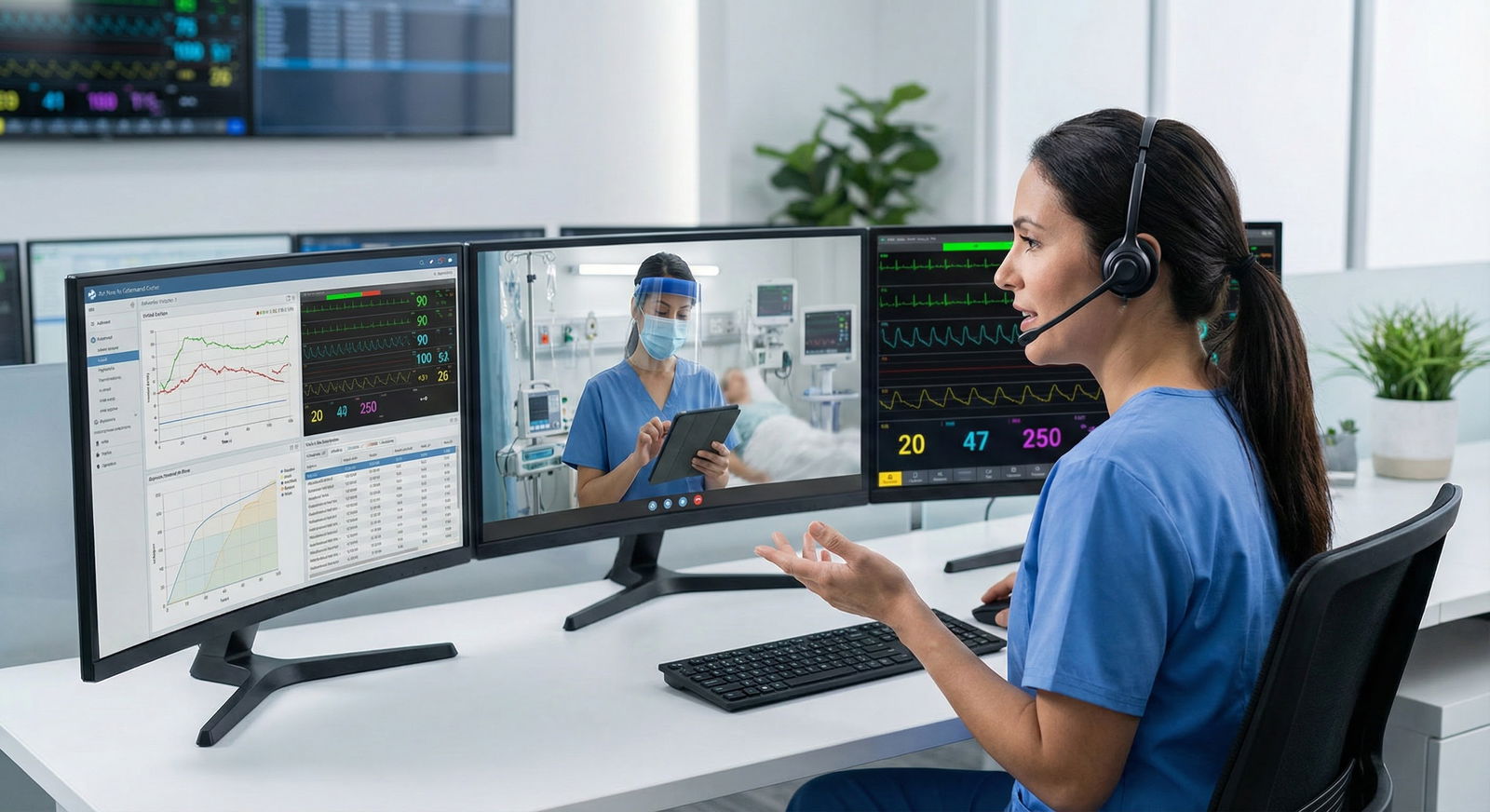
Cardiology teleclinics are either ruthlessly structured or completely useless. There is no middle ground.
You want a viable tele–heart failure (HF) or AFib career after training? Then you need to stop thinking like “video visit cardiologist” and start thinking like “systems architect for remote cardiovascular care.”
Let me break this down specifically.
1. The Real Job: You Are Designing a Remote Care System, Not Just Clicking Zoom
Most post-residency cardiologists step into telemedicine like it is an add‑on clinic: same visit, just on a screen. That mindset kills quality and kills your job satisfaction.
Remote HF and AFib work only when you deliberately engineer four things:
- A tight operational model (who you see, when, for what, with what data).
- A data pipeline (remote vitals, rhythm data, labs, imaging) that is actually usable in real time.
- A team model (RNs, APPs, pharmacists, techs) with scripted workflows.
- A billing & compliance frame that makes the entire thing financially defendable.
If you skip any of those, your “tele-HF clinic” turns into a glorified follow-up factory where you are blind to weight trends, can’t see ECGs, and spend 40% of visit time hunting through PDFs.
So start with the actual care models, not the video platform.
2. Core Models: What Tele-Heart Failure and Tele-AFib Clinics Actually Do
You do not need a dozen tele-clinic types. You need 3–4 very tightly defined products that you can describe in one sentence each.
Tele–Heart Failure Clinic: Three Core Products
Post-discharge HF optimization (30–90 days)
Narrow scope: recently hospitalized HFrEF/HFpEF with high readmission risk.
Objective: keep them out of the hospital and get them to near‑guideline-directed medical therapy (GDMT) targets.Chronic HF titration / maintenance clinic
Objective: ongoing GDMT optimization, weight/symptom surveillance, early decompensation flags.Device/remote monitoring–anchored HF management
CardioMEMS, ICD/CRT with pulmonary pressure/surrogates, or high‑risk HF with structured remote BP/weight monitoring.
Tele–AFib Clinic: Three Core Products
New AFib evaluation & strategy clinic
Objective: symptom characterization, stroke risk assessment, rate vs rhythm strategy, and initial plan.Rhythm control follow‑up (post-cardioversion or post-ablation)
Objective: recurrence surveillance, antiarrhythmic drug (AAD) management, and anticoagulation continuity.Chronic AFib management / anticoagulation & rhythm surveillance
Objective: symptom control, HR targets, device/patch rhythm review, and anticoagulation safety.
If your “teleclinic” cannot be cleanly categorized into one of those products, it probably should not exist as a teleclinic. Or it needs to be redefined.
3. Visit Architecture: Tight Templates, Or You Will Drown
Every tele-HF or tele-AFib visit should follow a fixed spine: pre‑visit data intake, structured encounter, post‑visit workflow. Free-form telemedicine is how people miss hypotension and QTc of 540.
Pre-visit: What Must Be in the Chart Before You Click “Join”
For HF, at a minimum you want:
- Last 4 weeks of weights (home scale or remote monitor).
- Home BP / HR log (or at least 5–7 readings).
- Current med list with doses and timing (including OTCs).
- Recent labs: BMP (including creatinine, potassium), +/- NT‑proBNP, LFT if on certain meds.
- Last echo summary and key EF, RV function, significant valvular disease.
- Any recent ED or urgent care notes.
For AFib, at baseline:
- Stroke risk profile: CHA₂DS₂‑VASc components clearly visible.
- Bleeding risk outline: prior GI bleed, ICH, labile INRs if on warfarin.
- Rate/rhythm data:
- 12‑lead ECG within 6–12 months (or more recent if symptomatic).
- Rhythm strip or patch summary if done.
- For wearables: at least 3–5 representative PDF strips, not 300 screenshots.
- HR/BP data and activity pattern (if available from devices).
Stop relying on patients to summarize any of that on the fly.
You need a pre‑visit RN/MA/APP script that populates a single standardized “tele-HF pre‑visit” or “tele-AFib pre‑visit” note section. If you do not have that, build it yourself in your EMR and get your team to use it.
4. Operational Models: How to Structure Your Actual Clinic Time
Let’s talk about your week. Post‑residency, you are paid either by wRVUs, hybrid RVU + quality, or pure salary with productivity expectations. A random sprinkling of 30‑minute tele-visits is the worst of all worlds.
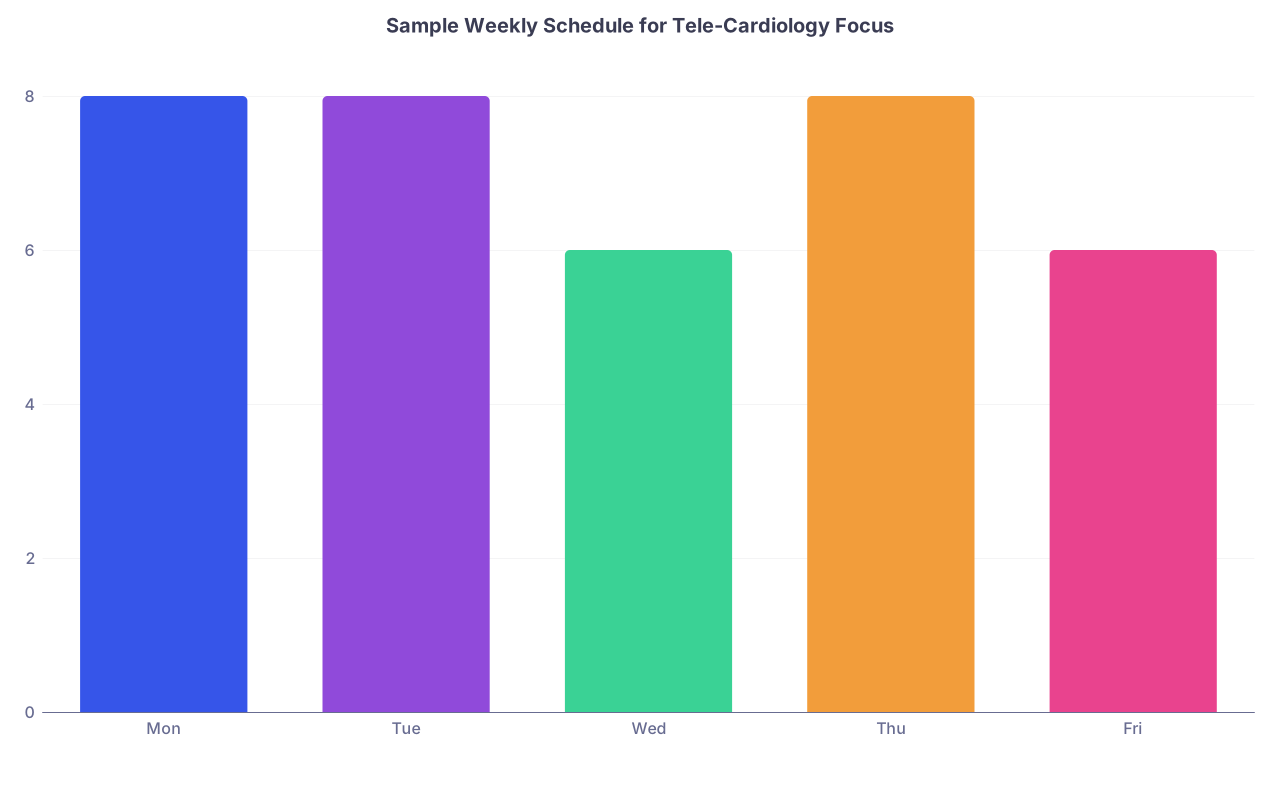
Example Weekly Structure: Mixed In‑Person and Remote Cardiology
| Category | Value |
|---|---|
| Mon | 8 |
| Tue | 8 |
| Wed | 6 |
| Thu | 8 |
| Fri | 6 |
That shows hours, not visit counts, but the key is this: cluster your teleclinics.
A practical pattern if you are 1–3 years out:
Two half-days per week: dedicated tele-HF + tele-AFib
Example:- Tuesday AM: Tele-HF (post-discharge + titration).
- Thursday PM: Tele-AFib (new eval + post-ablation follow-up).
In-person anchor days for new HF/AFib or complex multimorbidity:
- Monday, Wednesday: general cardiology + complex HF / AFib in person.
- Friday AM: procedures, imaging, or overflow.
Why you cluster:
- You train your team to run a tight, repeatable script those half‑days.
- Patients learn “this is the HF teleclinic” rather than random FaceTime.
- You can align RN/APP staffing and remote monitoring reviews to those blocks.
Trying to “fit in” tele-visits between cath lab cases is how people burn out. And how remote care quality degrades.
5. Building the Team Workflow: Who Does What, Exactly
Tele‑cardiology only scales if you stop thinking like a lone craftsman and start thinking like a production line with quality checks.
Typical Team Roles in Tele-HF / Tele-AFib
You will not have all of these at first, but you need to know the ideal model.
| Role | Primary Tasks in Tele Clinic |
|---|---|
| RN/MA | Pre-visit data gathering, vitals logs, med reconciliation |
| APP (NP/PA) | Routine follow-ups, protocol-based titration, education |
| Pharmacist | Polypharmacy review, anticoagulation, GDMT support |
| Tele-tech | Device data ingestion, troubleshooting, portal support |
| Cardiologist | Complex decisions, new strategy, oversight, escalation |
If you are in a smaller group and the team is just you + one MA, fine. Then you script what is realistic:
- MA: two days before visit
- Calls patient.
- Confirms weight and BP logs (or helps them read from device).
- Reconciles meds.
- Uploads any external ECG/monitoring PDFs.
- You:
- Review a pre‑visit summary that takes <2 minutes.
- Decide what labs you need before the visit.
- Convert some visits to “needs in‑person exam” before you waste a tele-slot.
The sign you have done this right: your actual tele‑visit is 90% decision-making and teaching, not data hunting.
6. Remote Data: You Either Engineer This or You Are Flying Blind
Tele‑HF and AFib lives on data. Not “how are you feeling?” but numbers and rhythms.
Heart Failure: Essential Remote Data Stack
Minimum viable tech stack:
- Home BP cuff (validated; upper arm; patient knows how to use it).
- Digital scale that is:
- Either Bluetooth/Wi‑Fi connected to your remote monitoring platform.
- Or at least used daily with values written down or logged into the portal.
- Periodic labs:
- BMP ± Mg every 2–8 weeks during aggressive uptitration.
- Cluster orders with tele-visit schedule to avoid random lab dates.
If you have remote monitoring infrastructure:
- Wireless BP + scale integrated into your EHR or monitoring dashboard.
- RN review queue every morning with clear escalation rules:
- Flag if weight ↑ >2 kg in 3 days.
- Flag if SBP <90 with symptoms or <80 regardless.
- Flag if HR <50 with symptoms or >110 persistent at rest.
You need written protocols for how RNs respond before it ever hits your in‑basket.
AFib: Rhythm and Rate Surveillance
At a minimum:
- 12‑lead ECG access: either local lab, PCP office, or partner clinic where patients can walk in.
- Event monitoring pipeline:
- 7–14 day patch monitors for unclear symptoms or burden.
- Clear “who orders,” “who reads,” and “who calls with results” rules.
For wearables:
- Apple Watch, Kardia, Fitbit, Garmin – all popular, all messy.
- You must define:
- Which formats you accept (PDF via portal, email to monitored address, direct vendor integration).
- Limits: e.g., “Send up to 5 representative episodes per month, not every blip.”
Do not let your tele-AFib clinic become an all‑you‑can‑eat buffet of unscreened wearable data. I have seen physicians spend 45 minutes scrolling through Apple Watch screenshots that added exactly zero clinical value.
7. Clinical Protocols: How You Standardize Care Without Becoming a Robot
Teleclinics run on protocols. You still individualize decisions, but you should not make the same 20 micro‑decisions from scratch every single time.
Protocol Examples – Tele-Heart Failure
You want explicit, written algorithms for at least:
GDMT titration steps for HFrEF
Start → uptitrate every 2–4 weeks if:- SBP ≥ 100, HR ≥ 55, Cr stable, K < 5.2, no symptomatic hypotension.
Diuretic adjustment rules based on home weights:
- If weight ↑ ≥2 kg over 3 days + increased dyspnea:
- Add ×1 extra loop diuretic dose or increase maintenance by 25–50%, with check‑in in 48–72 hours and lab in 1 week.
- If weight ↑ ≥2 kg over 3 days + increased dyspnea:
When to convert tele-visit to urgent in‑person/ED:
- At‑rest dyspnea, orthopnea worsening + weight gain despite diuretic adjustments.
- SBP <80 or MAP <60 with presyncope.
- New chest pain concerning for ischemia.
You adapt these to your practice style, but they must be written and shared with your team.
Protocol Examples – Tele-AFib
You need at minimum:
Anticoagulation initiation & continuation:
- Clear mapping from CHA₂DS₂‑VASc to anticoagulation recommendation.
- Consistent DOAC dosing and renal function intervals.
- Triggers to reassess if major bleed, GI workup, or new intracranial pathology.
Rate control targets by phenotype:
- Symptomatic vs asymptomatic.
- HFrEF vs HFpEF vs no structural disease.
Rhythm control follow-up schedule:
- Post‑cardioversion: tele-visit at 1–2 weeks, 3 months, then 6–12 months depending on plan.
- Post‑ablation: defined monitoring and AF burden assessment windows.
Again: protocols are not prison. They are scaffolding. You decide when to deviate, but your baseline pattern is not random.
8. Technology and Platforms: The Stuff That Actually Matters (And What Does Not)
People obsess over video platforms and ignore integration. Wrong priority.
What Actually Matters for Tele-HF / AFib
EMR integration
If your tele platform does not talk reasonably well to your EMR, you will waste your life on double documentation.Device integration capability
For HF:- Ability to ingest weights, BPs, HR into your EMR or a monitored dashboard. For AFib:
- At least some way to attach ECG/PDFs that are actually readable in the chart.
Team workflows inside the tech
Queues for:- Remote monitoring alerts → RN review → MD escalation.
- Lab follow-up messages linked to specific tele-Uniques.
Patient usability
If 30% of your visits crash because of login issues, your model fails. The “best” platform is the one 80‑year‑olds with HF can actually use.
What is far less important:
- Fancy backgrounds, co‑branding, marketing widgets.
- “AI visit summaries” that cannot handle cardiology nuance (yet).
- Overcomplicated dashboards with 12 colors and zero filter capability.
9. Reimbursement and RVUs: The Uncomfortable but Necessary Part
You are in the post-residency job market phase. Translation: if you do not understand billing and value frameworks, you will get taken advantage of or you will build a clinic that is economically unsustainable.
The Main Revenue Streams
Standard E/M telehealth visits
Video visits billed with time or complexity, same CPT family as in‑person in many regions. Your wRVUs are straightforward.Chronic Care Management (CCM) / Remote Physiologic Monitoring (RPM)
HF is tailor‑made for this:- Monthly RPM codes for weight/BP data review, with documented minutes.
- CCM if you have non‑face‑to‑face care coordination across comorbidities.
Transitions of Care Management (TCM)
Post-discharge HF tele‑visits within 7–14 days can qualify for TCM codes, which carry higher reimbursement if documentation is done properly.Quality/value bonuses
If your tele-HF clinic drops 30‑day readmissions or keeps BP under control, your group or system may have shared savings or quality metrics that translate into compensation. Or should.
If you are negotiating a job with a promised “50% tele-work,” ask pointed questions:
- Which codes are we using and how were last year’s tele wRVUs per half‑day?
- Who owns the RPM infrastructure? How is the revenue split between hospital and practice?
- Are tele wRVUs counted identically to in‑person for my bonus?
If you get vague hand‑waving answers, you already know what you are walking into.
10. Career Positioning: How to Make Tele-HF and Tele-AFib Your Niche (Not a Dead End)
Let me be blunt: “I do telemedicine” is not a niche. That is a tool. You need a specific, defensible value proposition.
Tele-HF and AFib give you several very tangible options:
System HF virtual program lead
- You design regional post-discharge HF pipelines.
- You standardize GDMT titration protocols.
- You show reduced readmissions across the system.
AFib virtual pathway director
- You coordinate with EP on pre- and post‑ablation care.
- You maintain an anticoagulation and AF burden registry.
- You become the person leadership calls when they want “AFib + tele” done right.
Virtual second opinion / cross‑state HF or AF consults
- Particularly valuable if you are in an academic or high‑expertise center.
- You can license across multiple states and work with employer groups or telehealth companies that contract for specialty consultations.
To make this real, you need:
- Data: 6–12 months in, you should be able to say, “Our tele-HF cohort had X% 30‑day readmissions vs Y% baseline.”
- Process documents: protocols, workflows, and templates you created.
- Teaching: show you have taught residents, fellows, or APPs to run this model.
That is how you secure leadership roles and protect your tele‑heavy schedule from being cannibalized when clinic templates change.
11. Practical Structures: Sample Tele-Clinc Session Designs
Let’s get painfully concrete. Here are two half‑day blocks I have seen work well.
Example A: Tele–Heart Failure Half-Day (4 hours)
08:00–08:15
RN huddle: review overnight remote alerts; pick 3–5 that may need same‑day MD input.08:15–10:15 – 6 short follow-ups (20 minutes each)
- Mostly titration and stability checks.
- RN joins first 3 minutes to present pre‑visit summary and any flags.
- Goal: one concrete change or affirmation per visit.
10:15–10:30 – Buffer
- Callback to a decompensating patient.
- Quick review of labs or device uploads.
10:30–12:00 – 3 longer visits (30 minutes each)
- Post-discharge HF.
- Newly referred advanced HF, but already had in‑person baseline.
- Complex GDMT with CKD or hypotension issues.
You are aiming for 9 visits in 4 hours with real work done, not 14 chaotic 15‑minute slots.
Example B: Tele–AFib Half-Day (4 hours)
13:00–13:15
Review monitoring reports the tech/RN has pre‑summarized.13:15–14:45 – 3 new AFib strategy visits (30 minutes)
- You need the time for education: stroke risk, options, expectations.
14:45–15:00 – Buffer
- Call lab, coordinate cardioversion, sync with EP.
15:00–16:30 – 4 follow-ups (20 minutes each)
- Post‑ablation, post‑cardioversion, long‑term rate control management.
Again, structured and predictable.
12. Risk, Safety, and When to Say “No, You Must Come In”
The biggest rookie mistake in tele‑cardiology is trying to “force” a tele-visit when a physical exam or in‑person ECG is actually needed. The second biggest is vague safety documentation.
Your tele‑HF and tele-AFib clinics need hard red lines:
HF “Hard Stop — Needs In-Person or ED”
- Suspected new cardiogenic shock, flash pulmonary edema, or ACS.
- Confusion, hypotension, or clear signs of end‑organ hypoperfusion.
- Rapid decompensation over 24–48 hours despite diuretic escalation.
AFib “Hard Stop — Needs In-Person / ED / Same-Day ECG”
- New syncope with presumed arrhythmic origin.
- Suspected rapid AFib in a patient with HFrEF and symptoms at rest.
- Concern for pre‑excited AFib, WPW, or wide complex tachycardia by history/descriptions.
You document why you converted from tele to in‑person/ED, and you do not apologize for that. Good teleclinicians know when not to use tele.
13. Job Market Reality: Where These Roles Actually Exist
If you are post‑residency and hunting, you will see a few patterns.
Where Tele-HF / AFib Roles Are Strong
Integrated health systems with:
- Established HF disease management.
- Existing remote monitoring programs (CardioMEMS, RPM).
- Value‑based or risk contracts.
Large cardiology groups (especially those owned by hospitals) that:
- Have high HF readmission penalties.
- Are building AFib programs, including EP labs.
Academic centers:
- Often have “virtual HF” or “virtual EP” initiatives for outreach to satellites and rural sites.
Where Tele-Cardiology Promises Are Often Fluff
Small private practices advertising “50% tele” but with:
- No remote monitoring infrastructure.
- No RN/APP support for tele work.
- No clear plan for how tele-visits generate sustainable RVUs.
Generic telehealth startups that want “cardiologists on demand”:
- Often focused on primary prevention, lipid management, or direct‑to‑consumer AFib screening.
- Some are serious. Many are not ready for real HF-level acuity.
Your move: in any interview, ask to see:
- Sample tele clinic schedules from current physicians.
- A description of their remote HF or AFib pathway on paper.
- Evidence of billing patterns for tele vs in‑person.
If they cannot show you, they probably have not actually built what they are selling.
14. How to Start If Your Current Job Has “Nothing” Built
So you are 1–2 years out, interested in tele‑HF/AFib, and your group is still mostly paper + phones. You do not need permission to start structuring; you need a small pilot.
Concrete steps:
Pick one small cohort
For example:- All HF discharges from one hospitalist team.
- All post‑ablation AFib patients from one EP.
Design one tele pathway
- Day 7–14 post-discharge or post-ablation: tele-visit.
- Standard pre‑visit data set and script.
- Protocols for common actions (diuretic bump, DOAC management).
Run it for 3–6 months
Measure:- 30‑day HF readmissions vs your own baseline.
- No‑show rates vs in‑person.
- Patient satisfaction from a short survey.
Package it
PowerPoint or 2–3 page memo:- The workflow.
- The early data.
- The staffing ask for scaling.
This is how you become “the tele-HF doc” or “the tele-AFib lead” in your group rather than “the person who does some telemedicine.”
Key Takeaways
Tele–heart failure and AFib clinics only work if they are deliberately engineered: clear products, pre‑visit data, strict protocols, and real team workflows. Random video follow-ups are not enough.
Your post‑residency tele‑cardiology career depends on structure + measurables: clustered tele half‑days, written algorithms, remote data pipelines, and actual outcome or utilization data you can show to leadership.
Do not let “telemedicine” be your niche. Make your niche remote HF and AFib systems – and build teleclinics that are clinically sharp, operationally sane, and financially defensible. That is how you make cardiology from afar into a real, sustainable career.